Wanted in Germany, Sanctioned by the U.S.: Who Is Palestinian Activist Zaid Abdulnasser?
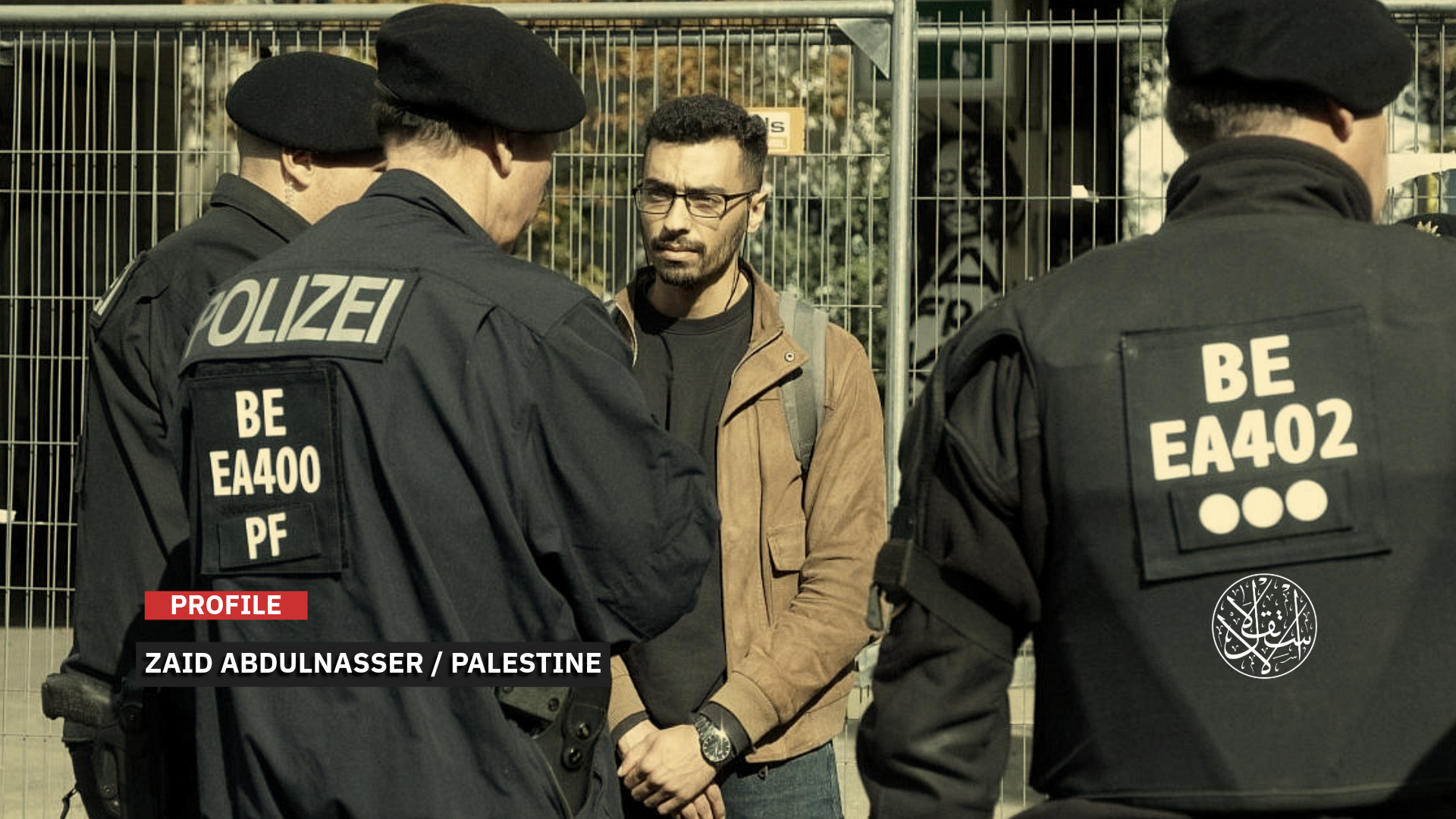
The U.S. record lists Zaid Abdulnasser under its Counter Terrorism Sanctions program.
From a Palestinian refugee born in Syria to an engineer working in the energy sector and one of the most prominent Palestinian activists in Germany, Zaid Abdulnasser’s trajectory culminated in August 2026 with his inclusion on a U.S. terrorism-related sanctions list.
The official confrontation began before October 7, 2023, when Germany’s Federal Office for Migration and Refugees opened proceedings concerning the protection granted to him over his political activities. The dispute escalated after the authorities banned the Samidoun network, raided his home, and continued to challenge his legal status.
His U.S. designation as a “leader or official” of the Palestinian Alternative Revolutionary Path Movement (Masar Badil) has taken the case to a new level, potentially restricting his access to the financial system and increasing pressure on his status in Europe. Abdulnasser and his lawyers maintain that his activities are political and say they are preparing to challenge the measures taken against him.
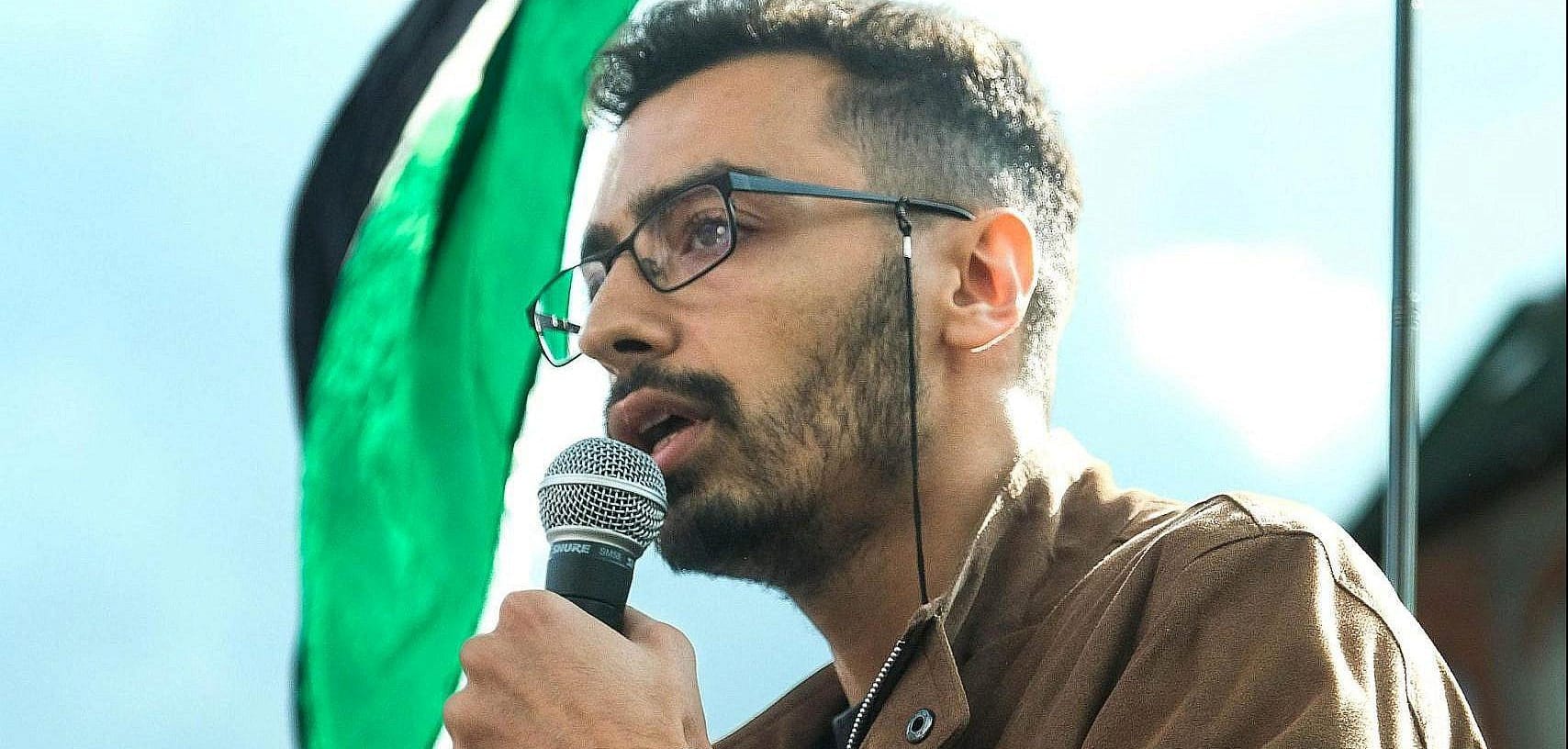
From Damascus to Berlin
Zaid Tamim Abdulnasser was born in Damascus, Syria, in 1995 as a Palestinian refugee. He describes himself as the “son, grandson, and great-grandson” of Palestinian refugees denied the right to return, placing his later move to Europe within a family history of displacement that began decades before the Syrian war.
Abdulnasser arrived in Germany in 2017 and was granted refugee protection in May of that year. He said the protection was based on his status as a Palestinian born in Syria, at a time when German authorities regarded the country as a war zone.
After settling in Germany, he turned to his studies, enrolling at RWTH Aachen University to study electrical engineering before earning a master’s degree in energy engineering in 2022.
His specialization opened the door to work in Germany’s electricity sector. He joined 50Hertz Transmission, a Berlin-based electricity transmission system operator, before moving in May 2023 to a position managing a portfolio related to renewable energy at an international energy services company.
50Hertz told the German newspaper Die Welt that it had not observed any signs of what it described as “political extremism” in the workplace during his time at the company. Outside his professional life, however, Abdulnasser was building a growing profile in Palestinian activism in Germany.
His name began appearing publicly as the German branch of Samidoun took shape, a network involved in solidarity with Palestinian detainees through demonstrations, seminars, and campaigns related to detainees and hunger strikes.
In a 2024 ruling by the Dusseldorf Administrative Court in a case involving another Palestinian organization, the court noted that the German branch of Samidoun had emerged publicly as early as 2019 and identified “Zaid Tamim” as the branch’s coordinator.
Abdulnasser’s activism expanded with the emergence of the Masar Badil, which was formally established in October 2021. In an interview published by the movement in September 2023, he was identified as a member of its executive committee and coordinator of Samidoun in Germany.
Abdulnasser placed Palestinian activism in Europe within a broader political vision of the role of the diaspora after the “Oslo peace accords.” He argued that Palestinians abroad should reclaim their place within the national movement rather than limit themselves to the role of supporters.
He also described Berlin as an important center for the Palestinian diaspora in Europe following the arrival of large numbers of refugees from Syria. In the same interview, he embraced the slogan of liberating Palestine “from the river to the sea” and expressed support for Palestinian resistance.
By 2023, Abdulnasser had combined a stable academic and professional career with a prominent political role within Berlin’s Palestinian activist community. That role would soon begin to directly affect his legal status.
That same summer, as he moved into a new job in the energy sector, he received the first official step from German authorities toward reviewing the protection he had been granted six years earlier.
The Confrontation With Germany
On July 19, 2023, Abdulnasser received notice that Germany’s Federal Office for Migration and Refugees had opened proceedings to withdraw or revoke the protection granted to him.
Berlin’s state interior administration told the Israeli magazine +972 that it had forwarded materials to the federal office concerning what it described as an alleged relationship between Samidoun and the Popular Front for the Liberation of Palestine.
According to interviews with Abdulnasser and his lawyer at the time, Nadija Samour, the authorities’ case also included his activities with Masar Badil and what German authorities described as “extremist activities.”
The timing of the proceedings was significant. The review of his protection began more than two months before Operation al-Aqsa Flood and before Berlin’s decision to ban Samidoun, placing the beginning of the legal dispute before the escalation that followed the October 7, 2023, events.
After October 7, Abdulnasser’s own statements became part of the public debate. He described the event as a moment that revived the modern Palestinian revolution and demonstrated the resistance’s ability to fight.
In an interview in November 2023, he defended the legitimacy of armed resistance and rejected calls for Palestinian activists to politically distance themselves from Hamas as a condition for engaging in activism. He also stressed that Samidoun, as an organization, had not called for “the practice of violence” in Germany.
The positions he took after October 7 also affected some of the groups that had previously supported him against the withdrawal proceedings. On October 11, 2023, the Berlin branch of Rote Hilfe, a German left-wing organization that provides legal and political support to activists, announced that it was ending its backing of the “Stand With Zaid” campaign.
The group cited Samidoun’s support for the Hamas operation, saying it had “crossed the political boundaries” permitted under its rules. The dispute over Abdulnasser thus spread beyond his dealings with German authorities and into parts of the German left-wing circles that had previously supported him.
On November 2, 2023, Germany’s Interior Ministry banned and dissolved Samidoun Germany. The decision said the organization’s aims and activities were incompatible with the principle of understanding among peoples and harmed peaceful coexistence and public order. It also accused the group of endorsing violence as a means of achieving political goals and supporting organizations that endorse or threaten attacks.
The measures included halting the branch’s activities, prohibiting the creation of replacement structures, banning the use of its symbols within the scope of the order, shutting down its online presence, and seizing assets linked to the organization in Germany.
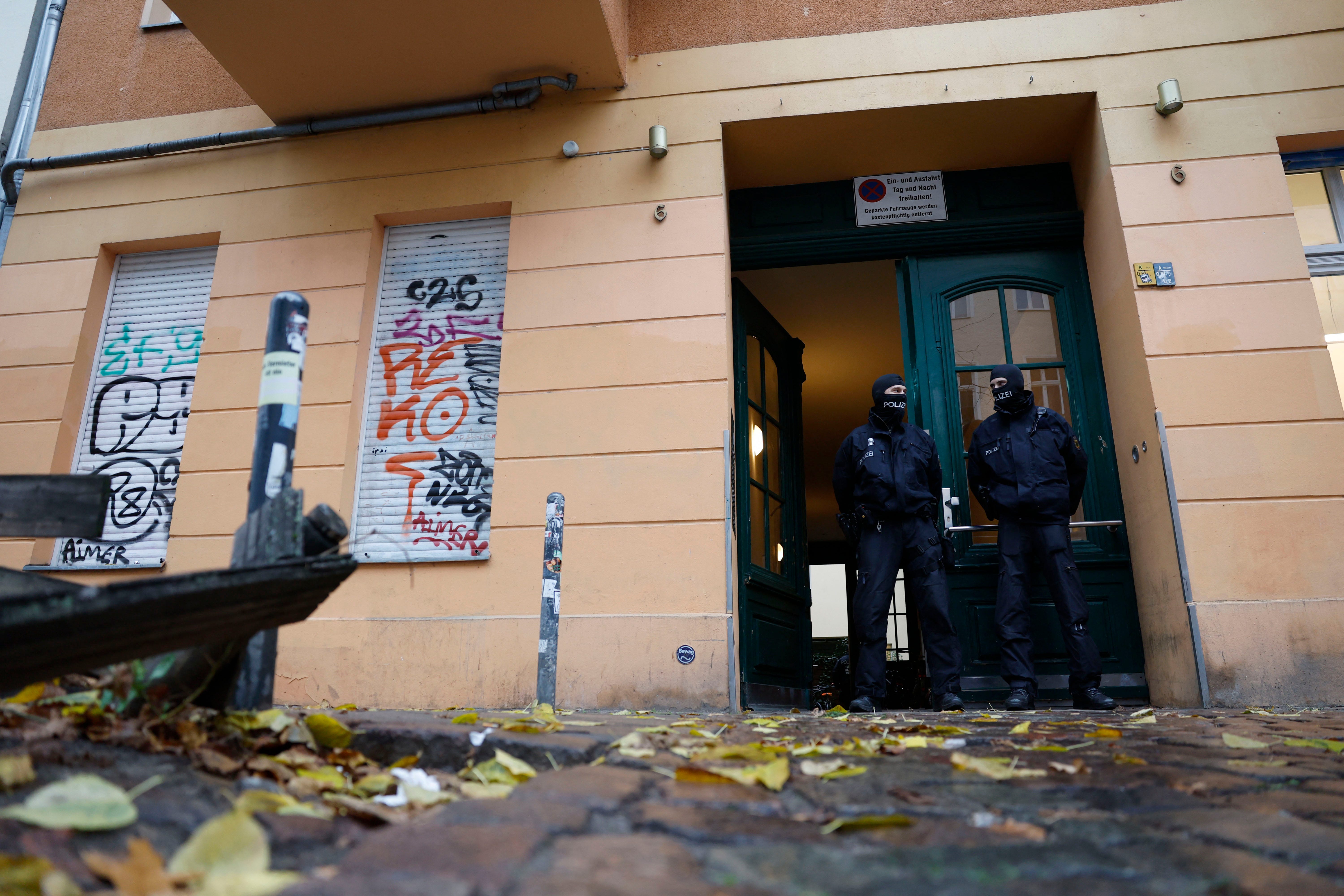
The ban was followed by direct police action. On November 23, authorities carried out raids linked to the enforcement of the bans on Hamas and Samidoun. German public broadcaster RBB reported that Abdulnasser’s apartment in the capital was among the locations searched.
He continued his political activism afterward, appearing in interviews as the former coordinator of Samidoun while remaining active with Masar Badil and at Palestinian events opposing the bans on Palestinian organizations and German policy toward Palestine. His refugee status remained a separate matter under dispute before German authorities and courts.
In 2023, his lawyer, Nadija Samour, said that losing his protection could leave Abdulnasser with a “Duldung,” a temporary suspension of deportation that carries fewer rights than recognized refugee status and can entail restrictions on travel, employment, and education depending on the final decision.
On September 2, 2026, the German website Site 36, which specializes in security and surveillance issues, reported that Germany’s Federal Office for Migration and Refugees had suffered a legal setback in proceedings related to its attempt to revoke Abdulnasser’s status based on statements concerning October 7. A separate proceeding was delayed over an issue involving possible judicial bias.
What Is the U.S. Connection?
On August 26, 2026, the U.S. Treasury Department announced a package of measures titled “Actions Against Violent Far-Left Terrorist Networks,” targeting the Masar Badil movement as well as Zaid Abdulnasser, who lives in Germany, and Rawaa Alsagheer, who lives in Brazil. The department said both were senior officials of the movement.
The U.S. State Department confirmed the decision in a separate statement, while the Treasury Department’s Office of Foreign Assets Control (OFAC) added Abdulnasser to the Specially Designated Nationals and Blocked Persons List and designated him as a “Specially Designated Global Terrorist.”
OFAC listed his year of birth, Palestinian identity, and residence in Germany. The Treasury Department explained its decision by citing what it described as links between Masar Badil, Samidoun, and the Popular Front for the Liberation of Palestine.
The Treasury Department accuses Masar Badil of serving as a front for Samidoun or operating under its control. In October 2024, Washington imposed sanctions on Samidoun, describing it as an entity owned, controlled, or directed by the Popular Front for the Liberation of Palestine.
The United States has designated the Popular Front for the Liberation of Palestine as a Foreign Terrorist Organization since 1997. The Treasury Department cited Abdulnasser’s position as a “leader or official” of Masar Badil as the basis for his designation.
The Treasury Department said Samidoun and Masar Badil overlap in their fundraising mechanisms, senior officials, and executive committee members, citing these links in its actions against the movement and its officials.
U.S. records place Abdulnasser under the counterterrorism sanctions program established by Executive Order 13224, based on his leadership role in Masar Badil and the organizational ties the department attributes to the movement. The measure was an administrative action by the Treasury Department and did not stem from a criminal conviction against him.
After the designation, Abdulnasser said he was frightened and shocked, adding that U.S. authorities had not contacted him before announcing the decision. He described the measure as part of a broader U.S. campaign against the Palestinian liberation movement and its supporters. He also said the designation could “financially cripple” him because of the central role of the dollar and U.S. banks in the global financial system.
His lawyer, Alexander Gorski, said the legal team was examining options to challenge the designation. He stressed that his client had not been criminally charged as part of the decision and characterized his activities as political work focused in particular on the issue of Palestinian detainees.
The sanctions block Abdulnasser’s property and interests in property located in the United States or in the possession or control of U.S. persons, while also restricting transactions involving U.S. persons or passing through the U.S. financial system.
The sanctions also extend to any entity owned by Abdulnasser, either individually or together with other people on the U.S. sanctions lists, at a combined ownership level of 50% or more. Such an entity is treated as blocked under what the Treasury Department calls the “50 Percent Rule.”
OFAC also warned that foreign financial institutions could face secondary sanctions for knowingly facilitating significant transactions on his behalf. This could prompt banks connected to the U.S. financial system or reliant on the dollar to subject his transactions to greater scrutiny or avoid dealing with him altogether for fear of U.S. action.
European measures remain governed by a separate legal framework. Asset freezes or travel bans within the European Union require a decision by EU institutions and official publication. As of September 4, 2026, no equivalent EU designation of Abdulnasser had appeared.
His status regarding protection, employment, and travel documents in Germany remains governed by German law and the outcome of his ongoing dispute with the Federal Office for Migration and Refugees. At the same time, the risk of U.S. secondary sanctions could lead European banks and financial services companies to restrict their dealings with him for fear of exposure to U.S. measures.
Sources
- Treasury Takes Action Against Violent Far-Left Terrorist Networks
- Counter Terrorism Designations; Issuance of Counter Terrorism General License; Issuance of Amended Russia-related General License
- Germany to strip Palestinian refugee’s status over his activism
- U.S. Designates Palestinian Refugee in Germany as “Terrorist”
- After Work, He Campaigns Against Israel [German]
- Repression of Pro-Palestinian Solidarity: Interview With Zaid Abdulnasser [German]
- Hatred of Israel: Between “Solidarity” and Terror [German]
- Ban on Hamas and Samidoun Organizations [German]
- Comprehensive Interview: “Our Movement Values the Islamic Resistance Forces and Their Defense of Our People” [Arabic]