Nuclear Power for Normalization: How the Saudi–U.S. Pact Turned Into a Political Showdown
The agreement, which runs for about 30 years, also allows Saudi Arabia to develop a nuclear industry rather than simply purchase a reactor.
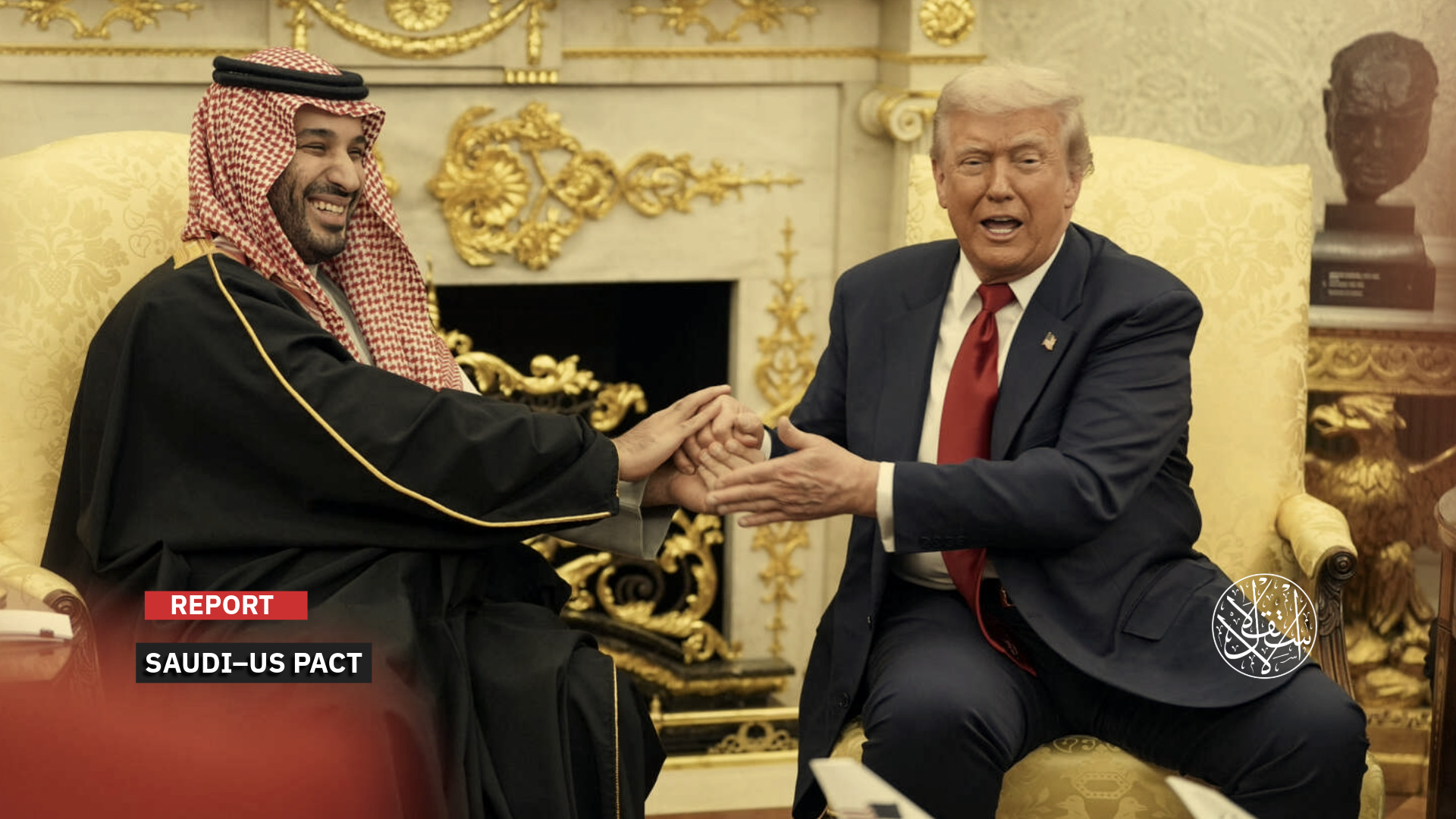
After Saudi Arabia and the United States signed a civilian nuclear agreement on July 22, 2026, giving Riyadh major gains, the deal quickly became a political battleground. It allows U.S. companies to export civilian nuclear technology to Saudi Arabia and gives the kingdom the right to enrich uranium on its own soil.
The agreement drew fierce criticism from Israeli Occupation newspapers and pro-”Israel” lobbying groups because it was not tied to normalization with “Israel” and because it grants Saudi Arabia the right to enrich nuclear fuel while easing international oversight, according to The Washington Post on July 22, 2026. Trump later returned to linking nuclear cooperation and uranium enrichment to normalization.
Riyadh was surprised when the final agreement with Saudi Arabia, which Trump sent to Congress on August 24, 2026, stated that “the pact will only go into effect if the kingdom normalizes relations with Israel,” according to a U.S. official quoted by Reuters on August 26, 2026.
The U.S. insistence on tying a civilian nuclear agreement with Saudi Arabia to normalization with the Israeli Occupation appears to be driven more by political and strategic considerations than by technical requirements related to nuclear energy.
It also underscores how Washington and “Tel Aviv” continue to view Saudi Arabia as the “big prize” that has yet to join the Abraham Accords.
Trump therefore appears to have used what Riyadh most urgently wants, U.S. nuclear technology and long-term nuclear cooperation, as leverage for what Washington wants in return: Saudi recognition of “Israel.”

A Deal Without Normalization, Then a Reversal
The original agreement signed by U.S. Energy Secretary Chris Wright and Saudi Energy Minister Prince Abdulaziz bin Salman in Washington on July 22, 2026, was a civilian nuclear cooperation agreement between the United States and Saudi Arabia, not a normalization deal.
Under the agreement, Saudi Arabia was granted the right to develop a fully integrated civilian nuclear program, opening the way for the kingdom to develop nuclear power, including building reactors to generate electricity and drawing on U.S. technology and expertise.
It also gave Saudi Arabia the option to enrich uranium domestically, unlike countries such as Egypt and the United Arab Emirates (UAE), which receive uranium enriched abroad.
That key provision alarmed the Israeli Occupation and the Jewish lobby in the United States, according to Reuters and The Associated Press. It differs from the 2009 U.S. agreement with the UAE, under which Abu Dhabi gave up uranium enrichment and reprocessing.
The agreement, which runs for about 30 years, also allows Saudi Arabia to develop a nuclear industry rather than simply purchase a reactor. It does not require Riyadh to sign the International Atomic Energy Agency (IAEA) Additional Protocol, which gives the agency broader powers to conduct surprise inspections and verify nuclear activities.
For Washington, the main return on the agreement was economic and strategic rather than political. U.S. companies stand to gain substantial business from Saudi Arabia’s nuclear market, particularly Westinghouse over the long term, while the deal would strengthen the strategic partnership with Riyadh and expand U.S. influence over Saudi Arabia’s nuclear program, reducing the likelihood that the kingdom would turn to Russia or other European countries.
The U.S. Energy Department made that rationale explicit, saying the agreement will lead to increased exports of U.S. nuclear technology, create American jobs, and enhance U.S. energy security and national security.
Under Section 123 of the U.S. Atomic Energy Act of 1954, Washington has the authority to negotiate civilian nuclear cooperation agreements with other countries.
The provision sets out nine nonproliferation criteria that partner countries must meet to ensure that U.S. nuclear technology is not used to develop nuclear weapons or that sensitive materials and technologies are not transferred to third parties.
U.S. law requires such agreements to be submitted to Congress for review before they can take effect.
Why the Israeli Outcry?
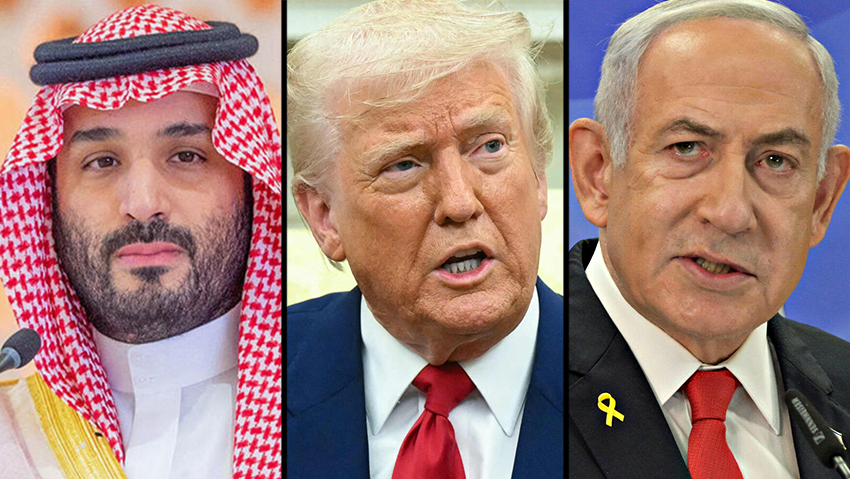
The Israeli and U.S. Jewish lobbying campaign against the agreement centered on claims that it could eventually allow Saudi Arabia to build a nuclear bomb because the kingdom would have the right to enrich uranium, as Iran does. The agreement, however, is officially intended for peaceful uses and does not give Saudi Arabia authorization to develop nuclear weapons.
Official Israeli statements and Hebrew reports said the problem was not with any provision explicitly referring to a “nuclear weapon,” but with the capabilities the agreement would allow Saudi Arabia to develop, including uranium mining, conversion, enrichment, reactor operation, and fuel reprocessing.
That would give Saudi Arabia important parts of the infrastructure that could potentially be used in a future military program if a political decision were made to pursue one.
For that reason, Israeli officials, nuclear nonproliferation experts, and members of Congress warned that the agreement could open the door to a nuclear arms race in the Middle East, particularly because Saudi Crown Prince Mohammed bin Salman (MBS) has previously said that Saudi Arabia would not hesitate to acquire nuclear weapons if Iran obtained one.
Israeli media reports compared the Saudi agreement with the U.S. nuclear deal with the UAE in 2009, noting that Abu Dhabi agreed to forgo uranium enrichment and nuclear fuel reprocessing, in what is known as the “gold standard” commitment.
The agreement did not include what is known as the “gold standard,” which prohibits uranium enrichment or the reprocessing of spent nuclear fuel. Nor did it include the IAEA Additional Protocol, which gives the agency expanded monitoring powers, including the ability to conduct surprise inspections.
The current Saudi agreement contains no such prohibition, meaning Washington offered Riyadh more flexible terms than those it secured from the UAE in its nuclear agreement.
What also angered Israeli officials and prompted them to mobilize the lobbying effort was the absence of any provision in the original agreement linking the nuclear deal and uranium enrichment to normalization with the Israeli Occupation.
The nuclear agreement announced on July 22, 2026, did not include a provision in the official U.S. announcement requiring Saudi Arabia to normalize relations with “Israel.” The nuclear deal therefore appeared to be a free gift, with no political price attached.
Pressure on Trump appears to have paid off, or he deliberately chose to reverse course after the original agreement was signed and link it to normalization. The new agreement, or deal, submitted to Congress indicated that it would not move forward unless Saudi Arabia joined the Abraham Accords and normalized relations with “Israel.”
This means there are effectively two overlapping deals:
The first is the agreement signed on July 22, 2026, which provides for civilian nuclear power, the construction of reactors using U.S. technology, and the possibility of uranium enrichment. This is essentially an “economic deal.”
The second is the agreement of August 24, 2026, which is more akin to a political deal, linking nuclear power and uranium enrichment to Saudi normalization with the Israeli Occupation.

Why Insist on Linking Nuclear Power to Normalization?
U.S. reports and assessments argue that Trump’s insistence on normalization in exchange for the nuclear deal would strengthen the political, security, and economic network his administration is seeking to build to counter Iran and expand U.S. influence in the region.
In other words, the goal is to reshape the Middle East by building a U.S.-Israeli-Gulf alliance.
The reports suggest that Trump has changed his approach to the Saudi nuclear deal, turning it from an “economic deal” that would financially benefit U.S. companies into a “strategic political bargain” that would serve “Israel” rather than U.S. interests.
But the central obstacle, according to these reports, is that Saudi Arabia has tied normalization to a clear path toward establishing a Palestinian state, while Netanyahu’s government rejects that condition, making the political deal more difficult than the nuclear agreement itself.
On August 28, 2026, retired Israeli Major General and Maariv military commentator Yisrael Ziv warned that Saudi Arabia would not back down from its conditions for normalization and that “Israel” would pay a “heavy price” for opposing the deal.
He said “Israel” could find itself facing a difficult regional equation in which nuclear cooperation between Saudi Arabia and the United States moves forward while Riyadh moves further away from normalization with “Israel.”
The reason, in his view, is that the continuation of Israeli wars without a political horizon has made the Saudi position toward “Israel” more hard-line.
In an article published by Maariv under the headline “Saudi Arabia Is No Longer Waiting for Israel: The Price Could Be Heavy,” Ziv said Riyadh now regards the establishment of a Palestinian state as a condition for normalization with “Israel,” while the U.S.-Saudi civilian nuclear agreement continues to move forward.
That could leave the Israeli Occupation outside an agreement with Riyadh while Saudi Arabia’s nuclear program advances, he argued, even as the deal currently appears to be “on hold” over Saudi Arabia’s official position on Trump’s normalization condition.
But Ziv noted that the Saudi response was clear: Riyadh remains committed to its refusal to establish relations with “Israel” without the creation of an independent Palestinian state along the 1967 borders, with occupied East Jerusalem as its capital, effectively rejecting the U.S. condition.
He said the Saudi position shows that Riyadh does not treat U.S. demands as binding orders, particularly because the normalization condition was not part of the original text of the agreement to be approved by Congress but was added later following Israeli objections.
Saudi Arabia views the condition as more of a “pressure tool” than a “fixed policy,” according to the Israeli analyst. Riyadh has refused to change its position and is instead demanding pressure on Netanyahu’s government while clearly defining the price “Israel” would pay for continuing the war without a political horizon.
Any agreement submitted to Congress enters into force within 90 days of Congress convening unless both the House and Senate reject it. This means it could move forward without a “normalization” provision, which is a political condition outside the economic agreement.
Some analysts argue that if the agreement goes through, it would be a strategic gain for the kingdom by launching a peaceful nuclear program and strengthening its partnership with Washington.
Others, however, contend that tying its implementation to normalization with “Israel,” along with concerns about its implications for regional balances, puts the deal before a set of complex challenges.
U.S. reports suggest that Trump’s insistence on linking approval of the nuclear agreement to normalization stems from his desire to achieve longstanding U.S. and Israeli objectives that had been put on hold since 2023.
He also wants to turn the nuclear agreement into leverage for securing normalization, viewing Saudi Arabia as the “big prize” that has yet to join the Abraham Accords, according to U.S. media reports.
Before the Israeli war on Gaza in October 2023, Washington and “Tel Aviv” had been working to push Saudi Arabia toward normalization. The war halted that process, and Riyadh has since insisted that there must be a clear and binding path toward establishing a Palestinian state before normalization.
The Israeli Occupation’s current government, meanwhile, refuses to make such a commitment. Trump is attempting to use the nuclear agreement to reopen the normalization deal from another angle, seeing it as a major political achievement for his administration if it succeeds.
“Israel’s” lobby and pro-”Israel” figures within the Trump administration therefore view the nuclear agreement not as a standalone energy deal but as part of a broader regional bargain involving Saudi Arabia, “Israel,” and the United States, as well as a step toward strengthening the U.S. camp against Iran.
On July 22, 2026, the United States and Saudi Arabia announced the signing of a civilian nuclear cooperation agreement lasting for decades. The official U.S.-Saudi announcement did not include normalization with “Israel” as a condition.
But the following day, Trump said the agreement was fully contingent on Saudi Arabia joining the Abraham Accords. The Washington Post described this as a new condition Trump added after the agreement was signed, raising doubts about the deal’s future.
Then, on August 25, 2026, the agreement was submitted to Congress with the condition still in place, indicating that Trump had not abandoned the use of normalization as a negotiating tool.

The Deal Hangs in the Balance
A report published by War on the Rocks on August 5, 2026, suggests that Trump’s demand for normalization with “Israel” could derail the Saudi nuclear agreement. It argues that Trump may have imposed the condition to avoid a confrontation with pro-”Israel” members of Congress over the original agreement.
But by making normalization with “Israel” a condition that would be difficult for Saudi Arabia to accept, the report says, Trump turned the nuclear agreement from a strategic deal into a domestic U.S. political bargaining chip.
Washington, the report argues, may be overlooking a basic reality if it believes it can force Riyadh to normalize by withholding strategic cooperation: Saudi Arabia now has other options, particularly as China and Russia are prepared to offer nuclear and technological cooperation.
Trump’s attempt to use the nuclear agreement to secure a political gain on normalization could therefore backfire, the site argues, resulting in neither Saudi normalization nor a U.S. nuclear agreement while pushing Riyadh to diversify its strategic partnerships further beyond Washington.
The report’s author, Dr. H.A. Hellyer, an expert on politics, geopolitics, and security, argues that Trump’s condition on the original agreement reflects either improvisation in decision-making within the Trump administration or perhaps deliberate political calculations designed to serve pro-”Israel” figures in his administration.
He says Trump may not have imposed the normalization condition solely as a genuine negotiating demand but may have used it as a political exit from the nuclear agreement and a way to avoid a difficult battle in Congress.
But Hellyer stresses that it would be difficult for Saudi Arabia to accept normalization now and that Riyadh is likely to reject it because it has come to regard the issue as a red line under current circumstances, particularly after “Israel’s” war on Gaza. Normalization without a clear and credible path toward establishing a Palestinian state would carry a political and popular cost for Riyadh across the Arab and Muslim worlds, while offering only limited strategic gains.
That could allow the agreement to collapse without forcing the Trump administration into a lengthy and embarrassing battle in Congress to kill it. Riyadh would instead appear to be the party that rejected the agreement because of an additional condition.
If Saudi Arabia were to accept normalization, which the report does not consider likely, it would become politically harder for many members of Congress to oppose the agreement because it would be tied to an expansion of Arab normalization with “Israel.”
Hellyer also points out that the United States has a genuine strategic interest in nuclear cooperation with Saudi Arabia, regardless of normalization.
Riyadh needs to develop its energy capabilities, while Washington wants to ensure that Saudi Arabia’s nuclear program develops under U.S. technology and oversight rather than having the kingdom turn to China or Russia for assistance.
The author argues that Washington also needs Saudi cooperation in energy, advanced manufacturing, semiconductors, artificial intelligence, and critical minerals.
Saudi Arabia’s Options
The collapse of the U.S. agreement would not mean Saudi Arabia would abandon its civilian nuclear program. Instead, according to the War on the Rocks analysis, Riyadh could turn to other parties over which Washington would have no control, including partners whose involvement in a Saudi nuclear program could come with fewer restrictions than those imposed under U.S. terms.
If the agreement stalls during congressional review or becomes impossible to implement, Riyadh has alternatives among countries and companies that have expressed interest in participating in its nuclear program.
Reports have said that China National Nuclear Corporation, a state-owned company, offered in 2023 to build a nuclear power plant in Saudi Arabia.
Russia’s state-owned nuclear company Rosatom, which built a nuclear power plant in Egypt, has also signed preliminary cooperation agreements with Riyadh.
South Korea, which built reactors in the UAE, is considered another leading potential competitor, along with France.
The choice of partner would likely depend on the technology offered, financing terms, and geopolitical alignment, as well as restrictions governing nuclear fuel management, enrichment, and reprocessing.
For Washington, the outcome depends on Saudi Arabia’s position on normalization. If Riyadh continues to reject normalization and refuses to build a uranium enrichment facility inside Saudi Arabia, or if disagreements emerge over which entity would operate the facility, Congress could reject the agreement.
If Trump were to persuade Congress to approve the deal while temporarily setting aside the normalization condition, in exchange for restrictions such as limiting operation of the facility to U.S. personnel under closed technical arrangements known as a “black box,” which would prevent Saudi employees from accessing details of the technology being used, the kingdom might agree in order to avoid a confrontation with its U.S. ally.
With the agreement now before Congress, the issue moves to the U.S. side of the negotiating table, where lawmakers must decide whether to tie the deal to Saudi Arabia joining the Abraham Accords and whether to allow uranium enrichment inside the kingdom.
Under U.S. procedures governing nuclear cooperation agreements, Congress has 90 days to review the deal. During that period, lawmakers can object under the applicable legal mechanism, and legislation could be introduced requiring normalization and potentially obstructing the agreement.
But Thomas Countryman, chairman of the Arms Control Association, told the U.S.-funded Alhurra that the Trump administration and the Saudi government both have a financial interest in preventing a normalization condition from being included.
Sources
- Why Trump’s Israel Normalization Demand May Kill the Saudi Nuclear Deal
- U.S. signs nuclear deal with Saudi Arabia that gives it path to enriching fuel
- Trump sends Saudi nuclear deal to Congress but says Riyadh must recognize Israel
- Israeli Major General and Military Commentator Yisrael Ziv: Saudi Arabia Is No Longer Waiting for Israel, and the Price Could Be Heavy [Arabic]