Was an Undisclosed Military Deal Signed During the Chinese President’s Visit to Egypt?
You can’t put all your eggs in one basket and rely solely on the United States.
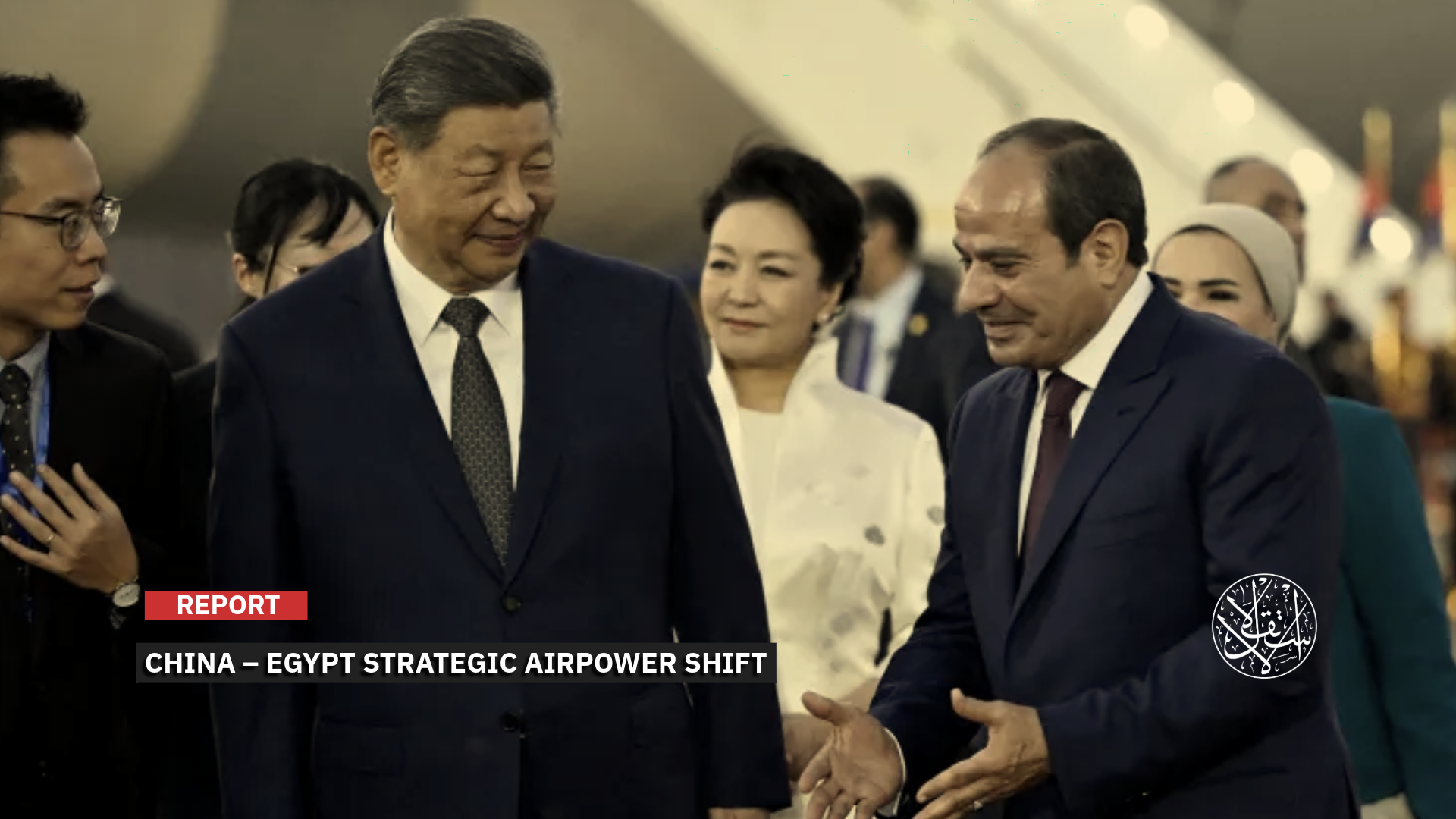
Coinciding with Chinese President Xi Jinping’s first visit to Egypt in 10 years, in early September 2026, there were indications that military relations between Cairo and Beijing were entering a new phase, moving beyond traditional forms of cooperation.
While the two countries spoke of deepening their economic ties, a Chinese aerial refueling aircraft was simultaneously seen refueling an Egyptian fighter jet during joint military exercises.
Although the economic dimension dominated the visit, amid Beijing’s efforts to expand its investments in Egypt and Cairo’s push to attract Chinese projects geared toward exports, another aspect of bilateral relations received comparatively less media attention.
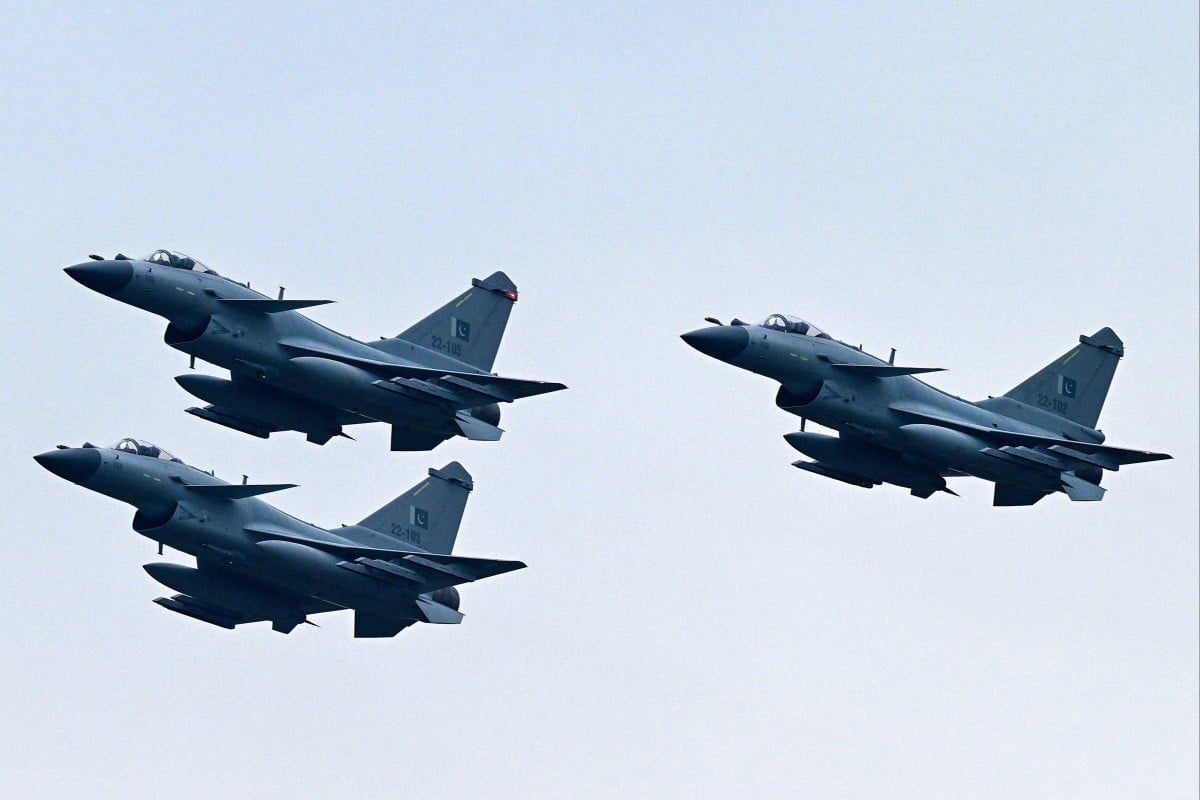
That aspect is the growing military cooperation between Egypt and China, amid reports that Cairo is interested in acquiring Chinese J-10CE fighter jets, as well as early-warning and aerial refueling aircraft.
This possibility raises the question of a potential dilemma for Cairo in its relations with its ally Washington should Egypt move toward purchasing advanced Chinese weapons, particularly given its reliance on U.S. military aid and its strategic relationship with the United States.
Washington has previously exerted pressure on Cairo over its plans to purchase advanced Russian weapons, including the S-400 air-defense system and Su-35 fighter jets. U.S. officials also warned that sanctions could potentially be imposed if Egypt proceeded with some of these deals.

A Significant Gap
It was noteworthy that the official statements issued regarding Xi’s visit made no mention of arms deals or new military coordination, focusing instead primarily on strengthening the partnership between the two countries and expanding economic and development cooperation.
The spokesperson for the Egyptian presidency said the visit was aimed at strengthening bilateral relations across various political, economic, and development fields, following up on the implementation of the “Comprehensive Strategic Partnership” agreement concluded by the two countries in 2014, as well as consulting on regional and international issues of common interest.
Egypt’s state-owned Al-Ahram newspaper also published two articles by Egyptian head of the regime Abdel Fattah el-Sisi and his Chinese counterpart, addressing the history of relations between the two countries and their shared views on sovereignty, development, and civilizational heritage, without focusing on military cooperation.
Nevertheless, the visit took place amid Israeli scrutiny and U.S. interest in the growing rapprochement between Cairo and Beijing, particularly as it followed the second edition of the joint Egyptian-Chinese air exercises, “Eagles of Civilization 2026.”
The exercises featured a notable development, with a Chinese YY-20A aerial refueling aircraft refueling an Egyptian Rafale fighter jet in midair, an operation that demonstrated an advanced level of interoperability between Chinese military equipment and Western-made hardware.
This coincided with Western reports indicating Egyptian interest in advanced Chinese military equipment, including J-10CE fighter jets as well as aerial refueling and early-warning aircraft.
The Israeli concern over the visit stems from the deepening military cooperation and joint air exercises involving Chinese and Egyptian fighter jets; technological cooperation, including Huawei’s offer to supply Egypt with thousands of AI chips; and major investments worth more than $10 billion, along with projects in the Suez Canal.
This is in addition to the coordination of political positions on Gaza, Iran, Sudan, and Libya, as well as “Tel Aviv’s” concerns over the growing strength of Egypt’s air force and Beijing’s expanding influence in a region of vital importance to “Israel’s” security.
At the same time, U.S. and Western concerns are growing over Egypt’s reduced reliance on Washington and its pursuit of what Cairo-based newspapers describe as testing the “strategic balance” in its foreign relations.
Experts expect the visit to include the conclusion of new agreements in investment, industry, energy, and technology, alongside stronger political and security coordination.
There is also a significant imbalance in the trade relationship. Egyptian exports to China rose to around $840.5 million in the first half of 2026, but remained negligible compared with imports from China, which reached $10.4 billion during the same period, according to Asharq Bloomberg in early August 2026.
Chinese President Xi Jinping’s visit to Egypt also carries political significance that extends beyond the economic dimension.
It comes amid rapidly changing regional and international economic and security dynamics, intensifying competition between Beijing and Washington, and the reshaping of the Middle East.
Beijing is seeking a greater role in the region and Africa, while Egypt could serve as an important link between China and the African continent.
In its report on the visit, Egypt’s State Information Service, which operates under the presidency, said that relations between the two countries were “reaching a historic milestone that reflects the depth of their strategic partnership,” just days after the launch of a joint military air exercise between them.
Chinese companies operating in Egypt are targeting projects worth $1.15 billion in synthetic fibers and tires, a $2 billion aluminum complex, a textile city in Port Said worth around $2 billion, and a $550 million tire plant in Alexandria’s Al-Amreya district. These are sectors targeted by Western tariff measures.
China is expanding its commercial presence in Egypt by establishing large-scale production lines to support manufacturing in sectors including renewable energy, aviation, aerospace, and infrastructure, amid significant opportunities for cooperation between the two countries in artificial intelligence and renewable energy.
Chinese investments in the Suez Canal Economic Zone have reached approximately $11.6 billion over the past three and a half years, representing nearly 50% of total investments in the zone, where China has established around 200 companies.
Egypt, however, is not China’s only investment destination in Africa. Beijing’s investments in Morocco have exceeded $6 billion, while the country’s electric-vehicle ecosystem has surpassed $10 billion.
While the talks focused on expanding the economic partnership between the two countries, the visit also sparked widespread anger and criticism among Egyptians over the traffic measures accompanying it.
These included the prolonged closure of a number of roads and bridges in different areas, leaving thousands of citizens stranded in public transportation in high temperatures while waiting for the Chinese president’s motorcade to pass.
Social media users also mocked what they described as the “temporary beautification” of streets, with painting, maintenance, and bridge-repair work carried out in conjunction with official visits.
They argued that such efforts do not have a comparable impact on citizens’ daily lives under normal circumstances.
A Military Deal
In August 2026, Chinese and Arab defense media outlets revived a scenario suggesting that Egypt could acquire 40 J-10CE fighter jets.
However, this information did not develop into an official announcement of a contract, and neither Cairo nor Beijing specified the value of any deal, a final number of aircraft, or a delivery schedule.
At the same time, reports emerged of a larger scenario involving as many as 64 fighter jets, 40 J-10CEs and 24 J-35s. This figure, too, remains within the realm of unconfirmed reports, with no official Egyptian or Chinese announcement confirming a deal of this size.
This was reported by the Arab Defense website on August 20, 2026, and earlier by the Chinese website NetEase, citing Air Data News on August 11, 2026, in reports highlighting the Egyptian military’s interest in Chinese fighter jets.
The reports spoke of the “possibility” that Cairo could pursue a major deal involving 64 fighter jets, comprising 40 J-10CEs and 24 J-35s, should contacts and negotiations develop into a final agreement.
The J-35 is a Chinese fifth-generation stealth fighter, fundamentally different from the J-10CE. If Egypt were to acquire the J-35 in the future, it would represent a qualitative shift in its air capabilities rather than merely adding another fighter to its fleet.
The aircraft played a major role in India’s defeat in the most recent war with Pakistan in May 2025, in favor of Islamabad.
A report by the U.S. Congressional Research Service on June 12, 2025, had previously documented Cairo’s continued interest in Chinese J-10 and J-35 fighter jets, at a time when the Egyptian Air Force relies on a mix of American, Russian, and French fighters, most notably the F-16, MiG-29, and Rafale.
Chinese analyst Nader Rong Huan, a member of the Chinese Association for Middle East Studies, predicted that cooperation could extend to the “possibility of reaching a deal to purchase Chinese fighter jets for the Egyptian side.”
Regarding the possibility of U.S. opposition to a military deal, Huan told Anadolu Agency in early September 2026 that Cairo has the “ability to diversify its relations amid the rivalry between Washington and Beijing,” assessing that Egypt is pursuing a strategy of multiple international partnerships.
Although China’s J-10C is a fourth-generation fighter and is not considered a fifth-generation aircraft like the U.S. F-35, it can be highly dangerous in aerial combat, particularly because it carries the long-range PL-15 missile and is equipped with an AESA radar, according to defense reports.
As a result, it poses a genuine threat to non-stealth fighters through China’s advanced long-range air-to-air missiles. Pakistani reports said these missiles were used to shoot down Indian MiG aircraft while they were inside Indian airspace, with the advanced weapons helping determine the outcome of the most recent war.
On August 22, 2026, the Egyptian Armed Forces announced the launch of the Egyptian-Chinese joint air exercise “Eagles of Civilization 2026,” involving multirole fighter aircraft of various types and taking place over several days at a number of Egyptian air bases.
The Egyptian military said the initial phases included theoretical and practical lectures aimed at standardizing combat concepts and procedures, along with joint sorties and training in the planning and management of joint air operations, with the goal of exchanging expertise and enhancing the operational capabilities and skills of the participating forces.
China’s Ministry of National Defense spokesperson Chen Xi said on August 14 that the training focused on air-combat tactics, air-superiority operations, combat search and rescue, and force employment.
Analysts point to the types of Chinese aircraft participating as the most significant feature of the 2026 edition, according to military analysts. J-16 fighters arrived in Egypt to participate in the exercise and were shown in footage training alongside Egyptian fighters, including French Rafales and Russian MiG-29s.
They were also accompanied by the YY-20A aerial refueling aircraft, a platform that Cairo is reportedly seeking to acquire.
The first edition of “Eagles of Civilization” was held from April 17 to May 4, 2025. During that exercise, China deployed J-10C fighters, the KJ-500 airborne early-warning and control aircraft, and the YY-20 aerial refueling aircraft. The drills included air combat, air-defense operations, battlefield search and rescue, mixed formations, and aerial refueling.
Military analysts believe that Egypt’s hosting of Chinese systems at its air bases during the second exercise with China in August 2026, and the training of its pilots on those systems, could implicitly indicate that Egypt is using the exercises to prepare the ground for potential purchases of new aircraft from China.
Training during the “Eagles of Civilization” exercises is particularly significant because it allows Cairo to evaluate equipment and weapons systems under realistic operational conditions, rather than merely observing them.
French-Chinese Competition
At the same time as China seeks to strengthen its presence in the Egyptian arms market and promote its fighter jets to Cairo, the French newspaper La Tribune reported in early September 2026 that Egypt is preparing to expand its fleet of French Rafale fighters by ordering 24 additional aircraft, which would bring the total number of French fighters in Egypt’s inventory to 78.
If completed, the deal would be Egypt’s third order for Rafale fighters and would confirm Cairo’s continued reliance on the French fighter amid growing competition from the United States, China, and other major combat-aircraft exporters.
Egypt was the Rafale’s first foreign customer. In 2015, Cairo signed its first contract to purchase 24 fighters, before expanding its fleet in 2021 with a new contract for 30 additional aircraft, reportedly worth around €3.95 billion.
The renewed Egyptian interest in French fighters comes as Cairo faces the task of modernizing part of its combat fleet, particularly its F-16 fleet, which comprises around 200 aircraft, with the oldest deliveries dating back to the 1980s.
Replacing aging fighters represents an important strategic opportunity for aerospace and defense companies at a time when China is likewise seeking to strengthen its position in the Egyptian arms market and promote its fighters to Cairo, according to the French newspaper.
La Tribune says that China launched a “disinformation campaign” aimed at convincing Egypt that the Chinese J-16 was superior to the French Rafale following the Egyptian-Chinese “Eagles of Civilization 2026” exercises held in August 2026. However, if reports of Cairo’s purchase of a third batch of Rafale fighters are accurate, this apparently did not affect the Egyptian position.
Drone Cooperation Is More Advanced
Cooperation between Cairo and Beijing in the field of unmanned aerial vehicles is more advanced than their cooperation on fighter jets. The Arab Organization for Industrialization has signed memorandums of understanding with Chinese companies to localize defense technologies, while cooperation between Cairo and Beijing is moving toward combining training, systems testing, technology transfer, and local manufacturing.

Unlike the Chinese fighter deal, which remains only a possibility, defense-industrial cooperation between Cairo and Beijing has made significant progress, particularly in the field of unmanned aerial vehicles.
In December 2025, the Arab Organization for Industrialization (AOI) signed a memorandum of understanding with the Chinese company “Shadow Wings,” aimed at localizing the technologies needed to manufacture advanced defense systems and making use of the capabilities of the AOI’s Aircraft Factory.
The AOI said the agreement marked the beginning of further cooperation in advanced defense industries between Egypt and China, adding that it sought to transform its factories into a hub for partnerships and the exchange of expertise with Chinese companies.
At the EDEX 2025 exhibition, the Arab Organization for Industrialization also signed a memorandum of understanding with Chinese company NORINCO to localize the manufacture of defense systems, facilitate technology transfer, and deepen local production.
According to Egyptian newspapers, the head of the AOI said the agreement was intended to capitalize on the manufacturing capabilities of the Aircraft Factory and further develop cooperation with the Chinese company.
This indicates that Egypt is not merely seeking to purchase ready-made systems; rather, according to official statements, it is seeking to localize technology and deepen domestic manufacturing.
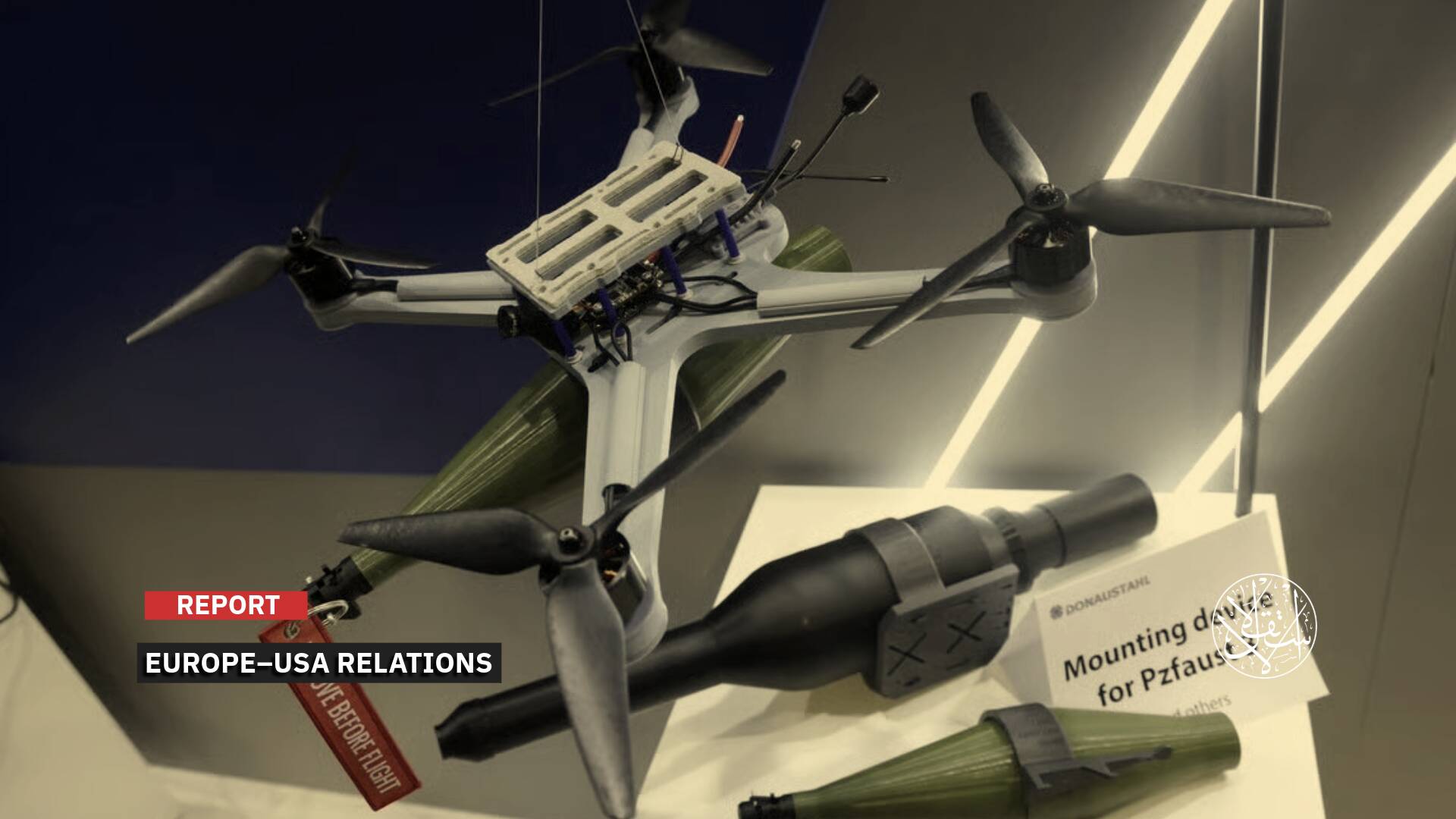
A clear example of this has been cooperation in the field of unmanned aerial vehicles, with defense reports describing Egyptian-Chinese cooperation in the production of combat drones inside Egypt, potentially developing into the local manufacture of some of these systems or their components.
This has been encouraged by the changing nature of modern warfare, which has made drones an important weapon on the battlefield, as demonstrated particularly by the wars involving Lebanon and Iran, whether for reconnaissance, targeting, strikes, surveillance, or electronic warfare.
The development of Egyptian-Chinese cooperation in the field of drones can be divided into three main phases:
First: Between 2011 and 2012, when cooperation began in technology transfer and the local production of ASN-209 reconnaissance and surveillance drones.
Second: Between 2017 and 2022, when Egypt expanded its reliance on armed Chinese drones, particularly the Wing Loong, amid reports that Cairo was exploring the acquisition of newer variants.
Third, and the most significant: Between 2025 and 2026, when cooperation moved toward joint manufacturing and technology localization. The most prominent example is Egypt’s Hamza-2 program with NORINCO, alongside Egypt’s drive to build a domestic drone industry capable of meeting military requirements and potentially supporting future exports.
On December 1, 2025, during the EDEX 2025 Egyptian defense exhibition, the Aircraft Factory of the Arab Organization for Industrialization signed a memorandum of understanding with China’s NORINCO in the fields of defense industries and technology localization.
The agreement covered the Hamza-2 program, an armed drone associated with the ASN-209 design, with cooperation encompassing manufacturing and production inside Egypt, increasing the local component, and technology transfer. Defense sources said the system was intended for reconnaissance and strike missions.
More importantly, the cooperation is no longer limited to the purchase of Chinese systems. Instead, it is aimed at establishing an Egyptian production capability in partnership with a Chinese company, a qualitative development for Egypt’s unmanned aircraft industry.
Avoiding Angering the United States
It was notable that Egypt was keen, at the official level, to portray this as part of its policy of strategic balance and not as a shift away from its traditional alliance with the United States.
This was evident in an article published about head of the regime Abdel Fattah el-Sisi before the visit, in which he said that Egypt pursues a policy of “strategic balance” amid growing global competition. He explained this by saying, “Egypt has adhered to a policy of strategic equilibrium as the guiding principle of Egyptian foreign policy.”
Some Egyptian newspaper coverage of the event was also more cautious. For example, Youm7, owned by United Media Services, described the expansion of the partnership with Beijing as “part of Egypt’s policy of diversifying its partnerships, rather than a shift away from the United States and its allies.”
This coverage suggests that Cairo does not appear to be seeking to turn its rapidly expanding rapprochement with Beijing into an explicit alignment against Washington.
Rather, it is using the Chinese partnership as a tool to expand its room for maneuver and diversify its sources of investment, technology, and arms.
When el-Sisi said that “Taiwan is part of the Chinese nation” as a gesture toward the Chinese president, some Egyptians believed this would anger U.S. President Donald Trump, who supports Taiwan.
Egypt’s official media outlets, however, were keen to clarify that the statement was not intended to signal a confrontation with Washington.
This messaging largely aligns with Egypt’s official position. The State Information Service, which is affiliated with the presidency, has stressed that Egyptian foreign policy is based on “strategic balance and diversifying international partnerships.”
This caution is particularly significant given the continuing weight of the United States in Egypt’s national security architecture.
The military relationship between the two countries dates back decades, and Egypt receives approximately $1.3 billion annually in U.S. military assistance.
A significant portion of Egypt’s weaponry and military infrastructure also relies on U.S. equipment, training, and security cooperation with Washington.
A report published in early September 2026 by the Washington Institute for Near East Policy, which is associated with the “pro-Israel” lobby, noted that the growth of Egyptian-Chinese relations, particularly in the economic and technological spheres, and potentially in defense, could, in some areas, come at the expense of further cooperation with the United States.
The report, written by Shivane Anand, a researcher with the Diane and Guilford Glazer Foundation Program at the Washington Institute, posed a question to U.S. policymakers about how to respond to this Chinese expansion in Egypt.
It noted that China has shown a greater willingness to provide Cairo with investments, construction projects, and advanced technologies, as well as military platforms on terms that are less restrictive than those offered by its American competitors.
“As long as the United States is unwilling or unable to pressure Cairo not to deepen its relations with Beijing or provide practical alternatives to Chinese offers, Egypt is likely to continue accepting them,” the report said.
Reuters, in a September 2, 2026 report, described Egypt as a major recipient of U.S. military aid and linked its rapprochement with China to a strategy of “strategic balance” and diversification of relations with major powers.
Egyptian assessments suggest that the message Cairo is trying to convey to Washington is closer to a clarification that “rapprochement with China does not mean moving away from America.”
Egypt wants to obtain investment, technology, manufacturing capabilities, and perhaps greater military options from Beijing, but at the same time, it does not appear prepared to turn this partnership into a confrontation with Washington.
This explains the cautious language used in Egyptian political and media discourse surrounding the Chinese president’s visit. Rather than presenting the visit as a shift in Cairo’s alignments, it was portrayed as an expansion of Egypt’s options within a multipolar international system.
Nevertheless, The New York Times, in a September 2, 2026 report, described the visit as Xi Jinping challenging U.S. influence in the Middle East by deepening ties with a longtime U.S. security partner and highlighting a greater role for Beijing in a region shaken by war.
The newspaper quoted Ding Long, a professor at the Institute of Middle East Studies at Shanghai International Studies University, who justified Egypt’s rapprochement with Beijing by saying, “When U.S. allies question Washington’s credibility as a partner after the Iran war, it makes sense that countries like Egypt would want to strengthen relations with China.”
He emphasized, “You can’t put all your eggs in one basket and rely solely on the United States. You need diversification, and within that diversification, China is a very important partner.”