Student Uprising: How the Cockroach People's Party Ignited a Political Confrontation Against the Modi Government
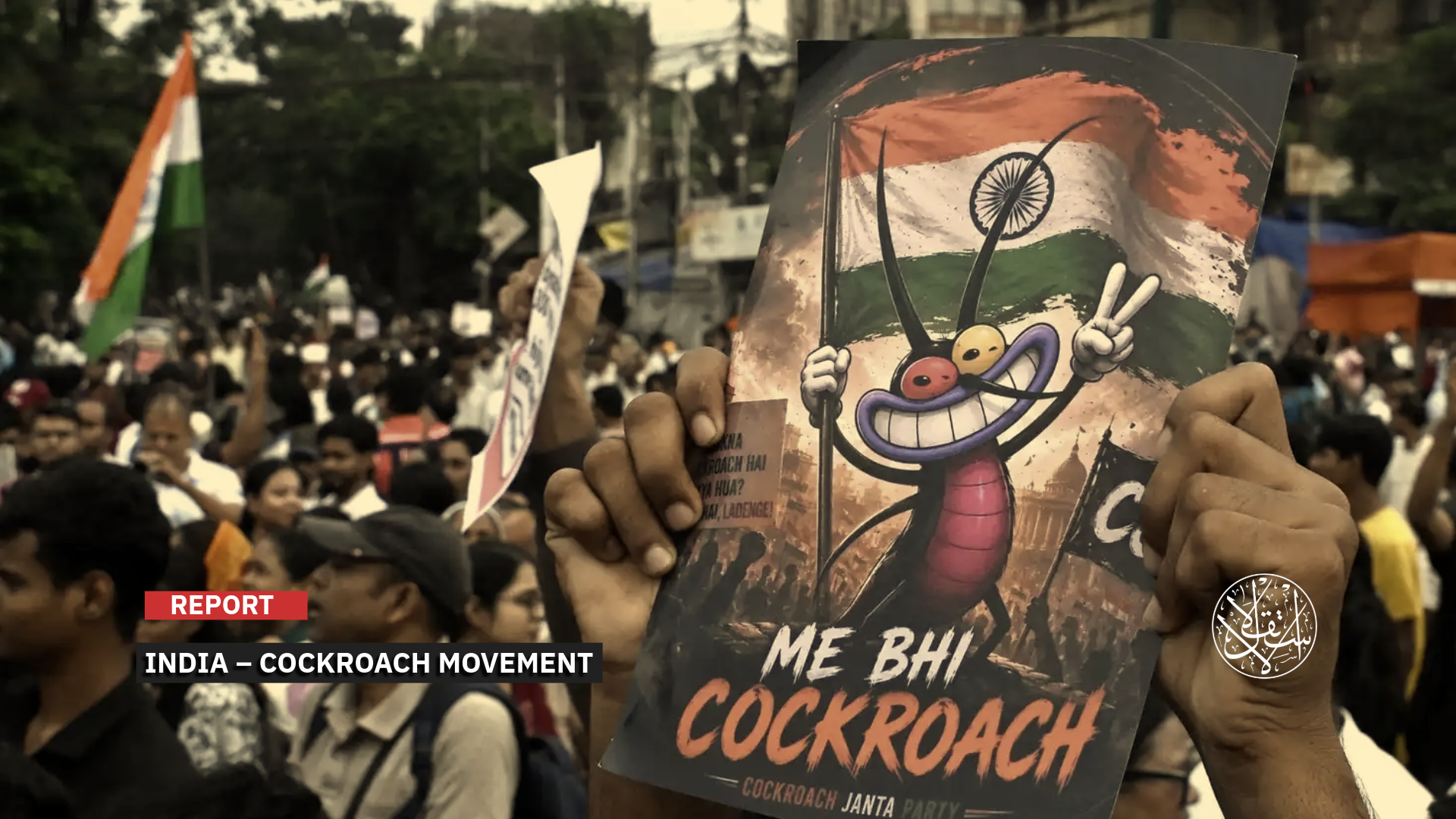
“India's Gen Z 'Cockroach People's Party' started as satire but is serious about change.”
A remark by the Chief Justice of India, likening unemployed youth to cockroaches, sparked widespread outrage and ignited one of the country's most controversial protests.
The insult was transformed into a symbol of protest against unemployment, corruption, and the lack of prospects facing an entire generation of young Indians.
Within just a few days, the so-called Cockroach People's Party garnered over 15 million followers on Instagram—a digital phenomenon that surpassed the social media presence of the ruling Bharatiya Janata Party (BJP).
This surge reflected the deep-seated frustration among young people who feel abandoned by India's economic and political systems, despite years of promises regarding growth and prosperity.
Participants in the movement assert that they represent a generation that studied hard and played by the rules, only to confront an economy incapable of generating jobs and an education system plagued by corruption and exam leaks.
Public discontent intensified following a series of scandals involving national examinations—most notably the 2024 NEET medical entrance exam scandal, which shook the nation after questions were leaked from a test taken by more than two million students.
Investigations revealed that corrupt networks had sold copies of the exam questions for millions of rupees; police arrested several individuals in Bihar state, accusing them of collecting huge sums from students in exchange for leaking the questions in advance.
As pressure mounted, Prime Minister Narendra Modi publicly addressed the issue for the first time on July 23, announcing the establishment of fast-track courts to handle cases involving exam paper leaks—a move prompted by the Indian judicial system's notorious reputation for slow proceedings.
Observers believe the protests have given the opposition a rare opportunity to attack Modi, who has maintained a broad youth support base over the years—despite his party’s declining performance in the 2024 general election, when it lost its absolute parliamentary majority for the first time in a decade.
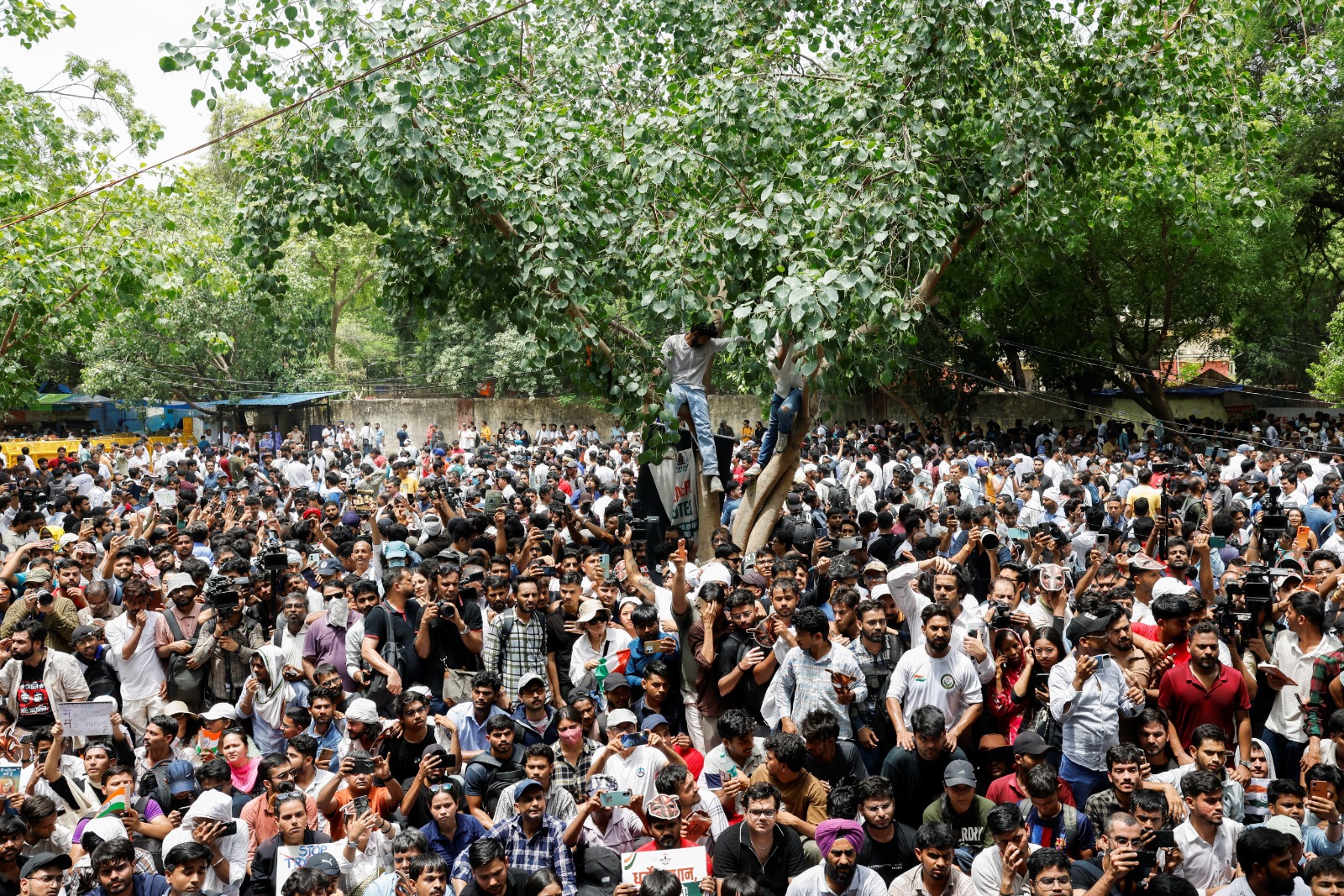
Social Discontent
Protests in India began in May 2026 as a satirical online campaign before moving to the streets in June 2026 through small gatherings in several cities.
The movement's rapid expansion reflects widespread youth discontent and mirrors a trend seen elsewhere in South Asia, where young people have spearheaded anti-government protest movements in recent years.
Tens of thousands of Gen Z protesters recently took to the streets of the Indian capital, Delhi, demanding the resignation of Education Minister Dharmendra Pradhan, in the largest protests Prime Minister Narendra Modi has faced since his re-election to a third term in 2024.
For weeks, the government had ignored the protesters, then vilified them, with the education minister calling protest leaders 'the B team of terrorists', according to the Indian daily The Hindu.
Presenters of Modi-loyal media outlets suggested the protest leaders were paid by India's enemy and neighbor, Pakistan.
Despite the satirical tone accompanying the formation of the Cockroach People's Party—launched by an Indian student last May—it quickly became a rallying point for young people frustrated with the situation in India, where unemployment rates remain high.
The movement’s name, Cockroach People's Party (Cockroach Janata Party), stems from remarks made on May 16 by Indian Chief Justice Surya Kant, who likened unemployed youths turning to journalism and youth movements to cockroaches and parasites.
The movement's founders adopted the word 'cockroaches' from the Chief Justice's statement and combined it with 'Janata'—a word found in the name of the ruling Bharatiya Janata Party (BJP), led by Prime Minister Narendra Modi—to create the new name: Cockroach People's Party (Cockroach Janata Party).
The Chief Justice later clarified that he had been referring specifically to youths holding forged degrees, rather than Indian youth in general.
As the movement transitioned from the online realm to the real world, many participating youths chose to wear attire reflecting the movement's name, such as masks depicting cockroaches or sanitation worker uniforms.
The Cockroach People's Party is led by Abhijeet Dipke, a 30-year-old political communications strategist and alumnus of Boston University.
On July 9, the movement announced a march to Parliament scheduled for July 20; the call drew a response from thousands who traveled to the capital, Delhi.
In other Indian cities, such as Bengaluru and Goa, hundreds organized candlelight vigils in solidarity with the Cockroach People's Party's march in the capital.
The protests gained significant momentum after prominent activist Sonam Wangchuk joined the cause; he had been on a hunger strike since June 28 before police hospitalized him over the weekend.
On July 18, 59-year-old Wangchuk was hospitalized; he announced he would continue his hunger strike, a move that sparked outrage among supporters of the Cockroach People's Party movement.
Commenting on the treatment Wangchuk received, Dipke called on Prime Minister Narendra Modi to resign.
Hunger strikes are among India's oldest forms of protest; Mahatma Gandhi undertook at least 17 of them, most focusing on issues within Indian society.
The country has witnessed other notable instances, such as Potti Sreeramulu’s 1952 strike—which led to the creation of the state of Andhra Pradesh—and Irom Sharmila’s 16-year-long strike protesting the Armed Forces Special Powers Act in Manipur.
Another prominent example of the impact of hunger strikes on Indian politics is Anna Hazare’s 2011 anti-corruption protest; this movement contributed to the subsequent rise of the Aam Aadmi Party and fostered the political climate that brought the BJP to power in 2014.
For his part, political analyst Ibrahim Khatib tells Al-Estiklal that Pradhan's resignation suggests that the government had to shift tactics after protests, which began in New Delhi on June 7, dramatically swelled in size.
"India has the world's largest number of young people, with around 367 million people between the ages of 15 and 29," he notes.
He points out that young people have all but vanished from mainstream political discourse, noting that no one speaks about them, listens to their concerns, or even acknowledges their existence.
Mr. Khatib explains that this situation reflects the widening phenomenon of brain drain from India, particularly as educated youth increasingly feel that their professional and economic futures are tied more to opportunities abroad than at home.
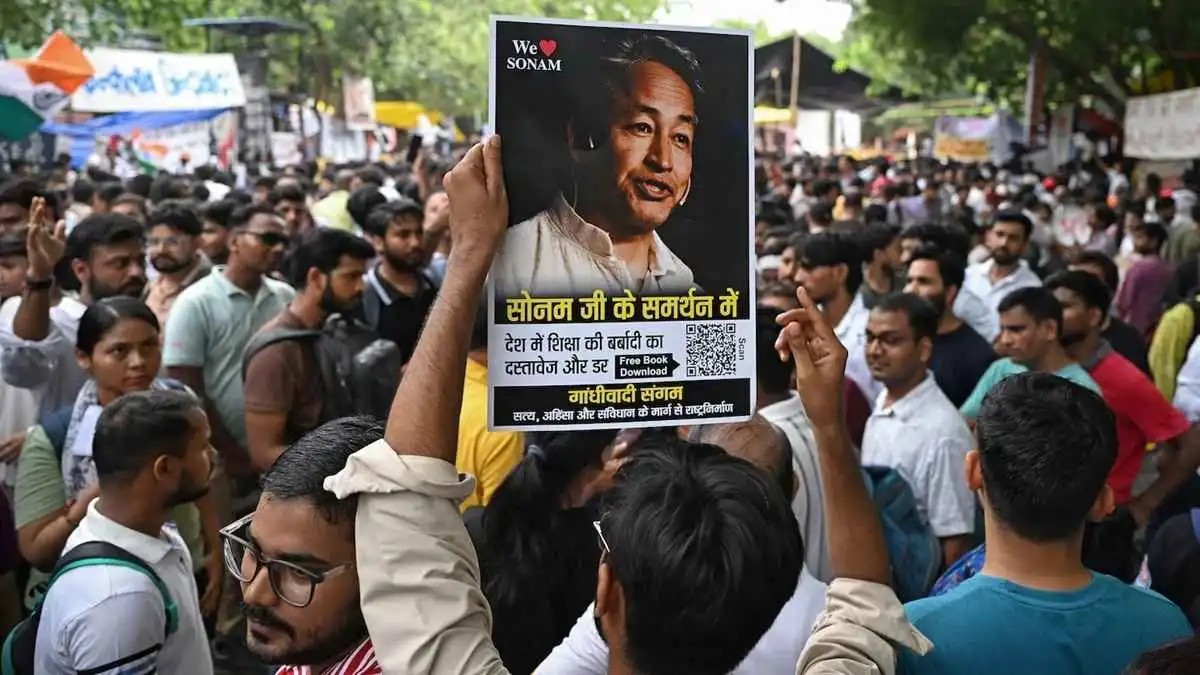
Education Protests
The demands of the Cockroach People's Party movement centered primarily on the country's educational issues.
Approximately 2.2 million students sat for the NEET exam on May 3rd—after spending months, and in some cases years, preparing for it due to its notorious difficulty.
However, the relevant authorities subsequently cancelled the exam following allegations that the questions had been leaked.
The decision to cancel came as a crushing blow to the hopes of many students, who would now be required to retake the same exam weeks later.
Families report that around 20 students committed suicide as a result of this decision—one of several factors that ignited the protests led by the Cockroach People's Party movement.
Dipke emphasized that any reform loses its value if political accountability for the crisis is not established.
Protesters are also demanding $104,000 in compensation for the families of students who took their own lives following the exam leak.
For many young Indians, these protests have become a prominent form of public dissent in a country that has seen increasing restrictions on activists, opposition figures, and protests against the Modi government.
The Cockroach People's Party has also garnered support from Indians across various age groups, driven by concerns regarding government accountability, unemployment, and job opportunities.
India has one of the youngest populations in the world, with millions of young people entering a labor market each year that suffers from a shortage of stable, well-paying jobs.
Despite years of rapid economic growth, many young people say their prospects have not improved as much as they had hoped.
As one of the country's largest voting blocs, India's youth could emerge as a more influential political force in upcoming elections.
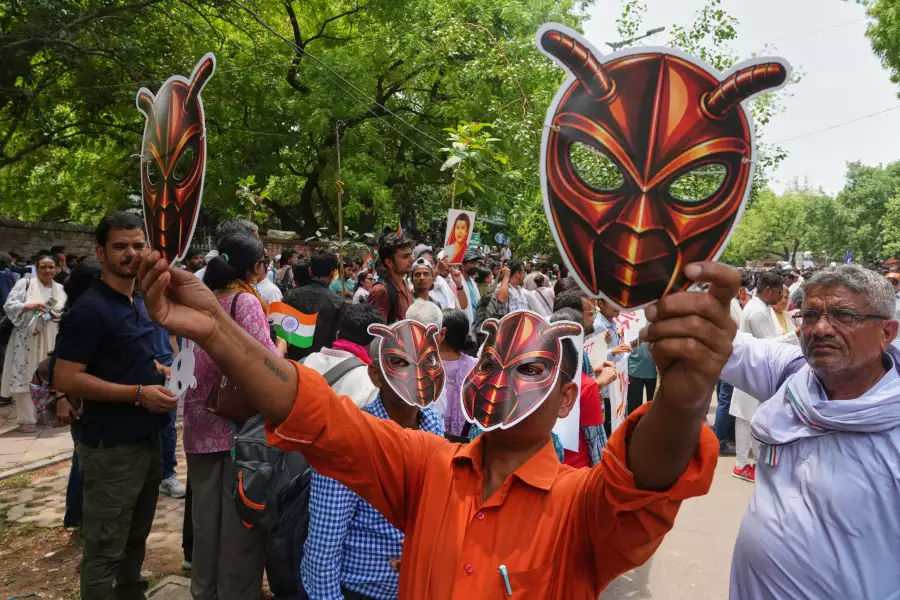
Political Support
Opposition parties quickly embraced these demands, turning the issue into a political confrontation within Parliament; sessions were disrupted for the fourth day of the week as lawmakers protested to demand the resignation of Minister Pradhan.
Mallikarjun Kharge, leader of the Indian National Congress, criticized the police response to protesters—which involved the use of stun guns and batons—describing it as an attack on democracy. Mahua Moitra, an MP from the All India Trinamool Congress, also joined the ranks of protesters last week before attending a parliamentary session.
Akhilesh Yadav, leader of the Samajwadi Party, also expressed his support for the students and protesters gathered in the capital, Delhi, stating that they should be treated with respect.
Indian opposition leader Rahul Gandhi also criticized Prime Minister Narendra Modi last week for his silence regarding the crackdown on protesters, demanding that he apologize to the students.
Against this backdrop, opposition MPs protested inside Parliament, demanding statements from both Modi and Home Minister Amit Shah, following allegations from injured protesters who claimed they were shot with pellet guns during a protest on July 20.
The police's use of force against Indian protesters has drawn condemnation from a number of opposition politicians.
MPs from the ruling BJP and its allies called for a parliamentary discussion on the issue, while government ministers accused the opposition of politicizing the crisis and refusing to participate in a parliamentary debate on exam system reform.
Indian Prime Minister Narendra Modi recently pledged to severely punish those responsible for exam cheating, amidst growing anger among students and young people protesting in the streets of Delhi.
In his first statement regarding the ongoing protests, Modi said on X: "We have decided to fast-track legal proceedings and strictly punish those involved in cheating."
"Nothing is more important than the safety and future of our youth, and anyone who attempts to jeopardize their future will face severe consequences," he noted.
The government is banking on the establishment of fast-track courts to help restore public confidence; these courts aim to expedite the resolution of cases within a judicial system notorious for lengthy litigation, where final verdicts can take years to be reached.
India has previously employed such courts for cases involving terrorism, sexual assault, money laundering, and crimes committed by elected officials. However, protesters argue that speedy trials do not address the root cause of the crisis.
In comments reported by Reuters, Ashutosh Ranka—a spokesperson for the party leading the protests—stated that the crucial question is not what the courts will do after the leaks occur, but rather, 'Why do exam leaks happen in the first place?'
He added that while India has established fast-track courts for various issues over the years, this has proven insufficient to resolve the underlying problems, arguing that the government focuses on outcomes while ignoring the root causes.
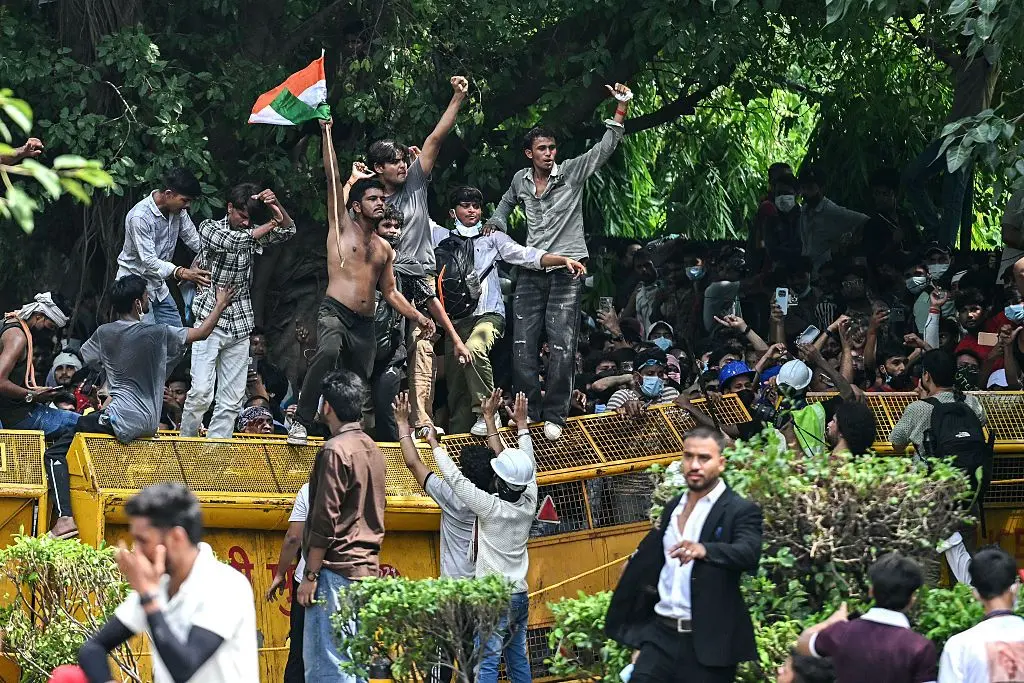
While neighboring countries such as Nepal, Bangladesh, and Sri Lanka have witnessed the fall of governments driven by youth-led movements, such large-scale protests have become rare in India in recent years.
During Modi’s 12-year tenure, the BJP has amassed unprecedented influence at both national and local levels; meanwhile, critics accuse the party of consistently imprisoning and prosecuting opponents and detractors, thereby shrinking the space for expressing dissenting views.
Ruling party MP Kangana Ranaut was among the officials who criticized the protests, telling reporters: "No one can dictate to the government whom to dismiss or whom to retain."