Alternative Front: How the Israeli Occupation Is Exploiting the “Tell Incident” To Implement Its Colonial Plans
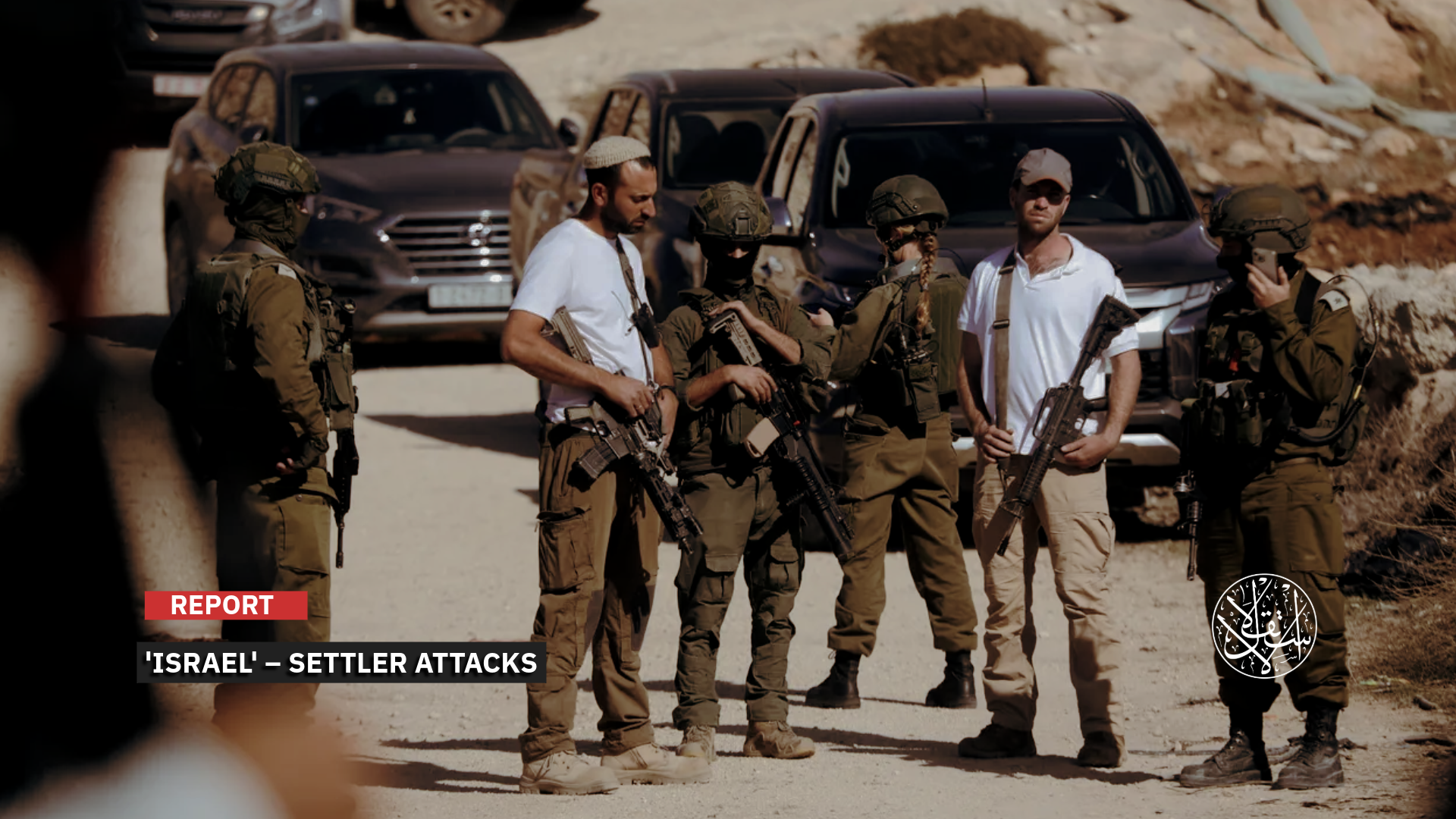
“The shooting in the Palestinian village of Tell, near Nablus, is the deadliest attack in the West Bank this year.”
Israeli Prime Minister Benjamin Netanyahu is moving toward a significant escalation in the West Bank as an alternative front, at a time when the likelihood of a large-scale military confrontation with Iran is diminishing following the abrupt halt of US airstrikes.
According to a report in the Israeli newspaper Haaretz, Netanyahu is seeking a new arena of conflict to maintain security and political momentum after his hopes of expanding the war against Iran were dashed by the reluctance of US President Donald Trump's administration.
After 13 consecutive nights of US airstrikes on targets inside Iran, the operations abruptly ceased on the evening of July 25 without any official announcement of their resumption.
Following clashes that resulted in the deaths of four Palestinians and two Israelis west of Nablus in the village of Tell, a wave of Israeli reactions erupted, including threats of retaliation from ministers and members of parliament in the ruling coalition.
Haaretz predicted that the Tell incident could mark a turning point toward a broader escalation that might exceed the operational capabilities allocated to the forces this year, particularly the reserve forces.
However, senior Israeli military officials indicated that the government was encouraging violent settlers, and that the unauthorized march that led to the confrontation was a planned provocation amidst widespread chaos on the ground.
Earlier, Netanyahu, facing elections in October, ordered a large-scale security operation in the West Bank and canceled military leave, while Finance Minister Bezalel Smotrich, a member of the far-right, called for the annexation of the West Bank, which Israel occupied after the 1967 war.
The West Bank has witnessed an escalating series of settler attacks, with UN and Palestinian Authority statistics indicating that dozens of Palestinians have been killed and hundreds wounded this year.
Since October 2023, more than 1,182 Palestinians have been killed and thousands wounded in the West Bank, in addition to the arrest of approximately 24,000, according to official Palestinian figures.
Palestinians warn that settlement expansion and settler attacks are paving the way for the formal annexation of the West Bank by "Israel" and undermining the possibility of establishing a Palestinian state as stipulated in UN resolutions.

Settlement Escalation
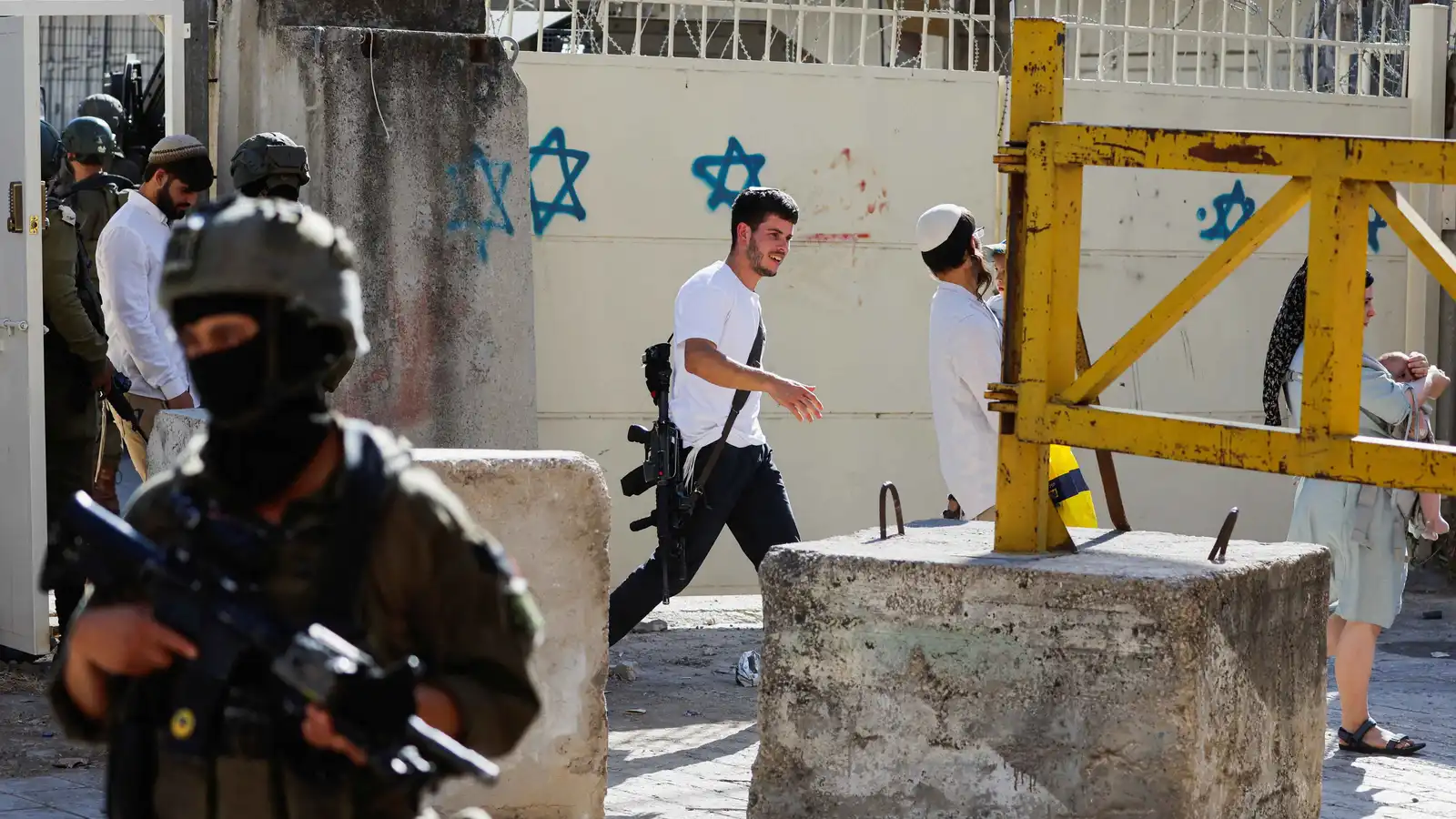
On July 24, settlers, under the protection of the Israeli army, attacked the town of Tell, near Nablus in the northern West Bank, killing four Palestinians and wounding four others. Two Israelis were killed in a shootout that erupted when residents confronted the attack.
Following the attack, Netanyahu and Army Minister Israel Katz announced a series of security and expansion measures in the occupied West Bank, including a military operation and extensive raids on Palestinian villages suspected of harboring militants.
The Israeli army decided to demolish the home of the perpetrator of the attack near the village of Tell, confiscate weapons, and revoke work permits in villages Israel describes as hotbeds of armed activity, while deploying additional forces throughout the occupied West Bank.
On July 25, the Israeli army announced the arrest of more than 75 Palestinians during raids in various areas of the West Bank, including more than 40 in the town of Tell near Nablus. Eight Palestinians were also injured in an attack by settlers on the village of Far'ata, east of Qalqilya.
Prior to this, Netanyahu vowed a firm response after the killing of an Israeli, stating that he would hold a meeting with security officials to discuss ways to respond to the bloody attack.
For his part, Israeli President Isaac Herzog said that terrorism will not prevail, adding in a statement, "In the face of deadly terrorism that seeks to harm our lives and security, we must stand united and resolute."
Israeli Chief of Staff Eyal Zamir ordered the reinforcement of troops deployed in the area, bringing the total to 26 battalions, and instructed them to arrest the terrorists involved in the attack.
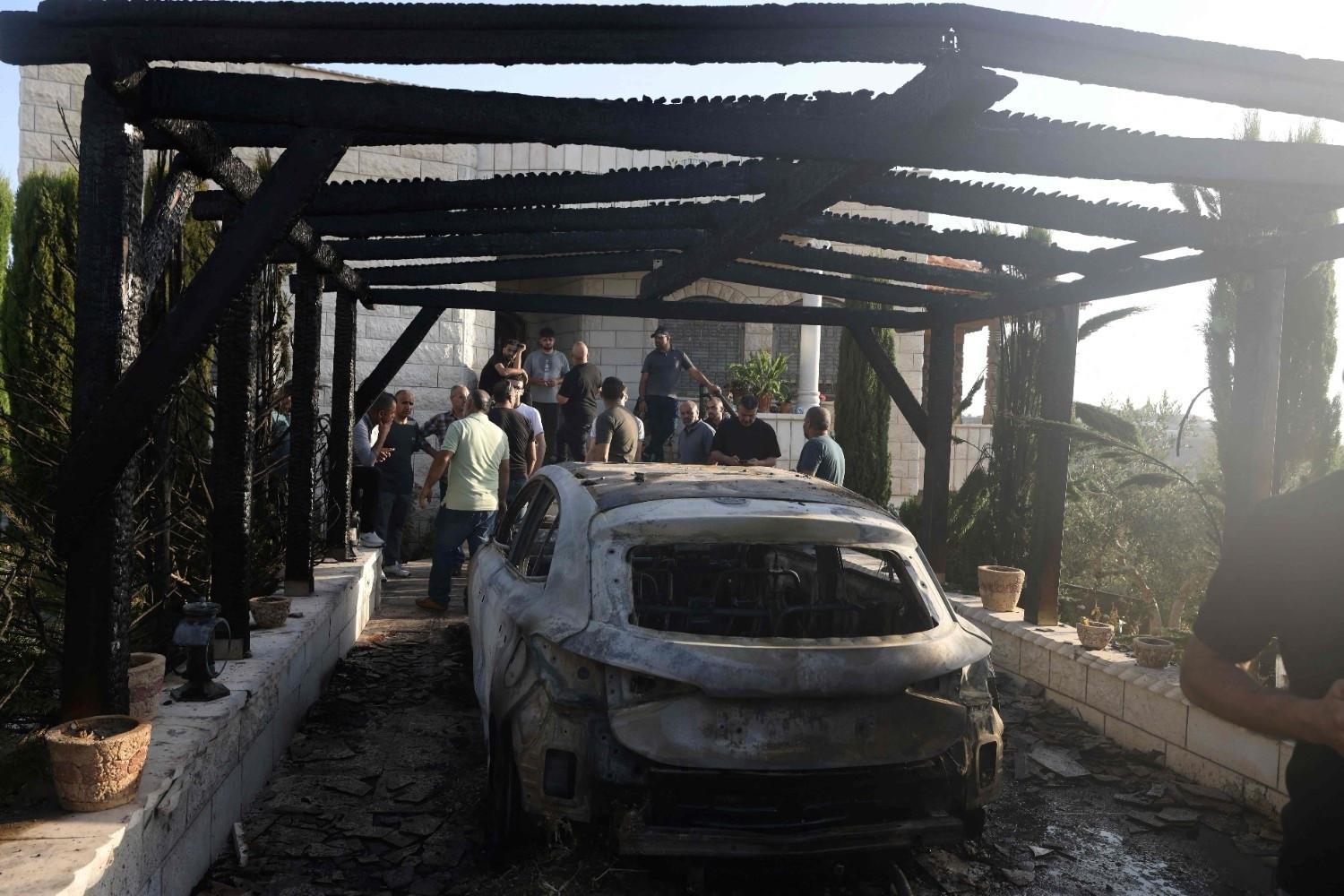
While the Israeli army continued its operations on July 26, settlers continued their attacks on Palestinians, burning two mosques, homes, and vehicles, and writing slogans calling for revenge.
On the settlement front, the Israeli government moved quickly to establish new facts on the ground.
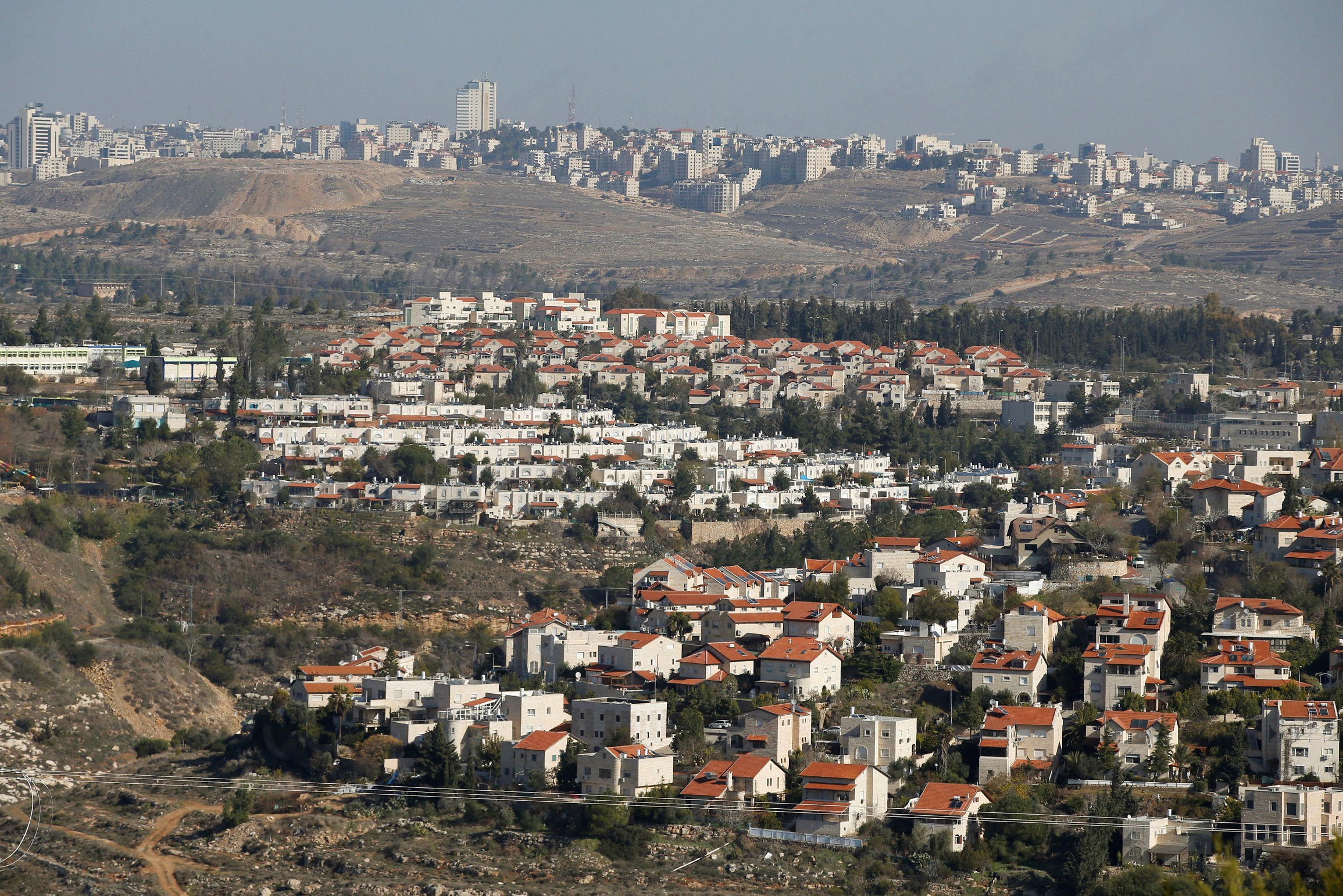
Finance Minister Bezalel Smotrich announced Israel's intention to build 763 new settlement units in the Eli settlement south of Nablus, as part of a plan expected to triple the size of the settlement in the coming years, allowing for the absorption of thousands of new settlers.
Earlier in July, Smotrich stated that since its formation in late 2022, the government had approved the establishment of 104 new settlements and 160 agricultural outposts in the West Bank.
Approximately 750,000 settlers reside in 141 settlements and 224 outposts in the West Bank, including East Jerusalem, according to a report published by the Israeli human rights organization B'Tselem.
The settlers exploit this security and political cover to expand their control, having established eight new outposts since the establishment of the Tel settlement, most of them on privately owned Palestinian land.
According to a report issued by the Palestinian Authority's Commission against the Wall and Settlements on July 6, settlers carried out 3,488 attacks against Palestinians and their property during the first half of this year.
These attacks included raids on Palestinian villages, arson attacks on homes, shootings, land confiscations, and the establishment of outposts, resulting in the deaths of 17 Palestinians, according to the report.
Israeli Narrative
Analysts have concluded that what is happening in the West Bank is not merely a series of isolated security incidents, but rather a systematic Israeli exploitation of events and manipulation of facts aimed at accelerating the annexation project and expanding settlements at the expense of Palestinian land.
Military sources confirmed that security forces understand the mistake was made by the settlers, and that the Palestinians who confronted them were unarmed and did not intend to kill the armed settlers. Rather, they rushed to defend the village, and this is what worries the Israeli security establishment.
The incident in the village of Tel in the West Bank clearly revealed how the Israeli media and political machine deliberately distorts the facts and criminalizes Palestinians, even in cases of legitimate self-defense, using this as a pretext to accelerate settlement construction and legitimize settlement outposts in the West Bank.
The video footage of the incident clearly shows that the Palestinian citizen, Farouq Ramadan, disarmed the Israeli soldier in self-defense. Israeli media outlets edited the video to show Ramadan firing at the settlers, omitting the initial scene when the settlers—protected by the Israeli army—began attacking the Palestinian man and his land.
Israeli media outlets deliberately edited a video clip, highlighting only a single image showing the Palestinian man holding the settler's weapon, to promote a false and misleading narrative portraying him as a "terrorist" who initiated an armed attack and killed Israelis.
In the same vein, the Israeli Broadcasting Corporation revealed that the ongoing military investigation into the incident reinforces the assessment that the Israeli soldier was killed by friendly fire (shot by another soldier), not by the Palestinian as the media had claimed.
The Haaretz newspaper had hinted at the friendly fire hypothesis from the outset, but the Israeli media deliberately concealed this fact for more than four days, continuing to disseminate the fabricated narrative to demonize Palestinians and prepare public opinion to accept harsh punitive measures.
The repercussions of this media manipulation did not stop at distorting the victim's image; they extended to translating into dangerous realities on the ground.
Israel exploited this incident to justify a frenzied escalation campaign and launch military operations inside Palestinian towns.
In response, on July 26, Palestinian President Mahmoud Abbas sent letters to world leaders, the European Union, the Secretary-General of the Arab League, and the President of the UN Security Council, calling for urgent international action to halt the ongoing Israeli aggression and settler terrorism in the West Bank.
Abbas stated that what is happening is a systematic Israeli policy aimed at imposing new realities on the ground through settlement expansion, escalating settler terrorism, and undermining and weakening the institutions of the Palestinian National Authority. This, he asserted, deliberately undermines the chances of implementing the two-state solution and threatens security and stability in the region.
The Palestinian Presidency accused the Israeli government of supporting the settlers, noting that the terrorist crimes witnessed in the West Bank are a direct result of the terrorist calls issued by Israeli occupation leaders to burn Palestinian land and displace its inhabitants.
Reckless Policy
The situation in the occupied West Bank is sparking heated debate in "Israel", with voices increasingly accusing the government of instigating bloody clashes to serve the partisan goals of Netanyahu and the two extremist ministers, Itamar Ben-Gvir and Bezalel Smotrich.
The shift in the attitudes of many Israelis began when initial investigations into the events in the village of Tel al-Damiya, which occurred on July 24, revealed that settlers in the outposts in the area had begun their attacks on the village as early as July 22, and then changed course two days later in a deliberate act of provocation.
Demonstrations spread from Tel Aviv to Jerusalem, Beersheba, Haifa, and 15 major intersections, with protesters chanting slogans such as: “Israel is not a democracy… it’s an apartheid state,” “They are committing genocide here,” and “Netanyahu will stop at nothing to protect his seat from collapse.”
Protesters across these areas unanimously agreed that the escalation in the occupied West Bank served Netanyahu’s partisan and electoral interests.
In a related context, Israeli officials accused Prime Minister Benjamin Netanyahu’s government of seeking to escalate the situation in the West Bank, warning of the repercussions of Israeli policies that they said were pushing toward further confrontation.
On July 26, Israeli Knesset member Gilad Kariv stated that Netanyahu and his Finance Minister, Bezalel Smotrich, wanted a third intifada in the West Bank, indicating that the Israeli government was working to inflame the situation instead of calming it.
He noted that he had warned months ago that the West Bank was on the verge of exploding, accusing Netanyahu's government of creating increasing friction between Palestinians and Israelis, making it difficult for the army to protect both sides from the violence of extremist settlers.
In the same vein, the head of the Democratic Party, Yair Golan, said that Israeli soldiers are paying with their blood for the reckless policies of Netanyahu and Ministers Smotrich and Itamar Ben-Gvir, accusing the government of turning the West Bank into a "powder keg" that threatens Israel's security.
Golan said that extremist settlers have been working systematically for months to create friction, ignite the region, and drag the Israeli army into a wider confrontation, calling for a change in Netanyahu's government in the upcoming elections.
New Confrontation
Political and security circles in "Israel" have warned of the danger of an explosion in the West Bank and the opening of a new, unforeseen front at a time when Israel is making military preparations for a possible new confrontation with Iran.
An Israeli security official confirmed that the situation in the West Bank is snowballing, warning that it will be difficult to stop if the escalation continues in this manner.
For his part, Nadav Eyal, a political and international affairs analyst for the newspaper Yediot Aharonot, said that the situation in the West Bank is severely damaging Israel's standing, and that the West Bank is not a top priority for the United States.
On the other hand, some within the Israeli government see the escalation in the West Bank, and the potential clashes between settlers and Palestinians, as an opportunity to resolve the situation militarily in the West Bank, including attempting to topple the Palestinian Authority and fully occupy the West Bank before the elections scheduled for October.
Given the approaching elections, the expansion of settlements and the provision of further privileges to settlers are also part of an effort to solidify the support of Netanyahu's right-wing base.
For his part, political analyst Ismail Masalmani told Al-Estiklal that the events unfolding in the West Bank represent an unprecedented Israeli escalation and a declaration of war and aggression against the Palestinians.
He described this escalation as an extension of a strategic project that began with the establishment of Israel and intensified after the occupation of the West Bank in 1967.
He added that the Israeli authorities exploited the settlers' attack on Palestinians and distorted the narrative through what he called media manipulation before carrying out widespread violations and attacks.
He asserted that Netanyahu might use this escalation as a bargaining chip during his talks with the US administration.
On another note, Mr. Masalmani pointed to growing speculation about the extent to which the accelerated pace of Israeli measures in the West Bank is linked to US military movements and the escalating tensions in the Arabian Gulf against Iran and its allies.
He stated that with the US administration and the international community preoccupied with maritime security and the energy war, the right-wing Israeli government finds an ideal opportunity to pass annexation decisions and legalize settlement outposts.
He noted that the cabinet recently allocated massive budgets exceeding one billion shekels for developing settlement infrastructure.
He concluded that whether a major war with Iran is imminent or merely a tool for strategic pressure, the Israeli government has succeeded in exploiting this charged atmosphere to impose a new settlement reality on the ground that will be impossible to reverse in any future political negotiations.
Sources
- Israel prepares major military operation in West Bank after four Palestinians and two Israelis killed
- Northern West Bank in lockdown as clashes rock villages and Israel deploys troops in Nablus
- Palestine weekly: West Bank in flames after Tal killings
- Israel planning ‘extensive’ military operation in West Bank after settler attack