Ethiopia, the UAE, and 'Israel': Has Khartoum Airport Become a Turning Point in the Ongoing War in Sudan?
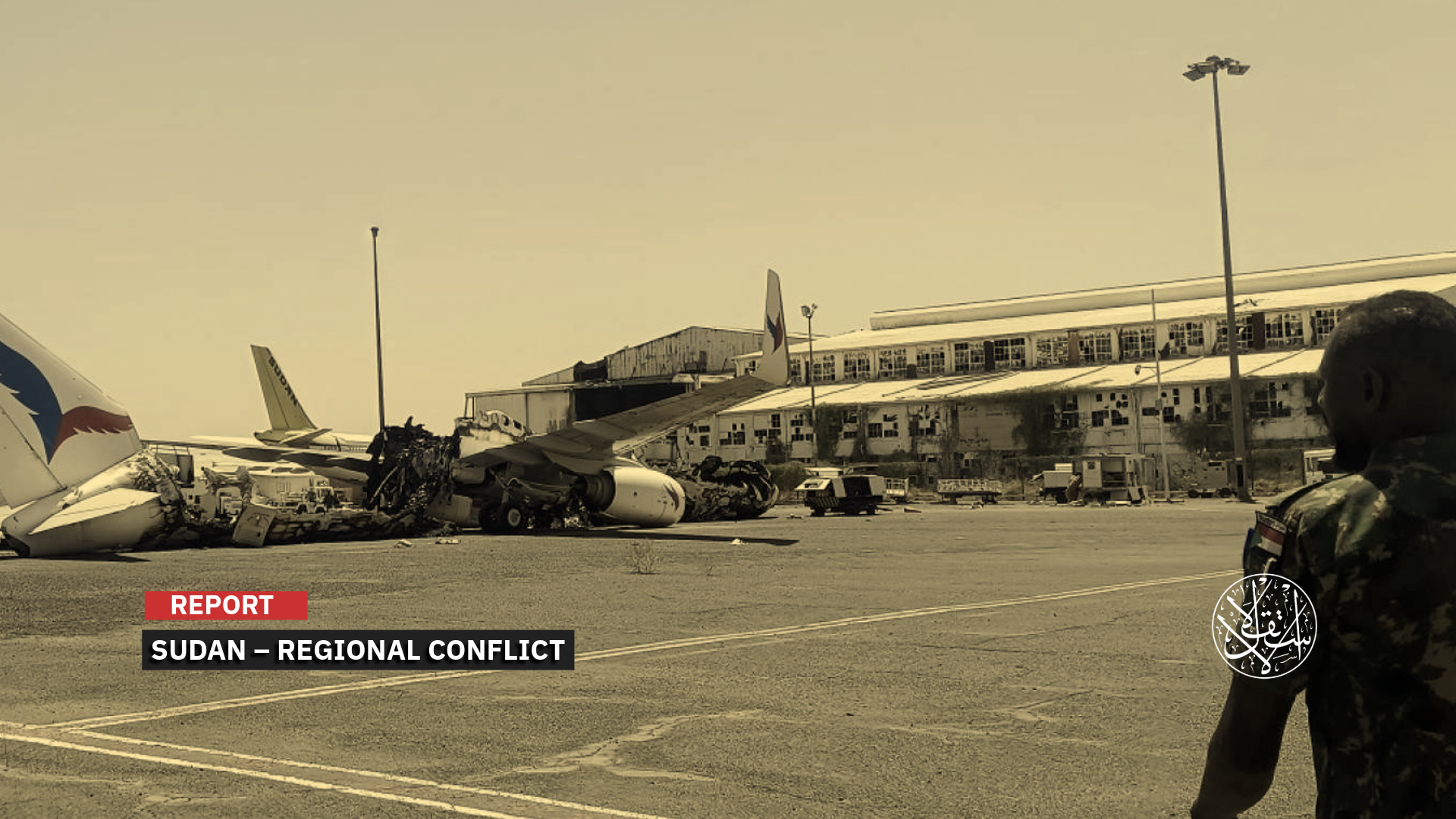
“Targeting Khartoum Airport has become a point of political and diplomatic contention.”
The Sudanese conflict is no longer confined to the civil war between the army and the Rapid Support Forces (RSF) militia. It has rapidly taken on regional dimensions, with escalating accusations of foreign involvement in managing the conflict and directing its military and intelligence operations.
The drone attack on Khartoum International Airport in early May was not seen as a mere isolated military operation, but rather as a dangerous shift revealing the war's transition to a new phase of direct cross-border interventions. This comes amid explicit Sudanese accusations against Ethiopia and the UAE for their participation in the attack.
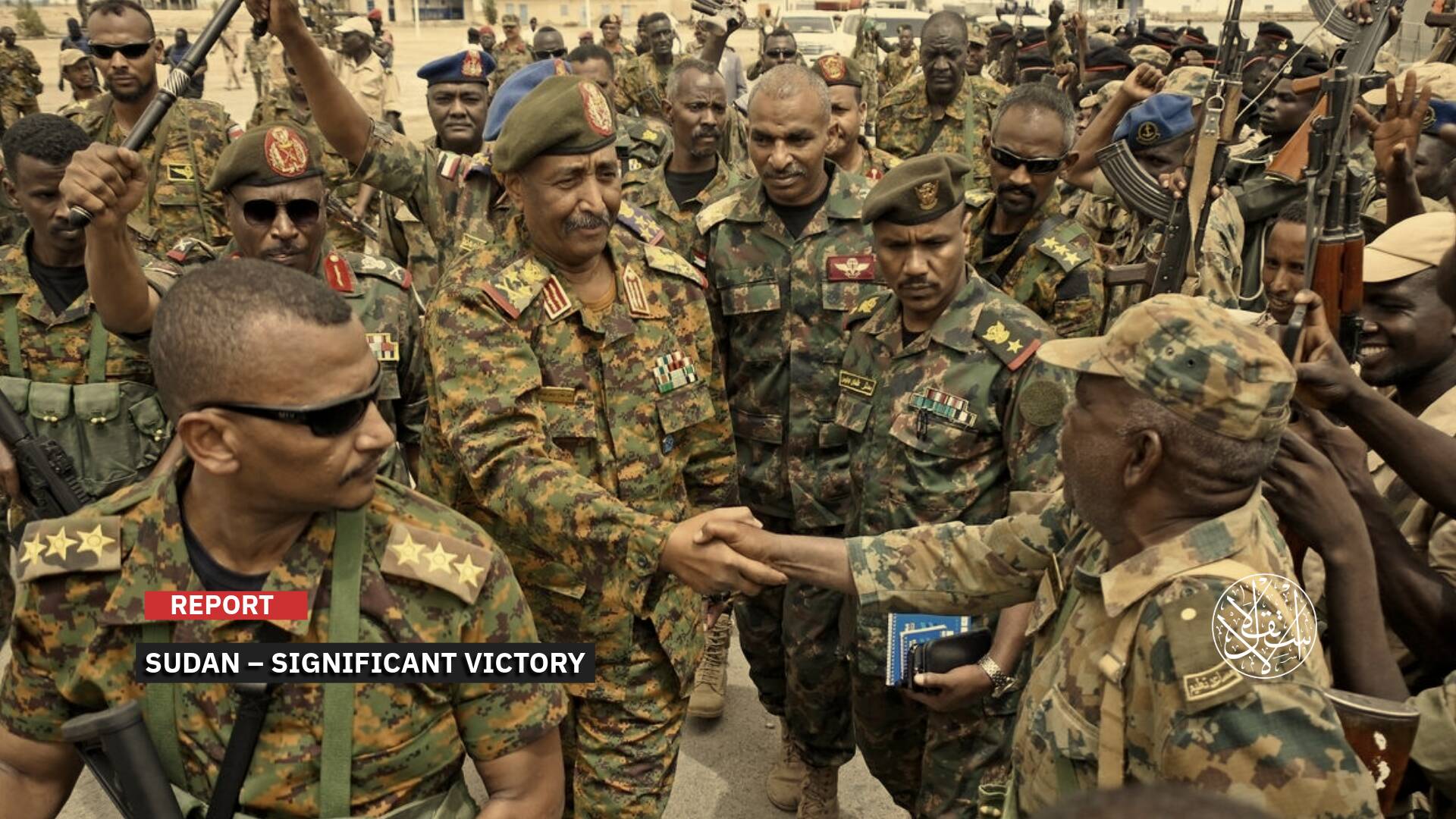
These developments coincide with the Sudanese army's advances on several fronts, particularly in Kordofan and Darfur, and its attempts to tighten its grip on the RSF forces led by Mohamed Hamdan Dagalo (Hemedti).
This has reinforced the belief within Sudanese circles that the recent airstrikes aim to disrupt the army and prevent it from consolidating its control over the capital and vital state institutions.
These accusations have also reopened complex files related to regional support networks for the Sudanese war, and the role of military bases and border airports in transporting weapons and drones.
This is in addition to the broader geopolitical conflict in the Horn of Africa and the Red Sea region, where security, influence, energy, waterways, and shifting regional alliances intersect.
Targeting Khartoum Airport has become a point of political and diplomatic contention between Khartoum on one side, and Addis Ababa and Abu Dhabi on the other, amid warnings that the continuation of this course could push Sudan and the region toward a more dangerous phase of open regional escalation.
Clear Shift
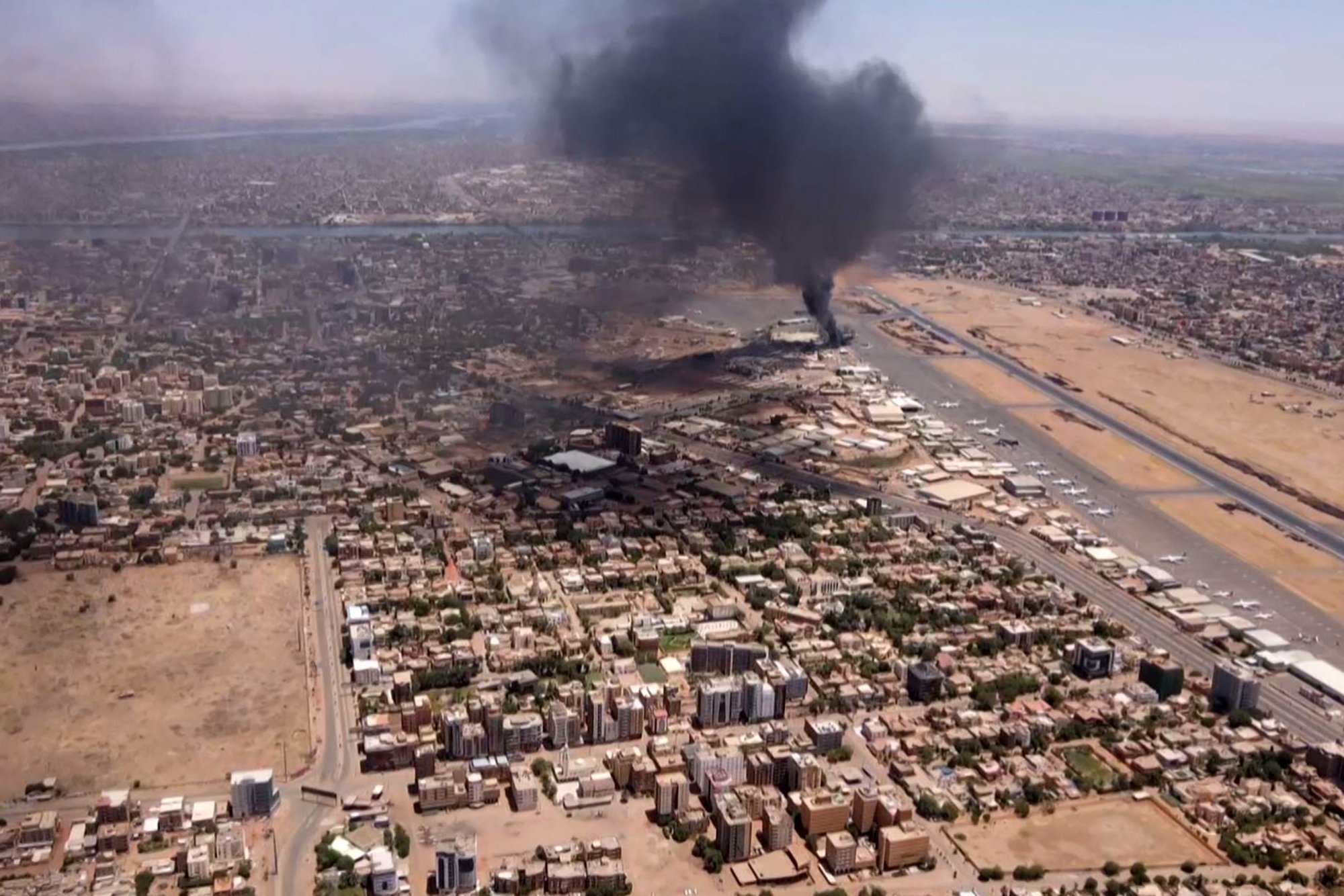
The attack on Khartoum International Airport was not an isolated event in the context of the Sudanese war, but rather part of an escalating pattern of long-range airstrikes employed by the RSF to compensate for their territorial and ground setbacks in the capital and central regions.
After losing significant territory within Khartoum, the RSF shifted to a new strategy based on targeting airports, vital infrastructure, supply lines, and civilian facilities.
It is attempting to disrupt efforts to restore state institutions to the capital and send a message that its ability to reach deep into Sudanese territory remains intact despite its military setbacks on the ground.
However, the danger of the recent attack lies not only in its military nature but also in the political and regional shift implied by the official Sudanese accusations.
This time, the Sudanese authorities not only spoke of drones launched by the RSF but also directly accused Ethiopian territory and airports used as launch points for the attack, in addition to accusing the UAE of providing military and technical support for these operations.
It stated that analysis of data from one of the drones shot down on March 17 showed it to be an Emirati aircraft launched from within Ethiopian territory, considering this evidence of cross-border military and logistical coordination in the war against Sudan.
With this accusation, the issue is no longer confined to an internal conflict between the army and the RSF but has escalated to the level of direct regional confrontation.
Ethiopia was positioned as a logistical partner, while the UAE was presented as the most prominent external supporter of armament and operational support since the outbreak of the war.
Recent developments have also revealed a clear shift in the RSF's tactics, which are increasingly relying on drone warfare instead of engaging in costly conventional confrontations with the Sudanese army.
On May 5, Sudan Tribune reported that at least five people were killed and others wounded in an RSF drone strike targeting two fuel stations in Kosti, White Nile State.
Two days earlier, a drone, likely belonging to the RSF, targeted the home of Abu Aqla Kikil, commander of the Sudan Shield Forces, in Gezira State, killing six members of his family, including his brother, Major Azzam.
These strikes confirm that Hemedti's forces are seeking to shift the war from traditional battlefields to targeting infrastructure, civilian and symbolic centers, and supply lines, after their ability to exert widespread control within Khartoum diminished.
It also reveals that targeting Khartoum Airport was not merely a fleeting military response, but a political attempt to undermine the army's image as the force that gradually restored the capital to state authority and its institutions.
Thus, the airport acquires a symbolic dimension that transcends its military importance. Targeting it casts doubt on the government's ability to resume air traffic and restore stability, and it also sends a message that Khartoum remains a target for the Rapid Support Forces and their regional allies.
Military Collapse
In parallel with the escalating violence in Khartoum, the Blue Nile and Kordofan fronts have returned to the forefront of the Sudanese military scene, becoming one of the most sensitive and complex theaters of the war.
In this region bordering Ethiopia, local sources in Blue Nile State reported the displacement of approximately 30,000 people following attacks launched by the RSF and the Sudan People’s Liberation Movement-North (SPLM-N) alliance on the villages of Dukan and Karn Karn in the Kurmuk region, a strategically important area located near the Ethiopian border.
The Sudan Tribune indicates that this alliance managed to seize control of the towns of Dukan and Karn Karn after months of consolidating its influence over parts of Kurmuk, amid direct Sudanese accusations against Ethiopia of providing logistical support to the RSF and its allies through border crossings and areas.
These developments, according to observers, explain part of the intensity of the Sudanese stance towards Ethiopia, as the matter is no longer limited to targeting facilities within the capital, but has extended to include a series of advanced military movements along the eastern border, in Blue Nile and South Kordofan.
The military alliance between the RSF and the SPLM-N seeks to disrupt supply lines and isolate strategic areas from the center of power in Khartoum.
In South Kordofan, fighting continues around the towns of Al-Dalanj and Al-Tukma, amid conflicting reports regarding territorial control. Meanwhile, the Sudanese army is working to secure the vital road linking Al-Dalanj, Kadugli, and the rest of central Sudan, attempting to prevent the collapse of the military and civilian supply network.
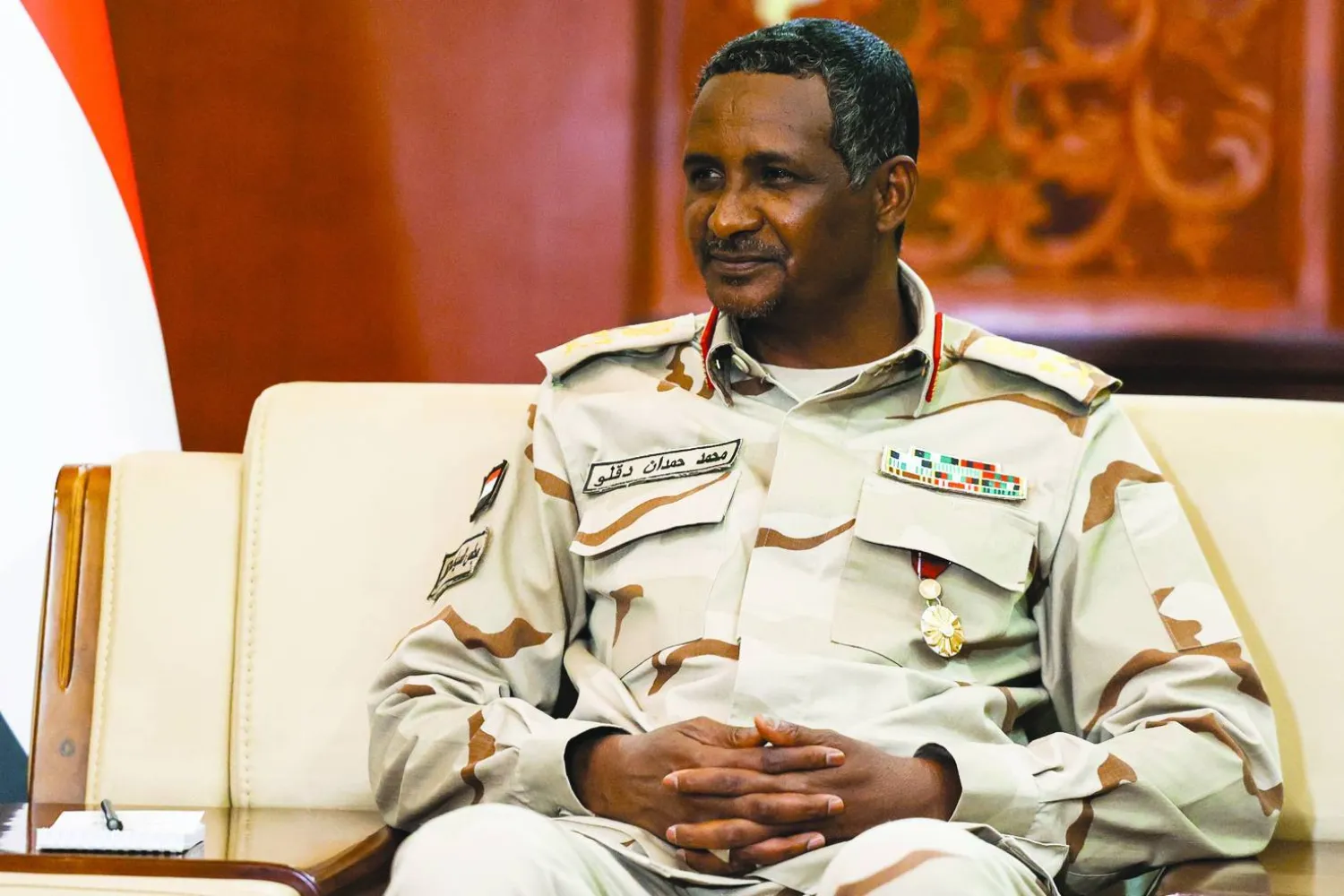
Amid this tense situation, RSF commander Hemedti made statements on May 7th, declaring his forces prepared to continue fighting for up to 40 years. His speech appeared to be primarily directed at the RSF internally rather than a political message aimed at negotiation or de-escalation.
Hemedti emphasized to his officers the need to reorganize his forces at the operational, administrative, and intelligence levels, asserting that the war cannot be ended unilaterally and accusing the Sudanese army of rejecting peace initiatives.
But the timing of this speech, coming amid escalating drone strikes and setbacks on key fronts, makes it seem more like an attempt to boost morale and recalibrate the fighters' tactics than an expression of an actual military balance on the ground.
Conversely, these messages do not appear sufficient to separate the reality on the ground from its humanitarian and legal dimensions. The RSF faces serious international accusations of committing widespread violations, particularly in Darfur and El Fasher.
The UN Human Rights Office confirmed that the RSF and allied militias committed mass killings, summary executions, sexual violence, abduction, torture, and looting during their attacks on El Fasher, in addition to recruiting children for combat.
Furthermore, the International Criminal Court (ICC) informed the Security Council in January that its Office of the Prosecutor was continuing its investigations in Darfur, amid growing indications of widespread war crimes committed during the ongoing conflict in the country.
Regional Conflict
In a statement to Al-Estiklal, Sudanese politician Dr. Ibrahim Abdel Aati said that recent developments have placed the Sudanese army in a multi-front battle for sovereignty, one that cannot be reduced to a single battlefield.
He explained that the challenge is no longer limited to direct military confrontation with the RSF, but has extended to include protecting airports and vital installations, securing borders, and countering attempts to transform Ethiopian territory into a logistical and operational corridor to support militia movements.
He added that the official accusations leveled by Khartoum against both Ethiopia and the UAE regarding the attack on Khartoum Airport represent a turning point in the nature of the conflict, transforming it from an internal war into a confrontation with broader regional dimensions, with all the ensuing political and legal repercussions.
He indicated that Sudan's presentation of what he described as documented evidence to international forums could open the door to inquiries regarding the parties providing military, logistical, and technical support to the Rapid Support Forces, whether directly or indirectly.
He noted that recent months have witnessed simultaneous media and political attempts by some Western and Israeli platforms, along with Sudanese figures affiliated with the civilian movement, to promote a narrative linking the Sudanese army to a specific regional axis.
He stated that there are increasing indications that the Ethiopian city of Bahir Dar has, in recent years, become a transit point for some supplies related to external support directed to parties involved in the conflict in Sudan, which raises questions about the nature of regional coordination in the area.
He added that, in his estimation, "Israel" seeks to expand its unstable spheres of influence in the Horn of Africa and the Red Sea through traditional strongholds including Ethiopia, Somaliland, and South Sudan, in order to reshape the security landscape in the region.
He emphasized that these moves coincide with attempts to reshape security arrangements in the Red Sea outside the traditional frameworks of the littoral states.
He noted that this is occurring in parallel with broader regional shifts, including a growing rapprochement between Egypt, Saudi Arabia, Turkiye, and Pakistan, and the potential for new security arrangements in the region as a result.
He concluded by saying that the level of coordination between Ethiopia, the UAE, and "Israel" indicates a trend toward prolonging the war in Sudan and transforming it into an open regional conflict.
He warned that the continuation of this trajectory not only threatens Sudan but also extends its impact to the security of the Red Sea and the stability of all neighboring countries.
Sources
- Sudan's Foreign Minister accuses the UAE and Ethiopia of attacking Khartoum airport [Arabic]
- Amidst the army's advance and defections within its ranks… “Hemedti”: We are ready to fight for 40 years [Arabic]
- 30,000 people displaced by attacks in Blue Nile [Arabic]
- The Sudanese army accuses the UAE and Ethiopia of launching a drone attack on Khartoum airport [Arabic]