Egyptian Air Force Personnel in the UAE: Symbolic Support or Involvement in a Confrontation with Iran?
“Egypt risked becoming entangled in a broader escalation involving Iran and Israel.”
Iranian circles considered the revelations made by Egyptian journalist Ahmed Moussa on May 6 regarding Egypt's provision of military support to the Gulf states as an indication that Cairo is entering—albeit indirectly—the fray in the ongoing war against Tehran in defense of the UAE and the Gulf.
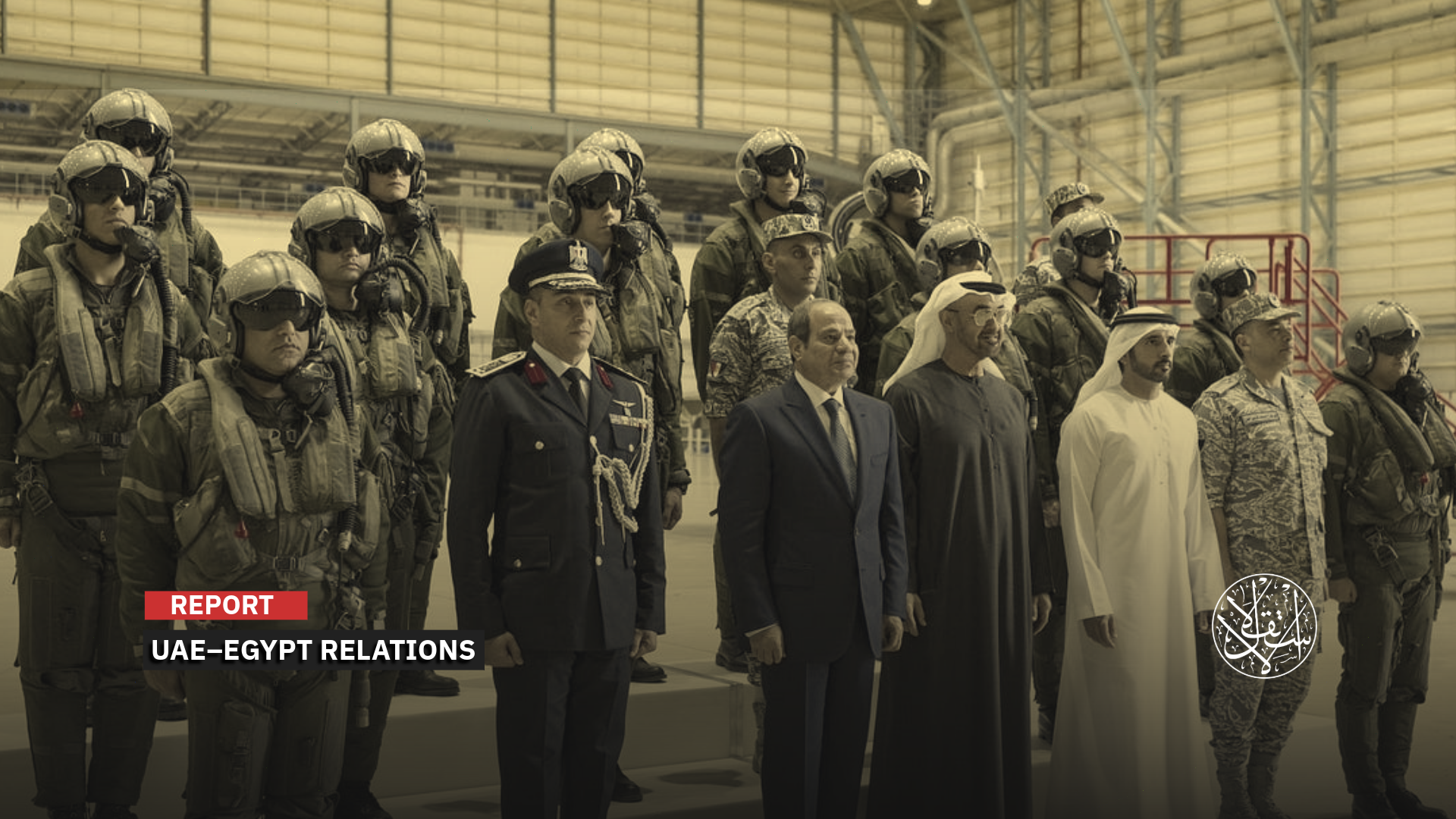
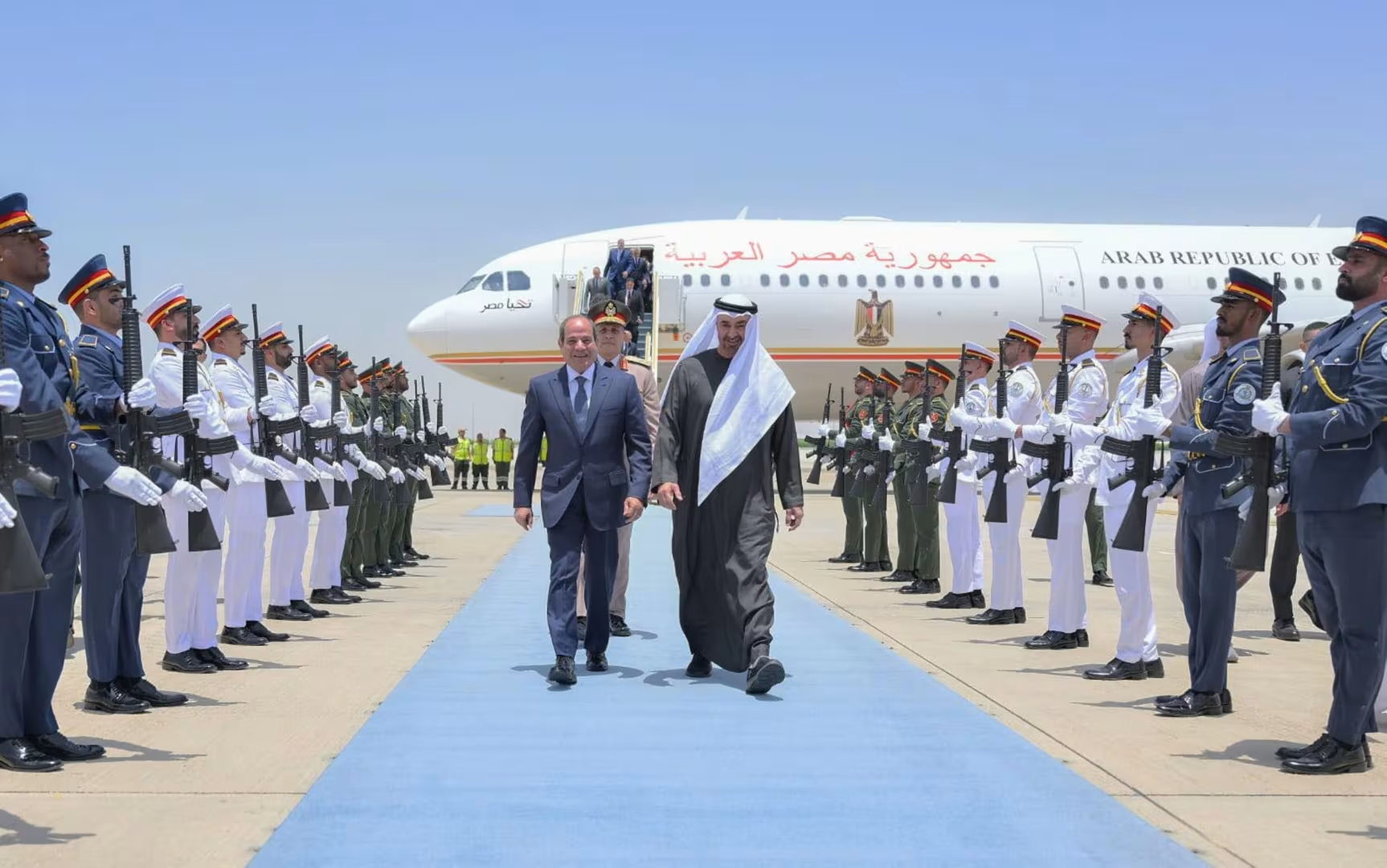
These statements coincided with a notable event: Egyptian President Abdel Fattah el-Sisi's inspection, on May 7, of a group of Egyptian pilots and fighter jets in the UAE. Emirati media outlets stated that this visit aimed to enhance operational capabilities and prepare for various challenges.
This development has reignited widespread questions about the nature of the shift in the Egyptian position regarding the US-Israeli war on Iran, and whether Cairo has indeed begun to move away from its traditional neutrality and toward indirect military involvement in protecting its Gulf allies.
The situation also sparked a broader debate about whether Egypt is reformulating its military doctrine, which has long been based on avoiding involvement in conflicts beyond its borders, or whether what is happening is merely a matter of political and military positioning and sending messages of deterrence and balance in a highly volatile regional moment.
Conversely, observers believe that the Egyptian move may have dimensions that extend beyond the direct military aspect, whether through brandishing a regional protection role in the context of seeking Gulf economic and financial support, or through Cairo's attempt to regain its presence in the power dynamics within the Gulf, amid the rapid transformations the region is witnessing.
Gulf Support
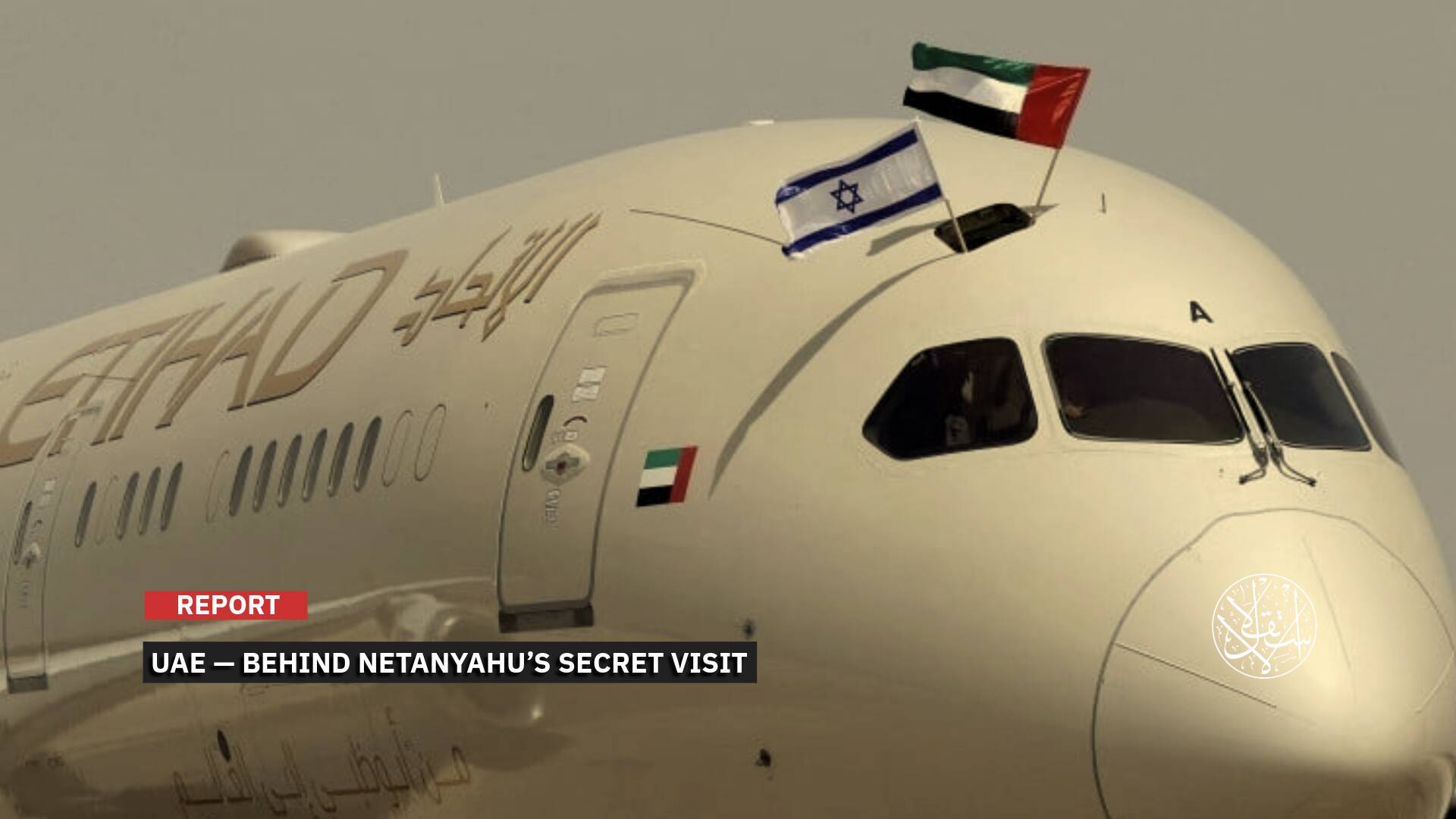
The recent visit of Egyptian President Abdel Fattah el-Sisi to the UAE revealed a previously unknown military detail, after Abu Dhabi announced the presence of Egyptian fighter jets and pilots stationed on its territory, a move that raised widespread questions about the nature and objectives of this presence.
It is noteworthy that the Egyptian presidency completely avoided mentioning this military aspect. Its official spokesperson merely stated that el-Sisi affirmed Egypt's solidarity with the UAE in light of the current regional circumstances, emphasizing Egypt's support for the UAE's security and stability and its complete rejection of Iranian attacks on its sovereignty.
The statement added that what affects the UAE affects Egypt, focusing on discussing trade and investment relations between the two countries, without any mention of el-Sisi inspecting Egyptian forces or aircraft within the UAE.
The Egyptian military spokesperson also completely ignored the visit, despite the sensitivity of the event and its military dimensions.
Extra News, a channel close to the security apparatus, simply stated that el-Sisi inspected Egyptian forces in the UAE during a fraternal visit, accompanying the report with images showing Egyptian fighters from the Air Forces, without providing any further details.
In contrast, the Emirates News Agency (WAM) announced that el-Sisi and UAE President Mohammed bin Zayed Al Nahyan inspected a detachment of Egyptian fighter jets stationed in the UAE to assess their operational readiness.
The UAE Ministry of Defense confirmed that both sides visited the Egyptian fighter squadron stationed in the country to review its readiness and the efforts being made to enhance operational capabilities and prepare for various challenges.
However, Cairo has not issued any official clarifications regarding the nature of these forces or their missions, or whether their presence is part of joint exercises and maneuvers, or related to operational roles connected to escalating regional tensions.
Questions also remain as to whether this squadron is the only one in the Gulf region, or if there is a broader Egyptian military deployment that includes other countries such as Saudi Arabia and Kuwait.
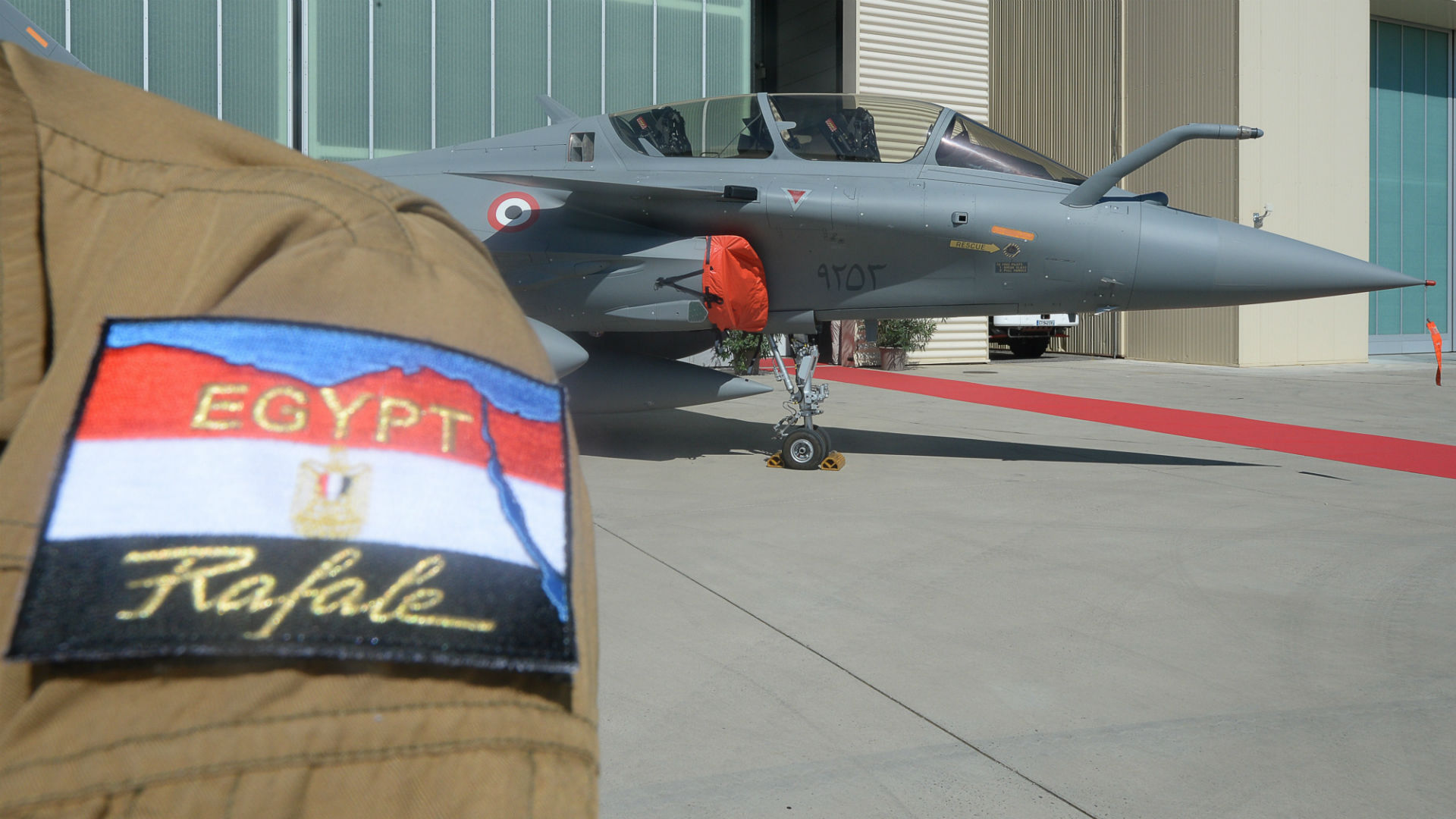
According to military protocol, a fighter squadron typically consists of between four and eight warplanes, with the number varying depending on the nature of the mission. However, the circulated images showed approximately eight fighter jets, in addition to 13 Egyptian pilots, and three persons in Egyptian military uniform.
The images also revealed that the aircraft were French Dassault Rafale models. Since Cairo's contract for these aircraft in 2015, questions have been raised regarding Gulf support and funding—particularly from the UAE and Saudi Arabia—for the deal.
Although there has been no official announcement confirming Abu Dhabi's direct contribution to financing the Rafale deal, French and Western reports at the time spoke of undisclosed Gulf political and financial support, given Egypt's heavy reliance on aid from the UAE, Saudi Arabia, and Kuwait after 2013.
Defense News, in a previous report, indicated that the most prominent question at the time of the deal's conclusion concerned the source of funding, discussing the possibility of Gulf parties providing guarantees or financial facilities to Cairo due to its economic crisis at the time.
The initial deal was valued at more than €5 billion and included 24 Rafale fighter jets, a frigate, and advanced missiles. In May, Egypt announced the purchase of an additional 30 fighter jets, bringing its planned fleet to 54 fighter jets, making Cairo one of the largest operators of the Rafale outside of France.

Egyptian Silence
When former Egyptian President Hosni Mubarak sent Egyptian military forces to Kuwait in 1991 to participate in the international coalition against the regime of the late Iraqi President Saddam Hussein, the decision was officially and publicly announced before the Egyptian parliament.
At the time, the state clearly involved the military establishment in the decision, and the intervention was justified as a response to the Joint Arab Defense Agreement, with emphasis placed on the mission being limited to liberating Kuwait, not invading Iraq or overthrowing its regime.
Cairo later reaped significant political and economic gains, most notably the cancellation of nearly half of its external debt.
The same scenario, albeit in a different form, was repeated when el-Sisi's regime decided to participate in Operation Decisive Storm in 2015.
Following a meeting with ministers and relevant authorities, the Egyptian presidency announced the deployment of naval and air forces to secure the Bab el-Mandeb Strait and shipping lanes in the Red Sea, along with the release of official statements clarifying the nature and scope of the mission.
When rumors circulated at the time about Egypt's participation with ground troops in Yemen, the Egyptian military spokesman quickly and categorically denied this on April 14, 2015, emphasizing that the Egyptian role was limited to air and naval operations related to protecting Egyptian national security and securing the Suez Canal and Bab el-Mandeb.
Similarly, when the Egyptian forces' mission was extended in 2017, official statements were issued by the presidency and the military spokesman explaining the nature, objectives, and duration of the participation.
Even at the height of the Houthi attacks on shipping in the Red Sea in 2024, and the resulting economic losses to the Suez Canal, Cairo maintained a public stance of refusing to participate in any international military coalition to strike Yemen, emphasizing that the Egyptian army does not participate in military operations outside its borders under any pretext.
However, the situation appeared strikingly different this time, as Cairo did not officially announce the deployment of troops or fighter jets to the UAE.
While Egyptians and the public were surprised by the Emirati media's revelation of the presence of Egyptian fighter jets and pilots stationed there, the official Egyptian media and state spokespeople maintained complete silence on the matter.
This ambiguity raises legal and constitutional questions, especially since Article 152 of the Egyptian Constitution clearly stipulates that the President of the Republic, in his capacity as Supreme Commander of the Armed Forces, may not declare war or send the armed forces on a combat mission outside the country's borders without first consulting the National Defense Council and obtaining the approval of the House of Representatives by a two-thirds majority.
The same article adds that in the absence of the House of Representatives, the approval of the Supreme Council of the Armed Forces, the Cabinet, and the National Defense Council is required.
However, no announcement was made regarding presenting the matter to Parliament, nor were any official meetings of the Supreme Council of the Armed Forces or the National Defense Council held to discuss the mission. This led observers to consider the Emirati disclosure of the Egyptian military presence a politically and constitutionally embarrassing development for the Sisi regime.
In this context, constitutional expert Essam al-Islambouli explained in statements to BBC Arabic on May 8 that the House of Representatives' internal regulations stipulate that voting on such decisions takes place during an urgent, closed session. However, he did not confirm whether Parliament had actually discussed the issue.
Conversely, Dr. Tarek Fahmy, who is close to the ruling circles, attempted to justify the secrecy surrounding the military move, saying that no army publicizes its news and movements.
He added that the president can act without prior parliamentary approval in cases of emergency or urgent threats, or in non-combat missions, maneuvers, exercises, and limited operations, or within the framework of implementing existing defense and military cooperation agreements, without specifying the nature of the Egyptian fighter jets' mission in the UAE.
However, this justification did not end the controversy. Egyptian opponents and observers responded by questioning the nature of Egypt's interest in becoming involved in protecting the UAE, suggesting that Abu Dhabi is active in regional issues that sometimes intersect with or compete with Cairo's interests.

Military Coordination
Recently, widespread questions have been raised about the nature of the Egyptian fighter jets' mission on Emirati soil, its limits, and the constitutional basis upon which it is based.
The revelation further fueled the controversy, coming amidst Egyptian accusations that Abu Dhabi was indirectly supporting regional actors whose actions threaten Egypt's national security.
These accusations included backing Mohamed Hamdan Dagalo's militia in Sudan, transferring drones to Ethiopia that were used to target Sudanese sites, and supporting separatist forces in Yemen.
Questions also arose about whether Cairo had taken military action following criticism from Gulf states and the media for what was perceived as its failure to protect its Gulf allies during the escalation with Iran, particularly given the growing Gulf media campaigns demanding a clearer Egyptian stance.
According to a Financial Times report published in early May, the UAE is hosting Israeli units linked to the Iron Dome and laser defense systems.
This would mean—for the first time since the founding of the Egyptian army—the presence of Egyptian pilots in an area of operations alongside Israeli forces within an Arab country.
In contrast, media figures and analysts close to the Egyptian authorities defended the move, estimating that it comes within the framework of joint Arab defense, stressing that the mission of the Egyptian fighters is of a defensive nature aimed at protecting Emirati airspace from Iranian missiles and drones.
However, military researcher Mahmoud Gamal questioned this narrative, explaining that fighter jets are not primarily used to intercept ballistic or hypersonic missiles, as this task falls under the purview of air and missile defense systems designed to engage high-speed targets with complex trajectories.
He pointed out that the primary function of fighter jets is to conduct offensive operations, establish air superiority, or carry out deterrence missions, which raises broader questions about the true purpose of deploying these aircraft in the UAE.
In the same vein, Military Watch magazine, in an assessment published on May 8, considered the deployment of Egyptian Rafale fighters to be primarily symbolic, especially since the UAE already hosts a large number of foreign fighter jets.
It argued that these fighter jets lack the effective capability to counter ballistic missiles or suicide drone attacks, thus limiting their direct defensive value.
However, it noted the possibility that the Egyptian presence is linked to logistical and armament coordination, particularly given reports of shortages of certain air-to-air missiles in the French and Emirati air forces.
It was also suggested that the Egyptian military presence might expand later to include Apache or Ka-52 attack helicopters, or even the deployment of long-range air defense systems such as the S-300VM, with the aim of bolstering defenses against missiles and drones.
Meanwhile, an Egyptian political source revealed that the UAE is not the only Gulf state currently hosting Egyptian forces and equipment, confirming that four Gulf states are hosting Egyptian troops as part of what he described as Cairo’s consistent policy of supporting Gulf security.
He explained that these forces have been present since the first week of the war, and that Cairo offered support to the Gulf states without waiting for a formal request.
He indicated that Egypt preferred to keep these movements out of the media spotlight, taking into account delicate regional considerations and to maintain its political role as a mediator between the parties to the conflict.
Emirati Objectives
According to observers, the revelation of the Egyptian forces' presence, coming from the Emirati side rather than the Egyptian side, reinforced the impression that Abu Dhabi wanted to exploit the event for media and political purposes, rather than viewing it as simply normal military coordination between two allies.
Egyptian analyses suggested that Cairo might have miscalculated, while others considered the move part of an Emirati attempt to gradually draw Egypt into the ongoing regional conflict with Iran.
Although official photos did not clearly reveal the location of the Egyptian fighter jets, observers speculated that the visit took place inside Al Dhafra Air Base, a base that had previously been targeted by missile attacks during past tensions with Iran.
Those who hold the first view believe that the UAE's primary objective in hosting this Egyptian squadron is to send a message of deterrence both domestically and internationally, especially given the recurring talk of internal divisions among the seven emirates and the rumors circulating about objections to Abu Dhabi's regional policies.
According to this perspective, the appearance of Egyptian forces alongside the Emirati leadership aims to demonstrate the cohesion of the federation and send a message that Abu Dhabi enjoys broad Arab and regional military support in the face of any internal or external unrest or pressures.
In this context, journalist Hafez Al Marazi believes that the UAE wanted to use the image politically to showcase the strength of its alliances.
He stated that Abu Dhabi, which is isolated from the Arab public, pushed Cairo to appear in a military spectacle that primarily serves the UAE's messages directed at the other Gulf states, especially Saudi Arabia.
He pointed out that Cairo's delay in releasing official photos and videos, compared to the Emirati media, reflects—in his opinion—Egyptian hesitation or a lack of complete enthusiasm for the move. He also noted that the term squadron, used by the Emiratis, is not traditionally used in Egyptian military discourse.
He added that the scene appeared more like a purely Emirati message than a declared shift in Egyptian political doctrine, suggesting that the image practically reflects Cairo's alignment with a regional axis that includes the UAE and "Israel".
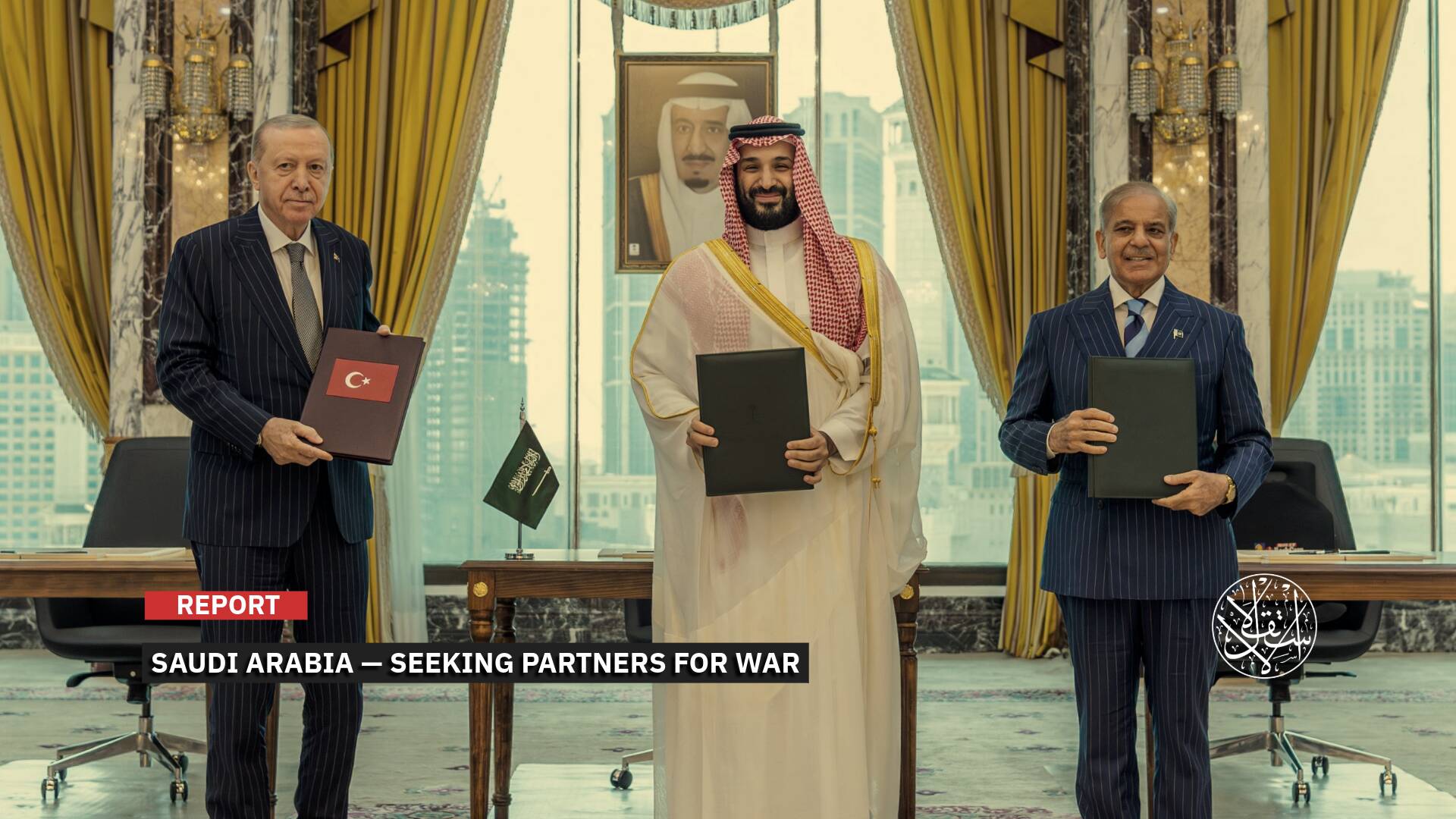
Conversely, a second assessment suggests that the Emirati objective transcends the symbolic dimension and relates to an attempt to reposition Egypt regionally by drawing it away from an axis comprising Saudi Arabia, Turkiye, and Pakistan, and toward another axis led by the UAE and "Israel" with American support.
This perception is based on the fact that Abu Dhabi was keen to highlight the presence of Egyptian and Israeli forces together on its territory as an indicator of the strength of this emerging alliance in the face of other regional axes.
The Pundit, a military platform, indicated in a report dated May 7, that the presence of Egyptian fighter jets serves several purposes, including enhancing readiness for joint patrols, improving response speed, protecting vital infrastructure, training in real operational conditions, and political deterrence.
It also discussed Gulf moves to secure additional military support from Egypt and Morocco, explaining that Cairo had already transferred some air defense assets to its Gulf partners, including advanced defense systems.
It added that el-Sisi's visit to the UAE came amid intense Emirati pressure, which included dangling the threat of Emirati investments and even raising the issue of Egyptian workers in the Gulf.
The third, and most controversial, assessment suggests that Abu Dhabi is effectively trying to embroil Egypt in a confrontation with Iran, serving the goals of the US-Israeli alliance aimed at weakening major regional powers and reshaping the balance of power in the Middle East.
In this context, human rights activist Aida Seif el-Dawla questioned the nature of the mission being carried out by Egyptian forces inside the UAE, and whether they are participating in the same air defense system operated by the U.S. and "Israel" to counter Iranian attacks.
She raised the issue of the news being announced through Emirati media rather than Egyptian media, considering this a reflection of a lack of transparency towards Egyptian public opinion.
She also mocked the contradiction between the official stance that previously rejected the idea of military intervention in support of Gaza, and the current involvement in protecting the Gulf, questioning whether the Egyptian parliament would witness any official inquiry or questioning to explain to Egyptians the nature, limits, and true reasons for this mission.
Contradictory Choices
Prior to this Egyptian stance of military support for Abu Dhabi, widespread questions were raised about the reasons for what was described as Egypt's neutral position regarding the Iranian attacks that targeted the UAE, along with other Gulf states.
Analysts believe Cairo found itself facing a highly complex dilemma between two contradictory options. The first is to align itself fully with the UAE and the Gulf states by providing direct or indirect military support against Iran.
The second option is to adopt a more cautious policy, avoiding involvement in the US-Israeli escalation against Tehran, for fear that weakening or collapsing Iran would lead to a complete imbalance of regional power, paving the way for near-absolute Israeli hegemony over the Middle East.
According to this interpretation, Cairo understood that the fall of Iran as a regional power would create a massive strategic vacuum, granting Israel greater ability to exert its regional influence politically, militarily, and in terms of security.
This explains, in part, Egypt's reticence during the initial weeks of the war, despite simultaneously facing criticism from the Gulf states accusing it of abandoning its traditional allies who have supported the Sisi regime economically and politically since 2013.
Therefore, the deployment of Egyptian fighter jets and pilots to the UAE appeared to many observers to be a significant shift in Egyptian policy, especially since the move—according to critics—was carried out without an official explanation of the nature and scope of the military mission. This sparked widespread debate about whether Cairo was redefining its traditional military doctrine.
Historically, Egyptian military doctrine has been based on the concept of defending borders and the state, while avoiding involvement in open regional conflicts outside Egypt's immediate sphere of influence, except in limited cases related to Arab alliances or clear national security imperatives.
But since the 2013 coup, the concept of Egyptian national security has undergone gradual transformations. The circles of threat have expanded from the traditional dangers associated with borders to more complex issues such as Libya, the Red Sea, the Grand Ethiopian Renaissance Dam, the war in Sudan, and the security of the Arabian Gulf. This has prompted the political and security establishment to adopt a broader concept of what it calls regional defense.
Although supporters of the regime assert that sending air forces or conducting joint operations with Gulf states does not necessarily signify a radical change in Egyptian military doctrine, but rather falls within the framework of protecting national security beyond its borders, critics have questioned the nature of this shift, especially since the deployed Rafale fighter jets are inherently more offensive than defensive.
Observers believe that Egypt’s involvement, even in a limited way, in defensive arrangements related to the ongoing conflict with Iran could gradually draw Cairo into a broader regional conflict, similar—in terms of political and military attrition—to Egypt’s intervention in the Yemen war during the 1960s.

From the outbreak of the regional war in February until the collapse of the Pakistani-led negotiations between Washington and Tehran, Cairo attempted to maintain a delicate balance between condemning Iranian attacks on the Gulf states and avoiding full involvement in the US-Israeli axis.
In the early days of the war, the Egyptian Foreign Ministry condemned the Iranian attacks on the Gulf states and Jordan, a stance understood as an expression of Cairo's commitment to the security of the Arabian Gulf.
However, Egyptian policy quickly shifted towards a more neutral tone, aligning with the positions of Turkiye and Pakistan, which called for preventing the war's escalation.
As fears mounted over the economic repercussions of the war, particularly on the Suez Canal, energy, investments, and tourism, Cairo sought to play the role of political mediator, coordinating with Ankara and Islamabad, in an attempt to prevent the confrontation from escalating into a full-blown regional war.
However, this delicate balancing act placed Egypt under a double pressure. On the one hand, it feared losing the support of its Gulf allies, who expected a firmer stance from it against Iran. On the other hand, it was aware that full-scale involvement in the war could put it in direct confrontation with Tehran and threaten its economic stability and internal security.
In this context, an analysis published by Middle East Eye on April 20 indicated that Cairo views Iran's continued existence as a regional power as a factor limiting Israel's complete dominance over the region.
Bu, it cannot disregard its political and security commitments to its Gulf allies, which explains the hesitation and balancing act that characterized the Egyptian position throughout the months of the war.
Sources
- Egyptian Fighters in the UAE Signal New Phase in Cairo-Abu Dhabi Security Coordination
- Egypt Deploys Rafale Fighters to Abu Dhabi to Reinforce UAE, U.S. and France Against Iranian Strikes
- War on Iran: Why Egypt cannot afford to take sides
- An Egyptian source told Al Jazeera Net: We have forces in 4 Gulf countries [Arabic]