Faultlines at Home, Fires Abroad: Iraq’s Test Under Ali al-Zaidi
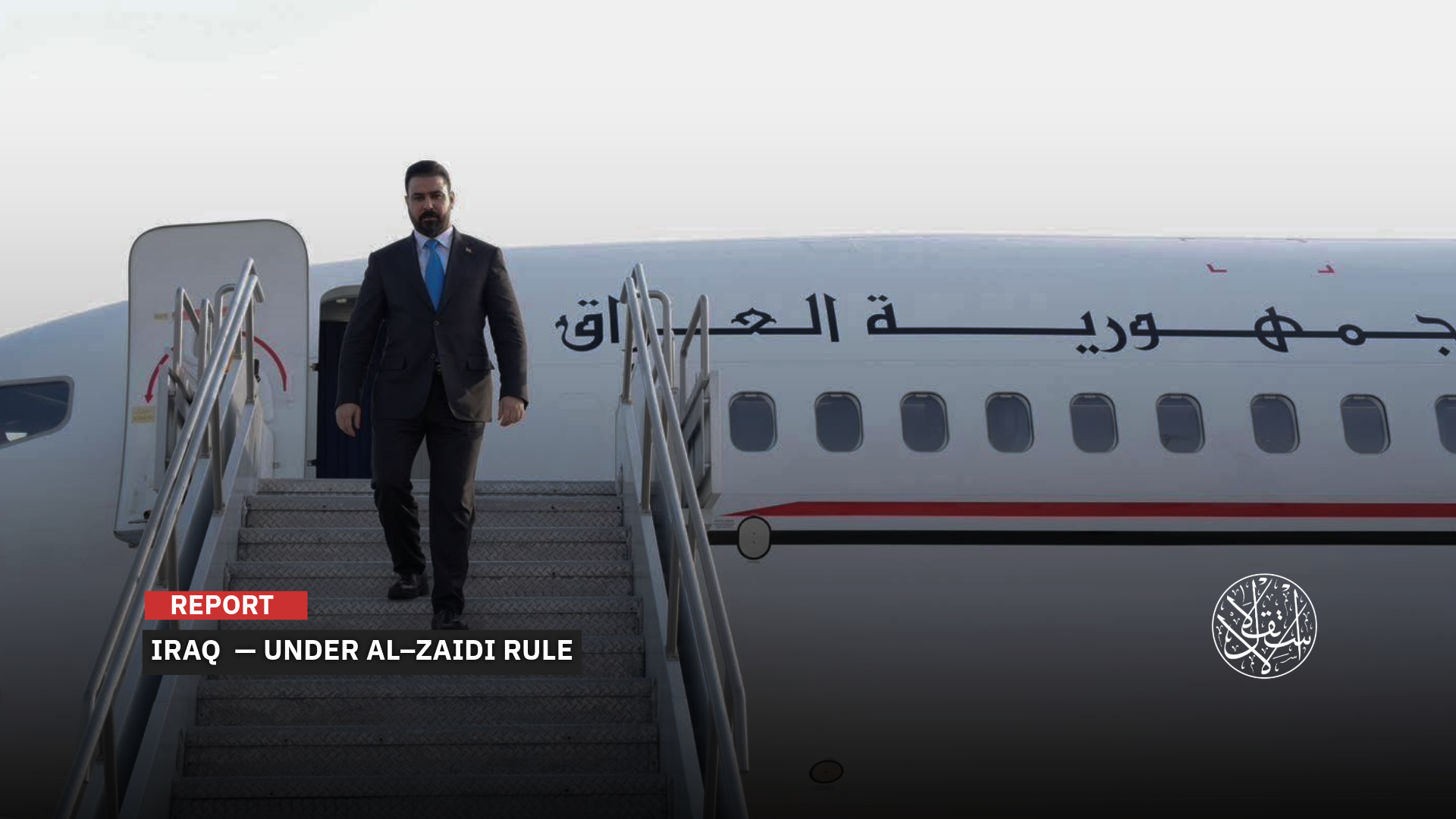
Al-Zaidi enters office under a stack of challenges that will quickly test his government.
Iraq’s prime minister-designate, Ali al-Zaidi, is confronting a dense web of political, military, and economic pressures at a moment of acute regional volatility, sharpened by the outbreak of war between the country’s two principal allies, the United States and Iran, on February 28, 2026.
On April 27, President Nizar Amidi formally tasked al-Zaidi with forming a government after factions within the Coordination Framework (CF) backed his nomination as head of the largest parliamentary bloc, following the withdrawal of several senior rivals, including Mohammed Shia al-Sudani, Nouri al-Maliki, and Haider al-Abadi.
The Defining Test
The thorniest issue facing Iraq’s prime minister-designate, Ali al-Zaidi, is the fate of the country’s armed factions, as pressure from Washington intensifies to dismantle groups, particularly those with ties to Iran.
The United States has offered rewards of up to $10 million for information leading to the wanted figures among the leaders of these factions. Since mid-April, it has announced bounties on several high-profile figures, including Abu Hussein al-Hamidawi, the leader of Kata’ib Hezbollah, as well as Abu Alaa al-Walai and Haydar Muzhir Ma’lak al-Sa’idi (known as al-Gharawi), accusing them of involvement in the killing of Iraqis and in attacks on diplomatic sites and U.S. military bases in Iraq and Syria.
Despite these accusations, their factions took part in parliamentary elections held on November 11, 2025, securing representation in the legislature. Lawmakers aligned with al-Walai joined the State of Law Coalition led by Nouri al-Maliki, while al-Gharawi became part of the Reconstruction and Development Coalition headed by Mohammed Shia’ al-Sudani. Kata’ib Hezbollah, for its part, is represented through the Huqooq Movement bloc.
According to MP Alia Nassif, the issue stands as the most serious challenge confronting al-Zaidi. While other files can be managed, she said, tensions with Washington are likely to persist, noting that former prime minister Mohammed Shia’ al-Sudani faced strains in his relationship with the United States after refusing to target these factions.
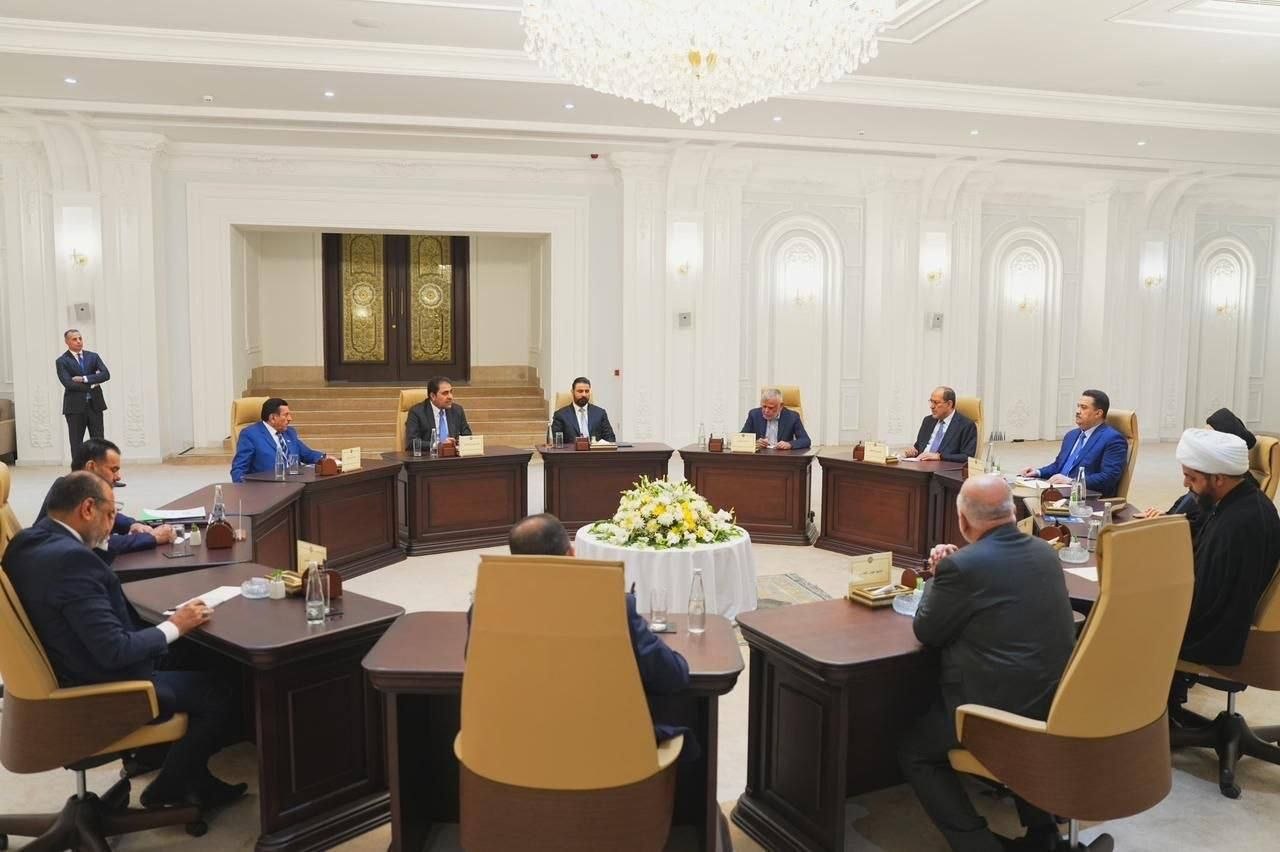
Alongside these pressures, al-Zaidi faces a separate domestic test, as Sunni and Kurdish political forces push for a more balanced distribution of power across the state, particularly in sensitive security and administrative posts such as the intelligence service, the national security ministry, the national security advisory, the army chief of staff, the counterterrorism service, and the federal police, as well as a range of influential government bodies.
In this context, the Sunni National Political Council (NPC) met on May 3 to discuss the formation of the new government, stressing the need to move quickly in line with the demands of the moment while preparing a political roadmap to address the crises in liberated provinces and the accumulation of unresolved challenges.
These demands reflect a long-standing sense of marginalization among Sunni and Kurdish groups dating back to the premiership of Nouri al-Maliki from 2006 to 2014. Many argue that sovereign and security positions have been concentrated largely in the hands of the Shia’ political establishment, despite repeated political agreements pledging a more balanced national framework within state institutions.
Tied by Political Constraints
As for Ali al-Zaidi’s ability to navigate these overlapping crises, Iraqi affairs researcher Mouayyad al-Douri argues that the prime minister-designate is very much a product of the post-2003 governing order, making his positions and choices largely predictable.
“Al-Zaidi, given the manner of his appointment, lacks an independent political base or direct popular mandate, limiting his ability to take decisive action, particularly on sensitive issues such as militia weapons,” al-Douri told Al-Estiklal.
“Any move to dismantle these militias or rebalance power within state institutions,” he added, “will not rest on a single decision but will depend on consensus within the Coordination Framework, where several factions wield significant military and political influence.”
“The real calculus also extends beyond Iraq’s borders, with Iran remaining a central player whose interests shape outcomes on the ground. Any shift in this direction would require collective will that goes well beyond the authority of the prime minister alone.”
Al-Douri also noted that al-Zaidi’s selection points to a preference for an administrative figure rather than a political heavyweight, especially when compared with earlier contenders such as Adnan al-Zurfi, who was widely seen as closer to the United States, a perception that ultimately fueled domestic opposition to his candidacy.
Writer Sabah al-Baghdadi believes factions within the CF are keen to keep government decision-making tied to political consensus, preserving their influence and limiting the executive’s ability to act unilaterally on strategic issues that could upset internal balances or foreign relations.
In an article published on May 2, 2026, al-Baghdadi argued that any reading of Iraq’s political landscape must account for Iran’s weight, noting that Tehran closely watches any signs of rapprochement with Washington, while attempts to assert Iraqi independence are met with complex calculations tied to the regional balance of power.
Against this backdrop, even routine moves by al-Zaidi, including whether to accept or delay an invitation from Donald Trump to visit Washington, carry outsized significance, signaling his political direction in the period ahead.
Trump congratulated al-Zaidi on April 30, describing his appointment as the beginning of a new chapter in bilateral relations and expressing hope for the formation of a government “free of terrorism” while extending a formal invitation for him to visit Washington once a cabinet is in place.
Al-Baghdadi, however, warned that the tangled nature of Iraq’s political scene and the overlap of domestic and external interests could yet stall the government formation process. Disputes, he noted, are no longer confined to the allocation of posts but now reach into the broader orientation of the next administration.
“A prolonged impasse could force al-Zaidi to reconsider his position, including stepping aside if he cannot form a government with enough internal backing without triggering external resistance,” he concluded.
‘A Thick Wall’
Iraqi writer Luqman Barzanji argues that the challenges facing al-Zaidi extend well beyond domestic politics, reaching into the overlapping interests of regional and international powers that have long turned Iraq into an arena for uneasy balances and open-ended conflict.
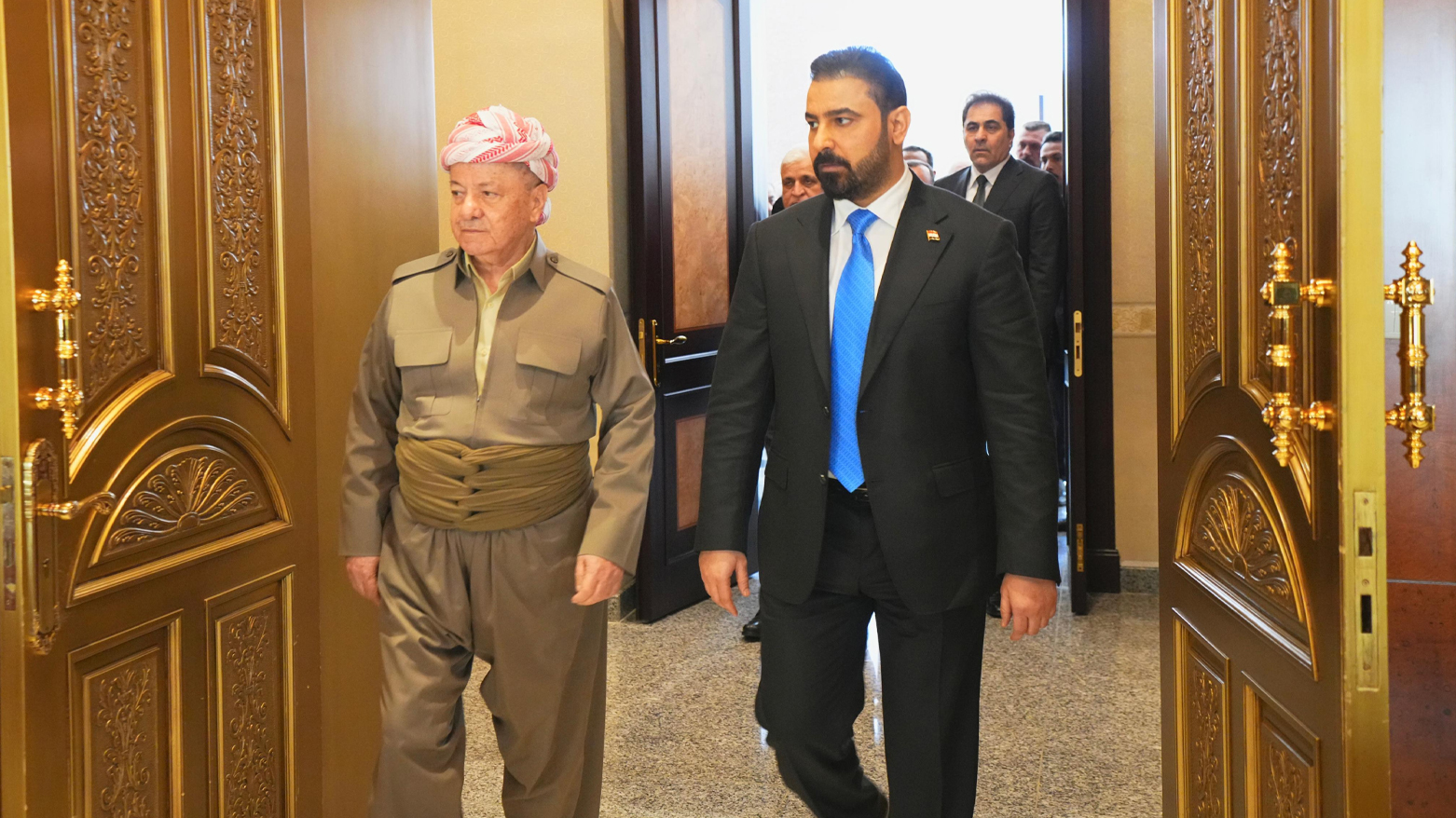
At home, Barzanji says, al-Zaidi is up against a “thick wall” of obstacles, led by a deeply entrenched quota system in which parties and factions see their electoral strength as giving them control over key levers of the state.
Writing on May 1, 2026, he warned that any attempt to break from this formula risks exposing a new government to early collapse, while yielding to it would simply reproduce a weak administration constrained by narrow partisan loyalties.
He also points to a public mood shaped by skepticism and expectation, as the gap between citizens and the political class widens after years of failures in basic services and corruption.
That leaves al-Zaidi under pressure to deliver quick, tangible steps to rebuild trust, even as he operates within a bloated administrative system and under tightening financial constraints.
On the security front, the issue of uncontrolled weapons stands out as one of the most sensitive files. Reasserting state authority and placing arms firmly under official control would mean confronting forces that command both influence on the ground and political representation, making any move in that direction fraught with the risk of upsetting Iraq’s fragile internal balance.
Externally, Barzanji argues, Iraq sits at the heart of complex regional rivalries, placing al-Zaidi in a delicate position as he seeks to manage relations between Iran and the Arab sphere, particularly Gulf states. Striking a balance that preserves Iraqi sovereignty without provoking Tehran, while at the same time reintegrating Iraq into its Arab surroundings, amounts to a highly intricate diplomatic task.
At the same time, relations with the United States and the broader West remain a persistent source of pressure, especially on questions of military presence and security and economic cooperation. Al-Zaidi must navigate between domestic calls to end foreign troop deployments and the state’s need for international support and expertise, while avoiding the risks of isolation or sanctions.
Barzanji concludes that this convergence of pressures leaves al-Zaidi facing a finely poised equation, one that demands careful, calibrated management in a deeply complex domestic landscape and an increasingly turbulent regional and international environment.
Sources
- Ali al-Zaidi Faces a Road of Bumps and Obstacles [Arabic]
- The National Political Council Discusses Government Formation and the Demands of Liberated Provinces [Arabic]
- Iraqi Prime Minister-Designate Caught in a Tight Squeeze: Washington and Tehran Pressure and an Early Struggle Over Sovereign Ministries? [Arabic]
- Trump Congratulates al-Zaidi on His Appointment as Iraq’s Prime Minister-Designate [Arabic]