Pre-Engineered Results: How Did Fatah Rig the Municipal Elections in the West Bank and Gaza?
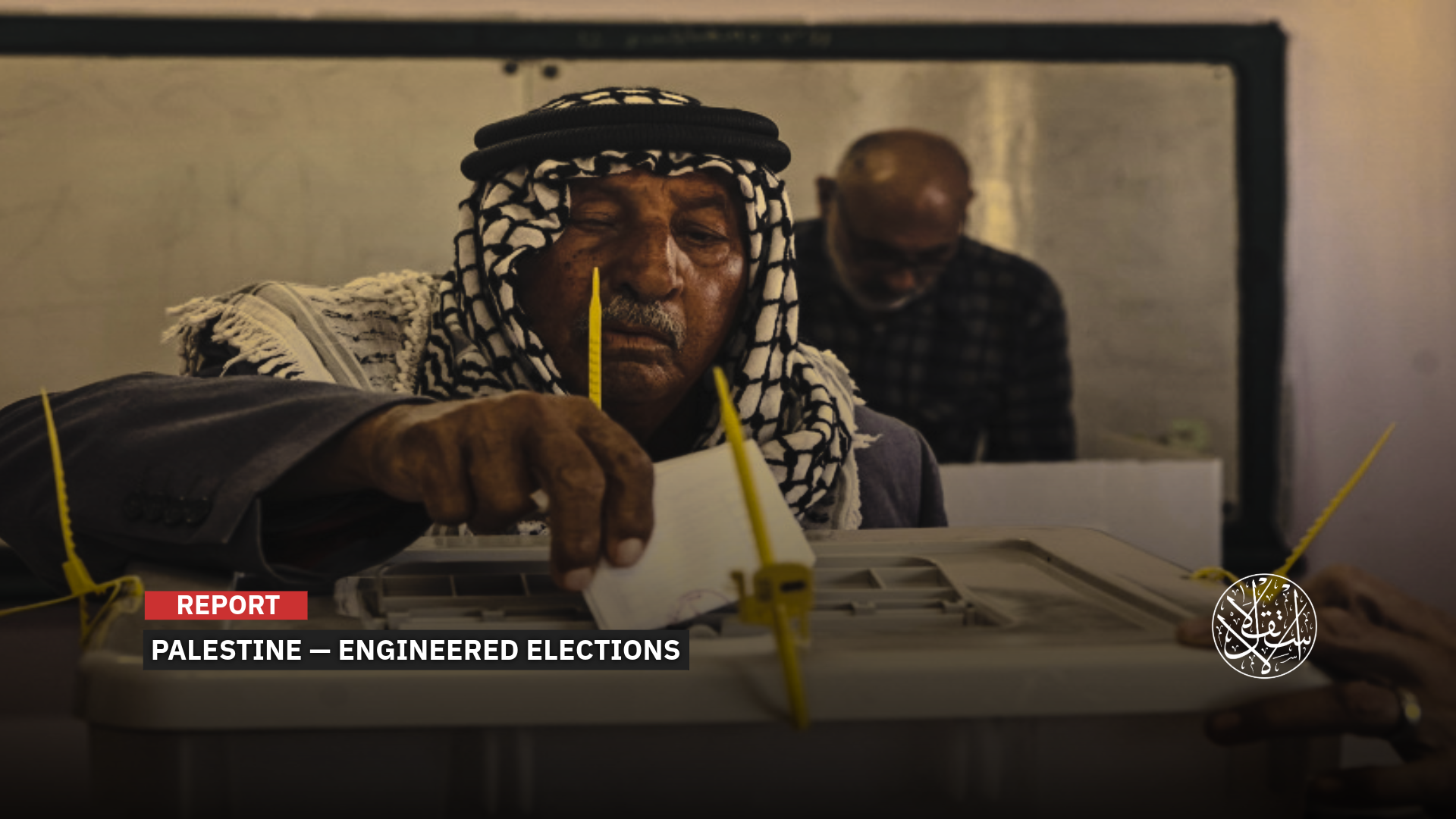
The Authority’s changes to candidacy rules stripped the democratic process of its substance.
After the Palestinian Central Elections Commission announced, on April 26, 2026, the final results of the local elections held in 183 local councils in the West Bank and the city of Deir al-Balah in central Gaza, including the number of votes and seats won by each list, reports spread accusing the process of being rigged in favor of Fatah, which represents the Palestinian Authority.
Politicians and voters pointed out that the amendments introduced by the Palestinian Authority to candidacy requirements stripped the democratic process of its substance and ensured the victory of candidates aligned with the Palestine Liberation Organization. Some went as far as to describe the scene as “Fatah competing against itself.”
The elections, called by the Palestinian Authority after a long period of hesitation and scheduled at a time when “Israel” was occupying roughly half of the Gaza Strip and Hamas’s control had weakened due to Israeli bombardment, were, according to critics, intended to project a decline in Hamas’s popularity in the enclave.
Despite some pro-Authority supporters celebrating Fatah’s victories in several districts, the actual results reflected a different reality, the movement did not achieve a decisive win, despite widespread criticism and suspicions surrounding the integrity of the electoral environment.

Election Results
The holding of local elections in the West Bank and the city of Deir al-Balah, after a 21-year hiatus, along with the wartime atmosphere and widespread pessimism about reforming the Palestinian Authority, was reflected in turnout rates, particularly in the Gaza Strip.
Voter turnout reached only about 23 percent in Deir al-Balah, the only city in the enclave where elections were held due to the destruction of other cities, compared with rates ranging between 40 and 53 percent in the West Bank.
Amid widespread disillusionment and loss of trust, combined with the hardships in Gaza and restrictions in the West Bank, as well as perceptions that the Authority’s leadership in Ramallah is beholden to the occupation, and allegations of weakness and corruption, the elections failed to attract significant public or media attention.
The results announced by the Palestinian Central Elections Commission, including the number of votes and seats won by each list, showed that 197 local councils were elected uncontested, according to the official news agency Wafa.
The elections were conducted under a new law applied for the first time, combining an open-list system with an individual system, and relied on an outdated civil registry in the Gaza Strip, amid the presence of thousands of martyrs and the displacement of entire families from the city.
The Elections Commission said the successful voting experience in Deir al-Balah represents a “political message affirming the geographic unity of the homeland” and reflects the possibility of holding general elections, including presidential and legislative ones, across Palestinian territories despite existing challenges, noting that they could be organized in other areas if suitable conditions are met.

How Did Fatah Win?
Immediately after the election results were announced, Palestinians said the Palestinian Authority had influenced the outcome of the process to ensure the victory of candidates affiliated with it, noting that in some districts the movement appeared to be competing against itself in the absence of genuine rivals.
They explained that most of the lists that took part in the elections were either officially affiliated with Fatah or composed of families and figures aligned or allied with it, while no official lists representing Hamas were present.
In the cities of Jenin and al-Bireh, for example, two lists of independent candidates aligned with Fatah competed against an official list of the movement. Similarly, in the town of Beitunia, west of Ramallah, the candidate was from Fatah, and the competing list was also from the same movement.
Alongside the dominance of family-based lists and uncontested wins, the elections were marked by an atmosphere of fear and political repression, with reports of pressure and threats circulating, prompting candidates to avoid presenting any political discourse, even on everyday issues related to the occupation, according to Palestinian activists on social media.
Reuters and Agence France-Presse reported, on April 26, 2026, that supporters of President Mahmoud Abbas won the Palestinian municipal elections amid low turnout, noting that Abbas-backed lists led in most districts in a vote that included Gaza for the first time in 21 years, despite it being under Hamas administration.

Journalist Alaa al-Rimawi said that the local elections in the West Bank were marked by political stagnation, alongside accumulated social transformations within Palestinian society, which led to the emergence of new local and interest-based blocs in the absence of real political competition.
He added that Fatah lists did not face direct competition from any organized political bloc, making the elections closer to local, familial, and interest-based contests rather than competitions over political programs or comprehensive visions.
He also noted that the turnout rates announced by the Elections Commission require scrutiny, given that some local councils and municipalities did not hold elections at all, either due to uncontested races or lack of competition, which raises questions about the significance of the published figures.
Palestinians documented examples of low turnout and boycott, as only two voters out of 2,510 registered voters cast their ballots in the municipality of Kafr Qallil in Nablus, which has nine municipal seats.
Political analyst Mazen al-Jaabari said that the elections were accompanied by multiple problems, noting that they were not a priority for Palestinians at this time, and were absent from major cities such as Ramallah and Nablus, as well as from the Gaza Strip except for Deir al-Balah. He also pointed out that they were held under an electoral law issued by presidential decree that did not enjoy Palestinian consensus.
The Quds Press agency reported, on April 27, 2026, that despite the promotion of the elections as a “democratic celebration,” they reflected a deeper crisis than just results and ballot boxes, describing them as a “farce that reflects the tragedy of the options available to Palestinians.”
It also noted the absence of real competition in many areas, declining public participation, and the prevalence of uncontested wins and political disengagement, raising serious questions about the usefulness of the electoral process and its ability to represent citizens’ will and everyday concerns.
Hamas also raised the issue of the exclusion or obstruction of some electoral lists, stating that election committees or relevant courts accepted appeals against lists associated with it, or rejected their registration for procedural reasons, while being more lenient with lists close to Fatah, which it said led to a “pre-engineering of results.”
Palestinian analysts attributed Fatah’s performance in the 2026 elections, including its uncontested victories in several areas, to a limited competitive environment, as well as the movement’s ability to mobilize and organize. However, they stressed that these results do not conclusively determine its popular support, given the absence of full competition and comprehensive participation across both the West Bank and the Gaza Strip.
The results showed that the “Deir al-Balah Together” list, an independent list close to Hamas, won only two seats out of 15 in Gaza, the same number obtained by the “Peace and Construction” list, whose candidates were largely affiliated with Hamas.
In contrast, the “Deir al-Balah Renaissance” list, backed by Fatah led by Mahmoud Abbas and the Palestinian Authority, won six seats, while the “Future of Deir al-Balah” independent list secured five seats.
Palestinian analyst Yasin Ezzedine said that the municipal elections held only in Deir al-Balah in the Gaza Strip saw the participation of four independent lists, one of which was associated with Fatah (“Renaissance”) and won six of the 15 seats.
He added, “Fatah had bet that people in Gaza would reject the resistance after all the destruction and turn to the Authority, but this bet did not materialize,” noting that the three other lists, which together won nine seats, later formed a coalition to run the municipal council after the elections.
Palestinian political analyst Reham Odeh told Reuters on April 22, 2026, that the municipal elections represent a “symbolic step aimed at sending a message to the world, to the Peace Council, and to “Israel”, that the Gaza Strip is an integral part of the Palestinian political system.”
She later added that the election of figures supportive of or close to Fatah could ensure that residents of Deir al-Balah receive unrestricted international support for the municipality, and could also pave the way for a gradual return of the movement to governing Gaza, even at the municipal level, with the possibility of further developments if legislative elections are held in the future.

Hamas Did Not Run for Office
Hamas, which ousted the Palestinian Authority in Gaza in 2007, did not present official candidates in the enclave, and also boycotted the elections in the occupied West Bank, a move that made Fatah candidates’ victory widely expected, according to Reuters.
The movement stated that it did not publicly announce candidate lists or endorse any candidates, attributing this to its disputes with President Mahmoud Abbas over a presidential decree requiring candidates to meet specific conditions, including recognition of “Israel”. It said that other factions also boycotted the elections for the same reasons.
The election law included a political condition requiring participants to adhere to the program of the Palestine Liberation Organization, which significantly limited political competition.
Hamas had previously criticized the new election law issued by President Mahmoud Abbas, describing it as a “serious infringement on citizens’ right to freely choose their representatives,” because it requires municipal candidates to adhere to the PLO’s program and international legitimacy, which it said effectively implies recognition of the Israeli occupation as a prerequisite for candidacy.
President Abbas’s decree, issued on January 27, 2026, amended Election Law No. (23) of 2025 on the election of local bodies.
The amendment revised Article (16), requiring “candidates on lists to pledge commitment to the Palestine Liberation Organization as the sole legitimate representative of the Palestinian people, its political and national program, and relevant international legitimacy resolutions.”
It also amended Article (19) to include the same requirement, obliging candidates to declare their commitment to the PLO, its political program, and international legitimacy resolutions.
Critics argue that these amendments strip the electoral process of its substance and restrict political competition, in a way that ensures the victory of candidates aligned with the Ramallah-based Authority or forces any candidate to adopt its program even if they oppose it.
Despite this, residents and analysts classified some candidates in Deir al-Balah as being close to Hamas, making votes for them a potential indicator of the movement’s level of support, according to Agence France-Presse.
This was also viewed by political analyst Hani al-Masri in the West Bank as an indicator that could be used to measure Hamas’s popularity, as well as the performance of candidates associated with it.
The voting marked the first elections held in the Gaza Strip since 2006, and the first across both the West Bank and Gaza since the outbreak of the war in 2023, while the last local elections had been held in 2005.
Hamas has governed the Gaza Strip since 2007 and appointed municipal and local councils twice, in 2007 and again in 2023, months before the outbreak of the war with “Israel” in October of that year.
Hamas regained control of Deir al-Balah and other areas along Gaza’s coastline, from which Israeli Occupation Forces withdrew under a ceasefire agreement in October 2025, while “Israel” still controls more than 53 percent of the territory.
Some polls have indicated that Hamas continues to enjoy popularity in both Gaza and the West Bank despite the extensive destruction caused by the war.
A survey conducted by the Palestinian Center for Policy and Survey Research in October 2025 showed that 41 percent of Palestinians support Hamas, compared to 29 percent who support Fatah.
The vote comes at a time when the so-called “Peace Council,” linked to U.S. President Donald Trump, is promoting a plan for Gaza’s future based on rebuilding the territory from scratch under the administration of a non-political technocratic Palestinian committee, whose entry into Gaza has not yet been permitted by “Israel”.
Sources
- Palestinian Leader’s Loyalists Win Local Elections, Including Some Seats in Gaza
- PA Leader Abbas’s Loyalists Win Local Elections, Including in Gaza’s Deir al-Balah
- Fatah Loyalists of President Mahmoud Abbas Win Palestinian Municipal Elections Amid Limited Participation [Arabic]
- How Did Fatah Secure Victory in Local Authority Elections in the West Bank and Gaza? [Arabic]
- Observers: Palestinian Local Election Results Do Not Reflect the Political Reality or Popular Will [Arabic]