From Politics to Religion: How the Escalating Confrontation Between Trump and the Church Is Impacting
“Trump called Leo WEAK on Crime and terrible for Foreign Policy.”
US President Donald Trump recently participated in a public Bible reading as part of his administration's efforts to integrate religion, particularly Christianity, into official work.
According to a CNN report, the Trump administration has been working to integrate Christianity more deeply into official work, and the president's participation is particularly noteworthy given his recent religious controversies.
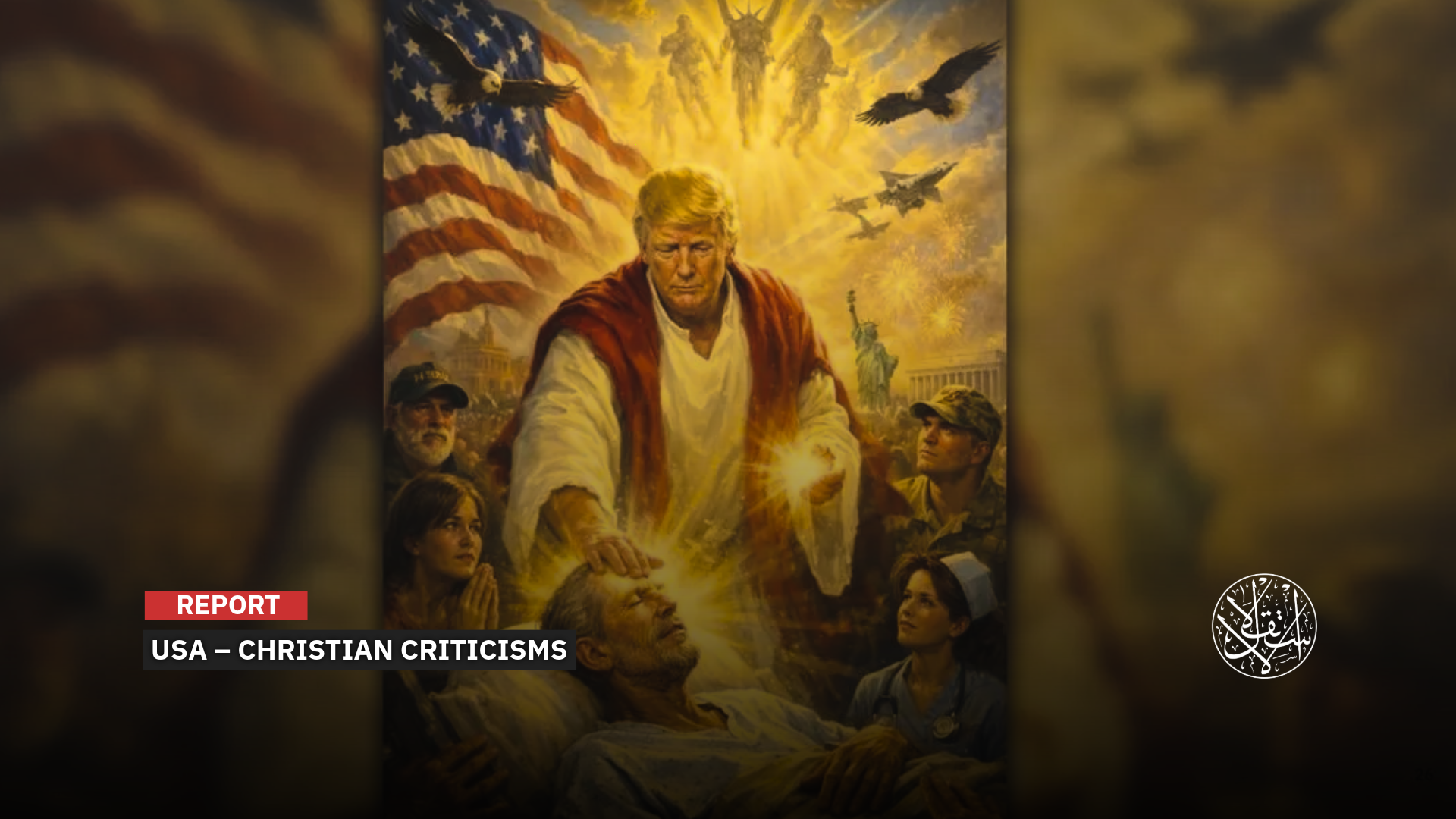
This month, Trump posted an AI-generated image of himself as Jesus, sparking outrage among his base and forcing him to delete it.
The controversy surrounding Trump's remarks, deemed offensive to Pope Leo XIV, also ignited widespread anger and criticism from both religious and political circles, drawing significant reactions from church institutions, human rights organizations, and public figures.
According to media reports in recent days, the remarks attributed to Trump were considered a breach of established diplomatic protocol in dealing with major religious figures.
These remarks also sparked a wave of angry reactions, particularly within Catholic and Christian circles, who viewed the speech as an affront to the Pope's position and his global spiritual role.
Unprecedented Tension
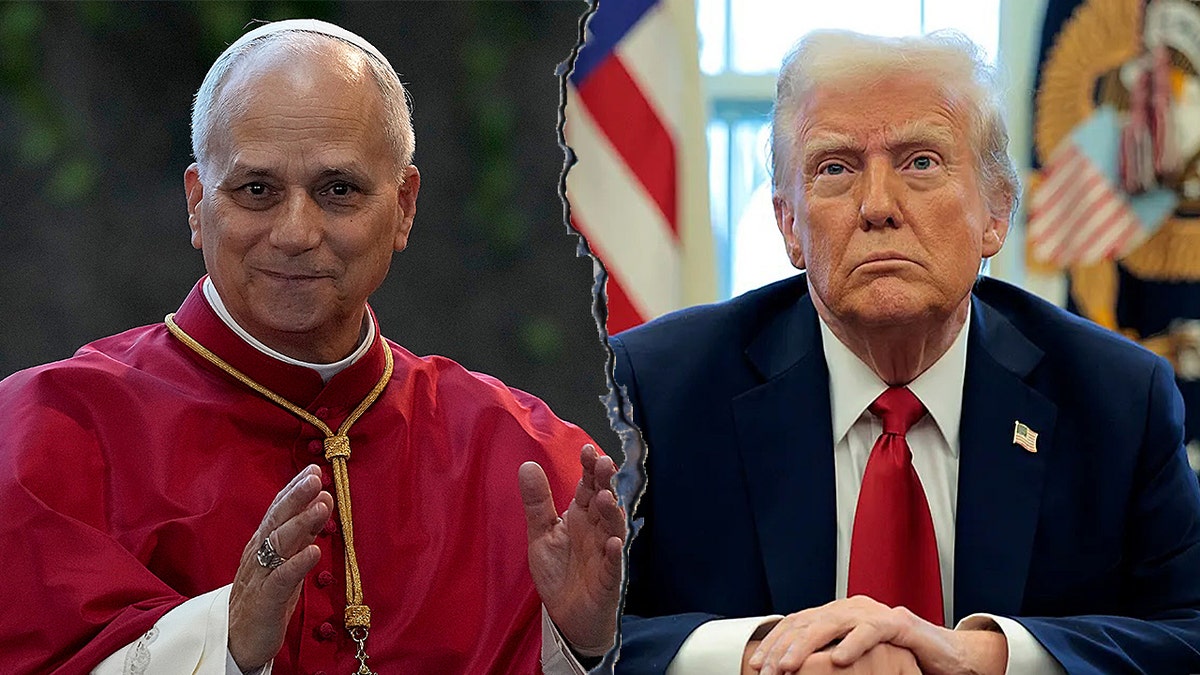
After a week of heated verbal exchanges between US President Donald Trump and Pope Leo XIV, Vice President J.D. Vance recently intervened in the crisis, attempting to defuse tensions by adopting a more conciliatory tone.
Vance, who had initially supported Trump in the dispute, chose this time to express appreciation for the Pope's remarks, emphasizing the US administration's desire to end the conflict and avoid further escalation.
"Arguing with Trump is not in my best interest," the Pope stated clearly, addressing the ongoing crisis.
He also noted that some media coverage of his statements had presented a narrative that lacked accuracy in certain aspects, in an attempt to clarify his remarks.
President Trump, in turn, adopted a less confrontational tone than his previous week of sharp rhetoric, telling White House reporters that he had the right to disagree with the Pope, but without offering any apology for his past remarks.
While Trump insisted on his right to disagree, Pope Leo clarified that his criticisms of those who manipulate religion for political and military purposes had been written two weeks prior to his delivery, meaning their content predated the recent dispute with the White House.
This more moderate tone followed a heated week of verbal sparring between President Trump and the Pope over the US-Israeli war on Iran, which the Pope had strongly criticized.
In the context of the war on Iran, the Pope repeatedly called for peace in the Middle East, emphasizing that God does not answer the prayers of those who wage war, a stance that angered the US president, who responded with sharp criticism.
Pope Leo XIV is among the most vocal critics of Trump's threats against Tehran, particularly his vow to completely destroy Iranian civilization if the deadline he gave them didn't respond.
On April 13, Trump posted a message describing Pope Leo XIV as weak on crime and a disastrous foreign policy.
He then posted an AI-generated image of himself as Jesus Christ healing the sick, but was forced to delete it after a wave of condemnation from both his supporters and opponents.
He also wrote on his platform: "If I weren't in the White House, Leo wouldn't be in the Vatican."
This statement, which the Pope responded to firmly, calling it completely unacceptable, ignited tensions between the Vatican and the White House.
Unacceptable Justifications
This is not the first time Trump has attacked the Catholic Church. He previously clashed with Pope Francis during his first term over immigration policies and the construction of the border wall.
Last year, after Pope Francis's death, Trump posted a picture of himself dressed as the Pope, sparking widespread outrage within Catholic circles.
The U.S. is home to approximately 60 million Catholics, representing nearly 20 percent of the adult population. Trump garnered significant support from Christian voters during the last election and strengthened his ties with the conservative religious movement during his second term.
After surviving an assassination attempt in July 2024, Trump reiterated his belief that divine intervention saved him, stating that he believes God saved him for a specific purpose: to make the country stronger.
Analysts believe these remarks could spark a new conflict between the US president and the religious right, as well as some members of his administration who belong to the Catholic faith, such as Vice President JD Vance and Secretary of State Marco Rubio.
Despite the wave of criticism, Trump refused to apologize, saying he would not apologize because the Pope had said things wrong about a war with Iran, adding that he was simply responding to those remarks.
He added that the Pope should stay out of politics, emphasizing that he disagreed with him on the issues at hand and that he saw no need for the Pope to intervene in political affairs.
In a related development, the Pope has become one of the most prominent critics of war, directly calling on Trump to find a diplomatic solution, stressing that he is not afraid of the US administration and that he does not intend to attack any party.
The Pope stated that his message is purely religious, based on the call for peace, and that he will continue to criticize wars and support dialogue between nations.
He also emphasized that using the name of Christ to justify wars is unacceptable, a statement that observers interpreted as an indirect criticism of US Secretary of War Pete Hegseth.
In a post on his platform, Trump explained that he possesses highly sensitive information, indicating that it represents a direct existential threat to the papacy and the Catholic Church.
However, he stated that he is refraining from releasing it at this time out of respect for the world's one billion Catholics, a move that carries a dual message of escalation and pressure.
Trump asserted that the release of these files would not be merely a media event, but a radical shift that could redraw the map of religious influence globally, suggesting that the repercussions of the disclosure—if it occurs—could affect the international geopolitical and religious landscape.

Religious-Political Conflict
The dispute between Trump and Pope Leo XIV has highlighted the conflict between the two most powerful figures in America, and is also testing the loyalty of tens of millions of Catholics in the U.S., according to The Wall Street Journal.
This conflict has resonated in churches, parking lots, and Catholic neighborhoods across the United States, from Pittsburgh to Boston and Miami, where Catholic voters throughout the country have expressed deep disappointment.
For some Catholics, the animosity of recent days is disheartening, but not surprising. Some say they have learned to live with Trump's contradictions because they see him as the better option than the alternatives, pointing to his fulfillment of campaign promises.
The growing criticism from his Christian supporters did not deter Trump from recently reposting a photo of himself embracing Jesus Christ on his Truth Social account, writing: "This might not appeal to the radical left, but I think it's very beautiful!"
Official religious condemnations have also emerged, with several clergymen emphasizing that any insult directed at the head of the Catholic Church cannot be treated as a mere political stance, but rather, as they put it, an attack on a religious symbol representing hundreds of millions of believers worldwide.
The Archbishop of Oklahoma City, Paul Cuokakli, said he was disappointed by Trump's offensive remarks.
Some church statements also considered the prevailing rhetoric to be contributing to deepening divisions among peoples and threatening the values of religious coexistence.
On the popular level, social media platforms witnessed a widespread wave of criticism, with activists launching hashtags demanding respect for religious symbols and rejecting the mixing of politics and religion. Others called for an official apology and clarification from Trump or his political team to alleviate the escalating tension.
Meanwhile, political analysts were divided on the implications of this controversy. Some observers saw such statements, whether direct or attributed, as reflecting the increasing political polarization in the U.S. and the world, where religious issues are sometimes used in the context of political or media campaigns.
Others warned that the continuation of this type of rhetoric could negatively impact the image of the U.S. globally, especially regarding its relations with international religious institutions.
Analysts have noted that the Vatican is always careful to avoid direct political debates, but at the same time, it rejects any attack on its symbolic status or any diminishment of the Pope's position as a global spiritual leader. This explains the wave of reactions that accompanied this issue, even if they came in an unofficial context or through media platforms that are not entirely reliable.
Amid this controversy, several religious voices renewed their calls for the separation of political and religious discourse, warning that the continued overlap between the two spheres could lead to wider cultural and religious tensions, especially given the already tense global situation.
For his part, political analyst Ibrahim Khatib told Al-Estiklal that "the Trump administration claims to be a protector of Christians, yet when it began its aggression against Iran, the Secretary of Defense surprised the public by asking all Americans to pray for the victory of Christ, not God."
He emphasized that "seeking God's help is natural, but addressing only one segment of the population, or ignoring the religious diversity of American society, is a political sin of the highest order."
"With Trump's popularity among Catholics at its lowest point, the analyst predicted the end of the traditional alliance between the conservative right and the Church, which puts Trump in a real electoral predicament ahead of the midterm elections," he noted.
He concluded that "the conflict is no longer just a passing political disagreement, but a moral clash over the legitimacy of using violence in international relations."