Defection of al-Nour al-Qubba, a Key RSF Commander: Could It Change the Course of Sudan’s War?
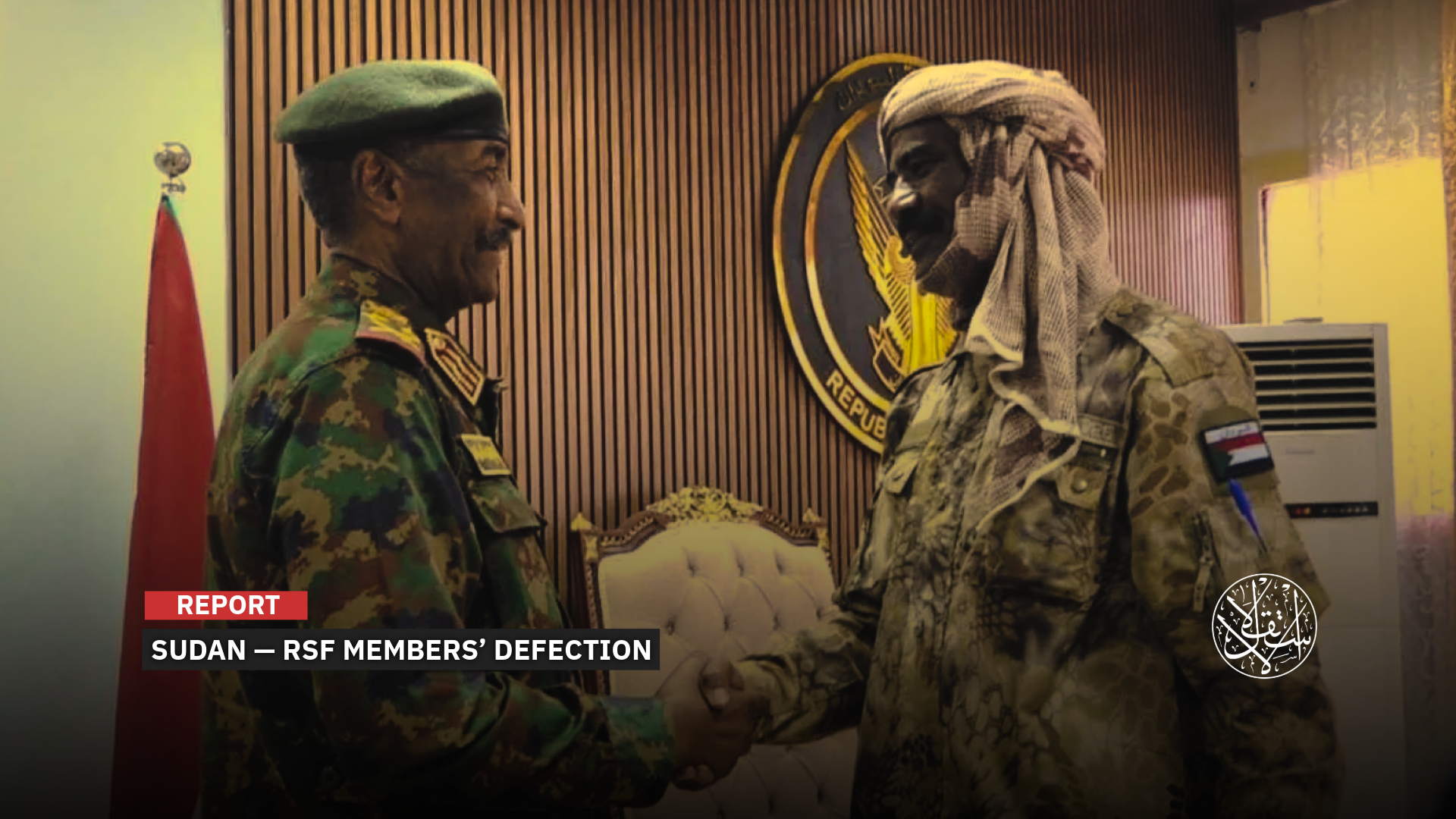
Five of Hemedti’s advisers announced their defection from the Rapid Support Forces in the same month.
The defection of Major General al-Nour Ahmed Adam al-Qubba, one of the most prominent field commanders in the Rapid Support Forces (RSF) led by Mohamed Hamdan Dagalo (Hemedti), marks one of the most significant breaks yet inside the UAE-backed militia. Ranked among its top leadership alongside Hemedti and his brother Abdul Rahim Dagalo, his departure underscores a growing fracture at the core of the force.
It follows a steady stream of defections among commanders and advisers since the war erupted in April 2023, with several figures switching sides to the Sudanese army. Among the most notable was Abu Aqla Keikal, who led RSF forces in Gezira State before announcing his defection in October 2024.
That same month, five of Hemedti’s advisers also broke ranks, including Abdel Qadir Ibrahim, who oversaw eastern Sudan and organizational networks, accusing the militia of steering the country toward destruction.
Al-Qubba’s defection, accompanied by a large contingent of his fighters, and his reception by army chief Abdel Fattah al-Burhan points to deepening internal rifts and leadership struggles within the RSF, particularly in Darfur. It also highlights the fragility of loyalty to Hemedti, raising the prospect that the force could splinter into rival militias if the pace of defections continues.

Who Is al-Nour al-Qubba?
Major General al-Nour Ahmed Adam al-Qubba, widely known as al-Nour al-Qubba, is one of the most prominent military figures in Sudan’s Darfur region and a founding pillar of the RSF militia. A senior field commander, he played a central role in major operations, especially those tied to the siege of el-Fasher.
Al-Qubba’s military career began in 2003 within the Border Guards under tribal leader Musa Hilal. He later joined the rebellion led by Hemedti and Idris Hassan in Darfur in 2006. Years later, he was reintegrated into the Border Guards as a colonel before joining the RSF militia in 2017 as a major general, eventually rising to become one of its most influential field commanders.
Before the Border Guards were absorbed into the RSF, he held senior leadership roles and led major military campaigns across Darfur, becoming part of the militia’s core command structure.
His defection carries added weight because of his deep tribal influence within the Rizeigat, particularly the Mahamid branch, which is led by Musa Hilal. Alongside his military standing, this tribal reach has made him a key power broker across Sudan’s western border regions.
Multiple accounts suggest that pressure from Hilal played a direct role in accelerating al-Qubba’s break, especially as tensions between Hilal and RSF leadership escalated following an alleged assassination attempt against him in February 2026.
Both the Transitional Sovereignty Council (TSC), led by army chief Abdel Fattah al-Burhan, and Hilal’s Revolutionary Awakening Council (RAC) welcomed al-Qubba’s defection and his alignment with the Sudanese Armed Forces (SAF).
Observers also link his decision to RSF military movements toward Mistereiha, a stronghold of Musa Hilal, where al-Qubba maintains close ties. Reports have also pointed to growing frustration within his ranks over marginalization by RSF leadership.
Al-Qubba had previously warned against any assault on Mistereiha, arguing it could trigger internal tribal fractures within the RSF. He also voiced objections over what he saw as neglect and sidelining of his forces.
After the attack went ahead, tensions escalated sharply. Reports indicate he received threats from RSF media official al-Tayeb Khalil, warning that his time was running out if he did not fall back in line, as RSF militia forces tightened their presence around him.
In an attempt to contain the fallout, Hemedti dispatched a delegation from the Mahamid tribe to persuade him to reverse course, but al-Qubba refused. Mounting tribal pressure tied to the Mistereiha attack, combined with increasing isolation on the ground, appears to have sealed his decision to break away.
Signs had been mounting that RSF leadership viewed al-Nour Ahmed Adam al-Qubba as a growing threat. Reports circulated that forces had been dispatched to detain him and strip him of his troops and weapons, but he managed to withdraw with his forces before ultimately surrendering to the Sudanese army.
His exit is part of a wider pattern of defections within the RSF militia led by Mohamed Hamdan Dagalo, with several field commanders already switching sides in recent months.
Among the most consequential was Abu Aqla Keikal, who defected in October 2024 while commanding RSF forces in Gezira state, then fully under RSF control, a move that significantly shifted the balance on the ground.
Keikal later led military operations against the RSF in the same region, reclaiming it on January 11, 2025, just three months after joining the army, a trajectory many believe al-Qubba may attempt to replicate in Darfur, particularly in efforts to retake el-Fasher.
According to multiple Sudanese media sources, al-Qubba reached northern Sudan on the evening of April 18, 2026, after an arduous 800-kilometer journey across the deserts and valleys of North Darfur. Details of the route were kept tightly guarded amid fears RSF leadership might detect his plans and move to intercept him.
Military sources cited by BBC said on April 21 that the defecting commander traveled with a force of 47 fully equipped combat vehicles and a group of loyal fighters, departing from a village near Kutum, where he had been based, before passing through areas under the influence of Musa Hilal and into areas controlled by the Sudanese army.
Other accounts, however, point to a much larger force. Sheiba Dirar, head of the Alliance of Eastern Sudan Parties and Movements, told the Sudanese newspaper al-Tayar that al-Qubba returned with more than 130 combat vehicles, underscoring conflicting estimates over the size of the force that accompanied him.

Why Does His Defection Matter?
The return of Major General al-Nour Ahmed Adam al-Qubba marks a turning point that goes beyond battlefield calculations and into morale and momentum. Analysts say it could open the door to a wider wave of defections within the RSF, especially in Darfur, accelerating the militia’s fragmentation and potentially shortening the war.
Al-Qubba is not just another commander switching sides. He played a central role in the siege and eventual capture of el-Fasher in October 2025, and Sudanese analysts now expect he could play a similarly decisive role if he joins efforts to retake the city, which remains under RSF control. His detailed knowledge of the terrain, combined with deep tribal ties, gives him a tactical edge, along with what some see as an attempt to atone for the war crimes that followed the city’s fall.
He had led the forces that encircled and attacked el-Fasher after the killing of RSF commander Ali Yaqoub in mid 2024 and is widely credited with helping secure the city after nearly two years of fighting, aided by his close ties to RSF deputy leader Abdel Rahim Dagalo.
Long before the war erupted between the RSF militias and the Sudanese army in April 2023, al-Qubba had been a key figure in Darfur’s tribal and military balance, making his shift not just a military loss for the RSF but a political and social one as well.
After RSF forces seized el-Fasher, he withdrew with loyal fighters to his stronghold near Kutum, remaining there as signs of a break slowly took shape before his eventual move into army-controlled territory.
His reception by army chief Abdel Fattah al-Burhan also reflects more than a battlefield gain. Sudanese journalist Nassif Salah al-Din told the BBC that contact between the two sides dates back to the early days of the war, suggesting his defection may have been the result of a long-running effort to neutralize him.
Some assessments go further, describing the move as the outcome of a carefully coordinated intelligence operation involving the SAF and the General Intelligence Service, planned in secrecy and executed with precision, which could explain the organized nature of his withdrawal.
But the political cost may prove just as significant. Al-Burhan’s decision to grant amnesty to al-Qubba and other RSF-linked commanders, allowing them to rejoin the army despite accusations of war crimes in Darfur, particularly in el-Fasher, has sparked intense debate inside Sudan.
Rights advocates warn that such moves risk entrenching impunity, especially amid concerns over pressure on human rights defenders. Several field commanders returned alongside al-Qubba, including Mahmoud al-Wali, Mohammed Kafouh, Ibrahim Abu Kanish, Ali Tango, and Dahiya al-Amin, all reportedly linked to bloody attacks in Darfur.
For many, the concern is not only accountability but also precedent: that granting official amnesty for crimes such as killing, torture, and sexual violence could undermine justice for victims and blur the line between political expediency and legal responsibility, crimes that are not subject to statutes of limitation or individual pardon.
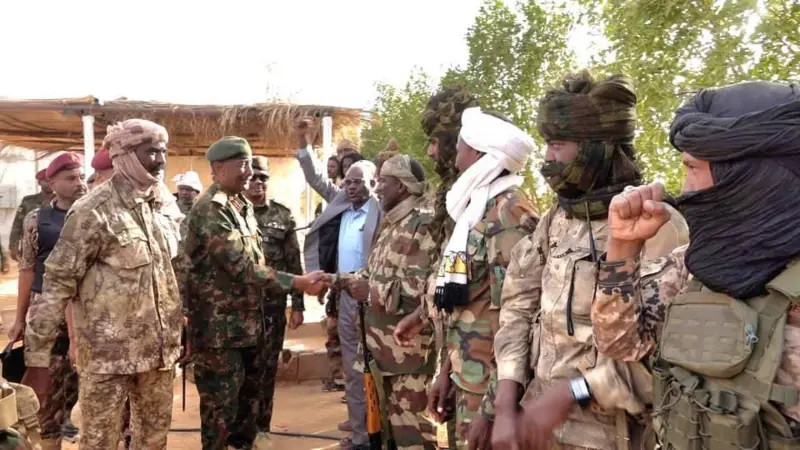
In el-Fasher, the backlash was immediate. The el-Fasher Resistance Committees said in a statement that al-Qubba and those who joined the army with him are “responsible for serious crimes,” calling for them to be disarmed and put on trial.
“What was committed against the people of Darfur and Sudan is not a series of passing mistakes that can be erased by political decisions or general amnesty,” the statement said, describing documented abuses including killing, looting, intimidation, and violations of human dignity. Disarmament, it added, would be only the bare minimum and far short of real justice.
Others see it differently. Some Sudanese voices and media outlets have welcomed those who lay down arms and join the army or a political path, arguing that the step deserves support as a way to limit further harm. Osman Mirghani, editor in chief of the newspaper al-Tayar, framed it in pragmatic terms, saying preventing greater damage should take precedence over pursuing potential gains.
Mirghani, speaking to Albalad News, framed the issue in starkly pragmatic terms. “Every weapon surrendered voluntarily spares a drop of blood among army ranks and allied forces,” he said, arguing that the move is less about rewarding past crimes than preventing new ones and accelerating the end of the war at the lowest possible human cost.
“Every soldier, officer, or commander who lays down arms saves lives in proportion to their military weight,” he added, urging that the issue be viewed through a simple calculus: preventing harm should come before pursuing potential gains.
Could this Change the Course of the War?
Whether the defection will shift the battlefield remains an open question, but the signs inside the RSF suggest growing strain. Loyalty within the militia has long been built on personal ties rather than institutional structure, with promotions often driven more by allegiance than competence. Combined with external backing, particularly from the United Arab Emirates (UAE), which is seen as flowing to select commanders, resentment has been building within the ranks of forces led by Mohamed Hamdan Dagalo.
According to the Sudanese outlet Alweeam Newspaper, that internal tension became more visible after the RSF captured el-Fasher in October 2025. The defection of al-Qubba exposed a deeper crisis of trust within the command structure, highlighting fragile alliances that begin to crack when gains stall or leaders diverge.
Reporting from the Sudanese Echo points to multiple factors behind his departure, including rising frustration within the militia and disputes over influence and leadership in North Darfur.
Despite his key role in securing el-Fasher, al-Qubba was not appointed military commander of the state. Instead, the position went to Gedo bin Shouk, a figure seen as closer to RSF leadership, reinforcing perceptions that loyalty, not merit, drives decision-making and deepening tensions within senior ranks.
External support has only widened that gap. Funding and weapons, particularly from the UAE, have reinforced a system built on raw power rather than institutional development. The result, analysts suggest, is a force that looks less like a future governing entity and more like a network at risk of prolonged fragmentation, raising doubts about its ability to evolve into a stable political or state structure.
According to Alweeam, the seeds of al-Qubba’s break began to form after the battle of el-Fasher, when RSF leadership abruptly sidelined his role and excluded him from key command appointments, replacing him with bin Shouk, a figure described as having close ties to RSF leadership.
That marginalization, the report suggests, deepened a sense of grievance that later fed into internal weakness and declining battlefield cohesion within the forces of Hemedti.
At the same time, there were signs that some forms of external support were narrowing as regional actors became preoccupied with other conflicts. That shift intensified internal competition over resources and influence, pushing the RSF toward a more fragmented structure, closer to armed groups dividing territorial control, with the risk of turning on one another.
As cities increasingly became zones of competing authority, and war decisions were shaped by power balances, tribal alignment, and external backing rather than a coherent political settlement, the absence of a functioning state framework and the continuation of defections have raised the prospect that the RSF could splinter into multiple competing entities, further weakening its position against the Sudanese army.
A Sudanese analysis published in Alweeam argues that al-Qubba’s defection carries strategic weight, marking a breach in the tribal and internal cohesion of the RSF and sending a signal to other sidelined field commanders that defection is now a viable path.
The report notes that attention has shifted to potential ripple effects in North Darfur and the Northern State, amid reports that other commanders, including a figure known as Hamouda, could join a widening wave of defections. If such scenarios materialize, it warns, the RSF’s structure could face an existential challenge that turns its past battlefield gains into rapid internal losses.
This context may explain why Sudanese army chief and TSC head Abdel Fattah al-Burhan personally received al-Qubba after his defection, traveling to Dongola in northern Sudan to welcome him and the forces that accompanied him, underscoring the importance of the shift for the army.
Official images showed al-Burhan greeting him warmly and presenting him with a vehicle reportedly linked to the presidential fleet, just one day after his arrival in army-controlled areas, highlighting the symbolic and military value attached to the move after more than three years of war.
Before his defection was announced, sources inside the RSF told Darfur24 on April 14, 2026, that Hemedti had personally led intensive efforts to dissuade him from leaving.
Those same sources say al-Qubba left his position in the al-Qubba area of al-Waha locality in North Darfur about a week before the announcement, with his destination initially unclear before his alignment with the army was confirmed.
Prior to his departure, he reportedly sent a sharply worded message criticizing RSF leadership, accusing it of marginalization and humiliation, and saying he had been forced to pay for his own medical treatment after being wounded in the el-Fasher battles.
He also accused the leadership of discrimination and directly criticized Hemedti and his brother Abdel Rahim Dagalo, condemning the attack on his home area of Mistereiha with heavy weaponry and drones, which he said resulted in civilian deaths and widespread looting.
These developments come amid rapidly shifting alliances in Darfur, where both the army and the RSF are competing to win over influential field commanders.
While the RSF controls most of Darfur and parts of West Kordofan and shares influence in other states, the army retains control over central, northern, eastern, and southern regions as well as the capital Khartoum, making defections of this kind potentially significant in reshaping the balance of power on the ground.
Sources
- RSF Court Sentences Defected Commander Al-Nour Al-Qubba to Death in Absentia
- Who Is Commander al-Nour al-Qubba, the RSF Defector Who Joined the Sudanese Army? [Arabic]
- Hemedti Leads Intensive Efforts to Bring al-Nour al-Qubba Back to the RSF [Arabic]
- Senior RSF Commander Defects: Inside al-Nour al-Qubba’s Move to the Sudanese Army [Arabic]
- Earthquake at the Heart of the RSF: Inside al-Nour al-Qubba’s Defection [Arabic]