‘The Habib Circle’: Where Is Iran’s Government Headed in the Postwar Era?
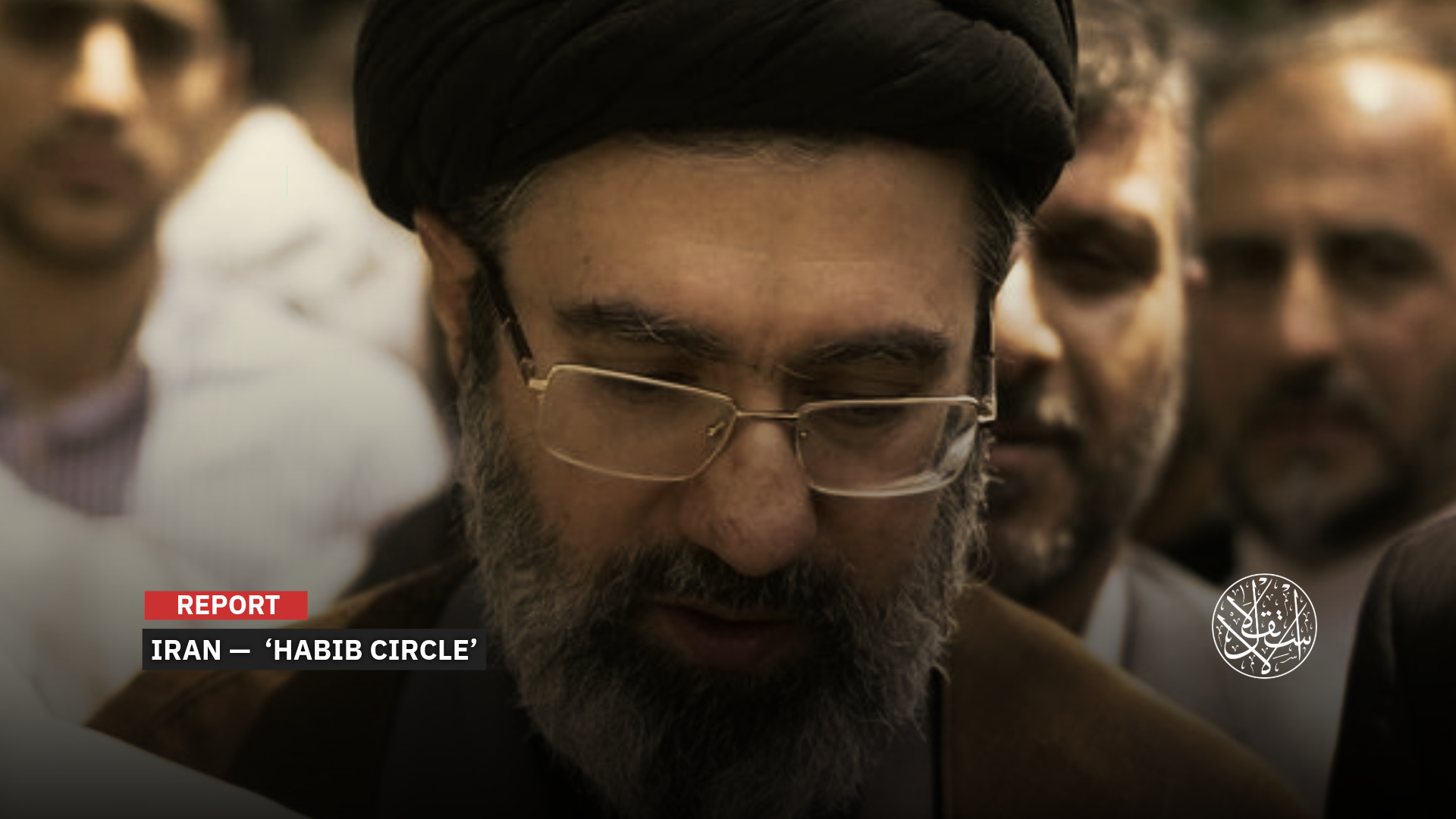
To understand Iran after 2026, you have to understand the “Habib Circle.”
The U.S.-Israeli War on Iran that erupted in late February 2026 was not simply a military campaign aimed at degrading Iranian capabilities. It quickly became an unexpected internal turning point that reshaped the balance of power in Tehran.
Washington and “Tel Aviv” had wagered that striking key figures in the leadership, above all, Supreme Leader Ali Khamenei, might trigger internal fragmentation or elevate a more pragmatic current. But in the first five weeks of the war, the outcome moved in the opposite direction.
Instead, Iran’s political and security architecture rapidly shifted in favor of one of the country’s most hardline and tightly organized factions.
By March 8, 2026, analyses from U.S. think tanks, including the Middle East Institute, suggested that an informal network believed to be led by Mojtaba Khamenei was best positioned to fill any emerging power vacuum, drawing on years of deep penetration within the Islamic Revolutionary Guard Corps (IRGC) and the security apparatus.
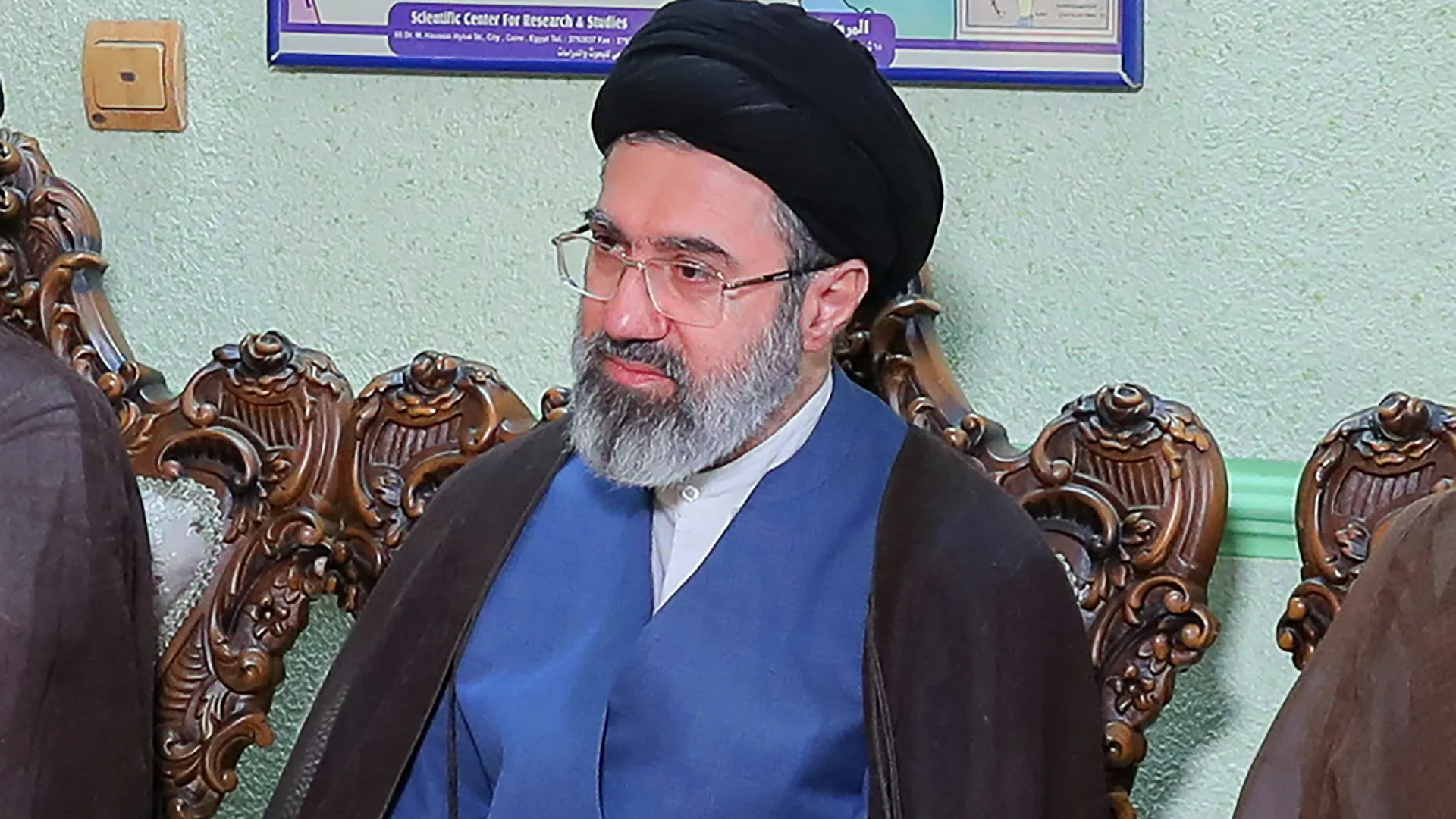
This was not a sudden development. It was the result of a process stretching back to the early 2000s, when Mojtaba Khamenei, operating from within his father’s office, began constructing an intricate internal system of loyalty ties that some analytical literature refers to as the “Habib Circle.”
As internal balances between rival factions collapsed under the pressure of war, this network shifted from an unseen background force into an effective center of decision-making, relying on a close alliance with the IRGC, which emerged in the early days of the U.S.-Israeli War on Iran as the most organized actor capable of managing the state under emergency conditions.
What Is the ‘Habib Circle’?
The roots of what is known as the “Habib Circle” trace back to the Iran-Iraq war (1980–1988), a formative crucible that produced much of today’s Iranian security and military elite. Amid that war, combat units within the IRGC emerged, including the “Habib Battalion,” made up of young fighters whose worldview was shaped by intense religious and military mobilization.
Among those who emerged from this early battlefield environment was Mojtaba Khamenei, who in his youth became part of these formations and built close ties with fighters who would later rise to senior positions within Iran’s intelligence and security institutions.
The name “Habib” itself carries symbolic weight, referencing Habib bin Muzahir, a figure from the Battle of Karbala in 680 CE, reflecting the ideological framing that shaped the group from its inception, where military experience and religious symbolism were tightly interwoven.
After the end of the Iran-Iraq war, these networks did not dissolve. Instead, they reproduced themselves within state institutions, benefiting from the rise of the IRGC as a parallel force to the regular army and its expanding influence across Iran’s political and security structures.
Throughout the 1990s, amid the rise of the reformist current under President Mohammad Khatami, these networks began operating in a more coordinated way, seeking to consolidate their positions within key institutions, particularly the judiciary, security services, and state media, to preserve their influence inside the state.
By 2002, memoirs attributed to former President Akbar Hashemi Rafsanjani suggest that Mojtaba Khamenei played a role in selecting hardline figures to manage state propaganda, an early indicator of his gradual entry into informal political influence.
This period marked a turning point, as the “Habib Circle” evolved from a war-time network of comradeship into an influence structure embedded within Iran’s so-called deep state, capable of shaping sensitive political processes, including elections, as later suggested in accounts of Mahmoud Ahmadinejad’s rise in 2005 by reformist politician Mehdi Karroubi.
With the outbreak of the current U.S.-Israeli War on Iran, the operational weight of this network has become more visible, particularly through its deep presence within the IRGC, where affiliated figures were among the most prepared to assume decision-making roles.
On March 24, 2026, Mohammad Bagher Zolghadr was appointed head of the Supreme National Security Council (SNSC). A senior IRGC commander and co-founder of the Quds Force in the 1990s, his appointment was interpreted by analysts, including those at the Washington Institute, as a sign of Tehran’s reliance on hardened security and military figures to manage the situation.
At the same time, Ahmad Vahidi emerged in a key leadership role within the IRGC. He has long been under U.S. sanctions over allegations linked to the 1994 AMIA bombing in Argentina, underscoring the continued prominence of heavily sanctioned security figures in Iran’s decision-making hierarchy.
Mohsen Rezaei also returned to an influential position as a military adviser, drawing on his long experience as a former IRGC commander during the war with Iraq, where he is widely seen as part of the generation that continues to shape Iran’s conservative establishment today.
These appointments reflect more than administrative reshuffling. They point to a clear political and security trend: the gradual shift of power away from civilian political elites toward military commanders, with the IRGC increasingly functioning as the backbone of the state.
According to past assessments by the U.S. Treasury Department, the IRGC is not only a military force but also a vast intelligence, security, and economic network. This structure gives the “Habib Circle” significant capacity to shape domestic control and influence internal power balances, particularly during periods of war and crisis.
Invisible Financing Networks
Alongside its military influence, the “Habib Circle” relies on a parallel economic structure that grants it a degree of financial autonomy, operating not through transparent companies but through control of key sectors tied to the IRGC and the Office of the Supreme Leader.
According to reports from the U.S. Treasury Department, institutions such as the Mostazafan Foundation manage vast assets across energy, mining, and telecommunications, operating outside conventional state oversight while maintaining direct links to the Supreme Leader’s office.
This model is not based on formal ownership but on control over appointments, contract allocation, and the distribution of economic influence through opaque networks. It gives the “Habib Circle” significant flexibility in navigating international sanctions and sustaining itself without reliance on traditional financial channels.
Ideological Dimension and Shift
What distinguishes the “Habib Circle” is not only its security and economic structure but also its ideological foundation. A report published by The Wall Street Journal (WSJ) on April 14, 2026, noted that the network draws on a distinct interpretation of the Mahdist doctrine, linking political and religious struggle to a historical trajectory culminating in the return of the Mahdi.
According to the report, this outlook was shaped in part by the ideas of cleric Mohammad Taqi Mesbah-Yazdi, who tied loyalty to the Supreme Leader to an absolute religious conception of authority, framing the Islamic state as a preparatory stage for the emergence of the Mahdi.
What was once confined to narrow intellectual circles has now, the report suggests, entered the official discourse of some educational and religious institutions and is used in mobilizing fighters within the IRGC and security agencies.
Within this framework, figures such as Hossein Taeb, former head of the IRGC intelligence apparatus; Hossein Nejat, responsible for security in Tehran; along with senior commanders like Ahmad Vahidi and Mohammad Bagher Zolghadr, are seen as operational arms of this worldview inside the state structure.
A State Within a State
The fusion of ideological, military, and economic power has turned the “Habib Circle” into more than a network of influence. It has become a parallel structure within the Iranian state itself. It does not operate outside the system, but from within, reshaping it according to its own internal balance whenever external pressure intensifies.
With the latest U.S.-Israeli War on Iran, the center of gravity has shifted further toward this structure, as traditional political elites lose ground and the IRGC expands its role as a comprehensive actor across security, economics, and governance.
As a result, post-2026 Iran is no longer governed solely through its formal institutions but through a dense overlap between the visible state and the deep state, with the “Habib Circle” emerging as one of the most powerful and least visible centers of gravity.
In the end, what began as a wartime brotherhood in the 1980s has gradually evolved into a cross-institutional network of power, then into a key mechanism for governing under pressure, and ultimately, in wartime conditions, into a structure that appears less like part of the state and more like the state itself.