For the First Time in a Century: What’s Behind Kirkuk’s First Turkmen Governor?
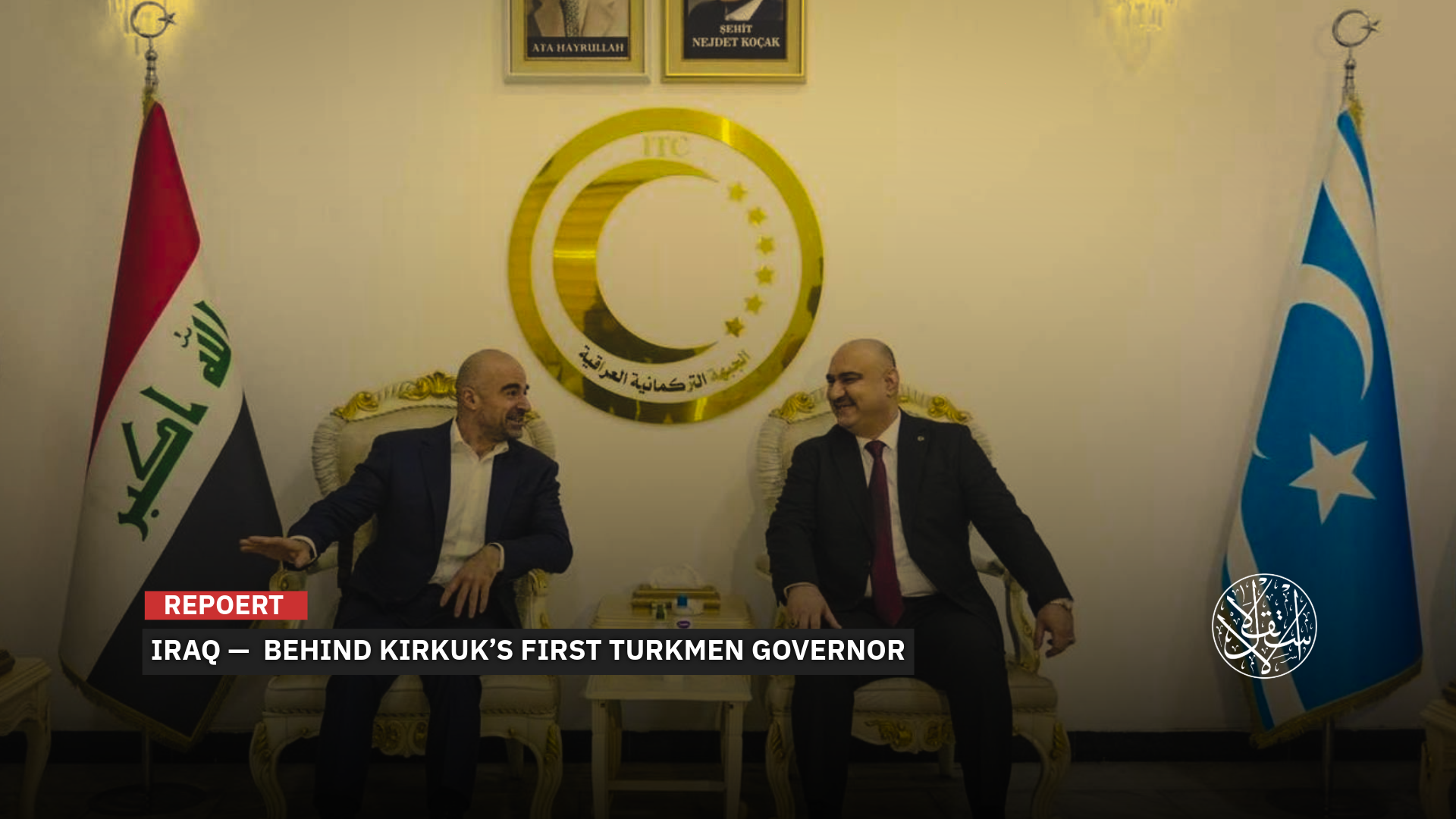
Talabani has given the post of Kirkuk governor to a Turkmen, marking a first in a hundred years.
The appointment of a Turkmen governor in Iraq’s oil-rich Kirkuk is anything but routine, not least because it marks the first time in nearly a century that the post has gone to a figure from the Turkmen community.
The shift follows a decision by the Patriotic Union of Kurdistan (PUK), led by Bafel Talabani, to relinquish the position as part of political understandings reached in 2024 among the province’s main constituencies—Arabs, Turkmen, and Kurds.
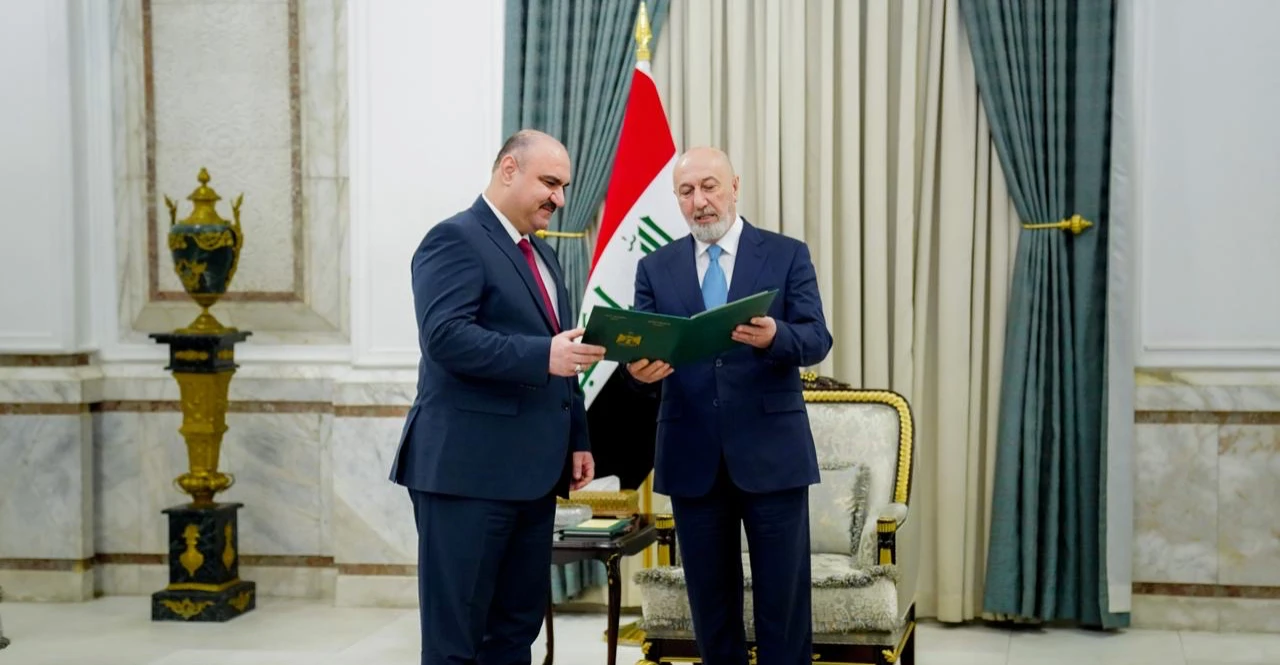
On April 16, 2026, Kirkuk’s provincial council voted to elect Mohammed Samaan Agha, head of the Iraqi Turkmen Front (ITF), as the new governor. His appointment came after the resignation of his predecessor, Rebwar Taha of the PUK, who had taken office in August 2024 and had since been named first deputy to the new governor.
Rapid Shifts
The appointment of a Turkmen governor in oil-rich, deeply contested Kirkuk did not happen in isolation. It came just a week after a senior figure from the PUK was elected president of Iraq, breaking a five-month political deadlock that followed parliamentary elections held on November 11, 2025.
On April 11, Iraq’s parliament voted to elect Nizar Amidi as president, defying the will of the Kurdistan Democratic Party (KDP), led by Masoud Barzani, which holds the largest number of parliamentary seats within the Kurdish bloc. The KDP later rejected the outcome, saying it would not recognize him as president.
Barzani’s party had already been sidelined from the Kirkuk governorship in 2024, following an agreement between the PUK, the Takadum party led by Mohammed al-Halboosi, and Asa’ib Ahl al-Haq, headed by Qais al-Khazali—a move the KDP described as a “betrayal” and a reversal of prior understandings that had granted it control over the province.
Shortly after Amidi’s election, backed by the same political forces, PUK leader Bafel Talabani, widely seen as close to Iran and its allies, appeared in a video message thanking Turkiye and its president, Recep Tayyip Erdogan, while also issuing an apology to Gulf states over attacks launched from Iraqi territory.
According to local reports, the apology and the concessions surrounding Kirkuk signal what some describe as a “strategic pivot” aimed at opening new channels with Gulf countries and Turkiye. The PUK, however, framed the move as an attempt to restore “international balance” and steer Iraq away from regional polarization.
“I want to start with a sincere apology to all our neighboring Arab countries that have come under attack from Iraqi soil; we are deeply ashamed of these actions,” Talabani said.
“Iraq is in the process of forming a new government, a new government that will repair these bridges that have been damaged, not broken.”
“A new government that will ensure that arms are only in the hands of the Iraqi government,” he added.
Talabani also praised the role of several international actors in easing tensions between Iran and the United States, including Turkiye and President Erdogan, as well as Pakistan and partners in Europe, the Arab world, and the United Kingdom, commending what he described as their quiet but vital efforts.
A Politics of Deals
Commenting on Bafel Talabani’s apology and his party’s decision to hand the Kirkuk governorship to the Turkmen community, Iraqi political researcher Latif al-Mahdawi said the move cannot be separated from the broader power calculus now taking shape in Baghdad.
“The apology came right after a senior figure from the PUK was elected president,” he told Al-Estiklal. “In that sense, Talabani is, one way or another, speaking for the presidency, even if the message didn’t come formally from the president himself.”
Al-Mahdawi added that Talabani, despite not holding the presidency, effectively wields influence over the position through figures from his party. The apology, he argued, signals a shift in the party’s posture, particularly given that the groups responsible for cross-border attacks are Iran-aligned factions that maintain close ties with the PUK.
At the heart of it, he said, is a system driven by political bargaining.
“The agreements binding these three actors—the PUK, the Takadum party, and Asa’ib Ahl al-Haq—are driven by deal-making, with each side getting the position it wants,” he said.
He pointed to the recent appointment of Haitham al-Zahwan as governor of Saladin, a figure aligned with Asa’ib Ahl al-Haq, as part of the same pattern, coordinated among the same players.
This alignment of interests, al-Mahdawi suggested, is likely to expand further, potentially drawing in Prime Minister Mohammed Shia’ al-Sudani, who is widely seen as seeking a second term, particularly after backing the election of Nizar Amidi as president and al-Zahwan’s appointment in Saladin.
Takadum leader Mohammed al-Halboosi welcomed what he described as the completion of the second phase of the Kirkuk power-sharing roadmap, following the rotation of positions under a political agreement reached in August 2024.
In a post on X on April 16, al-Halboosi thanked Talabani for his “efforts and cooperation in stabilizing Kirkuk and preserving its diversity,” adding that residents are now looking for concrete steps toward fairness and reconstruction, including better funding and improvements to service and economic infrastructure.
Asa’ib Ahl al-Haq leader Qais al-Khazali welcomed the election of Mohammed Samaan as Kirkuk’s new governor, describing it as a step that strengthens the role of all components of the province in managing its affairs.
In a post on X, al-Khazali said the appointment marks a “pivotal moment,” reflecting Kirkuk’s progress toward stability and reinforcing its status as a microcosm of Iraq—a place where diversity is held together within a unified framework.
He added that the development was the result of a political agreement between the PUK and the Takadum party, brokered in late 2024, crediting the deal with helping restore balance, promote partnership, and break the political deadlock.
Al-Khazali said the next phase would see a rotation of the governorship, eventually passing to the Arab community as part of a broader effort to entrench power-sharing among Kirkuk’s constituencies.
He also called on the new local government to fully assume its responsibilities, strengthening security, ensuring fairness among the province’s communities, and launching service and reconstruction projects that meet residents’ expectations.
Balancing Relations
Not everyone sees the shift through the same lens. Saleh Faqi, a PUK member, said Bafel Talabani’s apology reflects a broader effort to steer both Iraqi Kurdistan and Iraq away from regional flashpoints and toward more balanced international ties.
In remarks carried by local outlets, Faqi said the PUK is not seeking to deepen relations with Gulf states and Turkiye at the expense of its ties with Iran, but rather to maintain equilibrium across its regional relationships—including with the United States.
He also stressed that handing the Kirkuk governorship to a Turkmen figure is not linked to Turkiye, but results from a political agreement signed in the summer of 2024, not a sudden or externally driven development.
Kurdish politician Latif al-Sheikh, however, sees clearer signs of a shift in direction. Talabani’s apology to Gulf states, coupled with his party’s decision to relinquish the Kirkuk post, points to “a new trajectory in the party’s policy,” he said.
In comments published on April 20, al-Sheikh noted a growing rapprochement between the PUK and Turkiye after years of tension, suggesting Talabani is seeking to rebalance the party’s regional ties rather than rely primarily on its relationship with Iran.
He pointed to reports of an anticipated visit by Talabani to Ankara to meet Turkish President Recep Tayyip Erdogan, describing it as a signal of turning the page on past disputes and opening a new chapter in relations, even as efforts continue to disarm the Kurdistan Workers’ Party (PKK).
In recent years, Turkish authorities have imposed restrictions on flights to Sulaymaniyah Airport and continued military operations in areas under PUK influence, amid accusations of links between the party and the PKK.
Al-Sheikh added that the apology to Gulf states may also reflect divisions within armed factions, noting that groups accused of launching attacks on Iraqi Kurdistan and Gulf countries are not necessarily the same ones closely aligned with the PUK—an apparent reference to Talabani’s ties with figures such as Qais al-Khazali of Asa’ib Ahl al-Haq and Hadi al-Amiri of the Badr Organization.
Asa’ib Ahl al-Haq spokesperson Hussein al-Sheikhani said in an interview on April 14 that Bafel Talabani’s remarks and apology to Gulf states were “nothing out of the ordinary,” adding that the Iraqi government itself also rejects such attacks.
Sources
- Iraq’s Saladin Council names Haitham Al-Zahwan Governor
- Iraq’s Turkmen Front leader elected Kirkuk governor
- Iraq’s Kirkuk elects first Turkmen governor in a century
- From Tehran to the Gulf and Ankara: The “Great Pivot” of Talabani [Arabic]
- The President of Iraq hands Mohammed Samaan his decree appointing him governor of Kirkuk [Arabic]
- Sheikh al-Khazali Congratulates Election of Kirkuk Governor, Calls It Step Toward Stability and Power-Sharing Among Communities [Arabic]