Tunisia Corridor Linking North Africa and the Sahel Countries: A Real Project or Political Propaganda?
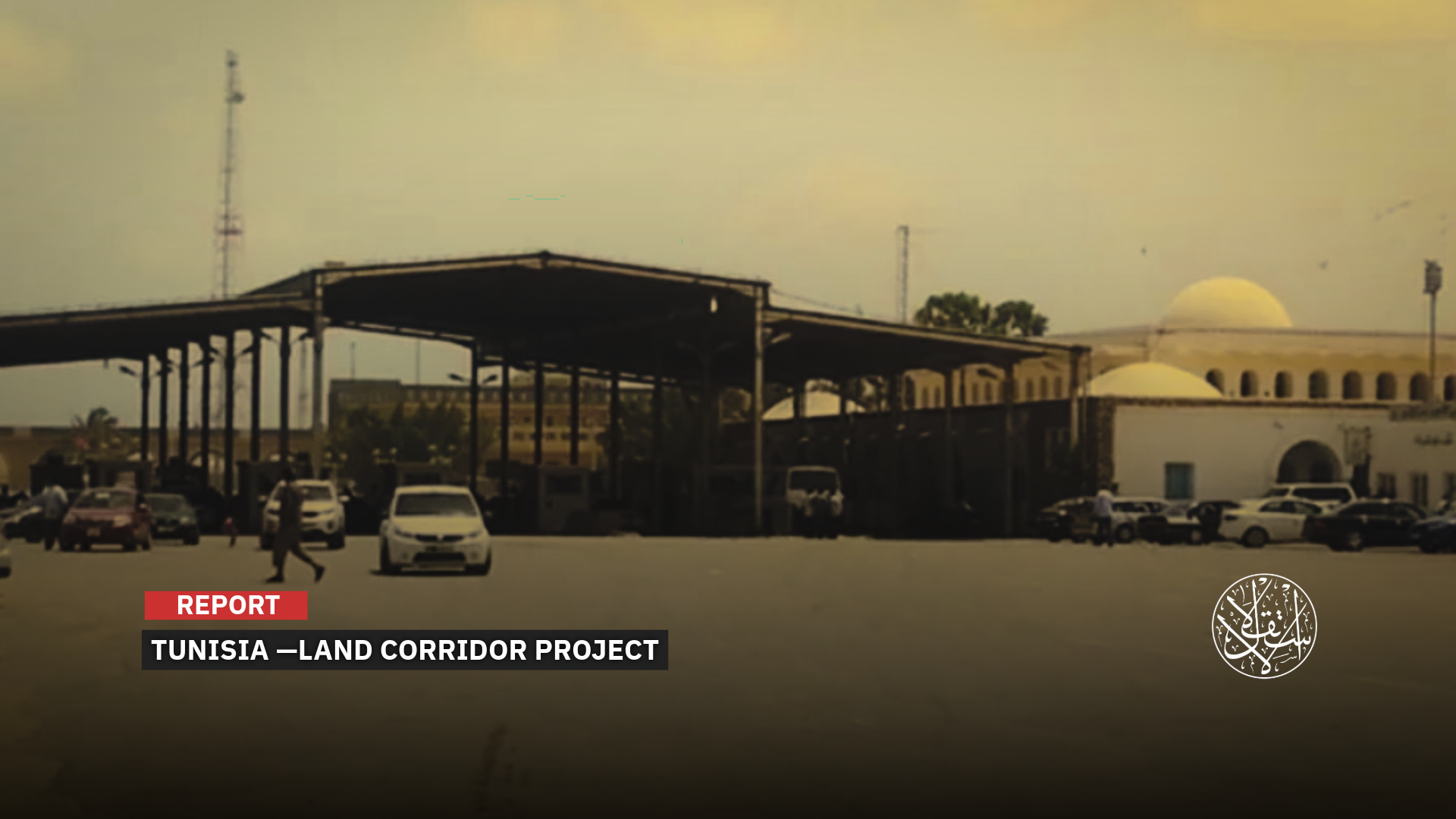
The project is strategic for Tunisia because it will connect it to a promising African market that includes more than 500 million people.
The Tunisian announcement of a continental land corridor project between the Mediterranean Sea and the Sahel region has sparked political and economic debate over its feasibility and whether Tunisia has the necessary liquidity to implement it.
The project aims to strengthen trade exchanges and open up to the African hinterland, in light of the promising opportunities offered by the African market, highlighting its strategic dimensions.
It is based on linking Tunisian and Libyan ports on the Mediterranean to sub-Saharan African countries, providing those states with direct access to European markets, as an alternative to longer, more costly, and time-consuming maritime routes.
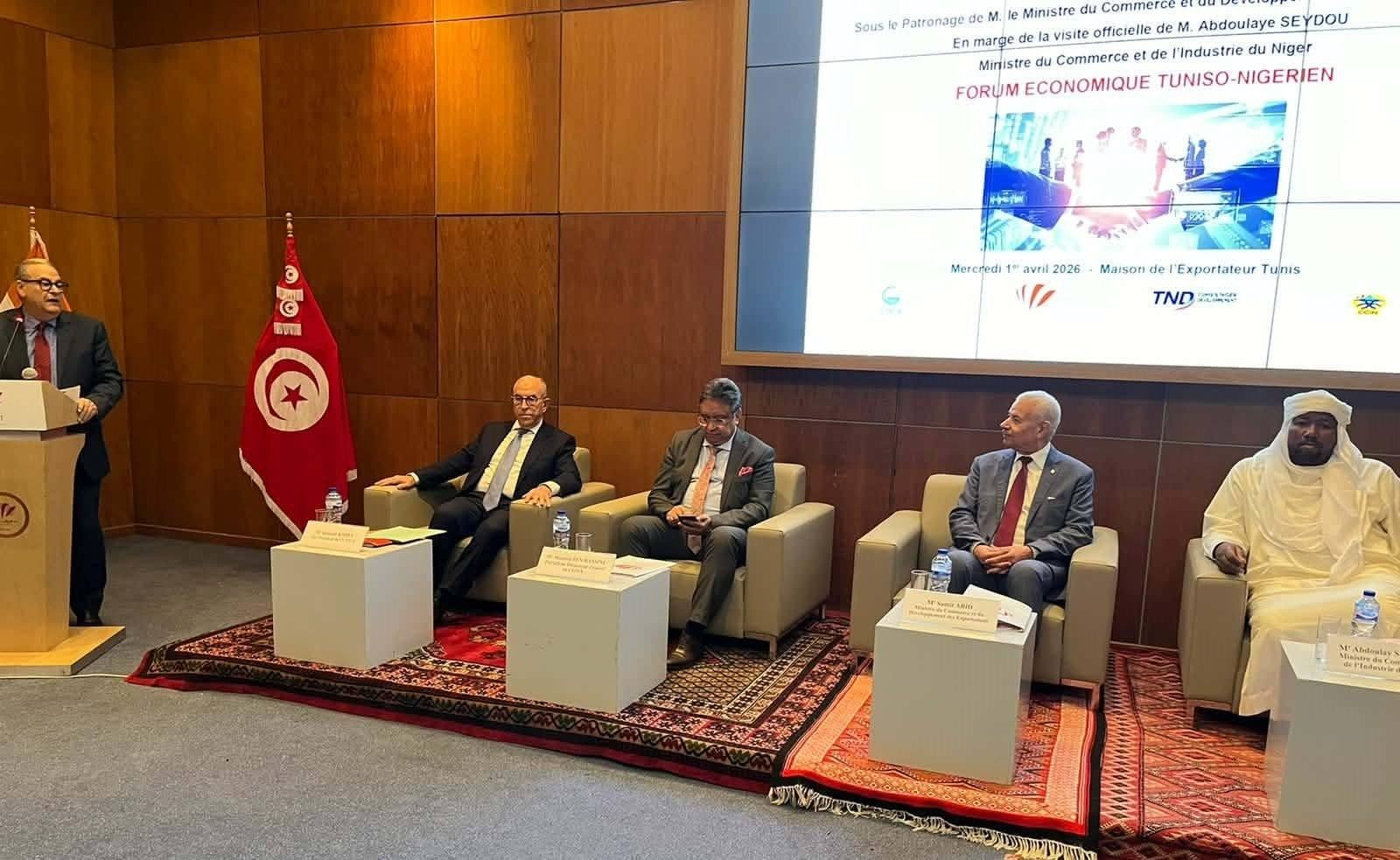
In a statement issued by the Tunisian Ministry of Trade and Export Development on April 1, 2026, Minister of Trade Samir Abid said that turning toward sub-Saharan countries represents a strategic challenge for developing trade exchanges.
He added, on the occasion of the Tunisian–Nigerien Business Forum, that Tunisia has begun preparing the continental land corridor project in coordination with the Libyan side.
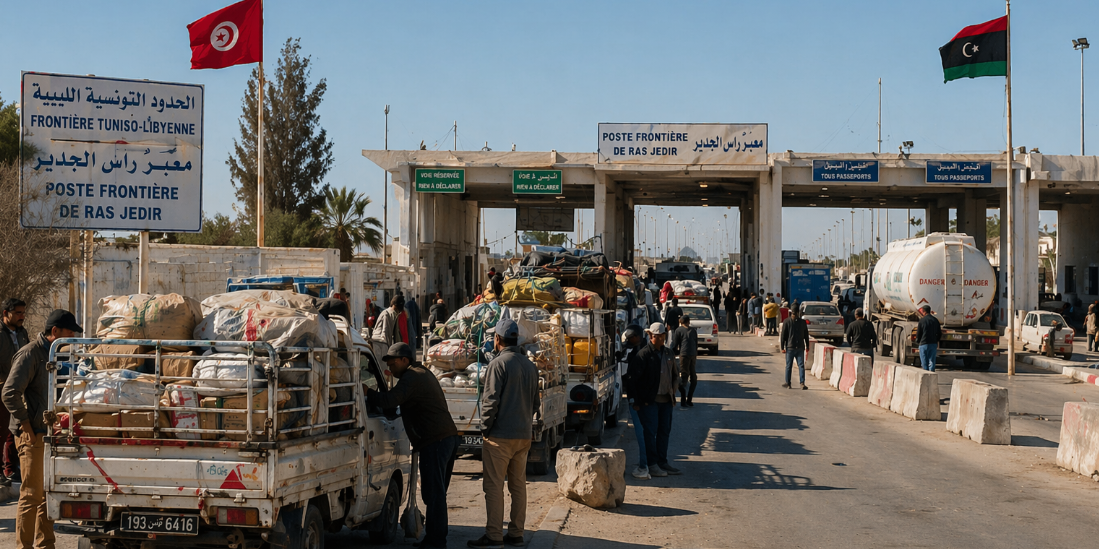
The route is set to start from the Ras Jedir border crossing and extend to sub-Saharan African countries, particularly Niger, Chad, Mali, Burkina Faso, and the Central African Republic.
He explained that the project would help reduce export costs and shorten delivery times, ease transportation and logistics difficulties, and support African integration.
The project reflects a joint Tunisian–Libyan approach to developing land connectivity with the African hinterland, especially with Niger, Chad, Mali, Burkina Faso, and the Central African Republic, according to Abid.
He also noted that the project would have a positive impact by reducing the cost and duration of export operations, easing transport and logistics challenges, and strengthening African integration.
According to figures published by the Tunisian Ministry of Trade and Export Development in February 2026, trade between Tunisia and sub-Saharan African countries recorded a surplus of 802.5 million Tunisian dinars in 2025, noting that one U.S. dollar equals approximately 2.92 Tunisian dinars.
According to the same data, Tunisian exports to sub-Saharan Africa reached 1.2 billion dinars, compared to imports worth 469.9 million dinars.
A Promising Market
In the same context, the head of the Tunisian–African Business Council, Anis Jaziri, said that “the project is strategic for Tunisia and North Africa, because it will connect it to a promising African market of more than 500 million people.”
Jaziri added, in an interview broadcast by Tunisian state radio on April 4, that “this corridor will reduce distance, time, and cost.”
He explained that the project would cut cargo transport time from two months to about one week, noting that “the African Development Bank and other financial institutions are currently studying this major project with a view to funding it.”
He also pointed out that Europe is highly interested in the project, “because it would allow it to access several countries via Tunisia to export its goods.”
Beyond the economic aspects, an African-focused outlet argues that this initiative carries broader social impacts.
In an analysis published on April 9, it added that improved trade access could reduce the prices of basic goods in Sahel countries, where supply bottlenecks often lead to inflation and shortages.
“It could also stimulate job creation along the route, from transport and warehousing to border services and local trade.”
“So far, the corridor is as much a political project as it is an economic one. Its success depends on sustained cooperation between Tunisia and Libya, as well as the stability of transit areas that have repeatedly suffered from insecurity.”
The analysis added that developing infrastructure such as road networks, customs systems, and logistics hubs would require massive investment and long-term political coordination.
The outlet stressed that the plan aligns with broader continental ambitions to strengthen African economic integration and reduce reliance on external trade routes.
It also warned that by linking the Mediterranean to the Sahel region, the Tunisian corridor could become a model for how regional connectivity projects can translate into real economic gains on the ground, and it signals stronger economic interdependence in the future.
Regional Competition
The website Libya24 stated in an analysis published on April 7 that the Tunisian land corridor comes amid an intense regional competition for access to the Sahel and Sahara markets.
It added, in the context of Libyan interest in the project, that Algeria, Morocco, and Mauritania, and even Libya itself, are each seeking to consolidate their position as a gateway for trade with Africa’s hinterland.
The outlet further noted that another Tunisian weakness is the lack of a comprehensive vision for investing in border infrastructure, whether with Libya or Algeria.
It warned that Tunisia has been slow to effectively join the African Continental Free Trade Area, despite having ratified it years ago.
It pointed out that the actual implementation of this agreement requires logistical infrastructure capable of handling trade flows, which is currently absent at existing land crossings that lack even basic modern customs facilities and specialized logistics zones.
In this context, economist Maher Qaida argues that Tunisia is attempting to break away from excessive reliance on maritime and air routes, which remain costly and largely controlled by foreign companies, and instead move toward a model of organic connectivity with the African space through land corridors.
However, Qaida does not hide his concern that the project could turn into a mere electoral promise or media statement, especially given that the cost of upgrading the road from Ras Jedir to the Niger border passes through vast areas requiring major investments.
He added that Tunisia’s financial situation, marked by a budget deficit and pressure on external debt, makes it difficult to secure such funding without genuine partnerships with the private sector and international investors.
The same source noted that the land corridor faces challenges that are not limited to financial issues, including legal obstacles related to trade agreements between Tunisia, Libya, and the target countries, which have not yet been fully finalized.
It also pointed to real security challenges in southern Libya and northern Niger, where armed groups and smuggling networks operate, requiring complex security cooperation between several countries.
It concluded that the continental land corridor project remains a true test of Tunisia’s ability to move from rhetoric to concrete action, stressing that time is not on Tunisia’s side, as regional actors are rapidly moving to seize opportunities in emerging African markets, while Tunisia’s export performance remains modest.
A Strategic Necessity
The Tunisian announcement prompted Libyan media to open a window on competition between the two countries in their orientation toward African states, whether through investment or continental corridors.
In this regard, the website Ean Libya reported on April 9 that economic analyst Sami Radwan stressed that such projects are no longer a secondary option, but have become an economic and strategic necessity imposed by the changing dynamics of the current stage.
Radwan said that Libya does not need to look for alternatives outside its own framework, given that it already possesses an integrated national project in the form of the “Transit Roads” project, which is being implemented by the Libya Africa Investment Portfolio in cooperation with the Ministry of Transport and several government bodies.
He confirmed that “this project represents the real starting point for any future regional partnerships.”
He explained that the project is one of the most advanced and prepared initiatives on the continent, supported by a feasibility study conducted by a specialized American company, which clearly confirmed its economic and strategic importance, particularly in strengthening internal connectivity, developing the logistics sector, and opening efficient cross-border trade routes.
Radwan noted that what distinguishes the “Transit Roads” project is its integrated nature, combining several strategic components, including road networks, railway lines, oil and gas transport routes, as well as advanced telecommunications infrastructure and energy transmission lines, making it a comprehensive logistics project that goes beyond the traditional concept of corridors.
He added that the project starts from the cities of Misrata and Benghazi toward sub-Saharan African countries, including Niger, Chad, and Sudan, with extensions reaching Nigeria, giving Libya a pivotal position on the continental connectivity map.
Radwan stressed that the current phase requires clarity of vision, emphasizing that support for the national project must be a top priority, as it is the most prepared and capable project to represent Libya as a key partner in any regional continental connectivity framework.
He concluded that the “Transit Roads” project represents a genuine strategic opportunity to transform Libya’s geographical position into an active economic force and to strengthen its status as a logistics hub linking the Mediterranean Sea with the heart of Africa.
An Economic Platform
Apart from skeptical views about the implementation of the project or the extent to which Libya might benefit from it, the website LibyaHerald stated in an analysis published on April 5 that the project offers an important opportunity for Libya to leverage its geographic location and strengthen its role as a regional trade hub.
It noted that, although the initiative originated from the Tunisian side, the passage of this corridor through Libyan territory gives Libya a real opportunity to become a logistics center linking Mediterranean ports with sub-Saharan African markets.
It reported that this could help boost trade and increase overland transport and logistics services within the country.
It added that the project could also pave the way for the creation of commercial and industrial zones along the route, revitalizing Libyan ports and turning them into gateways for goods coming from Europe and heading toward the Sahel region.
Furthermore, the source continued, it could strengthen intra-African trade with vast and largely untapped African markets.
Accordingly, the outlet argued that the real economic value of this corridor for Libya lies not only in its role as a transit route, but also in its potential to become an integrated economic platform that supports economic diversification and creates new investment opportunities in transport, logistics, and regional trade, provided that this opportunity is used within a clear economic vision.
It pointed out that the accelerating economic transformations across the African continent are increasing the need to develop a network of overland routes linking North Africa with the Sahel and the broader continent, placing Libya in a key central position.
It stressed that this gives Libya a strategic opportunity to capitalize on its geographic location as a link between Mediterranean markets and African markets.
It concluded that activating this project and similar land corridor initiatives could turn Libya into a major gateway for trade between Europe and Africa, strengthening its role in regional supply chains, especially given the growing importance of the African Continental Free Trade Area (AfCFTA) and the opportunities it offers for expanding intra-African trade.
Sources
- Anis Jaziri: “The Continental Land Corridor Project Linking Ras Jedir to Sub-Saharan Countries Is a Strategic Project” [Arabic]
- Tunisia Launches a Land Corridor Connecting Ras Jedir to Sub-Saharan Africa [Arabic]
- Calls for Government Support for the “Transit Roads” Project as a Strategic Priority [Arabic]
- Tunisia unveils land trade corridor project linking North Africa to Sahel
- Tunisia: New trans-African land corridor project aims to boost trade under AfCFTA framework