Saudi Oil Pipeline Through Yemen: An Energy Project or a Reshaping of Influence?
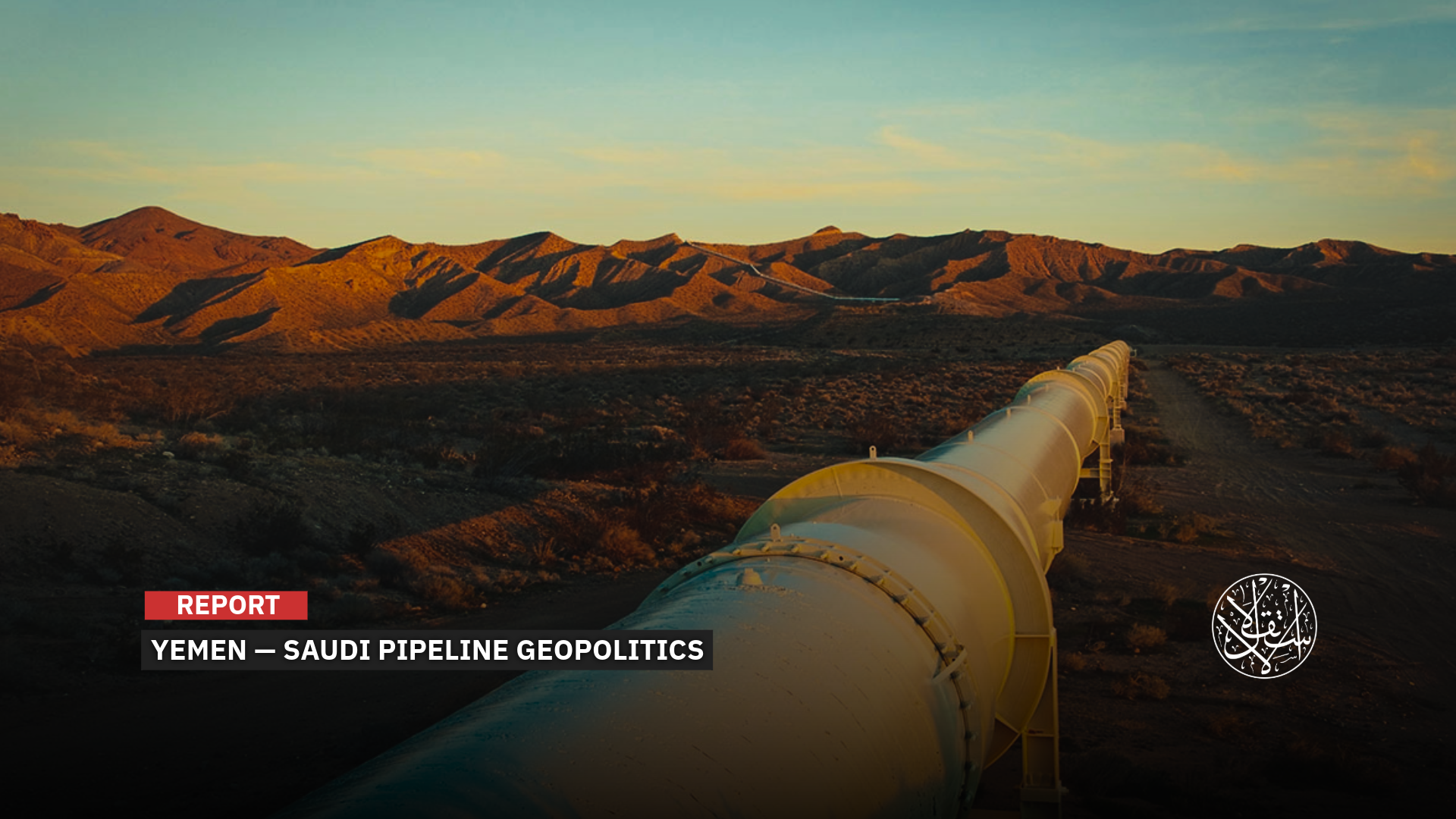
The proposed Saudi oil pipeline through Hadramawt and al-Mahra marks a major shift in Riyadh’s energy security strategy.
For decades, the Strait of Hormuz has been the sole artery for Gulf oil exports, but it has also remained hostage to persistent geopolitical tensions.
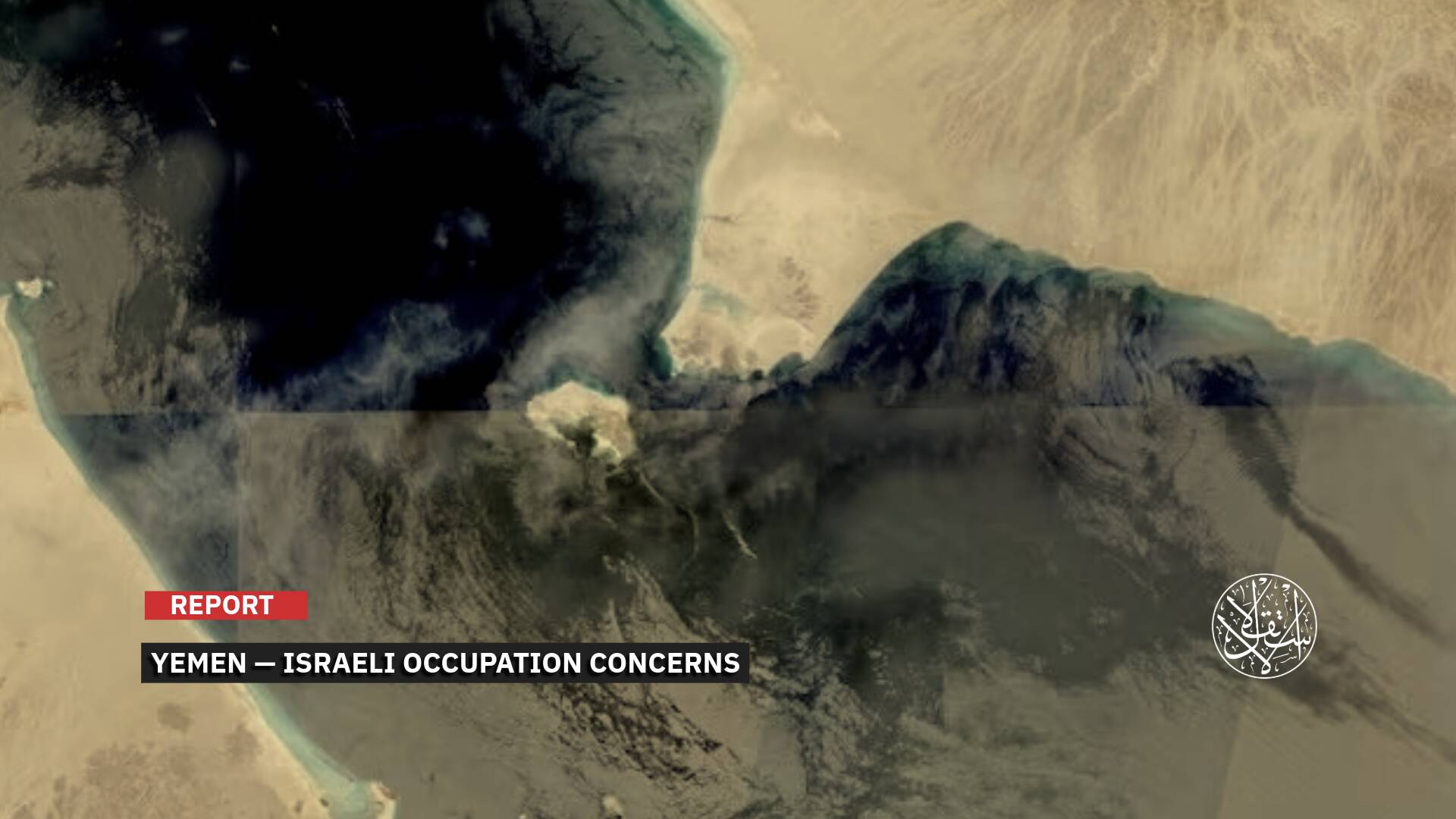
Today, amid the ongoing U.S.–Israeli war against Iran and Tehran’s move to threaten the closure of the strait, attention is returning to the proposed “pipeline project” stretching from Saudi Arabia’s Eastern Province oil fields across the Empty Quarter desert, through Yemen’s Hadramawt and al-Mahra regions, and onward to the Arabian Sea coast.
The proposed Saudi oil pipeline through Hadramawt and al-Mahra represents a major shift in Riyadh’s approach to energy security, moving from reliance on protecting maritime chokepoints to attempts at bypassing them geographically.
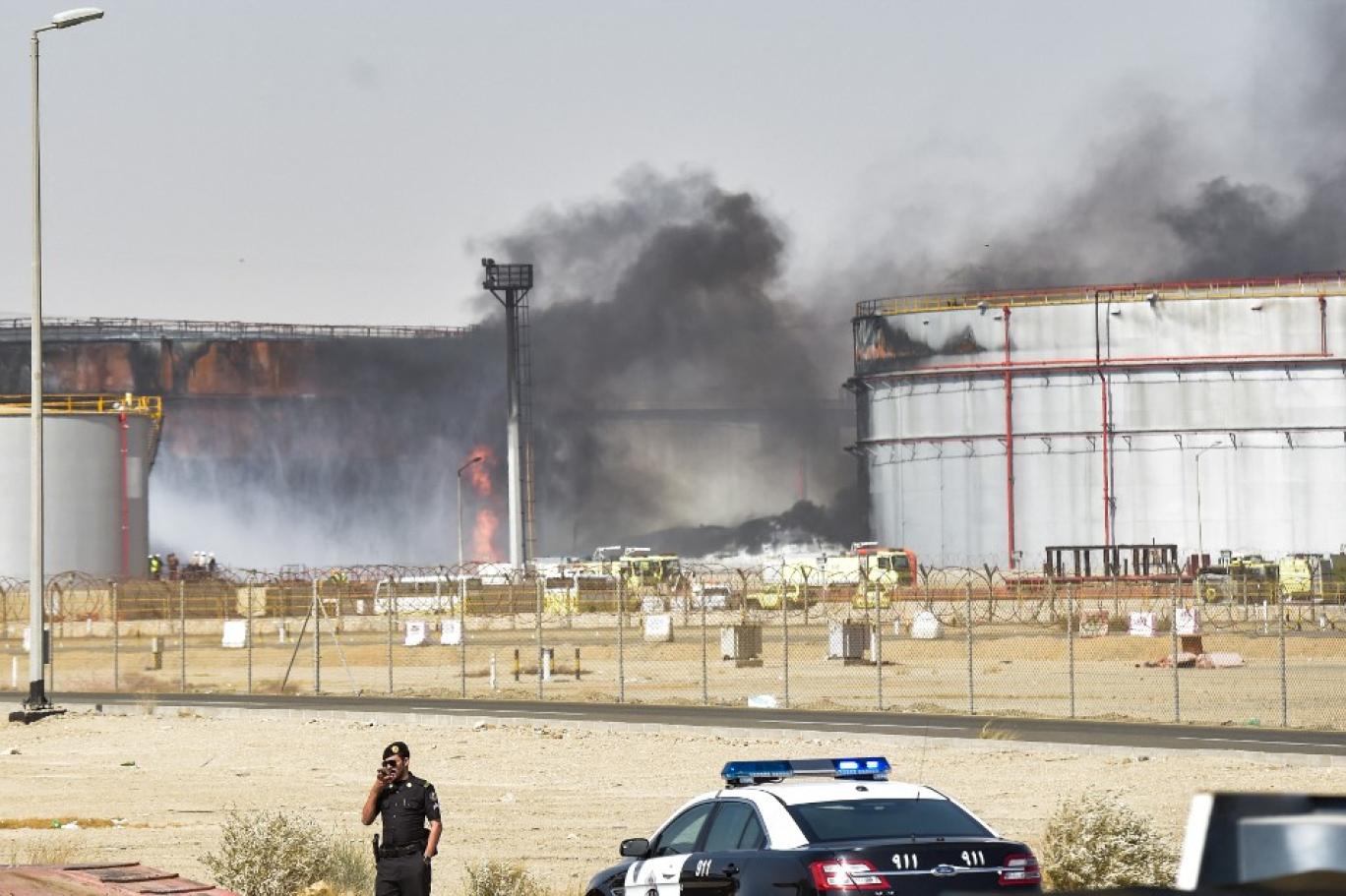
Saudi Arabia, which heavily depends on the Strait of Hormuz for its oil exports, faces a strategic dilemma in which the waterway could be closed or weaponized by Iran to pressure regional states, pushing Riyadh to seek safer and more independent alternatives.
However, the project raises complex issues regarding Saudi presence in those areas and the balance between economic cooperation and respect for Yemeni sovereignty, particularly in the absence of a stable political framework to regulate such strategic initiatives.
At the same time, the project cannot be separated from broader regional competition, where alternative energy routes have become part of a wider struggle over influence and power redistribution in the Middle East, in response to Iran’s geographic leverage over the Strait of Hormuz.

Forced Return
Developments in the Strait of Hormuz today are among the key factors that have once again brought the proposed Saudi oil pipeline project through Yemeni territory back into focus.
In this context, a source within the Yemeni presidency stated that the project is currently at the center of discussions with Saudi Arabia at the leadership level, with expectations of forming technical committees to prepare feasibility studies, alongside legal committees tasked with drafting an economic cooperation agreement.
The source added that regional tensions have provided an additional incentive to revive the project, alongside the end of Emirati presence in Yemen’s eastern governorates of Hadramawt and al-Mahra and the restoration of control over them by government-aligned forces.
Saudi Arabia had already begun promoting the project through its media outlets and figures close to its political circles.
In this context, Saudi writer and academic Dr. Mansour Almalik stated in a post on X that the time has come for Saudi Arabia and the Gulf states to establish a pipeline similar to the East–West line to transport oil to the Arabian Sea via Yemeni territory, arguing that this would significantly reduce the strategic importance of the Strait of Hormuz.
Earlier, the Saudi Council of Ministers approved on February 11, 2026, the opening of discussions with the Yemeni side on signing a memorandum of understanding between the Saudi Geological Survey and Yemen’s Geological Survey and Mineral Resources Authority.
Although the announced discussions fall within the framework of geological and mining cooperation, the link between mineral resources and energy infrastructure remains highly significant.
Geological surveying is the tool used to determine pipeline routes and study soil and subsurface layers to ensure the safety of large-scale construction projects.
These are the same requirements needed for an oil pipeline project, both in terms of security conditions and technical readiness.
Accordingly, geological cooperation can be viewed as a “developmental cover” aimed at building trust and strengthening shared interests, as it effectively lays the technical and legal foundation for any future large-scale infrastructure cooperation.
The Saudi Project
Al-Mahra is located in the far east of Yemen, and the border strip between al-Mahra and the Sultanate of Oman is approximately 300 kilometers long, extending from the Arabian Sea to Saudi Arabia. The governorate also has a coastline of about 560 kilometers along the Arabian Sea.
Tribal groups on both sides of the border share a Semitic language that differs from the Arabic spoken in surrounding regions.
The governorate covers an area of more than 67,000 square kilometers, making it the second-largest governorate in Yemen after Hadramawt, which lies to its west. Current population estimates vary widely, reaching around 650,000 people.
Discussions about constructing the pipeline began in the 1980s between Saudi Arabia and the then government of South Yemen, according to former South Yemeni President Ali Nasir Muhammad. Those talks failed, but were resumed after Yemen’s unification in 1990.
Negotiations between Yemen and Saudi Arabia over the oil pipeline were renewed in 1997, and former President Ali Abdullah Saleh came close to signing an agreement with Saudi Arabia to build the pipeline.
However, talks stalled in 2002 due to differences over pipeline security, with Saudi Arabia reportedly demanding full sovereignty over the entire project corridor.
According to a leaked U.S. diplomatic cable in 2008, Saudi officials remained focused on securing territory and building a future pipeline through Yemen by cultivating the loyalty of local leaders across the country.
As a result, many have continued to view Saudi interest in a Yemeni oil pipeline as a key dimension of Saudi–Yemeni relations.
A confidential cable issued from the office of former Saudi Crown Prince Nayef bin Abdulaziz in mid-Jumada al-Thani 1433 AH (April 2012) also highlighted Saudi Arabia’s commitment to implementing the oil pipeline project and extending it to the Arabian Sea, either through Yemeni or Omani territory.
Motives for Revival
For decades, access to the Arabian Sea has represented a firmly rooted geopolitical objective in Riyadh’s strategic calculations.
Saudi Arabia relies primarily on the Strait of Hormuz as a corridor for exporting its oil, a route that remains vulnerable during escalations with Iran, as is currently the case.
From this perspective, access to the Arabian Sea gains strategic importance, as it would reduce geopolitical risks, ensure the continuity of export flows in emergencies, and strengthen greater autonomy in energy policy.
At the same time, a highly significant political factor emerges in the relationship between Riyadh and the internationally recognized Yemeni government.
Saudi Arabia exercises extensive influence over Yemeni political decision-making, placing the government in a limited negotiating position and restricting its ability to impose or improve conditions in any potential arrangements related to the project.
In addition, Saudi Arabia has managed over years of intervention in Yemen to consolidate its presence in al-Mahra through a combination of military deployment and the building of local influence networks.
Since mid-November 2017, the Kingdom has expanded its presence in the governorate, taking control of several key facilities, including Nishtun Port, the Sarfait and Shahn border crossings, and al-Ghaydah Airport, the provincial capital. It has also established a series of military camps and positions along the coastal areas of the governorate.
Available reports suggest that the number of Saudi military camps established since late 2017 is no fewer than ten.
With its forces entering al-Mahra under the pretext of combating smuggling, Saudi Arabia began initial steps toward implementing the pipeline project in September 2018 by marking out the proposed route across the desert of the governorate. However, these moves were met with tribal opposition, and members of the Mahri tribes subsequently halted them.
In this context, Sheikh Ali Salem al-Huraizi stated that they possess information indicating that a German company, previously involved in Saudi infrastructure projects, had been granted a concession to build a Saudi oil port in al-Mahra.
According to this account, the company had already begun placing initial markers for the project route in September 2018 before local tribes removed them, prompting the company to halt operations due to escalating security risks during implementation.
On the ground, March 2018 saw a notable development when al-Ghaydah Airport was converted into a Saudi military base, in violation of one of the key conditions set by local authorities.
The base included an operations command center responsible for intelligence management, mission coordination, and oversight of major Saudi camps in the governorate, which in turn coordinate with smaller military sites. An additional base was also established at Nishtun Port earlier that year.
The number of Saudi forces deployed in al-Mahra is estimated at between 1,500 and 2,000 soldiers. By 2019, Saudi Arabia had established more than 20 military bases and sites across the governorate.
Implementation Obstacles
The project faces a fundamental challenge rooted in local opposition. In recent years, al-Mahra has witnessed repeated protests against the Saudi military presence and rejection of any arrangements perceived as undermining Yemeni sovereignty.
As a result, any attempt to advance the project without addressing these complexities could create a new hotspot of tension in what has been a relatively stable area.
At the same time, the Sultanate of Oman, which shares a long border with al-Mahra, views any Saudi expansion in the region with caution, given its potential security and geopolitical implications.
In this context, leaders of the al-Mahra protest movement established, in September 2019 and with Omani backing, the Southern National Salvation Council to counter the UAE-backed Southern Transitional Council and push out Saudi-led coalition forces from both al-Mahra and southern Yemen.
Despite its strategic importance, the project remains burdened by multiple challenges, including high economic costs, security fragility, and the complexity of Yemen’s political landscape. The absence of a stable central authority capable of making unified sovereign decisions also remains a major obstacle to any project of this scale.
The Houthi Obstacle
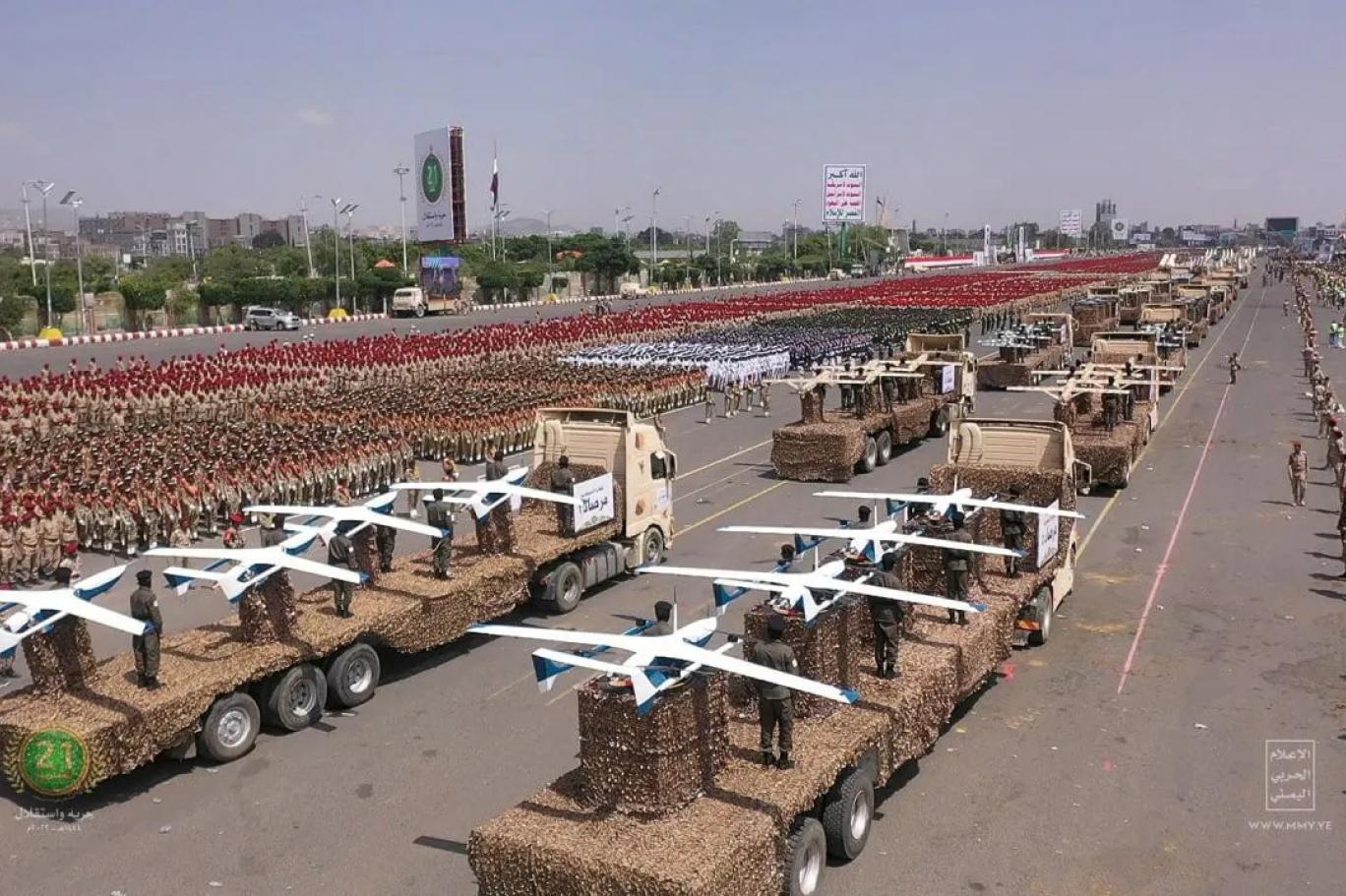
Alongside the previous factors, a decisive element emerges that is no less important or influential: the Houthi movement, which has become a key actor in Yemen’s and the region’s balance of power in recent years.
In this context, any project to build an oil pipeline through Yemeni territory appears to remain, in one way or another, dependent on the group’s position.
Ignoring or bypassing it without direct understandings, or without incorporating it into any deal framework, would expose the project to serious risks of disruption, potentially even failure.
This interpretation is reinforced by clear precedents on the ground. In 2022, the group was able to disrupt Yemen’s oil exports by targeting export ports in Shabwa and Hadramawt, under the justification of stopping the “plundering of oil wealth.”
A similar scenario could be repeated if the pipeline project moves forward without arrangements that secure a share or defined role for the group.
Politically, institutions affiliated with the Houthi authority have expressed rejection of any arrangements concluded outside their framework.
The Geological Survey and Mineral Resources Authority in Sanaa, which is not internationally recognized, declared its rejection of any agreements between Saudi Arabia and the internationally recognized Yemeni government’s geological survey authority, describing them as null and void and illegal, on the grounds that they are issued by an “illegitimate entity.”
This position sends a clear political message: any large-scale strategic project will not be acceptable from the group’s perspective unless it passes through its channels or is redefined within a negotiating framework that includes it.
As part of escalating pressure tools, the group has also moved toward expanding its maritime influence, leveraging its geographic position and growing capabilities.
In this context, The Wall Street Journal reported, citing Arab officials, that the Houthis may move toward imposing transit fees on ships passing through the Bab el-Mandeb Strait, and also noted Iranian pressure on the group to push for the closure of the strait.
These developments form part of a broader pattern of political signaling to Saudi Arabia and regional states, suggesting that the Houthis possess the ability to influence energy and trade routes, and to shape or obstruct major strategic projects unless their interests are taken into account.
Between Energy and Politics
Ultimately, reducing the proposed Saudi oil pipeline to a mere infrastructure project for transporting oil offers an incomplete reading.
In practical terms, the proposed pipeline represents a tool for reshaping power balances rather than just an alternative energy route. By creating a direct outlet to the Arabian Sea, Saudi Arabia would partially free itself from the geographical constraint imposed by the Strait of Hormuz, reducing the ability of rivals, particularly Iran, to use it as a pressure lever, and redistributing elements of regional deterrence.
This shift would give Riyadh greater room to shape its foreign policy, moving from a position shaped by existing chokepoints to one that actively creates alternative routes.
Linking the pipeline to a broader logistical infrastructure (ports, roads, and potentially railways) would transform it into a cross-border economic corridor, strengthening Saudi influence in southern Arabia and further integrating eastern Yemen into its sphere of influence.
Regionally, the project opens the door to restructuring energy and trade flows by reducing the centrality of Hormuz in favor of new routes, which could reshape roles among regional actors.
Internationally, it would enhance Saudi Arabia’s position in energy markets, not only as a major exporter but also as an actor capable of diversifying routes and reducing risks, an essential factor in pricing and energy security equations.
Overall, in the short term, the project is likely to remain within the framework of political and technical preparation (studies, understandings, and legal groundwork) without moving into actual implementation.
In the medium to long term, however, it could become a bargaining chip within broader arrangements related to a political settlement in Yemen or wider regional understandings.
Its success will depend not only on Saudi will, but also on complex balances within Yemen and across the wider region.
Sources
- Saudi Oil Pipeline Through Yemen Returns to the Forefront [Arabic]
- Saudi Arabia Agrees to Hold Talks with Yemen on Cooperation in the Mining Sector [Arabic]
- Al-Mahra: Where Regional Powers Shape Local Politics [Arabic]
- Yemeni Al-Mahra: From Isolation to the Eye of the Geopolitical Storm [Arabic]
- The Saudi–Omani Rivalry in Al-Mahra [Arabic]
- Has Riyadh Woken Up from Its Dream of Building an Oil Pipeline in Al-Mahra? [Arabic]
- Why Does the Houthi Movement Target Yemen’s Oil Ports? [Arabic]
- Geological Survey Authority: Any Agreements Signed with Mercenaries Are Void and Illegal [Arabic]
- “Top Secret Urgent Cable” on the Saudi Oil Pipeline [Arabic]
- (American Newspaper) The Houthis May Begin Imposing Fees on Ships in the Bab el-Mandeb Strait [Arabic]