Saudi, Emirati and Kuwaiti Media on the Iran War: A One-Sided Narrative to Mislead the Public
The media coverage in Saudi Arabia, the UAE, and Kuwait appeared biased and misleading.
Wars, after all, are not settled solely on conventional battlefields. They spill over into other arenas no less decisive, and at the forefront stands the media—one of the most prominent theaters of military and political confrontation, where what matters most is the struggle over narratives.
Gulf media coverage of the U.S.-Israeli War on Iran has thrown into sharp relief a distinctly one-sided approach. Reporting across Saudi Arabia, the UAE, and Kuwait—whether state-run or state-aligned—has largely mirrored official narratives, aligning itself closely with government positions. The result, critics argue, is a distorted public understanding of the crisis and its complexities.
By contrast, some international outlets with a greater degree of editorial independence have presented a clearer picture, suggesting that Iran was acting in response to sources of fire directed at it, originating from American bases spread across Gulf states and other regional military positions.
Yet Gulf media has tended to frame these developments as unprovoked attacks on those very states, advancing an alternative storyline that reflects official perspectives while downplaying the implications of hosting U.S. military bases—arrangements critics say have complicated security more than they have guaranteed it.
On the other side of the media spectrum, coverage from Al-Jazeera has stood out as comparatively more professional, particularly on its English-language channel, which has managed to compete with major American and European broadcasters.
This perception is further reinforced by data published by The Jerusalem Post on April 9, 2026, raising questions about why American audiences increasingly turned to Al-Jazeera English over established networks such as CNN and Fox News during the war, amid signs of declining trust in the perceived neutrality of U.S. media among segments of the public.
Official Coverage
During wars and political conflicts, the media plays a central role in shaping the narratives surrounding crises, whether by presenting them in a balanced, professional manner or by adopting biased approaches shaped by their editorial lines, ownership structures, and funding sources.
Media outlets in Saudi Arabia, the UAE, and Kuwait appear to operate under varying degrees of political influence, which has been reflected in their coverage of the U.S.-Israeli War on Iran. In many cases, their reporting has closely echoed official narratives, repeating rather than critically examining state positions and offering limited space for verification or for a more comprehensive reading of the crisis and its underlying causes.
Coverage across these countries has followed a broadly similar pattern, framing the war through a security- and state-centered lens aligned with government priorities. This has been clearly reflected in the editorial tone of both print and broadcast media affiliated with or close to official institutions.
Meanwhile, despite Iran’s early assertions that the escalation was linked to the presence of U.S. military bases across the Gulf, much of the regional coverage has largely downplayed this factor. Instead, it has focused on portraying Iranian actions as direct threats to regional security and stability.
These narratives have also tended to obscure the relationship between Gulf states’ defense policies—including the hosting of foreign military bases—and the dynamics of escalation. Instead, Iran has frequently been presented as the sole initiating actor, with limited exploration of the broader context leading to confrontation.
In this framing, media discourse has consistently emphasized Iran as a persistent security threat, with a strong focus on military dimensions, while political and diplomatic angles of the conflict have received comparatively less attention.
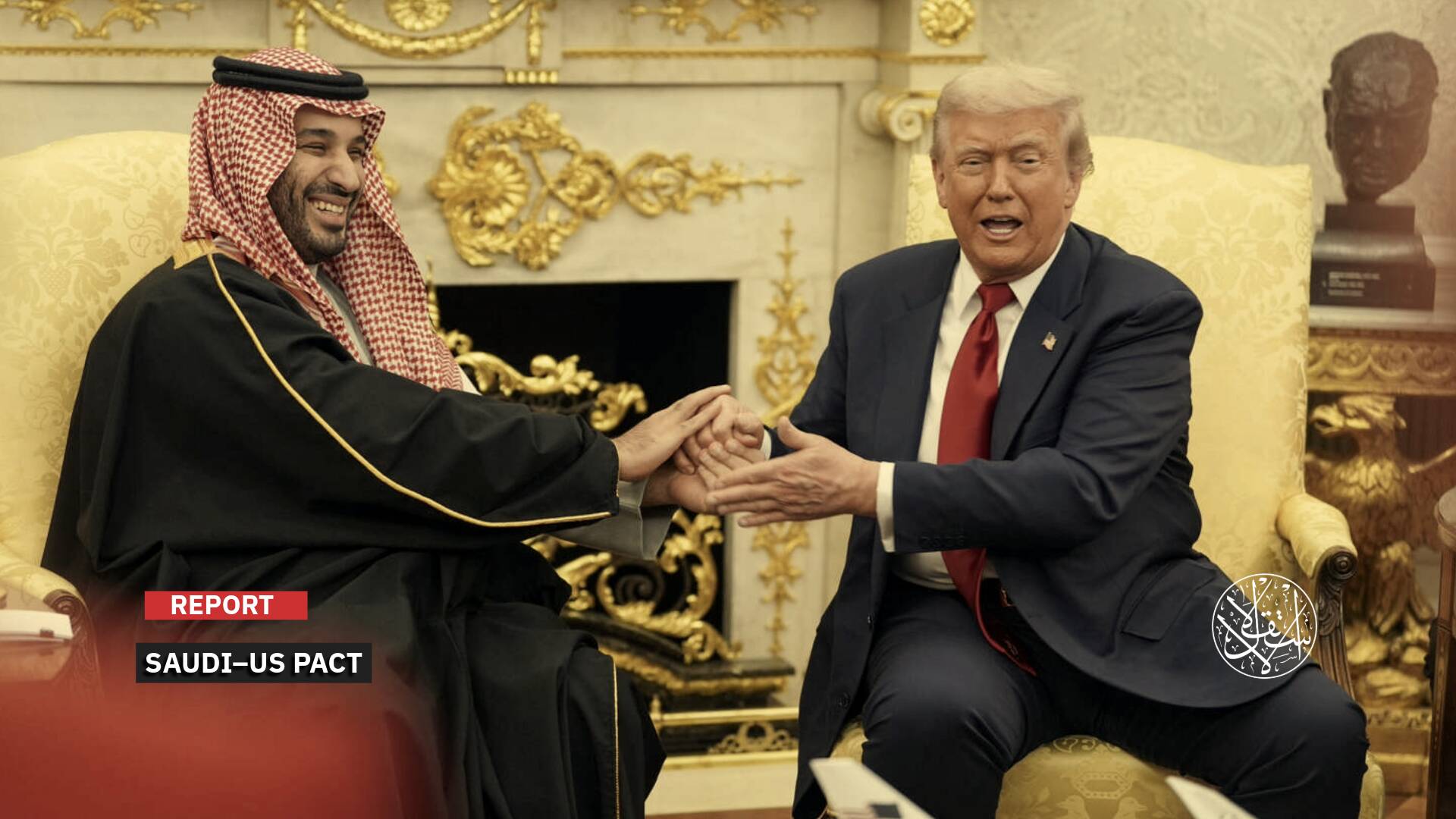
At the same time, reports in The Washington Post and The New York Times (NYT) have discussed the role of certain regional actors in shaping the trajectory of escalation. Some coverage suggested that Mohammed bin Salman was portrayed in certain accounts as supportive of U.S. aggression on Iran, while Saudi official sources reaffirmed the Kingdom’s commitment to the 2023 Beijing agreement that restored diplomatic relations between the two countries.
The Washington Post also reported in March 2026, citing an informed source, that pressure from Saudi Arabia and “Israel”—excluding the UAE—contributed to President Donald Trump’s decision to start war on Iran.
Media research and academic analysis point to a persistent pattern in Gulf coverage, where reporting tends to fall in line with official narratives; a March 26, 2026, report by the Carnegie Endowment for International Peace (CEIP) notes that this framing consistently casts Iran as a standing security threat while elevating military angles at the expense of broader political context.
This tendency is closely tied to the structure of media systems in these countries, where the state plays a central role in setting the news agenda and defining coverage priorities.
This conclusion is further supported by a Reuters Institute Digital News Report from June 2025, which found that media operating in less pluralistic environments rely heavily on official or state-aligned sources, limiting narrative diversity and resulting in largely one-directional coverage.
In such environments, news and analysis tend to echo the state’s line, with guest choices and expert commentary carefully aligned to the prevailing narrative, narrowing the space for public debate and sidelining dissenting—or even neutral—voices.
Manufacturing Perception
Media studies suggest that audiences exposed to a single dominant media environment, commonly referred to as “echo chambers,” tend to adopt a singular interpretation of events, with reduced capacity to cross-check or compare multiple sources. According to a BBC report, this dynamic weakens the formation of independent critical perspectives.
In the context of the crisis with Iran, this pattern has been clearly reflected in the spread of simplified and hard-edged narratives across parts of the Gulf media, where Iran is framed as an “existential threat” and confrontation is presented as inevitable, while substantive discussions of the conflict’s roots, who initiated it, its underlying causes, and the role of U.S. military bases in driving escalation are largely absent.
Media outlets in the UAE, Saudi Arabia, and Kuwait have also contributed to reproducing a discourse closely aligned with official policy. This has involved amplifying terms such as the “Iranian threat” and the “Iranian nuclear program” as near-accepted facts, without offering balanced examination of the broader conflict dynamics or addressing issues such as regional nuclear double standards—including Iran’s adherence to the Non-Proliferation Treaty (NPT) compared with “Israel’s” refusal to join it.
Media assessments warn that the impact of such coverage extends beyond content itself, shaping what is often described as “manufactured perception”—a gradual formation of distorted or simplified understandings among segments of the public over time, even outside periods of active conflict.
In this regard, a 2018 report by the Center for American Progress noted that narratives formally advanced in the United States and echoed in some Gulf media outlets may contribute to simplified or distorted perceptions of Iran.
On the other hand, Qatar’s Shura Council member Mohamed Hinai pointed to the emergence of Iranian spokespeople on Al-Jazeera’s broadcasts, who managed to achieve notable reach and influence, in contrast to the weaker impact of some narratives presented by Gulf-based commentators.
He attributed this to attempts within certain media discourses to downplay the reality of U.S. and Israeli military presence in the region or to deny that military operations are launched from bases in the Gulf, as well as to insist on the idea that regional governments maintain full control over those bases—claims he described as misleading.
By contrast, and despite the distorted Gulf media narrative on the crisis with Iran—where the discourse closely aligns with official orientations—some outlets have attempted to introduce a greater degree of plurality, though their coverage remains constrained by political considerations and a largely one-dimensional framing.
Echoing the State Line
Coverage by state-aligned media outlets in the UAE, Saudi Arabia, and Kuwait of the U.S.-Israeli War on Iran has revealed a media model heavily tilted toward the official storyline. It operates through narrative reinforcement and framing the conflict within a narrow security lens, with a noticeable absence of alternative viewpoints that might offer a broader interpretation of the war and its underlying causes.
This pattern is reflected in the heavy reliance on governmental sources and mobilizing rhetoric, resulting in a one-dimensional portrayal of the crisis. Similar framing can be observed in the coverage of several newspapers and television channels, including Asharq al-Awsat, Okaz, and al-Riyadh, as well as Ain Alemirate, Alkhaleej, and al-Jarida.
Saudi media outlets such as al-Arabiya and Alhadath have also consistently portrayed Iran as a “regional threat” and a destabilizing force in the Gulf, within an interpretive framework that prioritizes the security dimension of the conflict above all else.
Okaz coverage, in particular, has taken a sharper tone, adopting a more overtly mobilizing discourse. It has used terms such as “the Iranian threat” and “expansionist project,” with a strong emphasis on ideological framing. Iran is presented as an absolute adversary, with limited effort to explore the motivations or contextual factors shaping its actions.
Opinion pieces and analytical articles in some of these outlets have also focused on calls to “counter Iranian influence,” while describing Iran’s rejection of U.S. pressure as “stubbornness,” in contrast to portraying U.S. policy as “pragmatic”—a framing that reflects a clear bias in how the positions of different parties are characterized.
In the same context, the presence of several commentators on Saudi and Emirati channels has largely been limited to repeating accusations against Iran that align with official narratives, without offering balanced analytical approaches. At the same time, unverified claims have circulated, including allegations of espionage networks linked to Iran and Hezbollah.
In a critical reflection on media performance, Saudi writer Khaled al-Sulaiman acknowledged in an article published on April 13, 2026, in Okaz the weakness of Gulf media coverage during this war, describing it as “lackluster,” particularly at the level of analysis.
He noted that talk shows, which are supposed to host experts and provide professional insight, often devolved into combative platforms lacking depth, likening them to “bird squabbles,” where confrontation and emotion dominate over evidence-based analysis.
He further added that some Gulf news networks—in reference to Al-Jazeera—gave significant space to the Iranian perspective, which in turn granted it notable visibility in war coverage, a development that sparked criticism within certain Gulf media circles.
‘Victory for the UAE!’
Media coverage in the UAE, from newspapers to television networks, appeared less balanced, with a clear emphasis on messaging that closely aligned with official narratives, including the promotion of what was described as a “victory for the UAE” in the war, a characterization that sparked debate and criticism in some circles.
Emirati media discourse adopted an increasingly assertive tone in its portrayal of Iran. Commentators widely condemned “targeting the Emirati territory,” while coverage largely echoed the official state position.
Local outlets consistently framed the country in the role of a victim of external aggression, highlighting the effectiveness of air defense systems and describing Iranian strikes as “terrorist,” “unjustified,” and a “violation of international law.”
Significant attention was also given to showcasing the performance of air defense capabilities, with detailed reports and statistics on the interception of hundreds of missiles and drones, while comparatively less emphasis was placed on the scale of damage or human casualties.
Despite reports pointing to significant material damage and wider economic consequences, including declining investment and falling real estate prices, Anwar Gargash, advisor to the UAE president, said on April 8, 2026, “The UAE emerged victorious from a war we sincerely sought to avoid.” His statement followed the announcement of a temporary ceasefire between the United States and Iran.
“Today, we are poised to navigate a complex regional landscape with greater resources, deeper understanding, and a more robust capacity to influence and shape the future,” he added, despite reports highlighting the scale of destruction, which had not been sufficiently covered in the media.
Opinion pieces in the official al-Bayan newspaper appeared under closely aligned headlines emphasizing praise for state leadership, including “Proud of the UAE,” “Thank You, Mohammed bin Zayed,” and “The UAE Wins,” in an explicitly celebratory tone that reflected an embrace of a broader narrative of victory.
On another note, the disappearance of video clips posted by Emirati businessman Khalaf al-Habtoor, in which he criticized U.S. President Donald Trump and Senator Lindsey Graham for their role in the escalation, raised questions about the degree of tolerance for dissenting views within the broader media discourse.
Emirati authorities announced on March 21, 2026, the arrest of a “terrorist cell” allegedly linked to Hezbollah and Iran, according to Sky News Arabia. The claim was later denied by Hezbollah, which stated that it has no operational presence in the UAE.
Hezbollah Secretary-General Naim Qassem also commented on similar accusations made in several Gulf countries, stating that the group “does not maintain any cells” in those states, in a response that reflects growing media and political tensions.
Kuwaiti media coverage of the U.S.-Israeli War on Iran has been characterized by what could be described as a “soft bias.” While some newspapers maintained a formal appearance of pluralism, their core reporting largely reproduced the official state narrative, with limited presence of Iranian perspectives or deeper analysis of its motivations.
Kuwaiti outlets also adopted framing consistent with governmental rhetoric, using terms such as “blatant aggression” and “gross violation of sovereignty,” while giving comparatively little attention to the issue of strikes on U.S. bases.
Although news coverage generally maintained this tone, a sharper discourse appeared in opinion columns by certain writers, including Ahmad Aljaralah, who expressed hardline views toward Iran and emphasized a lack of trust in the Iranian leadership.
Media Crackdown Campaign
In the broader effort to control the media narrative and confine it within a security-driven framework that places responsibility for attacks on Gulf states squarely on Iran—while largely excluding any reference to the role of U.S. military bases—some Gulf countries, led by the UAE, have moved toward tightening restrictions on media coverage. Critics have described these measures as part of a broader campaign to limit the circulation of alternative narratives.
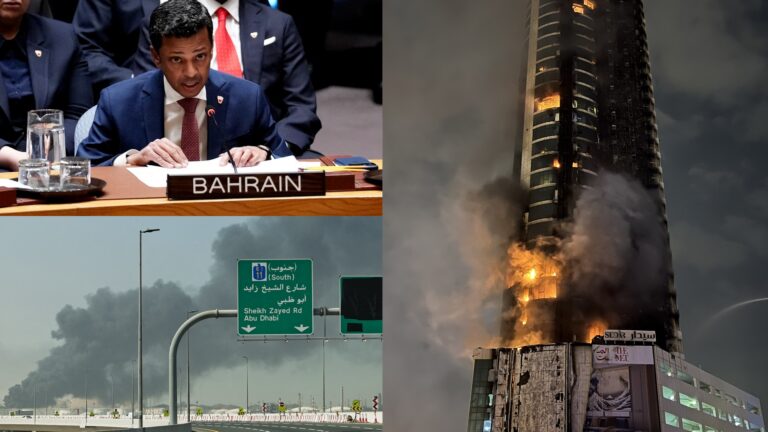
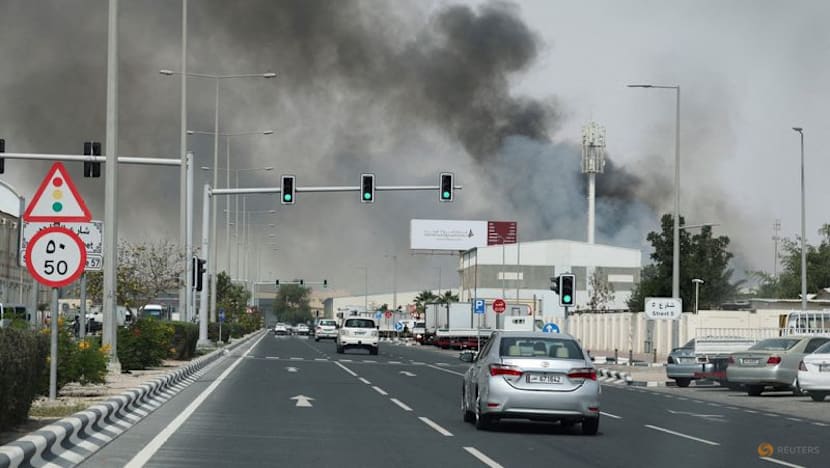
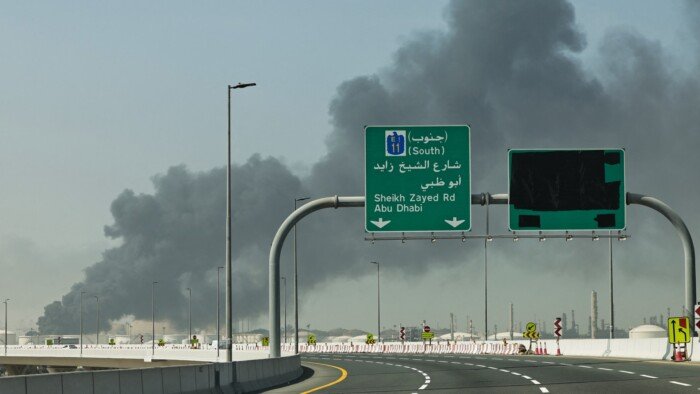
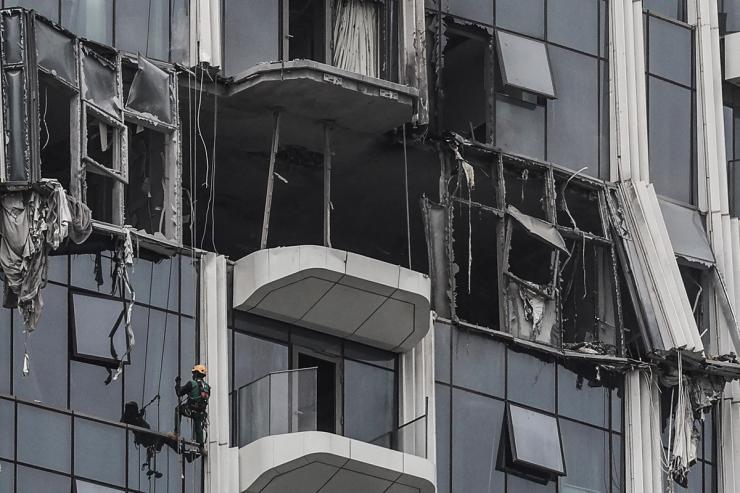
Within this context, official media has largely focused on publishing images and reports highlighting strikes on civilian infrastructure, such as hotels and oil refineries, reinforcing the official storyline that Iran is threatening regional security and stability by targeting non-military sites.
The UAE, Kuwait, and Bahrain have also criminalized the filming and dissemination of footage related to Iranian strikes. According to Semafor on April 13, 2026, several individuals, including journalists and foreign residents, were detained for sharing videos documenting strikes on various locations, including sites believed to have military significance.
These measures have, according to reports, also extended to limiting the publication of images showing damage to economic and tourism sectors, amid concerns over their potential impact on investor confidence, particularly in cities such as Dubai.
Some international news agencies were also reported to have reduced the use of original imagery documenting the aftermath of missile and drone strikes, relying instead on available material or content circulated outside official channels.
Press freedom organizations, including Reporters Without Borders (RSF), have documented media restrictions in several Gulf countries, pointing to government efforts to control the visual narrative of events in a region often presented as stable and secure.
Meanwhile, the hashtag “photography serves the enemy” circulated in Saudi Arabia in March 2026, reflecting a discourse that accompanied these measures and linked on-the-ground documentation of events to national security considerations, according to human rights reports.
Al-Jazeera: A More Neutral Approach
In contrast to the restrictions imposed by Kuwait and Bahrain on filming and publishing video footage related to Iranian strikes, Qatar’s Al-Jazeera broadcast a documentary on April 10, 2026, titled “What’s Hidden Is Greater,” which showed scenes of significant damage to al-Udeid Air Base, hosted in Qatar.
Although both official and unofficial discourse in Qatar included criticism of Iran, this divergence in media coverage can be understood within the broader context of efforts to push for a diplomatic settlement, according to CEIP.
Al-Jazeera’s coverage—particularly on Al-Jazeera English—stood out compared to some Gulf counterparts through its inclusion of multiple perspectives and a variety of analytical angles linking events to their regional and international contexts. This approach allowed audiences a broader understanding of the complexity of the conflict beyond a single narrative.
In contrast, networks such as Sky News Arabia, al-Arabiya, and Alhadath appeared closer to official narratives, reinforcing differences in editorial approaches across these platforms.
This divergence also drew international attention. The Jerusalem Post reported on April 9, 2026, a growing trend of American audiences turning to Al-Jazeera English during the war instead of traditional channels, amid declining trust in the perceived neutrality of some U.S. media outlets.
The report noted that Fox News had 15.2 million YouTube subscribers, while around 16 million Americans followed war coverage through Al-Jazeera English. Al-Jazeera Arabic’s audience exceeded 23.1 million subscribers.
It also showed that during one phase of the war, AJ+, part of Al-Jazeera’s network, came close to CNN’s YouTube audience, significantly narrowing the gap due to rapid subscriber growth.
Overall, Al-Jazeera’s combined YouTube presence exceeded 40 million subscribers, compared to about 34.4 million for CNN and Fox News combined.
During the same period, Fox News website traffic declined by 19% in March 2026, while Al-Jazeera’s presence in the U.S. market increased significantly, rising by around 30%, equivalent to approximately 16 million visits in a single month.
These indicators point to notable shifts in global news consumption patterns, reflecting the growing importance of “information warfare” and the role of media platforms in shaping public opinion during international crises.
Sources
- Exclusive / Gulf media crackdown sanitizes images of the war
- Editor's Notes: Why Americans turned to Al Jazeera instead of CNN or Fox during Iran war - comment
- Overview and key findings of the 2025 Digital News Report
- The Gulf States tighten grip on wartime communication
- What are echo chambers?
- Between Mobilization and Stability: The Battle of Narratives in the Middle East and the Role of Gulf Media [Arabic]
- Did the Media Succeed in This War?! [Arabic]
- Iranian Defiance and American Pragmatism! [Arabic]
- UAE: Arrest of a Terror Cell Linked to Hezbollah and Iran [Arabic]