Despite the Ongoing Ceasefire, Why Are Iran-Aligned Militias in Iraq Still Targeting Gulf States?
Saudi Arabia affirmed that it reserves the right to respond at the appropriate time and place.
Amid the wave of attacks launched from Iraq that struck both the United Arab Emirates and Saudi Arabia, political and media figures launched sharp criticism against the Iraqi authorities in Baghdad for failing to take any action to confront Iran-aligned armed militias, particularly in light of the ceasefire between Tehran and Washington.
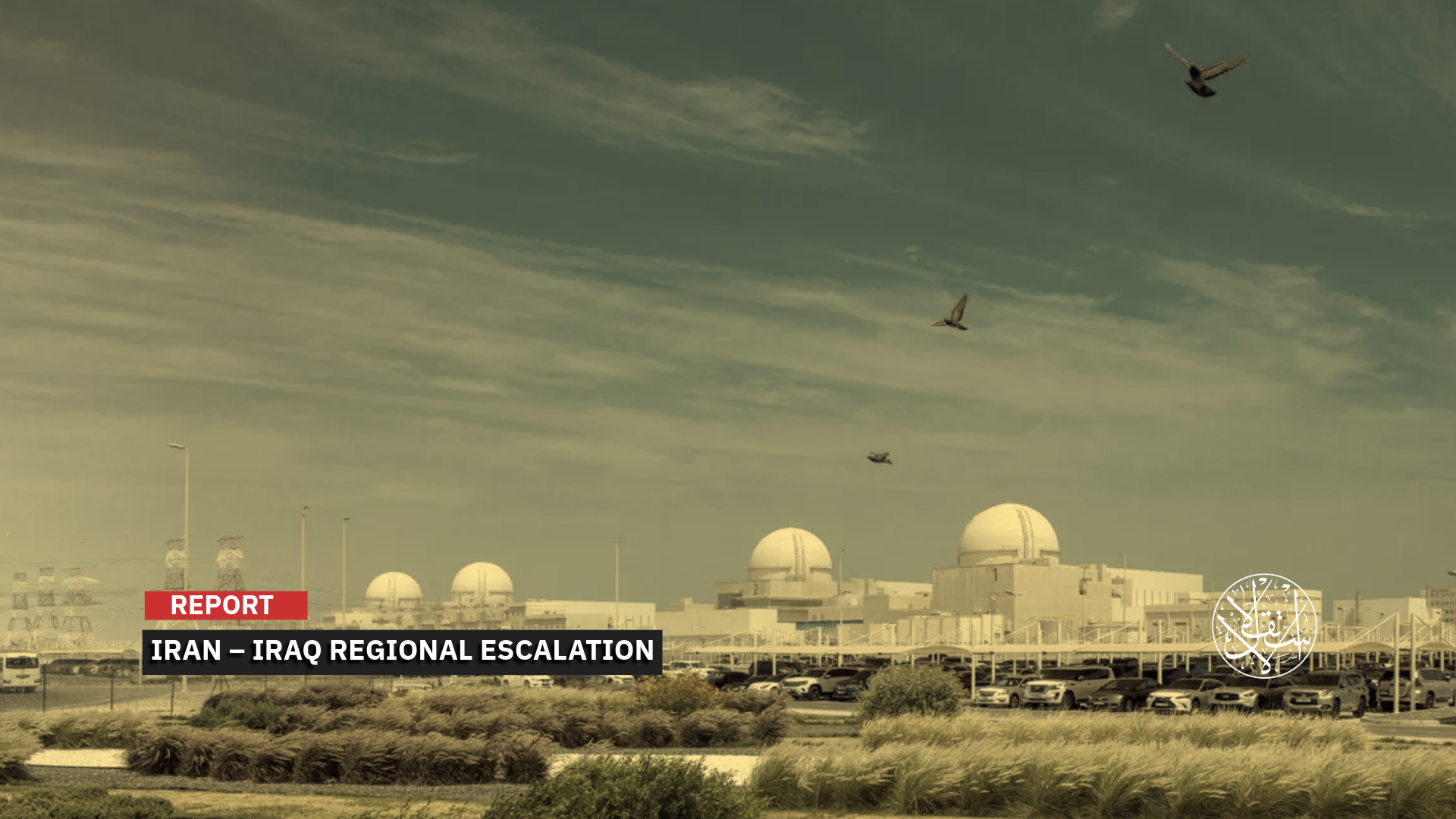
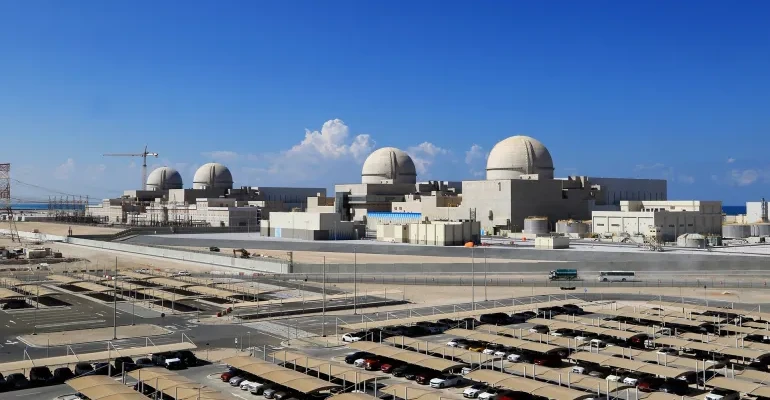
On May 20, 2026, the UAE Ministry of Foreign Affairs said in a statement that it “strongly condemns the treacherous terrorist attacks carried out by drones launched from Iraqi territory.” It added that one of these drones targeted the Barakah nuclear power plant in the al Dhafra region.
Three days earlier, the Saudi Ministry of Defense announced in a statement that it had intercepted and destroyed three drones after they entered Saudi airspace coming from Iraqi territory, affirming that it “reserves the right to respond at the appropriate time and place.”
Climbing to the Abyss
Regarding the Emirati and Saudi responses, some have called for distinguishing between Iraq as part of the Arab world and a “second Iraq” created by Iran after 2003 through sectarian militias. Others have stressed the need for Iraqi authorities to assume their real role in deterring these groups.
Saudi writer Abdulrahman al-Rashed said in an article published in Asharq al-Awsat on May 21 that “the Iraqi situation shows we are facing a hybrid state, like Lebanon; militias attack while the government disowns responsibility.”
He added, “The danger of militias does not lie only in their possession of weapons, but in their transformation into a parallel structure to the state, with financial resources, political influence, and partial legitimacy. Naturally, they have come to possess the ability to manage or disrupt Iraq’s sovereign decision-making.”
He further noted that “the Iraqi front has been opened, as Iran has activated its Iraqi militias to circumvent the ceasefire. Washington responded with two approaches: one targeting Iraqi militias by pursuing leaders who believe they are immune, and the other by beginning to cut off their financial resources.”
He concluded that “Tehran has become accustomed to bypassing direct agreements by shifting escalation to proxy arenas, which makes the militia file an organic part of the regional security equation, not a separate issue.”
Saudi writer Hussein al-Ghawi wrote on X on May 19 that there are now two Iraqs, not one: “There is the Iraq of Baghdad al-Rashid and al-Mutanabbi Street, which we love; between us there is blood, dialect, and kinship, and it has never been a stranger to us, not to the Gulf nor to Saudi Arabia in particular.”
“But unfortunately, there is a second Iraq created by Iran after 2003; it is the Iraq of militias, sectarian power-sharing, corruption, and external loyalties… the Iraq of Nouri al-Maliki and his circle,” he continued.
He added, “Imagine a government that does not know what is happening in its deserts, while militias launch drones at its neighbors in the name of sovereignty. What sovereignty is this? And above it, there are alleged secret Israeli bases operating on its land, yet they speak about protecting the homeland… which homeland? The one they are looting? Or the one whose decisions they are selling?”
In the same context, Saudi military expert Ahmed al-Fifi said on X on May 18 that “the probing attacks carried out by terrorist militias in Iraq, targeting some Gulf states following the appointment of a new Iraqi prime minister, amount to ‘climbing toward the abyss.’”
He noted that this development would place the Iraqi government in a dilemma between two difficult options: either forcibly disarming these militias or seeing them eliminated by Gulf states. He stressed that their continued existence in a state of intimidation and in targeting Gulf countries is absolutely unacceptable.
Emirati writer Ali Khalifa, who is close to the authorities, said on his X account on May 19 that “the Iraqi government has become a living example of ‘the one who saw nothing.’”
He pointed to “the aggression against Kuwait and Saudi Arabia, attacks on the Kurdistan Region of Iraq, alleged Israeli-operated bases in its desert, and a terrorist attack on the Barakah nuclear power plant, all carried out by militias acting under Iranian orders, while the government in Baghdad is the last to know… or pretends to be so.”
He added, questioning, “How long will Iraq remain hostage to this hijacking, and the state remain merely a façade while the real decision-making comes from beyond its borders?”
A Message to the Government
In contrast, Qatari writer and political analyst Ali al-Hail stated that “there is no ceasefire in the so-called thirty-nine or forty-day war between Iran and the United States; it is still ongoing to this day, why?”
He added in remarks to Al-Estiklal that “the United States violated the ceasefire by imposing a blockade on Iranian ports in southern Iran and by tightening control over the Strait of Hormuz, which is administered and dominated by Iran.”
The Qatari expert argued that “these Iraqi militias are extensions of Iran in the region, and they claim they responded to Saudi and Emirati strikes against them during the American war on Iran on February 28, which lasted 40 days.”
He noted that “the timing of the attacks coinciding with the formation of the Iraqi government under al-Zaydi may be intended to give the impression that the government is incapable of restraining Iran-backed militias. It is also a message regarding the policy of restricting weapons to the state, that you are unable to disarm the Iranian militias.”
He stressed that “it is not in Iraq’s interest for these factions to carry out such actions unless they are directed by Iran,” adding that “the UAE and Saudi Arabia have responded to the attacks, but it is not wise to enter into a war with Iran, whether directly or through its militias.”
Meanwhile, Iraqi Prime Minister Ali al-Zaydi condemned and denounced what he described as the criminal attack targeting the Kingdom of Saudi Arabia and the United Arab Emirates, according to his post on X on May 21.
Al-Zaydi said he had ordered an investigation into the incidents, and that a high-level investigative committee was formed at the first meeting of the National Security Council.
He emphasized the importance of conducting a joint investigation with the two countries to review all evidence and determine whether Iraqi territory was used in the attacks, in order to take all necessary legal and security measures against those responsible.
He concluded by saying, “We reject the use of Iraq’s land and airspace as a launching point for attacks against brotherly and friendly countries, and we stress that Iraq should be a zone of convergence for shared interests.”
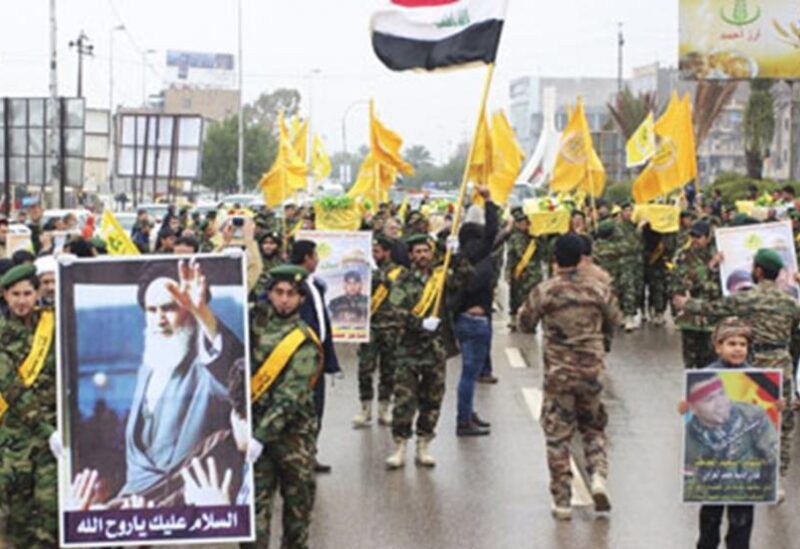
During April of this year, Washington announced financial rewards for the capture of leaders of “Kata’ib Hezbollah” Abu Hussein al-Hamidawi, “Kata’ib Sayyid al-Shuhada” Abu Ala al-Walai, and “Ansar Allah al-Awfiya” Haider al-Gharawi, on charges related to “killing Iraqis and targeting diplomatic facilities and U.S. military bases in Iraq and Syria.”
It is worth noting that the three groups participated in Iraqi elections and secured seats in parliament. The “Huquq” parliamentary bloc is affiliated with Kata’ib Hezbollah, while lawmakers loyal to al-Walai are part of the “State of Law” coalition led by Nouri al-Maliki.
Meanwhile, al-Gharawi entered parliament under the “Reconstruction and Development” alliance headed by Mohammed Shia’ al-Sudani.
Significance of the Timing
Regarding the timing of the attacks coinciding with the assumption of office by Iraqi Prime Minister Ali al-Zaydi, Middle East expert Imad al-Din al-Jubouri said that it is “a signal from Iran that political will in Iraq remains under Iranian pressure and control, and that there is no room to change this course.”
Al-Jubouri told Al-Estiklal that “there are reports speaking about airstrikes by Saudi and Kuwaiti air forces on militia headquarters during the US–Iran war. Whether this is true or not, the current attacks are a response to that action.”
He added, “The entire political process in Iraq is still under Iranian hegemony, and US administrations still do not want to dismantle the political process or change the current political figures who control Iraqi decision-making, most of them are affiliated, subordinate, or lacking independent will.”
Al-Jubouri stressed the need for Gulf states to deal with this reality, despite their awareness of it, stating that Iran controls key parts of the Iraqi state and political decision-making through these militias.
He called for “confronting this harsh reality and the need to dismantle the political process, which has become the only way to liberate Iraq from Iranian control. Anything else is merely an illusion, and the situation will remain the same whether the prime minister changes or stays.”
He further argued that “there are Iraqi forces capable of confrontation and intervention, but the United States does not want such support. In fact, just days ago, it brought figures from within the political process to Washington under the pretext of US–Iraqi relations, and this is a bitter reality that must be confronted.”
On May 13, Reuters revealed, citing unnamed “informed sources,” that Saudi warplanes had struck targets linked to powerful Iran-aligned armed groups in Iraq during the war with Iran, and that Kuwait had also carried out airstrikes on the country.
The agency explained that these strikes were part of a broader pattern of military responses in the Gulf region, which had largely remained undisclosed amid the wider regional conflict since the beginning of joint US–Israeli strikes on Iran on February 28.
Iraqi Prime Minister Ali al-Zaydi had pledged upon winning parliamentary confidence on May 13 to “restrict weapons to the state,” outlining three main policy tracks in his speech before parliament, “reforming the security system, strengthening the capabilities of the security forces, and consolidating citizens’ trust in democracy.”
Sources
- Al-Zaydi Renews Iraq’s Condemnation of the Shelling of Saudi Arabia and the UAE [Arabic]
- Iran’s Iraqi Front [Arabic]
- The UAE Calls on Iraq to Prevent All Hostile Actions from Its Territory [Arabic]
- Exclusive: Sources Say Saudi Arabia Struck Militant Positions in Iraq During the War [Arabic]
- Saudi Arabia Announces Interception of 3 Drones Entering Its Airspace from Iraq [Arabic]