How Burkina Faso’s Military Junta Severed Ties with France and Moved Closer to “Israel”
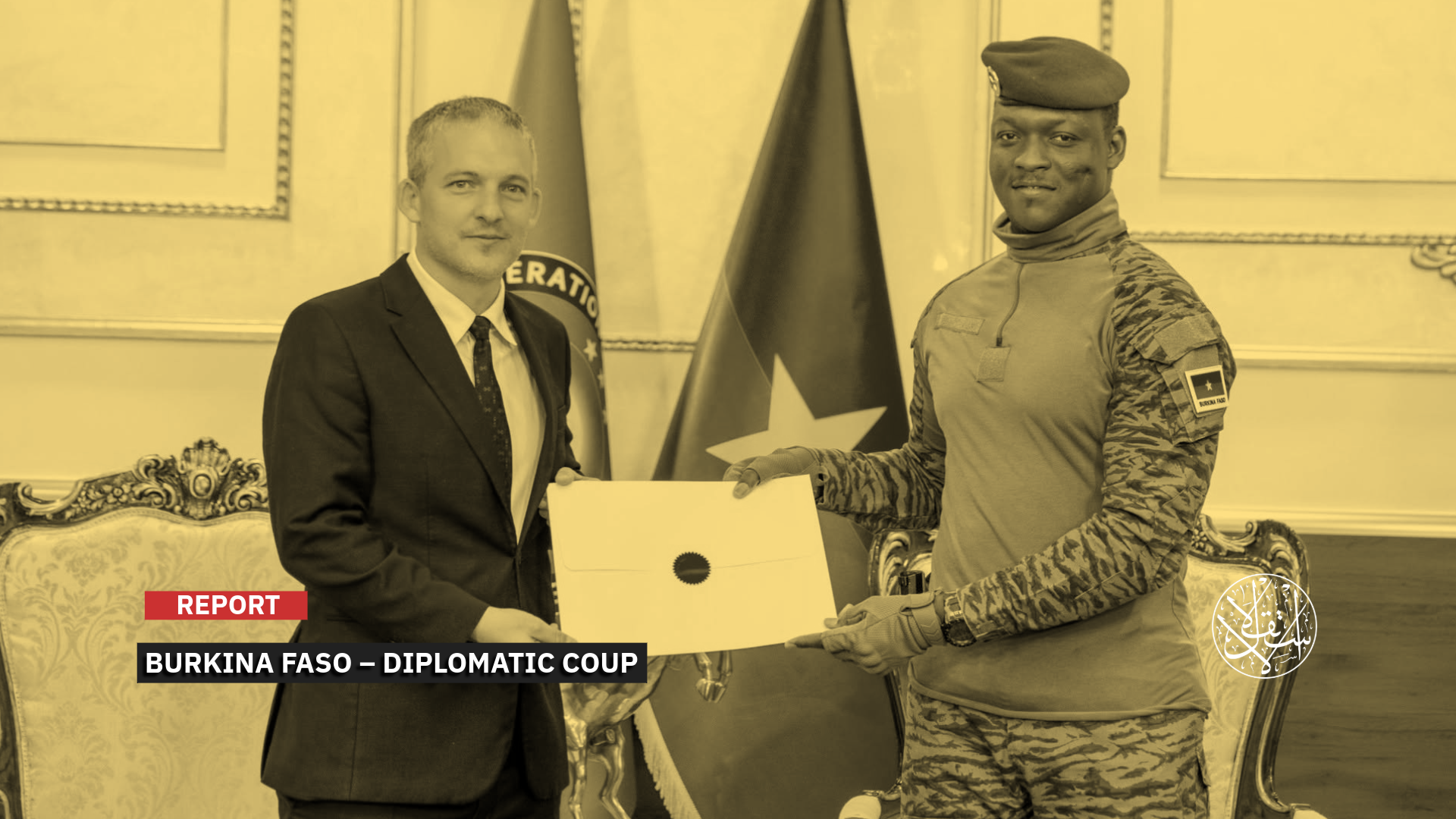
“Israel maintains diplomatic ties with over 40 African nations.”
As it severs ties with its former colonial ruler, France, Burkina Faso has begun moving toward strengthening cooperation with "Israel"—a move that has sparked debate regarding its underlying motives and political objectives.
On June 26, 2026, Burkina Faso’s President, Captain Ibrahim Traore, accepted the credentials of Simon Seroussi as Israel’s Ambassador Extraordinary and Plenipotentiary to the country. This development comes at a time when the African Sahel region is undergoing a major reconfiguration of its alliances and foreign relations.
Controversial Presence
The Burkinabe presidency stated on Facebook that relations between the two parties are based on a general agreement covering economic, scientific, technical, and cultural cooperation, alongside an institutional cooperation framework that has not yet come into effect.
Seroussi, who is based in Ivory Coast, will assume his duties as a non-resident ambassador to Burkina Faso—as well as to Togo and Benin—as part of an Israeli initiative to expand its diplomatic footprint in West Africa.
The accreditation of the new Israeli ambassador comes at a sensitive juncture, coinciding with Ouagadougou’s announcement that it is ending military cooperation with France. This move reflects the rapid shifts sweeping the Sahel region since military juntas seized power in several of its nations.
Since assuming power, Traore has sought to reshape his country's foreign policy, gradually distancing it from traditional French influence while simultaneously seeking new partners in the fields of security, development, and the economy.
In this context, the continuation of relations with "Israel" aligns with Burkina Faso’s policy of diversifying partnerships, although the level of cooperation between the two remains limited compared to Israel’s ties with other African nations.
Captain Ibrahim Traore emerged on the political scene in Burkina Faso in 2022 amidst a severe security and political crisis, driven by escalating attacks from armed groups linked to extremist organizations across vast areas of the country, alongside growing public criticism of the government’s failure to halt the deteriorating security situation.
Prior to assuming power, Traore was an officer in the Burkinabe army. In September 2022, he led a military move that ousted the then-head of the ruling junta, Paul-Henri Damiba—who had himself taken power only months earlier following a coup that toppled elected President Roch Marc Christian Kabore in January of that same year.
On the same day he received the Israeli ambassador, Ibrahim Traoré’s regime decided to sever diplomatic relations with Paris.
A statement broadcast on national television on Friday, June 26, 2026, read: "The government of Burkina Faso informs national and international public opinion that it has decided to sever diplomatic relations with the French Republic, effective June 26, 2026."
The military junta condemned the ongoing activity of the incumbent regime in France against the interests of Burkina Faso, and the declared neo-colonial ambitions—actively supported by subversive networks and terrorists—that are bringing suffering to the country and the Sahel region.
Since assuming power, Traore has worked to reshape his country's foreign relations, gradually distancing it from traditional French influence while seeking new partners in the fields of security, development, and the economy.
In this context, the continuation of relations with "Israel" is part of Burkina Faso's policy of diversifying partnerships, although the scope of cooperation between the two sides remains limited compared to Israel's ties with other African nations.
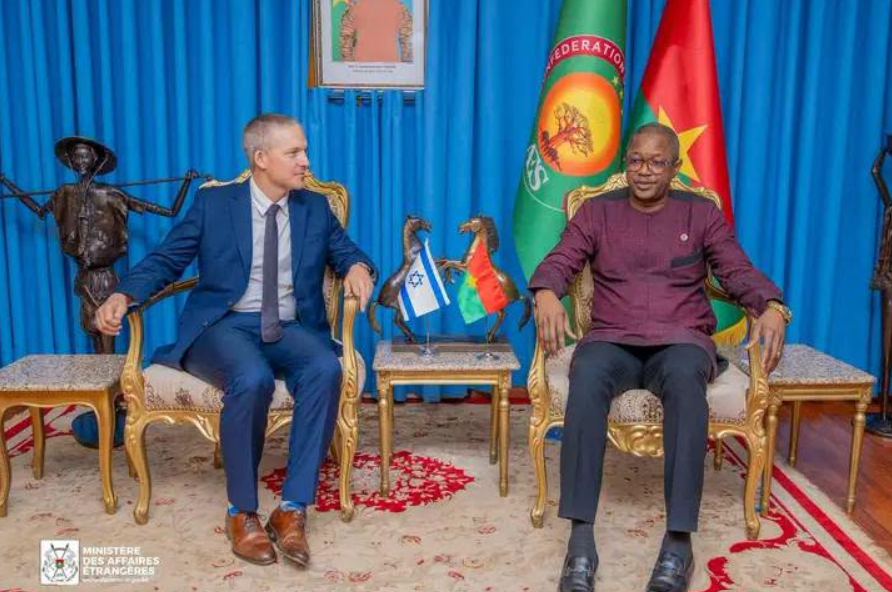
Regional Chaos
On the Israeli side, the i24news website reported in an analysis on June 29, 2026, that the appointment of an Israeli ambassador to Burkina Faso comes at a time when Tel Aviv is seeking to deepen ties with several African nations and the Sahel region.
The same source noted that this Israeli move occurs against a regional backdrop characterized by security instability and the fight against armed groups.
The website stated that this visit is part of a broader dynamic of rapprochement between Israel and certain Sahelian states, noting that Mali has—for several months—been engaged in secret discussions with "Israel", with support from the UAE and Morocco.
It also pointed out that, at this stage, there has been no official announcement regarding the precise nature of the exchanges between Ouagadougou and "Israel", nor concerning any potential diplomatic or security agreements.
Bolstering its presence in the Sahel region could enable "Israel" to achieve several objectives: forging new strategic partnerships, enhancing security cooperation, and solidifying its influence across the African continent.
From Burkina Faso's perspective, these meetings may also reflect a desire to diversify international alliances at a time when the country faces an ongoing terrorist threat and is seeking new partners in the security, diplomatic, and economic spheres.
In this context, international relations specialist Adam Mokrani observes that "Israel" already maintains a presence in the region—having restored ties with Chad—and is working, with Emirati and American backing, to further expand its footprint in the Sahel.
In an analysis for the Tunisian radio station Express FM on July 4, 2026, Mokrani explained that "Israel" had previously established a presence in Burkina Faso in 1960, only for relations to be severed following the 1973 war.
He noted that the ruling military junta is adopting a pragmatic approach; it seeks diplomatic rapprochement with Turkiye and Iran while simultaneously attempting to draw closer to "Israel" to leverage its technical expertise—particularly in agriculture, water management, intelligence, and security.
Mokrani also pointed out that Burkina Faso views its relationship with "Israel" as a gateway to engaging with the United States, specifically to access American intelligence expertise and information regarding armed groups and forces.
He further indicated that Burkina Faso is grappling with a difficult economic situation; consequently, it is attempting to reassure the U.S. by moving closer to Israel, even as it simultaneously strengthens its ties with Russia.

African Normalization
In this context, writer and journalist Fadel Ki observes that Burkina Faso’s move aligns with the efforts of certain African nations to engage with Israel, particularly in the diplomatic, security, and agricultural sectors.
Speaking to Al-Estiklal, Ki highlights the role played by Arab and Islamic nations in this trend, noting that several of them have already normalized relations with Tel Aviv.
He believes that most African governments justify Israel’s presence in their countries by pointing to the fact that the majority of Arab states have normalized relations with "Israel".
Ki adds that this link is further evidenced by the fact that African nations which previously severed diplomatic ties with "Israel" did so to support friendly Arab states and to condemn Israel’s crimes in the occupied Palestinian territories.
For his part, Mouhamed Lamine Sawadogo, an expert on African affairs, stated that Captain Ibrahim Traore’s relationship with "Israel" is characterized by what could be described as strict pragmatism and shifting geopolitical alliances.
In a Facebook post dated June 30, 2026, Sawadogo noted that while Traore adopts a nationalist political rhetoric opposing traditional Western colonialism—particularly French influence—and moves vigorously to strengthen ties with Russia and other international partners, he simultaneously pursues a policy of diversifying partners regarding sensitive security and technical matters.
He pointed out that Traore received Ambassador Simon Seroussi at the Kosyam Presidential Palace in Ouagadougou during a collective diplomatic ceremony. This event involved accepting the credentials of eight ambassadors from various nations and entities, including Saudi Arabia, Indonesia, and the Sovereign Military Order of Malta, among others.
He noted that this reception took place within the context of Ouagadougou’s efforts to demonstrate diplomatic openness and refute the narrative of international isolation that accompanied the end of the French presence and influence in the country.
However, Sawadogo states, "My personal stance on Israel has not changed; we disavow it. It is a criminal, occupying entity that has committed crimes against the Palestinian people and Arab-Islamic nations. We oppose normalization with it and its presence in Africa, as it represents an unjust colonial power."
He pointed out that “Israel maintains diplomatic relations with more than 40 African countries but manages these ties through a very limited network of representatives to cut costs; it has only 12 resident ambassadors and embassies across the African continent.”
Diplomatic Gains
In its analysis of the event, the Near East Center for Academic Studies noted that Israel's motives for developing relations with Africa go beyond mere economic gains, particularly given the geopolitical upheavals the region has witnessed over the past two decades.
In a report published on July 5, 2026, the Center highlighted that the outbreak of the Arab Spring revolutions delivered a sudden and profound shock to Israel's security environment.
It noted that the repercussions of the Arab Spring posed two major threats to "Israel": the collapse of allied Arab regimes and the rise of Islamist movements to power in several of the countries where revolutions took place.
It highlighted that the growing Iranian presence in Africa served as an impetus for Tel Aviv to develop a counter-strategy, which included an intensive diplomatic campaign targeting various nations across the continent.
It noted that development aid serves as a tool of Israeli soft power in Africa; official development agencies and Israeli charitable organizations—foremost among them MASHAV (Israel’s Agency for International Development Cooperation)—have stepped up their activities across the continent.
The report stated that "Israel" has also utilized military and security equipment and technologies to strengthen ties with African nations facing significant challenges in these sectors.
It added that Israeli surveillance tools have contributed to the shrinking of civic space and the entrenchment of authoritarianism in Africa; investigative reports link the notorious Pegasus spyware to the targeting of activists, journalists, and politicians in countries such as Rwanda, Ghana, Togo, and Kenya—nations that support Israel’s bid for observer status within the African Union.

Given the severe damage to Israel’s image resulting from the war of extermination in the Gaza Strip, the center predicts that the coming years will see an intensification of Tel Aviv’s diplomatic campaigns across Africa.
These efforts aim to garner support for its policies, consolidate its influence, and counter its African adversaries—most notably South Africa, which initiated historic legal proceedings against Israel at the International Court of Justice.
Regarding the Burkinabe authorities' acceptance of an Israeli ambassador, the report suggests this move appears to be a potential alternative pathway to Washington—and a means to alleviate the country's isolation—following the severance of ties with Paris and the failure of the bet placed on Moscow to counter terrorist movements in the Sahel.
The report further notes that this reflects the Burkinabe leadership's desire for Israeli military aid and enhanced technological cooperation.
However, it assesses that these efforts do not guarantee success; the military authorities had previously pinned their hopes on Moscow, yet the Russian presence in the Sahel failed to achieve the desired objectives.
Separately, the report states that "Israel" is seeking to expand its influence in the Sahel—building upon its foothold in the Horn of Africa via Somaliland—amidst fierce international competition for the region, aiming to secure a position that strengthens its role in the Sahel's ongoing dynamics.
It adds that "Israel" also seeks to garner diplomatic support from Sahelian nations at the United Nations and to break the international isolation it faces due to its violations in Gaza.