Pro-Government Forces Secure Most Seats: Why Did Islamist Parties Decline in Algeria’s Elections?
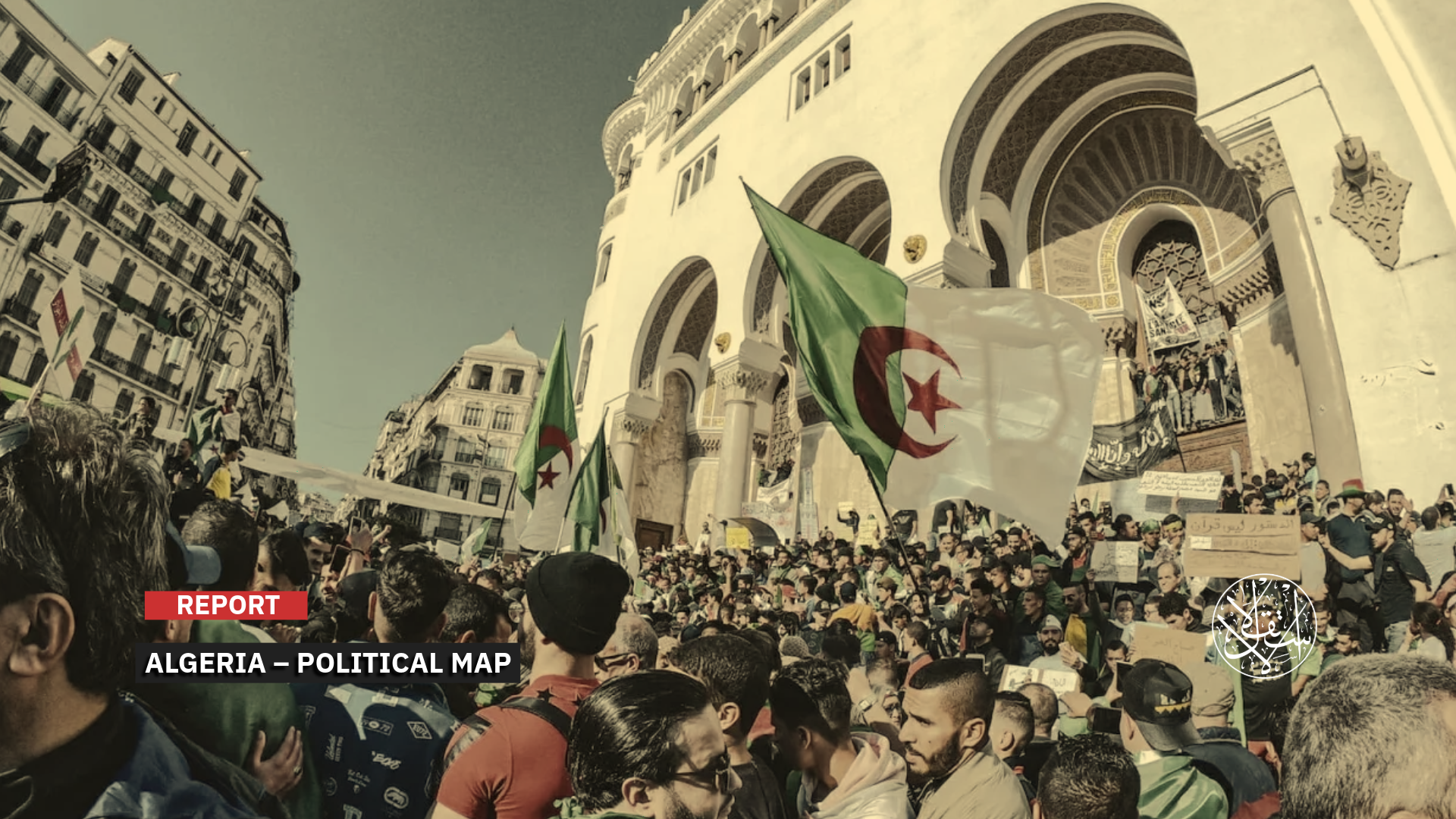
"The National Liberation Front won 90 out of 407 seats in the Algerian parliament in the July 2 poll."
After holding 26% of parliamentary seats since 2021, Algeria’s four Islamist parties saw their representation drop by 5% in the July 2, 2026, elections, while pro-government parties secured nearly 75% of the seats.
The Islamist parties' focus on a discourse more aligned with the concerns of the people, addressing economic and development issues rather than political polarization, did not translate into a greater presence in parliament compared to the 2021 elections.
Several factors explain this decline, including the fragmentation of the vote, competition among several parties with similar platforms, and public apathy.
Additionally, the alignment of some parties, such as the National Construction Movement (NCM), with the government and their support for President Abdelmadjid Tebboune in the presidential elections, while other parties, such as the Movement of Society for Peace (MSP), positioned themselves in the opposition, along with internal divisions and personal disputes among the leaders of these parties, all contributed to this decline.
These factors were reflected in the results of the parliamentary elections in Algeria. The four ruling parties, including the Islamist NCM, won 260 out of 407 seats, representing 63.9%.
The National Liberation Front (FLN) topped the legislative election results with 90 seats, while the share of Islamist parties, including the NCM, declined to 87 seats.
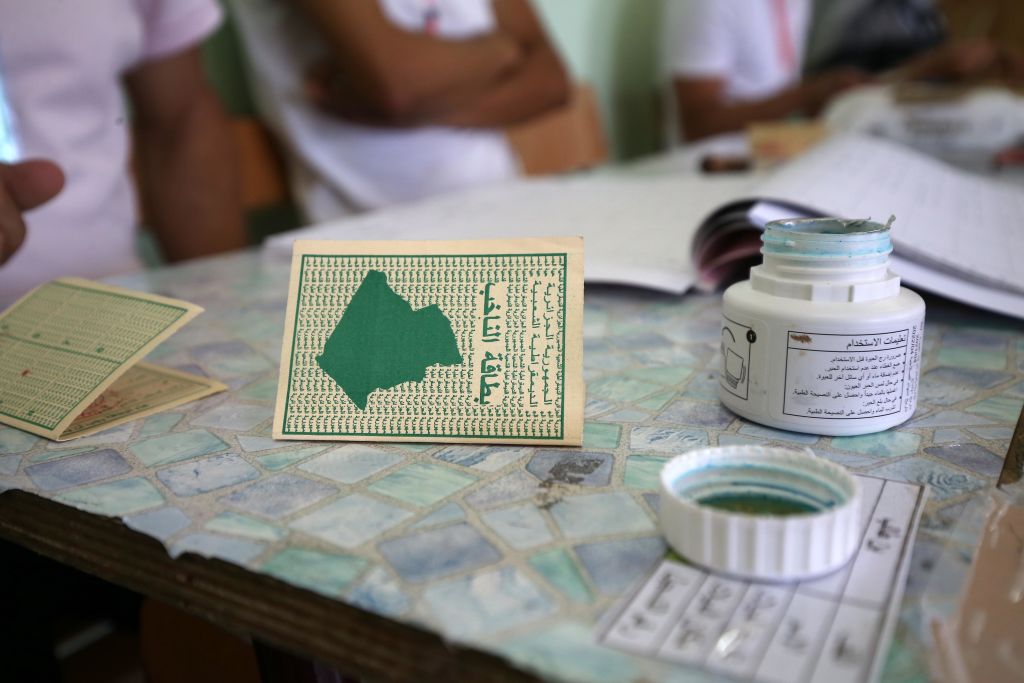
Political Decline
The results for the four Islamist parties—the MSP, the NCM (affiliated with the Muslim Brotherhood since 2012), the Justice and Development Front (led by Sheikh Abdallah Djaballah), and the Renaissance Movement—revealed a relative decline in their parliamentary presence.
These parties collectively won 87 out of 407 seats, or approximately 21.4% of the total. This result is lower than their performance in the 2021 elections, when they won 106 out of 407 seats, representing approximately 26% of the total seats in parliament.
Thus, Islamist parties lost 19 seats in the current elections, or nearly 18% of their parliamentary representation in the previous elections.
This occurred despite Islamist parties submitting 159 electoral lists out of the 789 lists that competed in the elections, in addition to two Islamist parties competing in the majority of electoral districts.
These parties are the MSP and the NCM, each of which submitted 68 lists in 77 electoral districts.
The MSP, the largest Islamist party and the only opposition bloc in the previous parliament, came in fourth place with 43 seats, down from 65 seats in the 2021 elections.
In contrast, the NCM won 38 seats, the Justice and Development Front won four seats, and the Renaissance Movement won two seats.
The paradox lies in the fact that the NCM is classified as an Islamist party, yet it is simultaneously considered a pro-government party and participates in supporting President Abdelmadjid Tebboune.
As for the MSP, it is the largest Islamist party, but it is not part of the ruling coalition and is positioned within the parliamentary opposition, despite its participation in dialogue with the government on certain issues.
Thus, the 38 seats won by the NCM fall into two categories simultaneously: one among the seats held by Islamist parties, and the other among the seats held by pro-government parties.
One of the most prominent indicators of the decline of the Islamist movement is the complete disappearance of one Islamist movement from the political scene: the National Reform Movement, which was led by the former ambassador to Muscat, Filali Ghouini.
This movement had caused a political surprise in the 2002 elections when it achieved a remarkable rise, winning 43 seats and surpassing other Islamist parties. However, it was unable to field any candidates in the current elections.
The movement also failed to win any seats in parliament during the 2021 and 2026 elections, suggesting it may be entering a phase of complete organizational decline, especially given its long-standing structural weaknesses.

Pro-Government Parties
In contrast, the results of the Algerian elections revealed that the pro-government coalition secured an absolute majority in the parliament.
The FLN maintained its lead, winning 90 out of 407 seats, despite a decline compared to the 2021 elections.
The remaining parties of the nationalist movement supporting President Tebboune won the largest number of seats in the 407-seat parliament. Meanwhile, some major opposition parties regained parliamentary representation.
The National Democratic Rally (RND), affiliated with the nationalist movement, came in second with 73 seats.
The Future Front, also from the nationalist movement, came in third with 59 seats, followed by the NCM, associated with the Muslim Brotherhood, with 38 seats.
Including the results of the FLN, the RND, the Future Front, the NCM, and the People's Voice Party (which supported Tebboune in the last presidential election), the majority parties' control 277 out of 407 seats.
This result gives the pro-government parties a comfortable majority in the new parliament and suggests their continued participation in the government and their support for the president's program and government legislation during the next parliamentary term.
The Freedom and Justice Party, a centrist organization combining national Islamic principles with democratic values, won six seats, reflecting the continued presence of the Islamist movement in parliament, albeit as a minority far from the majority.
As for the progressive democratic parties with a left-leaning orientation, the Socialist Forces Front (FFS) secured 12 seats, the Rally for Culture and Democracy (RCD) four seats, the New Generation Party two seats, and the Workers' Party three seats. These groups maintain limited parliamentary representation compared to the pro-government parties.
The remaining seats were distributed among several other parties: the New Dawn Party won six seats, the Rally for Hope of Algeria (TAJ) three seats, and the National Unity and Development Party (UND) two seats.
The Algerian Renewal Party, the Republican Alliance, the New Algeria Front, the Front for Good Governance, and the Free Citizens Front each won one seat. These parties, for the most part, are not far removed from the pro-president camp.
Thus, the political landscape resulting from the Algerian elections is divided into three political blocs with differing orientations.
The first is the conservative bloc, a bloc entirely loyal to the regime, representing the support base for Algerian President Abdelmadjid Tebboune. It primarily comprises the FLN, the RND, the Future Front, and the People's Voice Party.
The second is the Islamist bloc, represented by four parties: the MSP, the NCM, the Justice and Development Front, and the Renaissance Movement.
The third is the progressive and democratic forces bloc, led by the FFS, the Workers' Party, the RCD, and the New Generation Party.
Despite 33 parties participating, Algerian elections saw a record-low turnout of 20.79%, with only 4.9 million of 24 million registered voters casting ballots.

Electoral Fraud
Despite the decline in the number of seats won by Islamist parties and complaints of electoral fraud involving voting by deceased persons, observers do not consider the results for the Islamist movement to represent a sharp political setback, especially given the unfavorable internal and regional circumstances for Islamist movements in general.
Algerian reports indicate that what keeps Islamist parties active, even if their seats decrease in some elections and increase in others, is their political flexibility and ability to adapt to results and circumstances in the face of pressure and attempts to exclude them from the political arena.
Former Egyptian parliamentarian Dr. Mohamed Emad Saber, who is considered part of the Islamist movement, believes that the Islamist movement has not been defeated, but it has also failed to achieve the breakthrough it had hoped for.
He believed that the seats won by Islamist parties constituted a significant bloc, but remained insufficient to make them a ruling force or a sole decision-maker.
He explained that the Algerian elections did not produce a major political shift, but rather confirmed the continued relative stability in the balance of power, with the ruling parties remaining in the lead, while the Islamist movement maintained a considerable presence, albeit below the level of decisive influence.
He attributed the stagnation and decline of Islamist parties to the fragmentation of the Islamist movement into several parties, a general decline in public enthusiasm for party politics, and the limited powers of parliament within the Algerian political system.
He added that the priorities of young people had shifted, with their focus now on economic issues, unemployment, and housing, rather than political slogans, in addition to the intense competition between parties.
Despite the NCM being classified as a pro-government party, statements by its leader, Abdelkader Bengrina, sparked controversy after he called for an investigation into alleged fraud involving the registration of votes cast by deceased individuals at some polling stations.
He added that the relevant authorities are required to open an investigation into what he described as votes cast in the names of deceased individuals at three polling stations in the municipality of Abdelkader Azil in the province of Barika.
He indicated that the number of votes registered in the names of deceased persons ranges, according to him, between 2,100 and 2,200.
He maintained that, despite this alleged fraud, the movement retained its electoral base and the same number of seats it won in the 2021 elections, despite what he termed 'electoral injustice' that prevented it from gaining more seats.
He announced that appeals had been filed with the Constitutional Court concerning the results in ten provinces, with the aim of reclaiming the seats. He cited irregularities in some polling stations and falsification of the final results reports.
MCP President Abdelali Hassani Cherif also referred to these electoral violations, asking during a press conference: "Have we regressed, or have we been subjected to a process of marginalization?"
He replied: "We believe there was a manipulation of the movement's results, and there are contested results in several states, which are related to the final results."
Uncertain Future
The Algerian parliamentary elections did not hold any major surprises, but they did carry profound political messages. The results did not fundamentally alter the existing balance of power, but they did reveal challenges facing all political forces, especially the Islamist movement.
The results showed that the existing political landscape remained largely unchanged, with pro-government parties securing a comfortable majority in the new parliament.
This came at the expense of a clear decline in the influence of Islamist opposition parties and independent lists, while some leftist opposition parties maintained a limited presence. Ultimately, these forces are unable to obstruct any future legislation or government decisions.
The low voter turnout, which did not exceed 22% of an electorate of approximately 24 million voters, demonstrated a growing reluctance among Algerians to participate in elections.
This reluctance stems either from a lack of confidence in the possibility of change through the ballot box, or from the perception that political parties have failed to offer any new solutions to address the public's concerns.
The decline of some of the parties that won a majority is also noteworthy. The FLN, which came in first, lost eight seats compared to the 2021 elections, in which it won 98 seats, while it had won 164 seats in the 2017 elections.
This reflects a continued gradual decline in its parliamentary representation, despite remaining the largest political force in the assembly.

Meanwhile, the RND, the second-largest winner among the pro-government parties, added 15 seats to its tally in the 2026 elections, increasing its representation from 58 seats in 2021 to 73.
The Future Front's representation also rose from 48 seats in 2021 to 59 seats in 2026, while the People's Voice Party climbed from just three seats to 17, becoming one of the influential parties within the new parliamentary majority.
With the results of the FLN, the RND, the Future Front, the NCM, and the People's Voice Party (PSP), the parties of the presidential majority now hold approximately 277 seats out of 407.
This number could exceed 277 if the seats of independent candidates and other smaller parties that appear close to the pro-President Abdelmadjid Tebboune faction are included.
This gives the pro-government parties a comfortable majority, allowing them to pass legislation and support the president's program in the new parliament, compared to roughly a quarter of the seats held by all the opposition forces—Islamist, nationalist, and leftist.
Therefore, many Algerians do not believe that the election results will fundamentally alter the parliamentary landscape or composition.
With a two-thirds majority, the pro-government bloc now holds total control over Algeria's parliamentary bureau, committees, and legislative agenda.
Consequently, a decline in parliamentary performance is expected, especially since the outgoing parliament initiated only one piece of legislation in the past five years: the law criminalizing colonialism.
Analysts also anticipate that members of parliament belonging to political blocs will refrain from challenging the government and submitting sharp interventions and embarrassing parliamentary inquiries, fearing that their fate in the upcoming elections will be invoked under Article 200 of the electoral law.
This article allowed the authorities to disqualify a large number of parliamentarians and prevent them from running again for reasons described as illogical, based on their stances and parliamentary activities, which the authorities deemed to be outside the established line.
Prior to the July 2 elections, Algerian electoral authorities barred 269 candidates from competing for the 407 parliamentary seats, as reported by AFP.
This means, according to Algerian press estimates, that a large number of deputies will enter parliament with their sights set on the 2031 elections.
The publication Med This Week, affiliated with the Italian Institute for International Political Studies, explained in an analysis published before the July 2 elections that these elections represent an indicator of the public's acceptance of the New Algeria project, launched by President Tebboune at the beginning of his first term, which encompasses state institutions and the economy.
It explained that six years after the project's launch, only minor changes have occurred; the sovereignist and hardline nationalist outlook remains unchanged, and the prominent role of the high military leadership in politics continues, despite internal adjustments to the balance of power between the presidency, the intelligence services, and the defense sector in general.