The Egyptian–Saudi Satellite: Why Is It Raising Israeli Security Concerns in the Eastern Mediterranean?
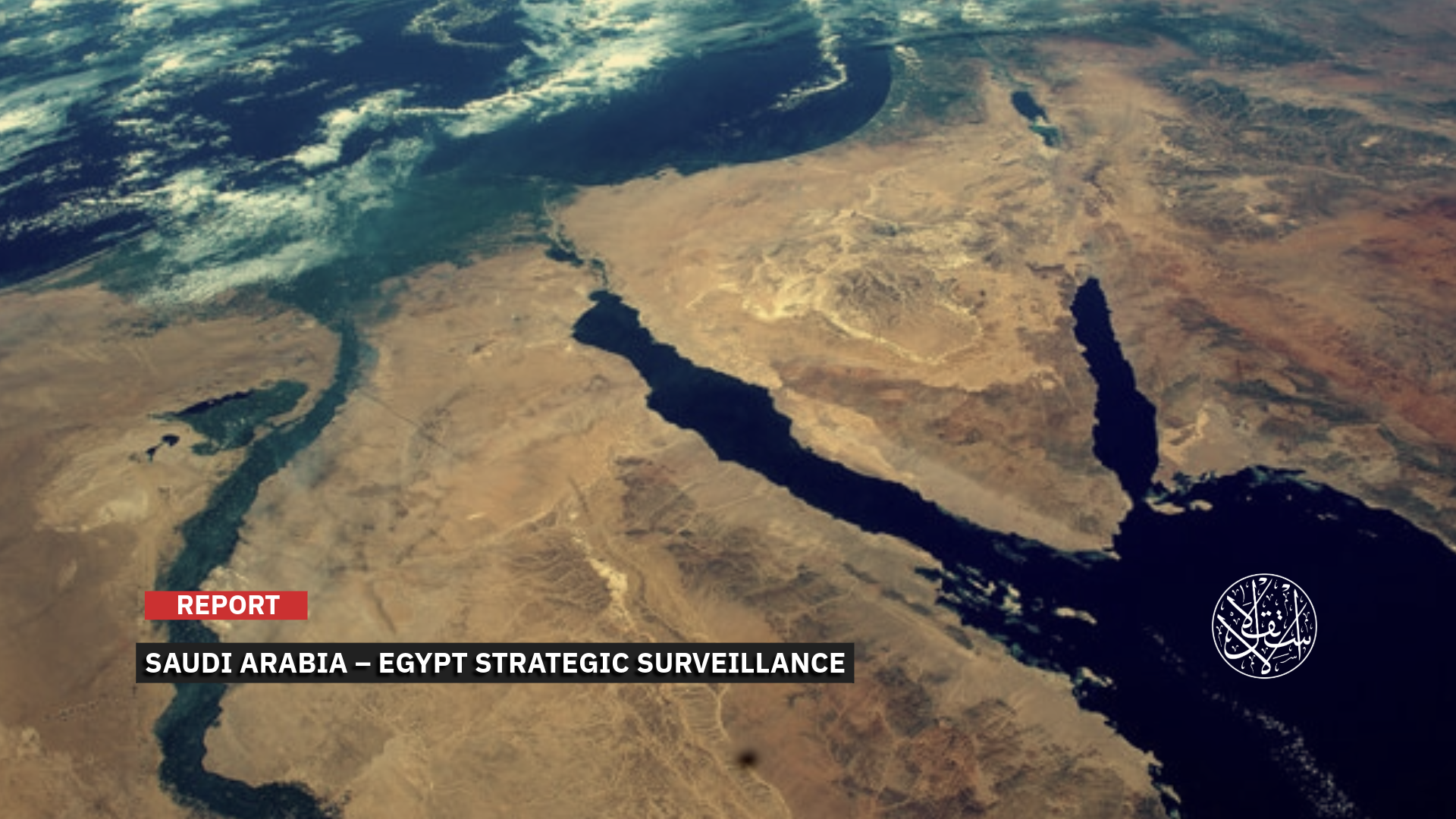
The satellite enhances Egypt's and Saudi Arabia's surveillance capabilities over the Eastern Mediterranean, the Red Sea, and the Sinai Peninsula.
Amid an unprecedented escalation in tensions between “Israel” and both Egypt and Saudi Arabia, driven by the region's deepening crises, from “Israel's” military campaign in the Gaza Strip to the repercussions of the war on Iran, a joint Egyptian-Saudi space project has emerged, adding a new dimension to the regional security equation.
The Saudi Council of Ministers approved an initiative to design and build Saudi Arabia's first remote sensing satellite in cooperation with Egypt.
Riyadh and Cairo presented the project as part of their scientific and technological cooperation and as support for the objectives of Saudi Vision 2030.
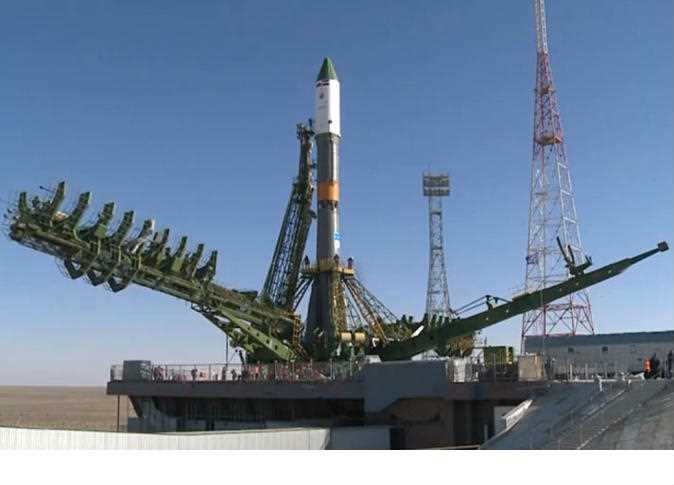
However, the project has been interpreted differently in “Israel”. In a report published on June 25, 2026, the Hebrew newspaper Yedioth Ahronoth argued that the satellite is not limited to its publicly stated civilian applications.
Instead, it described the project as a development that could give Egypt and Saudi Arabia greater capability to monitor the Eastern Mediterranean, the Red Sea, and the Sinai Peninsula, with direct implications for the security environment surrounding “Israel”.
The Beginning of Israeli Concern
According to the Saudi government statement, the project forms part of efforts to develop the Kingdom's national space sector in cooperation with Egypt.
It aims to build a remote sensing satellite for civilian and developmental applications, including monitoring natural resources, disaster management, urban planning, and supporting the agriculture and environmental sectors.
However, Yedioth Ahronoth argues that the Israeli assessment differs fundamentally from the official narrative. The newspaper contends that any modern remote sensing satellite is inherently a dual-use platform, combining civilian and military applications.
It argues that access to high-resolution satellite imagery enables the independent monitoring of military movements, critical infrastructure, and border activities, capabilities that are directly linked to intelligence operations.
The report cites Egypt's previous experience, noting that the EgyptSat-1 and EgyptSat-2 satellites, launched in 2007 and 2014 with Ukrainian and later Russian assistance, were officially presented as civilian projects for mapping and remote sensing.
However, the Israeli researcher cited by the newspaper argues that the Egyptian military establishment was the primary beneficiary of the satellite data, and that military funding gave the projects an intelligence dimension from the outset, even though they were publicly framed as scientific and developmental initiatives.
Why Is ‘Tel Aviv’ Alarmed?
The newspaper adds that the new project does not represent merely a technical extension, but rather a qualitative leap in Egyptian capabilities thanks to modern technology and Saudi support.
It could grant Cairo greater ability to monitor Sinai, the eastern borders, and the Red Sea, areas of direct strategic importance to “Israel”, both within the framework of the 1979 peace treaty and in light of subsequent security developments.
This assessment gains further significance amid the development of Egypt’s space infrastructure, as Cairo inaugurated in December 2023 the Satellite Assembly, Integration, and Testing Complex of the Egyptian Space Agency, supported and financed by China, making it the first facility of its kind in Africa.
“Israel” views Egypt’s possession of local manufacturing and testing facilities as gradually enhancing its technological independence and reducing its reliance on external partners in developing space reconnaissance programs.
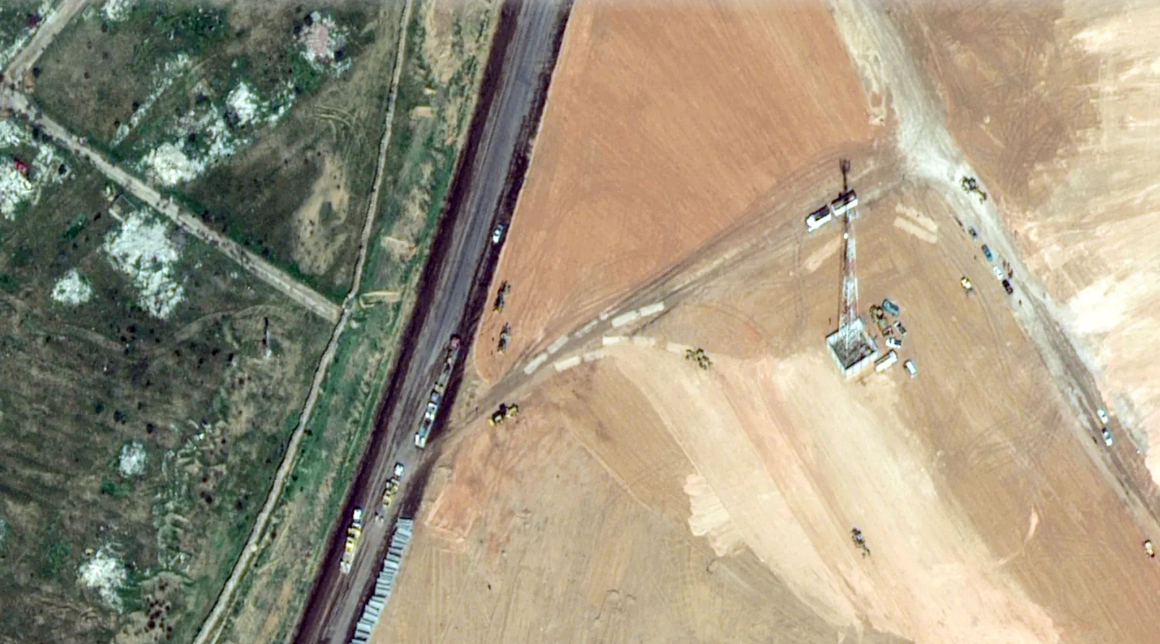
The report also links the joint project to the security situation in Sinai, where tensions between Cairo and “Tel Aviv” have escalated since the outbreak of the war in Gaza over border management, the Rafah crossing, and the Philadelphi Corridor. These issues have also been reflected in the political discourse between the two sides.
In this context, Yedioth Ahronoth argues that Egypt’s possession of advanced satellite reconnaissance capabilities would provide it with independent tools to monitor military movements in Sinai and the Red Sea without relying on external sources.
The Saudi Role
The newspaper highlights the Saudi role in the project, assessing that Riyadh’s entry as a financing partner adds a political dimension that goes beyond the economic and technical framework.
This is particularly significant given that Saudi Arabia is not a party to the Egyptian–Israeli peace treaty and therefore is not bound by the security restrictions associated with the regional arrangements in Sinai.
From this perspective, financing a project that grants Egypt advanced reconnaissance capabilities creates a new security reality outside the traditional frameworks of bilateral agreements, warranting increased American and Israeli attention to the implications of space cooperation between Cairo and Riyadh.
Accordingly, Israeli concerns are not limited to the satellite as a technical platform, but extend to its broader political and security implications, reflecting a gradual shift in the regional balance of capabilities.
A Dangerous Axis Forms
In a related context, the website MENA Unleashed published an analysis on June 16, 2026, stating that Saudi Arabia is not seeking to join a regional system centered on “Israel”, but rather is working to build an alternative system centered on itself and operating independently of “Tel Aviv”.
The analysis noted that the shift in Saudi Arabia’s relationship with “Israel” is no longer merely rhetorical, but has become material and structural, citing regional infrastructure projects as evidence.
In late March 2026, Saudi Railways inaugurated a freight corridor extending over 1,700 kilometers, linking the ports of Dammam and Jubail to the al-Haditha border crossing with Jordan. The railway can transport more than 400 containers and reduces transit time by half compared to trucking.
On June 9, 2026, Riyadh expanded two memoranda of understanding with Ankara to outline a land corridor stretching from Saudi Arabia through Jordan and Syria to Turkiye and then to Europe.
The analysis argues that this project represents a partial revival of the Ottoman-era Hejaz Railway, which opened in 1908 and once ran from Istanbul to Medina via Damascus and Amman before being halted after World War I.
The report further suggests that this corridor, extending from Aqaba to Anatolia, serves two main functions: bypassing the Strait of Hormuz and bypassing “Israel” as well.

A Heavyweight Bloc
The analysis indicates that the new route was designed in a way that reduces “Israel’s” role in regional trade flows, and it was presented as a strategic response to the “India–Middle East–Europe Corridor” (IMEC) announced in 2023.
It also draws a comparison between Turkiye, which has adopted an openly declared policy of boycotting “Israel” since 2024, and Saudi Arabia, which follows a quieter and more continuous approach based on reshaping the regional map rather than direct confrontation.
In this context, neither country is acting alone, but rather as part of a broader regional realignment that rejects submission to Israeli conditions or allowing “Israel” to impose its equations.
This trend has extended to include Egypt and Pakistan alongside Ankara and Riyadh, where repeated meetings of foreign ministers from these countries were held in Riyadh in March 2026, then in Islamabad later the same month, and then in Antalya in April of the same year.
The analysis argues that this bloc represents around 500 million people and brings together complementary strategic strengths: Turkish industry and ports, Saudi capital and oil resources, Egypt’s control of the Suez Canal, and Pakistan’s strategic depth, which has played a role in regional mediation efforts, including understandings between Washington and Tehran.