After the Houthis Declare General Mobilization and Military Rhetoric Escalates, Where Is Yemen Heading?
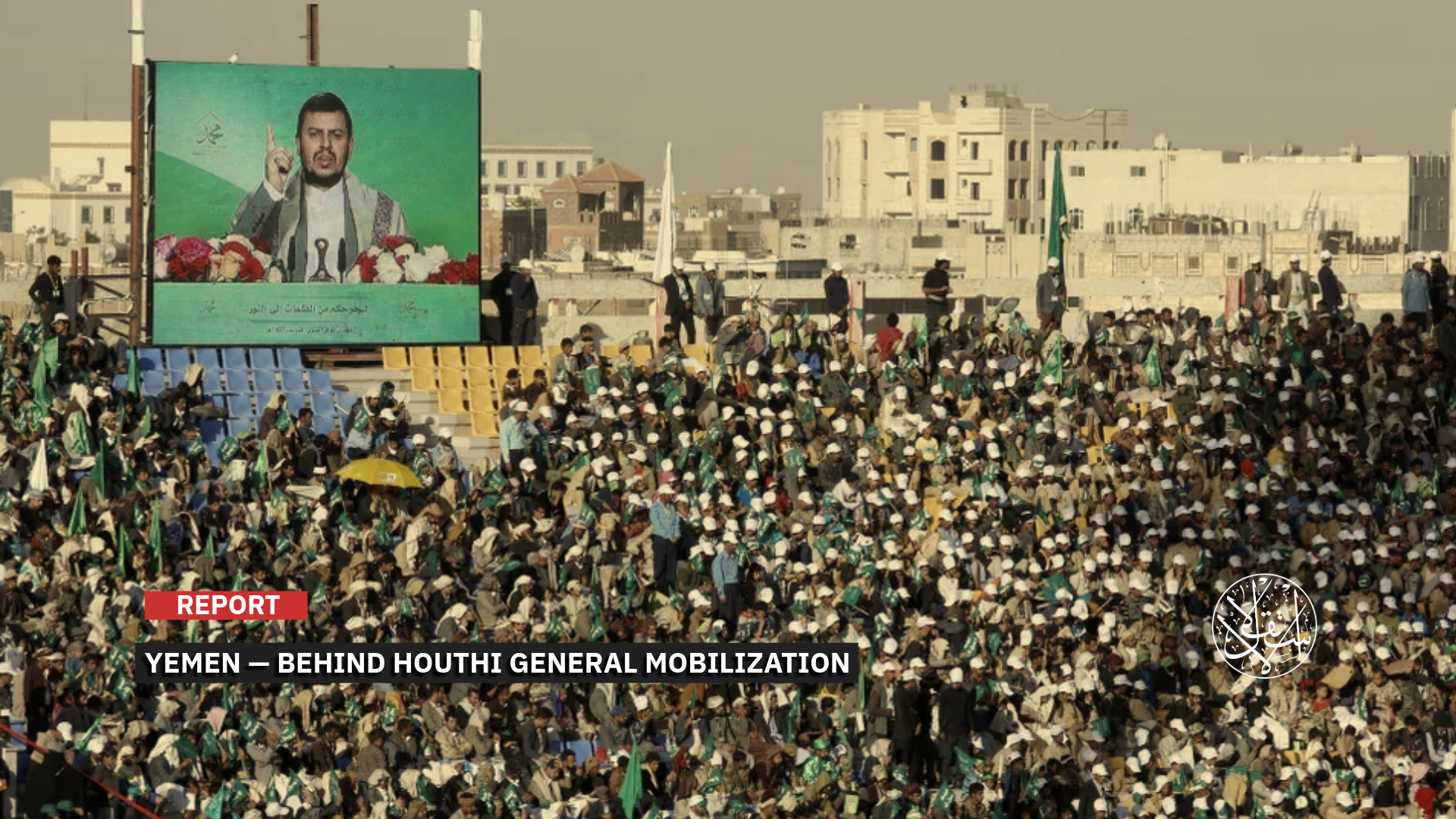
Analysts suggest this development may also be part of a broader Houthi calculation.
For more than a decade, Yemen’s political landscape has grown accustomed to the Houthi movement’s cycle of threats and warnings—rhetoric often deployed as a tactical tool for political leverage or to deflect internal anger.
But the latest escalation, marked by the announcement of “general mobilization” and the immediate readiness of hundreds of military brigades, carries a different weight. It is not only the scale of the rhetoric that sets it apart but also the unusually charged regional context in which it arrives.
This latest mobilization comes at a pivotal moment in the region, as U.S.-Iran understandings take effect and the arenas of regional confrontation that once provided the group with ideological fuel for escalation begin to recede.
More significantly, the announcement follows a series of Israeli Occupation strikes that, according to Israeli officials themselves, have severely depleted the group’s military and leadership ranks—with “Israel’s” war minister claiming that Houthi command structures had been “eliminated,” apart from the movement’s leader hiding in tunnels.
Inside Yemen, meanwhile, analysts say the group faces an unprecedented existential strain. Familiar narratives of “aggression and siege” are increasingly failing to contain public anger in a country battered by hunger and hardship, especially amid viral footage documenting widespread suffering and statements by Houthi officials urging citizens to “work without pay.”
Houthi Mobilization Rhetoric
The Houthi movement leader, Abdul-Malik al-Houthi, has recently escalated his military rhetoric in two key speeches that together sketch what appears to be a “roadmap” for the next phase of the conflict.
In a speech marking the anniversary of Imam Hussein’s death on June 25, 2026, al-Houthi declared that the Yemeni people will not accept the continuation of American, Saudi aggression, occupation, and siege on the country, vowing to confront it by all legitimate means until Yemen achieves full freedom, complete independence, a dignified life, and the recovery of its national wealth.
He reaffirmed what he described as the Yemeni people’s steadfastness on a “faith-based, liberation-oriented, jihadist path,” framing their stance within a Quranic narrative of confrontation with what he called the enemies of Islam, “foremost the United States and Israel,” while stressing ongoing coordination with “our brothers in the axis of jihad and resistance.”
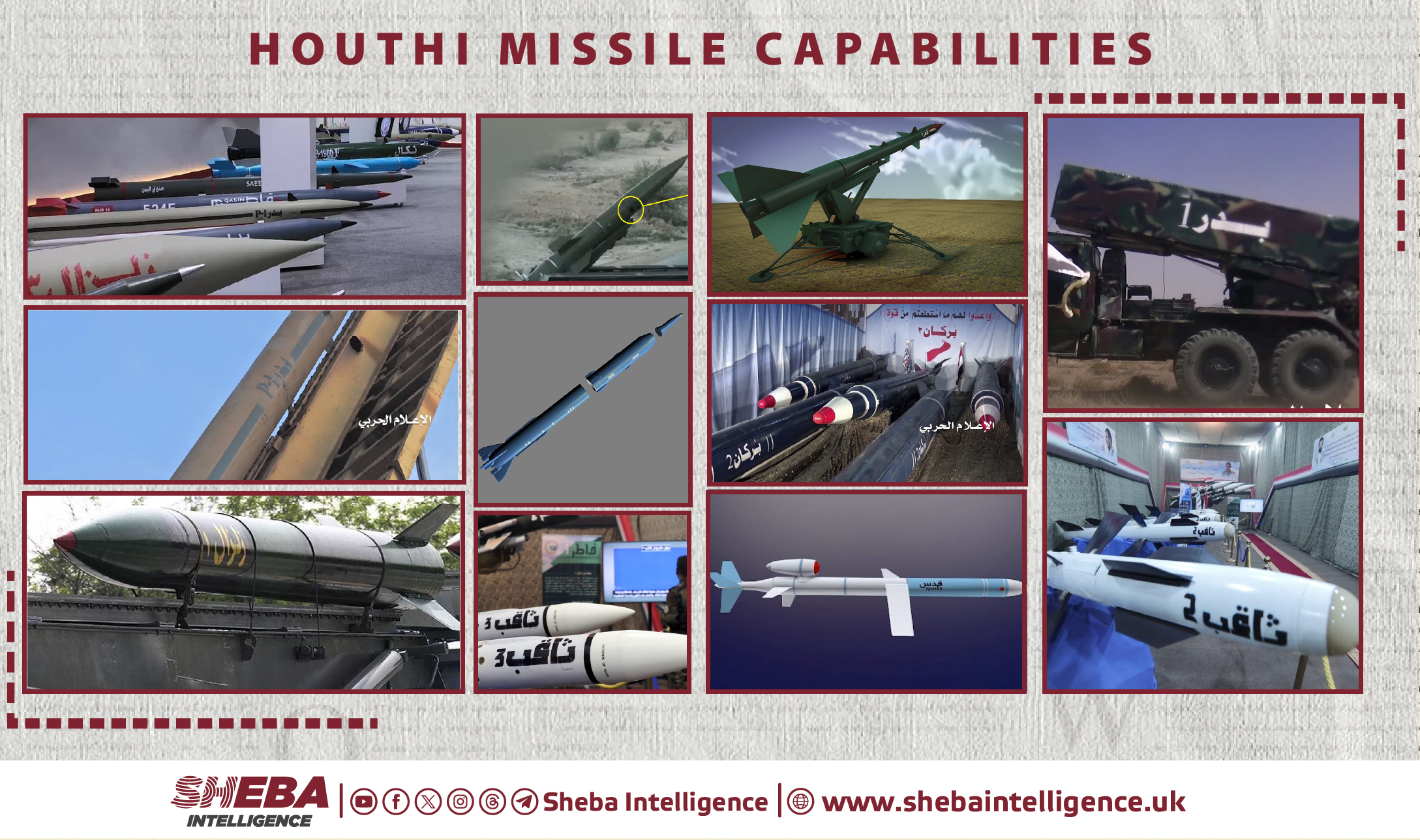
In a striking development, the Houthi leader warned of the Israeli efforts to turn Somaliland into a foothold aimed at controlling the Gulf of Aden and the Bab al-Mandab Strait. “Yemen will neither stand idly in the face of any Israeli presence in Somaliland, nor will it wait for those who fail to act,” he said. “The Houthi group will take the initiative, whenever the enemy establishes any presence, to target it by all available means.”
In another speech marking the Islamic New Year 1448 AH (June 16, 2026), he called for “official and popular cooperation in confronting the comprehensive hostile threats and challenges facing our country,” holding the Saudi-led coalition responsible for “occupying large areas of the country and controlling national wealth, including oil and gas,” arguing that this “requires concerted efforts [...] to end the aggression, occupation, and siege.”
These messages suggest that Abdul-Malik al-Houthi was not delivering routine public rhetoric, but rather laying out a political and military framework that would guide the group’s institutions in the days ahead.
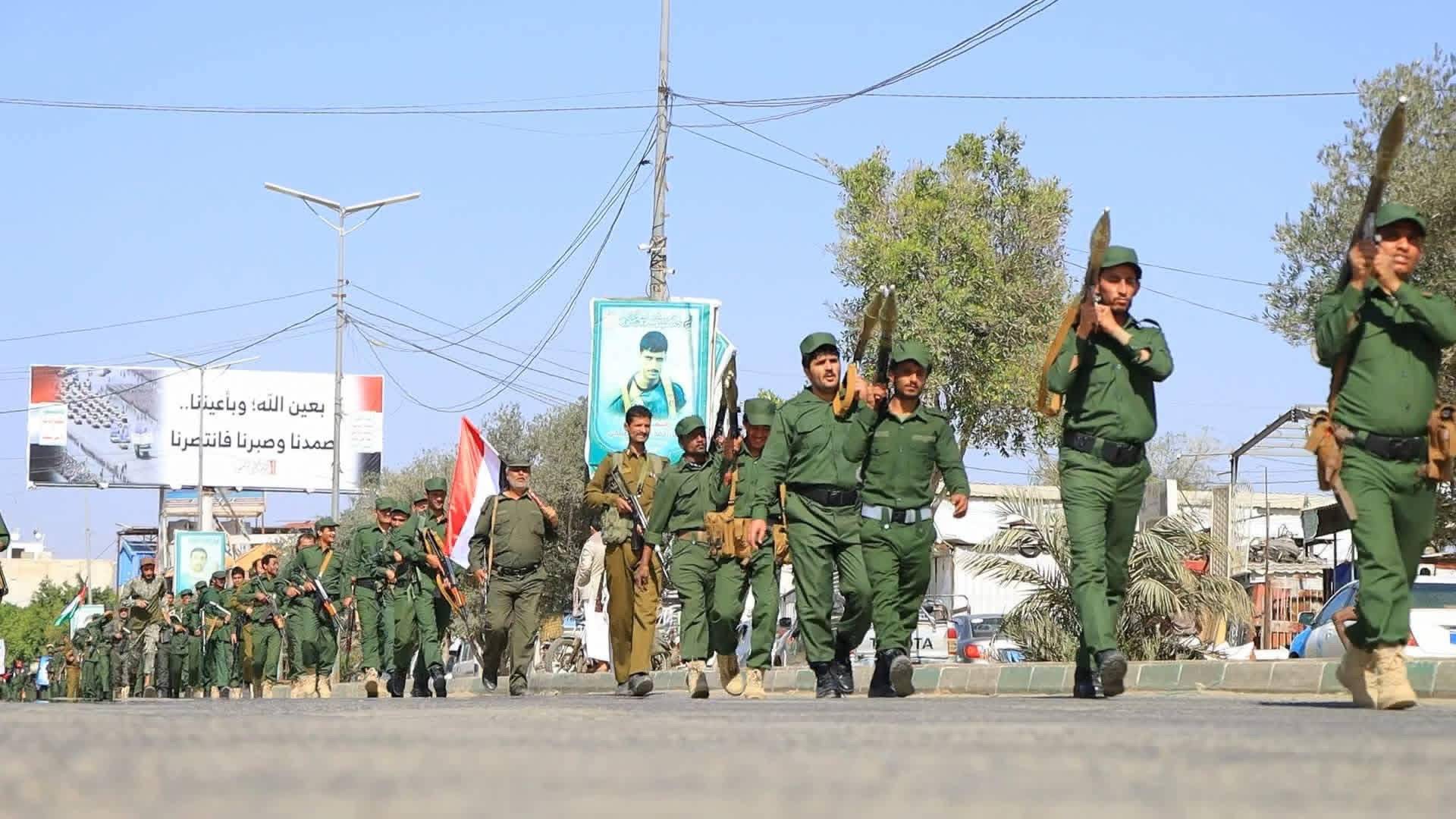
In an immediate translation of their leader’s directives, Houthi institutions moved to formalize and operationalize the escalation. The so-called “General Mobilization Forces” announced in a statement on June 22 that they were in a state of “full and immediate readiness” to implement al-Houthi’s directives, claiming a force of “hundreds of thousands” organized into “hundreds of mobilization brigades.”
The statement also called for joining Operation al-Asa Flood military training courses while reiterating the group’s foundational position in support of the Palestinian cause, stressing that “the Palestinian issue will remain the compass.”
Drivers of Mobilization and Escalation
The drivers behind this escalation are multiple and deeply intertwined, reflecting a complex mix of internal pressures and external calculations. At the domestic level, the group appears to be seeking an escape from mounting public frustration over unpaid salaries, collapsing public services, and worsening poverty. In this context, the mobilization functions as an informal “state of emergency,” channeling popular anger outward toward the United States, the Israeli Occupation, and what the group calls “aggression.”
The recently activated U.S.-Iran understandings have also become a dual and sensitive concern for the Houthis. According to a source close to the group cited by the al-Hudhud platform, the leadership is experiencing strategic confusion. It had long feared the collapse of Iran and the potential ripple effects on the so-called “Axis of Resistance,” but it is equally alarmed that any agreement ending regional war could shift attention squarely back onto Yemen’s deteriorating internal conditions.
From this perspective, the declared “full readiness” appears to be a preemptive move aimed at reconstructing an external threat narrative and embedding it within the domestic landscape. The goal, analysts say, is to reaffirm the group’s relevance as an active arm of the “Axis of Resistance,” ensuring it is not sidelined in any post-war regional realignment.
At the same time, a financial reordering has added further strain. Researcher Adnan Algabarni argues that the group’s fiscal crisis is not the result of shrinking resources, but rather a deliberate redirection of spending toward military preparedness, weapons production, and smuggling networks at the expense of public services.
This shift has begun to affect internal cohesion. Reports indicate growing dissatisfaction among fighters over delayed salaries—stagnant for months at less than $50—as well as weakened internal communication caused by heightened security measures imposed after recent strikes on Houthi leadership figures.

In an attempt to decode these developments, experts and analysts remain divided over the true drivers behind the campaign, ranging from those who see it as a pressure tactic to those who view it as a deeply embedded strategic doctrine.
From the perspective of negotiated leverage, writer Ahmed Alshalfi argues that the escalation is “closer to tools of political and bargaining pressure than to the prelude of a full-scale war,” primarily aimed at improving the group’s position in talks over economic files and unpaid salaries.
By contrast, researcher Masli Bahybah suggests that war mobilization is not merely a reaction to crises but an integral part of the group’s ideological structure. In his view, conflict is used as a central instrument for imposing facts on the ground and securing political gains.
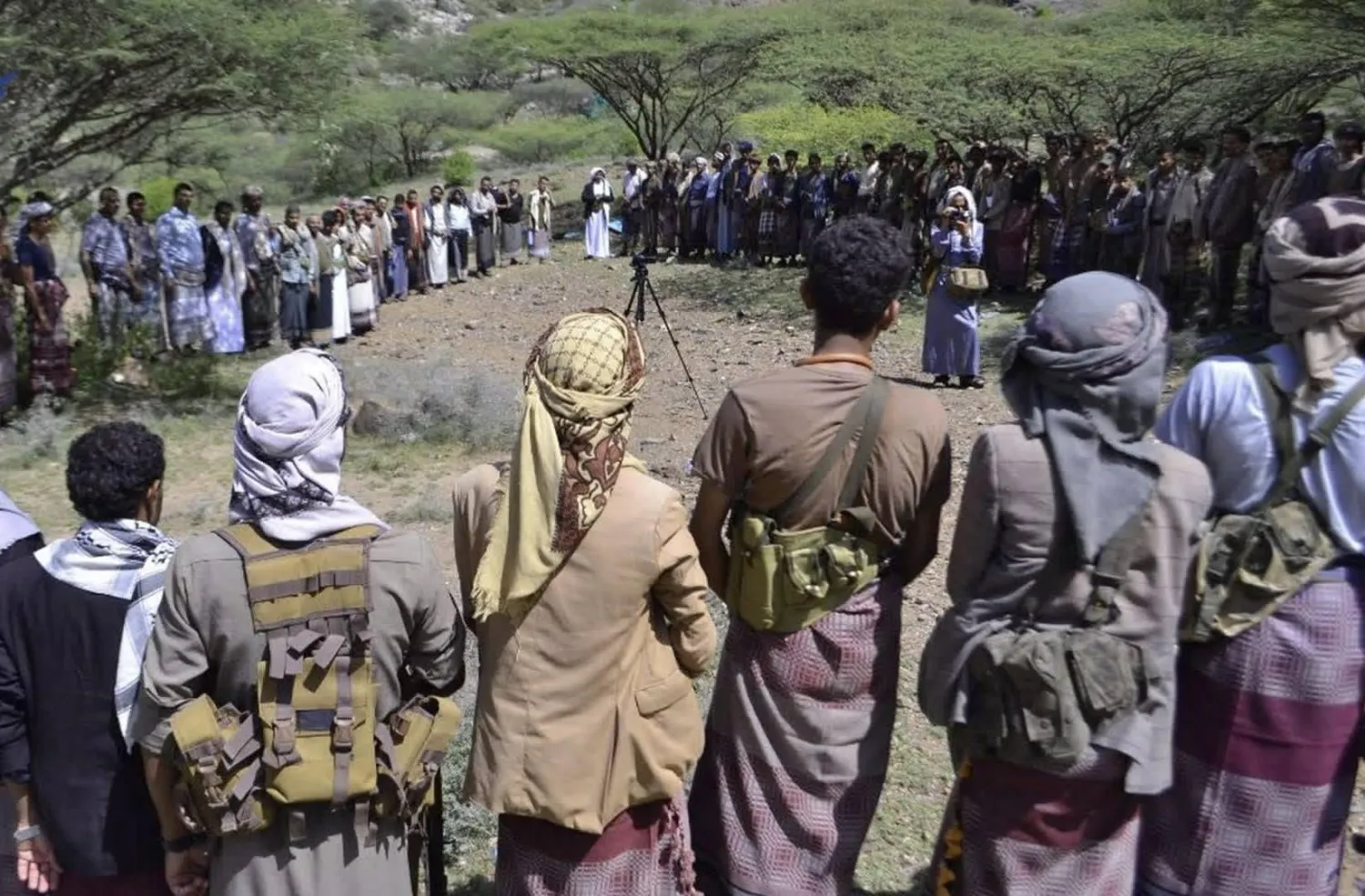
From a structural angle, researcher Adnan Algabarni describes the mobilization forces as a “replica of Iran’s Basij model,” designed to organize populations in neighborhoods and rural areas into a permanent human reserve and military support base.
On the operational level, military analyst Ahmed al-Maliki outlines possible scenarios for future confrontation, predicting that in the event of renewed war, the Houthis would focus on the Marib front as a gateway to resources and the Taiz front as a route toward Aden and control over the Bab al-Mandab Strait.
Several observers also note that the group is using the threat of war as a bargaining chip to revive stalled economic dossiers, particularly salary payments, oil export arrangements, and the implementation of a roadmap that has remained deadlocked for the past two years.
Amid this heightened state of alert, unverified reports circulating on X claimed that several security officers had fled Sana’a toward Marib, allegedly following a wave of raids and detentions in the capital linked to the Houthi mobilization campaign.
Analysts suggest this development may also be part of a broader Houthi calculation, potentially aimed at pushing such figures to the front lines of any planned offensive on Marib, given its strategic and economic importance and its status as one of the last major strongholds of Yemen’s state structure, whose fall would, in effect, mark the collapse of the republic.
Saudi Arabia at the Center of Houthi Escalation
Unlike previous months, when attention focused primarily on the United States, “Israel,” and the Bab al-Mandab Strait, Saudi Arabia has once again moved to the forefront of the Houthi military and political discourse during the “general mobilization” campaign. Analysts say this shift reflects a clear attempt by the group to exert political pressure on Riyadh, using the threat of renewed attacks or border destabilization to extract concessions on long-standing disputes.
This renewed focus on Saudi Arabia rests on three main strategic calculations.
First, the group recognizes that Riyadh remains the most influential actor in shaping any political settlement or “roadmap,” making pressure on Saudi Arabia more effective than addressing the Yemeni government alone.
Second, escalation is being used as a tool of financial and political leverage. The Houthis hold Saudi Arabia responsible for worsening conditions on the ground and continue to demand progress on the stalled salary payment mechanism—estimated at around $1.3 billion—which has been complicated by the U.S. designation of the group as a terrorist organization. They also accuse Riyadh of controlling Yemen’s oil and gas wealth.
Third, the rhetoric serves an internal ideological purpose: reframing the conflict as a foreign “Saudi aggression and occupation” rather than a domestic war. This narrative helps the group sustain mobilization and recruitment among its base.
Despite the intensity of the rhetoric, experts such as Ahmed Alshalfi maintain that communication channels between the Houthis and Saudi Arabia remain open. In his assessment, the threats are part of a broader set of “negotiation pressure tools,” rather than a prelude to full-scale war, as discussions continue within the framework of the military coordination committee.

Position of the Yemeni Government
The Yemeni government has not been absent from this critical moment, moving on both military and political fronts in parallel.
On the military level, Defense Minister Lt. Gen. Taher al-Aqili held an expanded meeting in Marib on June 23, bringing together commanders of military regions. He stressed the need to raise combat readiness and strengthen military discipline as part of discussions on evolving developments and the requirements of the current phase.
Politically, the government has issued serious warnings that the militarization of society and the threat of renewed war represent a systematic erosion of the fragile truce, describing these moves as an attempt to impose a new reality by force.
Analysts note that the Yemeni army and allied forces have significantly improved their operational readiness in recent years, gaining battlefield experience that could make any future confrontation both different in character and more costly for the Houthi movement.
The Palestinian Cause in the Mobilization Narrative
Since the outbreak of the Israeli war on Gaza, the Palestinian cause has become a central pillar of the Houthi mobilization project. It is no longer framed as a symbolic slogan or a gesture of solidarity, but rather as an ideological framework used to justify ongoing military recruitment and expansion under the banner of what the group calls “unity of arenas.”
Within this context, the Houthis have named their military training programs “Operation al-Aqsa Flood,” leveraging widespread public sympathy for Gaza to attract new recruits—particularly teenagers and younger demographics—through mass events and mobilization rhetoric. The mobilization statement repeatedly emphasizes that “the Palestinian cause will remain the compass,” seeking to present domestic conflict as an extension of confrontation with the United States and the Israeli Occupation.
The use of the Palestinian issue has not been limited to Yemen’s internal sphere; it has extended into broader regional military messaging. Abdul-Malik al-Houthi has threatened to target any potential Israeli presence in Somaliland, arguing that such a deployment would aim to secure control over the Bab al-Mandab Strait and the Red Sea—signaling a shift from Gaza-focused framing to a wider regional deterrence doctrine.
These threats come amid Israeli reports suggesting that the Israeli Occupation military has updated its operational plans in anticipation of a possible renewed confrontation with the Houthis. Israeli war minister Yisrael Katz has stated that the confrontation with the group is not over, warning that “the account remains open.”
Possible Scenarios
Current dynamics point to three main scenarios in the period ahead.
The most likely scenario is the continuation of political and media escalation, with the Houthis sustaining mobilization and recruitment campaigns, while the Yemeni government and Saudi Arabia maintain a posture of de-escalation, coupled with heightened military readiness and the preservation of political communication channels.
A second scenario envisions the Houthis resorting to limited military escalation on certain fronts—such as Marib, Taiz, and potentially al-Jawf, especially amid recent increases in tribal tensions against the group. The aim would be to strengthen their negotiating position and extract political and economic concessions without sliding into full-scale war.
The third, least likely scenario is tied to a broader regional escalation, particularly if the U.S.-Israeli War on Iran resumes. In such a case, the Houthis could re-engage in external military operations under the “unity of arenas” doctrine, with Saudi Arabia potentially among the first targets.
That said, current indicators do not suggest the Houthis have made a definitive decision to return to full-scale war. Rather, they appear to be systematically working to rebuild a political and military environment that would allow them to escalate if conditions become favorable.
In other words, the general mobilization is less a declaration of war than a declaration of readiness—a multi-directional deterrent message aimed at Yemen’s domestic front; the internationally recognized government; Saudi Arabia; the United States; and “Israel,” while also seeking to cement the group’s position within shifting regional power dynamics in the aftermath of the U.S.-Israeli War on Iran.
Ultimately, the Houthi mobilization campaign looks more like a comprehensive strategic repositioning than an imminent military move, with the likelihood of escalation remaining contingent on the trajectory of Yemeni negotiations, the evolution of U.S.-Iran relations, and shifting security balances in the Red Sea region.
Sources
- Houthi Leader: Yemen Will Not Accept Continued U.S.-Saudi Aggression, Occupation, and Blockade [Arabic]
- Statement by Houthi Leader Abdul Malik al-Houthi on the Occasion of the Islamic New Year 1448 AH [Arabic]
- General Mobilization Forces Declare Full Readiness to Confront "Aggressor Forces," Expel "Occupiers," and End the Blockade on Yemen [Arabic]
- Sana'a Finalizes Legislative Measures for the Battle Against Saudi Arabia [Arabic]
- Houthis Threaten War, Launch General Mobilization to Secure Political Gains [Arabic]
- After the U.S.-Iran Understanding, Why Have the Houthis Returned to the Language of War? [Arabic]
- Houthis Emulate Iran’s Basij and Warn of a Return to War [Arabic]
- The Houthis Signal Mobilized Popular Forces in the Name of “Liberating Palestine” to Confront “Aggressor Forces” [Arabic]
- An “Escalation Matrix” to Blackmail Neighbors: Researcher Explains Houthi Mobilization and Flags Signs of a Possible Coming Conflict [Arabic]
- Marib: Defense Minister Calls for Heightened Combat Readiness Across Fronts to Respond to Any Emergencies [Arabic]
- Yemen’s Houthi group vows to target any Israeli presence in breakaway Somaliland
- Israeli War Minister Claims Houthi Leadership Has Been “Eliminated” Except for Abdul-Malik al-Houthi, Who Is “Hiding in Tunnels” [Arabic]
- Israel Prepares to Resume War on Yemen and Updates Plans Against the Houthis [Arabic]
- The Houthis Vow to Target Any Israeli Presence in the Somaliland Region [Arabic]