Record-Breaking Heatwaves: How Summer Exposed the Fragility of Europe’s Infrastructure
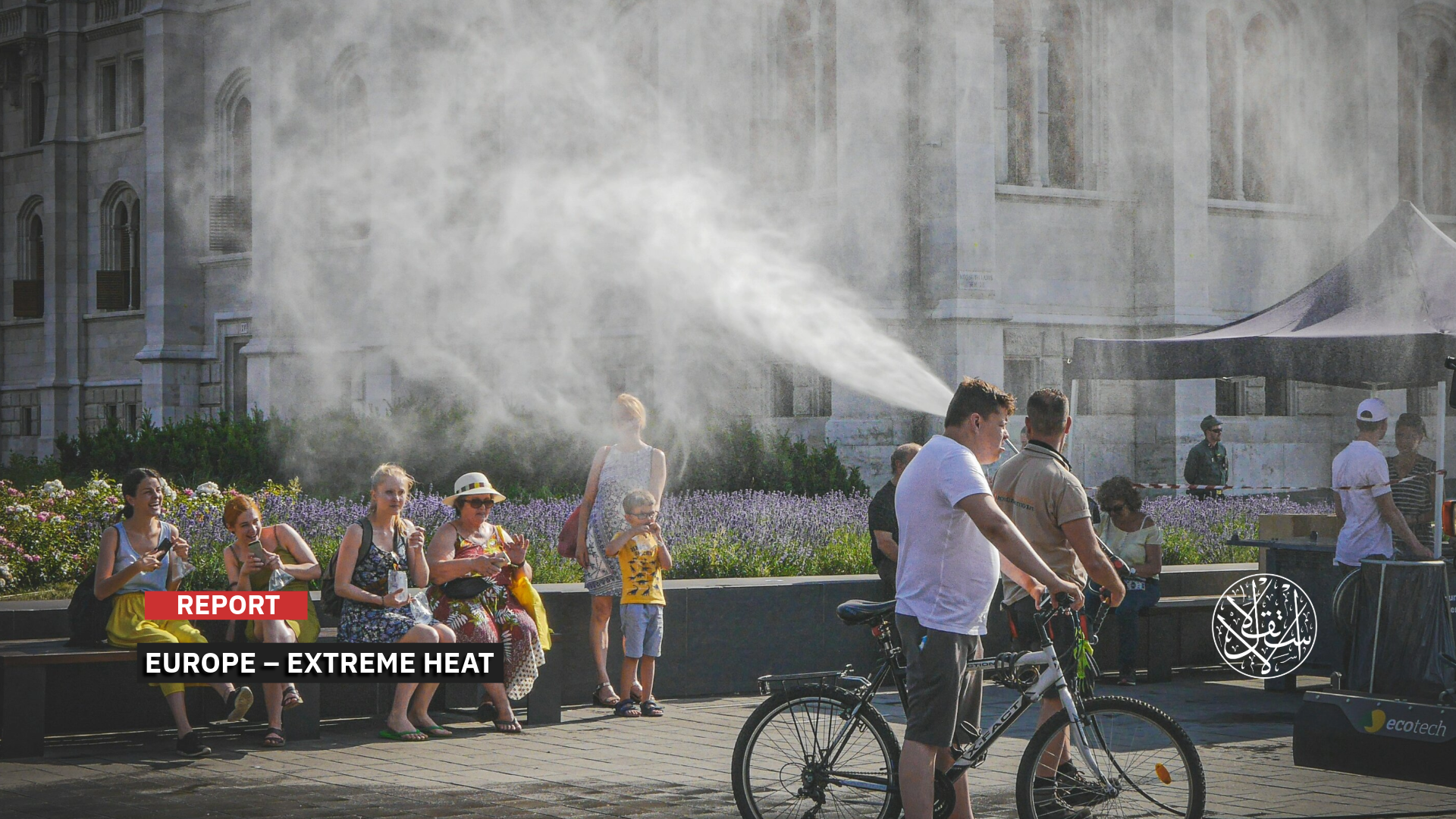
“Europe is the world’s fastest-warming continent, heating up twice as fast as the global average.”
Europe was never prepared for weather like this; the continent, accustomed to a temperate climate, now faces a record-breaking heatwave that ruthlessly exposes the gap between its infrastructure and a climate future that is no longer distant.
In this context, The Wall Street Journal has documented how schools are closing, trains are grinding to a halt on the tracks, and homes are turning into ovens—a scenario that is fundamentally reshaping the priorities of the old continent.
Reports and warnings from meteorological agencies and scientific institutions indicate that the continent may face exceptional heatwaves—potentially among the most intense in recent years—as a clear extension of the climate change impacts now forcefully shaping Europe's weather.
According to the World Meteorological Organization, greenhouse gas emissions—primarily resulting from the burning of coal, oil, and gas—have caused the planet's average temperature to rise by approximately 1.4°C above pre-industrial levels from the 19th century.
Severe Heatwaves
Heatwaves are once again bearing down on vast swathes of Europe—the continent warming faster than any other in the world—less than a month after a previous record-breaking event.
As temperatures climb to unusual levels, several countries have issued health warnings and implemented extraordinary measures, amidst growing concerns about another summer spent under the strain of global warming.
The heatwave striking Europe is no longer measured merely by the temperatures displayed on weather forecasts, but by the extent of the disruption it imposes on the details of daily life.
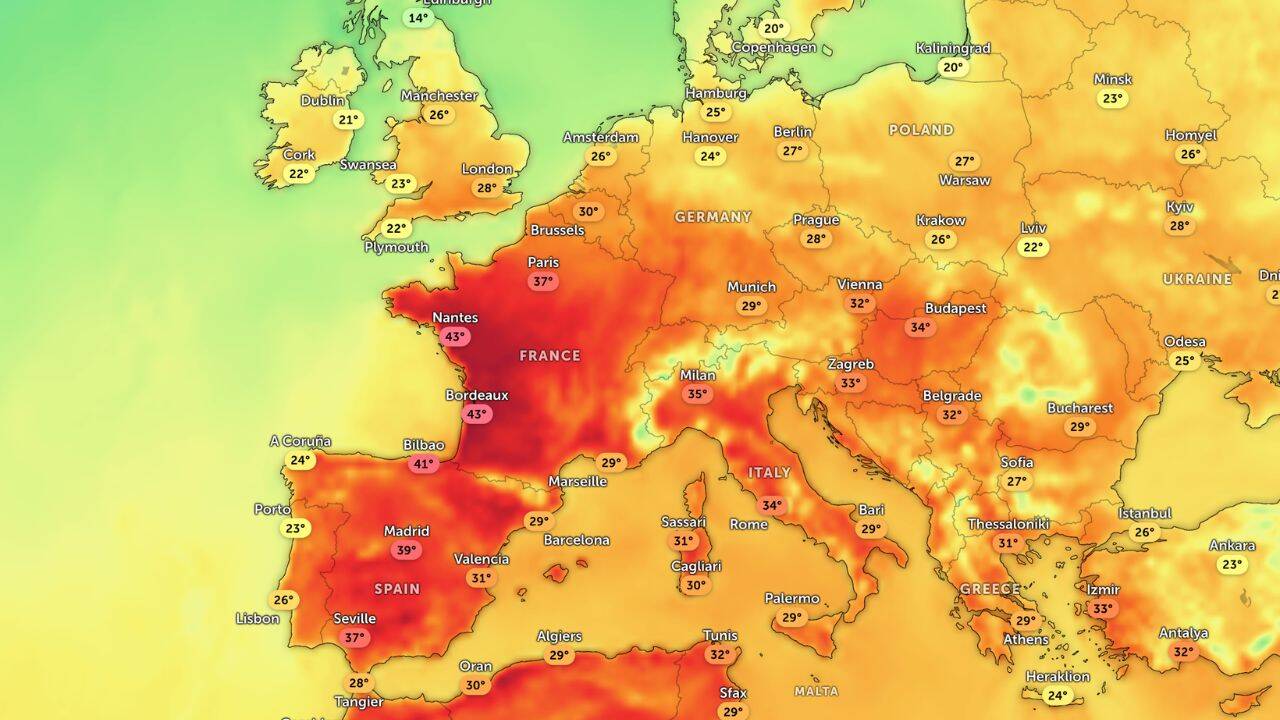
On June 26, 2026, health authorities across Europe—from Britain and France to Germany, Italy, Austria, and Serbia—issued high-level alerts as a severe, deadly heatwave swept across the region.
Scientists described this heatwave as the worst in Europe, a continent where the climate is changing faster than anywhere else.
As heat domes spread across the western part of the continent, their impact became evident in electricity grids, transportation, schools, tourism, and even nuclear power systems.
In France, power outages affecting approximately 68,000 homes in the Finistère region served as one of the clearest indicators of the strain placed on infrastructure.
Ninety percent of French homes are classified as vulnerable to rising temperatures, with half explicitly described as ovens incapable of retaining cool air.
Meanwhile, the French meteorological agency announced that on June 24, 2026, the country had recorded its hottest day since climate records began in 1947. This surpassed figures historically associated with the 2003 heatwave—one of the deadliest climate disasters in modern French history.
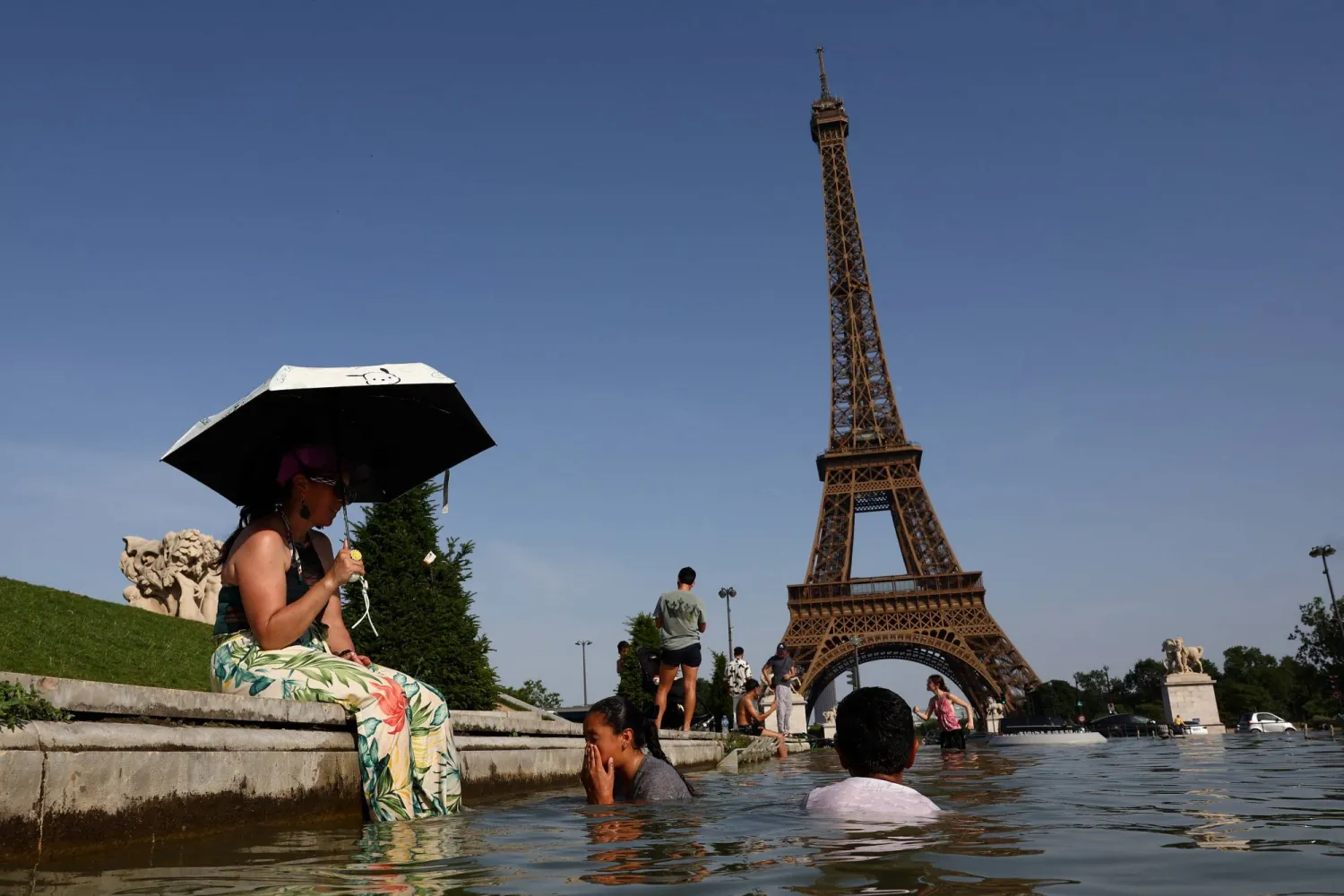
The heatwave’s impact extended beyond homes and power grids. In Paris, the management of the Eiffel Tower and the Louvre Museum was forced to curtail operating hours due to the extreme heat.
France also completely closed around 3,000 schools and reduced school hours at another 10,000.
Across the English Channel, Britain recorded its highest-ever June temperature, reaching 35.7°C in southern England. Authorities issued rare red-level health warnings and ordered the closure of over 1,000 schools.
Numerous train services were cancelled, and passengers were urged to avoid non-essential travel due to concerns about the heat's impact on transport infrastructure.
In a country where most buildings were not designed to withstand temperatures approaching 40°C, air conditioners and fans became highly sought-after items.
Germany is experiencing temperatures that likely exceeded 40°C in some areas, setting new records. Outdoor sporting and cultural events, such as the Hamburg half-marathon, were cancelled.
The German railway operator, Deutsche Bahn, advised customers to avoid travel—a move mirrored by similar European operators.
The Dutch meteorological institute issued a red-level warning for the first time—taking effect on June 26 across much of the country—as temperatures were forecast to reach 40°C.
In Switzerland, temperatures significantly surpassed the June record set nearly 80 years ago, reaching 38°C in the northern city of Basel on June 25.
Italy raised its alert level to the maximum in 16 cities, while other nations—including Poland, Hungary, and Croatia—issued similar warnings in anticipation of the heatwave's arrival in the coming days.
European estimates indicate that approximately 420 million people experienced temperatures exceeding 30°C on June 25, while around 193 million faced temperatures surpassing 35°C on June 26, making this heatwave one of the most impactful weather events for the continent's population in recent years.
As the number of people affected grows, the human toll has also begun to rise. France reported 55 heat-related deaths over just a few days—coinciding with large numbers of residents flocking to rivers and lakes to escape the heat—while Belgium saw the deaths of two teenagers in a similar incident.
In Spain, data published by the Carlos III Health Institute in Madrid revealed that at least 212 deaths recorded between June 21 and 24 could be linked to the ongoing European heatwave.
In Italy, the Corriere della Sera newspaper reported five heat-related deaths, including two agricultural workers and a construction worker.
Widespread Repercussions
According to the Reuters Climate Observatory, the heatwave—which pushed temperatures up to 18°C above seasonal averages—is driven by an atmospheric pattern known as an Omega block.
Climate models indicate the potential formation of heat domes over parts of Europe; this phenomenon traps hot air for extended periods, resulting in a sharp rise in temperatures and a lack of natural ventilation.
The current wave is caused by a massive mass of hot air originating in Africa and moving over Western Europe, a situation exacerbated by high-pressure systems in the upper atmosphere.
Climate scientists emphasize that the frequency of heatwaves is an unmistakable indicator of climate change, driven primarily by the use of fossil fuels.
These heatwaves are expected to become more frequent, longer-lasting, and more intense in the absence of necessary measures to curb global warming.
Given the impact of the heat on workers across various economic sectors, the European Trade Union Confederation (ETUC) called on the European Union on June 25, 2026, to mandate recovery breaks for workers exposed to heat—similar to those implemented by FIFA during the 2026 World Cup hosted by the United States, Canada, and Mexico.
In a related development, political debate has resurfaced in France regarding the climate leave proposal put forward by the Green Party.
This proposal advocates granting workers up to five days of paid leave annually during extreme weather events—a model similar to the one adopted by Spain following the 2024 floods.
Calls for such measures have intensified as experts warn that human-induced climate change is increasing the severity and frequency of heatwaves across Europe.
According to estimates by the European Centre for Medium-Range Weather Forecasts (ECMWF), early climate indicators point to a high probability of above-average temperatures across most of southern, western, and central Europe—particularly during July and August—along with an increased likelihood of prolonged heatwaves.
These forecasts align with data from the World Meteorological Organization, which has confirmed an unprecedented acceleration in global temperature rises in recent years. Europe is among the continents most affected by this phenomenon, warming at a rate faster than the global average.
Current warnings are grounded in recent precedents, most notably the record-breaking summer of 2023 and the summer of 2022, which resulted in tens of thousands of heat-related deaths. The highest temperature ever recorded in Europe was 48.8°C in Sicily in 2021.
Experts believe the summer of 2026 could bring a similar, or even more severe, scenario, particularly as global warming continues.
Europe’s health sector is already bracing for a harsh summer; the European Commission has urged member states to update their health emergency plans, particularly to protect vulnerable groups such as the elderly and those with heart or respiratory conditions.
Proposed measures include establishing cooling centers in major cities, issuing early warnings to the public, enhancing hospital preparedness, and expanding awareness campaigns on preventing heatstroke.
Rising temperatures affect not only health but also vital sectors like energy and water. Increased reliance on air conditioning drives up electricity demand significantly, potentially straining power grids and even causing outages in some areas.
Reports have also warned of possible water consumption restrictions, especially in Southern European countries—such as Spain, Italy, and Greece—that have already endured recurring droughts in recent years.
Another critical consequence of heatwaves is the heightened risk of wildfires, a crisis that has become an almost annual occurrence in Europe.
Data indicates that high temperatures combined with low humidity create ideal conditions for fires to spread rapidly.
In recent years, countries like France and Portugal have experienced devastating fires that caused massive loss of life and property, prompting governments to boost firefighting readiness and deploy advanced firefighting equipment.
European Vulnerability
Climate experts believe that what were once considered exceptional heatwaves could become a recurring pattern in the coming decades unless drastic measures are taken to curb carbon emissions.
In this context, the Intergovernmental Panel on Climate Change (IPCC) confirms that the world is nearing the 1.5°C global warming threshold—a limit that, if breached, will lead to a significant increase in the intensity and frequency of extreme weather events, particularly heatwaves.
Ioanna Vergini, founder of the global weather forecasting site WFY24, states that Europe must prepare for a combination of heat and drought in the south, a swathe of wildfires stretching from Portugal to Greece, and subsequent flash floods in the autumn.
"For every 1°C rise in air temperature, the atmosphere can hold about 7% more water vapor, increasing the likelihood of heavy, violent rainfall," she adds.
She explains that "Southern Europe remains the most vulnerable hotspot, yet Central and Eastern Europe are warming the fastest; these regions are the least adapted to days where temperatures exceed 35°C—conditions that have now become routine."
Although Europe is experiencing increasingly frequent and intense heatwaves, the political response remains limited.
According to a recent Bloomberg report, political divisions threaten the European Commission's plan to introduce legislation mandating a 90% reduction in emissions by 2040—a target experts consider the minimum required to achieve climate neutrality by 2050.
The European Environment Agency estimates that the continent loses €13 billion annually due to heatwaves.
Amidst the acknowledged reality of climate change and parallel global efforts to combat it, there is a pressing need to ensure better living conditions for Europe's population.
A study published by Inserm and ISGlobal in the journal Nature Medicine estimated that the heatwave across Europe in the summer of 2022 caused approximately 68,000 deaths, making it one of the continent's deadliest climate-related disasters.
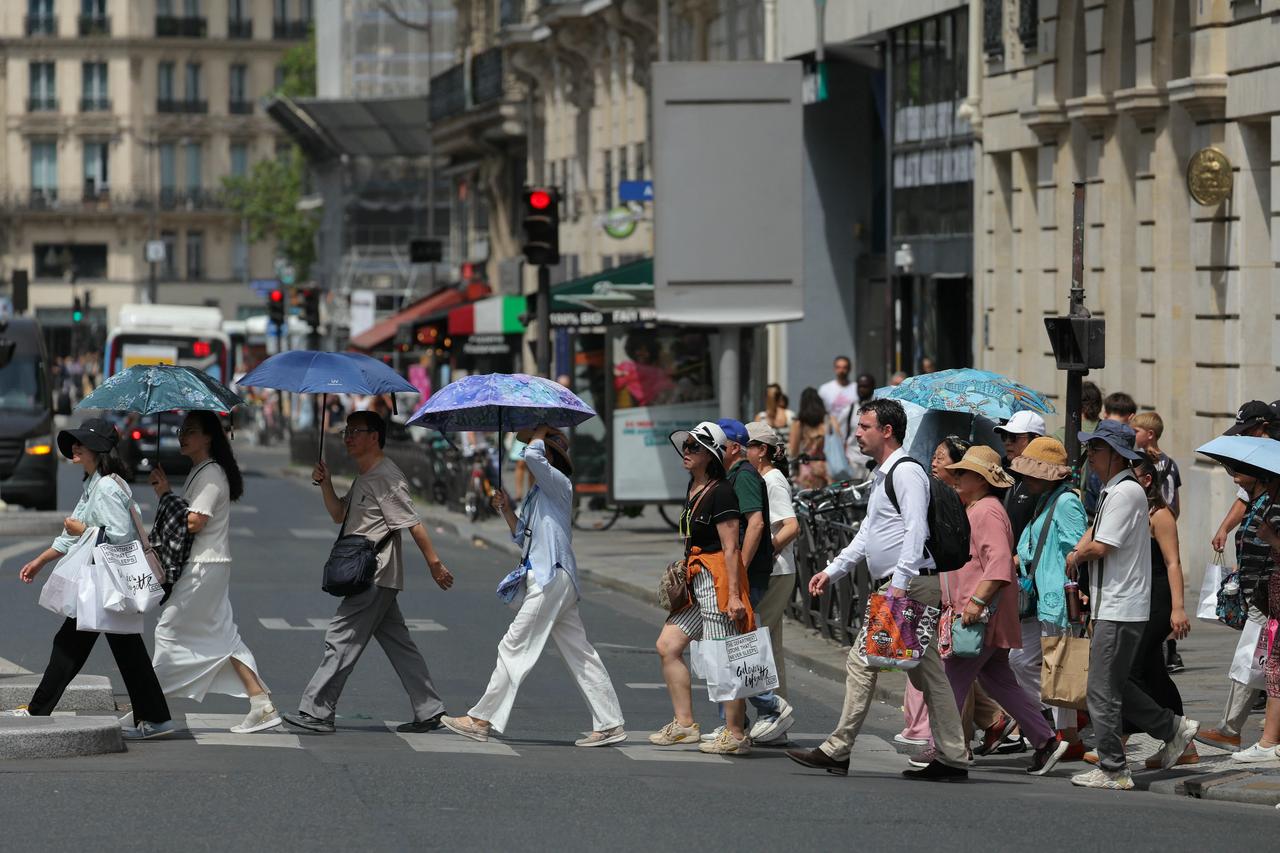
As heatwaves become more frequent, warnings alone are no longer sufficient; there is now a need to redesign cities to withstand extreme heat.
Observers believe that Europe has focused on its ambitious climate goals without moving quickly enough to fortify its infrastructure against the impacts of the very climate it seeks to protect.
While the number of air-conditioned homes is gradually rising alongside the frequency of heatwaves, the prevalence of air conditioning across the continent remains far lower than in the United States, for instance.
Sources
- 40°C in Paris: extreme summer heat is no longer exceptional for most of Europe
- Record heat has ‘fingerprints of climate change all over it’. What can Europe expect this summer?
- Economic losses from weather- and climate-related extremes in Europe [Study]
- Record-breaking Heat in the Summer of 2022 Caused more than 61,000 Deaths in Europe [Study]
- Europe’s record heatwave: does the continent have a new climate? [Study]