Algeria’s Movement of Society for Peace Calls for Unity Government: Can It Break the Political Deadlock?
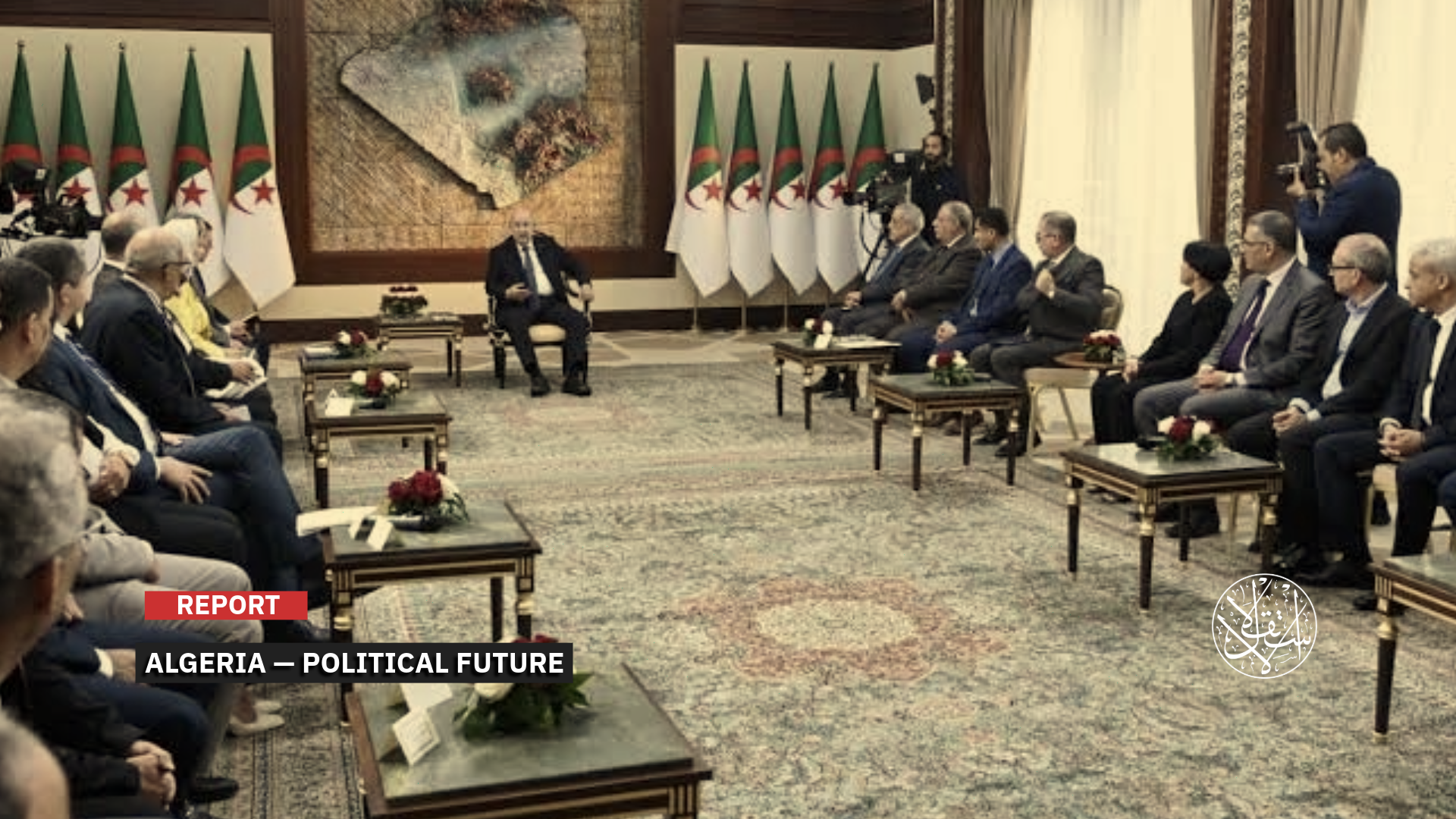
"Algeria appears headed toward a technocratic government with some political representation."
After legislative elections marked by widespread voter abstention, calls have grown for the formation of a “national unity government of salvation” aimed at restoring citizens’ confidence in the country’s political institutions.
The strongest call came from the consultative council of the Movement of Society for Peace (MSP), which urged a new national political dynamic built around dialogue. The goal, it said, should be to lay the foundations for a broad political partnership based on consensus among the country’s various political forces, paving the way for the formation of an inclusive government.
The call followed the MSP’s seventh regular consultative council session, held on July 24, 2026. The movement said voter turnout in the latest legislative elections, which did not exceed 22%, justified its demand for a broad-based political government.
A Deeper Message
The MSP council said the widening electoral disengagement “represents a profound political and social message” that requires a responsible national response. It called for addressing the causes by broadening political participation, strengthening credibility and transparency, upholding the rule of law, and rebuilding ties between citizens and state institutions.
It also said tackling Algeria’s economic and social challenges had become an urgent national priority. That means protecting citizens’ purchasing power, encouraging investment and production, expanding employment opportunities, improving public services, and strengthening social justice, which it described as essential pillars of national stability and sustainable development.
The MSP council also believes the current moment calls for a shift toward a new political model based on broad national political partnership. It described this as a strategic choice that could open new avenues while balancing political independence with cooperation on issues of national importance, political responsibility, and a continued capacity to put forward solutions.
In the July 2 legislative elections, the National Liberation Front (FLN) came out on top with 91 of the 407 seats. The Democratic National Rally (DNR) won 74 seats, while the Future Front secured 56, the Islamist-aligned National Construction Movement won 40, and the Voice of the People Party took 16.
Together, the five pro-government parties that make up the presidential coalition retained a combined 277 seats, giving President Abdelmadjid Tebboune a comfortable parliamentary majority to form a government and pass legislation without obstruction from the opposition.
The MSP, the largest opposition Islamist party, won 43 seats. The Socialist Forces Front took 12, the Rally for Culture and Democracy won four, and the Workers’ Party secured three.
The remaining seats were divided among 11 parties, each holding between one and four seats.
Attention is now turning to the presidential palace as Algeria awaits the legal and political course the executive branch will take following the announcement of the final legislative election results.
The constitution gives the president broad powers over the formation of the government. Tebboune can therefore shape the next administration with considerable latitude: he can appoint a prime minister to carry out his program if the elections produce a pro-government majority or appoint a head of government drawn from a parliamentary opposition majority.
Under the constitutional framework, Tebboune can preserve the current political stability by publicly renewing his confidence in Prime Minister Sifi Ghrieb and keeping him at the helm of the executive branch. Alternatively, he could opt for a complete overhaul and appoint a new government.
A Similar Call
The call from the MSP was echoed by Abdelkader Bengrina, head of the National Construction Movement, during a party meeting on July 25, 2026. He said the country’s current situation and the challenges it faces at home and in the region “require working with our partners to build a strong national coalition.”
Bengrina said the coalition should “rise above narrow partisan differences” to build an institutional bulwark protecting the foundations and institutions of the state, while ensuring that the presidential majority remains the backbone of Algeria’s political front.
He also called for the national dialogue between President Abdelmadjid Tebboune and political parties to continue, as well as talks between the government and the broader political class.
Others, meanwhile, have argued for bringing a new generation of political talent into government. Among them is Mohammed Touil, a senior member of the DNR.
In an article posted to his Facebook account on July 21, Touil said the next phase would require more effective political participation from all sides, both at the government level and in the management of local affairs.
He said his party’s position was rooted in its “belief in a culture of the state and institutions” and aligned with the forward-looking vision of President Tebboune’s program, which makes institution-building, local development, and the advancement of national talent key priorities for the next phase.
“Algeria today does not need rhetoric that generalizes failure or demonizes the political class, nor does it need verdicts of condemnation handed down before anyone has had the chance to act,” Tawil said.
“Algeria needs to widen the space for trust and give national talent a full opportunity to work, then hold it accountable based on the results it delivers. That is the only way political life can develop, a culture of responsibility can take root, and institutions can become more effective and credible.”
Touil cautioned that it would be unfair to hold the political class, in all its different forms, responsible for every negative aspect of the latest elections, whether the low turnout, the lackluster campaign, or the decision by some citizens to stay away from the polls.
Political work, he said, “cannot be measured solely by the outcome of a single election, nor can the performance of a political class be judged separately from the circumstances in which it emerged or the nature of the period Algeria has gone through in recent years.”
The DNR official called for opening the door to national elites and qualified professionals to help manage public affairs. It would make little sense, he said, to demand that political parties produce capable leaders and experts while shutting them out of positions of responsibility, or to view every elected official with suspicion before they have even begun their work.
Touil argues that local development can no longer be driven by the administration alone or by elected officials alone. Instead, it requires a genuine partnership between local authorities, elected representatives, public officials, and qualified professionals within the mechanisms provided for by the constitution.
From this perspective, he says, the political arena needs what could be described as a “dose of trust”: trust in institutions, trust in elected officials, and trust in public leaders. Trust, he argues, is not a free gift but an opportunity given by the state and society to those who take on responsibility, with their performance ultimately judged by results and by the oversight and accountability mechanisms enshrined in the constitution.
Presidential Response
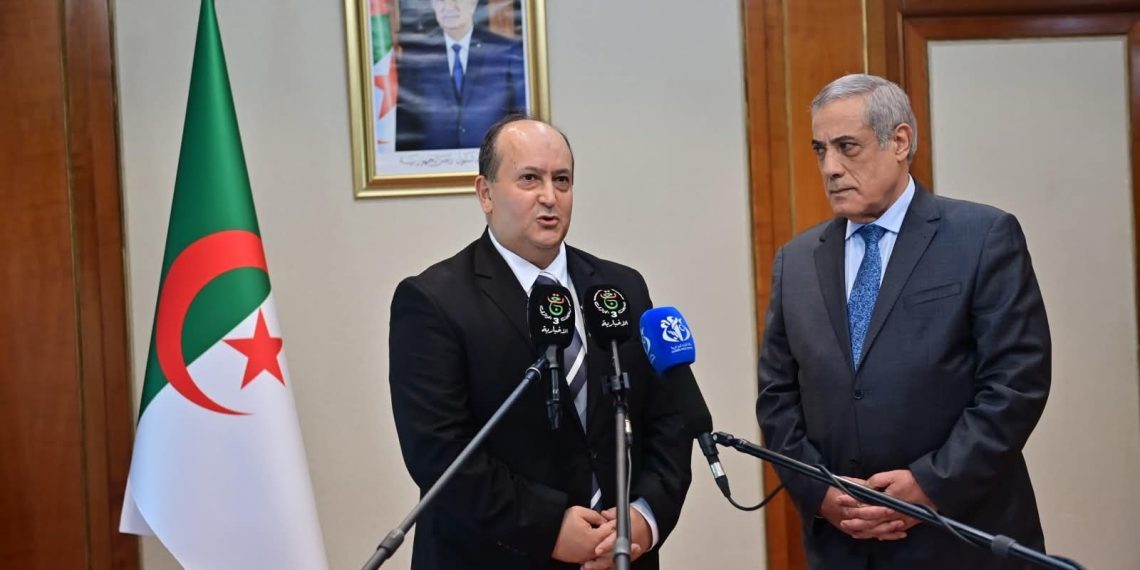
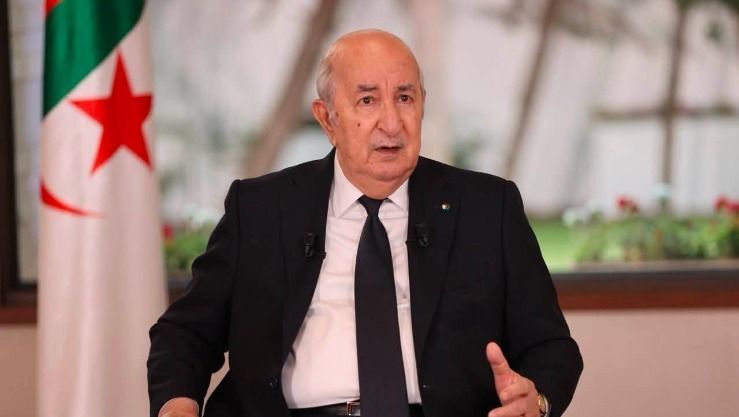
President Abdelmadjid Tebboune has responded to these ideas during his regular meeting with local media. Asked about the makeup of the next government, he said he would abide by the constitution, stressing that “the issue is not about political affiliation but competence.”
He emphasized the need for a government team with the competence, realism, and pragmatism to manage the country while remaining close to citizens and responsive to their concerns.
Tebboune also said Algerians living abroad should remain eligible for positions of responsibility, including within the government, as long as they meet the standards of experience and effectiveness, regardless of where they live.
Responding to Tebboune’s remarks, journalist Belkacem Boubaker said Algeria appears to be entering a new political phase centered on forming a government based on competence, as political calls grow for a reshaping of the executive branch in line with the results of the latest legislative elections.
In an analysis published by the local news site Setifone on July 29, 2026, Boubaker said the makeup of the executive had returned to the center of political debate after both pro-government and opposition parties called for moving beyond a government dominated by technocrats.
The debate raises questions about the direction the government will take, including whether to expand political representation within the cabinet or retain a model built around independent technocrats.
A Political Reading
Algerian political activist Hicham Charaf says calls for a government based on political consensus and a national dialogue come against the backdrop of legislative election turnout of no more than 21%, highlighting the depth of discontent among the silent majority.
Sharaf told Al-Estiklal that the constitutional decision on the matter rests with the president. He argued that the latest election rules out the prospect of a “consensus majority government” and leaves the president free to appoint a prime minister charged with implementing the presidency’s program, despite the fragmented distribution of parliamentary seats and the dominance of the pro-government bloc.
That, he said, gives the presidency ample room to stick to its approach to running the executive without being drawn into complex negotiations among political parties.
Charaf said the country’s political leadership appears to favor technocrats as part of a clear development and administrative approach. The current phase, he argued, is focused on major projects, from investment to large-scale infrastructure, and technocrats operate with a focus on “results,” while politically negotiated governments can spend valuable time on internal disputes and the allocation of posts among parties.
“The parties’ limited social weight is part of the problem,” he said. “Giving ministerial portfolios to parties that won seats on low turnout will not solve the citizen’s crisis of confidence. Instead, it could be seen as elites dividing up interests, further deepening the alienation of people who have already withdrawn from political life.”
Charaf said President Tebboune therefore prefers to engage directly with civil society, economic actors, and national experts rather than rely on “political intermediaries” who have lost their popular reach. He pointed to several councils and bodies that communicate directly with the president, including the Higher Council for Youth and the Ombudsman’s Office.
Based on these factors, Charaf said Algeria is not heading toward a “national unity government” in the political sense but toward “a technocratic government with some political representation, as has traditionally been the case.”
He said key sovereign and economic ministries, including finance, energy, and trade, have remained and are expected to remain in the hands of independent professionals and technocrats to protect strategic projects. At the same time, a limited number of portfolios could go to pro-government parties to ensure legislative coordination and provide a degree of political backing in parliament.
Charaf stressed that the real challenge in restoring the confidence of Algerians does not lie in handing ministerial posts to traditional parties to patch up an electoral landscape. It lies instead in modernizing state institutions, bringing in new expertise and faces, and replacing traditional political rhetoric with a language of efficiency and candor that reflects the realities and aspirations of a new generation.