Hemedti’s ‘Do-or-Die’ Speech: What’s Really Happening Inside Sudan’s Rapid Support Forces Militia?
Hemedti’s speech revealed that he sees this phase as a decisive test of his military project’s survival.
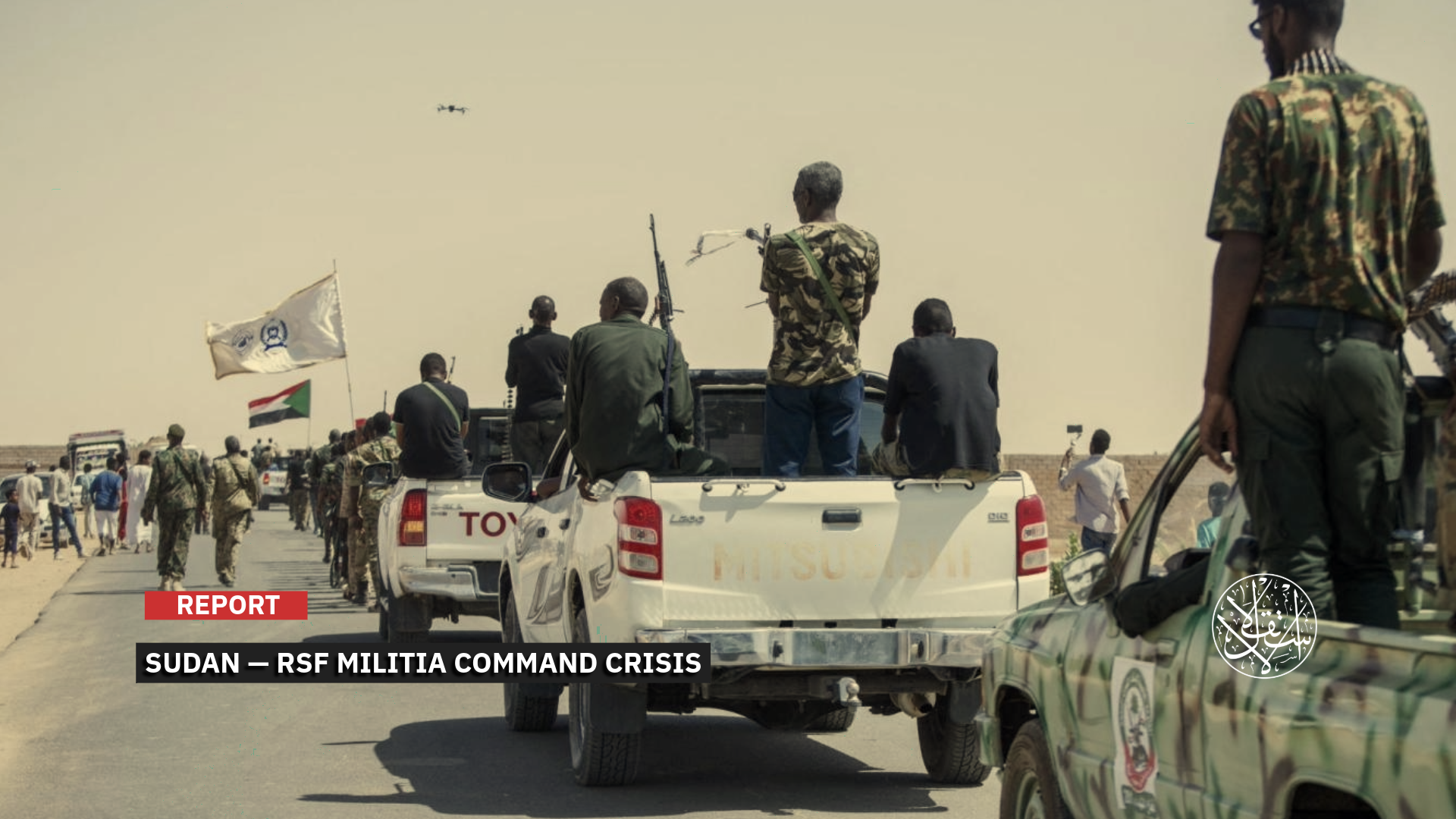
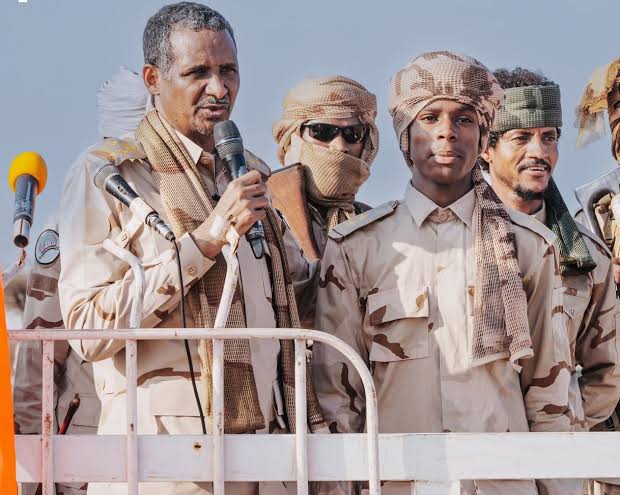
Hours after Sudanese army chief Abdel Fattah al-Burhan appeared in areas his forces had recaptured from the Rapid Support Forces (RSF) militia, the RSF militia commander, Mohamed Hamdan Dagalo, known as “Hemedti,” delivered a speech on Monday evening, July 27, 2026, that struck a markedly different tone from his previous addresses.
Addressing his fighters directly, Hemedti called on them to change the way they conduct battles, raise their level of readiness, prevent the filming of military movements, and purge the ranks of those he described as a “fifth column.” He declared that the confrontation had entered a “do or die” phase.
The speech came after the RSF militia lost the towns of Bara, Jabra al-Sheikh and Umm Sayala, along with other positions in North Kordofan, and days after hundreds of defectors from the group arrived in Khartoum.
The developments have raised questions over whether the speech signals preparations for a counteroffensive or an attempt to contain an expanding battlefield setback, and what its unusually sharp language reveals about cohesion within the RSF militia leadership, confidence among its ranks, and the future trajectory of the war in Sudan.
Hemedti opened his speech by thanking his fighters, saying they had “done their part,” before urging them to change the way they had conducted battles during the previous phase. He used the phrases “change the path you are on” and “change the game.”
He then declared that “the reins are not in my hands,” adding, “The reins are with you.” The remarks appeared to give field commanders greater latitude in directing operations, suggesting a more decentralized approach to battlefield management and less reliance on waiting for direct orders from the leadership before making moves on the ground.
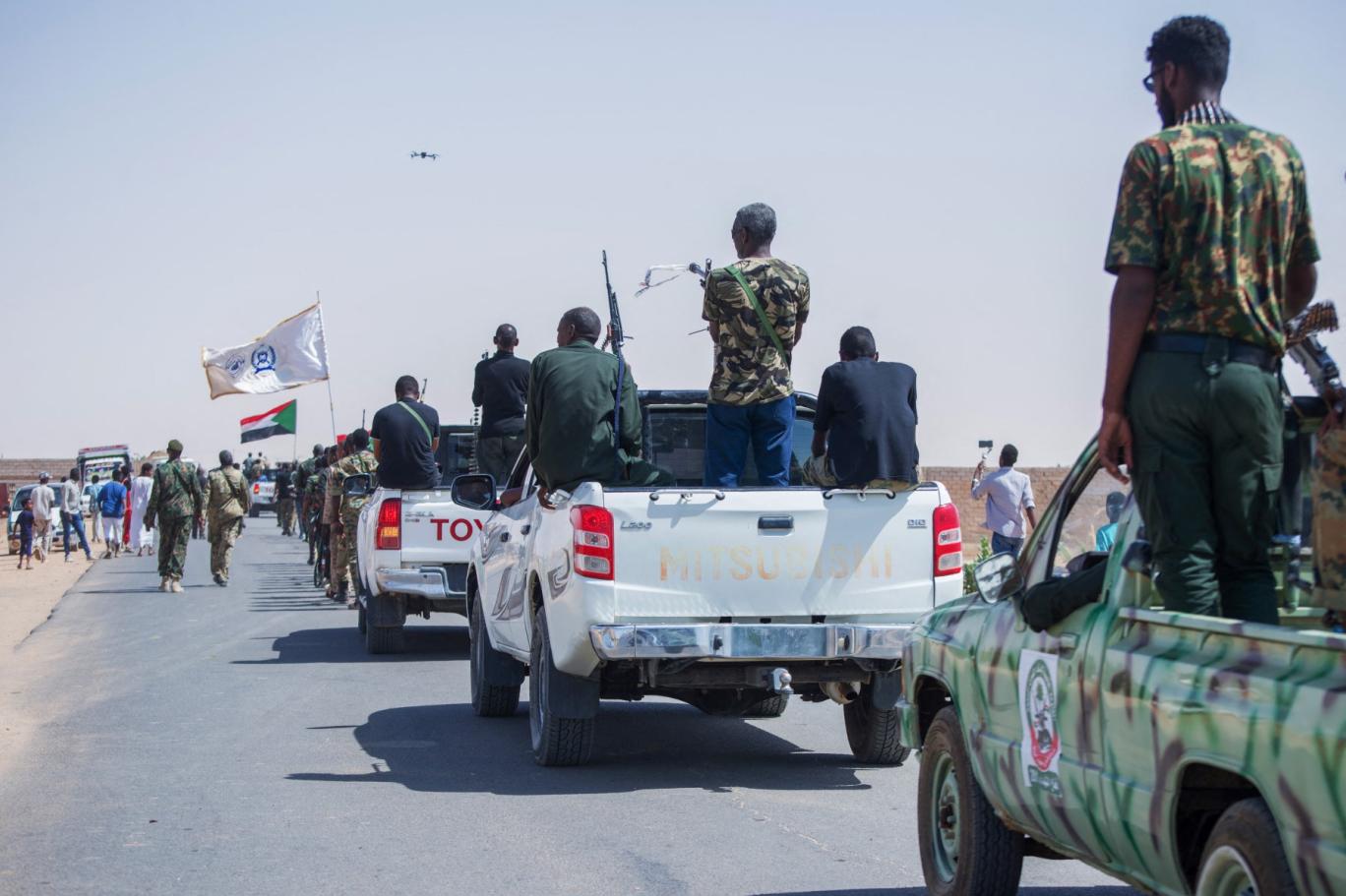
He paired that latitude, however, with strict instructions on discipline. He banned his forces from filming military movements and operations, limiting that task to those specifically assigned to it.
He warned that footage posted on social media provides the army with “free information” about the movements of his militia forces.
He went further, saying that any member who filmed without authorization would be treated as part of the “fifth column,” a reference to those accused of betrayal or collaboration with the opposing side.
Hemedti also called on his forces to abide by military laws and conventions, creating a contrast between his demand for strict discipline and his assertion that the “reins” were now in the hands of fighters and field commanders.
The RSF militia commander raised the level of mobilization further, declaring, “From today, there will be no sleep… it is do or die,” stressing that he would no longer accept any retreat or inaction on the battlefields.
He promised to join his fighters on the front lines, insisting that “the game will change” and that they would hear “good news,” without specifying which fronts or areas he was referring to.
He also denied opposing peace, saying he had previously agreed to a truce out of consideration for civilians’ interests. But he stressed that he would not accept what he called “painkillers”, a term he used for temporary measures to ease the situation, accusing unnamed parties of asking him to agree to a truce before giving the army and its allied forces an opportunity to launch large-scale attacks.
The Timing of the Speech
Hemedti chose the timing of his speech as his forces faced one of their most significant setbacks in North Kordofan.
At dawn on Sunday, July 26, the Sudanese army announced that it had retaken the towns of Bara, Jabra al-Sheikh, and Umm Sayala, before expanding its advance toward Umm Qarfah and Jireikh. It later announced that it had secured control of the export road linking Omdurman to el Obeid.
The significance of this advance lies not only in the number of towns recaptured, but also in their military and logistical importance.
Bara had served as a transportation hub linking Darfur and Kordofan to the capital via Omdurman, while Jabra al-Sheikh had in recent months become a logistical center and forward base for the Rapid Support Forces (RSF) militia in North Kordofan.
The fall of the two towns eased military pressure on el Obeid, opened a shorter route for army supplies, and pushed retreating RSF militia forces into more exposed areas in the northwestern part of the state.
The Joint Force of Armed Struggle Movements, which is allied with the army, said it had destroyed 62 combat vehicles and seized another 54, along with quantities of weapons, ammunition, and equipment left behind by the RSF militia at its positions.
According to military sources who spoke to local Sudanese news outlets, searches of Jabra al-Sheikh also uncovered weapons and ammunition depots, attack drones, communications equipment, and various types of military hardware.
Military expert Abu Bakr Abdel Rahim said the army had benefited from precise intelligence operations, alongside drone strikes that disrupted supply lines and neutralized several field commanders.
This, he said, deprived the RSF militia of much of its traditional ability to maneuver and call in reinforcements from surrounding areas.
Hemedti’s speech, therefore, came as his militia forces shifted from attempting to tighten the noose around el Obeid and expand eastward to defending their vital corridors between Kordofan and Darfur.
A Fractured Leadership
The pressure was not limited to territorial losses. The wording and delivery of the speech itself also pointed to possible problems within the Rapid Support Forces’ (RSF) militia command-and-control structure.
Rather than passing instructions on readiness, troop movements, and the prohibition on filming through the military chain of command, Hemedti announced them in a speech broadcast on social media platforms, addressing all fighters directly.
Sudanese politician Abdel Qader Ibrahim told Al-Estiklal that this approach reflects weaknesses in communication channels between the leadership and field units, as well as the absence of some commanders from the operational theater. He noted that military plans are not normally announced through the media.
He added that the speech came after RSF militia members appeared in videos complaining about their conditions on the ground and calling on their leadership to intervene, making the address appear more like a message to the group’s own ranks aimed at containing discontent than a message directed at its adversaries.
These signs of unrest coincided with a series of defections that peaked days before the speech, when around 280 fighters, including field commanders, arrived in Khartoum from Darfur with their full military equipment.
Field sources said the Sudanese army oversaw the group’s departure from RSF militia-controlled areas, in preparation for reorganizing the fighters and incorporating them into its ranks.
This followed the defection of Bashara al-Huwaira, the operations officer for the Bara axis; field commander Ali Rizqallah, known as “Savannah”; and Major General al-Nour Adam, known as “al-Nour al-Qubba,” who left North Darfur with a force reportedly comprising more than 40 combat vehicles.
Daifallah Adam, the second commander of the Fourth Group in the Blue Nile axis, also announced his defection from the RSF militia.
Meanwhile, Faris al-Nour, an adviser to Hemedti and a member of the Presidential Council of the “Tasis” alliance, resigned from his military and political positions.
The succession and growing scale of these defections may help explain Hemedti’s urgency in addressing his fighters directly, in an apparent attempt to reassure them, boost their morale, and emphasize that he would stand alongside them on the front lines.
An Admission of Defeat or a Countermobilization?
Interpretations of Hemedti’s speech were divided between those who saw it as an implicit acknowledgment of military setbacks and those who viewed it as a prelude to a new phase of escalation.
Those in the first camp pointed to his repeated use of phrases such as “no retreat,” “no inaction,” and “it is do or die,” arguing that this was the language of a commander seeking to contain the effects of a battlefield defeat and prevent them from spilling over from the fighting into the morale of his forces.
Observers noted similarities between the speech and previous mobilization messages delivered by Hemedti following the loss of the strategically important Jebel Moya area in Sudan’s Sennar state in October 2024, and again after his forces withdrew from Khartoum in March 2025.
In both cases, he sought to offset territorial setbacks by signaling the possibility of new attacks and emphasizing that a withdrawal did not mean his forces had lost the ability to continue fighting.
The second interpretation, by contrast, focused on his remarks about changing the “game” and giving field commanders greater freedom to direct movements, as well as his decision not to identify the areas being targeted.
Under this reading, the RSF militia leadership may be preparing to shift the weight of its operations to a new front, or to launch attacks relying on drones and maneuvering around areas where the army has advanced, rather than engaging in a direct confrontation along the export road.
Hemedti also sought to offset the loss of the towns by claiming that his forces had inflicted irreplaceable human losses on the army over two days, but he provided no figures or evidence to substantiate the claim.
The Sudanese army and its allied forces, meanwhile, focused on displaying the combat vehicles, weapons, and ammunition they had seized during the recent operations.
According to an article by Sudanese writer Othman al-Samandal published by Sudanile, the setback in North Kordofan does not mean that the RSF militia is on the verge of collapse. The group still retains substantial forces, areas of influence, military capabilities, and functioning supply lines.
The speech nevertheless revealed that the RSF militia leadership views the current phase as a genuine test of the survival of its military project, rather than merely a passing tactical setback.
Fifth Column
Perhaps the most consequential element of Hemedti’s speech was his call to “clean out the fifth column.” The phrase suggests a shift in how the reasons for the setbacks are being understood, from the battlefield to within the ranks of his own forces, pointing to growing suspicion and eroding trust within the command structure.
His emphasis on banning the filming of military movements may be directly linked to operational losses. Video footage can allow an adversary to identify troop positions, types of weapons, and directions of movement, while also helping it analyze assembly points and supply routes.
But threatening to treat anyone who films without authorization as part of the “fifth column” goes beyond simply controlling media activity. It potentially widens the circle of suspicion within the force to include fighters and field commanders.
This approach is particularly consequential for a force with a complex tribal and regional composition, which in recent months has seen a number of commanders and groups defect to the opposing side with their weapons intact.
An intensified search for collaborators or suspected infiltrators could lead to tighter internal surveillance, restrictions on the movement of units, and the reshuffling of commanders, measures that could undermine the battlefield flexibility on which the RSF militia has relied throughout years of war.
The speech also brought back into focus remarks by defecting commander Ali Rizqallah, known as “Savannah.” Following his defection, he claimed that the RSF militia had eliminated a number of commanders and placed others under house arrest, naming several individuals.
According to Sudanese writer Hassan Yaqoub, in an article published by the local Sudanese news site Sudafax, the call to “clean out the fifth column” could prove counterproductive.
Rather than restoring discipline, he argued, it could widen the circle of suspicion within the force and push wavering members toward defection.
If that happens, the RSF’s militia greatest challenge may no longer be retaking the cities it has lost, but preserving internal cohesion and preventing the fragmentation of its organizational structure.
A Pivotal Phase
In the final analysis, Hemedti’s speech does not provide conclusive evidence that the Rapid Support Forces (RSF) militia are on the verge of collapse, nor does it confirm that they are capable of regaining the military initiative.
It does, however, make clear that the group is facing one of its most critical phases since the outbreak of the war.
With successive battlefield losses in North Kordofan, defections involving prominent commanders and fighters, and tighter internal disciplinary measures, the RSF militia leadership appears to be facing a dual test: maintaining the cohesion of its forces and preventing the effects of its military setbacks from spreading to its organizational structure.
Meanwhile, the Sudanese army is seeking to capitalize on its battlefield gains to consolidate its position in Kordofan and sever the remaining supply lines between the region and Darfur, moves that could impose new dynamics on the course of the war in the coming phase.
Against this backdrop, the battles ahead are likely to prove more decisive, not only in determining control of territory but also in testing each side’s ability to preserve its military and organizational cohesion, as the war enters a phase unlike any it has experienced before.