Stephen Scholes and the UAE Network Behind the Arming of the RSF Militia
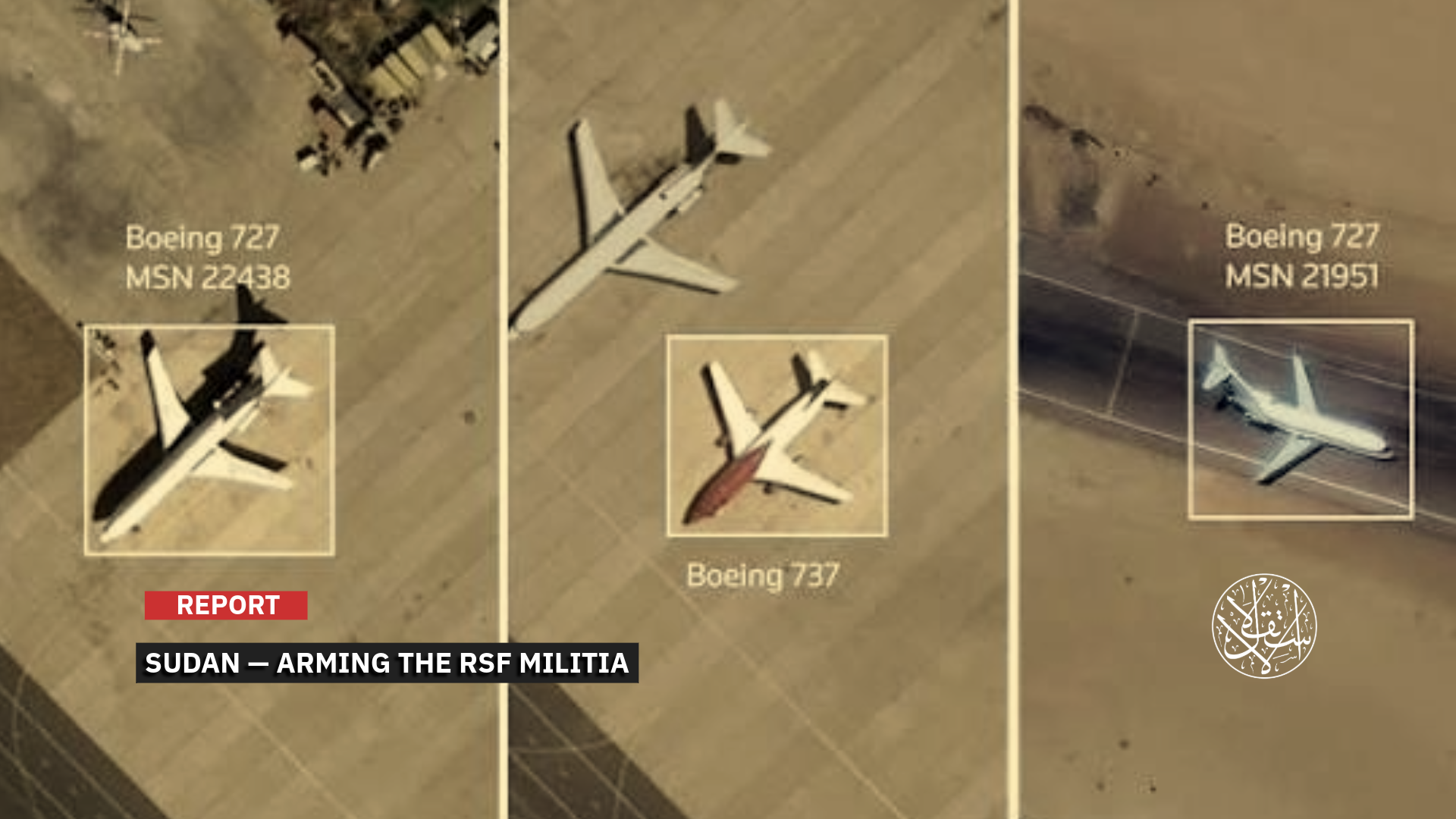
Stephen Scholes, a U.S. soldier who served with the elite Special Forces unit known as the “Green Berets.”
A draft UN report reviewed by Reuters and detailed in an exclusive investigation published on July 29, 2026, has revealed that Boeing 727 aircraft linked to a network of businesses run by a former U.S. military contractor transported weapons, drones, mercenaries, and fighters to Darfur for the UAE-backed Rapid Support Forces (RSF) militia.
UN experts relied on testimony from two witnesses in Nyala, along with correspondence from two UN member states, before concluding that a covert air corridor between N’Djamena and Nyala was used to support the paramilitary force accused of carrying out genocide.
The trail of aircraft leads to Stephen Scholes, a former U.S. Special Forces soldier and the owner of a network of companies that have secured hundreds of millions of dollars in contracts from Washington and the United Nations while maintaining commercial and operational ties across the UAE and Africa.
The questions now surrounding the flights are wide-ranging: How did aircraft linked to a contractor who once served U.S. interests become part of an RSF supply chain? Who bought the planes, operated them, and financed their missions? How did they move through military airports and evade tracking systems? And who is Stephen Scholes, the American contractor whose business empire has ties to the UAE?
From the Green Berets to the Business of War
The story begins with Stephen Scholes himself. A former U.S. soldier, Scholes served with the Army’s elite Special Forces unit known as the Green Berets before leaving the military two decades ago and moving into agricultural and development projects in Central Asia.
In 2002, he founded CADG, formerly known as the Central Asia Development Group, which evolved from an agricultural trading company into an international contractor providing construction, aviation, logistics, transportation, and facility management services in conflict zones and remote environments.
The Singapore-registered company lists Scholes as its chief executive and says it has carried out projects worth more than $800 million across Africa, Asia, and the Middle East.
But the depth of Scholes’ ties to U.S. institutions becomes clearer in government records reviewed by Reuters. Since 2002, his companies have received at least $419 million in U.S. taxpayer funds through military contracts and foreign aid projects.
Those contracts included building facilities for U.S. forces in Afghanistan, providing air-conditioning systems for American troops in Iraq, and working at a U.S. Department of Defense airfield in Kenya. His companies also built water facilities for the U.S. Air Force in Kenya, army buildings in the Central African Republic, and facilities for the U.S. Agency for International Development in Mozambique.
Beyond Washington, companies linked to the CADG received more than $160 million for work carried out for UN agencies over two decades.
The record suggests that Scholes was not simply an aviation broker who appeared suddenly in Sudan’s war. He was a veteran contractor with years of experience operating inside complex military environments.
CADG says it operates an air and ground transport fleet, maintains an international supplier network, and has a major office and warehouse in Dubai, as well as air bases in South Africa and Sudan.
That infrastructure has raised questions over whether the movement of companies linked to Scholes into air routes surrounding Darfur was merely geographic coincidence, or part of a wider wartime logistics network.
The UAE Funded Scholes’ Fleet
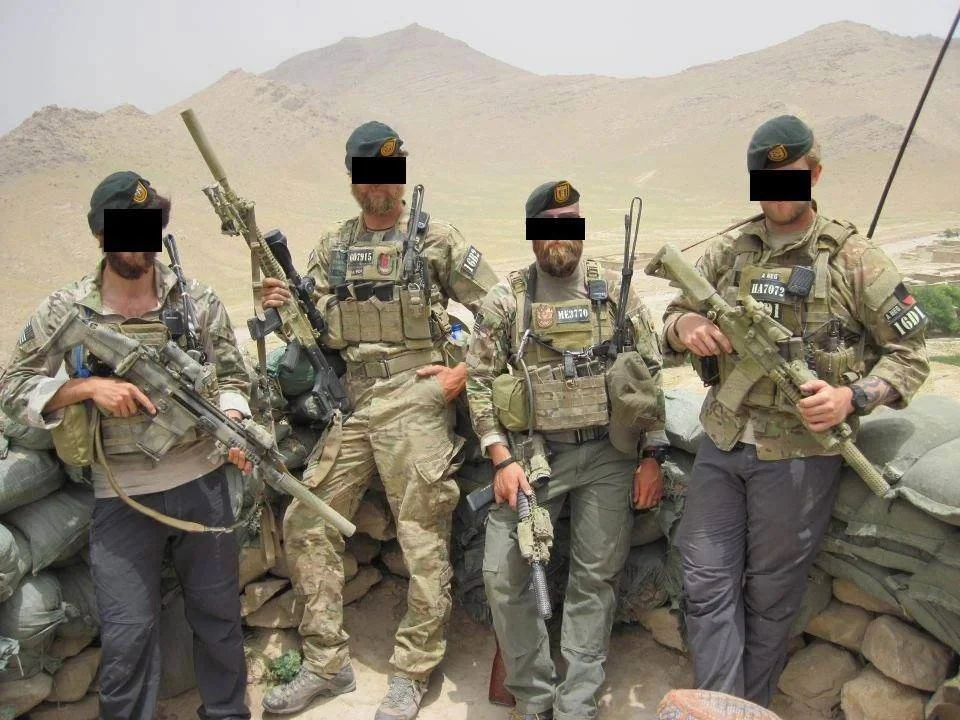
Documents reviewed by Reuters link Scholes to the aircraft through two key companies: Occidental Support Services, a UAE-registered firm wholly owned by him, and Contractor Airways, a South African company co-owned with his partner Craig Munro. The first handled financing and recruitment, while the second emerged as the buyer of several aging Boeing aircraft.
One trail began in Brazil, where Total Linhas Aereas sold a Boeing 727, serial number 22438, for about $1 million to a U.S. broker named Michael Ferreira.
The Brazilian company said the broker later sold the aircraft to Occidental, while Scholes’ company also appeared as the aircraft’s new operator in Brazilian registration records. The plane was then repainted white and moved to Chad in November 2024.
A second trail began in Michigan. On May 29, 2025, Contractor Airways purchased a Boeing 727 from Kalitta Charters II, a company that holds contracts with the U.S. government.
Federal Aviation Administration records show that the aircraft, previously registered as N726CK, was transferred to the Scholes-Munro company and arrived in N’Djamena on the same day the purchase agreement was signed.
Munro told Reuters that Occidental Support Services provided the financing needed to purchase aircraft for Contractor Airways, making Scholes’ UAE-based company a direct financial link in the creation of the fleet.
The operational role of Occidental also appeared in crew contracts for a Boeing 737 destroyed by the Sudanese army in Nyala in May 2025. A South Sudanese pilot and a Peruvian ground engineer aboard the aircraft were employed by the company.
Public records do not reveal the source of the company’s funding or the identity of the final customer behind the flights. They also do not provide evidence that the UAE government contracted Scholes. But they do show that a UAE-based company owned by Scholes financed the aircraft and provided some of their crews.
Aircraft Vanishing Across Four Countries
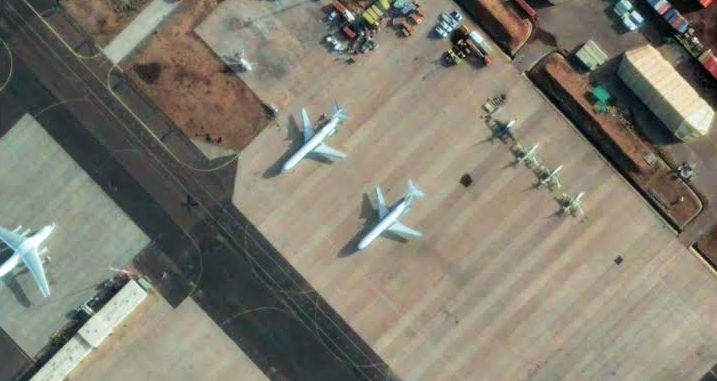
The aircraft moved from what appeared to be civilian purchases into routes connecting N’Djamena, Kufra, Nyala, and Bosaso, airports identified by UN experts and diplomats as key nodes in a regional supply network linked to the RSF militia.
Reuters tracked the aircraft using satellite imagery, phone location data, and open-source records after most of the flights disappeared from conventional tracking platforms. The planes repeatedly appeared inside the fortified military section of N’Djamena airport, where Chad’s air force aircraft, drones, and presidential aircraft are stationed.
From there, the aircraft purchased from Kalitta Charters II carried out at least seven flights to Kufra between June and October 2025, before a video later showed it landing in Nyala. The Brazilian aircraft was tracked on three flights to Kufra between March 2025 and January 2026.
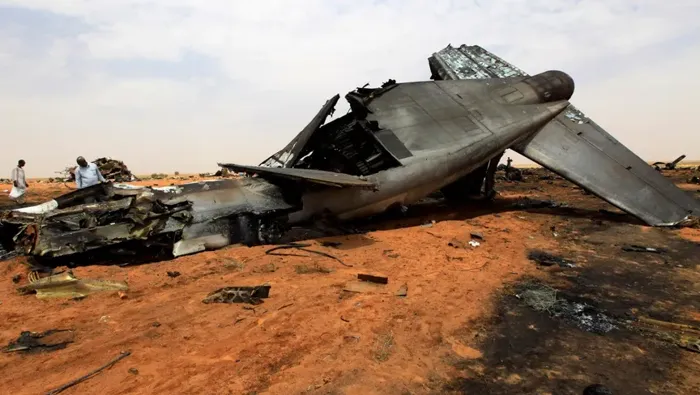
The Boeing 737 became the first human evidence pointing to the network’s operations. Hours before it was targeted in Nyala, the aircraft appeared inside the military section of N’Djamena Airport before reaching the RSF stronghold on the night of May 2, 2025.
About four hours later, the Sudanese army destroyed it. Military sources said at the time that 51 of the 54 people killed were RSF militia fighters, including at least six senior officers.
The irony was that Chad’s civil aviation authority said the aircraft had not received approval to operate from the country and had not submitted the required registration applications or operating certificates. At the same time, it said it did not oversee military aviation or military movement monitoring systems. Chad’s Foreign Minister Abdoulaye Sabre Fadoul said questions surrounding the aircraft fell under defense secrecy.
The UN Panel of Experts on Sudan concluded that the Boeing aircraft had taken deliberate steps to avoid detection while in flight. Although the Panel did not detail those measures, the night flights, the absence of tracking signals, the repainting of aircraft and registration markings, and operations from a military airfield point to a system designed to reduce the visibility of cross-border movements.
An Air Bridge at the Heart of the Darfur War
The draft UN report resolved a key mystery surrounding the aircraft: the nature of their cargo. The panel of experts said it had received credible information from four sources indicating that Boeing aircraft transported RSF militia fighters, foreign mercenaries, and military equipment, including drones and weapons.
The panel based its findings on testimony from two witnesses in Nyala and correspondence from two UN member states, concluding that the RSF militia used an air corridor between N’Djamena and Nyala to move personnel and weapons into Darfur.
The report also documented Boeing 727 and Ilyushin IL-76 aircraft landing in Nyala at night between January and July 2026, despite their movements not appearing in independent tracking systems.
Nyala became the most significant final destination. After the war broke out, the city was transformed into the RSF’s main military and logistical hub in Darfur. Kufra in southeastern Libya, controlled by Khalifa Haftar’s militias, served as an intermediary stop between air routes and overland supply lines heading into Sudan. Reuters linked three aircraft connected to Scholes’ network to at least 16 landings in Nyala, Kufra, and Bosaso.
The movements came during a decisive phase of the siege of el-Fasher, which lasted 18 months and ended with the RSF militia taking control of the city in October 2025. During the siege, the cross-border supply network provided the fuel, fighters, drones, and ammunition needed to sustain operations around the army’s last major stronghold in Darfur.
The draft report also revealed another link in the network, estimating the number of Colombian mercenaries involved at between 1,500 and 2,000 fighters. Known as the “Desert Wolves,” they established a base in Nyala in March 2025, operated drones, and took part in planning the battle for el-Fasher. The experts said they were recruited by the UAE-based Global Security Services Group.
A Complete Network, but Accountability Remains Elusive
The new findings place companies linked to former U.S. Special Forces soldier and contractor Stephen Scholes inside the infrastructure that supported the RSF militia, but they do not yet provide a full answer about who managed the network from the top.
What is established is that a UAE-owned company purchased one of the aircraft, financed the acquisition of others, and employed members of the crew aboard a flight that ended in Nyala. It is also established that aircraft linked to his companies transported fighters, mercenaries, weapons, and drones.
But the identity of the client that chartered the aircraft, the party that covered fuel, maintenance, and payroll costs, and the extent of Scholes’ knowledge of the cargo details remain absent from the public record.
The UN Security Council has imposed an arms embargo on Darfur since 2004, banning the supply of weapons, equipment, and technical assistance to parties involved in the conflict. That means responsibility does not rest solely with the aircraft operator. It may also extend to states that allowed the use of their airports, companies that sold the aircraft, and entities that financed or contracted the flights if it is proven they knew the destination and the final users.
Sources
- Treasury Sanctions Recruitment Network Enabling War in Sudan, Calls for Humanitarian Truce
- The US army veteran and the mystery Boeings flying Sudan’s war routes
- Boeings carried weapons for Sudanese Rapid Support Force: UN experts
- Boeings identified in Reuters report carried weapons for Sudanese paramilitary, UN experts find