From Coordination to Alliance: How Turkiye Is Repositioning Itself in Sudan
“The Port Sudan government now views Turkiye as a partner capable of combining political support with defense cooperation.”
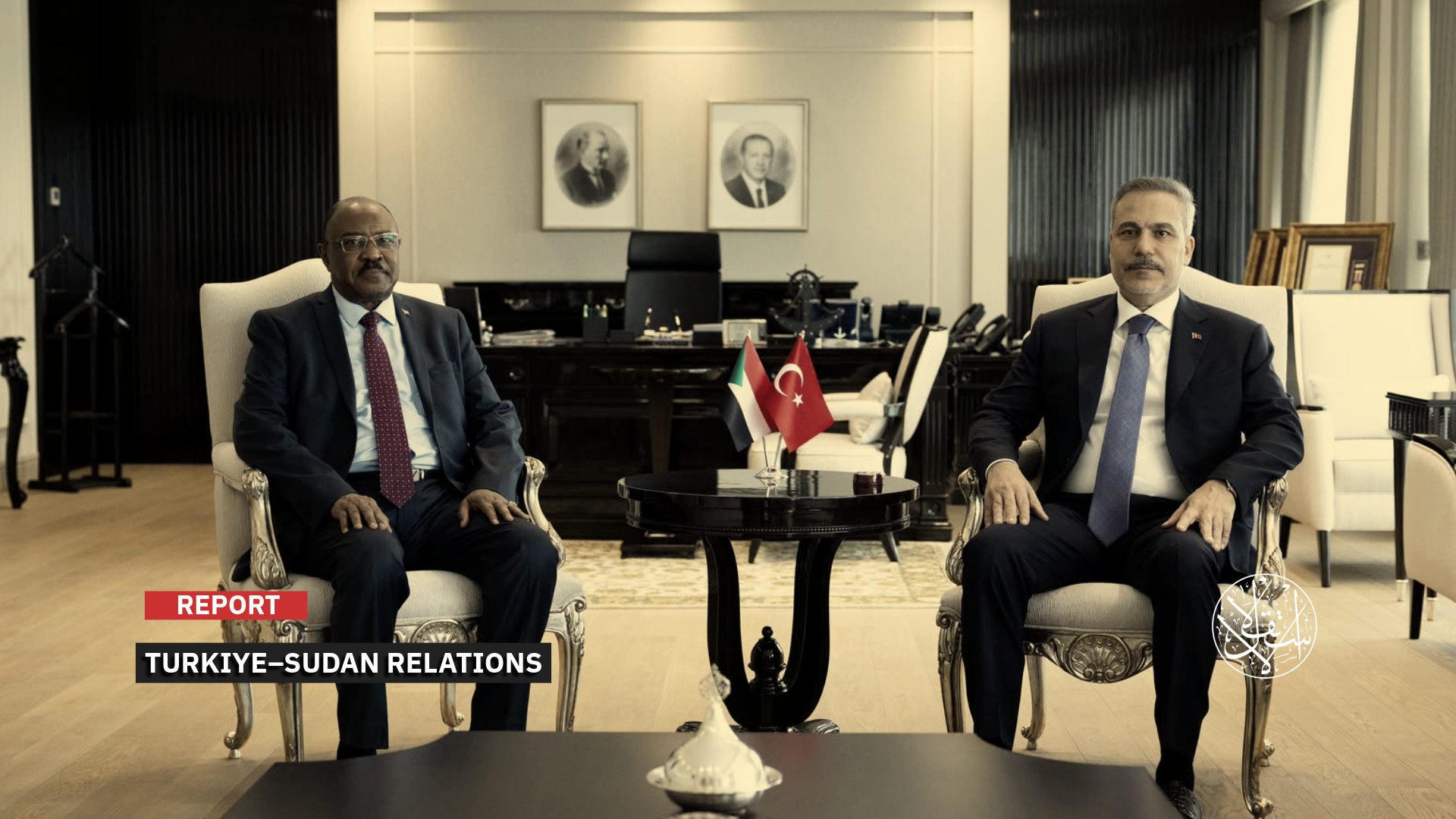
Sudanese Foreign Minister Mohi El-Din Salem arrived in Ankara on July 28, 2026, following a series of visits that have moved the relationship between Turkiye and the Sudanese government from mere diplomatic contacts to a more structured framework.
Salem met with his Turkish counterpart, Hakan Fidan, and they signed a memorandum of understanding for cooperation between the Turkish Diplomatic Academy and the Sudanese Diplomatic Institute, amid discussions covering defense, trade, energy, reconstruction, and Red Sea security.
The visit was preceded by meetings held by Amjad Farid, Advisor to Head of the Sovereignty Council for Political and International Affairs, with Turkish political and parliamentary leaders, including the Chairman of the National Defense Committee, Hulusi Akar.
It also followed Prime Minister Kamil Idris's visit to Ankara in May 2026 and the meeting between the Chairman of the Sudanese Sovereignty Council, Abdel Fattah al-Burhan, and President Recep Tayyip Erdogan on June 2, 2026.
This momentum raises a question that transcends the outcomes of each individual visit: Can Ankara and Port Sudan transform the pending agreements and existing military cooperation into a comprehensive strategic partnership, or will the calculations of war and regional balances keep them within the bounds of flexible cooperation?

Successive Visits
The current diplomatic activity builds upon a foundation established during President Erdogan's visit to Sudan between December 24 and 26, 2017, the first visit by a Turkish president to Khartoum.
The visit witnessed the signing of agreements and memoranda of understanding in the fields of defense, security, agriculture, energy, health, and education, along with the announcement of the establishment of a high-level strategic cooperation council chaired by the two countries' presidents.
However, the fall of Omar al-Bashir in 2019 and the ensuing political turmoil disrupted the implementation of many of these agreements.
The Sudanese war, which erupted in April 2023, reshaped the relationship on different foundations.
After the relocation of state institutions to Port Sudan, Turkiye moved its embassy from Khartoum to the city on May 11, 2023, and kept it fully operational, thus maintaining a direct channel with the Sovereignty Council, the military leadership, and the government affiliated with them.
Subsequently, Burhan visited Ankara in September 2023, and then, during a phone call in December 2024, Erdogan offered to mediate the dispute between Sudan and the UAE, affirming his support for the country's sovereignty and territorial integrity and rejecting foreign interference.
The two men then met on the sidelines of the Antalya Forum in April 2025, before Burhan visited Turkiye in December of the same year, and then again on June 2, 2026.
This trajectory was further strengthened by visits from Kamil Idris, Amjad Farid, and Mohi El-Din Salem. The sequence of visits indicates that the Port Sudan government now views Turkiye as a partner capable of combining political support, defense cooperation, and investment, while Ankara grants Burhan de facto recognition of the state institutions he leads, in the face of attempts by the UAE-backed Rapid Support Forces to establish a parallel authority.
Turkish Drones
Military cooperation constitutes the most advanced and sensitive aspect of the Turkish-Sudanese relationship.
In May 2017, the two countries signed a 22-article agreement for cooperation in defense industries, encompassing the purchase of military equipment, research and development, joint production, maintenance and modernization, and technology transfer.
However, details of this cooperation remained limited until the war revealed its shift to an operational level.
In March 2025, The Washington Post, citing contracts, correspondence, flight logs, and photographs, revealed that the Turkish company Baykar had signed a deal worth over $120 million with Sudan’s Defense Industries System, the body responsible for military procurement for the Sudanese army.
The initial deal included six Bayraktar TB2 drones, 600 warheads, and three ground control stations, along with 48 personnel to deliver the equipment and provide technical support within Sudan. Correspondence also indicated the subsequent arrival of two additional drones.
According to the investigation, the first shipment of munitions arrived in Port Sudan in August 2024, and flights continued until mid-September of the same year, before the equipment was transferred to military bases in Atbara and Shendi.
The correspondence also documented the presence of Baykar personnel inside a Sudanese command center, monitoring drone strikes.
The deployment of the TB2 drone granted the Sudanese army broader reconnaissance capabilities and allowed it to target the movements, depots, and supply lines of the Rapid Support Forces (RSF) rebels, coinciding with improved performance by the armed forces in central Sudan and Khartoum.
Subsequent indications also emerged of the use of the heavier Turkish-made Akinci drones in Darfur and Kordofan.

Reconstruction
The defense partnership is inextricably linked to the economic interests both countries seek. Sudan needs financing, technology, and the rebuilding of damaged infrastructure, while Turkiye sees opportunities in the agriculture, mining, energy, ports, and construction sectors, in addition to Sudan's strategic location on the Red Sea.
Trade volume reached $344.7 million in 2024, comprising $276.9 million in Turkish exports and $67.8 million in imports from Sudan, before rising to approximately $390 million in 2025.
Although these figures remain below the record high of approximately $680 million recorded in 2022, the continuation of trade during the war reflects a solid foundation upon which to build.
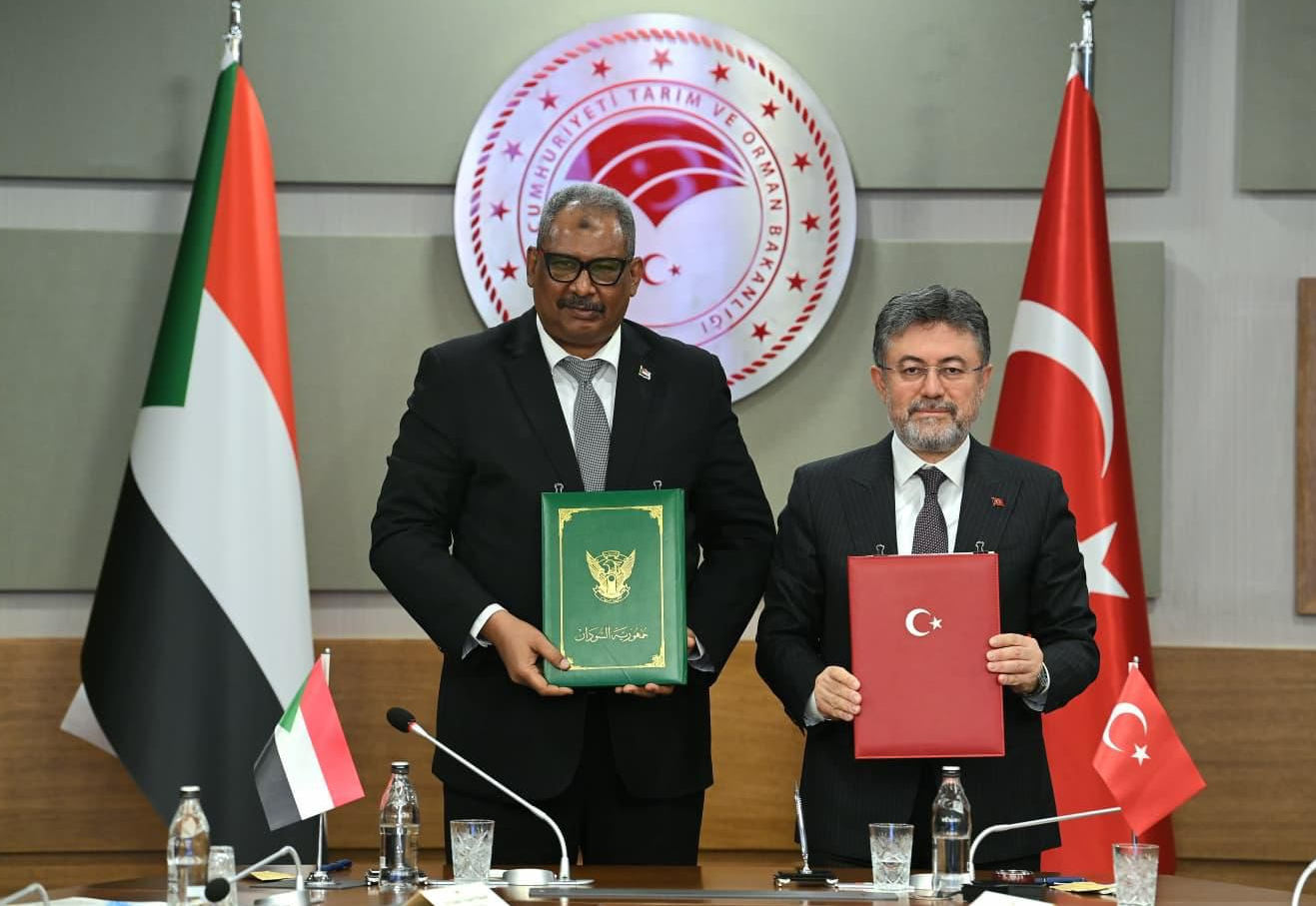
In May 2026, the Sudanese-Turkish Joint Economic Committee held its 16th session in Ankara after an eight-year hiatus.
The Sudanese delegation was headed by the Minister of Agriculture and Irrigation, Ismat Qurashi, while the Turkish delegation was led by the Minister of Agriculture and Forestry, Ibrahim Yumakli.
The meetings concluded with understandings regarding the implementation of projects in agriculture, energy, and mining; the development of technical cooperation; support for the health and humanitarian sectors; and the involvement of Turkish companies in infrastructure rehabilitation.
Documents cited by The Washington Post indicate that Sudanese officials discussed granting opportunities to Turkish companies in gold, copper, and silver mines, as well as licenses for fishing and fish processing, in addition to developing and managing the Abu Amama port on the Red Sea.
This is in addition to the project to rehabilitate Suakin Island and establish a dock for the maintenance of civilian and military vessels, which stalled after al-Bashir's fall.
Through this approach, Port Sudan seeks to link current Turkish support to a long-term role in the post-war phase, while Ankara aims to transform its military and political cooperation into contracts and investments that guarantee a sustainable presence in Sudan.

Balance and Interests
In an interview with Al-Estiklal, Ahmed Raghib, a researcher at Aydin University in Turkiye, stated that despite the progress in relations, the idea of a full strategic alliance faces regional and political constraints.
"Turkiye has developed its relations with Egypt, the UAE, and Saudi Arabia in recent years, and does not appear ready to enter into an overt military alliance in Sudan that could directly clash with the interests of these countries or turn the Red Sea into an additional arena of confrontation," he added.
"Ankara is trying to combine supporting state institutions and the army on the one hand, with maintaining its image as a mediator capable of communicating with regional powers on the other. This balance is evident in President Recep Tayyip Erdogan's offer to mediate between Sudan and the UAE, despite Abu Dhabi's involvement in arming the Rapid Support Forces," he noted.
"Port Sudan needs Turkish support, but it also does not want to be beholden to a single axis. It balances its relations with Egypt, Saudi Arabia, Qatar, Iran, and Russia, and seeks diverse sources of arms, investment, and political cover," Raghib said.
" Therefore, the most likely scenario seems to be a shift towards a flexible strategic partnership rather than a formal defense alliance. This would involve expanding military and technical cooperation behind the scenes, political support for the Port Sudan government, and a Turkish presence in reconstruction, ports, and mining, while maintaining room for mediation and avoiding direct military commitments," he added.
"The activation of the Turkish-Sudanese Strategic Cooperation Council and the implementation of pending agreements will remain the true test of whether the relationship will move from reciprocal visits to permanent projects and institutions," he concluded.
Sources
- A Turkish arms firm helped fuel Sudan’s brutal civil war, records show
- Sudan, Turkey agree to increase trade exchange to $1 billion
- President Erdoğan, Sudan's Burhan discuss peace efforts, stronger ties
- Turkey can step in to resolve Sudan-UAE disputes, Erdogan tells Burhan
- Sudan's Foreign Minister in Türkiye: Are relations heading towards strategic cooperation? [Arabic]