Saudi Arabia, Turkiye and Pakistan: A New Defense Alliance Reshapes Middle East Power Dynamics
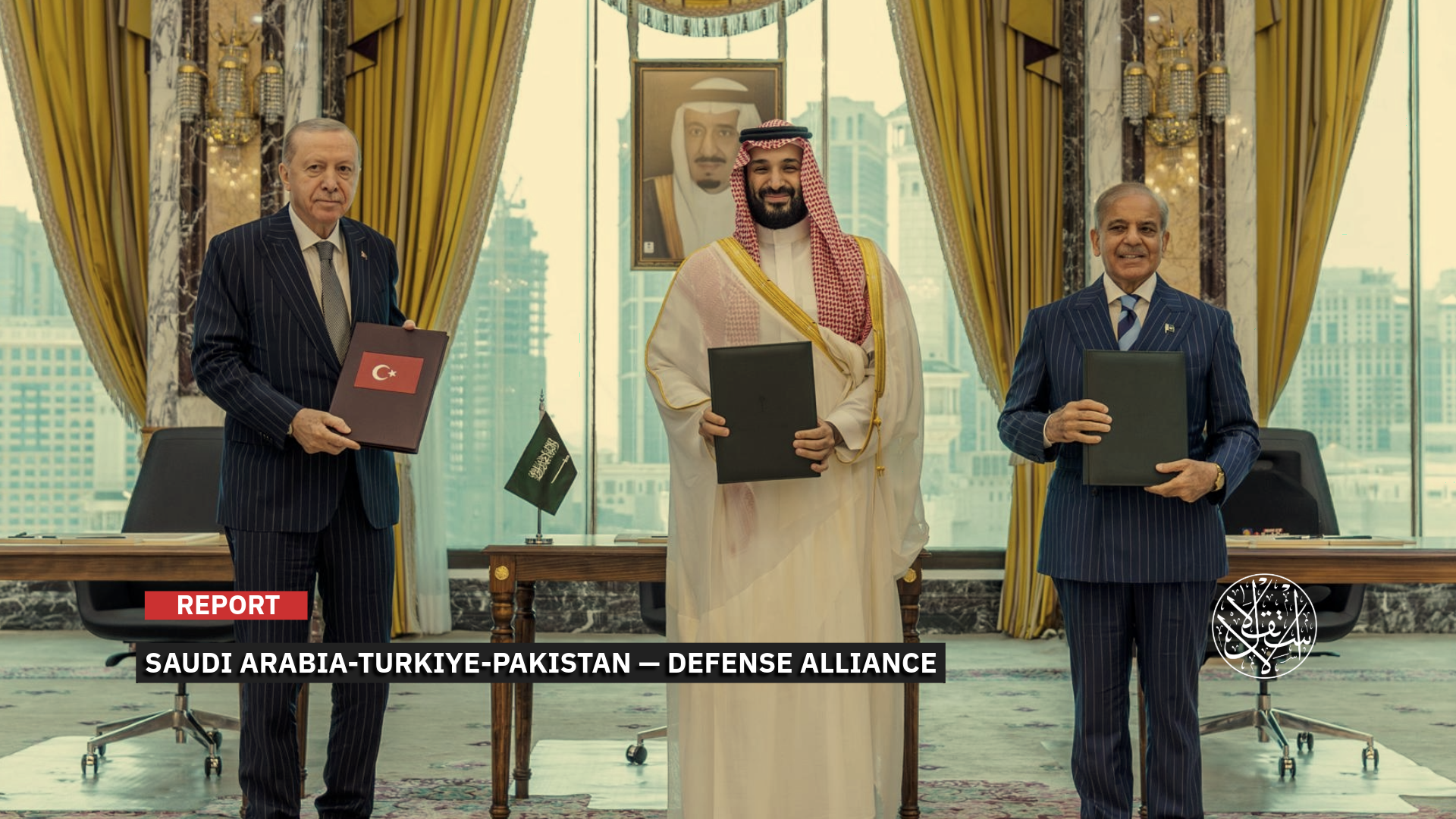
The agreement stipulates that an attack on any one of the three countries would be considered an attack on all three.
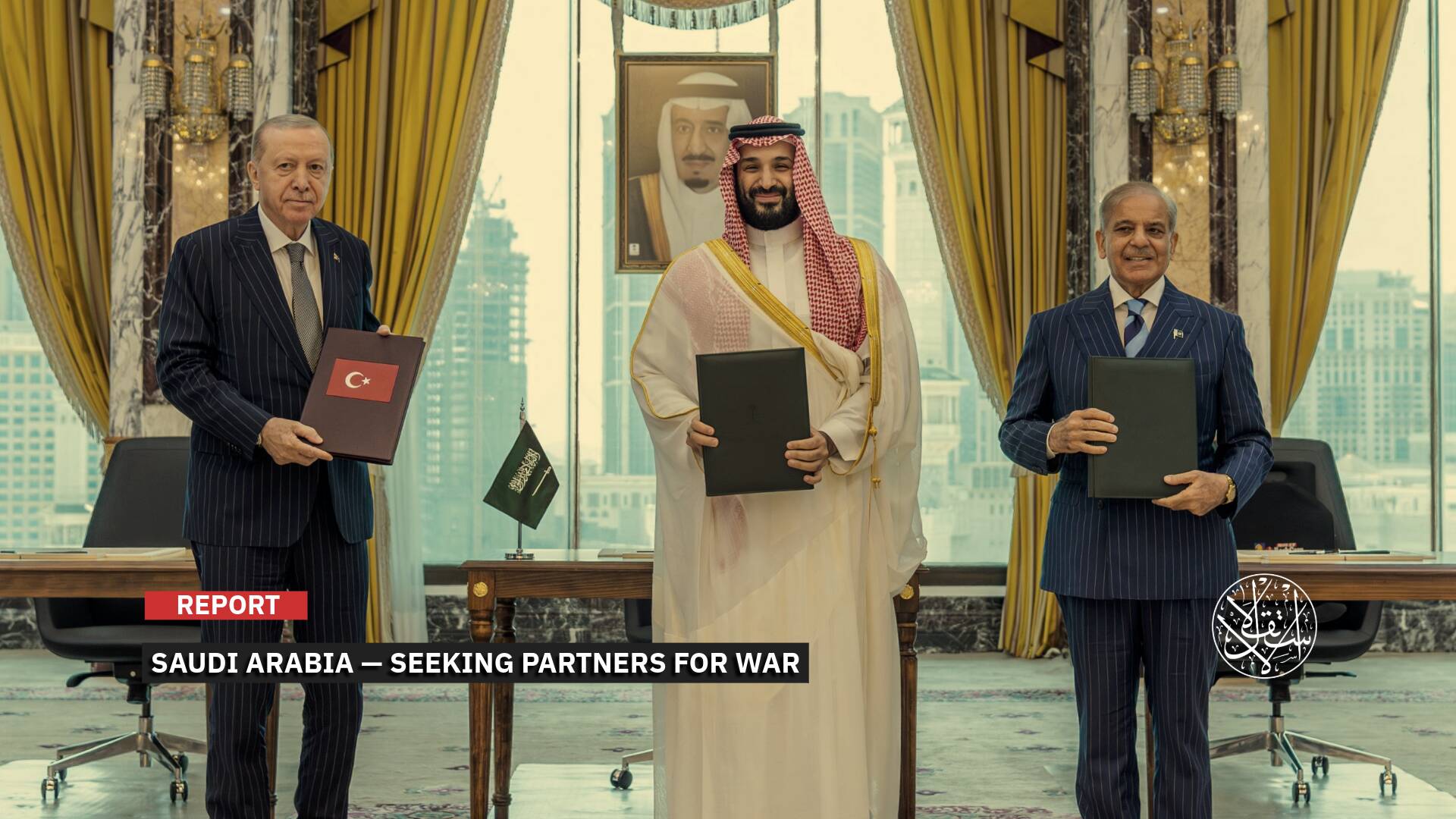
The signing of the “Mecca Mutual Defense Agreement” between Saudi Arabia, Turkiye, and Pakistan has drawn widespread attention in political and military circles, given its implications beyond mere defense cooperation among three countries that share close ties and each possess significant military, economic, and strategic capabilities in the region.
The agreement was signed at a time of mounting security threats across the region, driven by attacks carried out by Iran-aligned groups, continued tensions between “Israel” and several countries in the region, and the paralysis of the regional order amid the declining effectiveness of traditional security arrangements.
Although Riyadh, Ankara, and Islamabad have stressed that the agreement is not directed against any particular country, its timing, coupled with provisions stipulating that an attack on any one of the three countries would be considered an attack on all three, raises questions over whether it is intended to deter Iran and its proxies or also carries a message for “Israel” amid escalating regional tensions.
The trilateral agreement, bringing together a nuclear-armed state, a major regional economic and military power, and a key member of the North Atlantic Treaty Organization (NATO), also raises a broader question: what might it add to the Middle East’s evolving security equation in the period ahead?
A Sensitive Timing
The timing of the agreement’s signing does not appear to be unrelated to developments in the region over recent months. It came amid heightened military tensions between the United States and Iran, as well as attacks by Tehran on Gulf states, either directly or through its regional proxies, on the grounds that those countries host U.S. military bases and interests.
The agreement also comes after years of Saudi Arabia reassessing its security approach and moving to diversify its defense partnerships rather than relying entirely on the U.S. security umbrella.
This has coincided with expanding military cooperation with Turkiye, while Pakistan’s considerable military weight makes it an influential partner in any regional security arrangements.
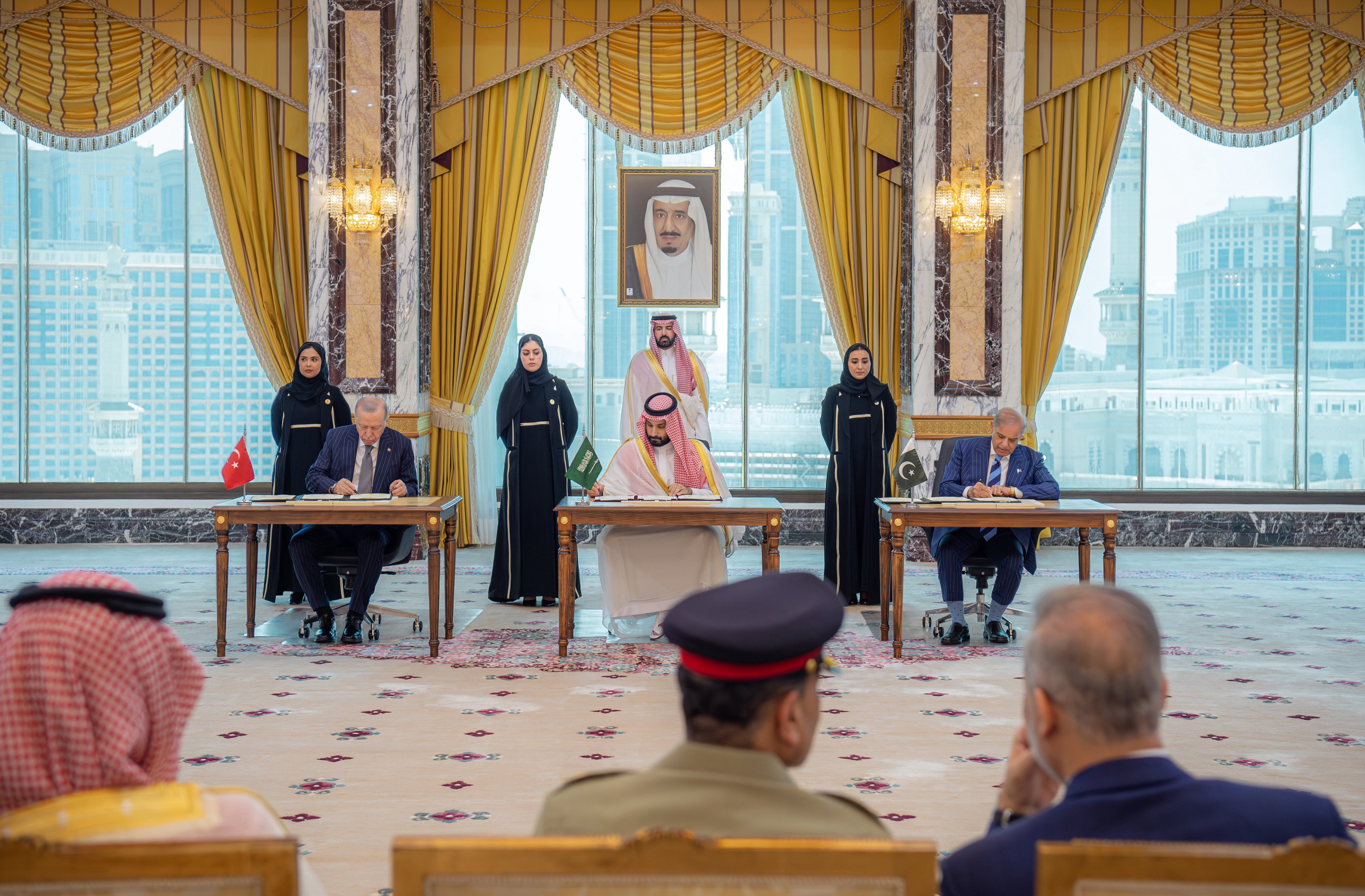
A joint statement issued on August 7, 2026, said the agreement aims to strengthen collective deterrence, expand defense cooperation, and develop military industries.
It also stipulates that any armed attack against one of the three countries constitutes an attack against all three, signaling a shift from traditional coordination toward a framework of shared defense commitments.
Saudi Defense Minister Khalid bin Salman, meanwhile, said on X that the “Mecca Mutual Defense Agreement” between Saudi Arabia, Pakistan, and Turkiye, signed in Mecca, “establishes a framework for a long-term defense partnership that strengthens deterrence, coordination, and integration among our brotherly countries, and contributes to supporting the security and stability of the region and the world.”
Saudi Foreign Minister Faisal bin Farhan said that the signing of the Mecca Mutual Defense Agreement underscores the depth of the fraternal and strategic ties between the three countries, marks an important milestone in their defense cooperation, and reflects their shared desire to coordinate efforts in confronting challenges and threats to the security and stability of the region.
The agreement reflects the three countries’ shared political will to safeguard security and stability and promote a more secure regional environment that serves their states and peoples, has a positive impact on the region as a whole, and paves the way for a safer future with greater opportunities for development and prosperity, according to bin Farhan in a post on X.
Pakistani Foreign Minister Mohammad Ishaq Dar said the “Mecca” agreement represents an important step toward strengthening strategic cooperation, expressing hope that it would contribute to regional stability. He described it as a “shield for peace and prosperity for future generations.”
The Turkish presidency, meanwhile, through its communications director Burhanettin Duran, described the agreement as a “historic step,” stressing that it is not directed against any particular country but aims to strengthen collective security, joint military capabilities, and defense industries, thereby contributing to the preservation of regional peace and stability.
Deterrence Messages
The choice of Mecca as the venue for signing the agreement is, according to observers, a political and symbolic message reflecting the three countries’ desire to give the accord a strategic dimension and demonstrate that it is part of a broader effort to safeguard regional security, rather than a temporary military arrangement driven by immediate circumstances.
Despite official denials that the grouping is aimed at any particular country, the agreement’s substance and timing have led many analysts to view it as a deterrent message directed at more than one regional actor, amid the sensitive conditions facing the region.
Ali al-Hail, a professor of political science at Qatar University, told Al-Estiklal that the agreement is not directed solely against Iran and its proxies, but against any external attack, including from “Israel”. He said it comes at a time when Saudi Arabia is facing growing threats from multiple directions.
He noted that attacks on Saudi oil facilities in recent years, along with current regional tensions, have strengthened the need for a more cohesive deterrence framework based on regional partnerships rather than relying solely on international security guarantees.
Al-Hail linked the agreement to a broader Saudi effort to redefine its concept of national security by diversifying its military and defense relationships and balancing its international partnerships while maintaining ties with the United States and, at the same time, opening up to other powers.
In the same context, Liqaa Makki, a senior researcher at the Al Jazeera Centre for Studies, described the agreement as the first practical response to attempts to impose hegemony over the Middle East, whether by Iran or “Israel”. She said the agreement’s value lies in its ability to raise the cost of any potential attack, thereby strengthening regional stability.
In a post on X on August 7, Makki added that defense alliances do not necessarily mean going to war whenever an incident occurs; rather, their primary purpose is achieved when they prevent war by creating a deterrent force that makes the cost of any military gamble prohibitively high for the aggressor.
An Implementation Test
Despite the political significance the agreement has acquired, observers say its success will ultimately depend on the three countries’ ability to translate its provisions into practical mechanisms, including military coordination, joint planning, intelligence cooperation, and the development of defense industries.
Abdul Jalil al-Saeed, director of the Scandinavian Gulf Studies Center, questioned Turkiye’s ability to undertake broad defense commitments outside the framework of the North Atlantic Treaty Organization (NATO), given its membership in the alliance. He noted that any Turkish military action could be constrained by its international obligations.
In a post on X, al-Saeed cited Turkiye’s experience with Qatar, arguing that the two countries’ mutual defense agreement did not translate into direct military intervention during periods of tension, with Turkiye’s response instead limited to political and indirect military support.
Iraqi media figure Qusay Shafeeq said the agreement was concluded in the context of protecting Saudi Arabia from potential missile or drone attacks launched from outside its borders, particularly amid rising tensions with some Iraqi factions.
However, in a post on X on August 7, Shafeeq ruled out the possibility that the agreement was directly aimed at Iran, given the continuing political relations between the three countries and Tehran.
Iran’s first reaction came from Ibrahim Rezaei, spokesman for the Iranian parliament’s National Security and Foreign Policy Committee, who said the agreement with Turkiye and Pakistan “will not bring security to Saudi Arabia.” He called on Riyadh to reconsider its policies rather than rely on defense agreements.
Between official backing, political reservations, and Iranian criticism, the “Mecca Mutual Defense Agreement” appears to mark a new stage in the reshaping of security balances in the Middle East.
Even as the three countries insist that the agreement is not directed against any particular party, it reflects a growing push to build regional deterrence frameworks capable of addressing mounting threats in a region undergoing rapid shifts in influence and the balance of power.