A Progressive Critic of 'Israel': How Abdul El-Sayed Could Become the First Muslim Senator
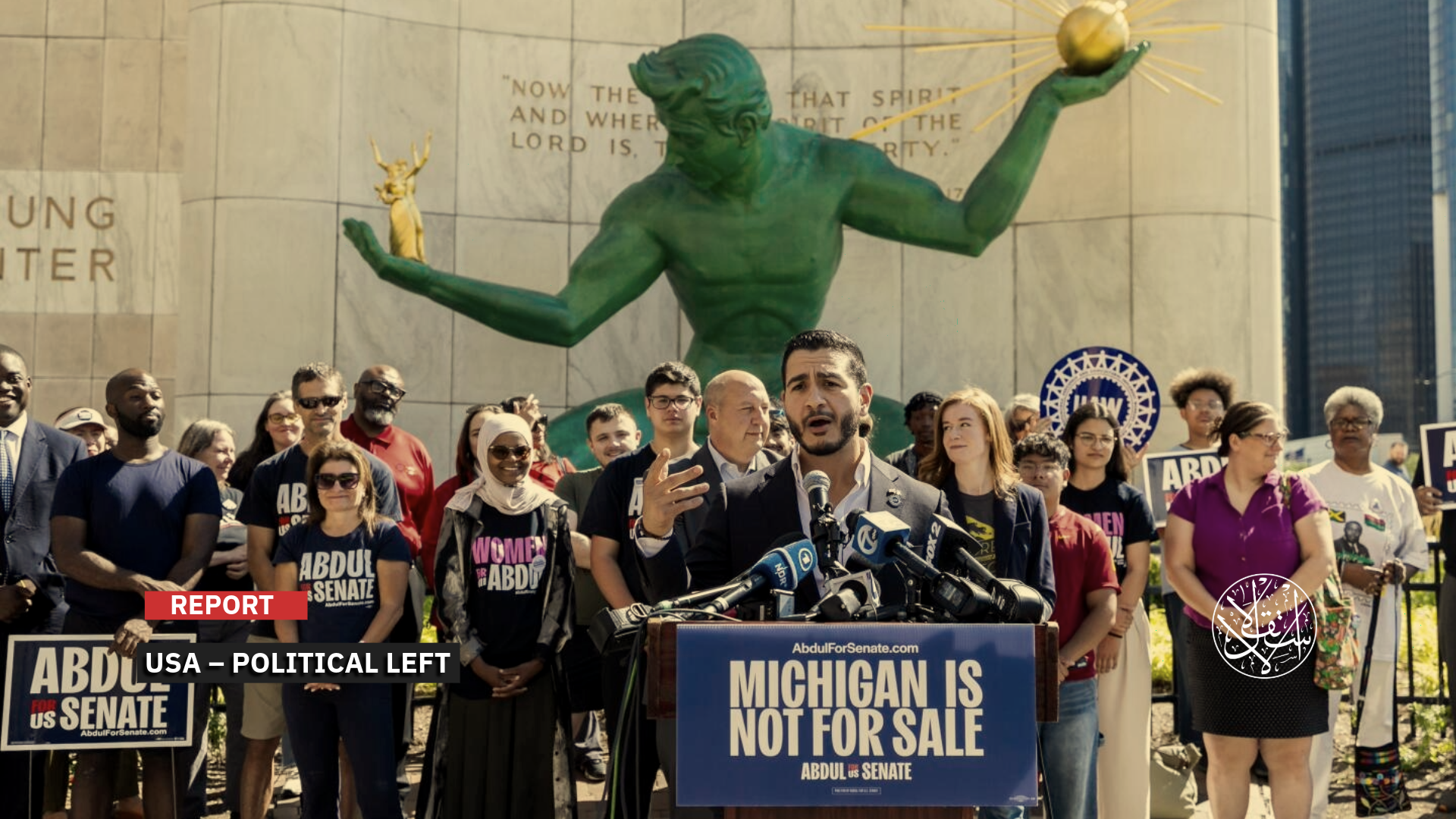
“The Michigan Senate primary now is the most significant triumph for the political left this year.”
Dr. Abdulrahman Mohamed El-Sayed, an American epidemiologist of Egyptian descent, is one step closer to making history as the first Muslim elected to the U.S. Senate, after winning the Democratic Party's nomination for the Michigan Senate on August 5, 2026.
El-Sayed's victory came after a hard-fought contest with Rep. Haley Stevens; a result considered a triumph for the progressive wing of the Democratic Party and a further indication of the growing influence of this movement in one of the most important swing states in the U.S.
Progressive Senator Bernie Sanders called El-Sayed's win the most extraordinary victory in modern U.S. politics.
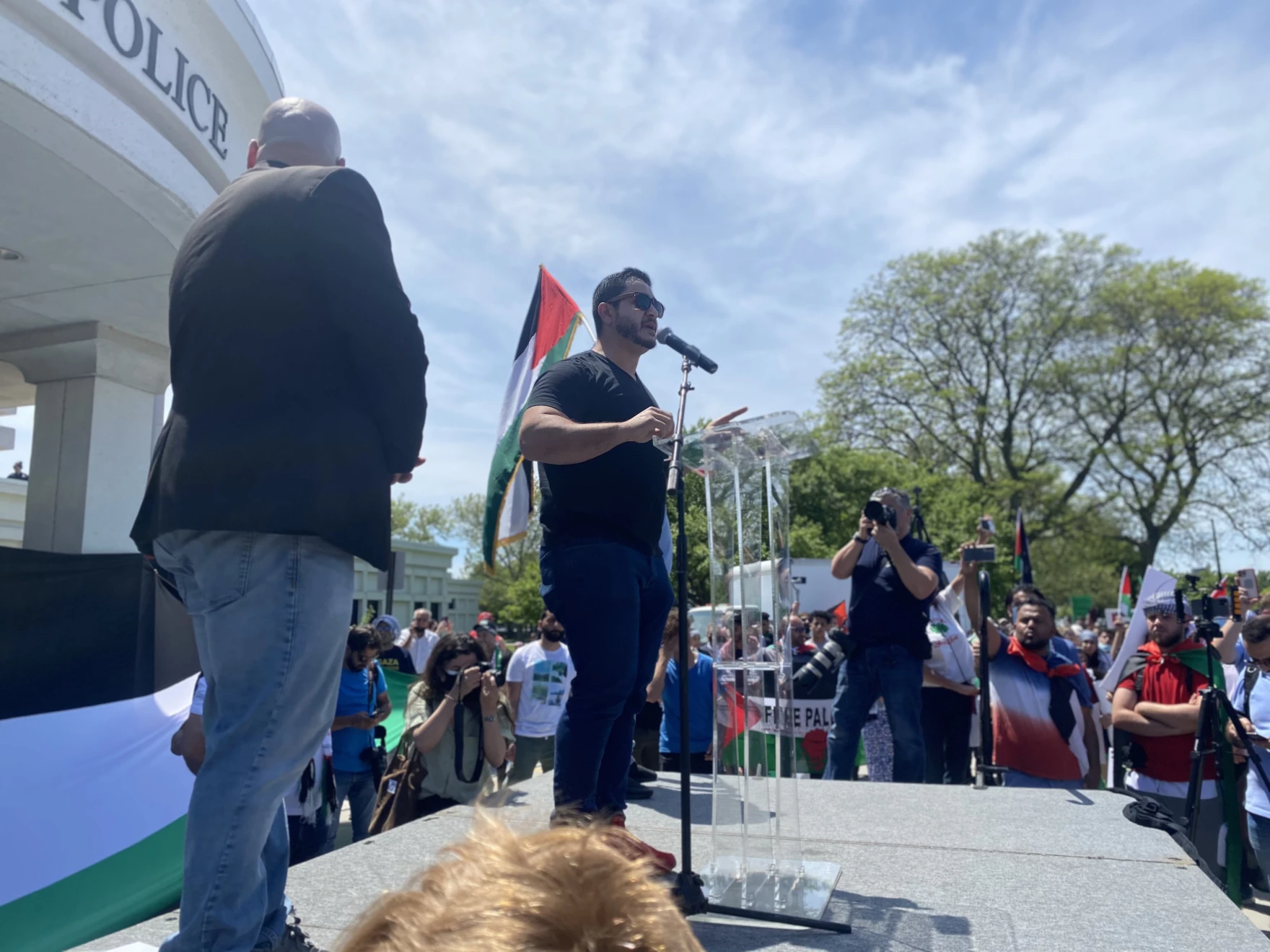
El-Sayed is known for his criticism of Israeli policies in the Palestinian territories. He has called for a foreign policy that links military aid to respect for international law and human rights.
His campaign enjoys support from segments of Arab, Muslim, and progressive voters, who see his rise as an opportunity to amplify a more critical voice regarding traditional U.S. policies toward Tel Aviv within the American legislative body.
A Muslim Progressive
Despite the election of several Muslims to the U.S. House of Representatives, including Keith Ellison, André Carson, Ilhan Omar, and Rashida Tlaib, the Senate has yet to see a Muslim senator elected.
This could make Abdul El-Sayed's potential victory in the upcoming November elections an unprecedented event in American political history.
Abdul El-Sayed is one of the Arab-American figures who entered political life as part of what has become known as the Blue Wave within the Democratic Party.
This wave comprises a new generation of immigrants from across the country, fueled by the anti-immigrant policies adopted by the Donald Trump administration and promoted by the far-right.
Before entering the current race, El-Sayed ran for governor of Michigan as a Democrat in 2018, but he did not succeed in achieving his historic ambition of becoming the first Arab-American Muslim to govern a state that serves as a social, economic, and political benchmark for Arab Americans.
This time, El-Sayed has chosen to repeat the experience by entering the national race for the Michigan Senate seat.
He recently cleared the first hurdle, securing the Democratic Party's nomination for the Michigan Senate, a significant victory for the party's progressive wing in a state with one of the largest Arab and Muslim communities in the country.
El-Sayed defeated Rep. Haley Stevens despite an unprecedented spending spree led by the American Israel Public Affairs Committee (AIPAC) and its allies in support of his opponent.
The contest between El-Sayed and Stevens reflected divisions within the Democratic Party regarding relations with "Israel", healthcare, corporate influence, and how to address the Trump administration's policies.
El-Sayed is now preparing for a crucial general election in November against former Rep. candidate Mike Rogers, a Republican who secured his party's nomination virtually unopposed. This race is considered pivotal and could determine the future of the Senate majority.
El-Sayed enjoys the support of prominent progressive figures, including Senators Bernie Sanders, Elizabeth Warren, and Democratic Rep. Alexandria Ocasio-Cortez of New York, who have framed the race as a confrontation between grassroots activism and traditional forces backed by political money.
He also has the support of Jewish Voice for Peace, which opposes the genocide in Gaza, as well as an Arab and democratic organization that opposes genocide in the Palestinian territory.
In contrast, Stevens has garnered support from leading figures in the Democratic Party, most notably Senate Minority Leader Chuck Schumer and House Minority Leader Hakeem Jeffries, along with massive foreign funding totaling $60 million, including the largest single campaign expenditure ever in a single race by the American Israel Public Affairs Committee (AIPAC), at $32 million.
Before the primaries, a large number of Democratic Party leaders in Michigan, including the governor, members of Congress, and the attorney general, rallied behind Rep. Stevens, believing she possessed the experience and ability to win in the state's notoriously difficult elections.
However, the results showed that a segment of Democratic voters preferred El-Sayed, who successfully attracted young people, liberals, and college graduates with a progressive message that focused more on economic and social issues than on traditional political experience.
Nevertheless, the results were close; more than half of those who participated in the primaries voted for other candidates, meaning the Democratic nominee enters the general election without a clear party mandate.

Political Burden
During his campaign, Abdul El-Sayed relied on a political and economic program that included reducing the cost of living, providing a comprehensive healthcare system, and imposing higher taxes on billionaires.
He also adopted controversial positions within the American political landscape, including criticizing the Israeli government, describing the Gaza war as genocide, and calling for the abolition of the U.S. Immigration and Customs Enforcement (ICE).
El-Sayed linked the war on Gaza to the high cost of living in America, and called for a ban on political funding and the influence of the lobbying group AIPAC, advocating for reform of the campaign finance system.
He describes Israel's actions in the Gaza Strip as genocide and apartheid, and affirms his support for equal political and human rights for Palestinians and Israelis.
He calls for treating "Israel" as a rogue state, like any country that disregards international law, and for halting unconditional US military aid to "Israel", emphasizing that a senator is responsible for how American taxpayers' money is spent.
While El-Sayed's election to the Senate will not, on its own, change US policy toward Tel Aviv, it could strengthen the presence of voices opposed to unconditional support for the Israeli occupation within Congress and open the door to a broader debate about the future of US policy in the Middle East, should he win the upcoming general election.
In a related context, El-Sayed's victory has sounded a real alarm bell in Tel Aviv and reflects a profound shift in the Democratic Party's stance toward "Israel", even in swing states crucial to US elections.
Although polls predicted a victory for Rep. Stevens, the congresswoman who advocates increasing military aid to "Israel", the results proved that a hardline stance against Tel Aviv and turning support for it into a political liability is no longer confined to traditional progressive strongholds like New York, but has extended to making an electoral difference in crucial states.
An analysis by the newspaper Israel Hayom revealed that El-Sayed is not the first progressive figure to win an election while declaring strong positions against "Israel". He was preceded by Zohran Mamdani in New York, along with other congressional candidates such as Claire Valdez and Darializa Avila Chevalier in New York, and Malat Quiros in Colorado.
The analysis also pointed out that El-Sayed is the first to win a primary election in a purple state where the electoral forces are almost evenly split between the two parties, unlike in districts with overwhelming Democratic majorities where the seat is generally decided in favor of the primary winner.

Radical Shift
Israeli research and strategic studies centers believe that Michigan, with its large voting bloc of Arabs, Muslims, and progressive youth, is the most prominent indicator of a radical shift in the Democratic Party's historical approach to its unwavering support for Tel Aviv.
They describe Michigan as an early warning sign of the future of the political and partisan landscape in the United States, noting that Tel Aviv is preparing scenarios for dealing with the new ruling elite in Washington based on this.
Israeli research centers have sounded the alarm regarding the radical changes within the Democratic Party, shifts that have crossed red lines in American political discourse and altered the very nature of electoral stakes.
The competition is no longer limited to seats in the House of Representatives or mayoralties, but has extended to the Senate, a position that grants its occupants unprecedented influence in shaping American foreign policy through direct participation in ratifying defense treaties and approving military aid budgets for Tel Aviv.
According to analyses issued by Israeli research centers, El-Sayed's recent victory suggests several major features that could shape the American political landscape in the coming period.
This victory has proven that the anti-war stance and the call to link aid to adherence to human rights are no longer confined to traditional progressive strongholds like New York and California, but now possess a popular base capable of deciding the outcome in a swing state like Michigan.
The Uncommitted movement, which emerged during former President Joe Biden's administration in protest against the Democratic administration's policies regarding the Gaza war, has transformed from a fringe protest movement into an influential, almost central force within the Democratic Party.
This victory may encourage other Democratic candidates to adopt bolder stances toward Israel and not consider their confrontation with AIPAC as sufficient reason to withdraw or soften their rhetoric, amidst rising public rejection of foreign funding and all lobbying efforts.
Israeli analysts have observed the emergence of a sophisticated political discourse within the rising Democratic movement. This discourse clearly distinguishes between Israeli policies and American Jewish interests, offering reassurances that guarantee citizenship rights and constitutional freedoms for all, without conflating state and religion.
Israeli research centers have also concluded that the Michigan Democrats are not merely a local voting bloc, but rather the spearhead in reshaping the Democratic Party's foreign policy doctrine.
These centers urged Israeli policymakers to reassess their tools for exerting public influence in the United States and to acknowledge that unconditional American support is no longer a given in light of the ongoing demographic and political shifts in swing states.
Democratic Identity
The Michigan Senate race is of exceptional importance to Democrats, as retaining this seat is crucial to any chance of regaining control of the Senate.
Republicans currently hold 53 seats, meaning Democrats need to win the four seats' Republicans hold, while retaining all of their current seats, to achieve a majority, with Michigan being the Democratic seats most likely to switch to Republicans.
In the general election, Abdul El-Sayed will face Republican Mike Rogers, who narrowly lost the Senate race two years ago.
Republicans have already begun their campaign against El-Sayed, releasing an ad describing him as the most extreme candidate in the U.S.
They plan to invest heavily in the race. The Senate Leadership Fund, the largest Republican political committee, has pledged $45 million to support Rogers, and a conservative group partly funded by the DeVos family has announced an additional $15 million for the campaign.
However, Republicans also face their own challenges. Reports indicate that Rogers lacks sufficient enthusiasm within the "Make America Great Again" (MAGA) movement's base, and Trump's declining popularity, fueled by the war with Iran, rising fuel prices, and economic pressures, could negatively impact Republican candidates in swing states.
In a related context, Arab Americans in the state say that El-Sayed's political rise reinforces a central principle: that the Arab American minority in Michigan has become a vital part of the political landscape.
They believe that the upcoming November elections could add another dimension to their growing presence in shaping local and national politics, through the competition from a candidate of Arab descent for a Senate seat.
It is worth noting that the repercussions of this race extend beyond the November elections. The progressive wing within the party views El-Sayed's candidacy as an opportunity to demonstrate that progressive candidates are capable of winning outside of traditionally Democratic states.
If he succeeds, it could give momentum to this movement before the 2028 presidential election, especially since Michigan will be among the first states to hold Democratic primaries.
However, if he loses, it could strengthen the arguments of the moderate wing, which believes that winning in swing states requires more moderate candidates.

For his part, Washington-based political activist Omar Taha explained to Al-Estiklal that El-Sayed's success in the recent election reflects a broader struggle over the identity of the Democratic Party, between a liberal establishment that has governed it for decades and a progressive left wing seeking to seize its leadership.
"This struggle is becoming increasingly important as the party attempts to regain the trust of its voters after failing to prevent the return of Trumpism, and as disagreements intensify over Israel, the economy, immigration, and healthcare," he added.
Mr. Taha clarified that "this new generation of Democrats intends not only to change the party's approach, but also to change how it deals with President Trump over the next two years, his style of governing the country, and the image of the United States abroad."
He also pointed out that "El-Sayed had campaigned by criticizing the Democratic Party establishment, describing it as corrupt, and presented himself as an alternative to a leadership that had lost the trust of a wide segment of voters."