How 'Israel' Is Turning Toward Latin America in a Strategic Bid to Build New Alliances
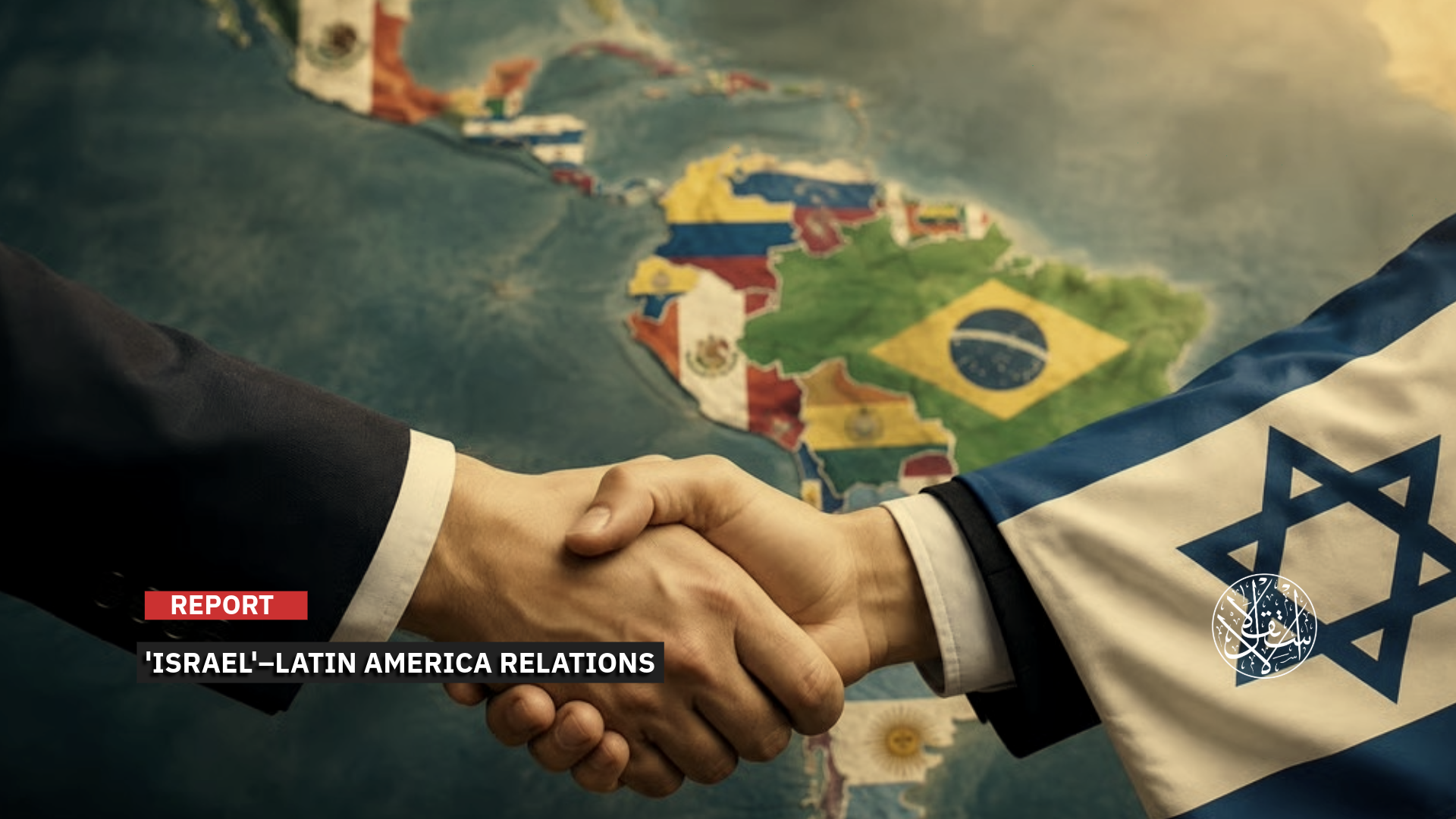
The Israeli Foreign Ministry has designated 2026 as the Year of Latin America."
"Israel" has recently turned its political focus toward Latin America, achieving significant political and economic breakthroughs in several countries, including Venezuela, Colombia, and Costa Rica.
This shift occurs against the backdrop of political deadlock and military stagnation in the Middle East, amidst anticipation regarding the outcome of the Iran-US agreement and the peace plan for Gaza.
"Israel" has emphasized its focus on strengthening ties with Latin America; the Foreign Ministry has designated 2026 as 'the Year of Latin America', cementing a strategic commitment to expanding Israel's engagement and interaction across the region.
At the initiative of Argentine President Javier Milei—and modeled after the Abraham Accords—"Israel" and Argentina launched the Isaac Accords in occupied Jerusalem on April 19, 2026.
The initiative aims to expand diplomatic, economic, and security cooperation, as well as to enhance coordination among participating nations in international forums.
In a related development, Israeli Foreign Minister Gideon Sa'ar began a tour last week that includes Colombia and Ecuador, making him the first Israeli foreign minister to visit Ecuador in 44 years.
The Israeli minister's tour coincides with a decline in leftist movements across a region traditionally characterized by left-wing governance and opposition to Israeli policies in the Middle East—a shift following the US-led ousting of Nicolas Maduro’s regime in Venezuela and the tight economic blockade imposed on the regime in Cuba.
A Significant Shift
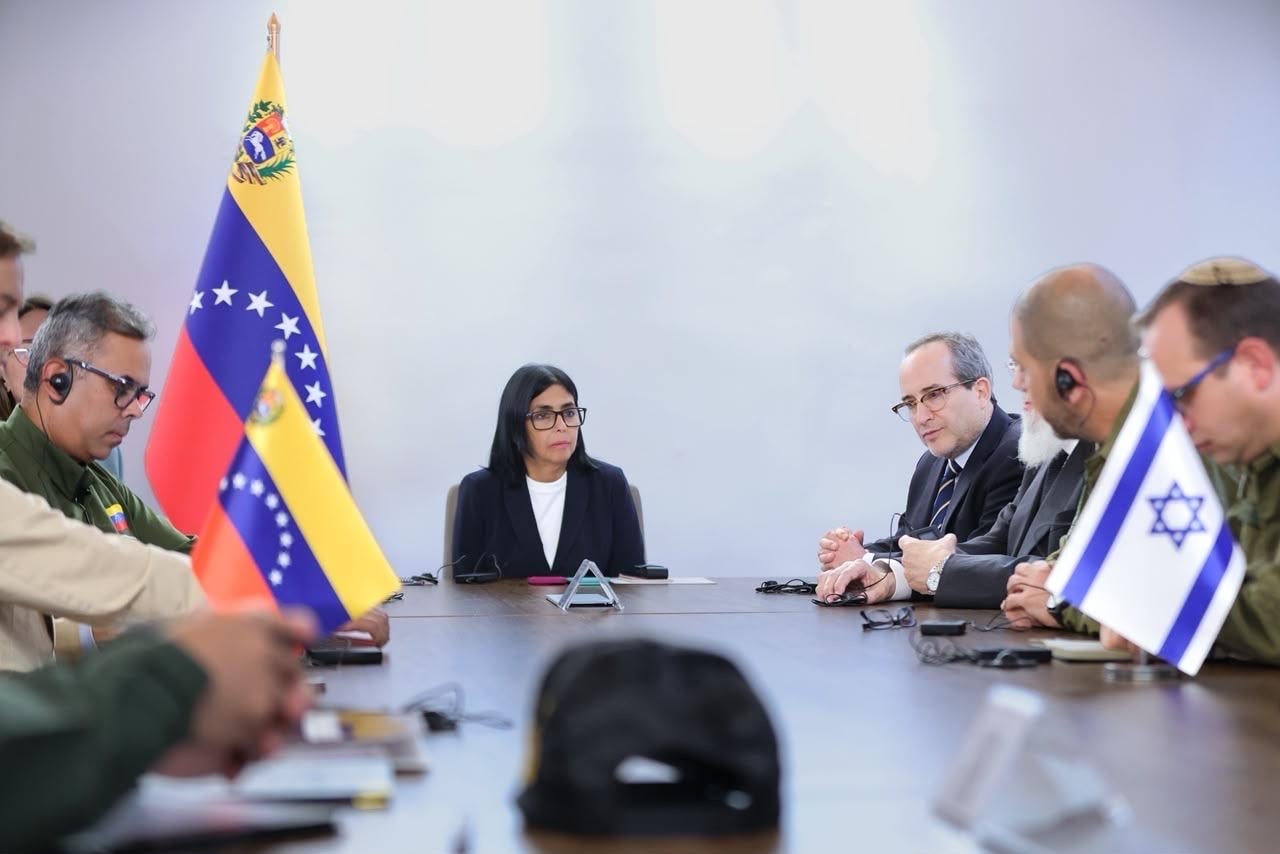
One of Israel's most notable gains in Latin America is the end of a diplomatic rift with Venezuela that had lasted over 17 years. This week, the foreign ministries of both nations unexpectedly announced an agreement to resume consular relations and establish a mechanism for providing consular services to their respective citizens.
In a report on this significant political development, the Israeli newspaper Haaretz noted that while the move does not amount to a full restoration of diplomatic relations—which have been severed since 2009—it does establish an official channel for coordination between Tel Aviv and Caracas.
It emphasized that the improvement in ties with Venezuela is part of a broader shift in Israel's relations with several Latin American nations.
Right-wing governments in countries such as Chile, Bolivia, and Honduras have taken steps in recent months to strengthen ties with "Israel".
This move follows a series of recent developments in Israel's relations with Latin American countries, most notably Colombia’s recognition on August 10 of Israeli sovereignty over the occupied Syrian Golan Heights.
"Israel" has also recently signed a free trade agreement with Costa Rica and is negotiating a similar deal with Ecuador.
Additionally, a direct flight route between Tel Aviv and Buenos Aires is scheduled to launch this coming November.
Haaretz notes that Venezuela recognized "Israel" in 1948 and maintained full diplomatic relations with the country for decades. However, the then-president, Hugo Chavez, severed ties and expelled Israeli diplomatic staff in 2009 in protest against Israel’s Operation Cast Lead in the Gaza Strip.
It noted that the foreign policy pursued by Chavez—characterized by anti-Americanism and a pro-Iran stance—kept relations with "Israel" frozen; although his successor, Nicolas Maduro, expressed a desire to restore ties in 2017, that initiative never materialized.
It pointed out that this agreement came just one day after Venezuela’s Chief Rabbi, Isaac Cohen, called on the country’s interim president, Delcy Rodriguez, to restore diplomatic and consular relations with "Israel".
The newspaper viewed this agreement as a significant shift in Venezuela’s foreign policy following years of close ties with Iran.
Since the United States adopted a stance opposing Venezuelan President Nicolas Maduro in January, Caracas has begun moving closer to Washington.
The two countries reached the agreement following talks held in recent weeks between Israeli Foreign Minister Gideon Sa'ar and Venezuelan Foreign Minister Felix Plasencia, as well as a visit by an Israeli humanitarian delegation to Venezuela after two earthquakes struck the country on June 24.
The Israeli delegation provided assistance to Venezuelan authorities in assessing earthquake damage and planning recovery efforts.
Both nations announced an agreement to continue bilateral technical cooperation stemming from the emergency response and recovery efforts following the two earthquakes.
A joint statement issued by "Israel" and Venezuela noted that both governments recognize the importance of the relationship between "Israel" and the Jewish community in Venezuela, describing the community as an important bridge for the historic friendship between the two countries.
Diplomatic Relations
Haaretz also addressed Colombia's recent stance, reporting in a headline that Colombia's new far-right government had recognized Israeli sovereignty over the occupied Syrian Golan Heights, describing Israel's control of the plateau as a fundamental element of its national defense and its ability to protect its citizens and ensure their security.
"Israel" had seized these strategic heights from Syria during the June 1967 war and effectively annexed them in 1981—a move that has not gained recognition from the majority of the international community.
Colombia is the second country to recognize Israel's claim of sovereignty over the Golan Heights, following the United States, which took this step in 2019.
This announcement comes amidst a warming of relations between "Israel" and Colombia under the latter's new right-wing government.
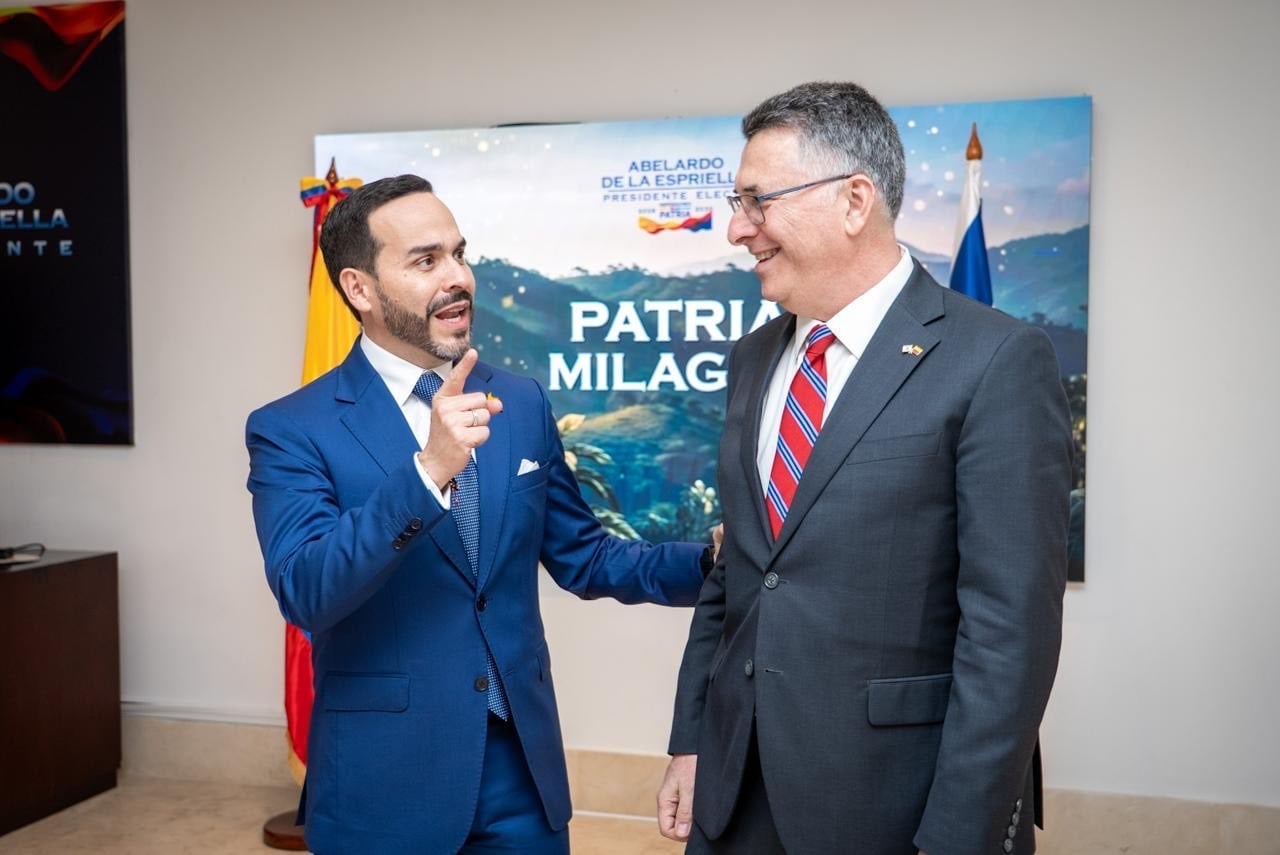
Israeli Foreign Minister Gideon Sa'ar met with the newly elected president, Abelardo de la Espriella—a figure backed by U.S. President Donald Trump and highly praised by ministers in Prime Minister Benjamin Netanyahu’s government.
Colombia's decision follows a series of significant developments in bilateral relations agreed upon during those meetings.
These developments include the full and immediate restoration of diplomatic relations between the two countries, the immediate appointment of ambassadors, the relocation of the Colombian embassy to Jerusalem, an agreement to waive visa requirements between the nations, and a return to the bilateral free trade agreement.
Additionally, the measures entail Colombia’s withdrawal from South Africa’s case against "Israel" at the International Court of Justice and from the Hague Group, as well as an agreement to deepen cooperation across diplomatic, security, and economic spheres.
The decision marks a sharp departure from the stance of the current Colombian president's predecessor, Gustavo Petro, who severed diplomatic ties with "Israel" in 2024—accusing it of committing genocide in Gaza, a charge "Israel" has denied—whereas De la Espriella had pledged to restore diplomatic relations with "Israel".
Sa'ar welcomed the decision, writing on X that the Colombian president had demonstrated leadership, values, and a commitment to "Israel" and its security.
He added that "Israel" is a small state lacking strategic depth and that he would continue working to have more countries... recognize Israel's sovereignty over the Golan.
Following de la Espriella’s narrow victory in June, Sa'ar congratulated him—in Spanish via the X platform—on the impressive win.
He expressed hope that the election would revitalize relations between the two nations, invited de la Espriella to visit "Israel", and stated he looked forward to welcoming him to Jerusalem soon.
The newspaper noted that de la Espriella is the latest addition to a list of right-wing leaders who have recently come to power in Latin America and shifted their countries' stances toward "Israel"—a trend seen previously in Chile, Bolivia, and Honduras.
In Argentina, President Javier Milei is also a staunch supporter of "Israel" and has pledged to move the embassy to Jerusalem.
However, this move has not yet been implemented, amidst reports of a dispute regarding plans by an Israeli company to conduct exploration activities in the British-administered Falkland Islands—territory claimed by Argentina, which refers to them as the Malvinas.
Israeli Influence
Governments in countries such as Argentina, Paraguay, and Guatemala have long expressed strong support for "Israel" and a commitment to bolstering the security of Jewish institutions.
However, these positions stand in contrast to the complex sentiments and polarization surrounding the Israeli-Palestinian conflict across Latin America—a reality that is also reflected in Israeli analytical discourse.
While a November 2024 declaration by Latin American nations emphasized combating antisemitism, pro-Palestinian leftist governments in countries such as Brazil, Colombia, Chile, and Bolivia have taken a strongly critical stance toward Israeli policies.
Leaders such as Brazilian President Lula da Silva and outgoing Colombian President Gustavo Petro have characterized Israeli actions in Gaza as violations of international law and acts of genocide.
The Times of Israel reports that the prevailing trend in Latin America is shifting toward greater criticism of "Israel", particularly in the wake of the recent conflict in Gaza.
However, the growth of the evangelical movement in certain countries could bolster support for "Israel" in the future.
"Israel" is actively supporting this movement to encourage the relocation of foreign embassies to Jerusalem.
In the wake of the genocidal war waged by the Israeli military against Palestinians in Gaza, several Latin American nations—specifically Chile, Colombia, and Honduras—recalled their ambassadors and diplomats from Tel Aviv.
Bolivia went a step further in 2023 by severing diplomatic ties with "Israel" for the second time—having previously taken the same step in 2009 before later resuming relations—thereby joining Venezuela, which cut ties in 2009, and Cuba, which ended them in 1973.
Historically, the divergence of views in Latin America regarding "Israel" is nothing new; it dates back to the state's founding in 1947.
At that time, positions were split: 12 countries supported the partition plan, five abstained, and Cuba was the only nation to vote against Resolution 181. However, by 1949, all countries in the region had recognized "Israel".

Despite intensive efforts to bolster Israeli influence—whether diplomatically or through arms deals—within Latin America, the Palestinian cause retains a strong hold on the public consciousness and opinion in several countries.
Palestinian flags are frequently raised in the streets in protest against the policies of Israel's right-wing government.
To date, Palestine is recognized by 19 Latin American nations, with the exceptions of Mexico and Panama.
Many of these countries maintain consulates in Palestine—mostly in Ramallah—and the region is home to large Palestinian communities estimated at around 800,000 people.
These communities are bolstered by broader Arab populations, particularly those of Syrian and Lebanese descent, helping to sustain the momentum of the Palestinian cause across the region.
Political analyst Ismail Maslamani believes that what "Israel" is seeking here goes beyond mere normal diplomatic relations; it aims to alleviate the isolation that deepened following the war on Gaza and to garner greater support for its position on sensitive political and legal issues—whether regarding Jerusalem and the Golan, or within international forums and cases filed against it.
In a statement to Al-Estiklal, he notes that a primary objective of the Netanyahu government's current diplomatic push in Latin America is to persuade these nations to move their embassies to Jerusalem—following the initial move by the United States in 2018, which was subsequently mirrored by Guatemala, Honduras, and Paraguay.
He adds that Tel Aviv also seeks to expand its economic footprint, noting that the volume of trade with the region reached approximately $6 billion in 2022, while arms sales totaled $381 million that same year.
Mr. Maslamani concludes that, thus far, this Israeli spring appears confined to diplomatic relations rather than extending to the general public; while Tel Aviv seems to have secured government support, agreements, and political stances that were previously out of reach, it has not yet won over the Latin American people.
Sources
- Israel and Venezuela Agree to Renew Consular Ties After 17-year Diplomatic Break
- Colombia Reopens Door to Israel after Petro Severed Ties over Gaza Genocide
- Israeli FM Sa'ar beings South America visit to strengthen regional ties
- Argentine leader Milei launches initiative to boost Israel-Latin America ties
- Why is Latin America becoming a breeding ground for 'fanatics of Israel'?
- A Latin American Turning Point: Javier Milei’s Moral Clarity and Israel’s Global Moment
- Israel and Latin American Christian Zionists seek to promote Isaac Accords