Broad ‘Terrorism’ Designations: How the U.S. And Europe Are Criminalizing Humanitarian Aid Work in Gaza
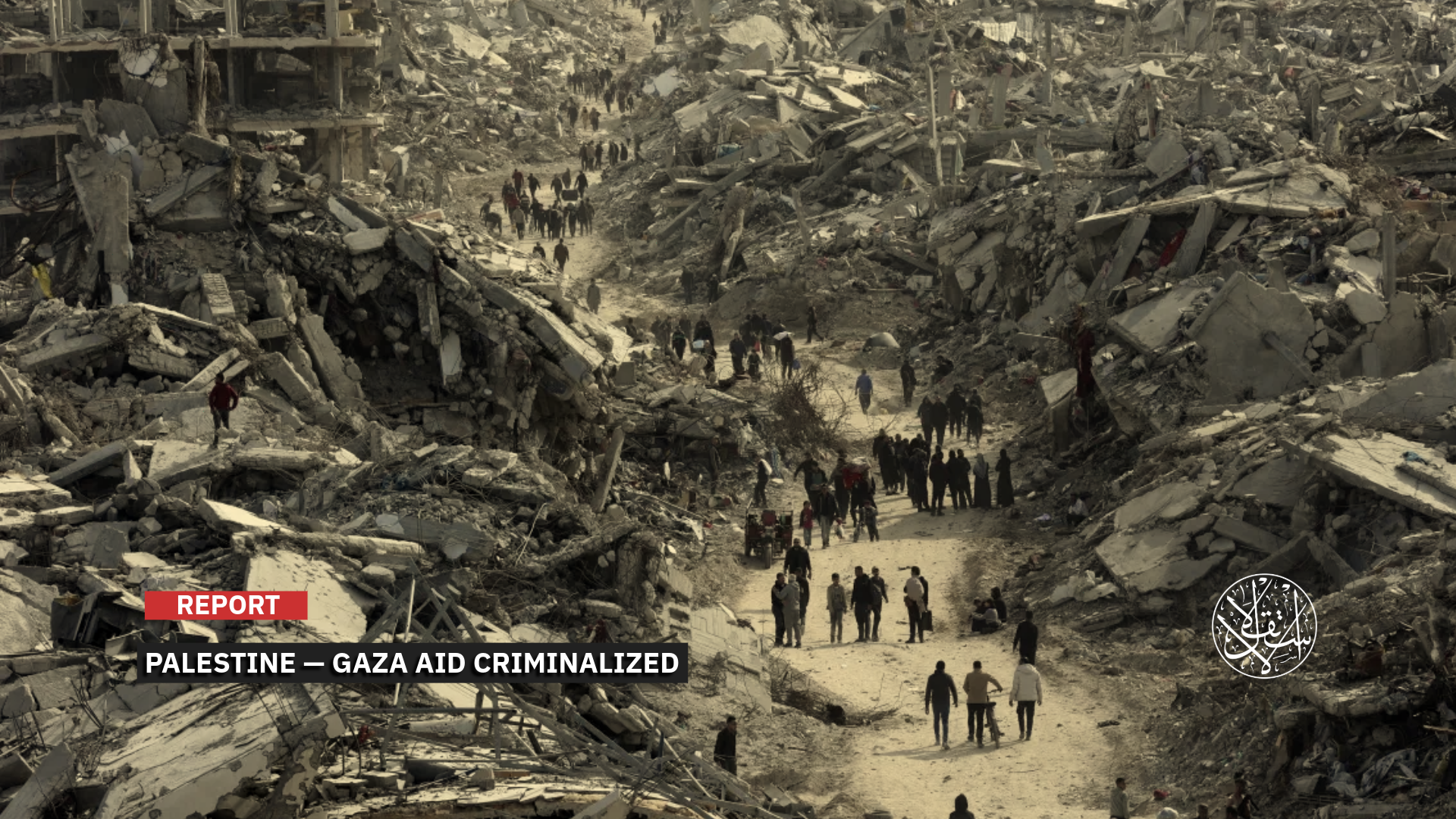
Israeli and American case files recast humanitarian aid work as incriminating evidence.
The case of Palestinian-Turkish national Mohammad Yousef Hasna places humanitarian aid work connected to Gaza before one of the most dangerous dilemmas created by what are known as Western “counterterrorism” laws.
The nature of operating inside a besieged territory requires aid organizations to transfer funds, bring in food and medicine, operate warehouses, prepare lists of beneficiaries, and coordinate with existing institutions to ensure that assistance reaches those in need.
However, Israeli and American files turn these procedures into incriminating evidence when they interpret the necessary communication with the authorities managing the territory as providing services to the Islamic Resistance Movement Hamas or as enabling it to direct the distribution of aid.

Similar Accusations
The U.S. Department of Justice announced on July 31, 2026, the arrest of Muhammad Hasna, a Gaza-born Palestinian-Turkish national, in Britain pending his extradition and trial in the United States.
It described him as the global director of the “Sham Charity,” an organization registered in the United Kingdom that operates in the field of international humanitarian relief.
The U.S. complaint accuses Hasna of managing operations to bring money, goods, and trucks into Gaza, using warehouses, dealing with distribution entities, and maintaining beneficiary lists.
He was charged with three counts, including conspiracy to provide “material support” to Hamas and financing terrorist activities under provisions of U.S. law.
The FBI relied in its complaint on voice messages, text messages, and documents exchanged through an encrypted application, as well as financial records, photographs, videos, and account books.
Prosecutors allege that Hasna communicated with Hamas official Ghazi Hamad regarding funds, the purchase of goods, warehouses, and distribution routes.
Part of the investigation relies on an FBI agent’s interpretation of conversations and terminology, while the affidavit described some Arabic translations as drafts subject to review.
The materials were presented to the court to establish “probable cause” allowing Hasna’s arrest and prosecution, before being tested in a public trial and through questioning of the evidence’s sources.
So far, the case remains at the allegation stage. The Justice Department has affirmed Hasna’s presumption of innocence and thanked Israeli security authorities and British authorities for their assistance in the investigation.
About two months before Hasna’s arrest, the trial of Amin Abu Rashid, a Dutch-Palestinian activist and a leading figure in Palestine-support and humanitarian organizations in Europe, highlighted the gap between security allegations and what can be proven in court.
Dutch prosecutors accused him of transferring more than eight million euros to Hamas between 2010 and 2023 through several fundraising organizations, most notably the al-Israa Foundation.
The prosecution claimed that al-Israa and other entities were used to continue the activities of the al-Aqsa Foundation, which had been banned by Dutch authorities, and that the recipients of the funds were subject to Hamas control. Abu Rashid was also accused of concealing his role from Rabobank and circumventing sanctions.
In June 2025, the U.S. Treasury Department placed Abu Rashid, his daughter, and the al-Israa Foundation on its sanctions list, describing them as part of a network that collected funds for Hamas through front organizations.
The Dutch prosecution relied heavily on an expert report that drew on media sources and U.S. and Israeli reports to link the beneficiary organizations to Hamas.
The Rotterdam court treated the conclusions cautiously, noting that they could have been influenced by political positions, and requested specific evidence proving that the organizations were controlled by the movement and that Abu Rashid knew of this.
The court established that funds had been collected and sent to Gaza, but the beneficiary organizations remained outside Dutch and European sanctions lists. The prosecution did not provide evidence proving that Hamas controlled those organizations or that Abu Rashid knew the funds reached the movement.
The court found that the fact that relatives of Hamas members or people killed in connection with Hamas benefited from social assistance did not prove that the organization itself had been funded, given that these individuals and their families live alongside the wider population in a society where Hamas has administered institutions for years.
On May 27, 2026, the court acquitted Abu Rashid of financing Hamas, concluding that his primary objective was to provide humanitarian aid. However, the U.S. financial designation remained in place despite the collapse of the charge in the Dutch judicial system.
A similar pattern had previously appeared in the case of Interpal, whose legal name is the Palestinian Relief and Development Fund, a British charity that provides aid to Palestinians in the occupied territories, Jordan, and Lebanon through local partners.
The U.S. Treasury Department designated the charity as a “terrorist entity” in August 2003, accusing it of concealing the flow of funds to Hamas and coordinating a fundraising network, based on reports whose details were not publicly released.
Meanwhile, the Charity Commission for England and Wales temporarily froze the charity’s accounts and requested that Washington provide its evidence.
The deadline passed without any proof that Interpal was linked to Hamas’s political or military activities, and the Charity Commission closed the investigation and lifted the freeze.
The commission reopened the file between 2006 and 2009 to examine the charity’s funds, its partners, and its relationship with the Union of Good.
It was unable to verify allegations relating to Hamas financing, but ordered the charity to sever its ties with the coalition and review its mechanisms for selecting partners and beneficiaries.
In 2012, the commission confirmed that Interpal had complied with these requirements, while the U.S. designation continued to affect the charity’s reputation and its ability to conduct banking transactions.
As for Mohammad el-Halabi, the Gaza operations manager for World Vision, he was arrested by Israeli authorities on June 15, 2016, and later accused of being affiliated with Hamas and diverting funds, materials, and humanitarian projects to the group.
Israeli authorities alleged that $50 million had been diverted, while the organization stated that its entire Gaza budget over the previous decade had amounted to about $22.5 million.
It also said that el-Halabi had assumed management of operations in October 2014, and that the individual signing authority available to someone at his administrative level was limited to $15,000.
World Vision suspended its Gaza operations and commissioned an external party to conduct a forensic financial investigation and audit of its records.
The review was completed in July 2017 and concluded that there was no evidence of funds being diverted or of el-Halabi’s membership in Hamas or working on its behalf.
The Israeli Justice Ministry stated that prosecutors had disclosed their evidence to the defense, while parts of the materials and hearings remained confidential on the grounds of national security.
The closure of proceedings and the classification of evidence prevented the public and independent reviewers from seeing the full basis on which the court reached its decision.
After detention and trial lasting nearly six years, the Beersheba District Court convicted el-Halabi in June 2022 and sentenced him in August 2022 to 12 years in prison.
In September 2023, UN experts said the trial was marked by serious violations of fair-trial guarantees and called for a review of the verdict.
El-Halabi was released in February 2025 as part of a prisoner and detainee exchange agreement, after spending nearly nine years in detention and on trial, while the alleged diversion of funds remained unsupported by evidence.
Broad Laws
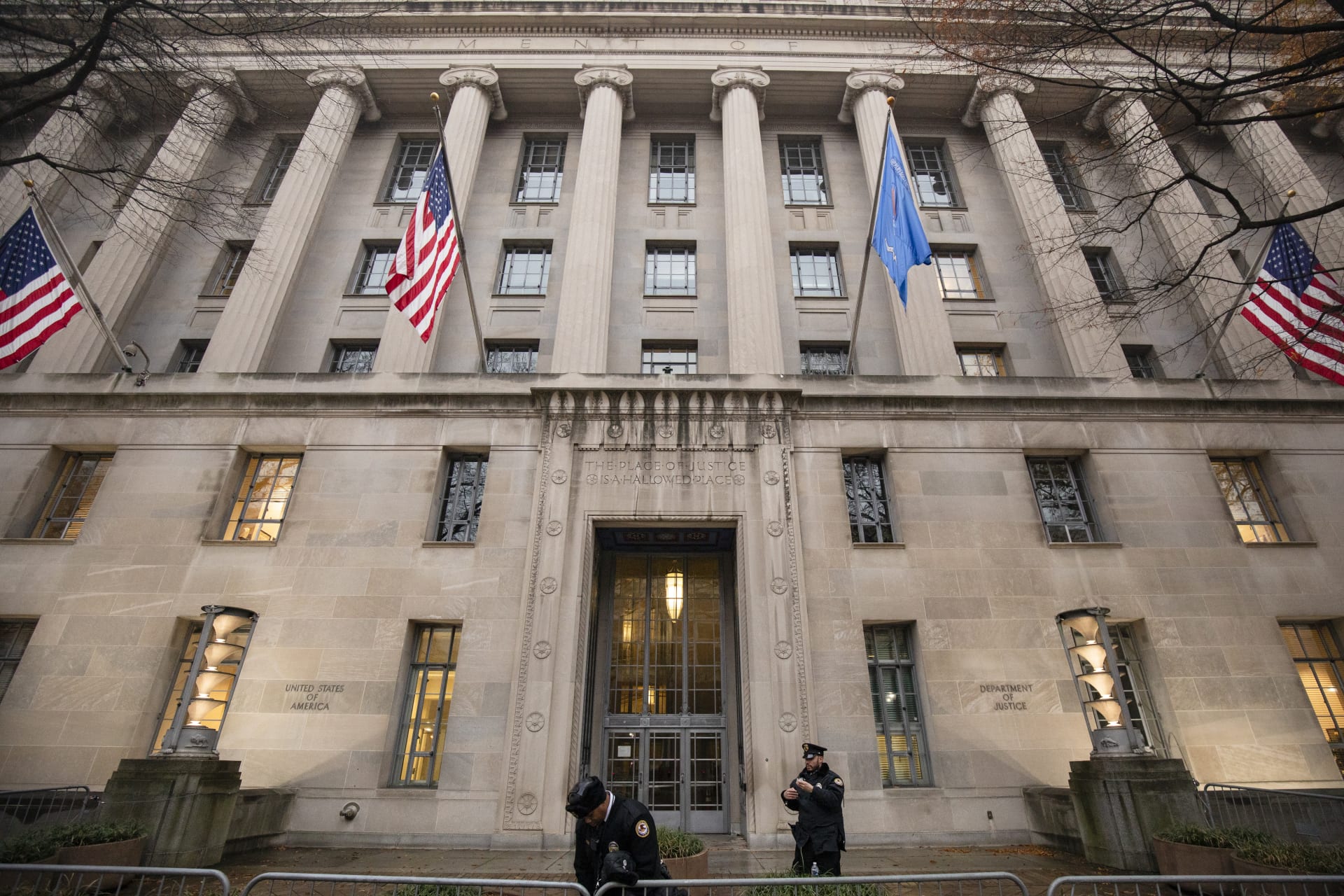
U.S. laws give authorities broad latitude to include civilian and logistical services within the concept of “material support.”
Sections 2339A, 2339B, and 2339C of the U.S. criminal code cover funds, financial services, training, expert advice or assistance, facilities, communications equipment, personnel, and transportation.
Section 2339A links material support to the preparation for, or commission of, specific terrorist crimes, while requiring intent or knowledge that the support will be used for those purposes.
Section 2339B criminalizes providing funds, resources, or services to an organization designated as a “foreign terrorist organization” when the provider knows of the designation or the organization’s alleged activities.
Section 2339C targets the collection or provision of funds with the intent or knowledge that they will be used for a “terrorist” act.
Section 2339B allows a case to be built by proving that a resource or service was provided to, or coordinated with, a designated organization, without tracing every dollar to a specific military operation.
This is why the Hasna complaint combined allegations of providing support to Hamas with charges related to knowledge or intent that the funds would be used in “terrorist acts.”
The U.S. Supreme Court expanded this interpretation in 2010, when it upheld the criminalization of peaceful training or legal advice provided in coordination with a designated organization.
This interpretation affects the details of humanitarian work in Gaza, where bringing in trucks, operating warehouses, and distributing food require coordination of routes with Hamas, which administers the territory.
U.S. prosecutors may classify these activities as services, transportation, or resources provided to a designated organization if they determine that Hamas directed them or controlled their implementation.
The legal exception related to medicine applies only to the medical supplies themselves, while surrounding services such as storage, transportation, and administration remain subject to the concept of material support.
The problem is amplified in Gaza because Hamas administers ministries, municipalities, civil institutions, and access procedures, requiring humanitarian workers to communicate with permit authorities, ministries, municipalities, social institutions, and security bodies that exercise control on the ground.
Alongside criminal prosecutions, the Office of Foreign Assets Control (OFAC) at the U.S. Treasury Department uses Executive Order 13224 to designate individuals and organizations for sanctions.
These measures freeze assets subject to U.S. jurisdiction and prohibit transactions through an executive action that can occur before any criminal trial.
Washington applied this approach to Interpal in 2003, and later to Abu Rashid, his daughter, and the al-Israa Foundation in June 2025.
The effects extend beyond the United States because of the central role of the dollar and U.S. correspondent banking networks; a European bank may refuse a transfer or close a charity’s account to avoid potential risks and sanctions.
In Britain, Sections 15 through 18 of the Terrorism Act 2000 criminalize fundraising, using, possessing, or entering into arrangements that make funds available for purposes classified by authorities as terrorist activities.
Some provisions use a standard of knowledge or having “reasonable cause to suspect,” allowing investigations into transfers and activities that took place outside the United Kingdom.
Britain expanded the scope of its ban on November 26, 2021, when it designated Hamas in both its political and military forms as a prohibited organization, after the ban since 2001 had applied only to the Izz al-Din al-Qassam Brigades.
The decision placed civilian and political institutions that London links to the movement within a broader sphere of legal risk.
The UK Crown Prosecution Service, in its guidance concerning humanitarian work, development, and peacebuilding overseas, acknowledges that charities may need to communicate with members of prohibited organizations, conduct transactions within local economies, and negotiate with de facto authorities that control access to people in need.
The guidance takes into account the humanitarian purpose of such contact, due diligence procedures, proportionality, and the public interest, while leaving decisions on prosecution to prosecutors.
The law also allows organizations to seek prior authorization for certain transactions or make rapid disclosures, procedures that may delay transfers during humanitarian crises.
The European Union’s Directive 2017/541 requires member states to criminalize providing or collecting funds with the intent or knowledge that they will be used, wholly or partly, to commit terrorist offenses.
Article 11 clarifies that a financing charge may arise even before the funds are actually used, and without knowledge of the specific “terrorist” operation for which they will be directed, provided that intent or knowledge is established under the laws of each member state.
The EU also operates a system for freezing the assets of listed individuals and entities under Regulation 2580/2001, prohibiting the direct or indirect provision of economic resources to them.
European frameworks include humanitarian licenses and exemptions intended to protect essential aid, but the execution of transfers remains dependent on banks’ willingness to accept the associated risks.
The Financial Action Task Force (FATF), which sets international standards on combating money laundering and terrorist financing, has acknowledged that excessive enforcement of these rules can sever banking relationships with charities and exclude them from the financial system.
The FATF amended Recommendation 8 in 2023 to emphasize proportionate and risk-based measures, and reinforced in 2026 that its standards do not call for closing accounts across entire sectors or disrupting legitimate humanitarian assistance.
The International Committee of the Red Cross (ICRC) has also warned of a “chilling effect” created by counterterrorism laws, sanctions, funding conditions, and banks’ refusal to process transactions.
This effect affects negotiations for access, the repair of water networks, the delivery of medical care, the training of parties to conflicts in international humanitarian law, and facilitating prisoner exchanges, tasks that require communication with authorities and actors controlling territory on the ground.
What Is ‘Israel’s’ Role?
Israeli authorities played varying roles in the four cases. They arrested, investigated, and prosecuted el-Halabi, while Israeli security agencies assisted in the U.S. investigation into Hasna.
Israeli reports also entered the Abu Rashid case through the expert consulted by the Dutch prosecution, while allegations concerning links between Palestinian charities and Hamas contributed to the designations and investigations targeting Interpal.
The process begins with the production of security intelligence linking a charity, employee, or local partner to Hamas, then moves to a Western authority that transforms it into a criminal complaint, sanctions decision, or regulatory investigation.
After the information reaches Western institutions, it may become a financial designation imposed by the U.S. Treasury Department, or be incorporated into a criminal complaint prepared by the FBI. It may also be adopted by European prosecutors and regulatory bodies as a basis for investigations and account freezes.
When the information moves between institutions, it acquires a new layer of institutional legitimacy. An Israeli report may appear in a U.S. statement, and then a European expert may cite that statement as an additional source, even though both materials trace back to the same security source.
This pattern appeared in the Abu Rashid case, when the Rotterdam court found that the expert report was based on news reports, government reports, and American and Israeli information.
The court demanded direct evidence proving Hamas’s control over the beneficiary organizations and the defendant’s knowledge of that control.
Secret evidence gives accusing authorities additional latitude. A charity may submit its accounts, records, and beneficiary lists, while finding it difficult to respond to information withheld from the public or whose source is unknown.
This was particularly evident in el-Halabi’s trial, where the Israeli court relied on classified materials, while an independent financial investigation examined the organization’s records and found no evidence of funds being diverted.
The nature of social and administrative life in Gaza also allows necessary civilian relationships to be recast as security suspicions.
Charities operate through existing institutions and municipalities and rely on local databases to reach families in need. Aid may also reach people with family ties to Hamas members. Security reports reinterpret these realities as indicators that Hamas controls the funds.
Security reports portray these connections as evidence of Hamas’s control over the money, while the Rotterdam court rejected that conclusion in the Abu Rashid case in the absence of specific evidence proving control and knowledge.
The consequences of an accusation begin before any verdict is issued. World Vision suspended its operations in Gaza following el-Halabi’s arrest, and the Australian Foreign Ministry suspended the organization’s participation in Palestinian programs for years, despite the organization’s announcement in July 2017 that a financial investigation had found no evidence supporting the alleged diversion of funds.
Following October 7, 2023, the European Commission subjected aid provided to Palestinians to a broad review on the grounds of preventing funds from reaching entities classified as “terrorist” organizations.
The review concluded that there was no evidence of funds being diverted from their intended purposes, after an entire system of aid programs and partners had been placed under suspicion.
This environment pushes banks and donors to suspend funding at an early stage, because maintaining the relationship requires complex legal and financial risk assessments, while ending it is presented as a precautionary measure.
A U.S. designation can therefore become the reason for a European bank to reject a transfer, for a donor organization to freeze a project, or for a person to be arrested in Britain at Washington’s request.
Through this process, “Israel” extends its security framework beyond the occupied territories, Washington gives Israeli reports the force of sanctions and extraterritorial jurisdiction, while British and European laws place charities under the pressure of suspicion and compliance requirements.
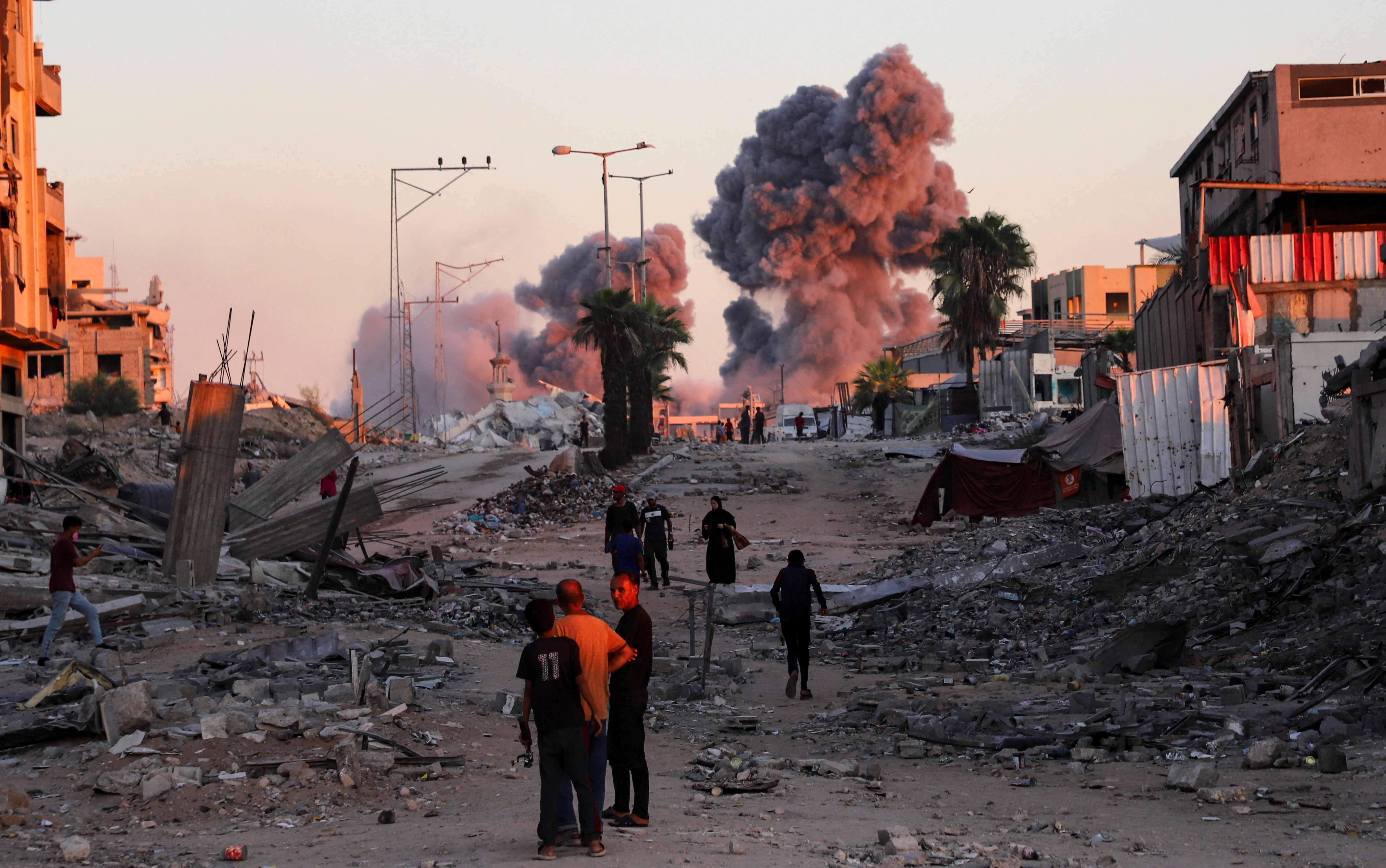
The blockade imposed on Gaza thus becomes a form of financial and legal suffocation targeting those attempting to bring money, food, and medicine into the territory.
Amid war and blockade, the very requirements of humanitarian access become grounds for prosecution. Delivering aid requires transfers, storage, distribution, and coordination, steps that are then recharacterized by the Israeli and Western systems as “material support.”
And when accusations falter or collapse after years of litigation, their effects have already taken place: relief projects have been halted, funding cut off, accounts closed, and aid workers arrested before the case ever reaches a judicial conclusion.
Palestinian journalist Abeer Ayyoub said, “What is striking is that the arrests currently taking place are related to money transfers sent to the Gaza Strip one or two years ago, and that these measures target people who originate from the Strip and who can have charges attached to them (easily).”
In a video posted on Instagram, she added that “this is part of a larger picture; users of the American PayPal application in Gaza were surprised when their accounts were suspended after they were asked to verify their accounts and submit identification documents.”
She continued that “transferring money to Gaza has become almost impossible from Europe, the Gulf countries, and also the West Bank, and we can expect to see an increase in similar cases targeting Palestinians in the Gaza Strip under this accusation.”