Who Benefits from the Bombing of LNG Ships at Egypt's Damietta Port: ‘Israel’ or Iran?
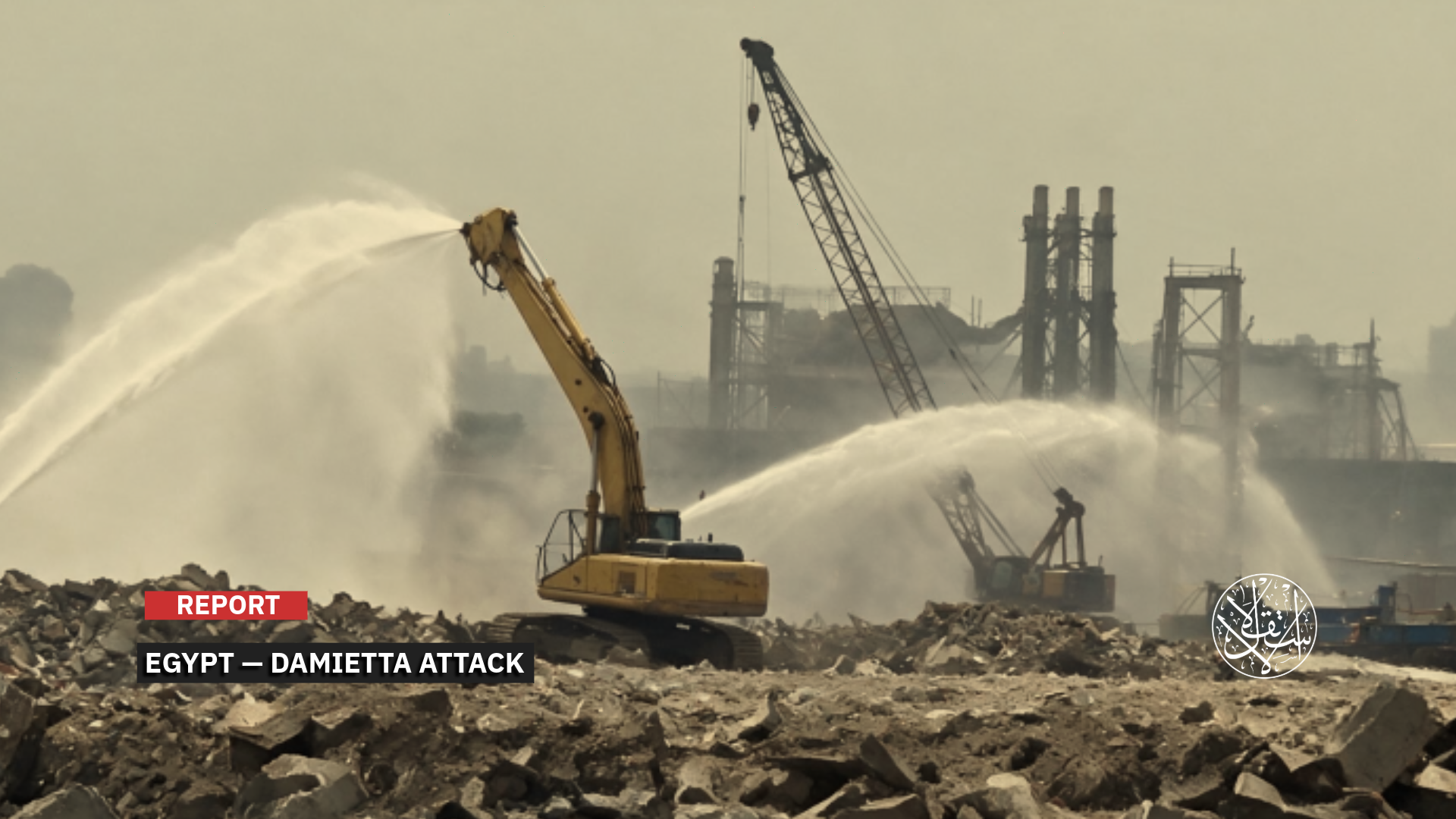
Other Egyptian assessments suggested that the attack may have been launched from a vessel in the Mediterranean Sea, rather than from the territory of any specific state.
The delay by Egyptian authorities in revealing the truth about the attack that targeted the U.S. liquefied natural gas (LNG) unit “Energos Winter” and spread to the Greek storage unit “GasLog Salem” at Damietta Port on July 29, 2026, followed by the Cabinet’s acknowledgment the next day that the incident was caused by a drone attack, raised widespread questions over the reasons behind the delay in disclosing the nature of the attack and the party responsible for it.
The British maritime security company Ambrey, along with Kpler, a firm specializing in tracking shipping and energy movements, had already reported that the U.S. vessel at Damietta Port was struck by a drone, causing it to become inoperable, before the fire spread to the nearby Greek vessel.
This meant that details of the incident had become publicly known before Egyptian authorities were compelled to officially confirm them.
Egyptian analysts, speaking to Al-Estiklal newspaper, attributed the delay to several factors.
The first was the embarrassment the incident caused for Egyptian authorities. The attack came just 25 days after Egyptian President Abdel Fattah el-Sisi inaugurated the “Octagon” military headquarters on July 4, 2026, which had been promoted as a fortress designed to protect the country from various threats, particularly amid displays of air-defense systems and their capabilities in countering drone threats.
The second reason, according to analysts, was linked to Egyptian leadership’s efforts to communicate with several countries that possess advanced satellite surveillance and regional monitoring capabilities.
The aim was to track the drone’s flight path, determine its launch point, and identify the party potentially responsible for the attack before issuing any official statement or deciding on the nature of a response.
However, the slow arrival of information, combined with the seriousness of the incident and growing domestic pressure caused by the absence of an official account, pushed authorities to quickly announce that the attack had been carried out by a drone, while leaving key questions unanswered: Where was it launched from? Who was behind it? And how would Egypt respond?
With no definitive official account, experts, analysts, politicians, and media outlets put forward multiple theories. These ranged from blaming Iran or its allies, to “Israel” and possibly Ukraine, as well as the possibility that the perpetrators were based inside Egypt.
Some Egyptian social media users even suggested that the drone may have been launched from the rooftop of a building in Damietta.
Other Egyptian assessments suggested that the attack may have been carried out from a vessel in the Mediterranean Sea rather than launched from the territory of any particular country, or by individuals operating from within Egypt.
This possibility was hinted at by pro-government journalist Ashraf Abu al-Hol in response to a question on his Facebook account about why air-defense systems did not intercept the attack.
Despite the range of scenarios, most of the assessments circulated by Egyptian politicians, diplomats, and security experts focused on the view that “Israel” was the primary beneficiary of the attack on Damietta Port, based on strategic and political considerations.
The main argument behind this interpretation was that “Israel” was seeking, according to these assessments, to expand the scope of its confrontation with Iran by drawing Arab countries into becoming directly involved in the conflict, a goal that supporters of this view believe the United Arab Emirates also shares with “Israel”.

Who Benefits?
The drone attack on Damietta Port, which targeted the U.S. gas storage unit “Energos Winter” and affected the Greek vessel “GasLog Salem,” raised questions about which party has the capability to bring the war into Egyptian territory, and what motives might lead it to benefit from such an attack.
According to assessments by a number of experts and analysts, targeting Egypt’s energy facilities could achieve several outcomes that may help identify the party most likely to benefit.
These include expanding the scope of the war to involve countries that were not previously direct parties to the confrontation, increasing economic pressure on Egypt amid its growing reliance on gas imports during peak periods, raising the costs of gas exports and imports in the Eastern Mediterranean, and disrupting the region’s energy security system.
Therefore, the main question in Egyptian circles, following confirmation that a drone had targeted gas vessels at Damietta Port, focused on identifying the party that would benefit from expanding the regional conflict to include Egypt, as well as the scenarios and objectives it might seek to achieve through such an escalation.
These questions emerged amid the intensifying military confrontation between the United States and Iran, Saudi Arabia’s involvement in military operations against Iran-aligned factions in Iraq, and previous attempts to draw other countries, such as Iraq, Bahrain, and Kuwait, into the conflict through drone attacks that Iran denied responsibility for and that were blamed by some on “Israel”.
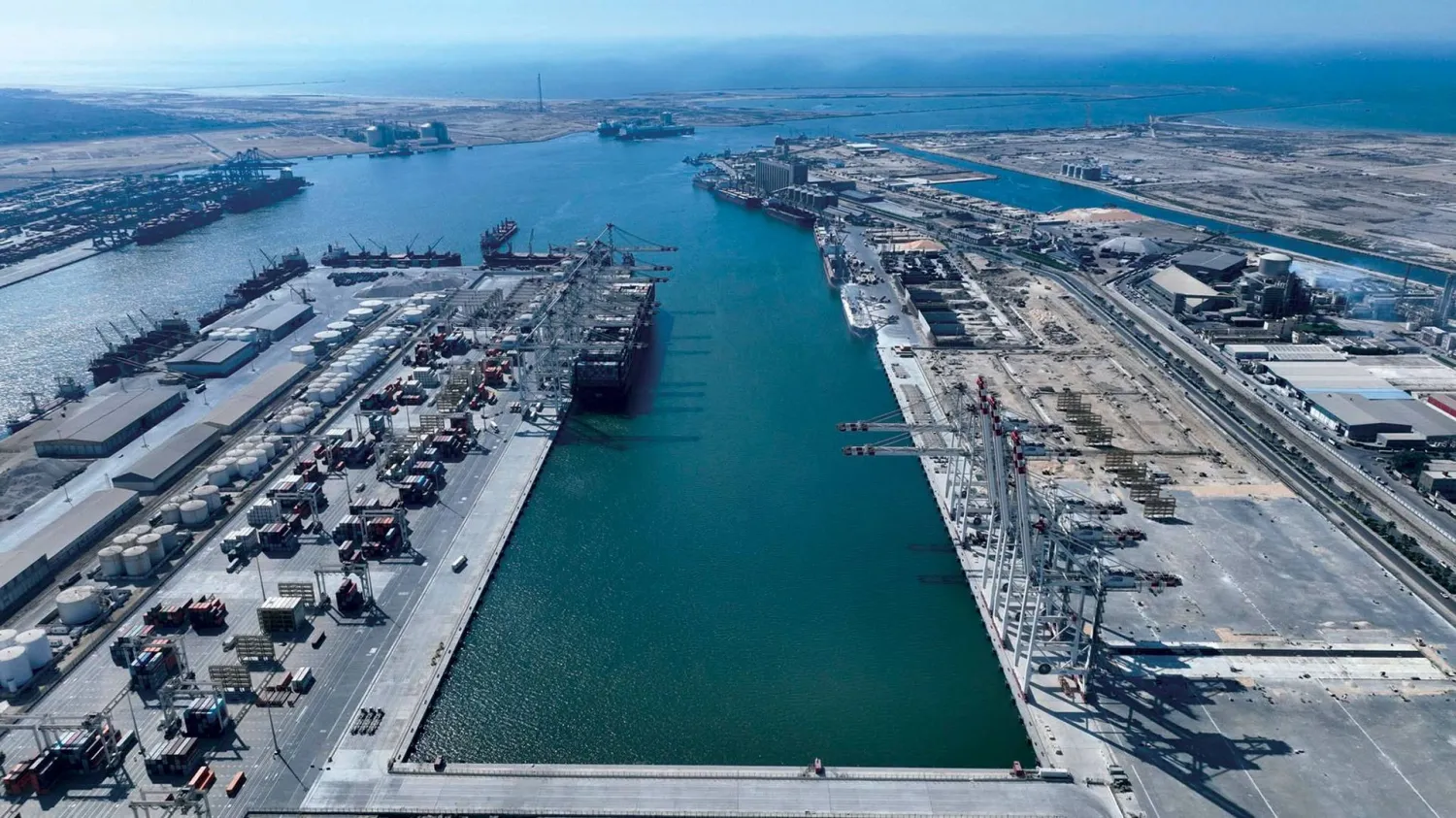
This question is particularly significant because Damietta Port is not merely a commercial port, but also one of the most important hubs for receiving, liquefying, and exporting natural gas in the Eastern Mediterranean.
It also houses floating units for gas storage and regasification, which Egypt increasingly relies on to offset declining domestic production and meet rising demand, especially during the summer months.
Therefore, the impact of targeting this port is not limited to Egypt alone. It poses a threat to Egyptian energy security, affects the broader regional energy security framework, and could disrupt gas supply chains to European markets. This gives the attack implications that extend beyond the immediate damage, with wider geopolitical and economic consequences.
Iran and Its Allies
In the context of the attack on Damietta Port, some analysts have raised the possibility that Iran or one of its allies may have been behind the operation as one of the potential scenarios.
From a military perspective, targeting gas facilities could fall within a strategy of expanding the arenas of retaliation against the United States and its allies, particularly if the targeted facilities contain American assets or interests.
Supporters of this view argue that targeting the gas vessel owned by a U.S. company inside Damietta Port could align with Iran’s interests amid the regional confrontation.
However, there is, so far, no publicly available evidence directly linking Tehran or any of its allies to the attack. No group has officially claimed responsibility, while Iran and the Houthi movement were quick to deny involvement.
In this context, The New York Times attempted to link the attack to Iran on July 29, 2026, when it cited two unnamed Iranian sources, believed to be from opposition circles rather than the Iranian government, who claimed that Tehran was behind the targeting of the U.S. vessel leased by Egypt.
The two sources, who requested anonymity, said that the explosion resulted from a drone attack and was intended to “demonstrate that Iran is capable of expanding disruptions to global shipping and energy supplies if it decides to escalate the conflict.”
However, the sources did not specify whether Iran itself or one of its allied groups carried out the attack, leaving the account within the framework of unconfirmed assessments.
In another development, the Israeli newspaper Yedioth Ahronoth reported on July 30, 2026, that Iranian state television had, just three days before the attack, identified Damietta Port as a potential target for retaliation against Ukrainian interests, following an unprecedented attack by Kyiv on an Iranian vessel in the Caspian Sea the previous weekend.
The newspaper said that Iranian television had displayed a map showing a number of potential targets in the Middle East and beyond under the headline, “What are Iran’s targets for revenge against Ukraine?” Damietta Port was among the locations highlighted.
The LNG facility there was described as having an annual production capacity of 5.2 million tonnes and as serving as a major gateway for gas exports to Europe.
In contrast, Iranian Foreign Minister Abbas Araghchi denied his country’s responsibility for the attack in Tehran’s first official comment on the Damietta incident.
Writing in both Arabic and English on his official account, Araghchi said, “Egypt is an important friend and partner in the region. Its security is of paramount importance to us, and we must all remain vigilant against Israeli schemes and ‘false flag’ operations aimed at undermining regional peace.” His remarks were a reference to what he described as an Israeli attempt to implicate Iran in the attack.
The Iranian Foreign Ministry also denied Tehran’s responsibility for targeting the floating gas storage unit at Damietta Port, stressing that there was no intention to carry out such an operation.
A source at the Iranian Foreign Ministry told Lebanon’s An-Nahar newspaper on July 30, 2026, that Iran “did not carry out this operation at all, and has no intention of undertaking such an act.” The source emphasized that relations between the Islamic Republic of Iran and the Arab Republic of Egypt, as well as between the Iranian and Egyptian peoples, are “deep-rooted and strong relations based on mutual respect and shared interests.”
Alongside the Iranian denial, a senior official source at the Houthi movement’s foreign ministry also denied that the group had targeted any vessel at Damietta Port. In a statement carried by the group’s Saba news agency, the source said that “the rumors claiming that Yemen targeted the vessel are false.”
Did ‘Israel’ Do It?
The majority of accusations raised by some analysts and experts have focused on “Israel”, based on the assumption that “Tel Aviv” and Washington have sought, since the outbreak of the confrontation with Iran, to increase pressure on Tehran by expanding the scope of the conflict and involving Arab countries in it. This, they argue, would broaden the regional support network and draw new actors into the war.
In this context, speculation has emerged on social media platforms and in some media outlets linking the attack to “Israel”, based on the argument that “Israel” would be the biggest beneficiary of expanding the regional confrontation or intensifying military and political pressure on Iran and its allies.
This hypothesis has been reinforced by previous reports claiming that “Israel” operates two secret bases in Iraq’s Anbar Desert, which were revealed by The New York Times and The Wall Street Journal in May 2026, before Iraqi officials confirmed their existence and said they had been used to carry out operations against Iran.
From this perspective, a theory emerged suggesting that “Israel” may have carried out the attack on Damietta Port from Iraqi territory, or from a nearby location, using a method designed to make it appear that Iran was responsible for the operation. According to this interpretation, the goal would be to draw Egypt into the confrontation by placing the blame on Tehran.
In the same context, an Egyptian economic expert, who requested anonymity, argued that Egypt’s growing number of gas regasification units, which have reached five so far, conflicts with Israeli interests because these facilities give Cairo greater ability to import liquefied natural gas (LNG) from global markets rather than relying on Israeli gas delivered directly through pipelines.
The expert explained that Egypt currently imports around 75 percent of its imported gas needs through pipelines coming from “Israel”, adding that an increase in the number of gas storage and regasification vessels and units would, in the future, provide Cairo with broader options to secure its energy needs from multiple sources. This would gradually reduce Egypt’s dependence on Israeli gas.
He noted that regasification units receive imported LNG and convert it back into a gaseous state before it is pumped into the national grid, giving Egypt greater flexibility in diversifying its energy sources.
In the same vein, energy expert and member of parliament from the Justice Party, Dr. Mohamed Fouad, said in a post on X that Egypt’s operational regasification units, although leased, are strategic assets directly linked to energy security and, more broadly, national security.
Fouad argued that targeting Damietta Port and gas vessels with a drone represents a direct threat to Egypt’s energy security and to one of the country’s most important strategic infrastructure assets.
He added that, from a technical perspective, “Israel” would be the primary beneficiary of damaging the regasification vessel. At the same time, he ruled out the likelihood that Iran or the Houthi movement carried out such an attack, arguing that expanding the conflict to include a country of Egypt’s size and importance would not serve their interests, especially since Egypt does not host U.S. military bases.
Supporters of this hypothesis believe that the attack had other objectives that would also serve Israeli interests.
According to this interpretation, targeting gas facilities at Damietta Port with a drone opens a potential new front in the U.S.-Iran confrontation and increases concerns over the security of navigation in the Suez Canal.
This could bring Egypt back under economic pressure, particularly amid the continued Houthi attacks in the Bab al-Mandab Strait and the resulting decline in vessel traffic through the canal, as reported by Reuters on July 30, 2026.
Furthermore, targeting an Egyptian port located near the Suez Canal highlights the vulnerability of one of the world’s most important maritime routes and underscores how international trade can be affected by rising tensions in the Middle East.
This was also noted by experts cited by The New York Times on July 30, 2026, who warned that an expansion of the conflict could lead to further disruptions in global trade.

False Flag Operation
A number of analysts and media figures have raised the possibility that the attack was a “false flag” operation, meaning an attack carried out in a way that makes it appear that a particular party is responsible, with the aim of provoking a certain reaction from its adversaries or justifying political or military escalation.
Supporters of this theory have cited what they describe as previous instances involving “Israel”, and sometimes Ukraine, in carrying out such operations, arguing that this keeps the possibility of their involvement in the Damietta attack open for discussion.
Iranian Foreign Minister Abbas Araghchi referred to this possibility, as did a source at the Iranian Foreign Ministry in comments to Lebanon’s An-Nahar newspaper on July 30, 2026. The source argued that “the Zionist entity has a long record of carrying out deception operations and psychological warfare, including what are known as false flag operations.”
The source added, “In recent months, Ukraine has also engaged in this type of false flag operation. The Iraqi national security adviser revealed the activities of elements linked to Ukraine in carrying out deception operations in the region, in cooperation with the Zionist entity, with the aim of expanding the scope of the war.”
The term “false flag” is used in politics, international relations, and intelligence to describe a covert operation carried out by one party that deliberately presents it as if it were conducted by another party, with the aim of misleading public opinion or justifying a political, military, or security response.
The term originates from naval warfare in the 18th and 19th centuries, when warships would raise the flags of other countries to deceive their opponents before an engagement, giving rise to the term “false flag.”
Such operations rely on concealing the identity of the actual perpetrator and attributing responsibility to another party through various methods, including the use of weapons or equipment associated with the party being blamed, leaving behind evidence or symbols suggesting its involvement, or carrying out the attack from a location or using methods consistent with its operational patterns. They may also exploit media uncertainty or delays in investigations to direct accusations before official findings emerge.
According to security literature, the purpose of such operations is to create conditions that justify launching a war or expanding an existing conflict, push a state or group into taking a reaction that serves the perpetrator’s interests, or draw neutral parties into the conflict.
Supporters of this theory cite several historical examples, most notably Operation Susannah in 1954, later known as the Lavon Affair, a covert Israeli operation carried out in Egypt that involved targeting Western facilities in an attempt to attribute responsibility to Egyptian actors, with the aim of damaging relations between Cairo and Western countries.
Iran had also previously warned Saudi Arabia on March 20, 2026, that “Israel” was planning a “false flag” attack targeting facilities belonging to the Saudi oil company Aramco, with the aim of blaming Tehran, according to Iran’s official news agency IRNA.
Despite the widespread discussion of this hypothesis, it remains, for now, within the realm of political and media analysis and speculation, with no publicly available evidence or official investigation findings proving that the Damietta attack was carried out according to this scenario.
Is the UAE Behind the Attack?
Posts on some social media platforms have linked the attack to the United Arab Emirates, based on what they describe as economic disputes and competition in the energy sector between Abu Dhabi and Cairo.
Supporters of this view argue, from an analysis of interests, that there may be an overlap between the UAE and “Israel’s” positions in what they describe as a plan aimed at drawing Arab countries, particularly Egypt and Saudi Arabia, into a direct confrontation with Iran.
They believe that any disruption affecting competing ports or energy facilities could benefit other hubs and ports in the region.
They further argue that the UAE, by supporting this approach, seeks to push Cairo and Riyadh into aligning with what they refer to as the “Abrahamic War”, thereby placing Arab countries in confrontation with Iran and its allied forces in the region.
Emirati accounts on social media platforms also circulated posts commenting on the attack with phrases such as “Iran has delivered the message,” suggesting that Tehran may have carried out the operation to demonstrate its ability to disrupt energy supplies and global shipping if the United States moves toward expanding the war against it.
In a related context, some analysts link the hypothesis of Emirati involvement, with Israeli support, to another possibility involving the potential use of Sudan’s Rapid Support Forces (RSF) militia to carry out such operations.
This assessment is based on previous reports claiming the existence of an RSF militia military base in Ethiopia, which was allegedly intended for operating drones that could be used to carry out attacks against targets inside Egypt.
Since tensions escalated between Cairo and the RSF militia, its commander, Mohamed Hamdan Dagalo, known as “Hemedti,” has made several statements accusing Egypt of supporting the Sudanese army and warning that continued support could lead to targeting Egyptian interests.
However, to date, there is no publicly available evidence linking either the RSF militia or the UAE to the attack targeting Damietta Port, leaving these hypotheses within the realm of unconfirmed analysis and speculation.
A Night of Speculation and Confusion
Egypt witnessed widespread confusion and speculation both before and after the Cabinet announced that a drone was responsible for the explosion and fire that targeted gas vessels at Damietta Port.
Some journalists circulated reports that the vessels had been attacked by a drone, based on information published by Reuters, but pro-government online networks launched a strong campaign against them and denied that account during the first hours after the incident.
The confusion also extended to some media figures close to the authorities. Journalists and commentators, including journalist and Member of Parliament Mostafa Bakry, published information attributed to security sources claiming that the vessels had been attacked by a drone, before later deleting their posts.
Meanwhile, analysts appearing on pro-government television channels suggested that a collision between vessels could have caused the fire, dismissing and criticizing those who supported the account reported by British maritime security company Ambrey that the port had been targeted in a drone attack.
The controversy was not limited to conflicting narratives; it also extended to disagreements among media figures aligned with the government. Journalist Amr Adeeb, who hosts his program on MBC Egypt, called for a firm Egyptian response, arguing that identifying the party that launched the drone should not be difficult.
In contrast, journalist Nashaat Eldeehy criticized Adeeb, describing his call as a “reckless approach.” He argued that what Adeeb was advocating served the interests of parties seeking to drag Egypt into the regional conflict and turn it into a direct participant in the ongoing war.
Eldeehy added that Egypt should learn from the “wisdom of the leaders of brotherly Gulf states,” which he said had set an example through restraint, prioritizing prudence, and avoiding being drawn into what he described as a direct war with Iran.
His remarks also sparked mixed reactions. Critics viewed them as reflecting a tendency to avoid any military response, while some believed Cairo would focus on containing the situation without taking escalatory measures.
Amid the absence of any direct statement from the presidency or the armed forces regarding the incident, the State Information Service, affiliated with the Ministry of State for Information, republished a video clip from an earlier speech by President Abdel Fattah el-Sisi that he had delivered on the occasion of the anniversary of the July 23 Revolution, on the same day that Damietta Port was targeted.
The clip included el-Sisi’s statement that “Egypt, by the grace of God Almighty and thanks to its great people, cannot be harmed or have its capabilities undermined by anyone.”
Observers viewed the message as an attempt to reassure public opinion amid growing uncertainty surrounding the incident.
The official clarification came only the following day, when the Egyptian Cabinet announced on July 30, 2026, that preliminary investigations conducted by the relevant authorities had shown that the incident was “caused by a drone,” while confirming that no party had claimed responsibility for the attack.
The statement added that the concerned authorities were continuing their investigations to determine all the circumstances surrounding the incident and to take the necessary measures to protect Egypt’s interests and national security.
Explaining the delay in the official announcement, former head of the Armed Forces’ Reconnaissance Authority and professor of strategic sciences, Major General Nasr Salem, attributed it to the need for the relevant authorities to review the air-defense system and determine whether a radar gap had been exploited to carry out the attack.
In comments to Mada Masr on July 30, 2026, Salem explained that the review aimed to verify whether there had been any failure in the detection system and to take the necessary measures to address it if one was confirmed, or to raise the level of readiness if no vulnerabilities were found.
Salem noted that the protocol followed in such incidents is not limited to collecting technical and security information, but may also include diplomatic communications with the suspected country to determine whether the attack occurred accidentally or had political objectives. This, he said, is intended to avoid taking steps that could trigger a crisis or even a military confrontation between states.
He added that drones have a low radar signature, making them more difficult to detect compared with conventional aircraft.
He also noted that they can be launched from various locations, including vessels in the Mediterranean Sea, and that some small commercial drones can be modified and equipped with explosive payloads capable of targeting ships and maritime facilities.
Where is the Octagon?
Despite the release of the official account of the attack, another question continued to resonate strongly in Egyptian circles: Where were the military capabilities, surveillance systems, and early warning systems that had been promoted during the inauguration of the “Octagon” military complex just 25 days before Damietta Port was targeted?
Many Egyptians questioned the effectiveness of those systems after the port was targeted by a drone, while the official announcement regarding the nature of the attack came approximately 16 hours later, before the Cabinet confirmed that the explosion had been caused by a drone.
Activists circulated sarcastic comments on social media, suggesting that official media had presented the “Octagon” as the world’s most advanced center for command, control, surveillance, communications, and early warning systems, while a drone was nevertheless able to reach its target inside Damietta Port without being intercepted, leaving authorities for many hours trying to determine the nature of what had occurred.
In the same context, the British maritime security company Vanguard said that the attack raises fundamental questions about the drone’s origin, the route it took, and how it was able to reach its target without being detected or intercepted, according to a report by the U.S. channel Alhurra on July 30, 2026.
These questions overlap with Western and Israeli assessments that have emerged since the outbreak of the U.S.-Iran confrontation in late February 2026, suggesting that “Israel” and the United States have sought to expand the scope of the war and encourage Arab countries, particularly those in the Gulf, to become more deeply involved in the confrontation with Iran.
In this context, Western media reports, including a report by The Associated Press dated July 30, 2026, indicated that the U.S. administration had discussed expanding forms of military cooperation with its Gulf allies during the crisis.
However, most of these countries preferred to limit their role to providing defensive or logistical support while avoiding direct involvement in combat operations, out of concern that the conflict could widen and have broader consequences for regional security and stability.
Sources
- Drone Strike Near Suez Canal in Egypt Raises New Security Threat in Widening War
- Two Ships Hit in Apparent Drone Strike at Egyptian Port
- Egypt Drone Strike Was Warning of Worse Disruption, Iranian Officials Say
- Egypt Suffers First Drone Attack, Widening the Iran War
- Government: Fire on Two Damietta Port Ships Caused by Drone; No Group Has Claimed Responsibility for the Incident [Arabic]
- Iranian Foreign Ministry to “An-Nahar”: We Did Not Target Damietta Port in Egypt [Arabic]