The Kinahan Cartel in Dubai: Visas, Companies, and Property Raise Awkward Questions
It is hard to believe that the UAE was unaware of the cartel leaders’ activities and crimes.
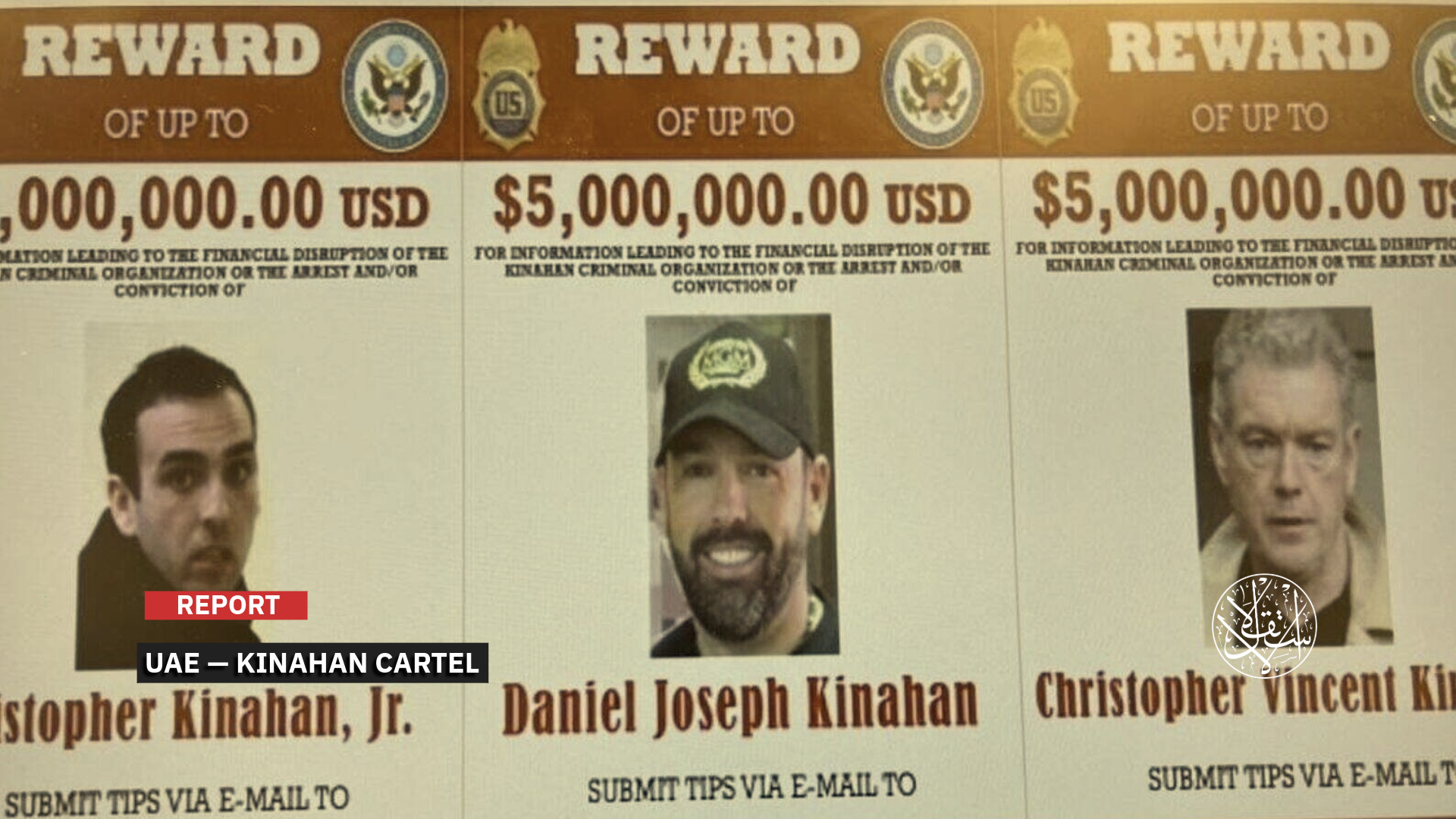
A review of UAE immigration records by the Dutch investigative platform Bellingcat and the Sunday Times, published on August 1, 2026, found that international drug lord and Kinahan cartel leader Christopher Kinahan Jr. obtained a new UAE visa less than two weeks ago, despite being under U.S. sanctions and having a $5 million reward offered for information leading to his arrest.
The findings go beyond the renewal of residency for a senior figure in a criminal network estimated to be worth $1.5 billion. They point to a longer trail of UAE visas linked to cartel leaders and companies they are believed to have worked for.
The documents reopen the story of a group that began with heroin trafficking in Dublin before building an international network involved in cocaine and weapons trafficking and money laundering, eventually moving its leadership to Dubai after a bloody feud shook Ireland.
So how did its leaders maintain residency and business operations in Dubai after being sanctioned? And what do companies linked to their visas reveal about the limits of the UAE authorities’ knowledge of a network that operated openly from the city?
Years of Residency in Dubai
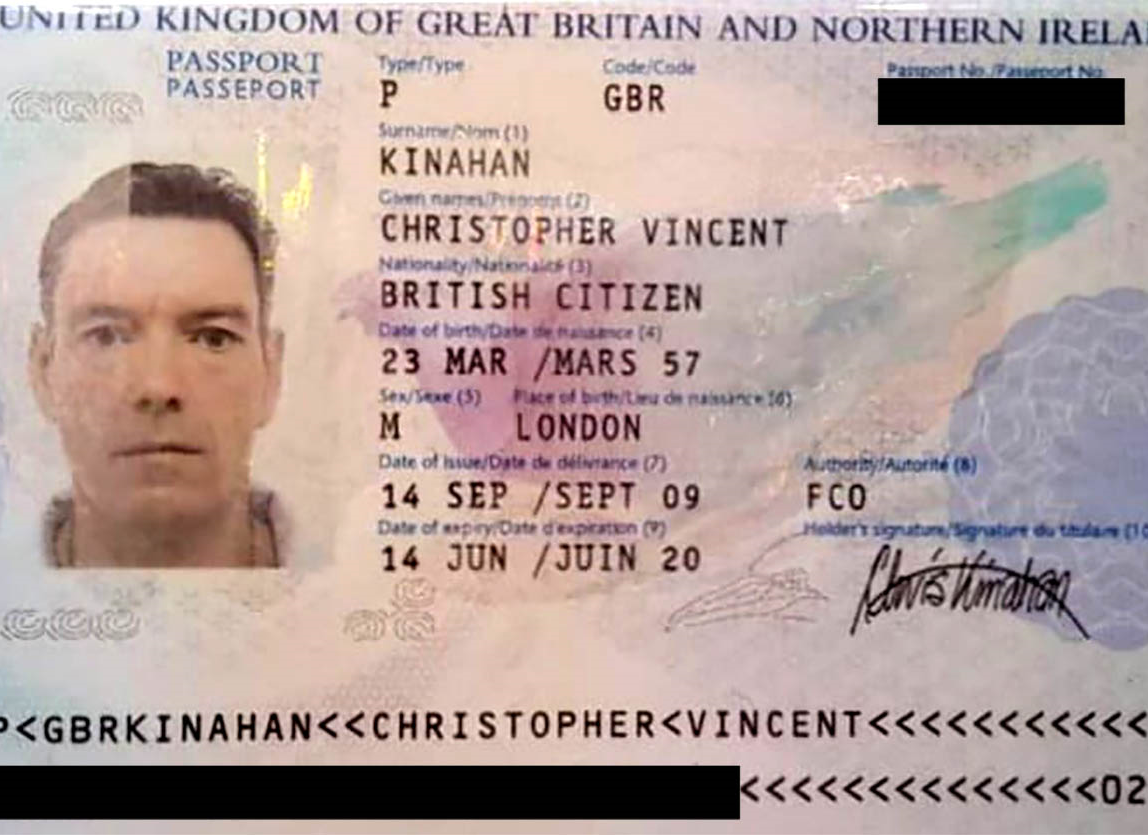
The passport details included in the U.S. sanctions notice provided a key to tracing a previously unknown history of the Kinahan leadership’s movements in the UAE.
Bellingcat and the Sunday Times entered passport numbers, identity card details, dates of birth, and nationalities into government inquiry portals, uncovering records that stretched back years before the cartel fully relocated to Dubai.
The records show that four of its six leading members entered the UAE before the attempted assassination of Daniel Kinahan at Dublin’s Regency Hotel in 2016 and the subsequent feud with the Hutch gang that drove the cartel’s leadership out of Europe.
Christopher Jr.’s passport was linked to short-term UAE visas dating back to September 2013. A search using Daniel’s passport, together with an alternative date of birth listed in the sanctions data, found seven visas between 2013 and 2015.
The first visa linked to Ian Dixon appeared in 2015, followed by records for Sean McGovern and Bernard Clancy in March and April 2016.
Christy Kinahan, the group’s founder, had a first record linked to his British passport dating back to February 2007, followed by another permit in 2009 and two visas in 2017.
But the most striking trail emerged when researchers searched an Irish passport issued in the name of Christopher O’Brien, one of Kinahan Sr.’s aliases. The government portal returned 31 records between 2014 and 2017.
Bellingcat linked the passport to Kinahan Sr. after finding both the name and document details in records belonging to a Hong Kong company, suggesting the passport was used alongside his original document for travel to and from the UAE.
The records show that Dubai was not a refuge the family suddenly chose after the violence of 2016 but a base where it had quietly built a presence over nearly a decade before turning it into the permanent headquarters for its operations.
They also show that the cartel’s dealings with the UAE immigration system continued after its members were placed under sanctions in 2022, including company-linked residencies and Christopher Jr.’s new visa.
A Family-Run Operation
The foundations of the Kinahan cartel were laid by Christy Kinahan, born in Dublin in 1957. He moved from theft, forgery, and handling stolen property in the late 1970s to heroin trafficking in the 1980s.
In 1986, Irish police found heroin in his apartment in Clontarf, leading to a six-year prison sentence. The conviction did not end his career. Instead, it gave him the opportunity to build relationships with criminals that he later used to expand his operations beyond Ireland.
The U.S. Treasury Department says Kinahan also served prison terms in the Netherlands and Belgium, including sentences for cocaine possession and money laundering. During the 1990s, his network expanded from Dublin into Britain and Amsterdam, taking advantage of the booming drug trade and the proximity of European ports.
By the late 1990s and early 2000s, the Kinahan organized crime group had developed a broader structure and established Spain’s Costa del Sol as a base for trafficking cocaine from South America.
As the network expanded, power was divided among family members. Christy retained strategic oversight of properties and companies, while Daniel took charge of day-to-day operations and drug supplies. Christopher Jr. handled financial and logistical matters, including contributing to a fund used to pay members of the gang.
The family also surrounded itself with a network of trusted associates. Sean McGovern served as Daniel’s adviser and closest aide. Ian Dixon moved cash, arranged payments, and tracked drug dealers’ debts, while Bernard Clancy handled payroll for the network. Johnny Morrissey was responsible for enforcing orders, facilitating drug shipments, and laundering their proceeds.
The cartel relied on a compartmentalized structure that kept its leaders separate from its operatives, with each member given only the information needed for their role, making it harder to establish direct links between the leadership and the crimes.
Even Operation Shovel, launched by Spanish police in 2010 and resulting in Christy’s arrest and raids on properties linked to the network, failed to dismantle its leadership after the legal cases stalled.
The group had evolved from a local gang into a decentralized criminal enterprise spread across family members, intermediaries, and companies, allowing it to replace foot soldiers while keeping its leadership away from the scene of the crime.
The Cartel’s Economy of Violence
Cocaine trafficking was the Kinahan network’s most lucrative business, while arms dealing, money laundering, and contract killings provided the tools needed to protect its market and eliminate rivals.
The U.S. Treasury Department has accused Daniel Kinahan of securing large quantities of cocaine from South America, organizing its distribution in Ireland, and attempting to move it into Britain through a network spanning Spain, the Netherlands, and Belgium.
The group worked with local intermediaries to move cash and collect proceeds before laundering them outside the UK, using companies, hawala transfers, and high-value assets.
In 2022, Europol announced the arrest of a man linked to the Kinahan family whom it described as one of Europe’s biggest money launderers. The agency said he had laundered about €200 million in just over a year.
His network used companies in Britain and Gibraltar, hawala transfers, and vehicles fitted with secret compartments. The investigation began after police seized 200 kilograms of cocaine and €500,000 in cash.
But the cartel’s most violent side emerged during its feud with the Hutch gang, which began after the killing of Gary Hutch in Spain in September 2015. In February 2016, gunmen dressed in clothing resembling that of a police emergency response unit stormed a boxing weigh-in at Dublin’s Regency Hotel, using automatic weapons. Daniel Kinahan was believed to be the intended target but survived, while his associate David Byrne was killed. The attack triggered a wave of revenge killings that left at least 18 people dead in Ireland and Spain.
Among the cartel’s most revealing killings was that of Noel Kirwan, a 62-year-old man with no links to organized crime who was targeted simply because he appeared in a photograph at the funeral of a member of the Hutch family.
The group placed a tracking device on his car, while Sean McGovern monitored his movements and directed gunmen before Kirwan was killed outside his home in December 2016. The cartel also used an Estonian hitman in an attempt to assassinate James Gately, while relying on encrypted phones, surveillance equipment, and compartmentalized cells.
McGovern’s own path eventually led from years of living in Dubai to his arrest and extradition to Ireland, where he was sentenced to 24 years in prison in June 2026. He was the first figure so closely linked to the cartel’s leadership to be convicted.
Dubai as the Cartel’s Command Center
Dubai emerged as the cartel’s base through a combination of legal protections, geography, a business-friendly environment, and the lifestyle the emirate offered. For years, Ireland and the UAE lacked a bilateral extradition treaty, raising the threshold for pursuing wanted suspects living there.
That gave the Kinahan leadership room to live openly, away from Irish police and rivals who had pursued them in Dublin and Spain. At the same time, Dubai offered a strategic link between Europe, Asia, and Africa, along with air and shipping networks that allowed cartel leaders to hold meetings, manage intermediaries, and move investments without coming close to the drug shipments themselves.
The UAE’s concentration of foreign companies and investors from around the world also provided cover through a web of relationships that appeared commercial on the surface. Its property market offered another way to secure residency, preserve wealth, and generate profits. Previous investigations found that cartel members bought villas, apartments, and offices worth millions of euros, some registered in the names of wives or associates who were not under sanctions.
One such property was a villa in Emirates Hills that was bought for about €6.05 million and later sold for €11.7 million.
The UAE offered more than a place to store money. It gave Kinahan leaders secure neighborhoods, schools, services, and a luxury lifestyle in which they could present themselves as consultants, investors, or sports executives.
Daniel Kinahan in particular benefited from the boxing world. Through MTK Global and relationships with prominent boxers and promoters, he built a public profile that was largely detached from the security accusations surrounding him.
His 2017 wedding in Dubai illustrated the overlap between the two worlds. Journalistic investigations described it as a gathering place for prominent figures in European organized crime.
For the Kinahans, Dubai thus offered a combination of distance from European law enforcement, access to a global network, and an environment where illicit wealth could be converted into residency, companies, property, and social status.
Companies Behind the Residency Permits
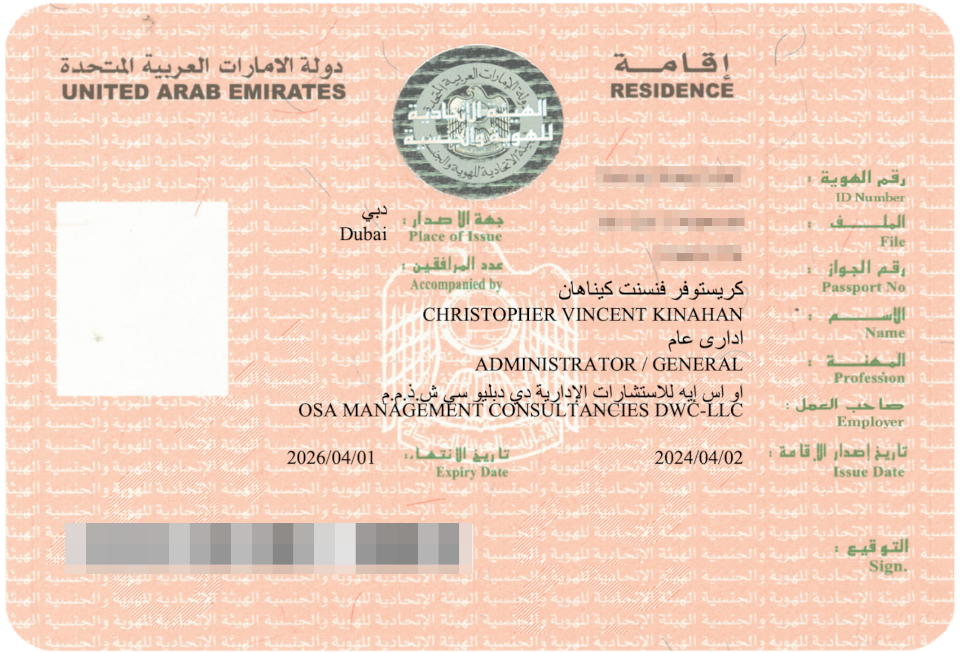
The names of companies listed on the residency permits form one of the most sensitive parts of the investigation. Under Dubai government procedures, employment-based residency permits are not initiated by individuals alone. Companies apply for work permits on behalf of employees, who must also undergo a medical examination before completing a residency permit valid for two years.
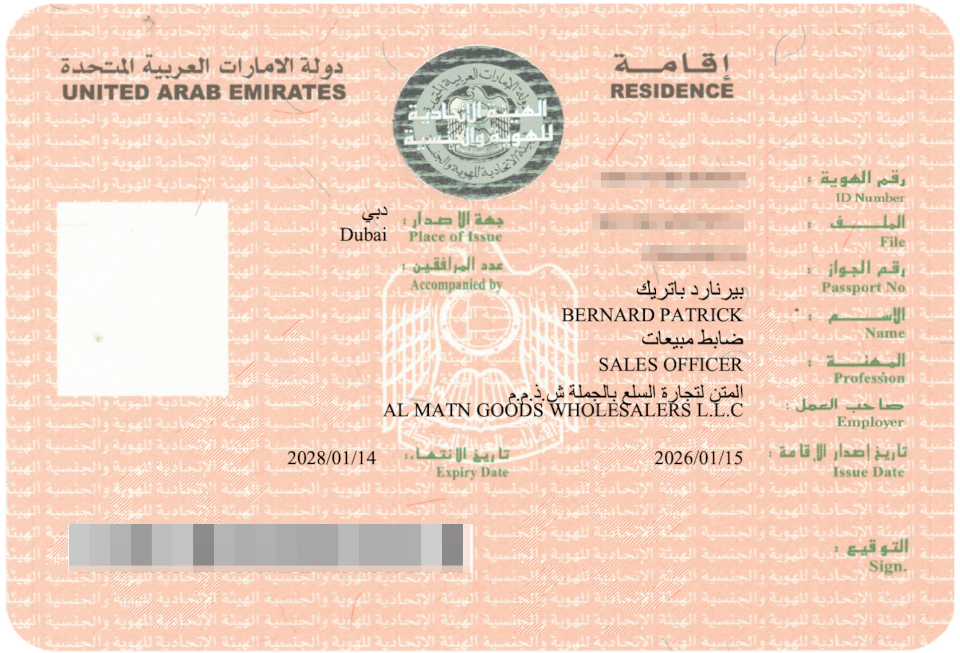
Island Star Tourism appeared on Christopher Kinahan Jr.’s permit, while Bernard Clancy’s residency was linked to al-Matn Goods Wholesalers LLC. Both names match companies registered in Dubai, although Bellingcat could not confirm that they were the same entities listed on the two permits.
Clancy’s residency also listed only Bernard Patrick, without his surname, unlike the other members of the cartel. When contacted by the investigation, the managing director of Island Star said Christopher Jr. worked on commission, not as an office employee. He said he knew his name but had never met him.
The director offered no explanation for why his company appeared on the visa, saying only that if the UAE had a problem with Christopher Jr., it would not have issued him the permit.
Christy Kinahan’s residency, meanwhile, was linked to OSA Management Consultancy, which appears in UAE government records as an aviation consultancy.
Data from the Horizons platform showed that the company shares an address, license number, and incorporation date with CV Aviation Consultancy Services, a company linked to the cartel. This suggests the entity may have changed its name rather than being established as a separate company.
The links raise questions about how much UAE authorities knew about the activities of people associated with the cartel, particularly since its members maintained residencies that required repeated dealings with employers and government immigration authorities.
Roy McComb, a former deputy director of Britain’s National Crime Agency, described the idea that the UAE was unaware of the cartel leaders’ activities and crimes as “incredible.” British lawyer David Haigh went further, suggesting there may have been corruption within the UAE government.