A New Phase: What Does Nechirvan Barzani’s Visit to Damascus Signal?
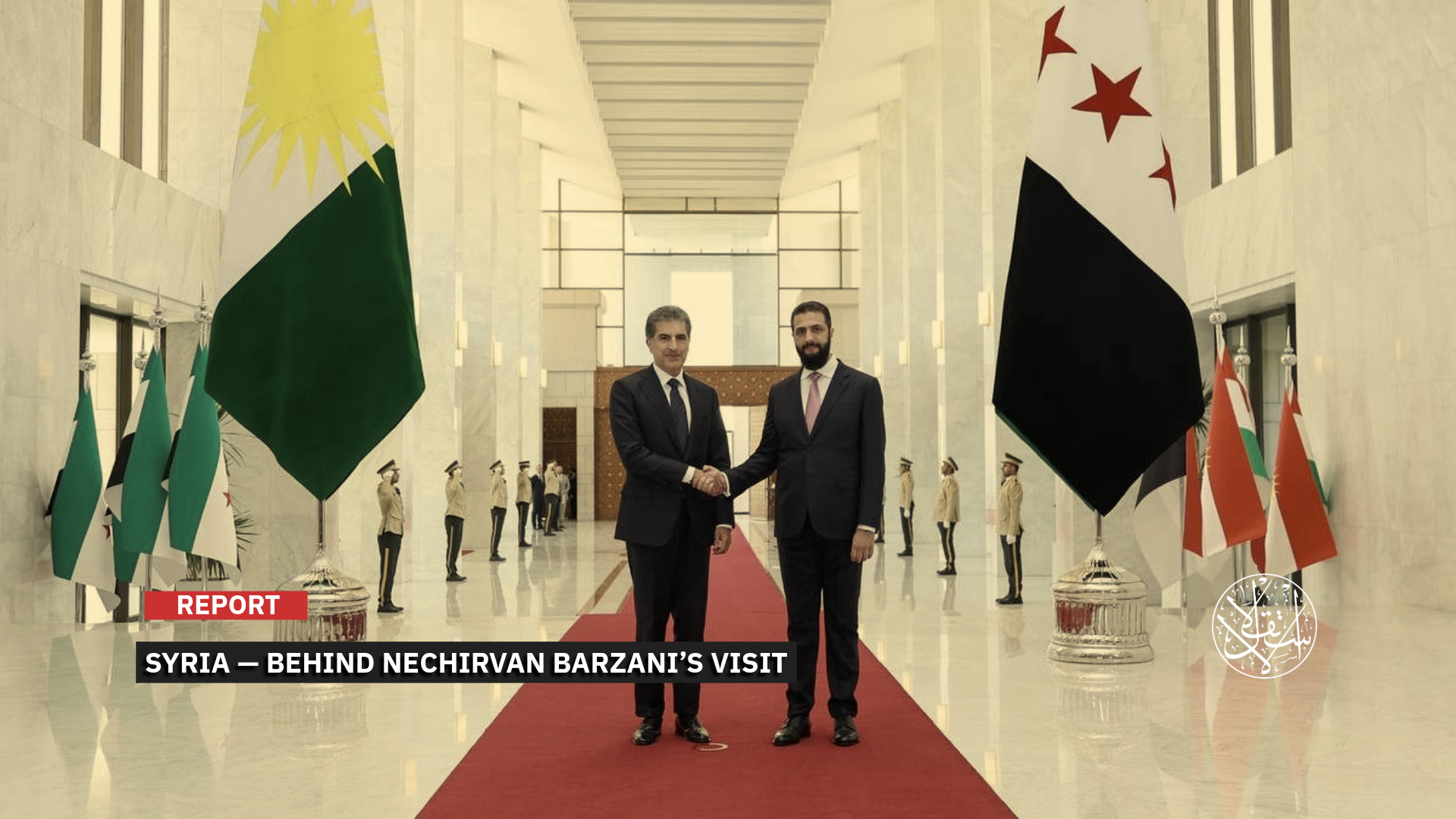
Barzani invited al-Sharaa to visit Erbil and the Iraqi capital, Baghdad.
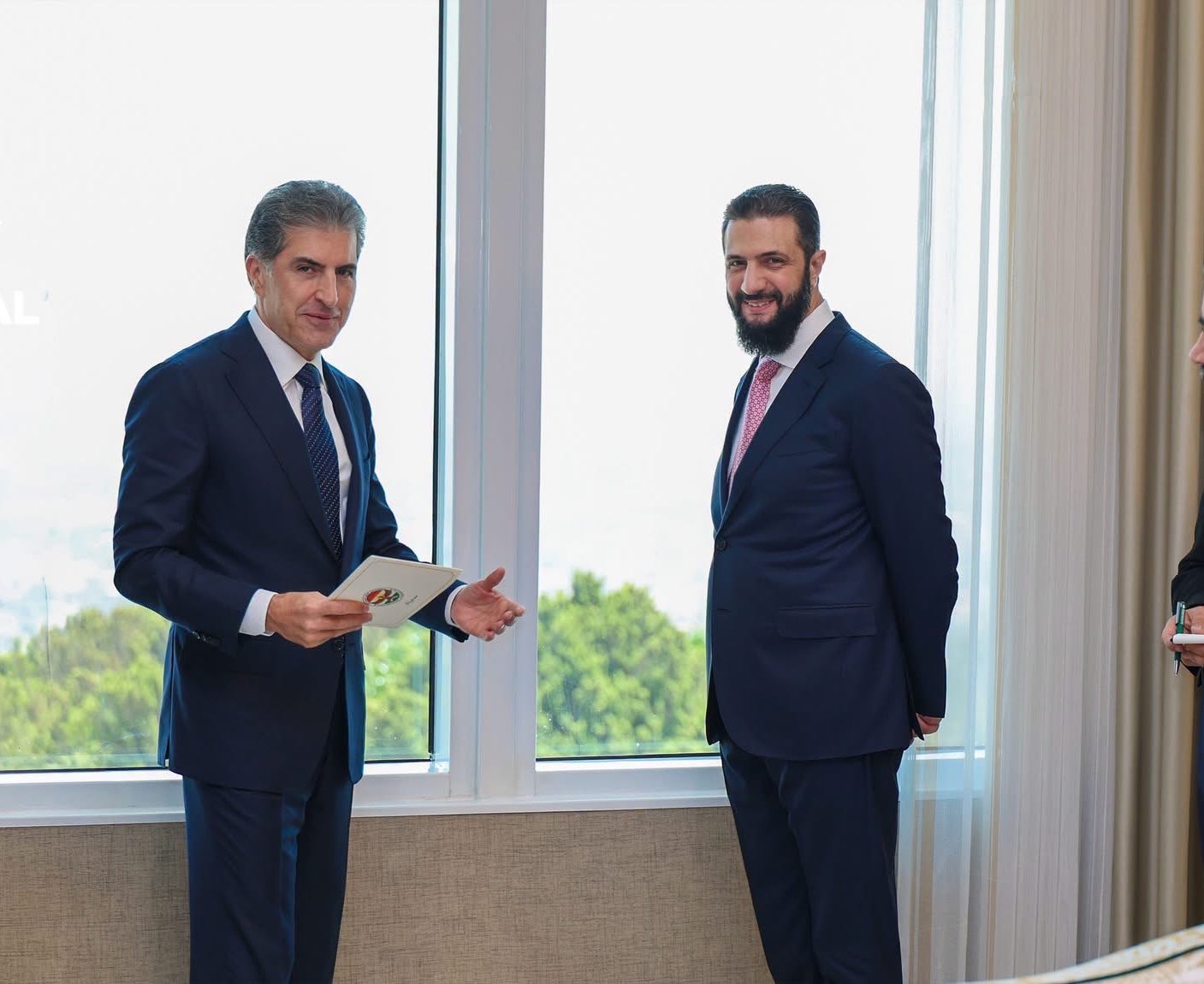
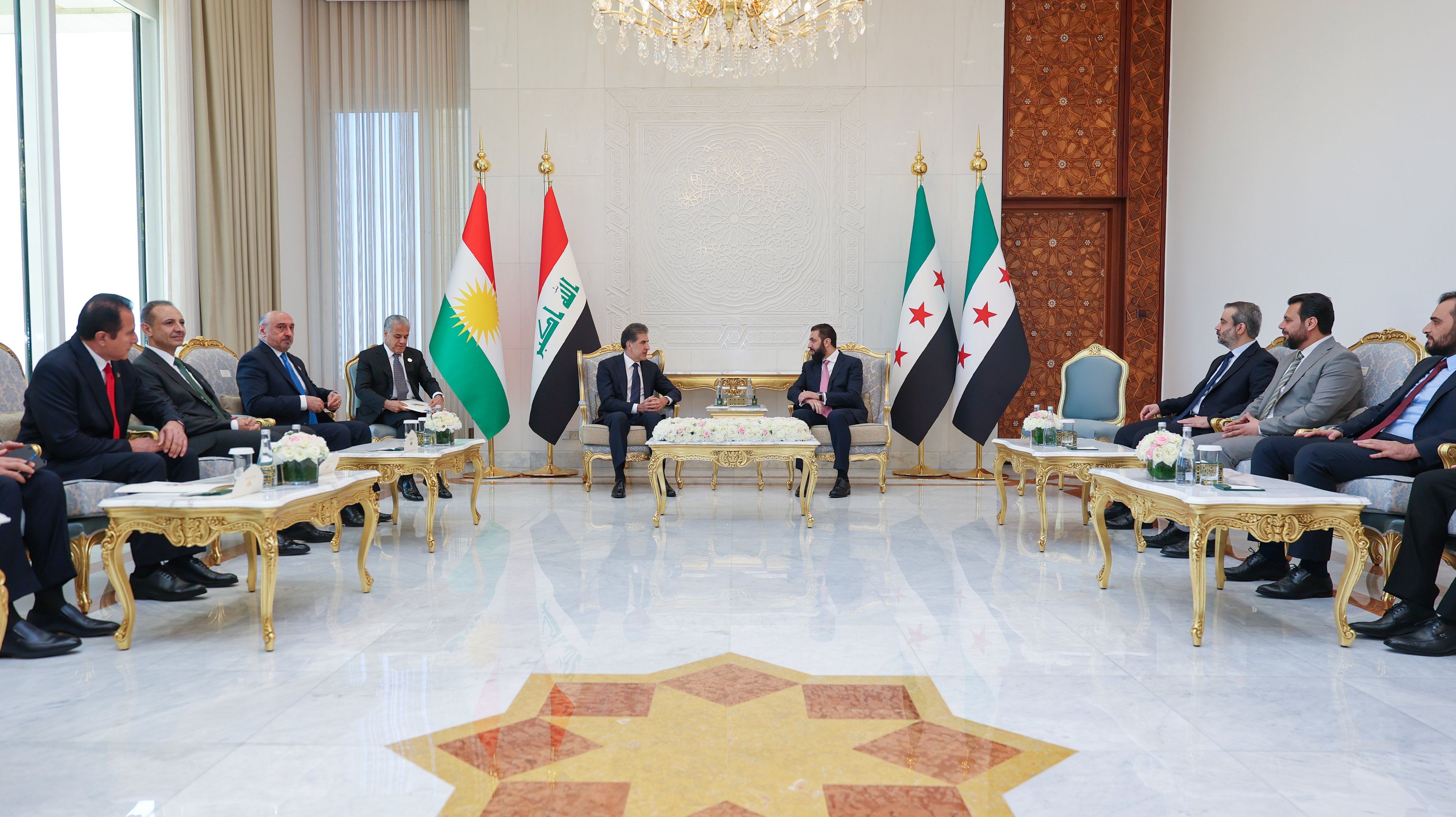
The August 3, 2026, visit by Nechirvan Barzani, president of Iraq’s Kurdistan Region, to Damascus and his meeting with Syrian President Ahmed al-Sharaa was more than a protocolary stop in the effort to rebuild ties between the two sides. It carried political and security implications that point to new regional arrangements taking shape in both Syria and Iraq.
Barzani’s visit, his first since the fall of Bashar al-Assad’s regime in late 2024, came at a particularly sensitive moment, as regional tensions mounted and efforts to integrate the Syrian Democratic Forces (SDF) into Syria’s state institutions moved forward.
Barzani said he had accepted an official invitation from al-Sharaa before extending a similar invitation for the Syrian president to visit Baghdad and Erbil. Damascus is also preparing to open a consulate in Erbil, adding a new dimension to ties between the two sides and suggesting that their engagement is moving beyond security coordination toward a broader political and diplomatic partnership.
Previous Understandings
The evidence suggests that the visit by Nechirvan Barzani, president of Iraq’s Kurdistan Region, to Damascus was not a spur-of-the-moment move, but the culmination of more than a year of political contacts. Barzani had previously met Syrian President Ahmed al-Sharaa in Antalya while also holding talks with Syrian Foreign Minister Asaad al-Shaibani on the sidelines of the Munich Security Conference in 2025 and 2026.
Multiple sources also revealed that a senior delegation from the Kurdistan Region made an undisclosed visit to Damascus weeks before Barzani’s trip. The two sides reached understandings that paved the way for the meeting, suggesting they had been quietly working to shape a new framework for their relationship away from the spotlight and media attention.
The process was further underscored by Damascus’s announcement on July 21 that it had begun preparations to open a Syrian consulate in Erbil. The move carries clear diplomatic significance, signaling that ties are shifting toward an institutional relationship after years of stagnation between the Kurdistan Region and the former Syrian regime.
Researcher at the Jusoor Center for Studies, Wael Alwan, said the timing of the visit was linked to a series of regional shifts that have forced both sides to reassess their political and security priorities.
In an interview with Al-Estiklal, Alwan said ties between Damascus and Erbil had remained positive in recent months, particularly following contacts during the major clashes between the Syrian government and the SDF in early 2026. Those contacts helped contain the escalation and keep channels of communication open.
“Damascus’s repeated expressions of solidarity with the Kurdistan Region during Iranian attacks and assaults by Iraqi armed factions had strengthened mutual trust and created conditions for moving from limited coordination toward broader political ties,” he said.
“The visit also came as the prospect of a confrontation between the United States and Iran grew, tensions continued between Syria and some Iraqi armed factions, and U.S. forces redeployed while reducing their presence in Erbil.” These shifts, Alwan added, have pushed the Kurdistan Region to diversify its political and security options by strengthening ties with Damascus.
What About Baghdad?
Nechirvan Barzani’s invitation to Syrian President Ahmed al-Sharaa to visit Baghdad and Erbil has raised questions over whether his decision to accept al-Sharaa’s invitation to Damascus was coordinated with or encouraged by the Iraqi government, particularly since the Kurdistan Region does not conduct foreign policy independently of the Iraqi state.
The signs suggest Baghdad was aware of the visit and helped coordinate it. Barzani’s invitation to al-Sharaa to visit the Iraqi capital also points to an effort to turn Syria’s opening to Erbil into a broader channel for strengthening Syrian-Iraqi ties, extending beyond relations with the Kurdistan Region alone.
Baghdad views Syria’s stability as part of its own national security, particularly when it comes to border security, the fight against the Islamic State, refugee returns, and economic cooperation. Those concerns mean that closer ties between Damascus and Erbil could ultimately serve broader Iraqi interests.
Dilshad Shahab, a spokesman for the Kurdistan Region presidency, said Nechirvan Barzani’s visit to Damascus was coordinated with Iraqi Prime Minister Ali al-Zaidi and aimed at strengthening cooperation between the two countries and consolidating regional stability, according to Iraq’s Shafaq News Agency on August 3.
The process also gives the Kurdistan Region an opportunity to act as a bridge between Damascus and Baghdad, drawing on its good relations with both capitals. That could strengthen Erbil’s standing and give it greater political weight in regional calculations.
At the same time, the issue of Syria’s Kurds, along with the integration of the SDF into state institutions, appeared to be among the key issues discussed during the visit.
Alwan said one of the visit’s main objectives was to consolidate the gains made by Syria’s Kurdish community and turn the rights recognized by Damascus in 2026 into lasting constitutional guarantees, particularly as the U.S. role, which had been a key balancing factor in the issue, has declined.
This view aligns with comments by Syrian journalist Ibrahim Hamidi, who said on X on August 2 that Kurdish leader Masoud Barzani had played an important role in supporting the implementation of the agreement to integrate the SDF. He said this was preceded by a phone call with President Ahmed al-Sharaa, alongside growing activity by civil institutions linked to the Kurdistan Region in northeastern Syria, particularly in education, relief, and development.
Hamidi added that Kurdish figures close to Erbil had begun taking on roles within Syrian state institutions, including the new People’s Assembly of Syria. He said this suggested Damascus was moving toward a partnership with the Kurdish current aligned with Erbil, rather than limiting its relationship to the SDF alone.
Regional Messages
The visit by Nechirvan Barzani, president of Iraq’s Kurdistan Region, to Damascus carried messages that went beyond Syria’s domestic politics, reaching the region’s key players. Closer ties between Damascus and Erbil strengthen the position of the Kurdish current close to the Barzani family, which maintains close relations with Turkiye, while the influence of Kurdish forces closer to Iran and the Kurdistan Workers’ Party (PKK) declines.
Hamidi said Damascus was betting on deeper ties with Erbil while taking further steps toward Syria’s Kurds, including expanding their participation in state institutions and recognizing their cultural and linguistic identity. The approach, he added, could help reduce the influence of the SDF and gradually separate the group from its Kurdish base.
The approach also aligns with Turkiye’s interests. Ankara has spent years seeking to weaken the PKK and curb its presence in Syria, making closer ties with Erbil a less sensitive option for Turkiye than engagement with Kurdish forces linked to the group.
At the same time, the opening toward Erbil sends an indirect message to Iran, which retains influence among some Iraqi factions and in Syria: Damascus is seeking to diversify its regional partnerships rather than rely on a single axis, according to observers.
The growing ties between Damascus and Erbil extend beyond security and politics to economic issues. After meeting al-Sharaa, Nechirvan Barzani said Syria, Iraq, and the Kurdistan Region share common interests because of their geographic proximity, pointing to significant opportunities for greater economic cooperation among the three sides.
Sources
- Iraqi Kurdish regional leader meets Syrian president in Damascus
- Al-Sharaa Hosts Barzani in Damascus for Talks on Economy and Regional Security [Arabic]
- Syrian MP to Rudaw: Nechirvan Barzani’s Visit Will Help Advance Kurdish Rights [Arabic]
- Nechirvan Barzani Invites al-Sharaa to Visit Iraq [Arabic]
- In Coordination With al-Zaidi: Details Emerge on Nechirvan Barzani’s Visit to Damascus [Arabic]