Unprecedented Tensions Between Washington and ‘Tel Aviv’: Can Israeli Occupation Survive Without the United States?
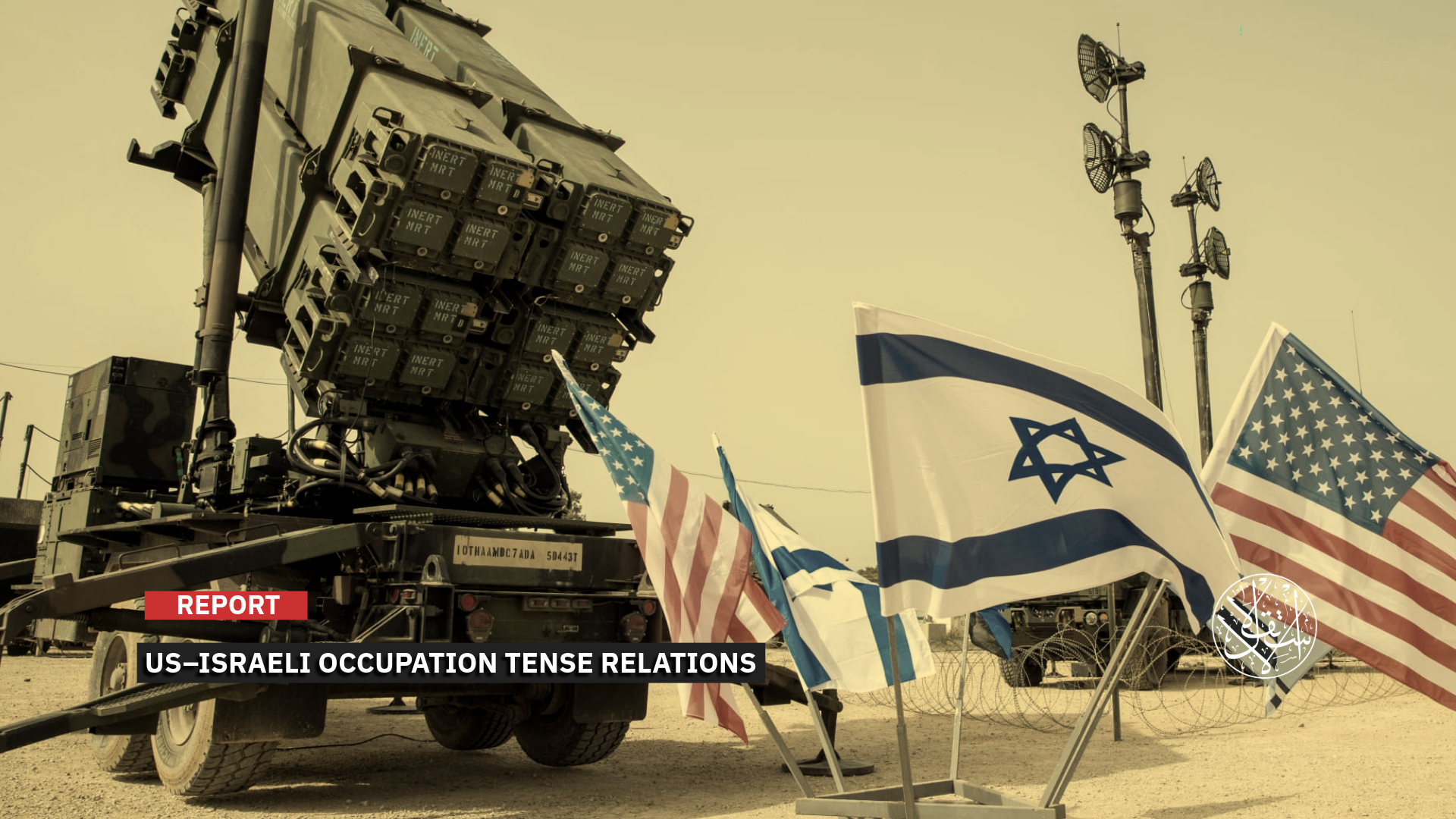
The Israeli Occupation is the largest recipient of U.S. aid in the world.
“Without me, there’d be no Israel [...] Israel would not exist right now. Israel would have been blown off the face of the earth, 100 percent.” Repeated several times on June 17, 2026, Donald Trump’s remark—paired with his suggestion that “Israel’s” existence could not be sustained without him and U.S. backing—landed like a political shockwave in the Israeli Occupation, where it was quickly interpreted as both revelation and insult.
The anger only deepened after the announcement of the U.S.-Iran agreement, which went ahead without Israeli consent. For Israeli officials, the combination of the deal and Trump’s comments amounted to a striking public slight, underscoring what they described as Washington’s willingness to move unilaterally on matters they consider existential.
Washington–’Tel Aviv’ War of Words
A sharp exchange between Washington and “Tel Aviv” has exposed deep political fissures between the two allies, following comments by U.S. President Donald Trump and a wave of Israeli pushback over a recent U.S.-Iran agreement.
Israeli officials lashed out after Trump repeatedly claimed on June 17, 2026, that “Israel’s” survival would not have been possible without him and continued American backing. The remarks, coupled with the announcement of the U.S.-Iran deal—finalized without Israeli approval—were widely seen in “Israel” as a diplomatic affront.
Speaking to Channel 14, Israeli Culture and Sports Minister Miki Zohar struck a defiant tone. “I say to President Donald Trump that Israel was capable of wiping Iran off the face of the earth on its own, and leaving it without electricity, water, or food, but it did not do so out of respect for the decisions of the United States,” he said.
Far-right ministers echoed the sentiment. National Security Minister Itamar Ben-Gvir dismissed the agreement outright, writing on X that “Trump’s deal does not bind us” and insisting “Israel is not subordinate to the United States.” Finance Minister Bezalel Smotrich called the accord “bad for us and for the entire free world,” urging “Israel” to pursue its own “campaign” against Iran.
On the opposition side, Yair Golan, leader of the left-wing Democrats, also criticized the deal, warning that it was struck without “Israel’s” knowledge and effectively offered “a lifeline to the murderous regime in Tehran.”
The U.S. response was swift. Vice President JD Vance rebuked Israeli officials on June 19, arguing that President Trump remained the only leader truly sympathetic to “Israel” today and warning against alienating Washington. He noted that two-thirds of the weapons that protected “Israel” in recent months were built and funded by American taxpayers.
The exchange has revived an old but increasingly urgent question: could the Israeli Occupation sustain its security and global position without the United States?
Analysts say the answer is rooted in decades of strategic dependence. According to Israeli security experts, the country’s military capacity—particularly its air power—relies heavily on American-supplied aircraft, munitions, intelligence systems, and advanced cyber capabilities.
They argue that U.S. support extends far beyond weapons, encompassing diplomatic protection in international forums, intelligence sharing, satellite infrastructure, and sustained military resupply chains that have proven critical during wars on Gaza, Lebanon, Syria, Iran, and Yemen.
The partnership, they add, has been reinforced over decades through political lobbying networks, cultural influence, and religious narratives within segments of American evangelical politics, all of which have helped cement Washington’s role as “Israel’s” indispensable ally.
As tensions simmer, the latest war of words has underscored a central reality of Middle Eastern geopolitics: “Israel’s” military reach may be regional, but its strategic backbone remains profoundly American.
Open-Ended Military Support
A dense mix of religious and ideological alignment, reinforced by sustained media and political pressure, has helped secure “Israel” an open-ended flow of U.S. military support across multiple domains. Over time, this assistance has become the backbone of “Israel’s” military superiority, the primary source of funding for its arsenal, and a key pillar of political protection in international forums.
The Israeli Occupation remains the largest recipient of U.S. aid in the world. According to data from the U.S. Council on Foreign Relations through November 2024, Washington has provided the Israeli Occupation with hundreds of billions of dollars in direct military and security assistance since the 1970s.
Since October 7, 2023, the United States has opened its military stockpiles to “Israel” through one of the largest air and sea bridge operations in the history of bilateral relations. The effort has included thousands of tons of ammunition, bombs, missiles, and advanced combat equipment.
While full official figures for U.S. military assistance since October 7 have not yet been published, American reporting indicates unprecedented and sustained levels of support.
Estimates from Brown University’s Costs of War Project put U.S. military assistance to “Israel” at more than $17.9 billion in just one year under the Biden administration. The Quincy Institute for Responsible Statecraft, meanwhile, estimates at least $21.7 billion in military aid between the start of the war on Gaza on October 7, 2023, and October 10, 2025.
According to the institute, Washington has transferred more than 50,000 tons of weapons and munitions to “Israel” via hundreds of military aircraft and ships. These include over 14,000 MK-84 two-thousand-pound bombs, around 6,500 five-hundred-pound bombs, more than 3,000 Hellfire missiles, roughly 2,600 GBU-39 small-diameter bombs, and nearly 3,000 JDAM precision-guidance kits.
Additional supplies include more than 57,000 155mm artillery shells, hundreds of BLU-109 bunker-busting bombs, and thousands of tank rounds and guided munitions.
The support has also extended to missile systems such as Iron Dome and David’s Sling, as well as military aircraft, helicopters, spare parts for F-35 and F-15 fighter jets, AH-64 Apache helicopters, armored vehicles, jet fuel, and advanced communications and surveillance systems.
Technological Support
Since Operation al-Aqsa Flood on October 7, 2023, U.S. support for the Israeli Occupation has gone far beyond weapons and funding, extending into unprecedented levels of intelligence, technological, and space-based assistance—effectively making Washington a direct partner in managing the war at the informational and operational level.
The United States has deployed its satellite, cyber-espionage, and aerial surveillance capabilities in support of “Israel,” providing high-resolution satellite imagery, real-time intelligence feeds, and advanced tracking and communications technologies. This has also included support for targeting operations, electronic jamming, and surveillance.
The Washington Post reported in June 2024 that agencies such as the NSA, CIA, and NGA significantly increased daily intelligence-sharing with the Israeli occupation military throughout the war on Gaza.
It noted that both commercial and military U.S. satellites played a central role in delivering near-real-time imagery of resistance movements and infrastructure inside the Strip.
Major American companies, including Maxar and Planet Labs, also provided imaging technologies capable of resolutions as fine as 40 centimeters per pixel—detail sharp enough to identify vehicles, military movements, and shifts on the ground with high precision.
Is the End Near?
Despite decades of alliance and deep dependency, “Israel” now faces a new and potentially destabilizing challenge: a shifting public mood in the United States, sharpened by the war on Gaza.
American polling, including a Quinnipiac University survey conducted on August 28, 2025, shows a notable erosion in support for continued military aid to “Israel.” One poll found that 60% of Americans oppose additional weapons transfers, while only 32% remain in favor.
At the same time, divisions within Congress over U.S. backing for “Israel” have become increasingly visible, as protests spread across American universities in opposition to the war—raising Israeli concerns that a historic inflection point may be emerging in the relationship with Washington.
The shift has triggered alarm in “Israel.” Former Prime Minister Ehud Barak warned that “Israel is losing the next generation of Americans,” while other officials have pointed to a growing “crisis of legitimacy” on U.S. campuses.
For the Israeli Occupation, the concern is not only the potential loss of American weapons but also the gradual erosion of the political legitimacy Washington has long provided on the global stage.
The Jerusalem Post described the decline in “Israel’s” popularity in the United States as the most dangerous in decades, particularly as the gap widens between the American political establishment and younger voters.
The trend is reinforced by mass demonstrations at major U.S. universities such as Harvard and Columbia, where thousands of students have called for an end to arms transfers to “Israel” and the imposition of sanctions.
According to Israeli affairs expert Dr. Saleh Ibrahim, the aftermath of the genocide in Gaza has triggered an unprecedented shift in American public opinion, with U.S. society—particularly younger Americans—becoming increasingly opposed to the Israeli Occupation and to continued military support for it.
He expects that shift to shape voter preferences and influence the platforms of both Republican and Democratic candidates, making the use of American taxpayer money to support “Israel” an increasingly contentious political issue.
Ibrahim argues that this changing political climate has heightened Israeli concerns that the United States may not remain the steadfast ally it has long been. He says those fears have pushed Prime Minister Benjamin Netanyahu to pursue long-term strategic agreements aimed at securing military supplies for as long as possible.
Sources
- US has sent Israel thousands of 2,000-pound bombs since Oct. 7
- Trump praises Netanyahu, says ‘Israel would have been blown off the face of the earth’ if not for the US and him
- Israeli Minister Fires Back at Trump: We Could Have Wiped Out Iran Without Anyone’s Help [Arabic]
- Lapid Sounds the Alarm: If We Don’t Replace Netanyahu’s Government, Our Foreign Relations Will Collapse [Arabic]
- Vance Blasts Israeli Ministers: Our Weapons Protected You [Arabic]