Pakistan’s Relations With the UAE Enter a Grey Area: Causes of Tensions and Their Implications
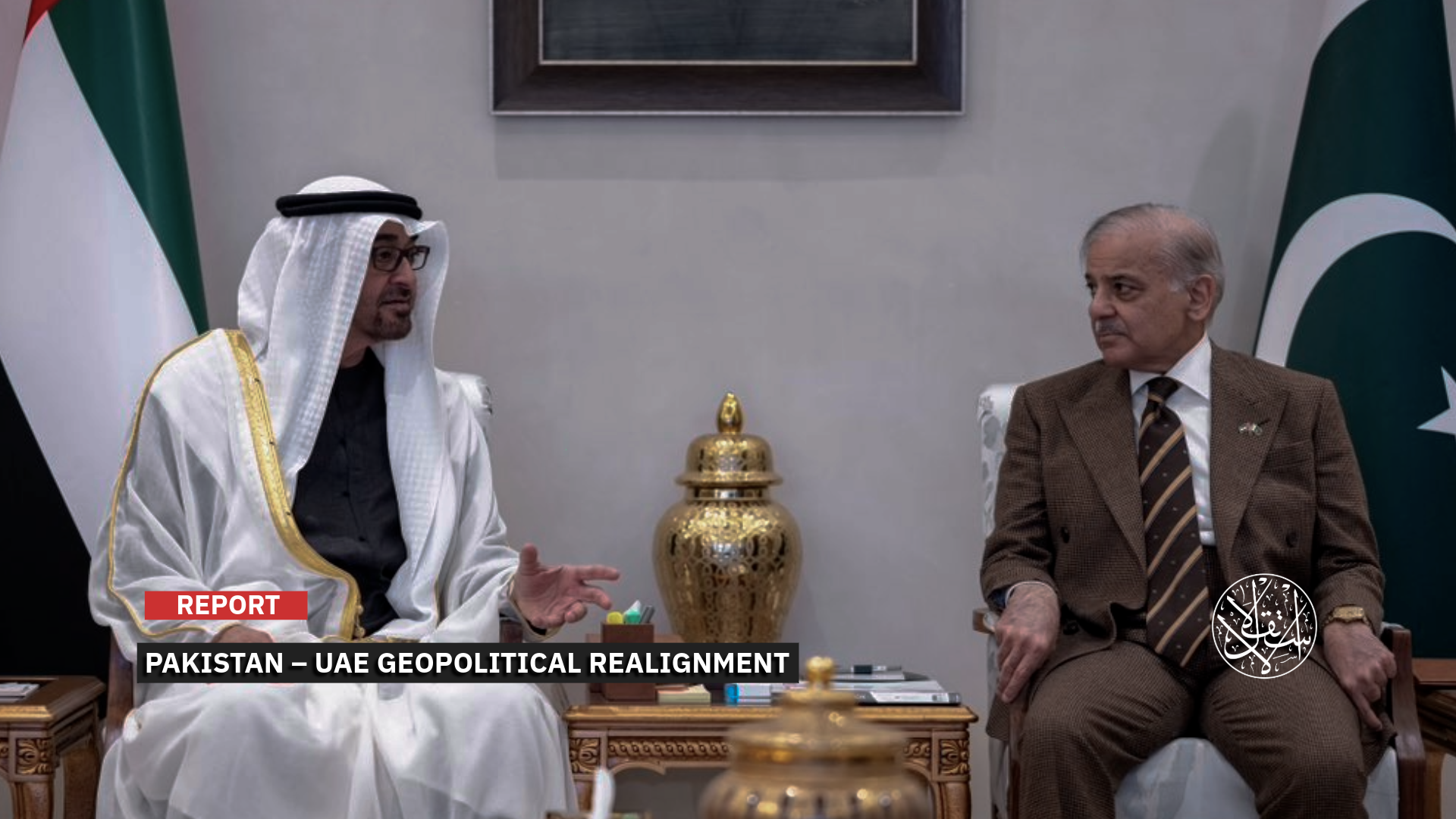
Saudi Arabia financially supported Pakistan after the UAE asked Islamabad to repay a billion-dollar deposit.
In recent months, relations between Abu Dhabi and Islamabad have been moving into a “grey zone,” where official calm overlaps with accumulating signs of tension, from the repayment of a large Emirati deposit at a time of financial pressure on Pakistan, to the deportation of thousands of Pakistanis from the UAE.
These signals are expanding further as the tension shifts into regional political and security spheres. The UAE–India partnership is advancing into the defense domain, while Pakistan is deepening its security ties with Saudi Arabia and cautiously managing its position on Iran.
This raises the question: does the relationship reflect a manageable cooling, or are shifting alliances in the Gulf and South Asia pushing the two long-standing partners toward a deeper political divergence?
Signs of Pressure
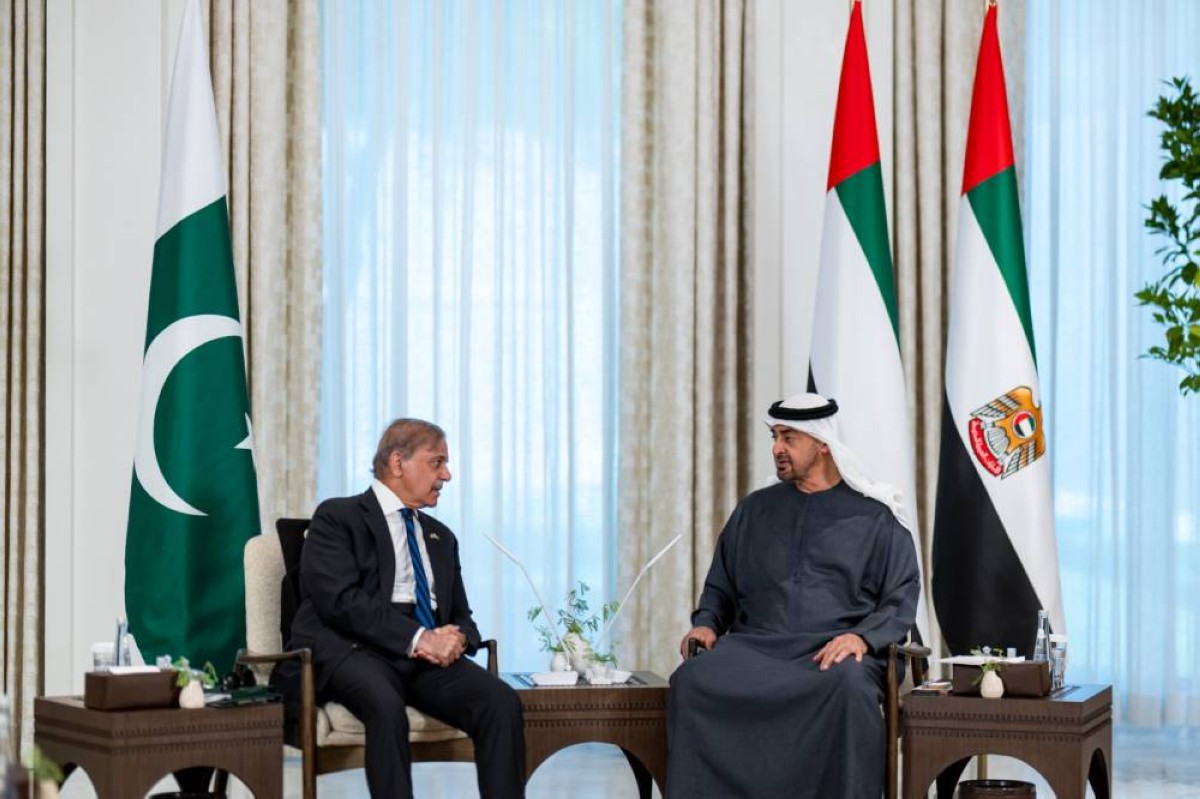
The first direct indicator emerged in the Emirati deposit file. In April 2026, Pakistan faced a heavy financial obligation in the form of repaying $3.5 billion to the UAE, a deposit that Abu Dhabi had placed with the State Bank of Pakistan in 2018 to support the balance of payments.
According to a Reuters report published on April 7, the deposit had previously been extended, first on an annual basis and then on a monthly basis, before Islamabad fully repaid it upon maturity.
At the time, Pakistan’s foreign reserves stood at about $16.4 billion, making the repayment equivalent to roughly 18% of total reserves.
This ratio gave the issue a political dimension, as Pakistan, which was under external liquidity pressure, would typically extend Gulf deposits or roll them over under new understandings rather than withdraw a large sum in a single payment.
This timing therefore opened the door to interpretation over whether the repayment was merely a financial obligation or a signal of pressure in a relationship that had begun to lose some of its former flexibility.
Pakistan’s Foreign Ministry provided a financial explanation for the move, denying that the repayment was linked to any geopolitical dispute with the UAE and confirming that the return of the deposit was part of the country’s financial commitments and its agreement with the International Monetary Fund.
In contrast, Ghulam Ali, a senior researcher at the Center for Global Peace Studies at National Chung Hsing University in Taiwan, offered a more cautious reading in an article published by the Middle East Council on Global Affairs on June 21, 2026.
Ali argued that the narrative of deteriorating relations had been shaped by linking separate events together, from Abu Dhabi’s growing ties with New Delhi to Islamabad’s closer alignment with Riyadh and its cautious stance during the Iran war. However, he believes much of this turbulence has been amplified more by media interpretation than by official policy shifts.
The South China Morning Post, a Hong Kong-based daily newspaper, reported on April 11, 2026, that Abu Dhabi had been requesting repayment of the deposit shortly before helping Pakistan arrange a ceasefire in the Iran war, and that the move was accompanied by a wave of critical Emirati social media commentary on Islamabad’s position.
The report also cited a widely circulated Emirati response saying, “We hear diplomacy, but we do not hear clarity,” suggesting that for some Emirati voices, the issue was not purely financial.
In mid-April 2026, Saudi Arabia entered the Pakistani liquidity picture. Pakistani Finance Minister Muhammad Aurangzeb confirmed that Riyadh had agreed to provide an additional $3 billion in support to Pakistan, and a spokesperson for the Saudi Finance Ministry also confirmed the deposit agreement.
From a financial perspective, Saudi Arabia appears as a stabilizing force for Pakistan’s liquidity. Politically, however, the timing raises questions about differing calculations in Abu Dhabi and Riyadh toward Islamabad during a period of pressure.
The second indicator relates to the Pakistani community in the UAE. In May 2026, the Pakistani English-language daily Dawn reported that the issue of deportations of Pakistanis from the UAE had been referred to a committee in the Pakistani Senate.
This followed an announcement by Pakistan’s Interior Ministry that 3,494 Pakistani nationals were deported between January and April 2026 for reasons described as related to legal violations or residency issues.
In the same month, Foreign Ministry spokesperson Tahir Andrabi stated that authorities had issued around 1,500 emergency travel documents to facilitate the return of citizens under amnesty and residency procedures, adding that the issue was not politically motivated.
This official narrative contrasted with a more sensitive account. On May 25, 2026, Reuters reported, citing a database from the Pakistan Muslim Unity Council, that around 7,500 Pakistani Shiites had been deported from the UAE since February 28, 2026.
Pakistani authorities denied that deportations were based on sectarian grounds, stating that the cases were related to legal and administrative violations. However, the timing kept questions open, especially as the deportations occurred amid the Iran war and the security and sectarian sensitivities it triggered within the Gulf.
With around 1.8 million Pakistanis living in the UAE and annual remittances exceeding $6 billion, according to estimates cited by Reuters in its deportation report, the issue is no longer just about migration but has become a test of one of the key economic lifelines in the bilateral relationship.
The sensitivity of the deportations does not lie in the number alone, but in the role of the Pakistani diaspora in Pakistan’s economy and in its relationship with the UAE.
The Pakistani market data platform Mettis Global reported that workers’ remittances to Pakistan reached $4.25 billion in May 2026, of which $1.01 billion came from the UAE, including $828 million from Dubai alone.
India in the UAE’s Calculations
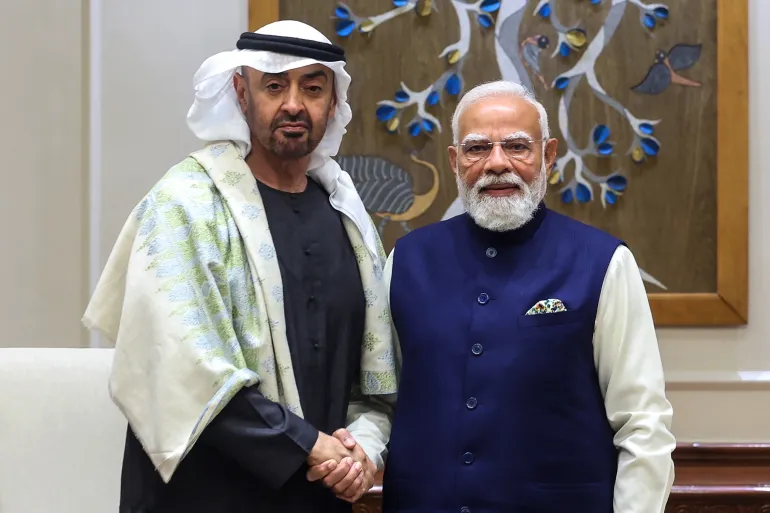
Against the backdrop of this bilateral tension, the UAE is moving rapidly toward a deeper partnership with India, Pakistan’s historic rival. The shift is no longer limited to trade and energy, but is increasingly taking on a clear defense dimension.
On January 19, 2026, the UAE–India partnership took another step forward with the announcement of a $3 billion liquefied natural gas deal over 10 years, under which India will receive 500,000 tons annually.
These figures cannot be understood in isolation from the UAE’s position in the Indian economy. On May 15, 2026, India’s Press Information Bureau (official) issued a statement following Prime Minister Narendra Modi’s visit to Abu Dhabi, noting that bilateral goods trade reached $101.25 billion in the 2025–2026 fiscal year.
The statement added that both sides aim to raise trade to $200 billion by 2032, and highlighted their intention to develop a defense partnership framework that includes industrial and technological cooperation, expanded joint military exercises, maritime security, and cyber and space security.
This trajectory aligns with a broader trend in India’s relations with the Gulf. On June 3, 2025, Jonathan Fulton wrote on the Atlantic Council website that the depth of India–Gulf relations, along with the momentum behind these partnerships, is creating a strong foundation for deeper integration between New Delhi and the Middle East in the coming decades.
He noted that India is not only an Asian trading partner but is deeply embedded in the Gulf’s social fabric through labor, family, religious, and commercial ties.
For the UAE, this partnership represents diversification of sources of power, technology, and supply chains. For Pakistan, however, it means Abu Dhabi is moving closer, in defense terms, to a state that Islamabad does not view as a normal trading partner, but as a direct military and nuclear rival.
This dimension became more sensitive after an exclusive Reuters report on June 22, 2026, which said that India is in talks to sell BrahMos supersonic missiles and the Akashteer air defense system to the UAE.
BrahMos, jointly developed by India and Russia, is not viewed in Pakistan as an ordinary weapons system, as it is closely associated with India’s image as an advanced missile power in South Asia.
If the UAE moves from importing energy and expanding trade with India to purchasing Indian weapons systems, the UAE–India relationship would enter a new space that Pakistan could perceive as a direct challenge to its traditional security role in the Gulf.
The sensitivity of this shift is further rooted in the May 2025 India–Pakistan crisis, one of the most serious confrontations between the two nuclear-armed neighbors in decades.
The escalation followed the Pahalgam attack in India-administered Jammu and Kashmir on April 22, which killed 26 people, with New Delhi accusing Islamabad of involvement.
On May 7, India responded with cross-border strikes targeting what it described as militant infrastructure inside Pakistan.
In the following days, the two sides exchanged missile fire, drones, and artillery before a ceasefire was announced on May 10.
The UK-based BASIC think tank, which focuses on disarmament and nuclear risk, concluded that the crisis highlighted the decisive role of mutual perceptions in managing escalation and de-escalation, which explains why Pakistan does not view the UAE’s rapprochement with India as a purely economic matter.
During that crisis, the UAE used diplomatic language calling for restraint and a return to dialogue, at a moment when New Delhi was rapidly advancing in Abu Dhabi’s economic and defense calculations.
Between Saudi Arabia and Iran
On the other side of the equation, Pakistan has been reshaping some of its Gulf and regional priorities. On September 17, 2025, Islamabad and Riyadh signed a mutual defense agreement stipulating that any attack on either country would be considered an act of aggression against both.
With this clause, long-standing Saudi–Pakistani military cooperation moved beyond training, expertise sharing, and traditional coordination into an explicit deterrence framework rooted in Pakistan’s position as a nuclear state and a large military power in South Asia.
Researcher Eleonora Ardemagni argued in an article published by the Atlantic Council on September 26, 2025, that the Saudi–Pakistani agreement represents a form of “dual deterrence” for Riyadh and reflects Saudi Arabia’s desire to reshape the Gulf security architecture.
She added that declining confidence in U.S. deterrence, ongoing Iranian threats, and the expansion of Israeli military activity in the region are all factors pushing Saudi Arabia and other Gulf states toward building layered deterrence structures.
For the UAE, which has historically maintained an important security relationship with Pakistan, the agreement raises the question of whether Saudi Arabia is now absorbing Pakistan’s most sensitive security role within the Gulf.
Ardemagni further suggests that the agreement could add a new security layer in the Gulf and potentially open the door to similar arrangements between other Gulf and Asian powers, while stressing that there is currently no publicly available evidence of such developments.
The coincidence between the Saudi–Pakistani defense pact and subsequent Saudi financial support has further intensified this question.
Iran then placed the relationship under a more complex political test. In February 2026, the regional war expanded after strikes on Iran by Israel and the United States, followed by retaliatory Iranian missile attacks on Saudi Arabia, the UAE, and other Gulf states.
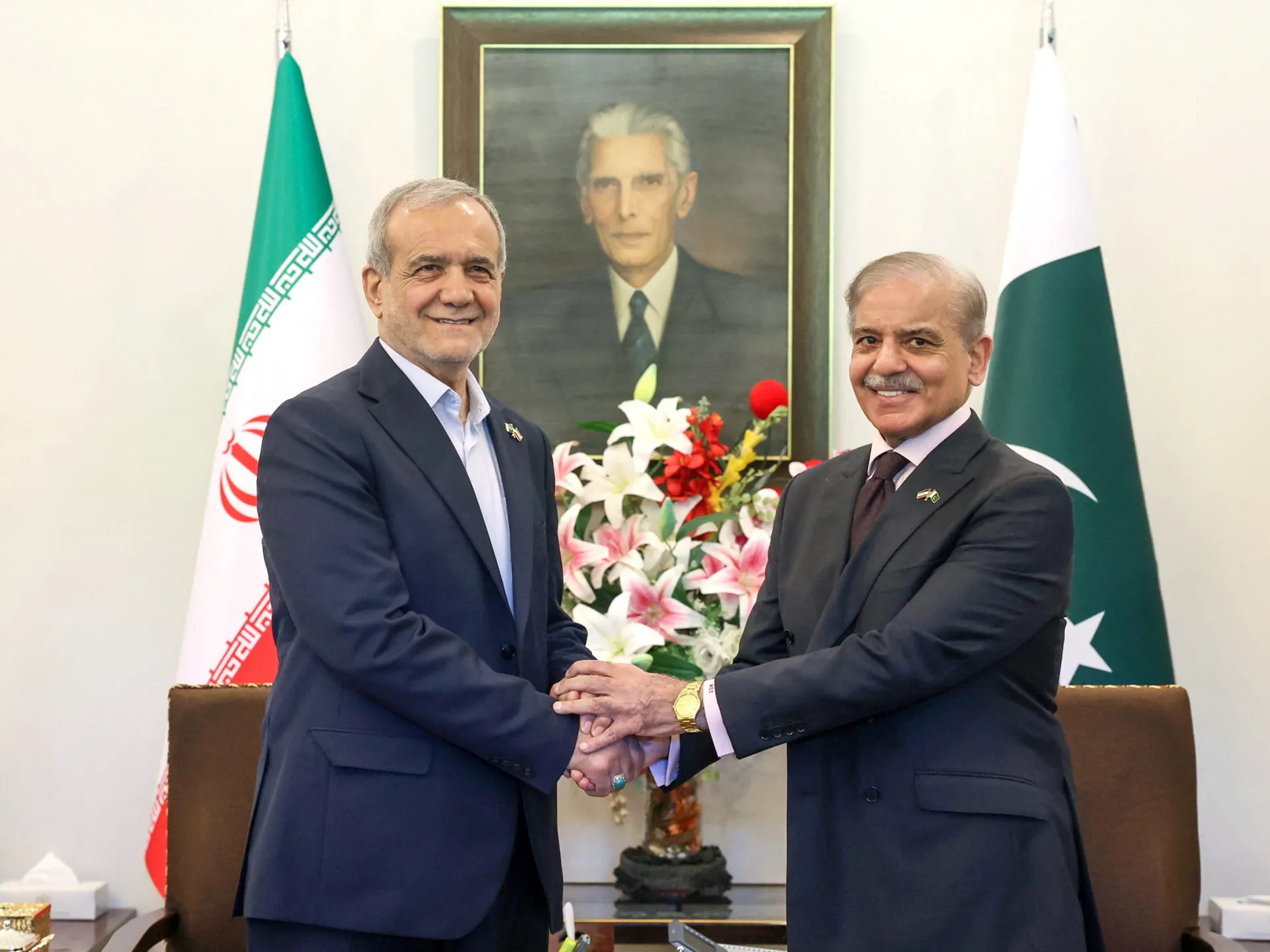
According to a statement from Pakistan’s Foreign Ministry at the time, Islamabad condemned the attacks on Iran while also denouncing Iranian strikes on Saudi Arabia, the UAE, Bahrain, Jordan, Kuwait, and Qatar, and called on all parties to exercise restraint and resume diplomacy.
During the crisis, the office of Prime Minister Shehbaz Sharif said he spoke with Saudi Crown Prince Mohammed bin Salman to express Pakistan’s condemnation of the regional escalation and its solidarity with Saudi Arabia and other Gulf states.
His office also announced a call with UAE President Mohammed bin Zayed, during which Pakistan reiterated its solidarity with and support for the UAE amid the crisis.
This dual language reveals Pakistan’s dilemma in a highly pressured regional moment. It condemns attacks on Iran, expresses solidarity with Saudi Arabia and the UAE, and simultaneously calls for de-escalation and a return to diplomacy.
As a result, Pakistan attempts to position itself as a mediator or a stabilizing buffer when Iran is involved in conflict, while Gulf capitals, especially Abu Dhabi and Riyadh, expect clearer and more unambiguous positions when their own territories or interests come under attack.
Sources
- Are UAE-Pakistan Relations Unraveling?
- India Deepens Defence, Energy Ties with UAE During PM Modi Visit
- Pakistan’s Naqvi Visits Iran with ‘Special Letter’ for Supreme Leader
- Report: Unpacking the May 2025 India-Pakistan Crisis: Mutual Perceptions, Nuclear Escalation Risks, and De-escalation Pathways
- The Saudi-Pakistan Defense Pact Highlights the Gulf’s Evolving Strategic Calculus
- Pakistan PM Backs Saudi Arabia, Gulf States After Iran’s Regional Strikes
- India in Talks to Sell Supersonic BrahMos Missile to UAE, Sources Say