Under War and Occupation: Can Palestine Hold Legislative Elections?
The electoral process in the West Bank began before arrangements were finalized for Gaza and Occupied Jerusalem.
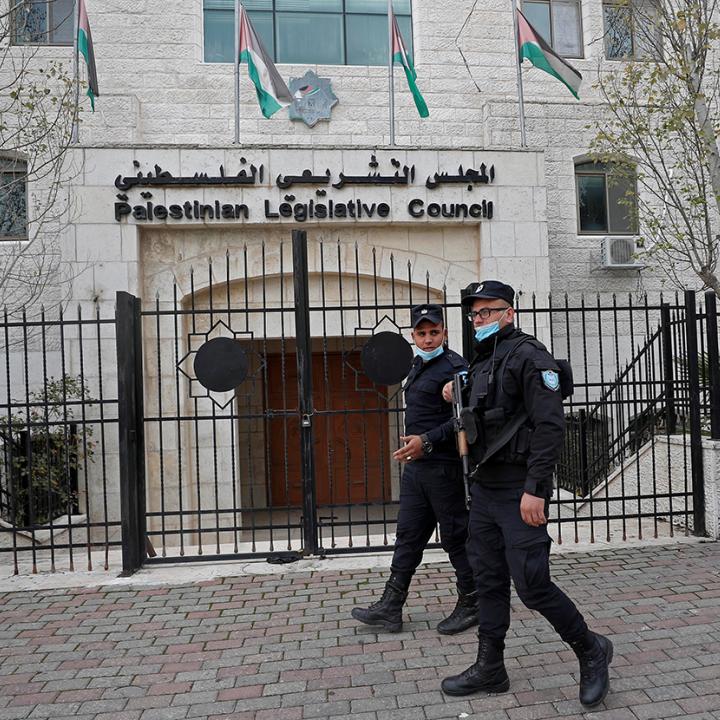
Palestinian legislative elections are set for November 28, 2026, but they face a widening gap between a completed legal framework and unresolved questions over how the vote can actually be carried out.
The participation of Gaza and occupied East Jerusalem remains tied to arrangements that have yet to be announced, as well as the ability of Palestinian factions to agree on the rules of competition, political freedoms, acceptance of the results, and a transfer of power.
Palestinian Authority President Mahmoud Abbas issued a decree on July 9, 2026, calling on Palestinians in occupied Jerusalem, the West Bank, and Gaza to elect a new legislative council. The election commission later announced dates for voter registration, candidacy, campaigning, and voting.
But preparations in the West Bank began before arrangements for Gaza and occupied Jerusalem were settled, leaving the election's inclusiveness dependent on updating voter rolls amid mass displacement and destruction, securing polling stations and election staff, and confronting Israeli Occupation efforts to prevent occupied Jerusalem residents from voting.
Who Will Take Part?
The presidency and Fatah are leading the current process, based on Abbas’s decree and the amendments introduced ahead of the election call.
The new system gives Fatah’s leadership more room to shape its list after the number of seats was increased from 132 to 200. Lowering the electoral threshold to 1% also gives smaller lists a better chance of entering the legislature.
Whether Fatah can run on a unified list remains a key factor in deciding whether to proceed. The 2021 elections exposed divisions within the movement, with several Fatah-affiliated lists competing against one another before the vote was postponed.
Hamas, meanwhile, rejected Abbas’s amendments, describing them as a continuation of his policy of “unilateral control” over the political system. Its decision on whether to participate remains open, ranging from running an official list to backing sympathetic candidates or a closely aligned list, or boycotting the process altogether.
At the heart of the dispute is a legal requirement that every candidate pledge allegiance to the Palestine Liberation Organization (PLO) as the “sole legitimate representative of the Palestinian people,” as well as to its political and national program, which rejects armed resistance and endorses international legitimacy resolutions.
That requirement gives the election commission grounds to assess candidates’ eligibility while opening a political and legal dispute with Hamas, Islamic Jihad and other forces that reject the PLO’s current political framework.
A broader objection emerged in a joint statement issued by Hamas, Islamic Jihad, the Palestinian National Initiative, the Popular Front for the Liberation of Palestine, the Democratic Front for the Liberation of Palestine and the Popular Front for the Liberation of Palestine-General Command on June 28. They called for an urgent meeting and a national dialogue ahead of the elections to ensure an inclusive process.
The dispute also raises a fundamental question about the elections’ place in the wider political process. The presidency treats the legislative vote as a standalone election, to be followed by a presidential vote in the first quarter of 2027. The factions, by contrast, link the process to presidential and PLO National Council elections and to rebuilding the PLO through a broader political agreement.
The 2026 framework differs from the Cairo agreement reached by Palestinian factions in February 2021, when they pledged to respect the results, guarantee political freedoms, end political arrests, ensure the neutrality of security forces and allow freedom of campaigning, assembly and media coverage.
No updated consensus document containing similar commitments has been issued, making the freedom afforded to Hamas and opposition candidates in the West Bank an early test of the election’s credibility.
Election law allows representatives of electoral lists, local and international observers and journalists to attend voting and counting. It also gives the election court authority to review decisions by the election commission.
But ensuring that the results are accepted will require a political agreement defining the shape of the next government, the powers of the legislature in Gaza and the West Bank, and how institutional, financial, security and judicial authority will be transferred.
The creation of a temporary national committee to administer Gaza, headed by Ali Shaath, adds another question over who will govern the territory after the election. The committee was established to manage institutions and civilian services during the transitional period, but its legal relationship with the Palestinian government or the future legislature remains unclear.
For the results to be accepted, an agreement will also be needed on whether the committee will operate under the oversight of the elected legislature and how its powers will eventually be transferred to a government deriving its mandate from Palestinian institutions.
The 2006 experience showed how an electoral victory can trigger a new crisis when local and international actors refuse to accept the result. Hamas’s Change and Reform list won 74 seats to Fatah’s 45, after which the struggle over the government and security forces evolved into a geographic split and paralysis of the legislature.
The Arab Center for Research and Policy Studies, in an assessment published on August 3, said the timing of the election was linked to international pressure to reshape the Palestinian Authority and prepare it for arrangements following the Israeli Occupation war on Gaza.
It said the legal amendments were redrawing the boundaries of political participation within the Palestinian system, particularly through the requirement to commit to the PLO and the link between membership in the legislature and membership in the National Council. The dispute, it argued, therefore concerns which political forces will enter the new institutions and what political platforms will be allowed to compete.
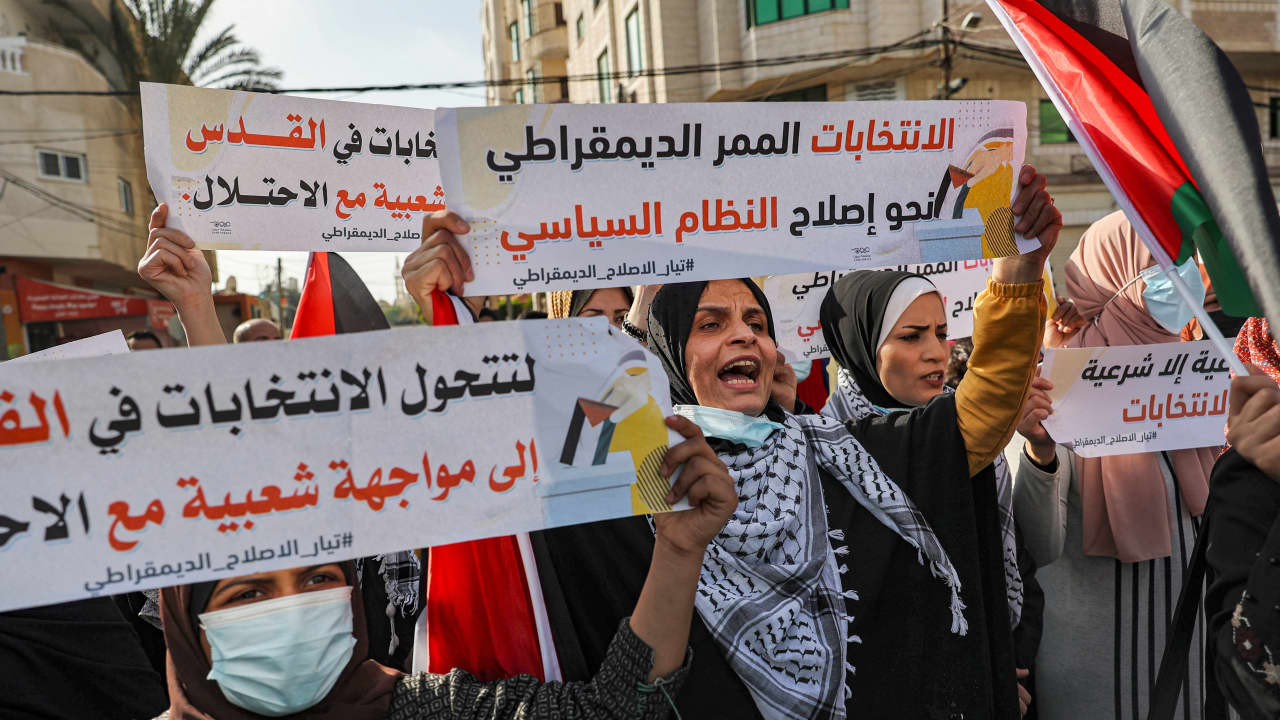
The Coalition for Change, a Palestinian grouping of political, legal and civil society figures, also announced on July 22 that it rejected political preconditions imposed on candidates and amendments it viewed as an attempt to engineer the political system. It called for legislative and presidential elections to be held simultaneously.
Its opposition extends beyond the Islamist factions and reflects concerns among Palestinian figures that the legislature could be reshaped according to rules set by the executive branch while no elected legislature is in place.
Israeli Occupation commentary has also shown a direct interest in keeping Hamas out of the political arena. The right-wing newspaper Israel Hayom described the requirement to adhere to the PLO program as a measure aimed at preventing Hamas from running under its own name.
The Begin-Sadat Center for Strategic Studies, in a study published on August 4, argued that one goal of the process was to create a new source of Palestinian legitimacy outside the outcome of the 2006 election. It characterized the absence of Hamas and Islamic Jihad from elected institutions as a “political exclusion” and a “strategic victory” over the two groups.
These assessments reflect Israeli interest in determining who can participate and what political outcome is acceptable, alongside the Israeli Occupation’s ability to arrest candidates, restrict campaigning, and prevent voting in occupied Jerusalem.
How Will the Vote Work?
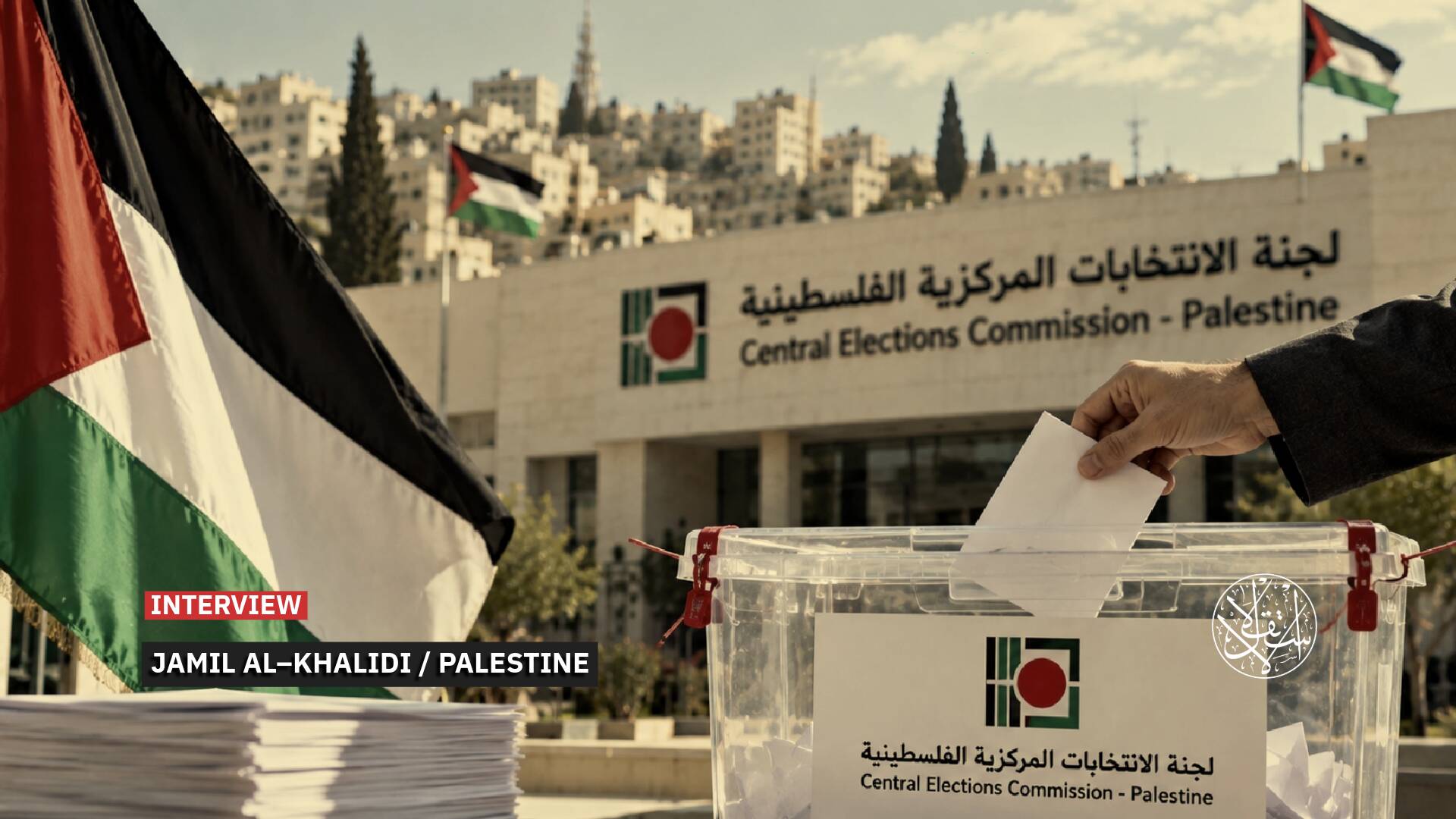
The West Bank has the most developed administrative infrastructure for the election. Updated figures from the Central Elections Commission (CEC) on August 3 show 1,588,294 registered voters, with 467 centers designated to receive registration applications and update voter data between August 15 and 19.
The CEC also oversaw broad local elections in April, with turnout reaching 56% in the West Bank. That provides a pool of staff, facilities and operational experience that can be built on for the legislative vote. But this readiness faces an Israeli Occupation system that fragments the West Bank with checkpoints, gates, and closed roads.
The UN Office for the Coordination of Humanitarian Affairs in the occupied Palestinian territory (OCHA) documented 925 movement obstacles in a report published in April, including 89 permanent checkpoints, 218 partial checkpoints, and 232 road gates. About half restrict access between Palestinian communities and main roads, while the Separation Barrier and permit system isolate areas and communities from occupied Jerusalem and the rest of the West Bank.
This affects voters’ and election workers’ access to polling stations, candidates’ movement, the transport of ballots, ballot boxes and records, and participation by villages located behind the Separation Barrier or near settlements.
Israeli Occupation forces can also close an entire governorate, raid a city or arrest a candidate or list representative during the campaign or on election day, measures that go beyond the CEC’s ability to extend voting at individual polling stations.
The West Bank process will therefore require a risk map for every polling station, reserve staff based within the same areas, alternative routes for transporting election materials and clear rules for dealing with closures and raids.
The contest will also require guarantees of political freedoms in areas under Palestinian Authority control, since political arrests or restrictions on opposition campaigns would add Palestinian barriers to those imposed by the Israeli Occupation.
In Gaza, the first challenge is determining the size and location of the electorate. The CEC has said Gaza residents will be able to participate without going through the registration process underway in the West Bank, with special procedures to be announced later.
That exception will require rules governing the source of voter data, how martyrs and missing people are accounted for, how displaced people are assigned to polling stations, what documents will be accepted from those who have lost their identification papers and how double voting will be prevented. The law requires a final voter register for each polling station and verification of voters’ identities before they receive a ballot.
The implementation of these measures will depend on who administers Gaza in the months leading up to the vote. If the temporary National Committee for the Administration of Gaza (NCAG) takes control of civilian institutions, it will be the local authority responsible for providing facilities, municipalities, communications, staff, and coordination with the election commission.
If the transfer of powers to the NCAG is delayed, the CEC will have to work with the administrative structures already operating in Gaza, without a clear framework defining each side’s responsibilities.
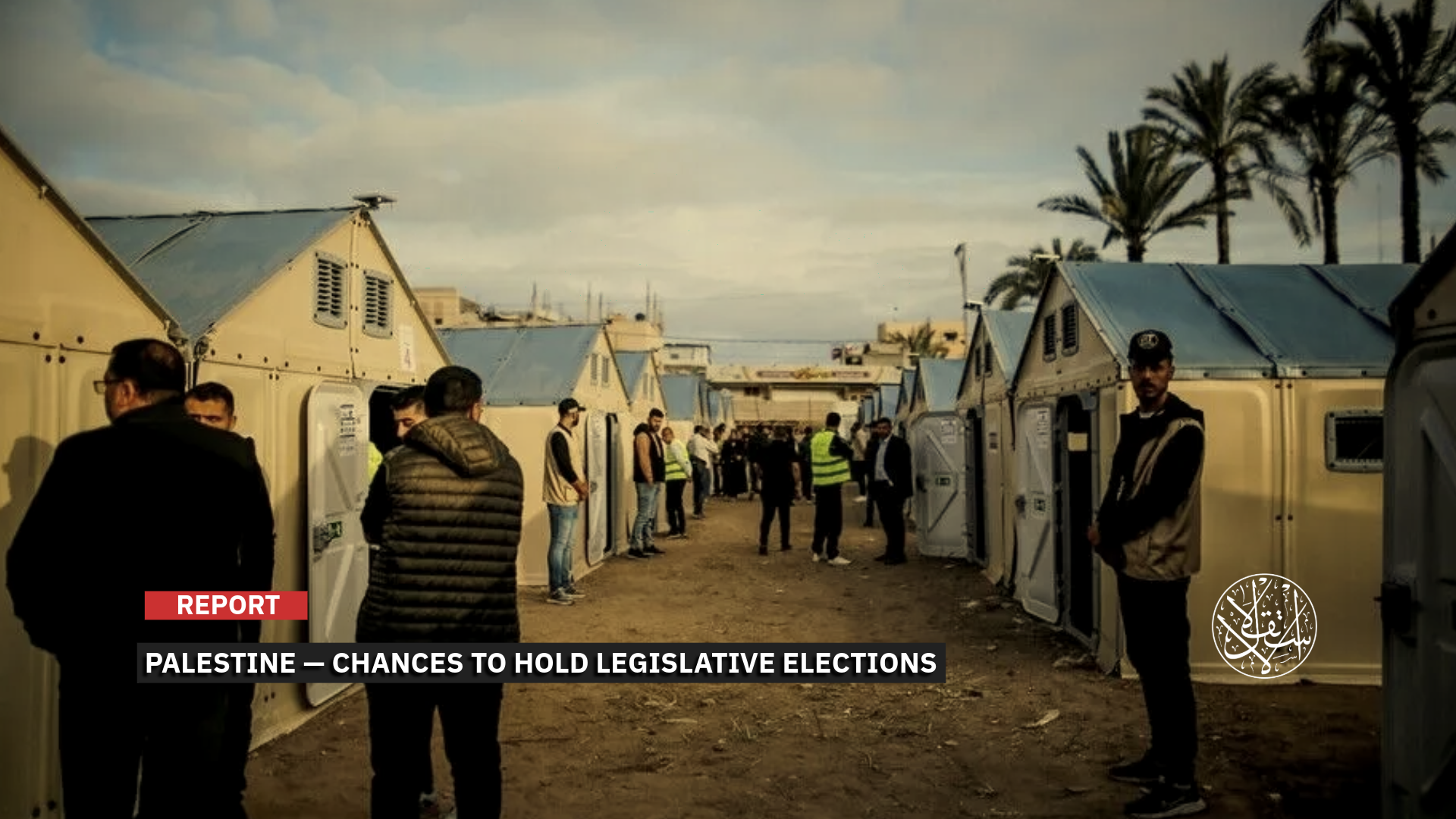
The April 25 municipal election in Deir al-Balah in central Gaza offered a test of the NCAG’s ability to operate in the territory. It covered about 70,449 eligible voters, with voting held at 12 polling stations, most of them tents.
Turnout was 23%, demonstrating that the NCAG can conduct a limited vote in Gaza. Legislative elections, however, will require coverage across five electoral districts and a much larger network of polling stations, staff, representatives and observers, all amid continued destruction and displacement caused by the Israeli genocide.
OCHA said in a report issued on July 31 that Israeli bombardment near the so-called “Yellow Line” and in other areas was continuing to damage shelters, drive new displacement and disrupt access to services. It said 67% of the population was facing high levels of acute food insecurity.
That reality affects whether schools and public buildings can serve as polling stations, as well as the movement of staff and voters and the availability of electricity, communications, printing facilities and protection for ballot boxes.
Political lists will also need to campaign across Gaza, including displaced communities and different areas of influence, while appointing representatives, monitoring the count and filing appeals.
The chances of a fair contest could vary sharply if one group is able to move freely and reach voters while others face security or logistical restrictions, particularly without a political agreement between the Palestinian Authority and Hamas on how the process will be administered.
Election security will depend on who controls the police and security institutions in Gaza on voting day. If the temporary NCAG takes over, it will need to establish which police force is responsible, who commands it, and how it will coordinate directly with the election commission, while protecting candidates, staff and ballot boxes and preventing armed groups from appearing near polling stations.
If security remains in the hands of existing structures or is divided among multiple authorities, conflicting instructions could undermine the NCAG’s ability to enforce the law.
The Gaza arrangements must therefore be settled before candidate registration opens on September 26, since national lists need to know where their voters are, how they can reach them and how many polling stations will actually operate.
Any delay until the campaign period would leave parties competing for Gaza’s share of the national vote while the process for collecting and verifying those votes remains unresolved.
Occupied Jerusalem presents the most politically difficult obstacle. The presidential decree called on the city’s residents to participate, while the CEC deferred arrangements for occupied Jerusalem voters to a later announcement. No agreement has yet been reached to allow polling stations to open inside the city or campaigns to operate there under Israeli Occupation control.
Previous elections relied on the electoral annex to the 1995 Interim Agreement, which allowed a limited number of occupied Jerusalem residents to vote inside Israeli post offices, while most voters went to polling stations in the city’s outskirts.
In the 2006 elections, six post offices were designated for voting, with capacity for about 6,300 voters. The CEC also opened additional polling stations in Kafr ‘Aqab, al-Ram, Anata, al-Eizariya and other areas outside the city center.
The CEC documented Israeli Occupation attacks, arrests, and other obstacles targeting candidates and voters at the time, and later recommended finding a more dignified alternative to voting in post offices controlled by the Israeli Occupation.
The options now include restoring the post office arrangement, moving occupied Jerusalem voters to polling stations in the suburbs, or opening Palestinian polling stations inside the city despite the risk of closure, seizure of election materials, and arrests of election workers.
The first option requires Israeli Occupation approval. The second would force voters to cross checkpoints and leave their city, while the third would leave polling stations vulnerable to direct security intervention.
Current law does not provide for a general system of electronic or mail-in voting from home. Instead, voting is tied to the voter’s identity, registration at a specific polling station, and physical presence at the polling location. Introducing an electronic or postal alternative would therefore require changes to the rules before the election, along with safeguards for secrecy, verification, and protection against manipulation.
The precedent of 2021 also hangs over the current process. Abbas halted the elections after candidate registration had been completed, saying in his postponement decree that the process would resume once conditions were in place to hold elections throughout the Palestinian territories, particularly in occupied Jerusalem.
The CEC had said it was prepared to implement alternative arrangements inside the city if it received a political decision to do so. But the process was suspended following Abbas’s decision on April 29 of that year.
Full Elections or a Partial Vote?
The first scenario is a simultaneous vote in the West Bank, Gaza and occupied Jerusalem, in line with the presidential decree and the structure of the election law. Votes would be counted across a single national district to determine the electoral threshold and allocate seats in the legislature.
Making this possible would require arrangements for Gaza and occupied Jerusalem to be announced in the coming weeks, along with guarantees for political freedoms and security, access for campaigns, list representatives and observers in all three areas, an updated voter register in Gaza, designated polling stations and a clear authority responsible for securing them.
A full vote would also require a decision on the future of the temporary NCAG administering Gaza after the legislature is elected. If it continues to run the territory under a separate transitional mandate, it would leave an executive authority outside the direct oversight of the institution Gaza residents helped elect. Bringing the NCAG under the Palestinian government and placing its budget and decisions under legislative oversight would require an agreement defining its mandate, duration, and how its powers would eventually be transferred.
Whether the election can truly be considered inclusive will also depend on how many people can actually vote. The CEC could open polling stations in Gaza and occupied Jerusalem’s suburbs, while large numbers of voters may still be unable to reach them because of displacement, checkpoints, bombardment and arrests. In that case, polling would exist geographically across all three areas, but political and legal questions would remain over whether voters and competing lists had been given equal access.
The second scenario would involve holding elections in the areas where voting is possible while excluding Gaza or occupied Jerusalem, or postponing voting there until a later stage.
The law does not allocate separate seats to individual governorates that can be elected independently of the rest of the territory. The electoral threshold and seat distribution are instead calculated from the total valid vote across a single national district. Excluding Gaza or occupied Jerusalem would therefore change the electorate on which the results are based, affecting the chances of different lists and their share of seats.
A phased election would require a legal amendment or new decree specifying the length of the delay, how ballots would be secured, when results would be announced, and the timeline for appeals.
Results from the first phase would also need to remain confidential until voting is complete. Publishing voting trends in the West Bank before Gaza or occupied Jerusalem votes could influence campaigns, list alliances, and voter behavior.
A legislature elected only in the West Bank would face a representation crisis in Gaza, where de facto authorities and factions could refuse to recognize its results. Excluding occupied Jerusalem would also recreate the contradiction seen in 2021 and reinforce the Israeli Occupation’s ability to determine the geographic boundaries of Palestinian democracy.
Excluding both areas would leave the legislature representing only part of the territory under Palestinian Authority administration, weakening its claim to represent Palestinians across the occupied territories.
The third scenario is another postponement by presidential decree if minimum conditions for participation in Gaza and occupied Jerusalem cannot be met. That would follow the precedent of 2021, but carry a high political cost after 20 years since the last legislative elections.
Any delay would need a new election date, publicly stated conditions for resuming the process, and a decision on whether existing voter registration, candidate lists, and completed procedures remain valid. Otherwise, postponement could become open-ended.
In a report published on July 22, “Israel’s” public broadcaster Kan suggested that Abbas had left himself an “escape route” from the elections, citing fears of a Hamas resurgence and the precedent of postponement.
Zman Yisrael similarly reported on July 16 that the requirement to hold the vote in occupied Jerusalem could provide another opening for postponement, anticipating strong Israeli opposition to any voting inside the city.
Yedioth Ahronoth, meanwhile, quoted an unnamed Palestinian official on July 9 as saying pressure from donor countries and Arab capitals had pushed the Palestinians toward elections and the creation of a new elected leadership.
That supports the Arab Center for Research and Policy Studies’ view of the vote as part of a broader international reform effort. But it also raises a fundamental question: can an electoral process shaped by external pressure, occupation, and Palestinian division produce a political settlement that competing factions will accept once the results are known?
Sources
- From Cognitive Victory to Political Exclusion: Hamas and the 2026 Palestinian Elections
- Movement and Access in the West Bank | April 2026
- The CEC announces the Legal Periods for the 2026 Legislative Elections
- Fear and Loathing in the Palestinian Authority: Preparing for Elections for the First Time in 20 Years [Hebrew]
- Palestinian Elections: Motivations, Context and the Significance of the Timing [Arabic]
- Shaath: Gaza Administration Committee Ready to Begin Work Once Resources Are Available [Arabic]
- President Sets November 28 as Date for Legislative Elections [Arabic]