After Defeating AIPAC: Could Abdulrahman el-Sayed Become the First Muslim U.S. Senator?
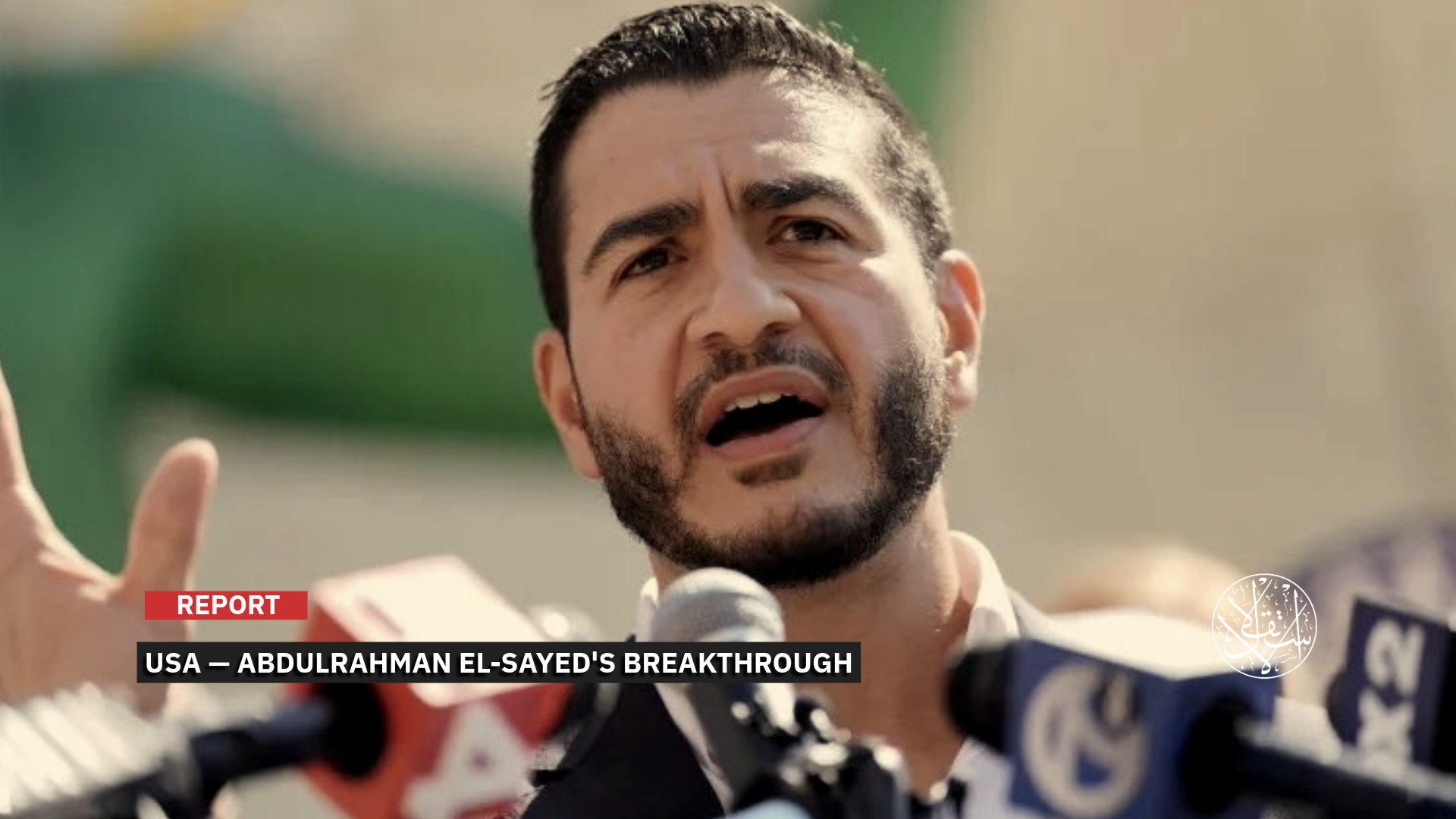
“No Muslim has ever entered the Senate since its establishment.”
When “Abdulrahman el-Sayed,” known as “Abdul,” delivered the University of Michigan’s 2007 commencement address at an election event for former U.S. President Bill Clinton, he received praise from Clinton, who saw in him more than just a gifted speaker and advised him to seriously consider entering politics.
About 19 years after that advice, el-Sayed entered the political arena, running for a seat in the U.S. Senate representing Michigan. He secured the Democratic nomination by defeating a candidate who had received support from the “pro-Israel” lobby AIPAC, setting the stage for the general election in November 2026 against the Republican nominee.
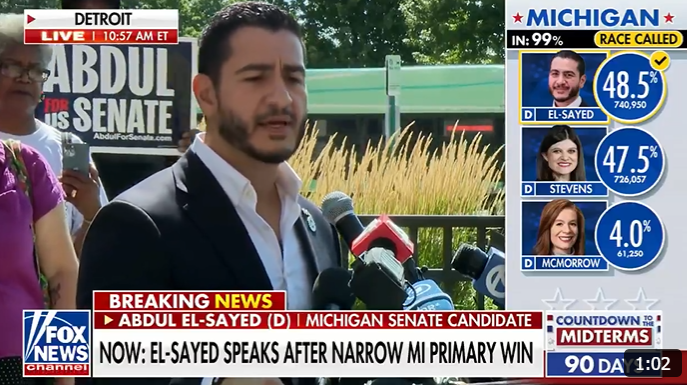
The Egyptian-American physician and epidemiologist, Abdulrahman el-Sayed, won the Democratic nomination for the U.S. Senate race in Michigan, defeating Representative Haley Stevens in the primary held on August 5, 2026.
This marks an important step toward the possibility of becoming the first Muslim to win a seat in the U.S. Senate in the November 2026 election.
El-Sayed was not the only candidate to make electoral gains. Several candidates opposed to the influence of the “pro-Israel” lobby also achieved notable results, including Palestinian-American Representative Rashida Tlaib and climate activist William Lawrence, in electoral contests against candidates backed by AIPAC.
These results reflect a notable decline in the “pro-Israel” lobby’s ability to influence certain electoral races and may also signal growing political shifts within the Democratic Party, potentially affecting the direction of the next Congress.
Why His Victory Matters
Abdulrahman el-Sayed’s victory represents not only a major setback for “pro-Israel” influence, but also a defeat for a large group of politicians and businesspeople who supported “pro-Israel” candidates and, together with the lobby, spent roughly $60–72 million on advertising, compared with just $6 million spent by el-Sayed’s campaign.
He advocates removing “corrupt money” from politics, returning it to the pockets of ordinary citizens, and providing healthcare for everyone. His campaign slogan, which proved highly effective at the polls, was, “Get money out of politics, put money in your pocket, healthcare for all.”
His victory, along with those of other progressive candidates, also represents a setback for a faction that has emerged within the Democratic Party arguing against nominating “progressives,” whom Trump calls “leftists,” and instead choosing “moderate” candidates.
In other words, the success of a progressive candidate in a swing state such as Michigan will give the left a powerful argument in the internal debate over “electability,” a debate that the traditional Democratic establishment has often used to justify backing moderate candidates.
This was reinforced by the victory of his fellow progressive, William Lawrence, in Michigan’s 7th District. Backed by Bernie Sanders, Lawrence defeated candidates associated with the “moderate” wing despite the millions of dollars spent to stop their advance.
In Virginia, incumbent Representative Don Beyer, who opposes the current U.S. war against Iran and has called for tougher measures to prevent “Israel” from launching attacks on Lebanon and Gaza, also won.
The election result therefore marks the beginning of a period of realignment within the Democratic Party and gives the progressive wing greater legitimacy.
This could force the traditional leadership to adapt to a new political reality that may reshape the Democratic caucus in Congress in the coming years.
His victory, alongside those of immigrants and opponents of the “pro-Israel” lobby AIPAC who are calling for greater scrutiny of the organization and for it to be treated as a foreign organization, also represents a shift in the balance of power within the Democratic Party and strengthens the faction calling for an end to U.S. military aid or arms transfers to “Israel”.
Although el-Sayed did not achieve the landslide victory predicted by some polls, simply maintaining the lead after an enormous spending campaign in support of Haley Stevens represents a strategic success for the progressive movement.
The figures involved reportedly include $72 million in outside spending by AIPAC and other “pro-Israel” groups to support his opponent, Haley Stevens.
Despite this, el-Sayed remained ahead, albeit by less than 1.5 percentage points. The result is therefore being viewed as a setback for the influence of the “pro-Israel” lobby.
Dr. Abdulrahman el-Sayed himself was keen to highlight this point when announcing his victory, declaring, “We defeated political money,” a reference to the “pro-Israel” lobby.
This result could make a larger number of Democrats less willing to support the continuation of U.S. military aid to “Israel”, especially since el-Sayed made confronting AIPAC’s financial influence a central theme of his campaign, according to U.S. media reports.
In addition to the victories of Abdulrahman el-Sayed and William Lawrence, despite opposition from the lobby, incumbent Representative Rashida Tlaib also won the Democratic nomination to run for reelection to the U.S. House of Representatives in Michigan’s 12th Congressional District, securing more than 68 percent of the vote in the primary.
She will face Republican candidate James Hooper in the general election. The district is classified as a “safe Democratic” seat, making her victory in the November general election highly likely.
The First Muslim in the Senate
Abdulrahman el-Sayed’s success would carry significant symbolic weight in the Senate if he defeats former Republican Congressman Mike Rogers, the Republican candidate backed by Trump and also supported by the AIPAC lobby, in the November 2026 election.
He would become the first Muslim of Arab origin to win a seat in the U.S. Senate since the founding and declaration of independence of the United States 250 years ago, in 1776, and nearly 237 years since the U.S. Constitution went into effect, in 1789.
No Muslim has ever served in the U.S. Senate since its establishment, while several Muslims have served in the House of Representatives. Four Muslim Democrats currently serving in the House are Andre Carson, Ilhan Omar, Rashida Tlaib, and Lateefah Simon.

Historically, since the establishment of the House of Representatives in 1789, only six Muslim representatives have served in it: Keith Ellison, Andre Carson, Ilhan Omar, Rashida Tlaib, Jamaal Bowman, and Lateefah Simon.
Abdulrahman el-Sayed, an Egyptian-American physician and politician, is now in contention to become the first Muslim senator in the history of the U.S. Senate if he wins the November 2026 general election.
Moreover, his victory in this swing state, Michigan, is considered crucial to the Democratic Party’s hopes of regaining control of the Senate in the 2026 congressional midterm elections, according to the British newspaper The Guardian on August 5, 2026.
His victory has sparked alarm among evangelical Christians and the Zionist lobby, while media commentators and lawmakers have begun attacking him from an explicitly anti-Muslim and Islamophobic perspective.
Senator Ted Cruz claimed that “the Muslim Brotherhood is rapidly infiltrating America with the Democrats and communists, all of whom seek to destroy Western civilization from within and hate America and Israel, and Islamists seek to take control of the Democratic Party.”
Before his victory, anti-Muslim politician Eric Daugherty claimed that polling stations were being flooded by Muslim women wearing hijabs and other Muslims to ensure Abdulrahman’s victory, arguing that Republican candidate Mike Rogers should defeat him “at any cost.”
He said, “We do not want Abdulrahman to enter the Senate and advance Islamic interests at the expense of America’s interests!”
Abdulrahman, AIPAC, and ‘Israel’
There is a wide gulf of conflict and hostility between Abdul el-Sayed and the “pro-Israel” lobby and “Israel”. He entered the race in the first place to oppose Trump’s policy of redirecting healthcare and social-welfare funds away from Americans and toward weapons for “Israel”, which, he argued, are used to kill Palestinians and others.
El-Sayed had not originally planned to run for the Senate. However, Trump’s 2025 decisions to freeze federal funding for health centers and programs across the country, including in Michigan, became the main motivation for him to enter the race.
At the time, he was serving as director of the Wayne County Department of Health, and during his campaign he said that freezing these funds and sending American taxpayers’ money to “Israel” to drop bombs on children in Gaza was a major reason he decided to run.
He therefore says that his responsibility, as a potential senator, would be to determine how American taxpayers’ money is spent, and he calls for an end to unconditional U.S. military aid to “Israel”.
He advocates treating “Israel” as a “rogue state,” like any country that disregards international law. He describes “Israel’s” practices in the Gaza Strip as “genocide” and “apartheid,” and says he supports equal political and human rights for Palestinians and Israelis. These positions have been reported in coverage of his campaign.
When asked in a CNN interview in July 2026 whether he believes in “Israel has a right to exist,” he said that “this question is a trap that AIPAC puts in the path of every candidate,” referring to the American “Israel” Public Affairs Committee.
“The real question,” he said, “is whether it has the right to American taxpayers’ money.”
“Nobody ever asks whether Palestine has a right to exist. Israel exists,” he said, addressing the interviewer. “The better question you should ask is, ‘A better question is: Does Israel have a right to our tax dollars?’”
When another CNN interviewer tried to challenge him by pointing out that he opposes U.S. funding for things such as “Israel’s” Iron Dome, he responded, “Yes, I am against it, in large part because I just don't understand why anybody thinks it's the right thing to do to send our tax dollars abroad, to fund foreign militaries when our own kids barely get to go to schools that are functional.”
AIPAC and groups affiliated with it directly opposed him and supported Haley Stevens with $30 million. The total amount spent on advertising to defeat him and elect Stevens, who was strongly supportive of “Israel”, was reportedly around $64–72 million, according to various U.S. estimates.
Some commentators therefore argued that his victory meant America was waking up and rejecting candidates backed by “Israel”, instead choosing Muslims and immigrants who prioritize the interests of the American people over those of “Israel”.
Just as New York City’s Muslim mayor, Zohran Mamdani, defeated one of America’s most prominent politicians, Andrew Cuomo, and the coalition of “pro-Israel” donors, billionaires, major corporations, and lobbying groups that supported him, Abdul defeated Haley Stevens, the lobby-backed candidate who had said that she “dreams about Israel.”
Trump, His Vice President, and the Media Against Him
Because he represents a growing current within America and the Democratic Party that opposes spending billions of U.S. dollars to fund “Israel’s” war machine while public services in the United States suffer from inadequate funding, Trump, his vice president, the lobby, and right-wing media have attacked him, warning of the threat they believe he poses.
Hours after his victory, Trump described him as someone who “hates Jews and hates Israel,” calling him a “man of hate” who is “full of crap,” and warned against electing him to the U.S. Senate in November 2026, according to The Hill.
In a statement issued after Abdulrahman el-Sayed’s victory was announced, Trump described him as “the failed communist who hates Jews and Israel.”
Trump’s vice president, J.D. Vance, also attacked him and warned about his political rise, seeking to portray his election as a senator as a threat to policies adopted by the current administration.
“God forbid, you're going to have President el-Sayed in three years, we don't want him to undo all the incredible work that we've been doing,” he said.
El-Sayed has faced accusations of antisemitism from his political opponents for years, but he rejects those allegations, maintaining that his positions are directed at the policies of the Israeli government, not at Jewish people.
In an interview with MS NOW on August 5, 2026, he emphasized his commitment to protecting Jews, saying, “My commitment to Jewish safety is the same as my commitment to the safety of my own kids. We have a responsibility to take on antisemitism in all of its forms, wherever we see it. It’s the same responsibility we have to take on Islamophobia.”
He added, “To all of my sisters and brothers of the Jewish faith, or any faith at all, or no faith at all, I want you to know that my commitment to your safety — to Jewish safety — is the same commitment that I have to the safety of my own daughters.”
The American organization Rabbis for Voice praised his remarks, including his statements, “I love Judaism and I love the Jewish people, but AIPAC and Israel are not the same thing as Judaism,” and, “It is dangerous to expand the definition of antisemitism to include criticism of Israel.”
AIPAC Loses the Bet
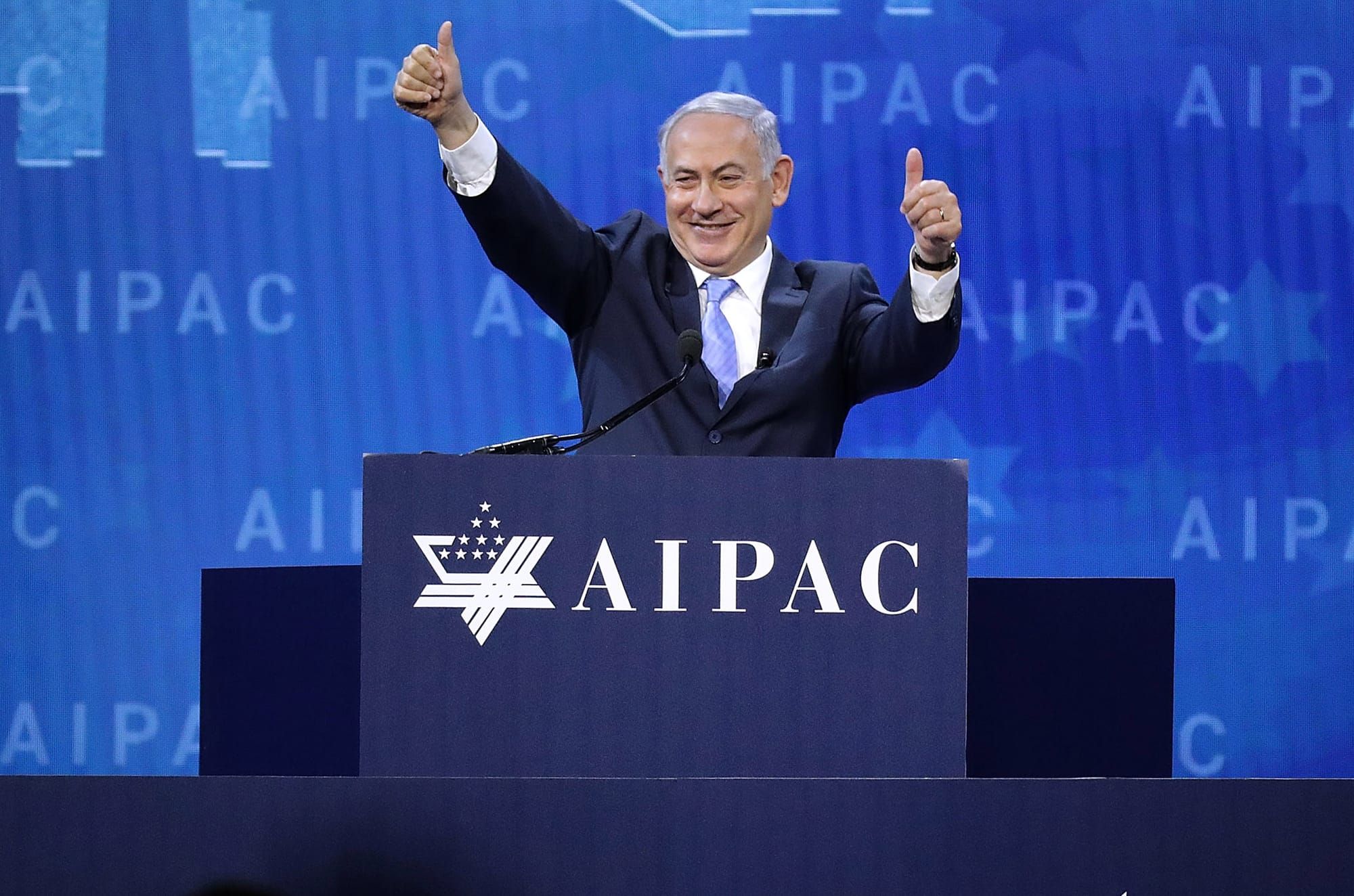
The American “pro-Israel” lobby, formally known as the American Israel Public Affairs Committee (AIPAC), spends millions of dollars to oppose critics of “Israel” and uses its political influence to shape U.S. elections in ways that serve the interests of “Israel”. However, it suffered a major setback in the latest elections.
According to ABC News, AIPAC and its affiliated super PAC, the United Democracy Project (UDP), supported 40 candidates in primary races that have been decided so far.
Approximately 26–28 of the AIPAC-backed candidates won those races, representing a success rate of roughly 65–70 percent, while around 12–14 candidates lost, a significantly higher defeat rate than in previous election cycles.
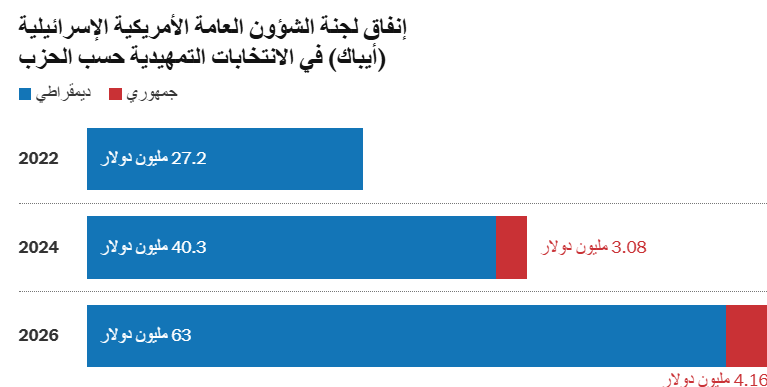
In the 2022 elections, AIPAC supported 365 candidates, 359 of whom won, giving the organization a success rate of approximately 98 percent. As a result, several media outlets have described this year as AIPAC’s worst electoral performance since it began spending money in elections to support “pro-Israel” candidates.
Commenting on AIPAC’s defeats, independent Senator Bernie Sanders said the elections represented a test of whether billionaires and powerful spending committees would continue to control American politics or whether there would be a government that represents working families, according to Common Dreams.
An analysis published by Sludge on August 3, 2026, found that AIPAC had spent more than $100 million during the 2026 U.S. midterm election cycle, including approximately $30 million in an effort to defeat Muslim Senate candidate Abdulrahman el-Sayed.
The analysis confirmed that spending by AIPAC and its affiliated super PAC, the United Democracy Project (UDP), had reached approximately $30.6 million in the Michigan Senate race in an effort to defeat el-Sayed, the largest amount the organization has ever spent in a single electoral contest.
The analysis estimated that AIPAC’s total spending during the 2026 election cycle had reached at least $104.3 million and was likely to increase before the midterm elections concluded. It also noted that the United Democracy Project had approximately $80 million in cash on hand as of the end of June 2026.
The report explained that this figure does not include money AIPAC channels through other spending committees operating under local-sounding names that do not obviously indicate their connection to the organization.
Previously, The American Prospect reported that AIPAC had used committees such as “Elect Chicago Women” and “Affordable Chicago Now” to finance electoral campaigns in Illinois.
An analysis published by Common Dreams on August 5, 2026, described the primary election results as “the final nail in AIPAC’s coffin,” arguing that “challenging Israel may give Democrats a chance to control Congress,” after criticizing “Israel” or discussing an end to U.S. military support for “Israel” had long been considered politically taboo in elections.
The analysis argued that the influence of the “pro-Israel” lobby within the Democratic Party is declining alongside declining public support for “Israel” in the United States, particularly as a result of the war in Gaza, a trend that was clearly reflected in Abdulrahman el-Sayed’s victory.
It noted that AIPAC and its allies had spent tens of millions of dollars to turn the Michigan race into the most expensive Democratic Senate primary in the party’s history, yet the spending failed to prevent el-Sayed from advancing toward the Democratic nomination.
The analysis argues that the Republican Party’s problem is that it is failing to read these shifts in the American public mood, which are not limited to Michigan but extend to other states such as Maine, where all Democratic candidates were forced to adopt stronger positions on the war on Gaza.
It explains that Republicans are misreading this shift and are betting that progressive candidates will not be able to win in the general election, while “the mood of the American public has changed more profoundly than party leaders in Washington realize.”
The analysis describes what is happening in the United States as “not merely a limited change in voters’ priorities, but a major political realignment, driven by images of the war on Gaza and the destruction, famine, and killing of civilians that accompanied it.”
It asserts that “Democratic voters are now punishing candidates who maintain traditional pro-Israel positions.”
Under the headline “AIPAC Enters the Biggest Test in Its History During the Primaries, Including Michigan Tonight,” The New York Times, on August 4, 2026, summarized the scale of the setback suffered by the “pro-Israel” American lobby in these elections.
It reported that AIPAC suffered losses against candidates it had sought to defeat, with its losses more pronounced in the 2026 elections than in 2022.
AIPAC, the powerful “pro-Israel” lobby that poses a formidable challenge to any American politician who opposes or criticizes “Israel”, was forced to issue a statement acknowledging its setbacks after the victory of its staunch opponent, Abdulrahman el-Sayed.
In the statement, the organization highlighted its successes in supporting other “pro-Israel” candidates who won their primary races with its backing, despite losing other contests.
The “pro-Israel” lobby’s statement also made clear that it intends to work from now on to defeat el-Sayed in the November 2026 general election, where he will face Republican candidate Mike Rogers, who is also backed by Trump.
AIPAC congratulated 30 “pro-Israel” candidates who won their congressional primaries in Kansas, Michigan, Missouri, Virginia, and Washington state, stating that it had succeeded in advancing 215 AIPAC-backed candidates from both parties to the 2026 congressional midterm elections.
Among those it supported who won was Congressman Wesley Bell, who defeated former Representative Cori Bush, whom AIPAC accused of seeking to demonize its members and attack “Israel”.
In Michigan, Jeremy Moss also won with the lobby’s support against opponents whom AIPAC described as “anti-Israel”. AIPAC also celebrated the defeat of Aisha Farooqi, who had accused “Israel” of committing genocide and called for an end to all aid to “Israel”.
AIPAC established a major Super PAC in 2022 that spent more on television, radio, and digital advertising in federal elections than any other non-party-affiliated special-interest group.
That assessment was based on a New York Times analysis of data compiled by AdImpact, a company specializing in tracking media and political advertising.