‘Return Centers’: Why Is There Doubt About the Effectiveness of the European Union’s New Immigration Laws?
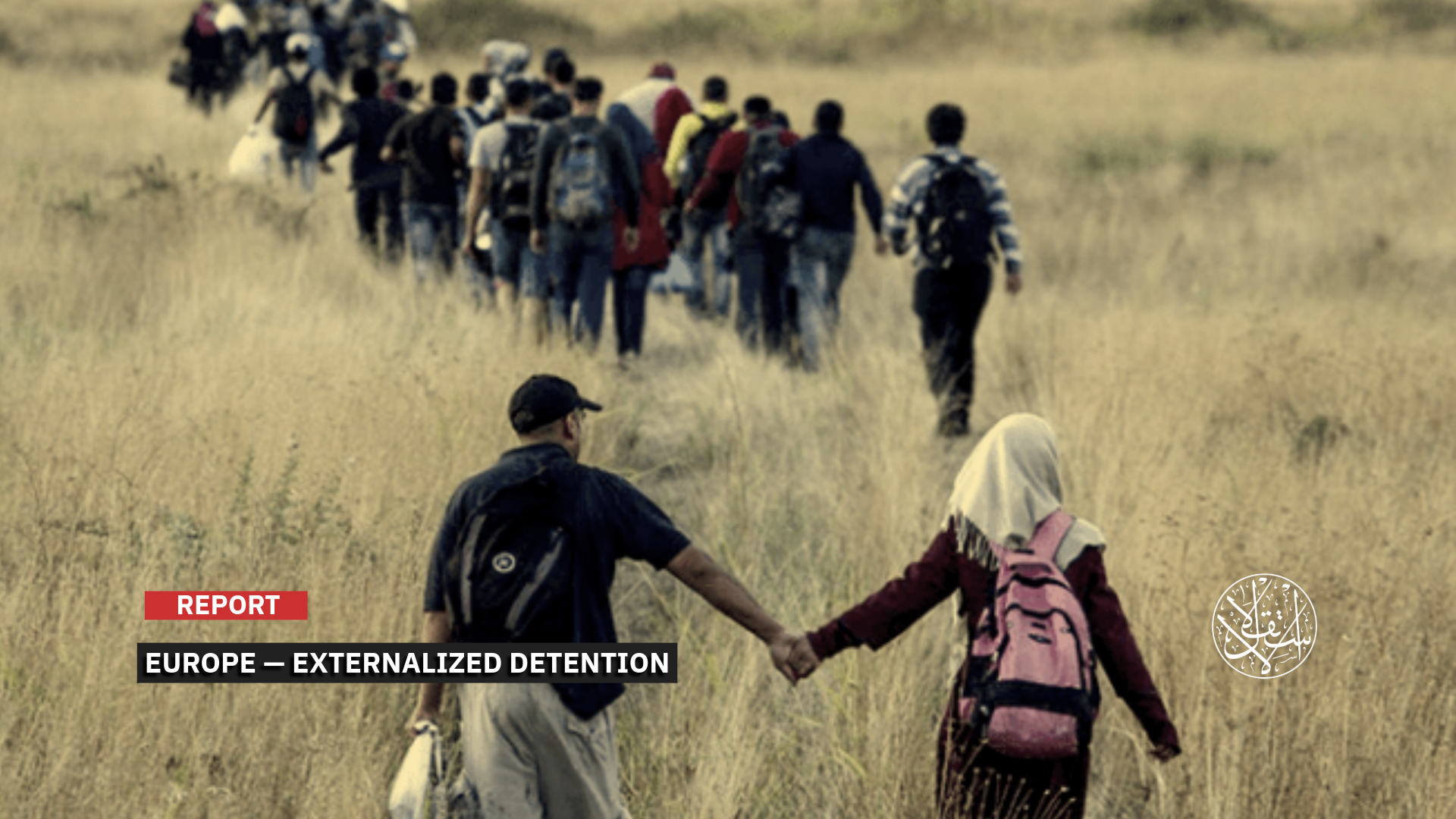
Setting up migrant return centers will face political and logistical challenges.
Amid growing European debate over migration policies, questions are emerging about the extent to which the European Union’s newly adopted legislative package for managing irregular migrants is realistic and effective.
While its supporters see it as a decisive step toward addressing a long-standing flaw in the asylum system, where only a limited proportion of deportation decisions are actually enforced, its critics view it as a radical shift toward unprecedented tightening of migration controls, one that could affect fundamental rights and raise complex legal and humanitarian concerns.

Return Centers
The European Parliament approved on June 17, 2026, a new European Union law allowing the establishment of return centers outside the bloc and authorizing inspections of migrants’ homes, with support from conservative and far-right groups.
The legislation aims to accelerate the return of migrants who do not have the right to remain in the European Union. The decisive factor in its approval was the backing of the center-right bloc and far-right parties.
The new rules introduce stricter measures for returning migrants whose asylum applications have been rejected. They allow member states to conclude agreements with third countries to establish “return centers” outside the European Union, where migrants could be detained while awaiting deportation.
Currently, only about 20 percent of deportation decisions involving foreigners residing irregularly in the European Union are carried out, a rate that has fueled strong criticism from supporters of a tougher migration policy.
The new “return system” represents the most significant tightening of the European Union’s migration policy in decades. It allows member states to create deportation facilities outside the bloc, known as return centers, through agreements with third countries.
These centers could be used as temporary facilities where migrants await removal to their countries of origin. However, critics warn that they could also become places where migrants remain for extended periods, potentially without a clearly defined time limit or any guarantee that they will eventually be returned. The system excludes unaccompanied minors, although families with children could be transferred to these centers.
In addition to return centers, the legislation includes a provision allowing authorities to inspect “the homes of irregular migrants or other related locations.”
Non-governmental organizations and civil society groups have compared these measures to controversial immigration raids carried out by the United States Immigration and Customs Enforcement (ICE).
Other provisions include longer detention periods, stricter entry bans, and expanded powers to locate irregular migrants.
The maximum period for detaining irregular migrants awaiting deportation would increase from six months to two years. This period could be extended by an additional six months, while individuals considered a security threat could face indefinite detention.
Entry bans would also become significantly stricter. In most cases, they would increase from five to ten years, while individuals deemed a security risk could receive lifetime bans.
The legislation also changes the appeals process. Under the current system, deportations are automatically suspended while legal challenges are pending.
Under the new rules, this automatic suspension would be removed, and courts would decide on a case-by-case basis whether a return order should be temporarily halted.
Members of the Social Democratic and Left groups strongly opposed the legislation, warning that the measures could undermine migrants’ fundamental rights.
Anna Catarina Mendes, vice-president of the Socialists and Democrats group, said in a statement on June 17, 2026:
"This regulation risks normalizing practices of questionable legality that would have been unimaginable in the European Union just a few years ago."
Meanwhile, United Nations High Commissioner for Human Rights Volker Turk expressed deep concern over the new European legislation allowing migrants to be returned to their countries, stressing that European states cannot transfer their human rights obligations to third countries.
Turk said in a statement, "EU countries cannot simply delegate their human rights obligations to third countries."
He added that detaining vulnerable people, including children, and returning them to third countries is an extremely sensitive exercise of state authority and carries a high risk of human rights violations.
He also stressed the need for “special attention to the protection of human rights and dignity, both in practice and in the wording of the law.”
In contrast, French President Emmanuel Macron said on July 19, 2026, that France does not support establishing so-called “return centers” for migrants in third countries and questioned their effectiveness. However, he added that France respects countries that wish to create such facilities.
Speaking in Brussels at the conclusion of a two-day European Union summit, Macron said, "We support a more effective return policy, but... I have never seen a return center in a third country that actually works."
Macron also questioned whether such centers align with European values, saying, "I am not sure that this reflects the essence of the Europe we believe in, and I also do not think it is effective."
Meanwhile, Spanish Prime Minister Pedro Sanchez said at a press conference following the European Union summit on July 19, 2026, that Spain also opposes the creation of such centers, although it remains in the minority on the issue at the European level.
He added that these centers “would only lead to a waste of economic resources, and Europe does not have many of them.”

A Long-Standing Debate
The idea of deporting migrants to third countries was originally an Italian initiative. In 2023, Italian Prime Minister Giorgia Meloni implemented a similar agreement with Albania.
However, the difference is that the migrants transferred there had not originally applied for asylum. The European Union, by contrast, wants to limit this procedure to migrants who are legally required to leave its territory.
In 2025, around 700,000 people were residing in the European Union without legal authorization. Approximately 500,000 of them were ordered to return to their countries of origin.
In practice, however, only 135,000 people actually left, meaning that the rate of compliance with departure orders did not exceed 27.5 percent.
As a first step toward reducing irregular migration flows into European countries through the bloc’s external borders, the new Common European Asylum System (CEAS) entered into force in the European Union on June 19, 2026. It aims to strengthen migration management and reduce irregular entry through stricter procedures.
The system provides for faster asylum procedures, primarily carried out at the European Union’s external borders. Individuals whose asylum claims are considered unlikely to succeed will be subject to accelerated procedures lasting up to 12 weeks.
The reform also introduces an initial screening phase for asylum seekers, including comprehensive identity checks, health and security screenings, as well as the collection of biometric data. The aim is to quickly direct individuals to the appropriate legal process and improve oversight of irregular entries.
Regarding the distribution of responsibilities, the country through which an asylum seeker first enters generally remains responsible for processing the application.
However, the reform introduces a mandatory solidarity mechanism among European Union member states for handling asylum applications and sharing responsibilities.
The debate has intensified with the introduction of new mechanisms such as “return centers” outside the European Union’s borders, accelerated asylum procedures at borders, and expanded detention and inspection powers.
Caught between deterrence and security considerations on one side, and humanitarian rights and political costs on the other, Europe’s own position remains divided, reflecting the depth and complexity of the migration crisis within the bloc.
Many of these measures fall under the “New European Pact on Migration and Asylum” (GEAS), which aims to reduce and regulate migration while harmonizing procedures among member states.
One of its tools is the creation of a unified European database for migrants, containing fingerprints, facial images, and other identifying information.
Through this system, the European Union hopes to speed up the screening of entry and asylum applications and more quickly reject those who do not meet the required conditions.
However, human rights organizations have criticized the system, arguing that it comes at the expense of individualized assessments of each asylum claim.
At the same time, such agreements with countries outside the European Union are not new. In 2016, the European Union, under the leadership of former German Chancellor Angela Merkel, reached an agreement with Turkiye to curb the flow of Syrian refugees.
Similar agreements were later concluded with Libya, Egypt, Tunisia, Niger, and Mauritania, countries that are not considered models when it comes to human rights protections.

An Unclear Future
While critics have raised concerns about the treatment of migrants in these countries, conservative politicians see no problem with such arrangements.
Although the number of migrants arriving in Europe over the past two years has fallen by about half compared with the previous period, members of the European Parliament want to permanently adopt return centers before July 2026.
In this context, Syrian lawyer Mohammad al-Nawaf, who resides in Germany, said that “within the European Parliament, there are those pushing for the adoption of strict laws to deport some refugees to Rwanda, Uzbekistan, or countries with which they have no connection and where they have never lived.”
Al-Nawaf added that “for the left, such laws represent a betrayal of European values, while for the right, they are a necessary and long-awaited tough measure through the creation of deportation facilities outside Europe’s borders, known as return centers.”
He continued, “This policy targets migrants residing in the European Union without legal residence permits, either because their asylum applications have been rejected or because their visas have expired.”
Therefore, “the European Union is seeking to increase the rate of deportations of people who are in violation of immigration laws, and it is looking for new solutions through new legislation.”
Al-Nawaf noted that “the idea of return centers is not new, but it has remained controversial for a long time. Today, many EU countries have become willing to accept the concept, even though not everyone agrees with it. Spain, for example, has taken a different position. In the greenhouses of southern Spain, thousands of people work without legal documents, and many of them hope to regularize their status. Spanish Prime Minister Pedro Sanchez had promised to pursue this.”
However, “Spain appears almost alone in Europe in taking this position. Elsewhere in the European Union, people without the right to remain may face deportation to countries that are completely foreign to them. This is a result of the new migration rules agreed upon by the European Commission and the European Parliament, with return centers at the forefront of these measures.”
“There are European countries that reject and question this law because the conditions awaiting migrants who are deported remain unclear. Nevertheless, five European countries want to use these centers outside the EU: Germany, Denmark, the Netherlands, Austria, and Greece. They are even planning to establish such centers before the end of this year.”
“For this reason, they have already begun identifying potential destinations such as Senegal, Ghana, Mauritania, Rwanda, Uzbekistan, and possibly many other countries,” he continued.
Al-Nawaf pointed to a number of unresolved questions surrounding the issue, including, “What will third countries receive in exchange for accepting migrants from the European Union? Will they be offered European trade concessions, direct financial assistance, or something else?”
He said, “It is clear that the relationship between the European Union and partner countries has become increasingly based on bargaining and mutual interests. Therefore, these countries will demand financial contributions, trade privileges, and other benefits.”
“The establishment of migrant return centers will be surrounded by political complexities due to differing positions within the European bloc, as well as logistical obstacles. Such laws will not solve the fundamental problem, which is the failure to enforce departure orders within Europe.”
Al-Nawaf pointed out that “some countries, such as Algeria and Morocco, refuse to readmit their citizens, which obstructs return operations. On the other hand, migrants can legally challenge deportation decisions if they fear persecution in their countries of origin. This leads to the suspension of many deportation cases. In addition, a large number of people residing irregularly disappear from authorities’ view and become difficult to locate.”
He explained, “Therefore, some see the idea of deporting migrants to distant and unfamiliar countries as a solution born out of necessity. People who are required to leave should first be given the opportunity to return voluntarily to their home countries. However, opponents of return centers believe that the new law will make forced deportations, assisted by police, far more likely.”
He concluded by saying that there are therefore two approaches: “The first is tightening controls and closing the doors, while the second, advocated by many experts for years, is addressing the root causes of migration. This means improving living conditions in countries of origin so that people do not have to risk migrating to Europe in the first place.”