Between International Recognition and Political Maneuvering: What's Happening in Somaliland?
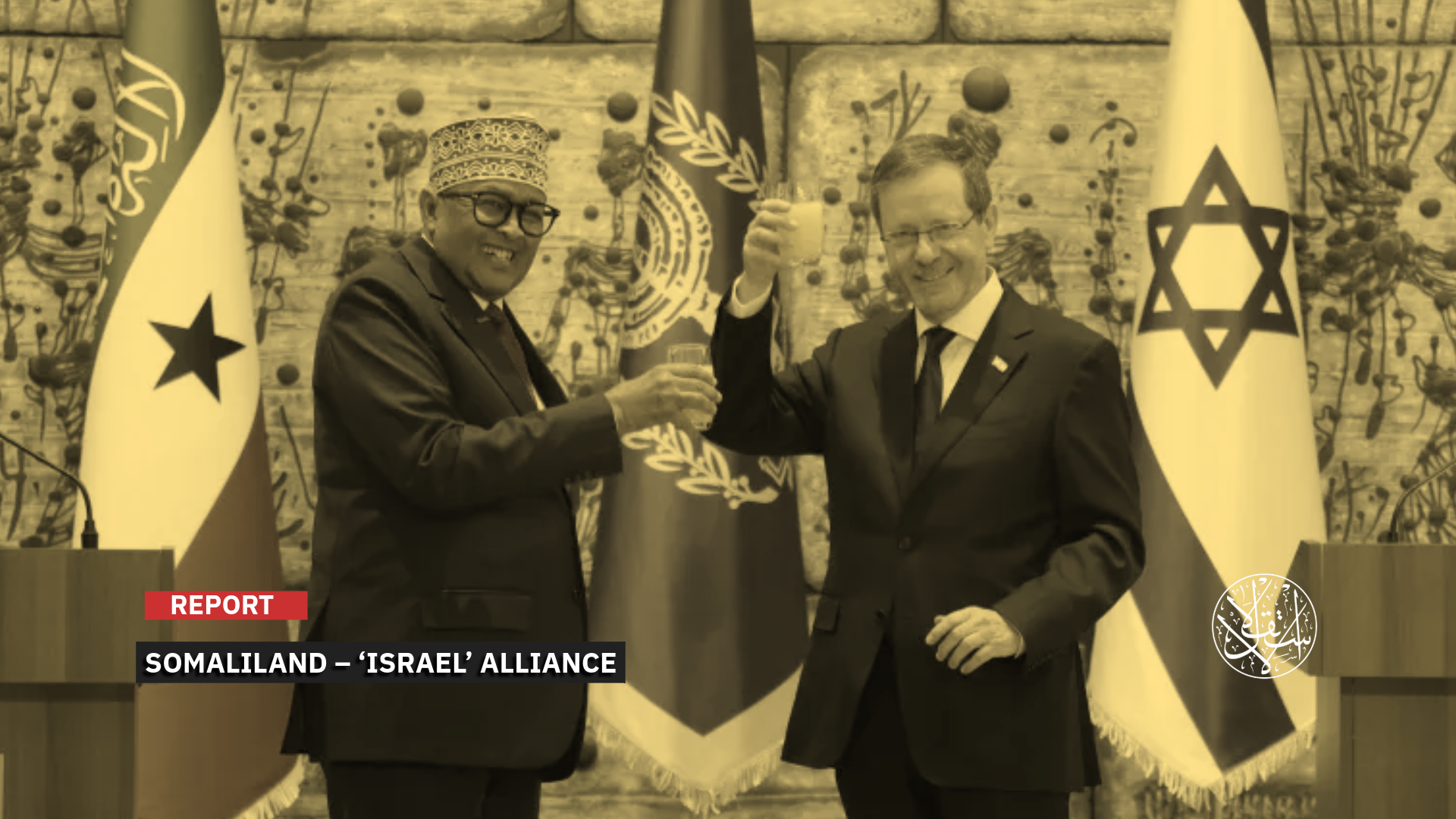
“Israel” views Somaliland from a purely strategic perspective.
After “Israel” became the first United Nations member state to recognize Somaliland, the separatist political entity seeking independence from Somalia, in December 2025, the Israeli state hosted the region's president on June 14, 2026, in what was described as a "historic" visit.
During the visit, he offered what was seen as a gesture of rapprochement by recognizing occupied Jerusalem as “Israel's” capital and announcing the opening of a Somaliland embassy there.
Israeli President Isaac Herzog received Somaliland President Abdirahman Mohamed Abdullahi, known as Irro, accompanied by his wife, Fardowsa Mohamed Roble , describing the visit as "historic."
The move was widely viewed as a challenge to Arab countries that oppose the expansion of Israeli influence in the Horn of Africa through this separatist entity.
In this context, reports indicate that the area surrounding the Port of Berbera has become a hub for growing logistical and military activity, raising concerns that it could evolve into a site with an Israeli military presence as part of a broader strategy to strengthen influence over the vital shipping routes of the Gulf of Aden and the Bab el-Mandeb Strait, according to reports cited by Israeli newspapers.
Remarks made by the Israeli president during the reception, which referred to what he described as "six million Muslims" in Somaliland and their support for recognizing Jerusalem as “Israel's” capital, highlighted the political controversy surrounding this rapprochement, particularly among Arab states and especially Egypt, in the Horn of Africa region.
Herzog stated, "Israel and Somaliland face a wide range of shared threats and interests. Both countries confront the danger of radical extremism and are working together to promote security and stability in the Horn of Africa and the wider region."
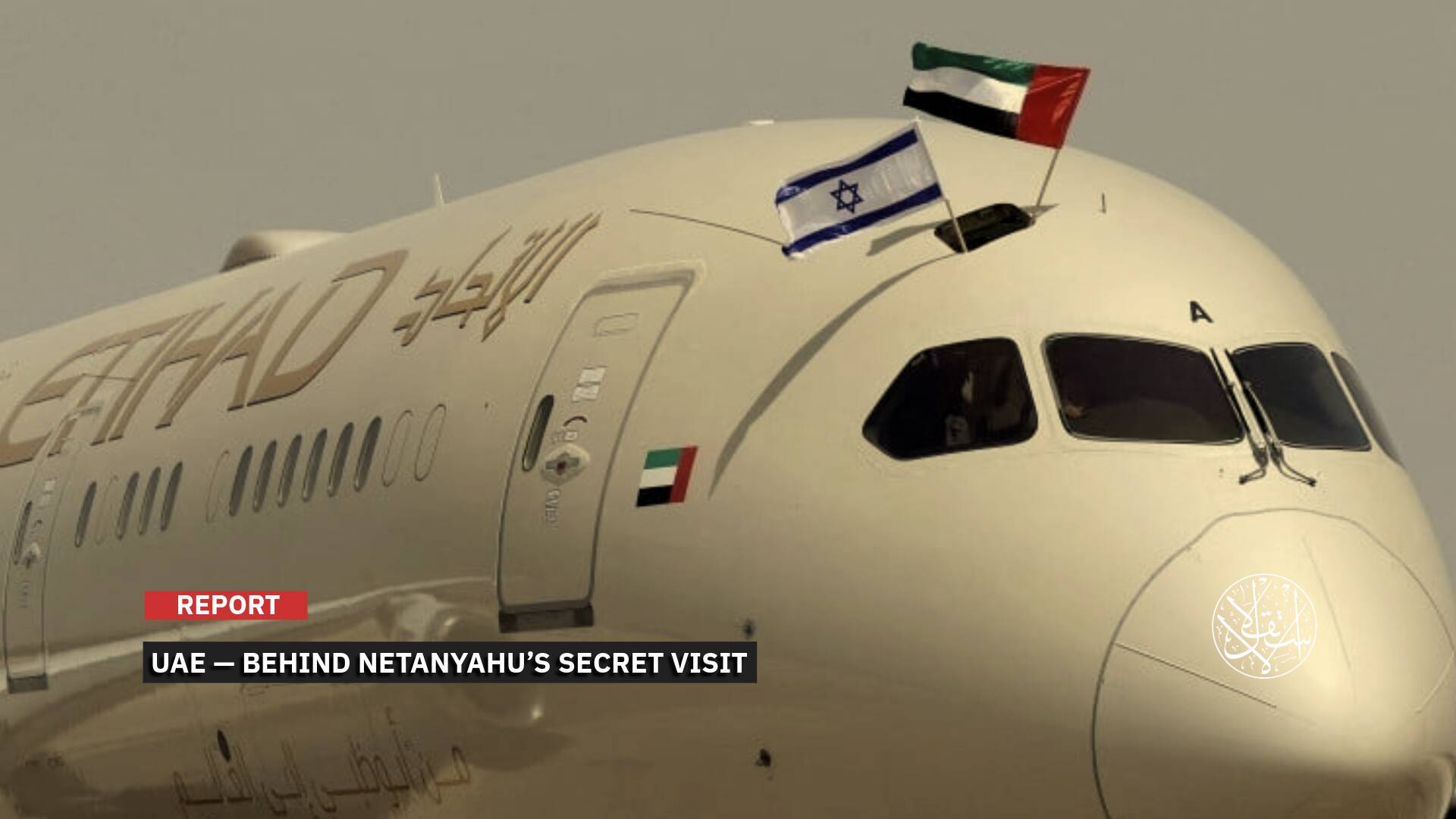
One day before the visit, on June 13, 2026, the news outlet Drop Site reported that “Israel”, which is seeking a foothold on the Red Sea through Somaliland, is working to deepen its ties with the separatist entity. Reports also suggested that it intends to establish a military base there in the near future.

Mutual Benefits
The decision by Somaliland's president to visit “Israel” and open an embassy in Jerusalem points to a political and security trajectory that goes beyond symbolism.
According to various analyses, it reflects a move toward strengthening “Israel's” presence in the breakaway region in exchange for growing political and security incentives being discussed in this context, including the training of local forces, expanded security cooperation, and reports of plans to establish a military foothold there.
At its core, these developments appear to resemble a "mutual-benefit arrangement" between the two sides. Somaliland, which lacks broad international recognition, is seeking to break out of the isolation it has faced since declaring independence from Somalia in 1991 and to secure official recognition that could open new diplomatic avenues.
“Israel”, meanwhile, stands to benefit by expanding its geopolitical influence in one of the most strategically sensitive regions of the Horn of Africa.
In this context, Iqbal Somaliland, a regional affairs expert at the Danish Institute for International Studies, argues that Hargeisa's push for cooperation with “Israel” cannot be separated from its ongoing search for an international partner capable of helping it break through the barriers of diplomatic isolation.
He noted that this choice also reflects complex political calculations involving identity, legitimacy, and regional alignments.
In remarks to the Drop Site News, he explained that the central issue is that this approach may be viewed as a political gamble, one that involves gradually sacrificing a degree of acceptance within the Muslim world in exchange for recognition from a single state.
This comes at a time when Somaliland has still not secured recognition from any United Nations member state, despite more than three decades having passed since it declared its separation from Somalia.
One notable irony in this context is that Somaliland and Kosovo have, under this trajectory, become among the Muslim-majority entities that have established diplomatic representation in Jerusalem.
This adds an additional symbolic dimension for “Israel” in the context of its broader struggle for international legitimacy and political recognition.
On May 18, 2026, the city of Hargeisa, the capital of the breakaway region, witnessed an unusual scene within its socially and religiously conservative environment.
Israeli flags were raised during local celebrations, and participants were seen waving flags bearing the Star of David alongside Somaliland's tricolor flag, reflecting the extent of the shift in the symbolic relationship between the two sides.
Supporters of this approach within Somaliland, however, argue that these steps represent a political effort to break the international deadlock that the territory has faced for decades, particularly in light of the absence of formal recognition and its lack of international legal standing despite possessing fully developed institutions, including a government, military, currency, and local administration.
According to this view, any potential recognition by “Israel” could constitute a "diplomatic breakthrough" that may be used either as leverage or as a precedent to persuade other countries to reconsider their positions, or at the very least to open broader political and economic channels of engagement with the territory.
“Israel”, for its part, is widely seen as viewing Somaliland through a purely strategic lens, primarily because of the region's geographic location overlooking the Gulf of Aden and its proximity to the Bab el-Mandeb Strait, one of the world's most vital maritime chokepoints, through which a significant share of international trade and energy flows between Asia and Europe passes.
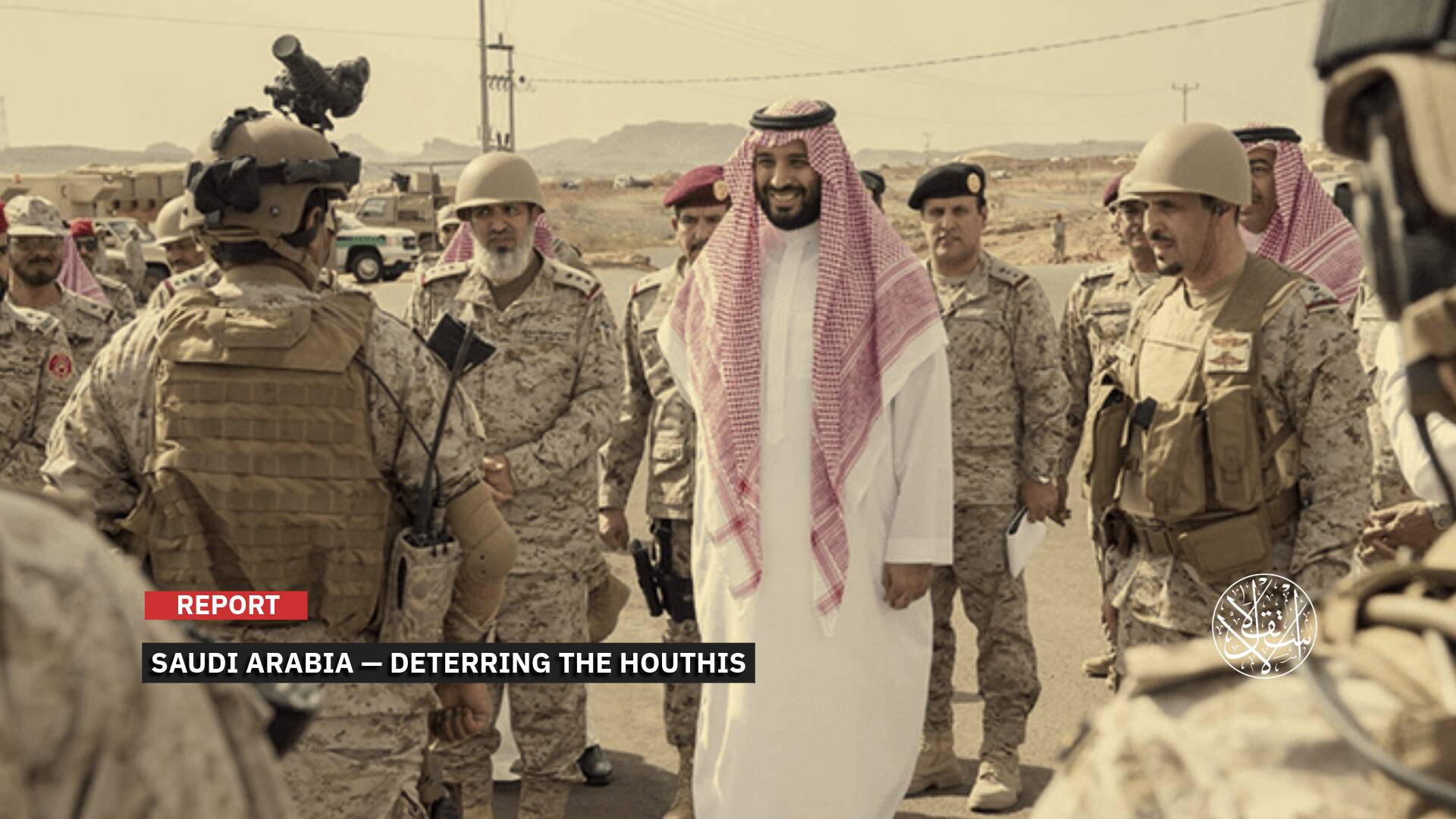
The territory also derives additional strategic importance from its position opposite the Yemeni coast, where the Iran-backed Houthi movement remains active and has intensified maritime attacks in recent years.
These developments have affected navigation security in the Red Sea and the Gulf of Aden and have had repercussions for strategic ports across the region.
From this perspective, a number of analysts regard Somaliland as a potential forward observation post for “Israel” in the Horn of Africa, enabling it to monitor maritime and military movements around the Bab el-Mandeb Strait and track activities linked to Iran and its regional allies, including the Houthi movement in Yemen.
The region's geographic position, together with the shifting balance of power in the surrounding area, could also make it, should security or intelligence cooperation deepen, part of a broader network through which “Israel” seeks to expand its presence in the Red Sea and the Horn of Africa and strengthen its ability to influence critical maritime routes.
Within this framework, the growing rapprochement is viewed as part of a wider pattern of Israeli efforts to extend its influence beyond its traditional sphere, taking advantage of geopolitical vacuums in parts of the Horn of Africa and the intensifying regional and international competition over ports and maritime corridors.
Consequently, this relationship is not seen merely as a bilateral matter between two parties. Rather, it is interpreted within a broader web of interconnected interests involving political recognition, maritime security, and the reshaping of influence across one of the world's most strategically sensitive waterways.
A Challenge to Arab States
The visit of Somaliland President Abdirahman Mohamed Abdullahi "Irro" to “Israel” represents a development that goes beyond the traditional diplomatic dimension and poses a challenge to the Arab countries bordering the Red Sea.
In addition to “Israel's” recognition of Somaliland as an independent state, this step marks the beginning of a new phase in consolidating Israeli presence in the Horn of Africa.
“Israel's” recognition of Somaliland, along with the latter's decision to open an embassy in occupied Jerusalem, has raised Arab concerns that the move could alter the balance of power in the Horn of Africa.
The region has for years witnessed intense competition for influence among major powers, most notably the United States, Russia, and China, alongside influential regional actors such as Egypt and Turkiye on one side, and the United Arab Emirates and Ethiopia on the other.
“Israel's” entry as a direct player through the recognition of Somaliland gives it influence over one of the most important coastlines overlooking the Red Sea and the Gulf of Aden.
This could have implications for maritime security, international navigation, energy issues, and regional power balances.
Therefore, the visit cannot be viewed merely as a diplomatic step or an exchange of official representation; rather, it can be seen as an attempt to build a long-term strategic partnership between “Israel” and an entity controlling a highly sensitive geographic location at the gateway to the Red Sea.
While Somaliland's objective is to obtain international recognition that would consolidate its separation from Somalia, “Israel's” objective appears broader, involving the establishment of a political, security, and strategic foothold in the Horn of Africa, in close proximity to the Bab el-Mandeb Strait and the Yemeni coastline.
This is the source of the visit's sensitivity for Arab countries bordering the Red Sea, as it could contribute to a new geopolitical shift in one of the world's most important regions for Arab national security.
The announcement of this step triggered swift and unusually unified regional reactions. Foreign ministers from more than 12 countries, including Egypt, Saudi Arabia, Turkiye, and Somalia, issued a joint statement condemning what they described as an "illegal and unacceptable" move by Somaliland authorities.
The Egyptian Ministry of Foreign Affairs also condemned, in a separate statement, the opening of what it described as an embassy by the "authorities of the separatist Somaliland region" in occupied Jerusalem, considering the move a violation of international law and international legitimacy resolutions concerning the status of the city.
The ministry affirmed that Egypt rejects any unilateral measures aimed at changing the legal and historical status of Jerusalem or granting legitimacy to arrangements that contradict United Nations resolutions.
It stressed that East Jerusalem is Palestinian territory occupied since 1967 and that any measures affecting its legal or political status are null and void and have no legal effect.
The Palestinian Ministry of Foreign Affairs expressed its rejection of the opening of a Somaliland embassy in “Israel” in occupied Jerusalem, considering the move a "violation of international law and international legitimacy resolutions."
In a statement, the ministry said that any measures or arrangements, whether diplomatic or political, or any attempts to alter the status of the city of Jerusalem, its legal position, geography, or demographic composition, are null and void and produce no legal consequences. It added that such actions do not change the internationally recognized legal status of the city.

Israeli Military Base
Despite what the website Drop Site revealed, citing officials in the Somaliland government on June 13, 2026, regarding the imminent opening of an Israeli military base in the breakaway region, and information previously mentioned in a report by Al-Estiklal, which suggested that it would likely be located in the coastal city of Berbera, both “Israel” and Somaliland authorities quickly denied the reports.
The Israeli newspaper Haaretz reported on June 17, 2026, that both sides had denied the accuracy of reports claiming that the Israeli military had begun establishing a military base inside the Horn of Africa region.
Somaliland Defense Minister Mohamed Yusuf confirmed that there was no Israeli military base or deployment on the territory, explaining that the existing cooperation was limited to training support.
He said, "There is no Israeli military presence or military bases in Somaliland, but Israel is helping Somaliland; it is supporting the training of some members of our police and military."
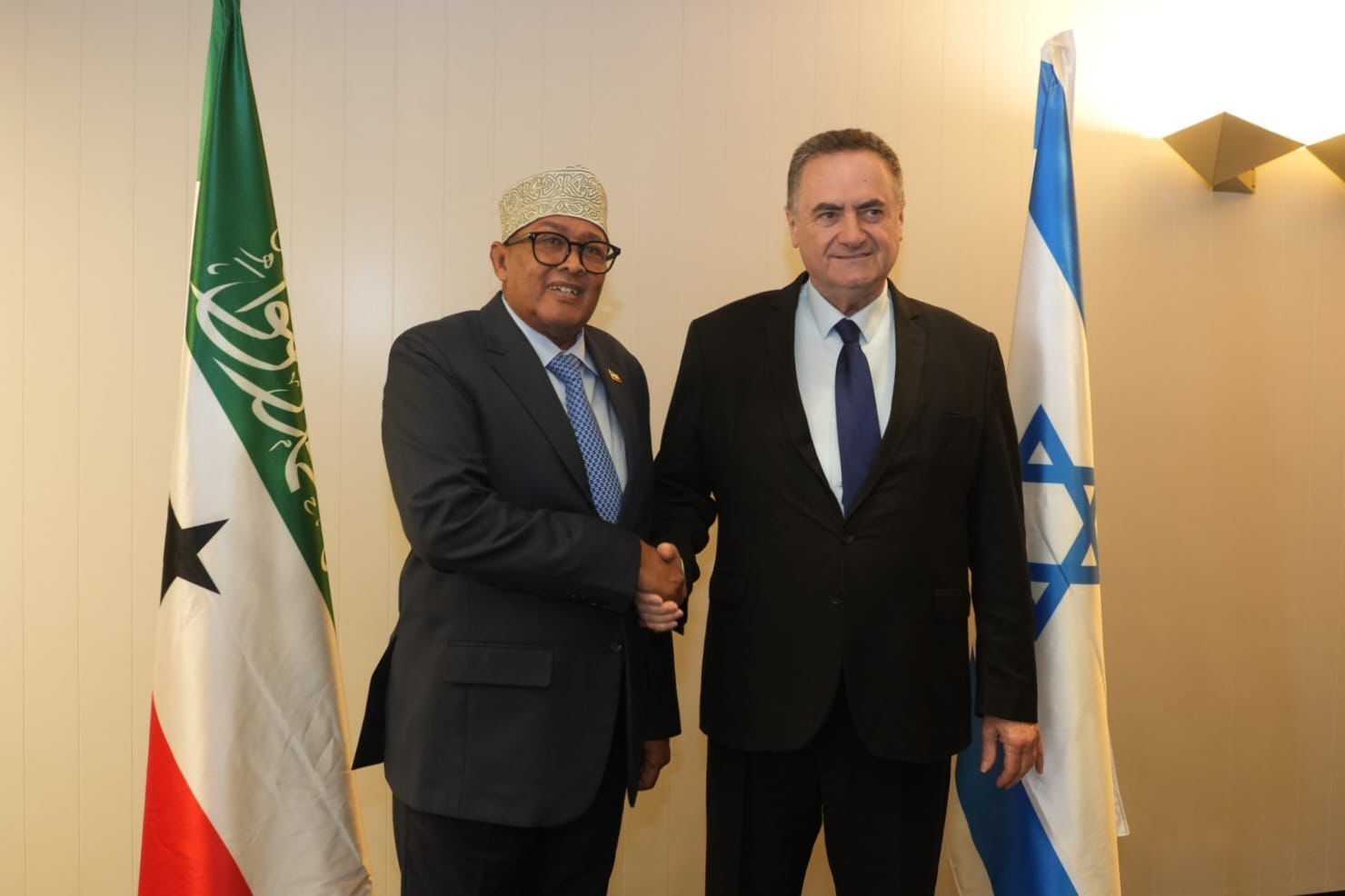
However, this denial coincided with statements by Israeli Defense Minister Israel Katz that revealed an advanced level of cooperation between the two sides.
During his meeting with Somaliland President Abdirahman Mohamed Abdullahi "Irro," Katz announced his intention to expand security and economic relations with the region, according to Reuters, as reported on June 17, 2026.
He also confirmed that “Israel” and Somaliland had been cooperating "secretly" for many years, according to statements reported by The Times of Israel on the same day.
"We have cooperated for many years in secret in a series of operations that will remain confidential, and now we intend to elevate and deepen our security cooperation to new levels," Katz said, according to a statement from his office.
These remarks reinforce what was reported by Drop Site and Somali Guardian on June 14, 2026, that “Israel” had already established an intelligence presence inside Somaliland and that discussions were underway regarding the possible establishment of an Israeli military base in the future.
The website quoted officials, including a Somaliland government official and a senior Somali official, as saying that “Israel” "has established an intelligence presence in Somaliland, while the establishment of a military base remains under consideration."
As another indication of the seriousness of these discussions, a Somaliland official told Israeli media on January 8, 2026, that closer ties with “Tel Aviv” had opened the door to discussions regarding the establishment of an Israeli military base inside the region.
Israel's Channel 12 also quoted Deqa Qasim, director of the political affairs department at the Foreign Ministry in Hargeisa, as saying that the idea of a military base was "under discussion," but that it depended on the nature of agreements that could be reached between the two sides following the exchange of diplomatic representation, something that was later achieved through the opening of reciprocal embassies.
Observers argue that any potential Israeli base in Somaliland would provide “Tel Aviv” with a military foothold along one of the world's most important maritime routes, near the Bab el-Mandeb Strait, which serves as a vital artery for trade and energy flows between Asia and Europe and whose strategic importance is often compared to that of the Strait of Hormuz.
Estimates by several analysts suggest that Berbera Port and Berbera International Airport are the most likely locations to host any future Israeli military or intelligence presence, as part of an emerging regional alignment involving Somaliland, “Israel”, and the United Arab Emirates.
In this context, the German Institute for International and Security Affairs (SWP) has stated that the UAE is working in coordination with “Israel” to consolidate an Israeli security and military presence inside the breakaway region.
The Israeli newspaper Maariv had previously referred to what it called the "Berbera Axis," describing it as reshaping influence maps in the Horn of Africa with the participation of the UAE, “Israel”, and the United States. Other reports by the same newspaper indicated that “Tel Aviv” views Somaliland as a forward platform for monitoring the Houthis and countering their influence in the Red Sea.
These assessments are reinforced by ongoing expansion and development works at Berbera International Airport, which the International Institute for Strategic Studies (IISS) in London described as upgrades with a military dimension that could prepare the infrastructure needed to receive foreign forces or military equipment in the future.
Hussam Radman, a researcher at the Sana'a Center for Strategic Studies, argues that the open confrontation between “Israel” and the Houthis has provided “Tel Aviv” with an additional justification for seeking a permanent foothold in the region.
He told Drop Site, "In practice, the presence of a military or intelligence base in Somaliland would enable Israel to expand its influence against the Houthis, obtain broader intelligence information, and consolidate its geopolitical presence in the southern Red Sea in a sustainable manner."
He added that the broader objective is to gain direct influence over one of the world's most important maritime chokepoints, the Bab el-Mandeb Strait, through which a significant share of global trade passes.
The significance of these developments is further heightened by the fact that the UAE signed an agreement in 2017 to establish a military base near Berbera International Airport, which was used to support its operations related to the war in Yemen.
Somaliland also occupies a highly sensitive strategic position, with a coastline stretching more than 800 kilometers along the Gulf of Aden and lying directly opposite the Yemeni coast.
This makes it an ideal strategic foothold for any military or intelligence arrangements aimed at shaping security and maritime dynamics in the Red Sea and the Horn of Africa.