Where Is Bolivia Headed After Declaring a State of Emergency?
“Several weeks of protests and blockades have generated economic losses exceeding $3 billion.”
In early May, Bolivia’s main labor union launched a protest movement condemning the government's failure to address the country's ongoing economic crisis.
Farmers, factory workers, and miners gradually joined the movement, rejecting reform proposals put forward by center-right President Rodrigo Paz—whose rise to power in November 2025 had ended nearly two decades of socialist rule.
On June 20, 2026, Bolivian President Rodrigo Paz Pereira declared a nationwide state of emergency following weeks of protests and road blockades.
The state of emergency has sparked fears of renewed political escalation and an aggravated economic crisis, alongside concerns over the restriction of freedoms.
Questions remain as to whether the government can contain the crisis through these extraordinary measures or if the situation will spiral out of control, reaching a point of no return.
Popular Protests
Bolivia has entered a more perilous phase of its political and social crisis after President Rodrigo Paz declared a state of emergency. This move followed 50 days of protests and road blockades that paralyzed the economy and caused severe shortages of fuel, food, and medicine.
In an address to the nation, Paz stated that he had ordered the implementation of the state of exception to clear the country's roads.
He argued that Bolivians could not remain held hostage by blockades that prevented them from working, studying, receiving medical treatment, and securing basic necessities.
According to the president, the measure aims to restore normalcy to the country, as the protests had—in his view—shifted from social demands to an organized attempt to paralyze the state and destabilize democracy.
He warned that anyone continuing to block roads or resorting to violence would face the maximum penalty prescribed by law.
Congress is expected to debate Paz's state of emergency decree later Saturday, and decide whether to approve or reject it. It went into immediate effect, allowing the government to begin clearing blockades, and will last for 90 days with the possibility of extension.
While the opposition warns that deploying the army and police could escalate tensions unless accompanied by genuine economic solutions, the government seeks to forcibly clear the roads and restore normalcy—placing the country at a critical juncture.
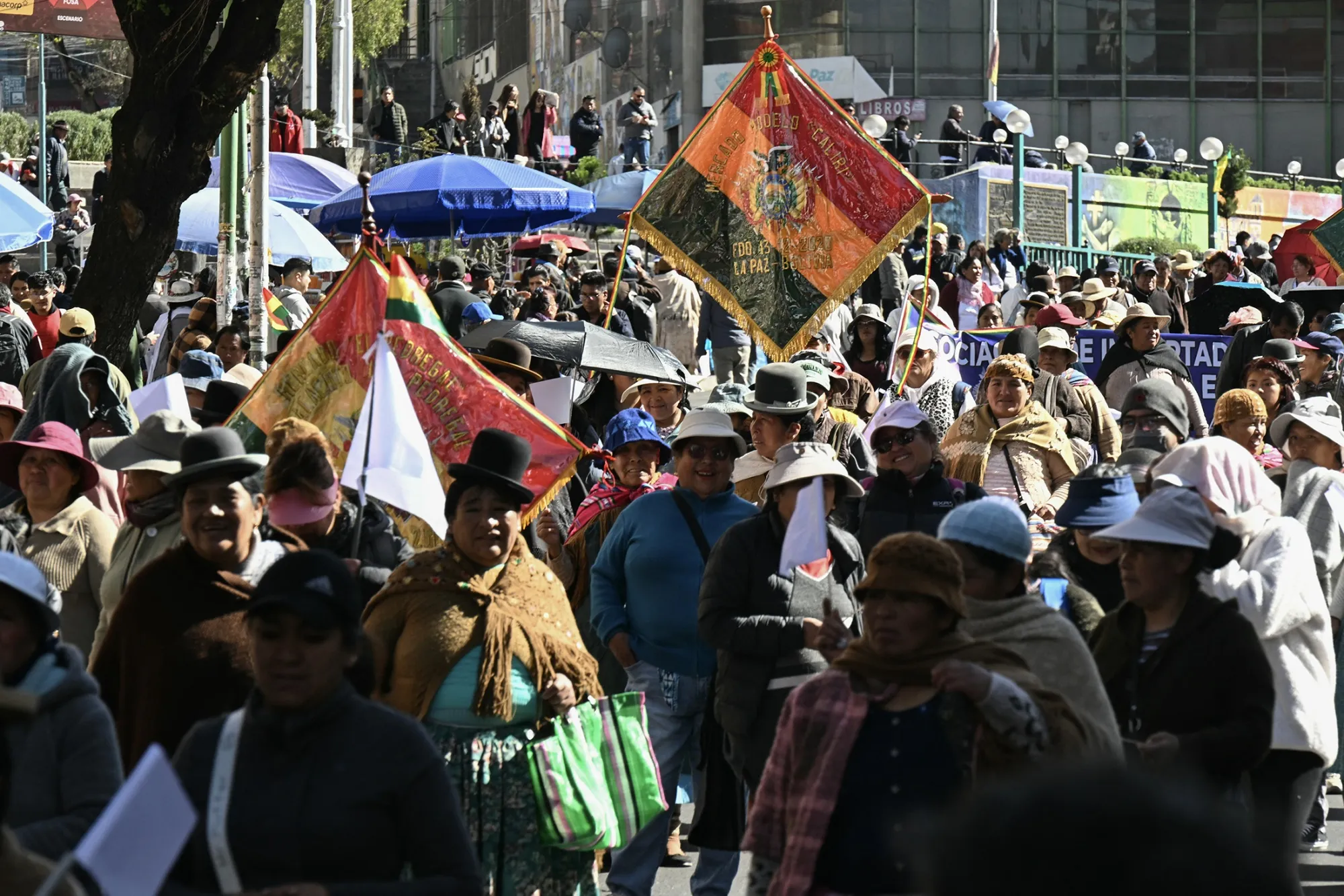
The protests had caused severe shortages of fuel, food, and medicine in several cities, particularly in La Paz—the seat of government—and the neighboring city of El Alto.
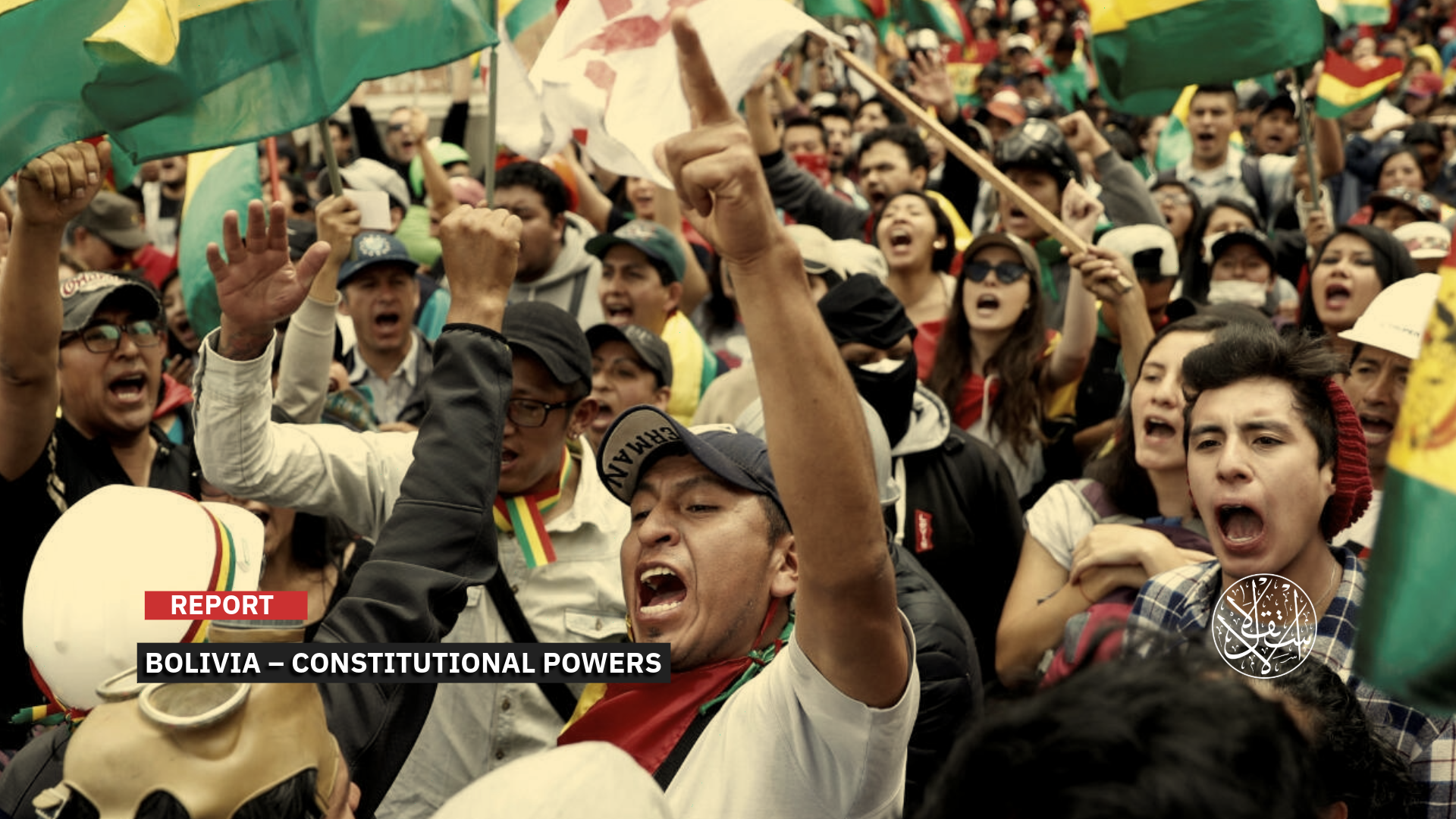
The declared state of emergency in Bolivia marks the culmination of weeks of political and economic turmoil, during which the capital, La Paz, witnessed violent clashes between security forces and thousands of protesters, including teachers, workers, and indigenous people.
The day after the state of emergency was announced, clashes broke out between police and farmers on June 22, 2026, in the Bolivian province of Cochabamba—a stronghold of former President Evo Morales.
Although police and army forces remain deployed, Minister of Public Works Mauricio Zamora stated on June 23, 2026, that there were no longer any active protest-related roadblocks, down from a peak of one hundred.
However, cleanup and repair work is still required to address the damage sustained by numerous roads during the protests.
Several weeks of protests and blockades have generated economic losses exceeding $3 billion, according to the National Chamber of Industries. That's equivalent to about 6% of Bolivia's annual output.

Economic Crisis
The roots of the current crisis in Bolivia lie in the political and economic shift the country has been undergoing since last year, following the election of center-right President Rodrigo Paz, which ended two decades of socialist rule.
Paz pledged to end the country's worst economic crisis in decades—manifested by shortages of foreign currency and fuel—amid ongoing talks with the International Monetary Fund.
Protests erupted after the president made the bold, sudden decision to scrap a twenty-year-old fuel subsidy in an effort to reduce the deficit.
However, despite subsequent measures to stabilize fuel prices and the reversal of unpopular land reforms, the protests intensified; unions demanded wage increases, an end to fuel and dollar shortages, and Paz’s resignation.
Paz faced mounting public pressure demanding higher wages, economic stability, and a halt to the privatization of key state-owned enterprises—with calls for his ouster growing as commodity prices hit record highs.
Amid the crisis, the name Evo Morales has re-emerged prominently from his rural stronghold in the Chapare region; the former president retains significant influence among segments of Bolivian unions and leftist movements.
Paz’s government accused Morales of stoking unrest and having financial ties to drug cartels, though it offered no evidence to substantiate these claims.
While denying he incited the protests, Morales described the events as a genuine uprising driven by the economic crisis, arguing that the state bears responsibility for any conflict rooted in social demands.
He also noted that the current wave of anger has prompted him to consider a return to politics, although he maintains he is not currently waging an active campaign.
The opposition viewed the move to hold Morales responsible as an attempt to divert attention from the root causes of public anger—namely, deteriorating living conditions, shortages of fuel and dollars, and rising prices.
Paz’s rise to power marked a historic turning point for Bolivia, not only domestically but also in its foreign relations; he sought to rebuild ties with Washington after years of tension and announced plans for a $1.5 billion economic cooperation agreement with U.S. officials to secure fuel supplies.
Paz, who enjoys Washington's backing, recently received a fresh signal of support from the United States and its regional allies.
In a joint statement with 15 Latin American nations, the U.S. State Department expressed deep concern regarding the impact of road blockades on democracy and the rule of law in Bolivia.
"We support the constitutionally elected Bolivian government and urge the mobilized groups to prioritize dialogue and negotiation within the existing constitutional framework as a fundamental tool of democracy," the statement added.
Right-Wing Experiences
Analysts and legal experts have warned that emergency powers could exacerbate unrest if the underlying causes of the protests are not addressed.
These developments unfold amidst an intensifying conflict between the right and the left—a dynamic that echoes the country's historical crises and reflects the broader turmoil seen across several Latin American nations.
Bolivia’s internal conflict has two dimensions. The first is historical, rooted in the perennial friction between the impoverished class and right-wing governments; the latter typically prioritize market liberalization and economic partnerships with Western nations while often disregarding domestic social conditions.
The second dimension is immediate and economic: socialist governments consistently strive to implement robust social programs—in contrast to right-wing administrations—a difference that has fueled deep internal divisions.
Right-wing policies generally align with World Bank guidelines and stringent foreign investment conditions—approaches that impact the domestic landscape—whereas leftist governments seek to establish independent economic policies.
The right-wing administration currently governing Bolivia mirrors past experiences; it approaches the public by pursuing economic programs that fail to account for the country's vast impoverished population, all while the incumbent president has made little effort to engage or accommodate working-class groups and opposing political factions.
Historically, right-wing governance in Bolivia has only succeeded when policies were adjusted to retain social programs—particularly those supporting the poor, housing, healthcare, and education—and to create job opportunities, while avoiding violent crackdowns on leftist movements.
There is a historical context involving internal clashes and even military coups that attempted—but failed—to contain popular demands; consequently, the government's persistence with this economic approach could lead to the president's ouster if the crisis is not contained.
Separately, global reactions have revealed political divisions: governments allied with Donald Trump—which have recently come to power across Latin America, from Argentina and Chile to Honduras and Costa Rica—pledged support for the La Paz government and condemned the protests as destabilizing.
The U.S. adopted a hardline stance, characterizing the demonstrations as a coup attempt.
"We will not allow criminals and drug traffickers to overthrow democratically elected leaders in our hemisphere," Senator Marco Rubio stated last week.
In contrast, Colombian President Gustavo Petro—one of the few remaining leftist leaders in the region—defended the protests, describing them as a struggle for Latin American dignity.

For his part, economic analyst Mustafa Shaheen told Al-Estiklal that "Bolivia stands at a crossroads following the authorities' declaration of a state of emergency after weeks of protests that have pushed the political and social situation toward chaos and caused a deterioration in security."
"The declaration of a state of emergency by President Rodrigo Paz cannot be viewed merely as a reactive measure to strikes and road blockades; rather, it signals the culmination of a structural crisis that has been building for years," he adds.
According to Mr. Shaheen, the economic dimension of these developments is underscored by a rising wave of popular mobilization amidst inflation nearing 20% and eroding purchasing power, alongside shortages of fuel and basic commodities in major cities—factors that are accelerating the erosion of legitimacy for a government that assumed power only a few months ago.
Nevertheless, the analyst believes that reducing the crisis to issues of wages and social subsidies is an inadequate approach, given reports of escalating social conflict and the resulting institutional fragility and politicization of the judiciary, as well as a crisis of representation reflected in declining public confidence in both the judicial and electoral systems.