The Washington–Tehran Agreement: A Chance for Peace or a Strategic Realignment of the Houthis in Yemen?
While attention is increasingly focused on the negotiations and rapidly developing understandings between the United States and Iran, Yemen stands out as one of the regional arenas most sensitive to any potential shift in relations between Washington and Tehran.
The Yemeni war, now entering its twelfth year without a decisive outcome, is no longer merely an internal struggle for power, nor is it simply a proxy battleground between Iran and its regional rivals.
Rather, it has evolved into a geopolitical knot where regional security concerns, maritime trade routes, and international power balances intersect.
Over the past years, the Yemen file has remained an indirect but persistent factor in most episodes of U.S.–Iranian tension.
Every escalation between the two sides has, to varying degrees, been reflected in the behavior of the Houthis in Yemen.
At the same time, the Red Sea and the Bab al-Mandab Strait have gradually become part of the broader equation of mutual deterrence between Tehran and Washington.
Today, amid discussions of new understandings that may encompass security and political dimensions extending beyond Iran’s nuclear program, growing attention is being directed toward a question that concerns both diplomatic circles and the Yemeni public alike: How would any U.S.–Iran agreement affect the future of the conflict in Yemen?
The Washington-Tehran Agreement
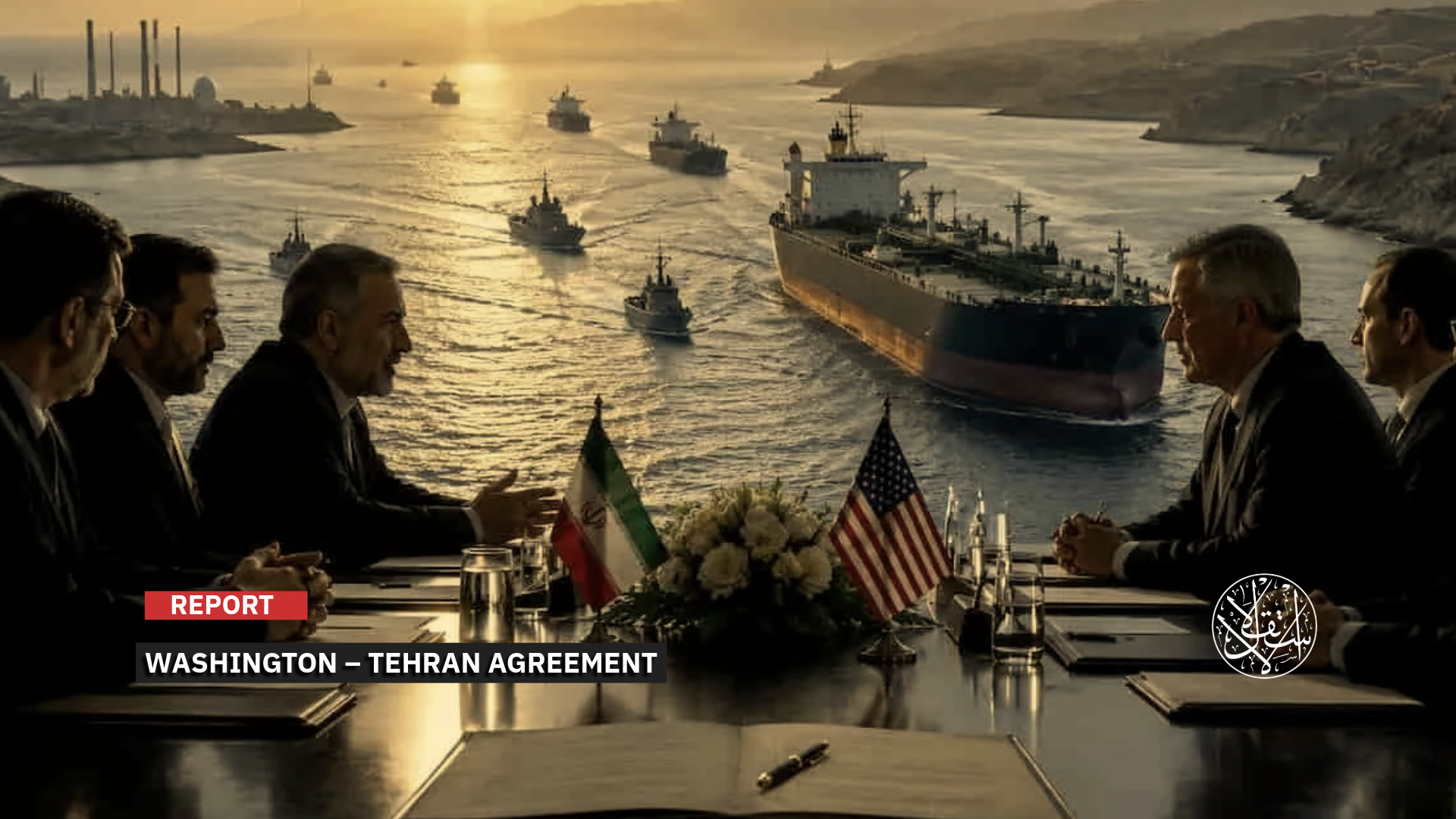
According to statements released by the United States, Iran, and international mediators, the two sides have reached a preliminary framework agreement that calls for a halt to military operations, the reopening of the Strait of Hormuz, and the launch of a new sixty-day negotiating phase aimed at addressing the most complex outstanding issues.
U.S. President Donald Trump stated that “the agreement with the Islamic Republic of Iran is now complete.” Meanwhile, Iranian Deputy Foreign Minister Kazem Gharibabadi announced that “negotiations will begin during a 60-day period with the aim of reaching a final agreement,” while emphasizing that “caution toward the United States remains.”
What is notable, however, is that the agreement is not limited to the bilateral relationship between Washington and Tehran. Rather, it directly addresses various regional fronts.
Pakistani Prime Minister Shehbaz Sharif stated that the agreement includes “the immediate and permanent cessation of military operations on all fronts, including Lebanon.” Although Yemen was not explicitly mentioned in the publicly announced provisions, it is widely regarded as one of the regional issues most likely to be affected by this development.
The U.S. approach is fundamentally based on two key principles:
- Reducing military and technical support provided to armed groups allied with Iran.
- Linking any easing of sanctions or release of Iranian assets to guarantees for international maritime security and the prevention of threats to global trade routes.
What Does the Deal Mean for the Houthis?
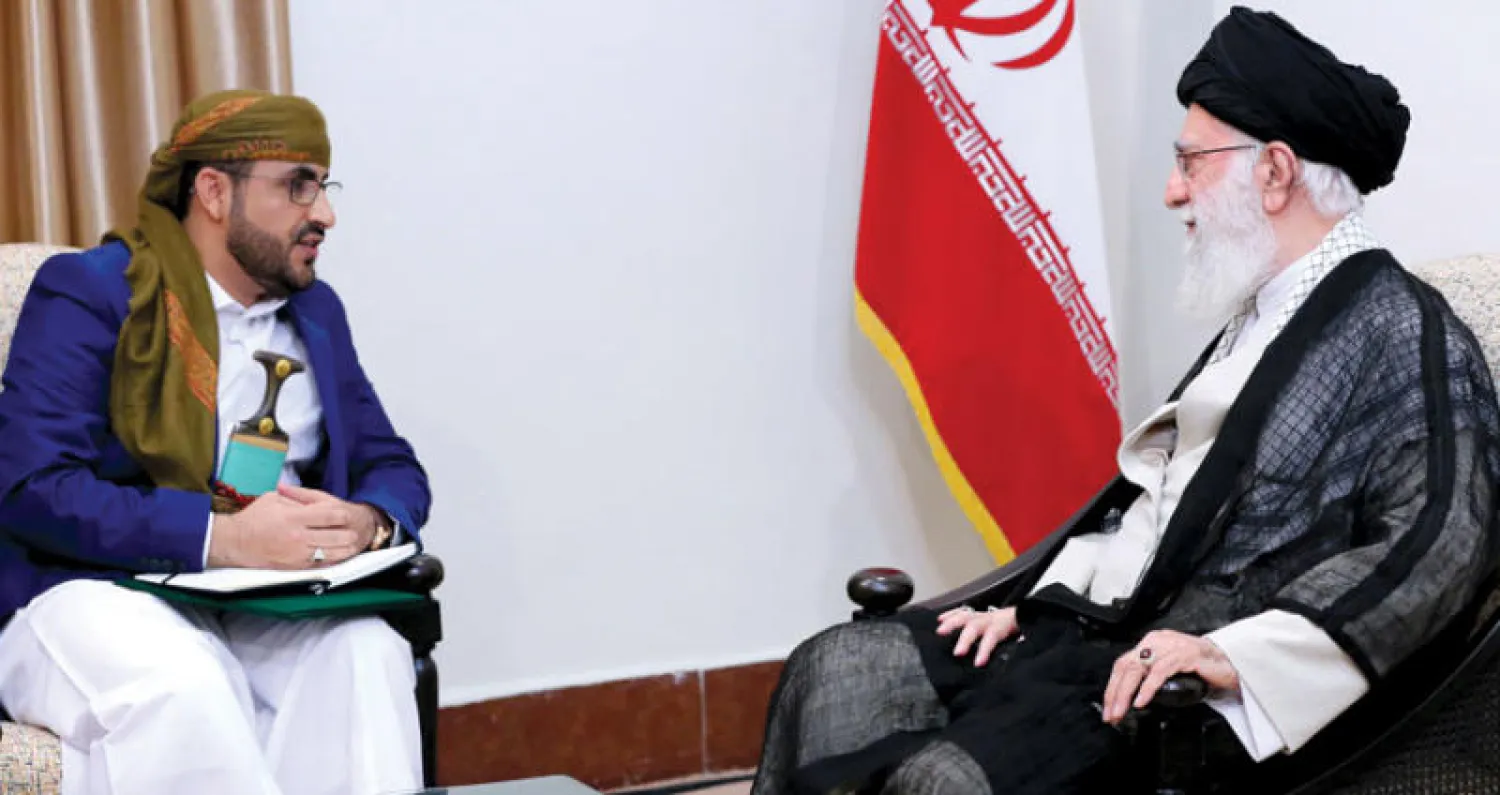
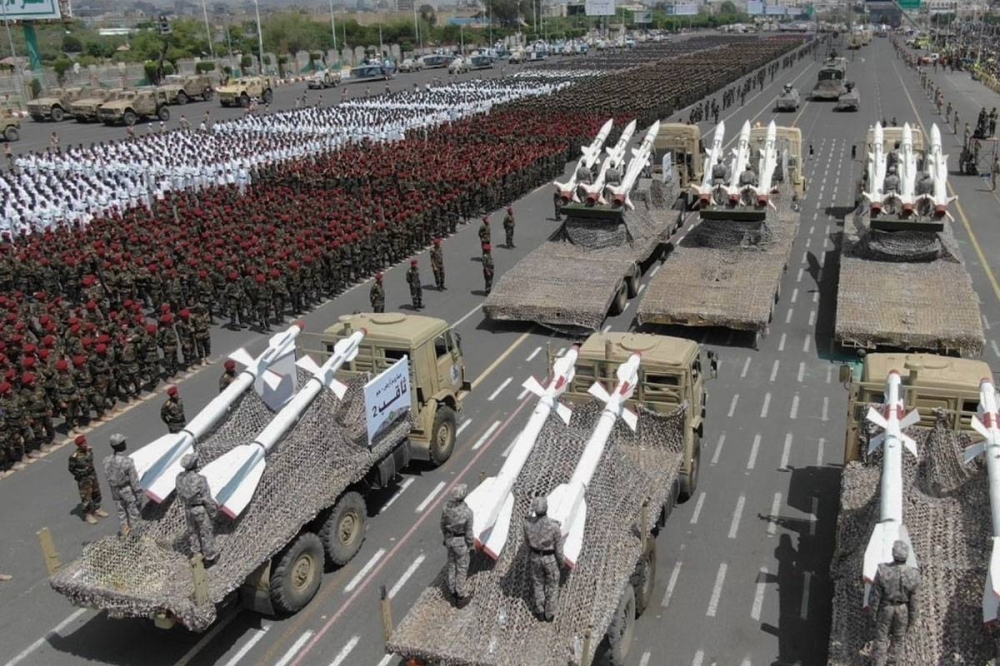
Over the past years, the Houthi movement has benefited from the ongoing confrontation between Iran and the United States. The group has gradually evolved from a local actor into part of a broader regional influence network linked to Tehran.
However, the new agreement could impose a different reality on the group. Recent statements suggest that Washington is seeking to establish a new relationship with Iran based on curbing its regional activities in exchange for easing economic pressure.
A U.S. official stated that any future economic benefits for Iran would be tied to its willingness to work with Washington on its nuclear program and to refrain from financing extremism in the region.
This raises a fundamental question: Will Iran-aligned groups, including the Houthis, be part of the new understandings? There is no clear answer at this stage, but current indicators point to two possible scenarios:
First, Tehran may seek to reduce levels of regional escalation, including through the Houthis, in order to protect its newly gained political and economic interests.
Second, Iran may retain the Houthis as a strategic pressure tool that could be used if subsequent U.S.–Iran negotiations encounter obstacles. For this reason, the group is unlikely to lose its strategic importance for Iran, but it may be pushed toward greater political pragmatism.
Based on this, several researchers argue that any U.S.–Iran agreement could encourage Tehran to pressure the Houthis to reduce regional escalation. However, it would not necessarily guarantee the group’s acceptance of political concessions that could affect its domestic influence or control over state institutions.
The Government’s Legitimacy and the Future of Peace
Over the past months, the Yemeni government has developed a clearer political position regarding the future of any settlement process.
This position is based on rejecting any approach that would lead to legitimizing Houthi rule or reproducing the underlying causes of the conflict.
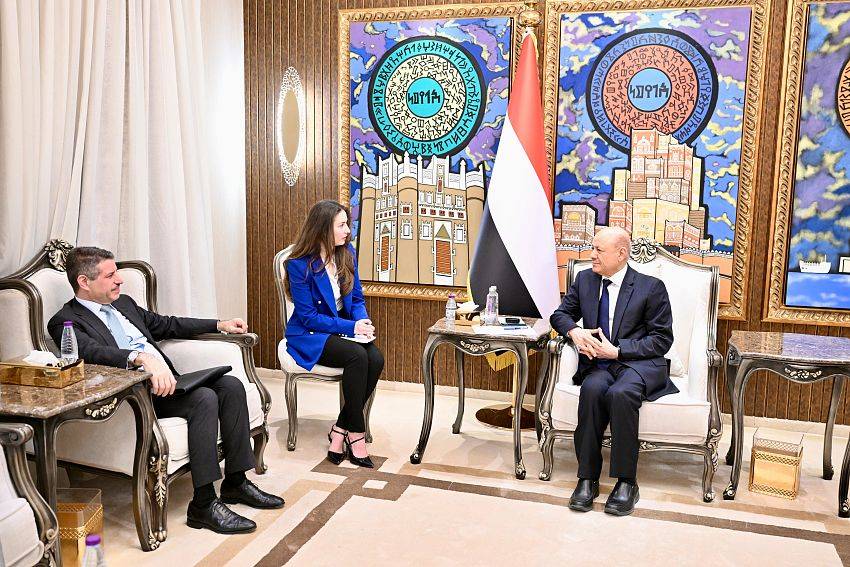
In this context, Chairman of the Presidential Leadership Council Rashad al-Alimi has emphasized that sustainable peace cannot be achieved through power-sharing between the state and an armed group.
Rather, it requires restoring the state’s exclusive authority, ending the coup, and addressing the political and security roots of the Yemeni crisis.
This vision is based on viewing the crisis not as a dispute between competing Yemeni political actors, but as a conflict with an armed group linked to a regional project supported by Iran.
Accordingly, the government argues that any settlement that fails to address issues of statehood, sovereignty, and the state’s monopoly over weapons would only produce a temporary truce that could eventually reproduce the conflict in a more complex form.
It stresses that genuine peace requires strengthening the rule of law, restoring national institutions, and guaranteeing rights and freedoms.
At the same time, the government’s discourse has sought to internationalize this approach by pushing for a firmer international stance toward the Houthis.
During meetings with European officials, Yemeni officials called for increased political and economic pressure on the group, including consideration of designating it as a terrorist organization, arguing that such a move would restrict its sources of funding and its ability to continue military escalation and threaten international maritime security.
In this regard, Presidential Leadership Council member Abdulrahman al-Muharrami believes that opportunities for a political settlement remain possible, but they depend on the Houthis’ willingness to engage seriously in the political process, amid what the government describes as a continued policy of intransigence and delay.
Meanwhile, the Yemeni government is approaching any U.S.–Iranian understandings with caution, warning that overlooking the Iranian dimension of the Yemeni crisis could turn any regional agreement into a temporary settlement at the expense of regional and international security.
For this reason, it calls for any future arrangements to include dismantling Iranian military and logistical networks in Yemen and holding Tehran directly responsible for the Houthis’ military activities.
Nevertheless, if U.S.–Iranian understandings succeed in achieving security and maritime stability without addressing questions of state authority, sovereignty, and the monopoly over arms, the Yemeni government could face growing international pressure to accept settlements based more on the balance of power on the ground than on established political frameworks and internationally recognized references.
The Saudi–Houthi Negotiation Track
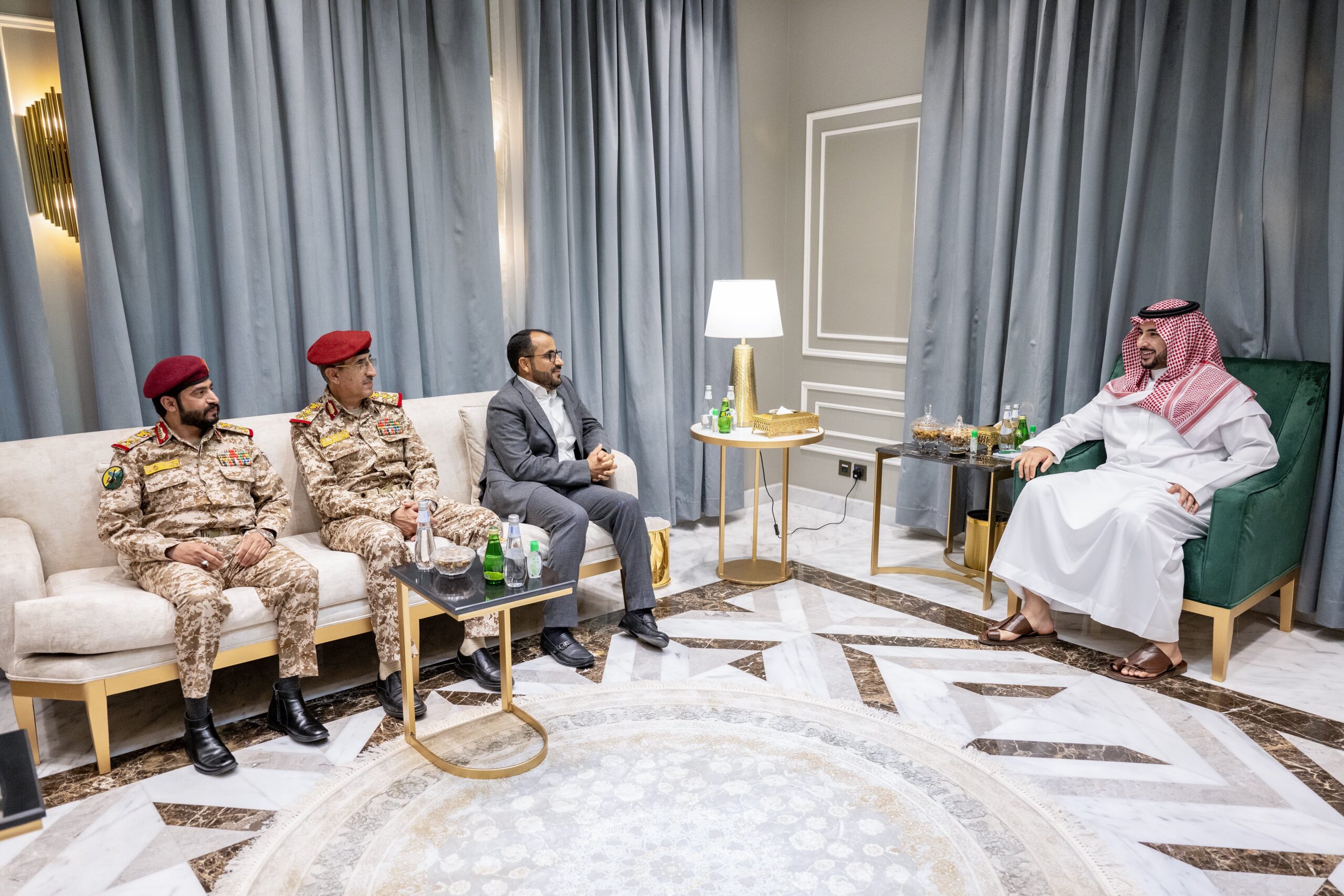
The U.S.–Iran agreement is likely to provide fresh momentum for the peace process in Yemen, particularly for the Saudi–Houthi negotiations, which have shown increasing signs of revival in recent months.
Most Western studies published in recent years suggest that Saudi Arabia’s priority is no longer focused on completely reshaping Yemen’s political landscape.
Instead, its main objectives are ensuring the security of the Kingdom’s southern border, preventing missile and drone attacks, and safeguarding maritime navigation in the Red Sea.
From this perspective, any U.S.–Iran understanding that succeeds in reducing military escalation and limiting Houthi activities in the Red Sea would directly serve Saudi interests.
In this context, Yemeni journalist Ahmed al-Shalafi spoke of serious discussions to hold a UN-sponsored meeting in Riyadh involving the Houthis, the Yemeni government, and Saudi Arabia.
This comes alongside Yemeni–U.S.–Saudi understandings aimed at resuming oil exports through the al-Dhabba Port, amid indications that the Houthis are engaging with these arrangements following meetings held in Amman and Riyadh.
Al-Shalafi views these developments as part of efforts to revive the Saudi roadmap aimed at shaping a settlement formula or partnership between the Yemeni government and the Houthis.
The military option remains theoretically available, but it faces clear Saudi reservations about returning to a full-scale war, given Riyadh’s priority of consolidating the ceasefire and continuing the negotiation process.
Political analyst Ahmed al-Zarqa, meanwhile, describes the relationship between Riyadh and the Houthis as having shifted from a state of open warfare to “a prolonged bargaining process under the framework of deterrence.”
He expects progress on some limited issues, such as prisoner exchanges, salaries, and border crossings, while noting that a final settlement remains constrained by the lack of trust, the complexity of the Yemeni landscape, and its regional entanglements.
Meanwhile, the Houthis continue to raise the level of their political rhetoric, insisting that the current state of “no peace and no war” is no longer acceptable.
They are demanding that Saudi Arabia fulfill its commitments under the roadmap, while signaling possible escalation options if the current deadlock continues.
The International Stance
The United Nations has adopted a cautious approach focused on containing escalation and preserving opportunities for a political settlement.
In this context, the UN Special Envoy for Yemen, Hans Grundberg, called on the Yemeni parties to use the U.S.–Iran agreement as an opportunity to advance the peace process by engaging in comprehensive negotiations under UN auspices that would lead to a lasting solution to the crisis.
During his visit to Aden, Grundberg stressed the need to shield Yemen from the repercussions of regional conflicts, preserve the momentum of the political process, support economic stability, and create the necessary conditions for achieving sustainable peace.
The United Nations continues to manage parallel tracks covering political, military, humanitarian, and economic aspects of the conflict.
Despite broad international consensus on the need to end the war, disagreements remain over how to address the Houthis.
While the majority of United Nations Security Council members support an inclusive Yemeni-led political process under UN leadership, France, the United Kingdom, and the United States are pushing for increased pressure and sanctions on the Houthis, viewing them as an obstacle to a settlement and a source of instability.
In contrast, China and Russia argue that expanding the sanctions regime could heighten tensions and undermine prospects for reaching a negotiated solution.

Post-Agreement Scenarios
The implications of any U.S.–Iran understanding for Yemen are likely to unfold along two main paths. The first is that the agreement could lead to reduced regional tensions and create a more favorable environment for advancing political settlement efforts.
However, this scenario also carries risks. Iran could seek to reduce its overt ties with the Houthis while maintaining them as a strategic instrument of influence, or use the Yemen file as part of broader regional bargaining arrangements. This could reinforce a new political reality that strengthens the group’s position.
The second path involves the failure or collapse of negotiations. In such a scenario, Iran could expand its use of the Houthis as a regional pressure tool by escalating military operations, targeting U.S. interests, and threatening international maritime security.
This could once again place Yemen at the center of regional confrontation, prolong the conflict, and deepen the humanitarian crisis.
Although a U.S.–Iran agreement could ease regional tensions and provide Yemen with a renewed opportunity to move beyond the cycle of war, its actual impact will depend on its ability to address the root causes of the crisis rather than merely manage its consequences.
Yemen is no longer simply a sphere of regional influence; it has become a genuine test of the ability of international and regional powers to produce sustainable settlements.
While new understandings may lead to a longer ceasefire or gradually encourage a political settlement, lasting peace will remain dependent on rebuilding state institutions and restoring the state’s monopoly over weapons and sovereign decision-making.
Without this, any agreement could become only a temporary phase in a conflict that may erupt again with the first disruption in relations between Washington and Tehran.
Sources
- America and Iran Reach a Preliminary Agreement to End the War [Arabic]
- Al-Alimi Calls for Unity and an End to the Houthi Coup [Arabic]
- Al-Alimi: Peace Begins with Restoring the State, Not Sharing Power with the Houthis [Arabic]
- Grundberg Discusses Reviving the Yemen Peace Process with Al-Alimi and Al-Muharrami [Arabic]
- Yemeni Efforts to Rally a Firmer European Position Toward the Houthis [Arabic]
- Grundberg: Yemen’s Parties Should Seize the Opportunity of the Washington–Tehran Agreement to Advance Peace Efforts [Arabic]