‘The Day After’: Has Washington Really Started Discussing Netanyahu’s Political Future?
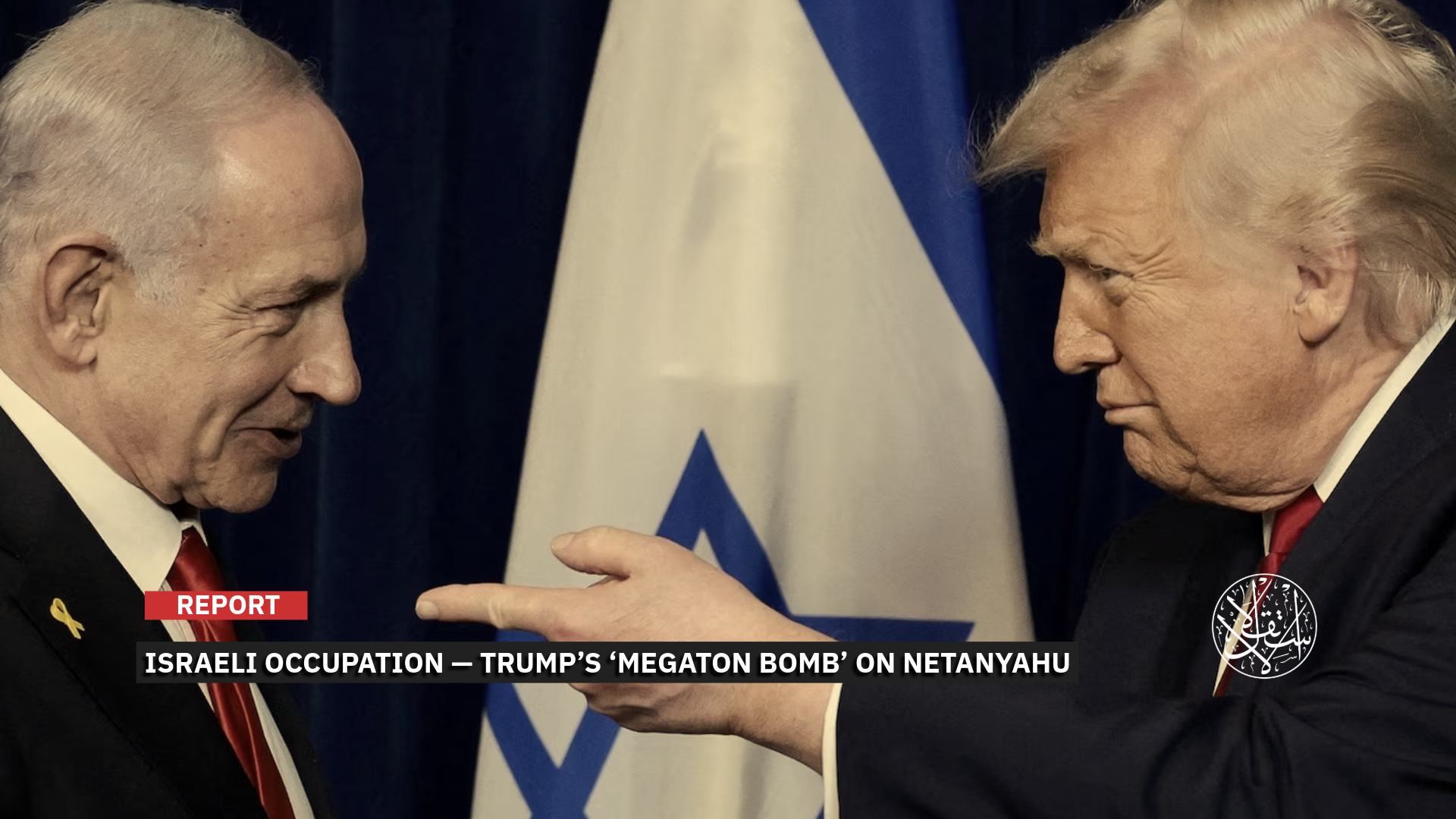
Trump has grown fed up with Netanyahu.
After a long history of sharp remarks directed at Israeli Prime Minister Benjamin Netanyahu—including, at one point, describing him as a “damn madman”—U.S. President Donald Trump has once again fueled speculation about Netanyahu’s future, this time suggesting that the Israeli leader’s political career may be nearing its end.
Trump’s comments, made on June 9, 2026, sparked widespread debate after he publicly questioned whether Netanyahu would even run in the Israeli Occupation’s next election.
Speaking to ABC News, Trump said Netanyahu’s political future was unclear and that it was uncertain whether he would contest the upcoming vote or remain in public life.
“Does he want to continue?” Trump said. “Because, you know, he’s a wartime prime minister,” a remark widely interpreted by observers as a suggestion that Netanyahu may not be suited to ‘Israel’s’ postwar political landscape.
The comments were broadly seen as casting doubt on Netanyahu’s prospects of remaining in power after “Israel’s” early elections, expected in either August or October 2026.
The perception of growing distance between the two leaders was reinforced by reports in The Times of Israel on June 10, which said Trump had grown increasingly frustrated with Netanyahu, particularly as opinion polls showed declining public support for the Israeli Occupation premier and rising opposition to another run for office.
Likud, however, dismissed any suggestion that Netanyahu was nearing retirement. The ruling party insisted that he would contest the next election and, “with God’s help, win,” underscoring the widening contrast between Washington’s doubts and the confidence projected by Netanyahu’s political camp.
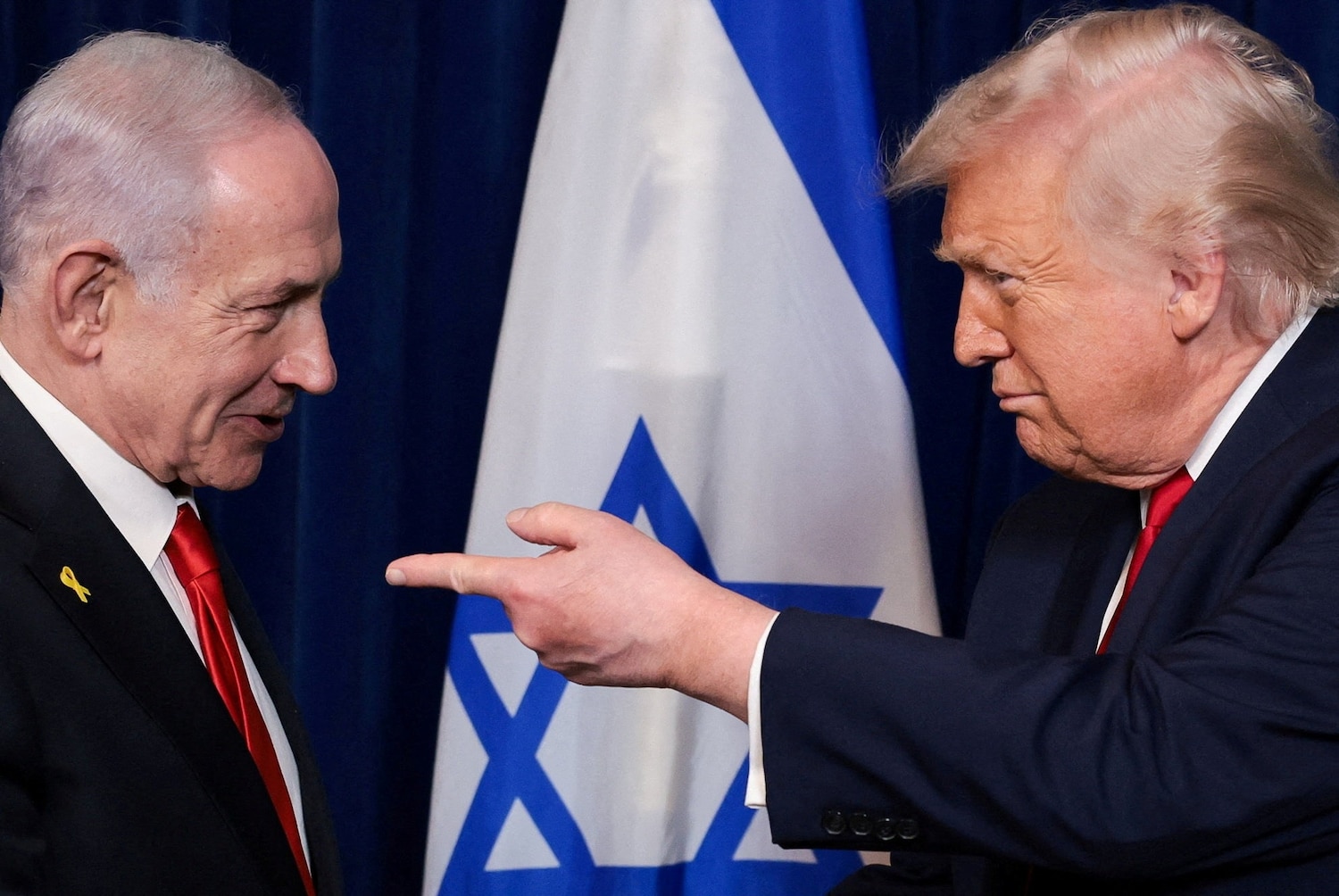
What Does Trump Mean?
The rupture between U.S. President Donald Trump and Israeli Prime Minister Benjamin Netanyahu appears to have reached a breaking point after Netanyahu ordered attacks on Iran in response to Iranian strikes—a move widely seen as defying Trump’s calls for restraint. For some Israeli commentators, the episode was the final nail in the coffin of a relationship already under strain, and it was the moment Trump finally grew tired of the Israeli leader.
On June 8, 2026, Israel’s Channel 12 reported that Trump warned Netanyahu he could find himself alone with the Iranians.
“I told Bibi, you better be very careful with what you do, because you might soon be left alone against Iran,” Trump was quoted as saying.
Trump told Netanyahu during their telephone conversation on Monday that “Israel” does not have a “green light” to strike Iran.
Trump also said that Netanyahu informed the United States of his decision to attack Iran at a very late stage, effectively forcing Washington to deal with a decision that had already been made and ignoring his advice.
The U.S. president acknowledged that he had called Netanyahu “madman” during a heated phone conversation. At the same time, he insisted their relationship remained good and even urged “Israel’s” president to pardon Netanyahu in the corruption cases that the prime minister continues to deny.
Although the BBC quoted Trump on the same day as saying that Netanyahu did not defy him, his remarks to ABC News a day later painted a different picture. They reflected clear frustration with the Israeli Occupation leader and echoed his earlier criticism of Netanyahu over the bombing of Beirut and the crisis he triggered with Iran.
According to ABC News correspondent Jonathan Karl, who spoke directly with Trump on June 9, the president cast doubt on Netanyahu’s political future.
“I don't know, he’s had an amazing career. Does he want to continue?” Trump said.
“Because, you know, he’s a wartime prime minister. We will very shortly win the war one way or the other, and you know he's a wartime prime minister.”
“That's okay, just like I’m a wartime president,” he added.
Politically, Trump stopped short of saying that Netanyahu would not run again. What made his remarks remarkable was that he publicly raised the question for the first time, “Does he want to continue?” Israeli media viewed the comment as a significant political signal, reflecting growing American doubts about Netanyahu’s future after the war.
In both the Israeli Occupation and the United States, the remarks were widely interpreted as an unprecedented indication that Trump was questioning whether Netanyahu intended to seek reelection or remain in public life once the war ends.
On June 10, 2026, Haaretz argued that the statement may do more damage to Netanyahu’s political prospects than to his electoral chances, highlighting Trump’s public musing over whether “Bibi even wants to continue.”
The same day, Channel 12 political correspondent Amit Segal said Trump had openly cast doubt on Netanyahu’s political future, effectively floating the possibility that the prime minister could step aside.
Segal noted that Trump described Netanyahu’s future as “an open question” and sarcastically asked, “Does he want to continue? Because, you know, he’s a wartime prime minister.” In his view, the remark marked a sharp departure from the praise Trump had traditionally lavished on Netanyahu and contrasted with the image he had projected in the past.
An analysis published by The Times of Israel on June 10 suggested that Trump’s comments may reflect growing frustration not only with Netanyahu but, to some extent, with “Israel” itself. The paper argued that the president’s suggestion that Netanyahu might not seek reelection could be less a prediction than a wish.
According to the analysis, Trump still views Netanyahu as an ally, but one who has increasingly become a source of frustration. In that sense, talk of Netanyahu leaving office may also reflect a desire for a fresh start after a long and exhausting war.
The newspaper also noted that Trump’s remarks may have been influenced by Netanyahu’s age and health. The 76-year-old prime minister has faced several health issues in recent years, including cancer, raising speculation that Trump may have been hinting at political fatigue after decades in public life and nearly three years of war.
Maariv reported on June 9 that Trump’s wording—particularly the fact that he himself raised the possibility of Netanyahu not continuing in office—sparked intense discussion in political and media circles in both “Israel” and the United States, fueling a wave of speculation about the Israeli leader’s future.
The paper added that American and international media treated the comments as evidence of uncertainty even within the Trump administration about Netanyahu’s political trajectory, especially given Trump’s long record of publicly praising him as a close ally.
Likud quickly moved to contain the speculation. In an official statement, the ruling party insisted that Netanyahu would run in the next election and had no intention of retiring from politics.
“Prime Minister Netanyahu will contest the next election and, with God’s help, will win,” the party declared, stressing that there had been no change in his political plans and that he intended to remain at the helm of Likud for the upcoming campaign.
Israeli analysts suggested that the speed and decisiveness of Likud’s response were aimed not only at Trump, but also at preventing the notion of a “day after Netanyahu”—or a succession battle within the party—from gaining traction.
Netanyahu’s allies also denied any crisis in relations with Trump, insisting that cooperation between the two sides remained “unprecedented.” Sources close to the prime minister said Trump’s remarks did not signal a decline in support for Netanyahu or tensions between Washington and “Tel Aviv” but were merely an offhand observation.
Israeli Economy Minister Nir Barkat echoed that message, saying Likud was preparing for the election as usual. While acknowledging that Trump makes different kinds of statements, he insisted that ties between Netanyahu and the U.S. president remained strong and that cooperation between the two countries had reached unprecedented levels.

Netanyahu’s Political Future
Trump’s remarks came amid increasingly visible tensions with Netanyahu in recent weeks, particularly over Iran. The U.S. president also declared that Netanyahu would have “no choice” but to accept any American agreement with Tehran, adding, “I decide. I make all the decisions.”
Relations between Donald Trump and Benjamin Netanyahu have long been marked by friction and sharp rhetoric. But the timing of Trump’s latest comments—just months before “Israel’s” next parliamentary election—fueled speculation that his message was directed not only at Netanyahu but at Israeli voters as well.
Many Israeli commentators argued that Trump’s remarks went beyond a passing observation about Netanyahu’s age or political fatigue. Instead, they appeared to signal that Washington is no longer certain about Netanyahu’s future after the war—or may already be preparing for a post-Netanyahu era.
The upcoming election will be “Israel’s” first since Operation al-Aqsa Flood on October 7, 2023, widely viewed as the country’s worst security failure. The operation triggered “Israel’s” aggression on Gaza, which evolved into a prolonged and devastating war with far-reaching human, economic, and infrastructural consequences.
Although Netanyahu returned to power in December 2022 at the head of the most right-wing coalition in Israeli Occupation history, his government faced mass protests even before the wars on Gaza, Lebanon, and Iran. Operation al-Aqsa Flood further eroded what remained of his public support.
Since then, most Israelis have expressed dissatisfaction with a prime minister who maintained his grip on power for years through alliances with religious and nationalist parties.
The political backdrop is increasingly uncertain. The Israeli Occupation has been moving closer to the prospect of an early election after the Knesset approved a preliminary measure to dissolve itself, while opinion polls suggest Netanyahu’s bloc may struggle to retain its current parliamentary majority.
Survey after survey has indicated that his coalition is unlikely to secure a majority in the election expected in October 2026, prompting speculation that Netanyahu could seek either to delay or accelerate the vote depending on political circumstances.
A poll published by The Israel Democracy Institute on June 9 found that 61% of Israelis believe Netanyahu should not run again.
Another survey projected that Likud would win 22 seats if elections were held today, while the broader right-wing coalition would secure only 50 seats—well short of a governing majority—amid declining support from some Haredi factions and growing calls to replace the government.
Yet Netanyahu’s opponents face problems of their own. Polls suggest that any opposition coalition would struggle to reach a parliamentary majority without support from Arab parties, a prospect some right-wing opposition figures remain reluctant to embrace.
The opposition camp itself remains divided between right- and left-leaning factions. Former prime ministers Naftali Bennett and Yair Lapid have joined forces in a shared political framework projected to win around 20 seats, leaving them dependent on other opposition groups to approach the 55-to-60-seat range and potentially requiring support from Arab parties, particularly Mansour Abbas’s United Arab List.
Bennett and Lapid had hoped to bring former Israeli military chief Gadi Eisenkot into their alliance. Polls suggest Eisenkot could win between 18 and 22 seats on his own, but he has so far opted to keep his options open and consider an independent run.
Polling released on June 12 showed Eisenkot outperforming Netanyahu as voters’ preferred candidate for prime minister, with 44% backing Eisenkot compared with 40% for Netanyahu. Bennett also ranked ahead of Netanyahu, receiving 43% support versus 39%.
At the same time, Bennett’s party slipped by two seats compared with previous surveys, leaving it with 21 seats, one fewer than Eisenkot’s projected tally.
According to Maariv, Netanyahu’s declining popularity has been driven in part by perceptions that he yielded to Trump’s demands to halt the war on Iran, as well as by Trump’s own public questioning of whether the Israeli leader should seek another term.
Domestic tensions have also intensified after Netanyahu’s government advanced legislation placing ultra-Orthodox yeshiva students on equal legal footing with Israeli Occupation soldiers, paving the way for broader military service exemptions and further straining his coalition.

According to the same poll, if elections were held today, Likud would win 22 seats, while the joint “Together” list formed by Naftali Bennett and Yesh Atid would secure 21 seats. The Yashar party would receive 20 seats, followed by the Democrats with 10, Yisrael Beiteinu with 9, Otzma Yehudit with 9, Shas with 8, United Torah Judaism with 7, Hadash–Ta’al with 6, the United Arab List with 4, and the Religious Zionism Party with 4 seats.
Under these projections, the Zionist opposition parties would hold 60 seats, compared with 50 seats for Netanyahu’s coalition parties and 10 seats for Arab parties.
Seeking to strengthen his position, Netanyahu is reportedly pushing to change Likud’s internal election rules by canceling or reducing the party’s primary elections and replacing them with a special committee or by expanding his authority to appoint candidates on the party list, according to Israel’s Channel 14 on June 10, 2026.
Yedioth Ahronoth also reported on June 10 that Netanyahu is using changes to the candidate-selection process as leverage within Likud to secure more guaranteed positions for allies ahead of the 26th Knesset elections.
The moves come as preparations for the next election accelerate, with Netanyahu seeking tighter control over Likud’s candidate list and a more unified parliamentary bloc if he succeeds in forming the next government.
Sources
- Trump Just Dropped a Megaton Bomb on Netanyahu's Re-election Campaign
- Trump says not clear Netanyahu will run in upcoming elections, remain in politics
- 'Does he want to continue?' Trump questions Netanyahu's candidacy in upcoming Knesset elections
- Netanyahu to run for re-election, his party says, after Trump raises doubts
- Trump might just be getting tired of Netanyahu — and so might Israel
- Trump told Netanyahu not to escalate with Iran or else 'you could be left alone very soon' - report