Unprecedented Escalation: What’s Behind the US-Saudi Strikes Inside Iraq?
"Sources confirmed that the escalation of attacks against Saudi Arabia thwarted al-Zaidi's planned visit."
The crisis between Iraq and Saudi Arabia entered a new phase of escalation after Riyadh announced it had launched strikes on targets within Iraqi territory in retaliation for drone attacks on its oil facilities, claiming the drones were launched from Iraq and carried out by Iranian-backed militias.
This comes ahead of a planned visit by Iraqi Prime Minister Ali al-Zaidi to Saudi Arabia on July 30, 2026, as part of a tour that began in the United States and Qatar, followed by Iran and Turkiye, during which he signed several agreements and memoranda of understanding.
Regional Security
The crisis began when the Saudi Ministry of Defense announced on July 27 and 28 that it had intercepted and destroyed drones that attempted to target oil facilities in the Eastern Province.
The Ministry asserted that the drones were launched from Iraqi territory and operated by terrorist militias affiliated with Iran, stating that the Kingdom reserves the right to respond at the appropriate time and place.
Meanwhile, the Saudi Ministry of Foreign Affairs called on the Iraqi government to take the necessary measures to prevent the use of Iraqi territory as a platform for launching attacks against the Kingdom, estimating that the continuation of such attacks poses a direct threat to regional security.
Less than 24 hours later, the United States Central Command (CENTCOM) announced that American and Saudi fighter jets had carried out what it described as precision strikes targeting weapons depots and logistical sites in several areas of eastern Iraq.
CENTCOM stated that the targeted sites and weapons belonged to Iranian-backed factions responsible for drone attacks against Saudi Arabia and US forces.
Following this, the Saudi Ministry of Defense announced that its armed forces, in coordination with US Central Command, had conducted targeted strikes against sites in Iraq in response to drone attacks targeting oil facilities in the Kingdom.
Ministry of Defense spokesman Major General Turki al-Maliki stated that the response was based on the right to self-defense guaranteed by international law, while emphasizing that the Kingdom does not seek escalation but will respond to any aggression against it.
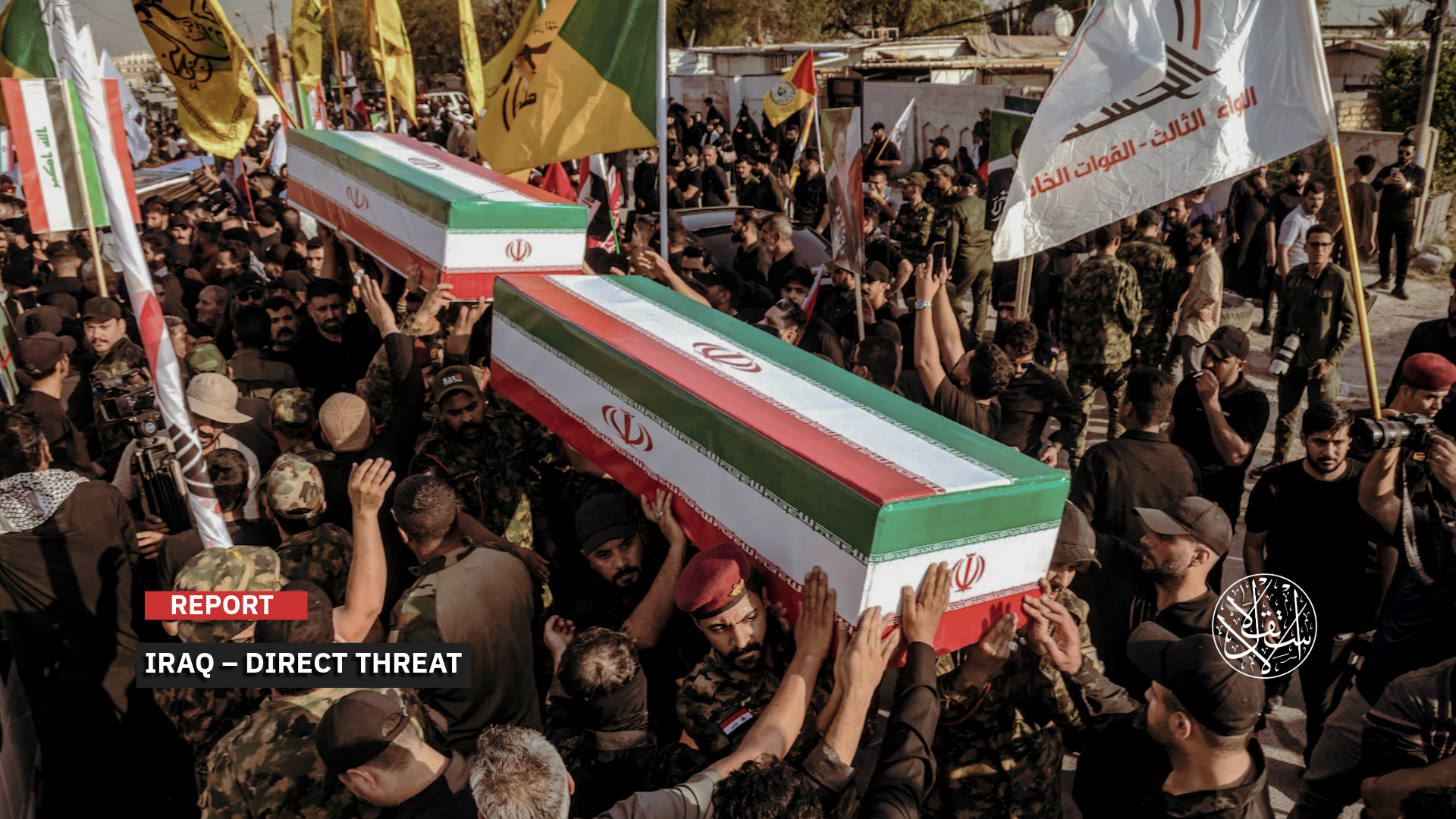
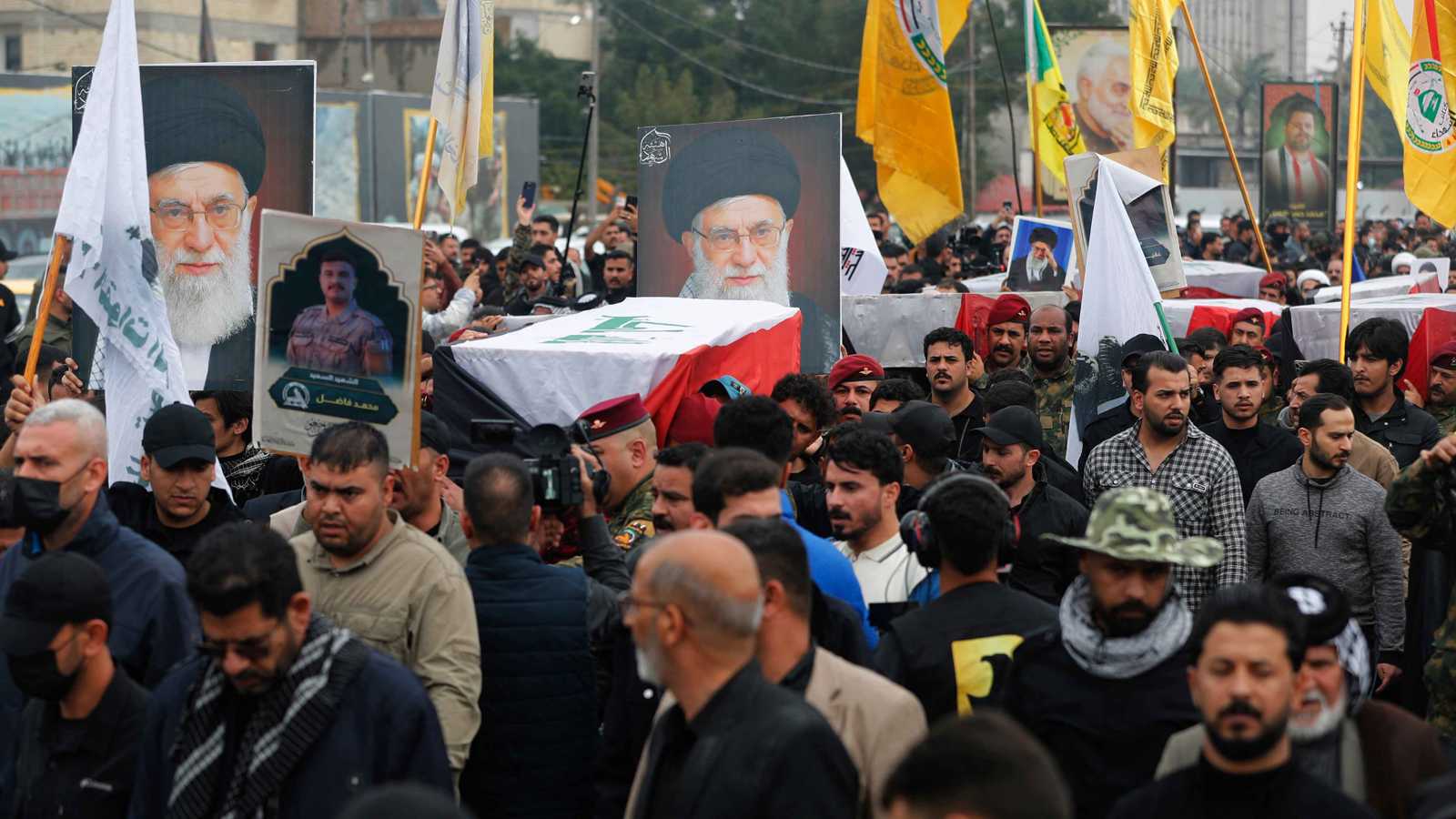
Meanwhile, the Popular Mobilization Forces (PMF) announced that at least 20 of its members were killed and 32 others wounded, confirming that the toll was preliminary, and described the strikes as targeting official PMF headquarters.
Regarding the timing of the militias' escalation of attacks on Saudi Arabia, which prompted the latter's response, private Iraqi political sources stated: "The armed groups linked to foreign powers don't act on their own initiative; therefore, the attacks that continued over the past two days on Saudi oil facilities were deliberate."
The sources explained to Al-Estiklal, requesting anonymity, that these militias wanted to provoke Saudi Arabia to sabotage al-Zaidi's visit to Riyadh, which was scheduled for July 30. Iran, which was angered by his visit to the United States, doesn't want him to go to Saudi Arabia.
As for the reasons behind Saudi Arabia's response and its failure to postpone it after al-Zaidi's visit, the sources believed that "Riyadh wanted to send a message to the Iraqi Prime Minister: you must put an end to the attacks against it before you come to conclude any agreements or understandings that will not be implemented as long as these militias control the situation in Iraq."
On this point, Iraqi journalist Ali Farhan said: "It is now undeniably clear that Prime Minister Ali al-Zaidi must resolve internal problems, foremost among them the proliferation of weapons, before turning his attention to foreign affairs."
Farhan added in a post on X on July 29 that "the problem of uncontrolled weapons is capable of undermining all government efforts aimed at restoring Iraq's regional role and building bridges of cooperation and distancing itself from the Iranian axis."
Internal Division
On the Iraqi political front, the US-Saudi strikes sparked widespread anger within political circles and factions close to the PMF; The Coordination Framework forces viewed the attacks as an attack on Iraqi sovereignty, demanding that the government take a firmer stance.
The Secretary-General of the Badr Organization, Hadi al-Amiri, condemned the strikes, calling on the Iraqi government to adopt a firm and decisive position.
Qais al-Khazali, leader of the Asa'ib Ahl al-Haq movement, asserted that targeting an Iraqi security force within the country constituted a blatant violation of sovereignty and that Iraqis must unite against it.
The al-Nujaba Movement, led by Akram al-Kaabi, threatened military retaliation, deeming the American bases a threat to the country's security, and called for a halt to all forms of cooperation with Saudi Arabia.
The Saraya Awliya al-Dam (Brigades of the Guardians of Blood) went further, demanding the expulsion of the Saudi ambassador and the severing of diplomatic and economic ties with Riyadh.
The escalation extended to the Iraqi parliament, where several members affiliated with the Coordination Framework and the Iranian-backed Shia militias called for political and military action against Saudi Arabia.
MP Mohammed Jassim al-Khafaji called for the summoning of the Saudi ambassador and the cancellation of the prime minister's planned visit to Riyadh, while MP Saud al-Saadi called for a military response to the strikes, arguing that mere political condemnation was no longer sufficient.
MP Alaa al-Haidari urged the government to adopt a firmer stance, while Miqdad al-Khafaji called for a review of Iraq's air defense systems and airspace protection mechanisms.
Baqir al-Yasiri, Ahmed Rahim al-Moussawi, Ali Saber al-Kinani, and Faleh al-Khazali stressed the need to move from statements of condemnation to concrete steps that would safeguard Iraq's sovereignty.
However, this trend toward escalation was met with a different stance from the leader of the Sadrist movement, Muqtada al-Sadr, who called for Iraq to be kept neutral in regional conflicts, emphasizing his rejection of any targeting of Iraqi territory by any party.
Al-Sadr stated that the presence of uncontrolled militias provides pretexts for targeting Iraq, demanding that the factions refrain from using Iraqi territory as an arena for settling regional scores.
He also called on the government to fully assert its sovereignty, control weapons, and protect the country from being drawn into a new war.
This discrepancy reflects the extent of the division within the Iraqi political landscape, between forces that see a response as necessary to preserve the state's prestige, and others that believe the priority should be preventing the escalation of the confrontation, especially in the security and political situation that remained fragile.
Amid the escalation, Iran denied any involvement in the attacks. Iranian television quoted an unnamed military official as saying that Tehran has no connection to any projectiles launched from other countries toward targets in Saudi Arabia, considering the attribution of responsibility to Iran a miscalculation.
Similarly, Iraqi writer and political analyst Ayad al-Anbar stated on X on July 29, "In the logic of politics, sovereignty is indivisible. Governments that are incapable of monopolizing the decision of war and peace have their sovereignty, prestige, and borders violated."
Trump's Response
However, statements made by US President Donald Trump following the attacks further complicated the situation, after he declared that the strikes targeted militias in Iraq were carried out in coordination with the Iraqi government, adding that the United States would continue targeting Iranian-backed groups.
"The militias supported by Iran are the cancer of the world," Trump declared, vowing a strong response against Tehran.
He indicated that Washington was considering sending further messages to Iran's proxies in the region, a clear reference to Iraqi armed factions, as reported by Fox News on July 29.
While no official Iraqi response to Trump's statements was issued, the Iraqi National Security Council (comprising the heads of ministries and security agencies) held an emergency meeting, chaired by Prime Minister and Commander-in-Chief of the Armed Forces Ali Faleh al-Zaidi, to discuss the repercussions of the airstrikes.
In an official statement released on July 29, the Council condemned the attack, emphasizing that it occurred while the Iraqi government was engaged in discussions with relevant parties to address accusations regarding attacks on Saudi territory, which it deemed an undermining of diplomatic efforts.
The Iraqi Council decided to prepare a comprehensive security plan to strengthen control on the ground and prevent Iraq from being used as a launching pad to threaten neighboring countries.
It also tasked the Ministry of Foreign Affairs with taking action in accordance with international law to document what it described as an attack and to safeguard Iraq's rights.
At the same time, the Council emphasized the government's rejection of all hostile acts, whether launched from Iraqi territory against neighboring countries or targeting Iraq from abroad, stressing that addressing these issues remains the exclusive responsibility of the state and its official institutions.
It also reiterated the government's commitment to a policy of neutrality in regional conflicts and to adopting dialogue and diplomatic means as the basis for resolving disputes, while continuing to implement the plan to monopolize weapons in the hands of the state and finalizing the security agreement for ending the presence of international coalition forces.
On July 29, Iraqi Prime Minister Ali al-Zaidi decided to postpone his planned official visit to Riyadh, following the joint airstrikes carried out by US and Saudi forces targeting PMF positions inside Iraqi territory.
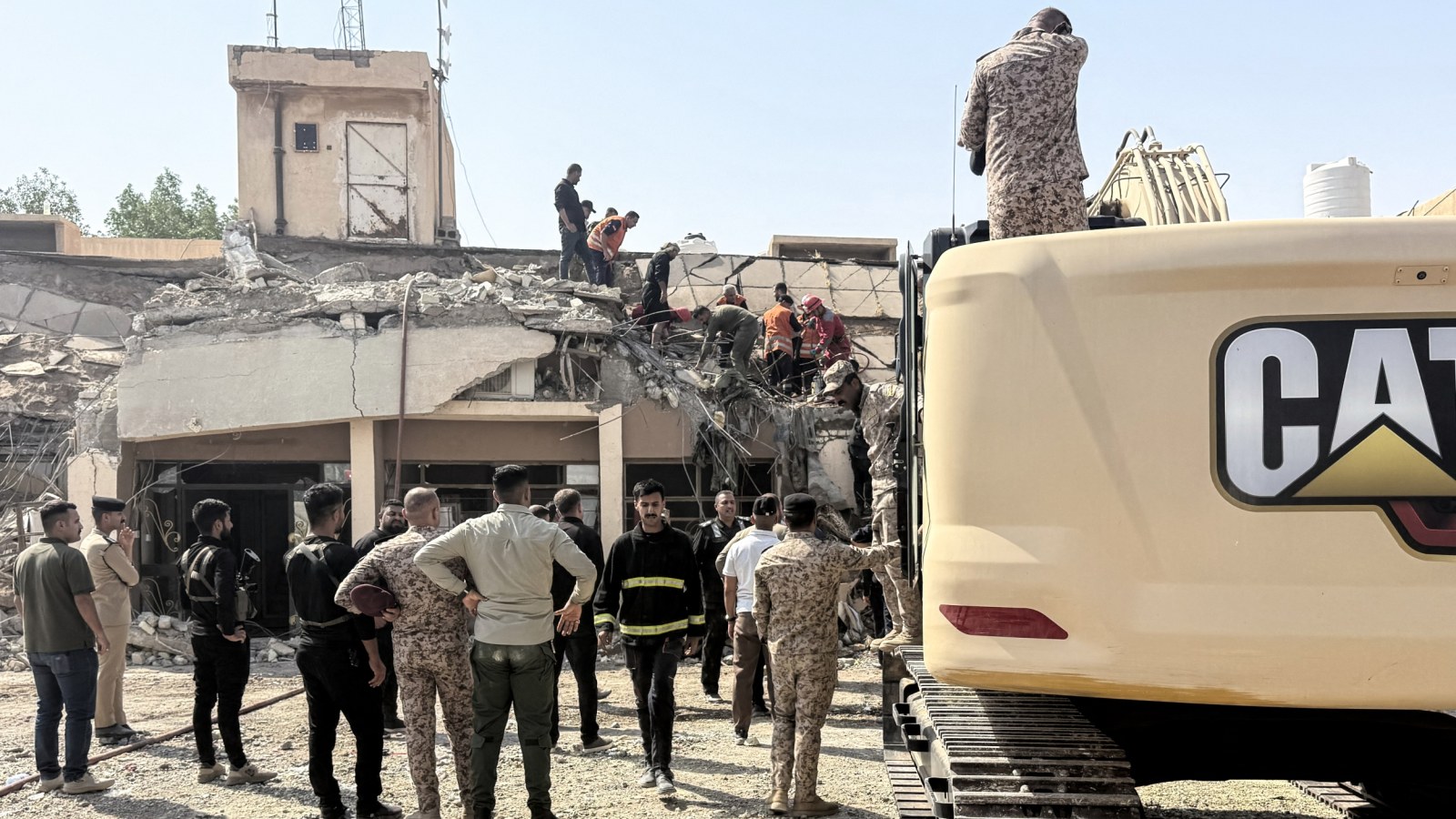
An informed government source told the Iraqi news agency Shafaq News (on condition of anonymity) that the decision came as a direct response to the recent security developments in the country, including the suspension of all arrangements for the government delegation and the talks that were scheduled to be held the following day with the Saudi side.
In turn, Reuters quoted three unnamed sources as saying that al-Zaidi canceled a meeting that had been scheduled with Saudi Crown Prince Mohammed bin Salman in Jeddah, as a result of the Saudi-American attacks on Iraq.
Sources
- The Iraqi Security Council condemns the US-Saudi attack and instructs the Foreign Ministry to take international action [Arabic]
- Trump: The strikes in Iraq were carried out in coordination with the Iraqi government [Arabic]
- Iraq after the strikes: Militias increase pressure, and al-Sadr warns of war [Arabic]
- Saudi Arabia announces retaliation for drone attacks with strikes inside Iraqi territory [Arabic]
- The Iraqi Prime Minister suspends his visit to Riyadh after the US-Saudi bombing of Popular Mobilization Forces positions [Arabic]
- Saudi Arabia announces it has intercepted a new drone attack originating from Iraq [Arabic]