Palestinian MP: The Situation in Gaza and the West Bank Does Not Allow for Fair Elections, but Abbas Will Hold Them (Exclusive)
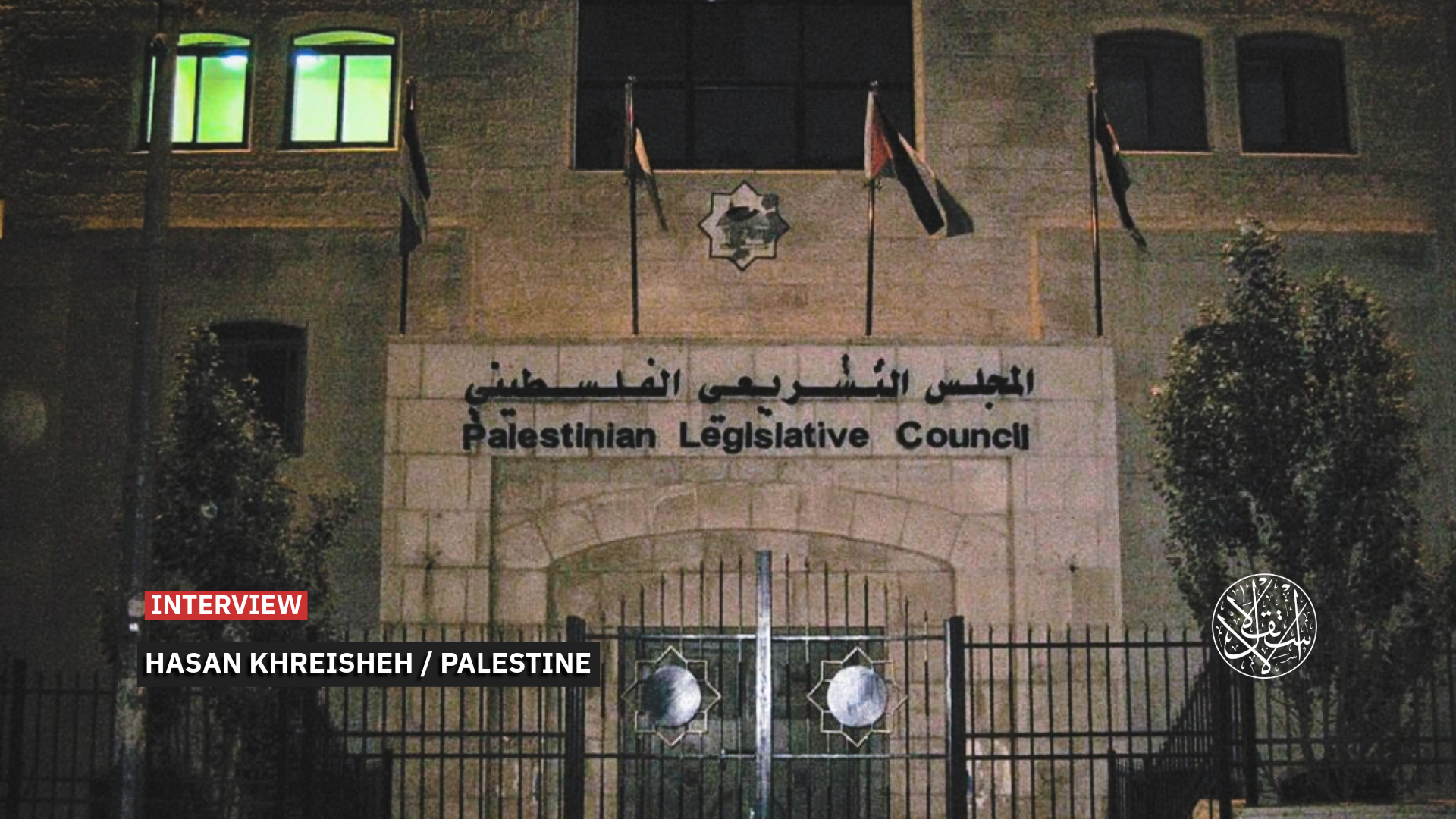
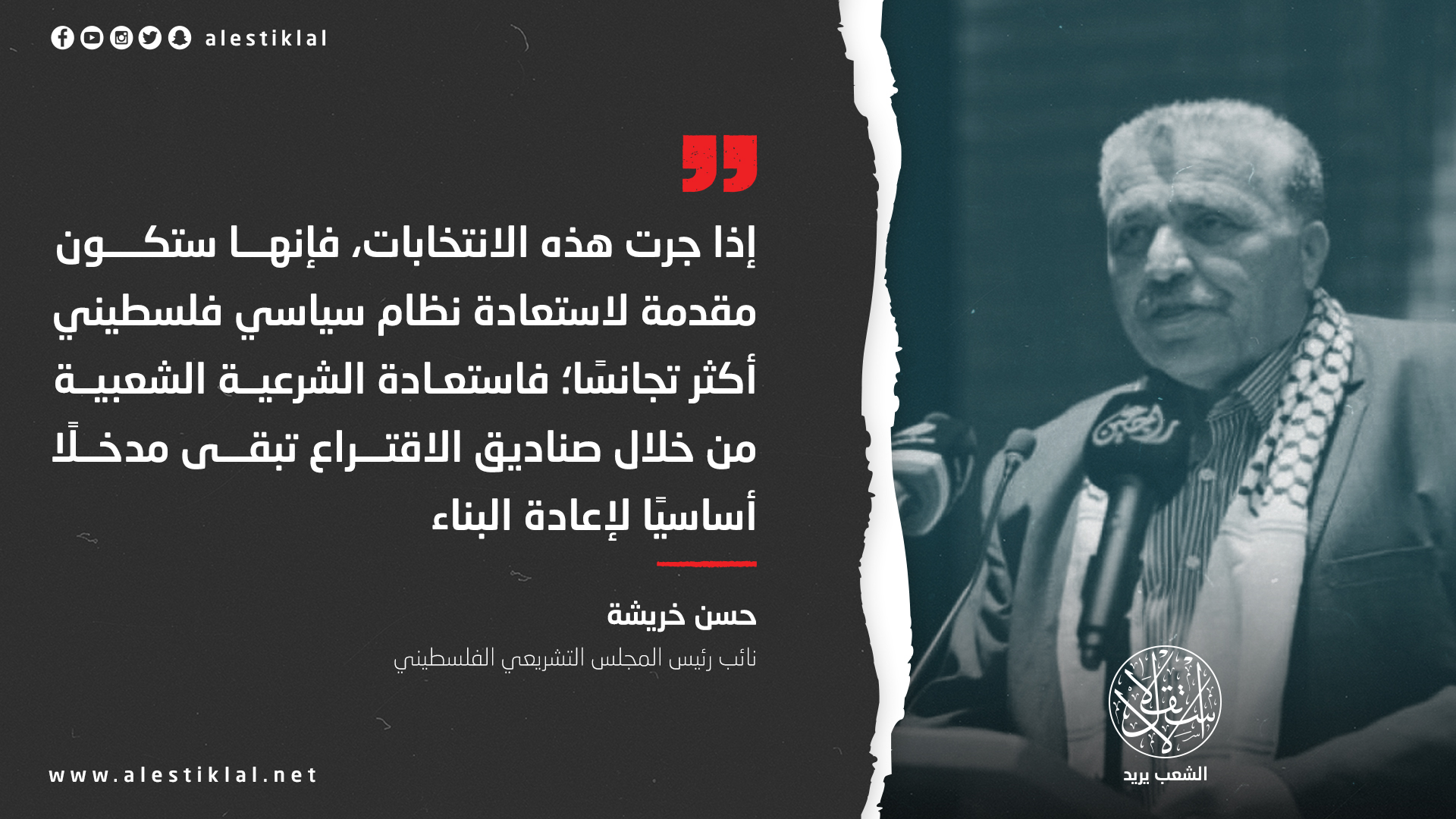
"The elections face significant political, security and legal challenges that may affect their integrity and results."Hassan Khreisheh
With Palestinian President Mahmoud Abbas announcing November 28, 2026, as the date for legislative elections, debates are renewed regarding the future of the Palestinian political regime and the possibility of restoring democratic life after the absence of the Legislative Council for nearly two decades.
In this context, Deputy Speaker of the Palestinian Legislative Council, Hassan Khreisheh, believes that holding elections is a national and popular demand. However, the process faces significant political, security, and legal challenges that could affect its integrity and results.
In an interview with Al-Estiklal, Khreisheh emphasized that the current circumstances do not create an ideal environment for holding genuine and fair elections, whether in the Gaza Strip, which is facing a devastating war, or in the West Bank, which is witnessing an escalation in settlement activity and Israeli violations.
He also raised questions regarding the participation of Jerusalem and the mechanisms for overseeing the electoral process, noting that a number of fundamental issues still lack clear answers.
He believes that the priority for any future legislative council is to preserve the unity of the Palestinian land and people, safeguard public rights and freedoms, and enhance the political participation of youth, women, and various national forces.
While he emphasized that legislative elections alone are insufficient to fully reform the Palestinian political regime, he sees them as a fundamental step towards restoring popular legitimacy and rebuilding national institutions on democratic foundations.
Serious Doubts
How do you assess the president's announcement of the date for legislative elections at this time?
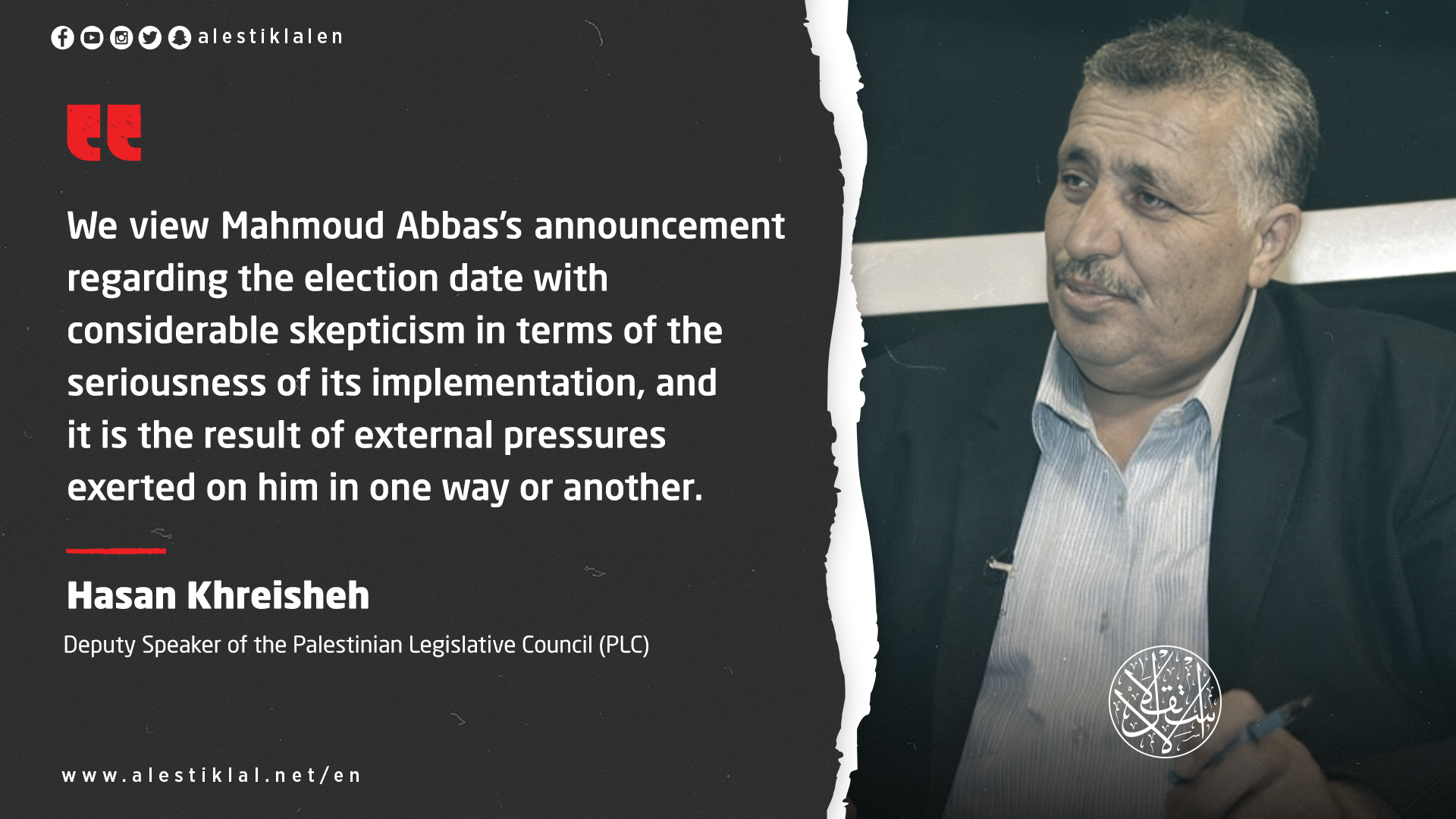
Firstly, we view this announcement with considerable skepticism regarding its seriousness and implementation. We see it as a result of external pressures exerted on the president in one way or another.
We also see it as an attempt to reproduce the same existing regime and apparatus, aiming to secure credentials for the next phase in Palestine.
What is the importance of holding elections after so many years of the democratic process being stalled in Palestine in general?
Elections have always been a popular and national Palestinian demand, and we saw how they were canceled and postponed in 2021 under the pretext of Jerusalem.
Today, these elections are taking place under difficult circumstances for the Palestinian people, whether in the Gaza Strip, which is subjected to a war of extermination, or in the West Bank, which is witnessing the annexation of land by settlers and settlements.
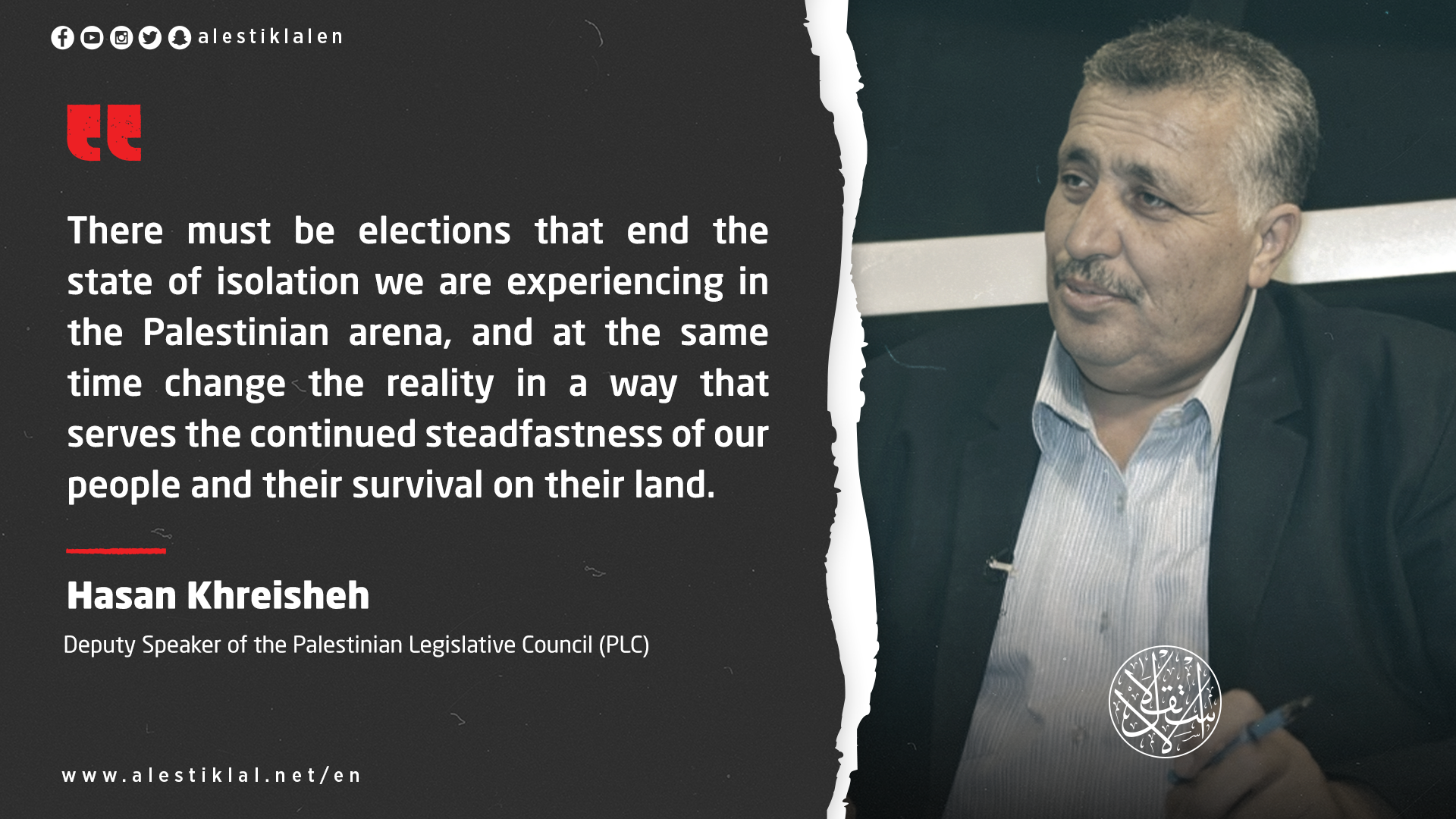
Nevertheless, there must be elections that end the state of isolation we are experiencing in the Palestinian arena, and at the same time, there must be attempts to change the reality in a way that serves the continued steadfastness of our people and their remaining on their land.
Do you believe that the current political and security conditions allow for genuine and fair elections?
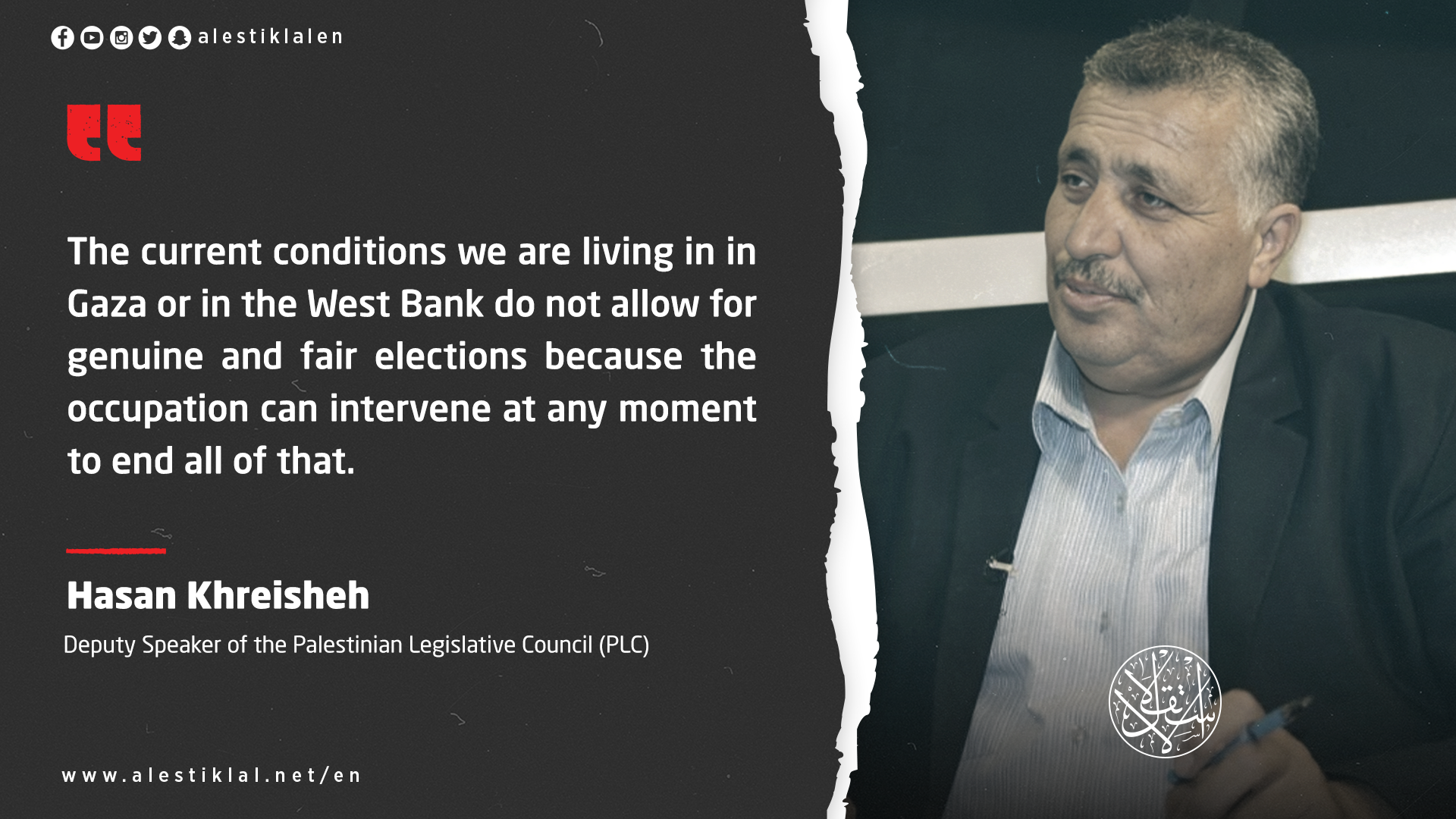
The current conditions we are experiencing in Gaza or in the West Bank do not allow for genuine and fair elections because the Israeli occupation could intervene at any moment to end everything.
The Jerusalem Dilemma
Has the issue of Jerusalem changed? What has happened regarding Jerusalem that necessitates holding these elections?
There is also a tragic situation in Gaza. Who will oversee the elections? Will it be the committee they are talking about or a technocratic committee? Who will manage and protect this process?? Where is the existing judiciary?
All of these are major questions surrounding how these elections will be conducted. Because it seems some want to push it through quickly, under major political laws and procedures that prevent, or aim to exclude, anyone who still believes in a political program different from that of the Palestine Liberation Organization (PLO).
In reality, no one in the executive authority has yet been able to present this political program to the Palestinian public. Therefore, we are demanding today that the Elections Committee present this political program so we can see it.
Is it the program that was the basis of the Declaration of Independence, for example? Or is it the program that was subsequently abandoned?
They say this is the political program the Palestinian public wants, and therefore, there are major obstacles to holding these elections.
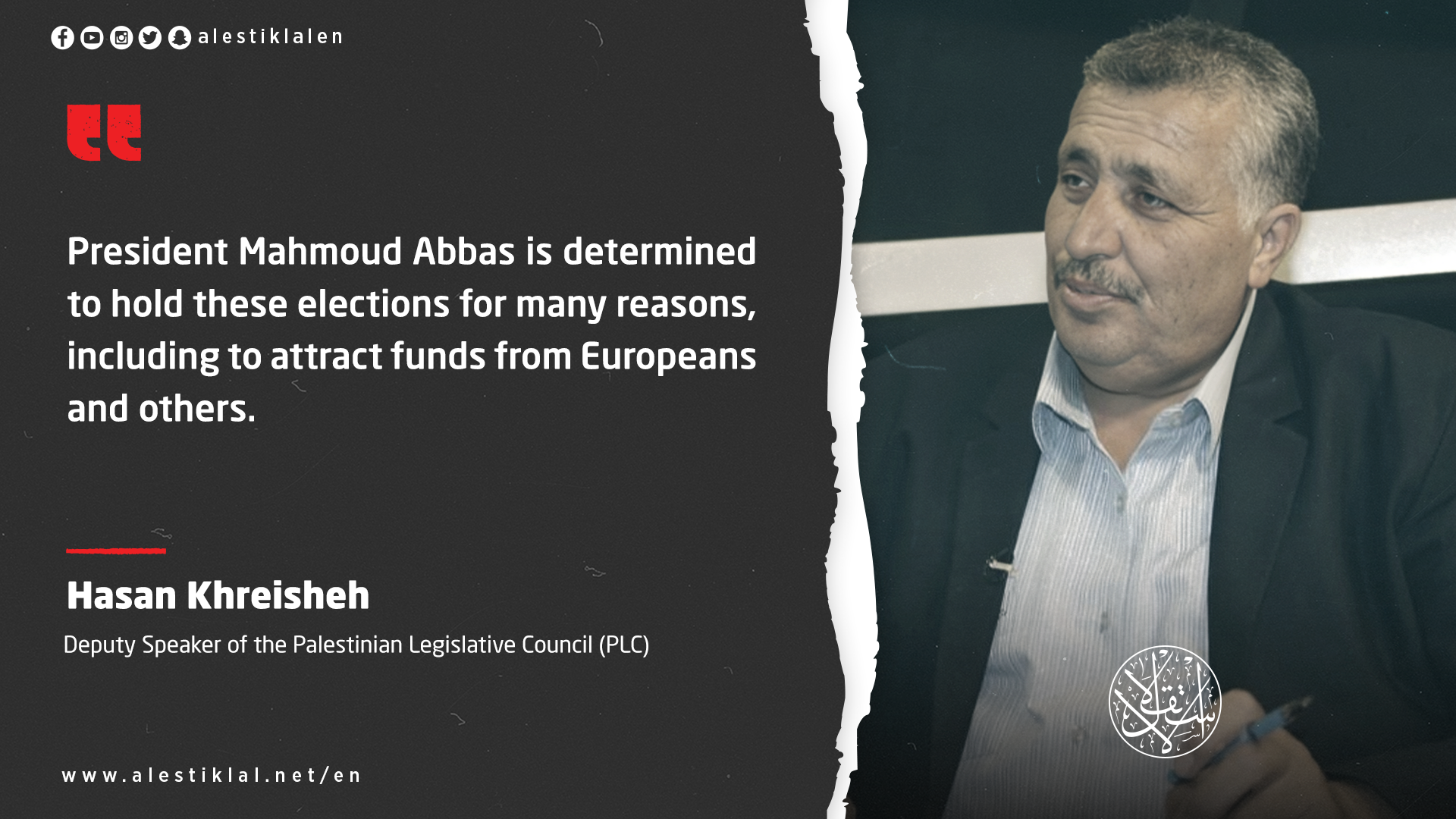
Nevertheless, I personally believe that President Mahmoud Abbas is determined to hold these elections for many reasons, including securing funds from Europeans and others, and under European, American, and even Israeli pressure, in order to renew and reproduce the same authority, but under circumstances completely different from those before 2021 or even in 2006.
If we focus on the issue of Jerusalem, in your opinion, what guarantees the participation of Jerusalemites in these elections, and prevents a repeat of the 2021 crisis?
There are no guarantees regarding the participation of Jerusalemites or Gazans.
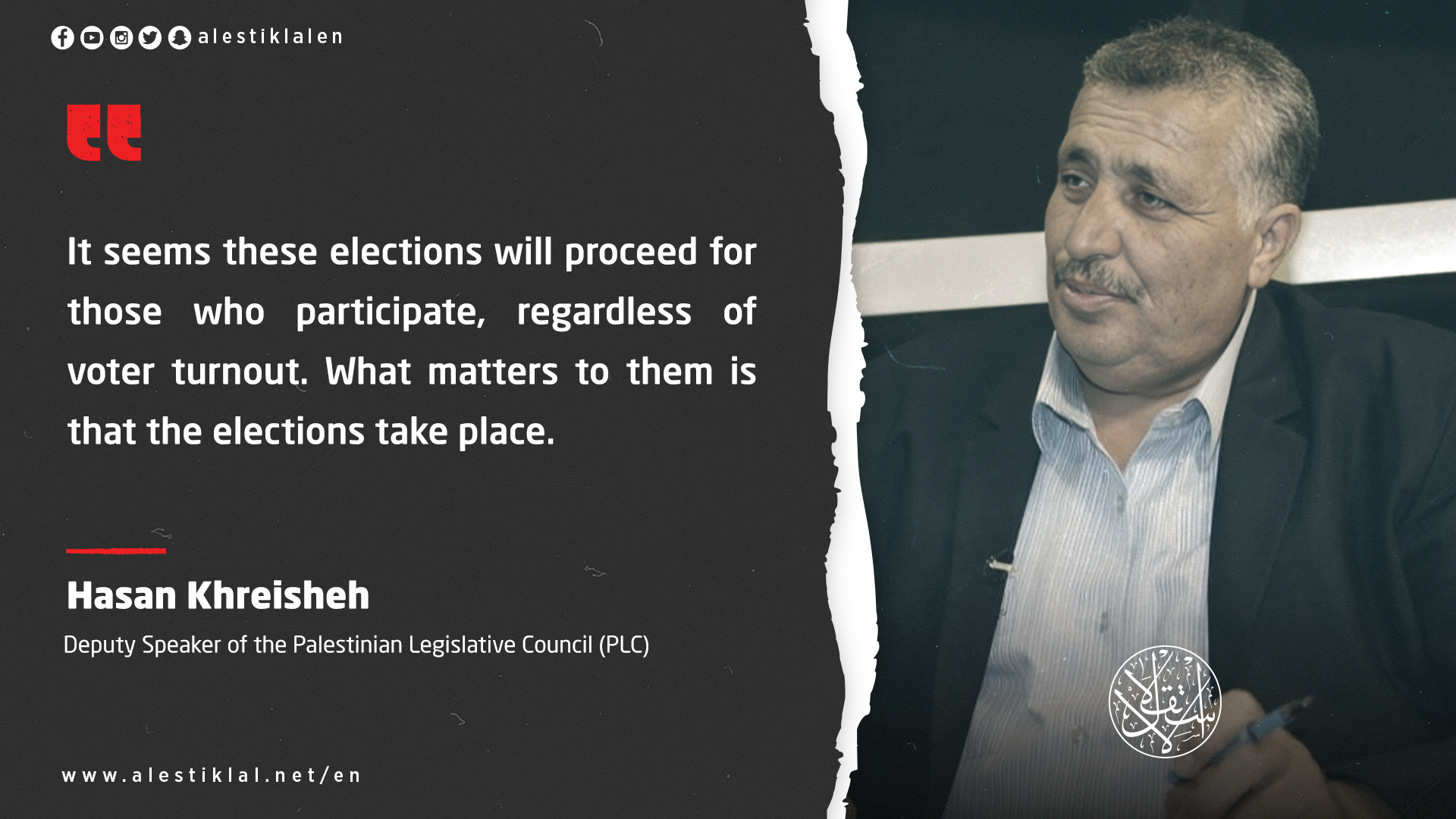
The proportional representation system, meaning full proportional lists, has been adopted, so that voting takes place regardless of the number of voters.
We saw this in the recent municipal elections, where voter turnout was low, yet the elections were held and the results were validated.
I believe that this time too, the elections will proceed regardless of the number of participants because they realize that even in previous agreements with the Israelis, whether in the 1996, 2005, or 2006 elections, the participation of Jerusalemites was limited and minimal, subject to the Israeli perspective.
Consequently, nothing has changed; on the contrary, Israeli control over Jerusalem has deepened. Many Palestinians are prevented from accessing the city, and settlement activity continues.
Settlements have expanded into large blocs. The Jerusalem we used to talk about, with an area of 65 square kilometers, now extends to nearly 100 square kilometers, reaching the Dead Sea.
Therefore, holding elections in Jerusalem will be difficult, beyond the symbolic significance we are discussing. As for the Palestinian people, they look forward to elections and the ballot box, hoping they will end the current state of unilateralism and bring about change in the reality we live in.
In your opinion, is there a genuine political will among the various parties on the Palestinian scene to ensure the success of the elections?
The political will exists among the Palestinian people because they do not want to remain hostage to the individual and capricious decisions that govern the work of the Palestinian Authority.
At the factional level, there are two categories: one linked to the existing political system and the Palestinian Authority, and these will try with all their might to hold and win these elections.
Conversely, there is another category that appears to be barred from participating in these elections altogether, or that there are procedures that may prevent their actual participation.
The 2021 Election Crisis
What lessons can be learned from the 2021 election experience?
Firstly, one of the lessons learned is that the lists that contested those elections were numerous; there were 36 lists in total.
Today, there are efforts underway, and I am one of those working on this, to form a broad coalition of Palestinian figures across the nation to contest these elections, after going to court and following the legal requirements, in order to achieve a genuine alignment of the people.
Trust between the people and the Palestinian Authority is almost nonexistent, and therefore they are fully aware that any election in which a cohesive body of national Palestinian figures participates, one that avoids selfishness and narrow interests, will have different results.
There have also been proposed changes regarding the Legislative Council. Initially, it was said that the council would consist of 200 members, then 132, and later it was added that 68 members would be chosen to become members of the Council.
If elections are held and new Legislative Council members are elected, what role can this council play?
First, it should be noted that the first attempt to end the division took place within the Legislative Council building.
We held parliamentary dialogues and reached positive results based on the National Reconciliation Document drafted by prisoners inside Israeli jails.
However, this attempt did not continue, and the file was transferred to other, more distant venues, such as Egypt and Qatar, and then to Russia, China, and others.
Therefore, if elected officials are present within the Legislative Council, they may have a genuine incentive to end the division and consign it to the past, as elected officials are more powerful and capable of action and influence.
On the Palestinian domestic front, the Legislative Council can end the current state of unilateral decision-making and restore balance to political life through oversight and legislation.
Furthermore, dozens of laws and pieces of legislation have been issued during the period of the Legislative Council's absence; we are talking about a continuous absence from 2006 until today, nearly twenty years.
Consequently, the institutions of the Palestinian Authority do not currently possess full legitimacy, and there is a need to restore this legitimacy by appealing to the Palestinian people.
I believe that if elections are held and the Legislative Council resumes its work, there will be a significant shift in the political trajectory, the mindset, and the approach by which the Palestinian Authority is governed.
At the level of governmental and administrative institutions, how can the new Legislative Council restore the prestige of the legislative institution after twenty years of absence?
We must discuss the Palestinian Basic Law, which stipulates that all laws issued during the absence of the Legislative Council must be presented at the first session of the new Council.
These laws will be reviewed, some will be repealed, and others will be retained, thus ending the practice of legislating solely by presidential decree and restoring the legislative process to its normal course within the Legislative Council.
The various institutions currently operating without genuine oversight will become accountable because the Legislative Council will regain its oversight and legislative role over the Palestinian government and the president.
More importantly, the Palestinian Authority's budget will be subject to the approval of the Palestinian Legislative Council and will be debated publicly within the Council, instead of being passed without scrutiny and accountability.
Oversight is one of the most important roles that an elected Legislative Council can play. We exercised this role in the first Legislative Council, but the second was unable to fulfill it adequately due to the division and the subsequent circumstances.
If legislative elections are held and the Council resumes its functions, there will be genuine oversight of the Authority's performance, its finances, and its treatment of citizens.
The Palestinian citizen, who has remained silent until now, will find tomorrow an elected institution that represents him, defends his rights, and exercises oversight on his behalf.
The Upcoming Council
What are the most prominent priorities of the new Legislative Council?
The first priority is preserving the Palestinian entity, the unity of the land, the unity of the Palestinian people, and preserving the Palestinian cause as it is, since Jerusalem, the West Bank, and the Gaza Strip are Palestinian territories.
The second priority is enacting laws and legislation that are appropriate to the reality we live in.
The third priority, and the most important, is protecting citizens' rights and strengthening oversight of public freedoms. There are clear violations of public freedoms, such as arrests and other abuses, and in the absence of accountability, there is no one to monitor these violations.
But when there is an elected Legislative Council, I believe that no one will dare to violate citizens' rights or restrict freedoms as is happening today.
Do you expect broader representation of political forces and youth in the upcoming council?
I believe that political forces are capable of asserting their presence, but the current circumstances are not favorable to many of them.
For example, those within the PLO, as well as Fatah and Hamas, whose roles have diminished or who have voluntarily relinquished some of their influence due to the division and its consequences.
As for other forces, their positions remain unclear, including some factions and national groups.
I believe there is considerable curiosity and interest in participating in the elections, especially among independent national figures who have remained outside decision-making positions for years. They may be able to amplify their voices if they succeed in unifying their efforts within a genuine national framework.
Regarding youth, this is always a pressing issue. I think some lists will rely on well-known, traditional figures, but we hope that youth will have a real and prominent presence on the electoral lists.
We also hope that women will have a clear and active presence, because youth and women represent the agents of real change at this stage and in the future.
What is required to guarantee the independence of the new Legislative Council and its ability to exercise oversight and accountability?
The first guarantee is that elections actually take place.
The second guarantee is the strength of the elected members. When a representative is elected by their people, they possess real power derived from the Palestinian public.
If these elected officials can maintain their independence and strength, prioritize the national interest over partisan interests, and believe that the nation is greater than any individual or group, this will be a fundamental element in the Council's success.
It is also important that Council members avoid narrow alignments and blocs that could affect the independence of their decisions, and that they free themselves from various pressures and dictates.
If these elections take place, they will pave the way for the restoration of a more cohesive Palestinian political regime. Restoring popular legitimacy through the ballot box remains a fundamental prerequisite for reconstruction.
https://s3.eu-west-3.amazonaws.com/alestiklal/gallery/2026/7/23/356126065.jpg
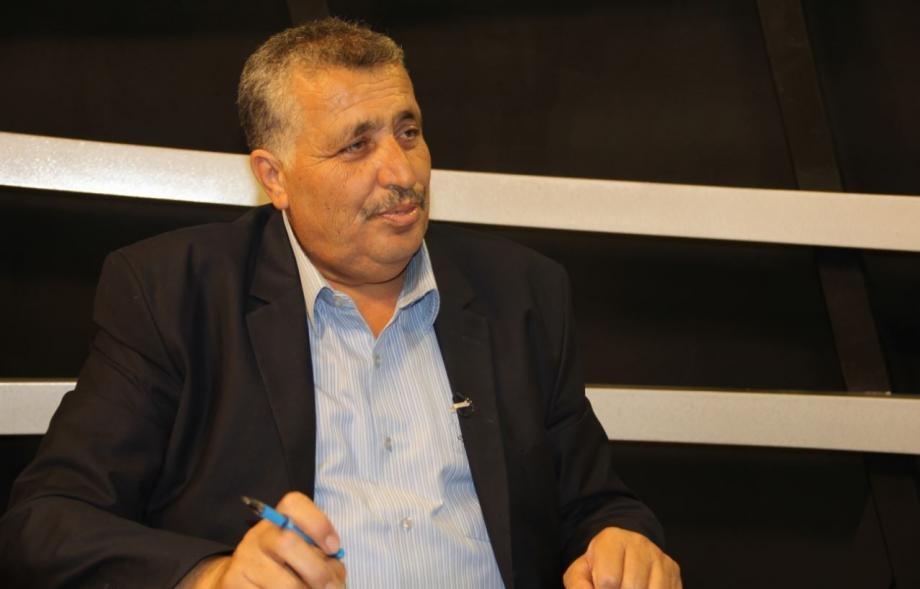
Hasan Khreisheh
Deputy Speaker of the Palestinian Legislative Council (PLC)
https://palinfo.com/wp-content/uploads/2023/03/QXExT.jpeg
Do you believe that legislative elections alone are sufficient to reform the Palestinian political regime?
If these elections are held, they will be a prelude to restoring a more cohesive and organized Palestinian political regime.
We have always spoken about the necessity of holding elections for the Palestinian National Council and rebuilding national institutions on democratic foundations.
However, it seems that some international and regional parties are reluctant to hold comprehensive elections for all Palestinian institutions, including the Palestinian National Council, and are instead focusing solely on legislative elections.
Nevertheless, holding legislative elections remains preferable to maintaining the status quo.
These elections alone may not be sufficient to fully reform the Palestinian political regime, but they are an important step in that direction.
In any case, having an elected legislative council is better than continuing a reality where Palestinian Authority institutions operate without renewed electoral legitimacy.
Restoring popular legitimacy through the ballot box remains a fundamental prerequisite for rebuilding and developing the Palestinian political regime.