Under the Pretext of ‘Incitement,’ Israeli Military Orders Legalize the Execution of Palestinian Journalism
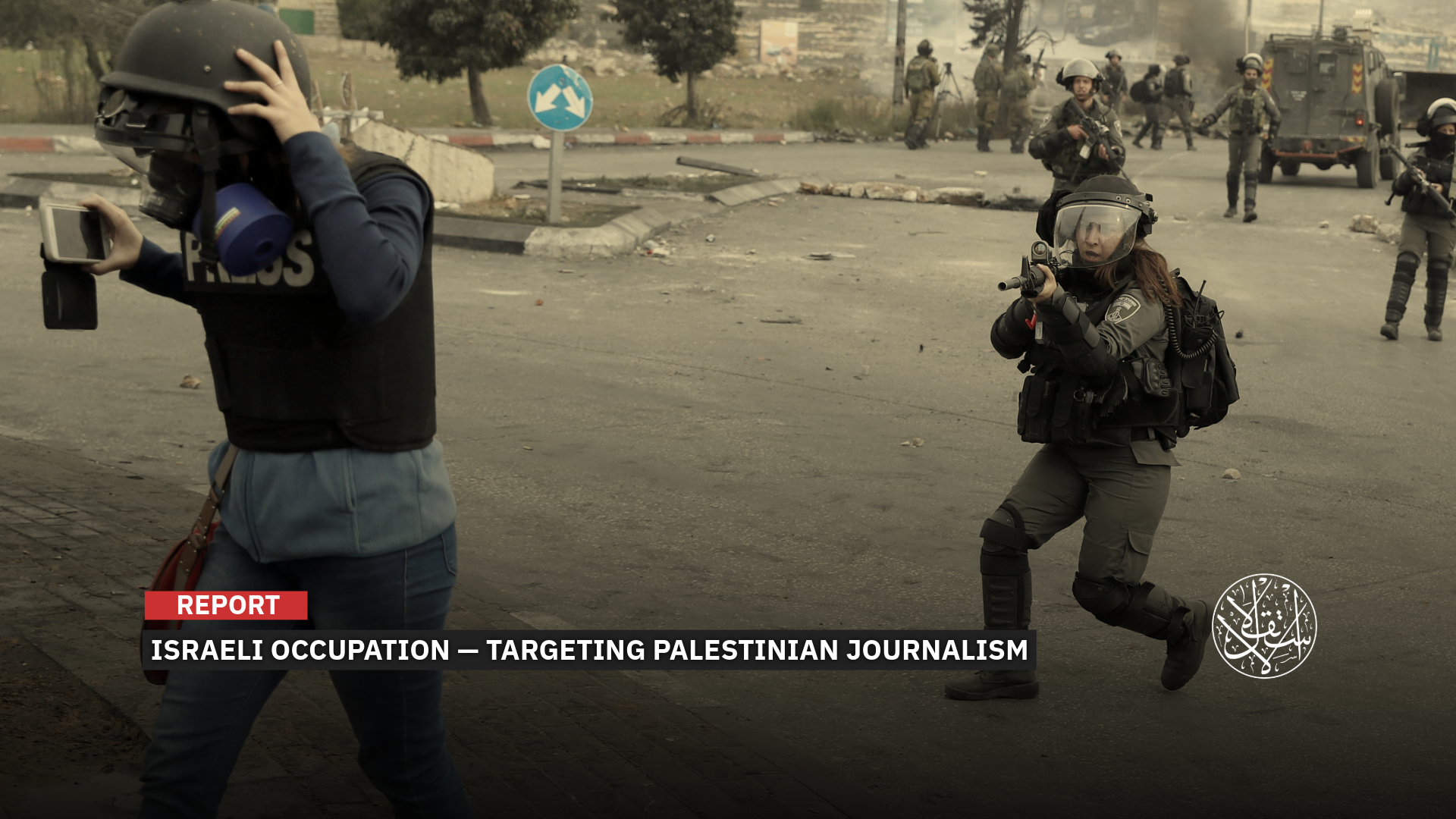
Israeli Occupation authorities classified five Palestinian news websites as "terrorist organizations."
Since the Israeli Occupation shut down three radio stations in Hebron in the southern West Bank in 2015, Israeli measures against Palestinian media have repeatedly followed a similar pattern: raids on media institutions, disruptions to broadcasts, and the seizure of equipment under the pretext of “incitement” or “supporting terrorism.”
The campaign later expanded to include production companies, television network offices, and news websites, eventually extending to the killing, detention, and restriction of journalists’ access to areas where events were unfolding. The latest raid on Alhuda Holy Quran Radio in Qalqilya has brought this pattern back into focus.
Targeted Media
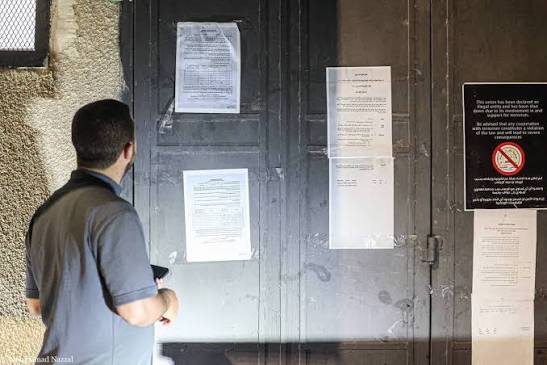
Israeli Occupation forces raided the headquarters of Alhuda Holy Quran Radio in the Sofin neighborhood of Qalqilya in the northern West Bank in the early hours of July 28, 2026. They seized the station’s equipment and contents, shut down the premises, and posted a notice banning its reopening.
The radio station is affiliated with the Quran and Sunah Organization, a local religious and educational organization that works on Quran memorization programs, educational activities, and assistance for families in need.
The raid on Alhuda has brought back into focus a campaign that became particularly visible in Hebron during the fall of 2015. On November 3 of that year, Israeli Occupation forces raided the headquarters of Manbar al-Huria Radio, halted its broadcasts, cut cables, and confiscated transmission equipment before ordering the station’s closure for six months.
Eighteen days later, Israeli forces raided Hebron Radio, destroying or confiscating most of its equipment and issuing a similar six-month closure order. On November 29, 2015, Dream Radio in Hebron was also shut down for six months after its premises were raided and equipment was seized.
The campaign expanded on March 11, 2016, to include the Ramallah office of Palestine Today TV, where transmission equipment was confiscated and the office was closed by a decision from the Israeli Ministerial Committee on National Security Affairs (the Security Cabinet).
On August 31, 2016, Israeli Occupation forces raided al-Sanabel Radio in Dura, south of Hebron, confiscating transmission equipment and technical materials and detaining five employees before shutting down the station for three months. At the time, the attack involved the military, police, the Shin Bet security service, and what is known as the civil administration.
The raids continued on August 31, 2017, when Israeli forces targeted al-Hurriya Media Network, Manbar al-Huria Radio, and al-Nawras TV in Hebron. The institutions were closed for six months, their equipment was confiscated, and parts of their technical infrastructure were damaged.
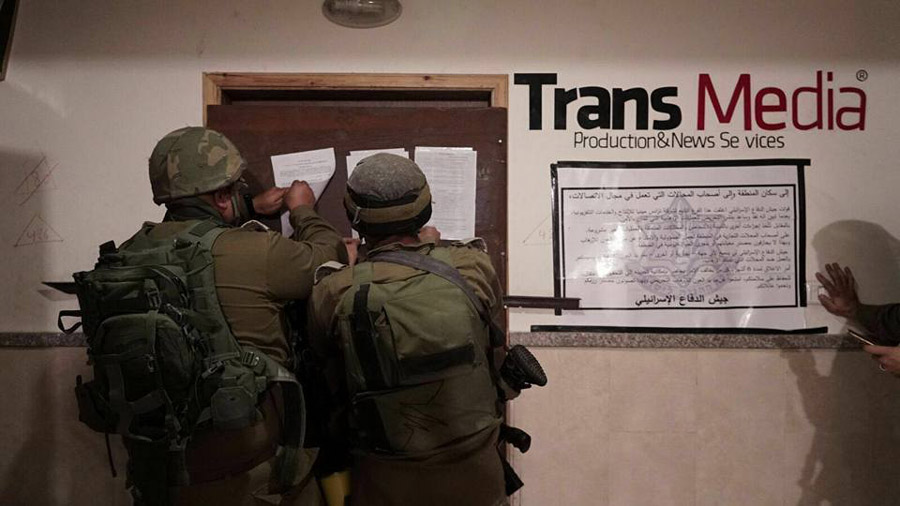
On October 18, 2017, the campaign expanded to production companies that provided services to several television networks. Raids targeted the offices of PalMedia, Trans Media, and RamSat in Ramallah, Nablus, Hebron, and Bethlehem. Israeli forces seized equipment and sealed the offices with metal barriers for six months.
In occupied East Jerusalem, Israeli Occupation police raided the offices of Palestine TV and al-Arz Media Services Company on November 20, 2019, confiscating materials and surveillance camera footage and closing the premises for six months.
The closure order was issued under then-Public Security Minister Gilad Erdan, and authorities repeatedly extended the shutdown until at least 2021. Israeli forces also closed G Media in October 2023.
The policy reached a broader level on September 22, 2024, when an Israeli force raided the Al Jazeera office in Ramallah, forcibly removed journalists, confiscated equipment and documents, and handed the office a 45-day closure order.
Further extensions followed, including a 45-day extension that began in December 2024 and 60-day extensions during 2025. On February 22, 2026, Al Jazeera said Israeli Occupation authorities had extended the closure for 90 days for the 12th time.
On February 26, 2026, the Committee to Protect Journalists said Israeli authorities had issued orders to shut down five Palestinian news websites.
Closure and Detention Laws
Israeli Occupation measures against Palestinian media operate through different legal frameworks that vary depending on the location of the institution and the nature of the action taken. In the West Bank, the Israeli Occupation military relies on military orders that grant the military commander broad powers over publishing, assembly, closures, and arrests.
One of the most prominent of these measures is Military Order 101, issued in 1967. The order imposes restrictions on publishing materials with political content and on organizing gatherings and protests while criminalizing attempts to influence public opinion in ways that Israeli Occupation authorities consider harmful to security or public order.
The order also covers expressions of support or sympathy for organizations classified as “hostile,” with penalties reaching up to 10 years in prison.
Human Rights Watch (HRW) has described these orders as overly broad, allowing for the prosecution of peaceful political expression, while Amnesty International has said that Order 101 has been used to punish Palestinians for political and expressive activities protected under freedom of expression and assembly rights.
Arrests in many cases are based on Military Order 1651, which allows Israeli authorities to issue administrative detention orders lasting up to six months, with the possibility of repeated extensions.
Detainees are brought before a military judge within eight days, while review hearings in a number of cases rely on secret intelligence material that the detainee or their lawyer cannot fully access.
Press freedom organizations have documented the use of administrative detention against Palestinian journalists, as well as prosecutions linked to posts, news coverage, or live broadcasts that Israeli Occupation authorities classified as incitement.
The closure of Al Jazeera’s office in Ramallah falls under the military framework and emergency regulations applied in the West Bank, with extension orders citing justifications issued by the Israeli Occupation military command in the area. On February 22, 2026, the channel said the extension decision was based on the 1945 emergency regulations.
The ban on Al Jazeera’s operations inside the Israeli Occupation, meanwhile, is based on the “Law for Preventing a Foreign Broadcasting Body from Harming State Security,” which was approved by the Knesset in early April 2024.
The foreign channels law gives “Israel’s” communications minister, with approval from the prime minister and the government or security cabinet, the authority to halt broadcasts, shut down offices, confiscate equipment, and block websites for a set period that can be extended.
The Israeli Occupation government used this law against Al Jazeera’s operations inside “Israel,” while the decisions were subject to review by Israeli courts.
The channel and the Association for Civil Rights in “Israel” challenged the law, arguing that the powers granted under it undermine freedom of expression and the public’s right to access information.
In occupied East Jerusalem, Israeli Occupation authorities have used measures linked to restrictions on the activities of the Palestinian Authority and its institutions inside the city.
The closure of the Palestine TV office and al-Arz Company in 2019 was ordered by the public security minister, with Israeli Occupation authorities accusing them of operating on behalf of the Palestinian Authority and violating Oslo arrangements.
The accusation of “incitement” became particularly prominent during the wave of confrontations known in the media as the “Knife Intifada,” when Israeli authorities focused their measures on radio stations in Hebron.
Manbar al-Huria Radio was accused of inciting stabbing attacks, while al-Sanabel Radio was accused of praising attacks and calling for an uprising. Production companies were described in 2017 as assisting “terrorism.”
G Media was classified as an “unlawful organization” in 2023, while five Palestinian news websites were designated as “terrorist organizations” in 2026. Similar accusations were used against Al Jazeera and al-Huda Radio.
Human rights organizations argue that the broad wording of “incitement” allows the term to be applied to political and field-related content that goes beyond direct calls for confrontation or violence.
The Committee to Protect Journalists has documented cases in which journalists faced charges linked to posts, live broadcasts, or journalistic work, while the International Federation of Journalists described the closure of Al Jazeera’s Ramallah office as an escalation against press freedom and the public’s right to know.
The ability to challenge these measures varies depending on the legal framework used. The foreign channels law allows for review before an Israeli court and provides institutions with a public legal process, while challenges in the West Bank go through a military system that in some cases relies on intelligence assessments and confidential material.
Disrupting the Broadcast
The number of journalists martyred and detained, along with the scale of destruction, shows that attacks on media institutions are taking place within a broader environment of pressure on journalists and the channels used to access information.
According to documentation by the Palestinian Journalists Syndicate (PJS) through July 30, 2026, 260 journalists have been martyred since October 2023, 39 journalists remained in detention, 550 journalists were injured, and 150 media institutions were destroyed.
In a six-month report published by the PJS on July 20, 2026, it recorded 467 violations during the first half of the year, including the martyrdom of eight journalists.
Regarding arrests, the Committee to Protect Journalists said on June 3, 2026, that it had documented 102 cases of journalists and media workers being detained since the start of the war on Gaza, with 36 journalists still in custody at the time.
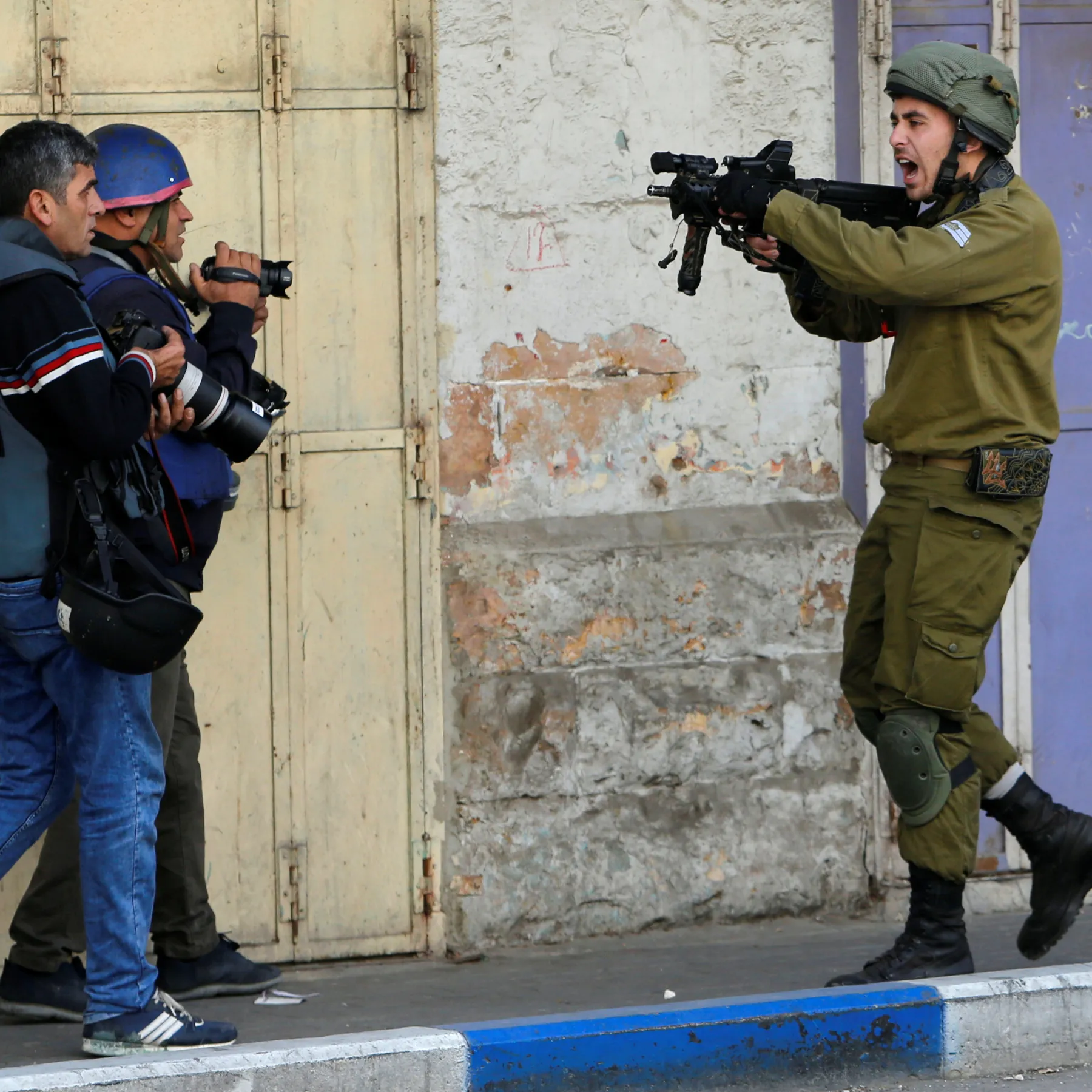
The testimony of Amjad Shawar, director and presenter at Hebron Radio, shows how raids can bring media operations to an immediate halt. He told the Palestinian Center for Development and Media Freedoms (MADA) that Israeli soldiers ordered the staff to stop broadcasting, detained the sound technician, cut cables, and moved the equipment onto a military truck.
The impact of these measures goes beyond the number of journalists affected and extends to the daily ability to produce news. The confiscation of transmitters, cameras, computers, and archives disrupts media operations and raises the cost of returning to work.
The losses suffered by Manbar al-Huria Radio and al-Nawras TV in 2017 were estimated at around $650,000 combined, while raids on production companies in October of that year affected 94 journalists and employees. In the case of al-Sanabel Radio, the disruption continued even after the closure period ended because of the scale of the losses and the detention of staff members.
Raids also dismantle the networks that supply television channels and newspapers with field material. Companies such as PalMedia, Trans Media, and RamSat provided filming, production, and broadcasting services to multiple outlets, meaning that shutting down their offices affected organizations beyond those directly targeted.
The closure of Al Jazeera’s Ramallah office also forced the channel to move part of its editing and coordination operations to Amman, while continuing coverage through smartphones, apartments, hotels, and temporary locations. The move deprived the team of the infrastructure provided by a permanent office, including equipment, archives, communications systems, and editing rooms.
The disruption of media institutions is also linked to restrictions on access to the scenes of events. Since October 2023, the Israeli Occupation has prevented foreign journalists from entering Gaza independently, limiting access to restricted visits organized by Israeli forces, which determine their routes and duration.
This has left Palestinian journalists inside Gaza carrying the primary burden of documenting the Israeli war amid bombardment, displacement, communication blackouts, shortages of equipment, and a lack of protection.
Meanwhile, Al Jazeera’s West Bank bureau chief Walid al-Omari described the office closure as an attempt to “erase the truth” and prevent the public from hearing it.
Repeated raids and arrests have also pushed journalists and sources to weigh the risks of reporting, particularly during raids and military operations.
Digital platforms and smartphones have allowed some outlets to continue operating after losing their offices. Manbar al-Huria and Dream Radio resumed broadcasts through radio and online platforms, while Al Jazeera continued reporting from Amman and alternative field locations.
But these tools cannot restore confiscated archives or replace newsrooms and transmission equipment. They also remain vulnerable to checkpoints, arrests, communication disruptions, and restrictions on access to areas of military operations.
The period stretching from the closure of Hebron radio stations in 2015 to the raid on al-Huda Radio in 2026 reveals a gradual system of pressure involving closure orders, confiscations, administrative detention, website blocking, killings, and access restrictions.
The accusations of “incitement” and “supporting terrorism” have enabled closures and confiscations before detailed evidence is publicly presented or legal challenges are completed, while arrests and access restrictions reduce the number of witnesses able to document events on the ground.
Sources
- Israeli army raids Quran radio station in occupied West Bank, shuts it down
- “MADA: the shutdown of Manbar Al-Huria Radio and Al-Nawras TV a grave breach of freedom of expression”
- Israeli Forces Raid Radio Station in Qalqilya and Arrest Resident from Kafr Qaddum [Arabic]
- Palestinian Journalists Syndicate
- It Shut Down Three Radio Stations and Threatened Another With Closure [Arabic]
- Arrests of Palestinian journalists since start of Israel-Gaza war
- Born Without Civil Rights
- Order No. 101