Al-Zaidi's Government Faces a Test of Strength: Who Will Have the Final Say in Baghdad?
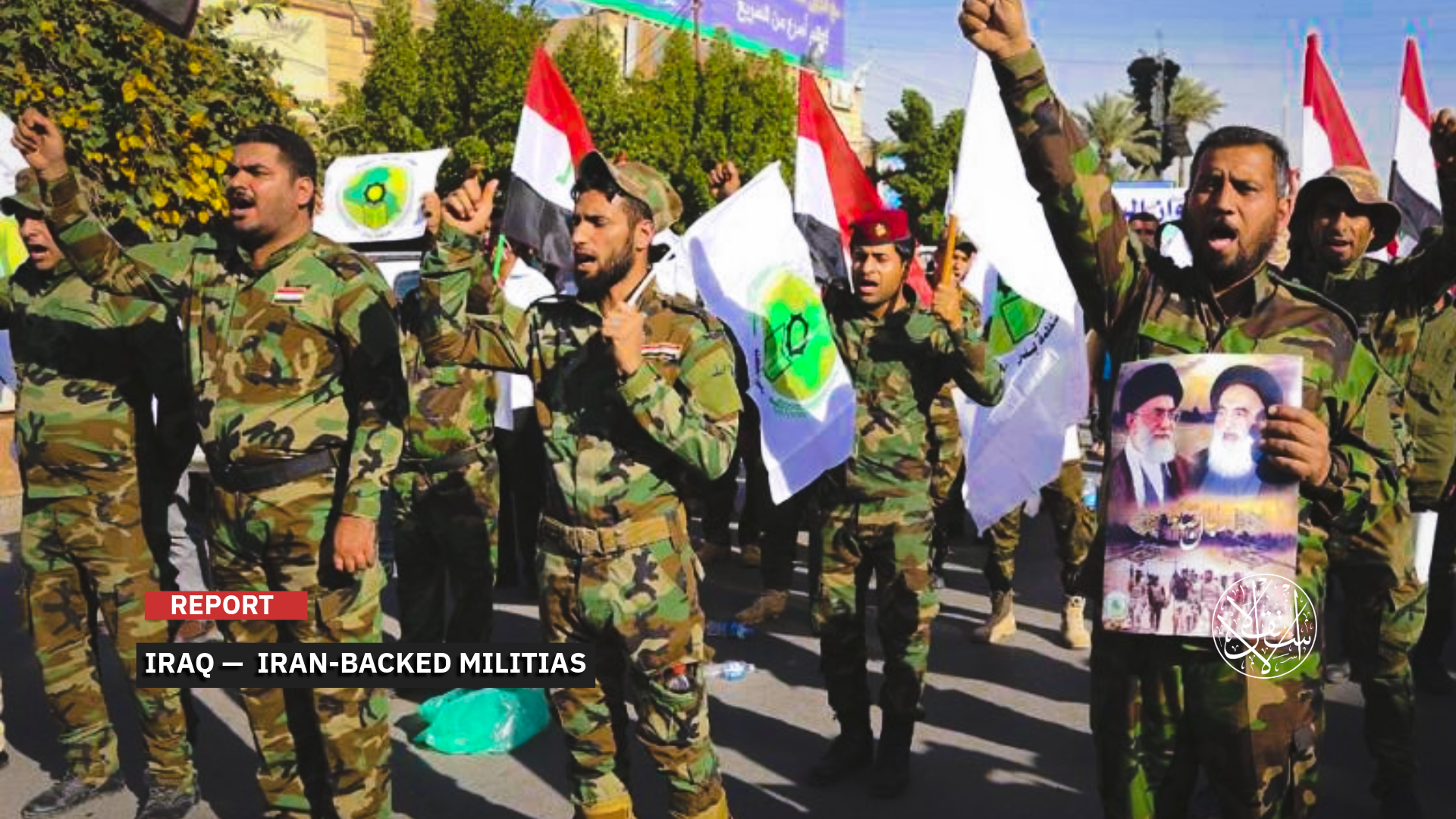
The government maintained its silence despite comments on the incident by individuals close to the militias.
In the first real test faced by the government of Iraqi Prime Minister Ali al-Zaidi, Iraqi security forces failed to raid the headquarters of an Iran-backed armed militia, about a week after al-Zaidi pledged to disarm the factions and place all weapons under state control by September 30, 2026.
During a meeting with U.S. President Donald Trump in Washington on July 14, al-Zaidi said that "restricting weapons to the state's control is a fundamental priority, and I have made an irreversible decision on this matter," adding that "there will be no need for any armed factions to remain after September 30."
The date announced by al-Zaidi marks the departure of the final contingent of U.S. forces serving in Iraq as part of the International Coalition.
It follows the timetable for a phased withdrawal agreed upon during previous talks between Baghdad and Washington in September 2024.
Jurf al-Naddaf
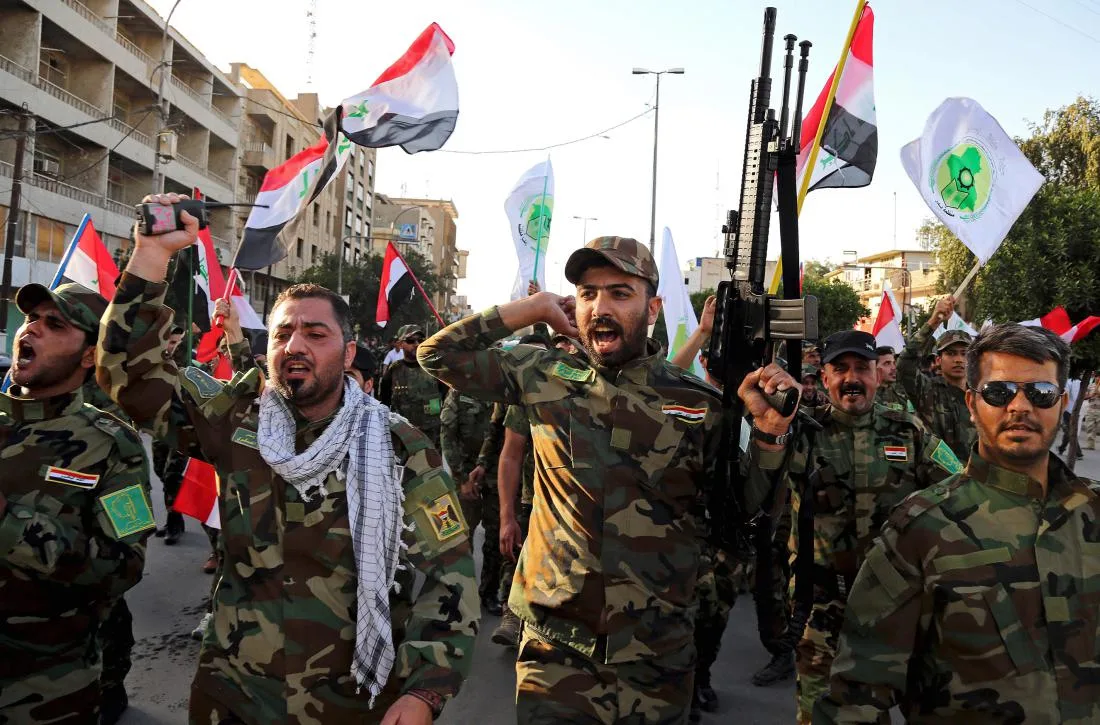
On July 24, local media outlets and social media activists reported that Iraqi security forces had surrounded a headquarters belonging to the Iran-backed Harakat al-Nujaba militia in the Jurf al-Naddaf area on the outskirts of Baghdad, preparing to raid the site after receiving intelligence that it housed a factory used to manufacture drones.
The Iraqi news agency Shafaq News, citing an unnamed security source, reported that "the headquarters contains a drone manufacturing facility, and the drones had previously been launched toward the U.S. Embassy and Baghdad Military Airport. However, gunfire was fired into the air when the compound was surrounded."
The Iraqi al-Saa'a network reported that the security force was prevented from entering and remained at the gate of the military compound awaiting permission to proceed. According to the report, Harakat al-Nujaba fighters threatened to target the security force if it attempted to storm the camp, forcing the Iraqi force to withdraw without entering the facility.
The network also said that a unit from the Popular Mobilization Forces (PMF) took part in the operation without knowing that its mission involved raiding a site belonging to Harakat al-Nujaba.
Echoing those accounts, Iraqi political analyst and writer Nizar Haider, who is based in the United States, said that Harakat al-Nujaba prevented an Iraqi Army unit from entering one of its sites in the Jurf al-Naddaf area, southeast of Baghdad, and forced it to retreat at gunpoint.
In a post published on X on July 25, Haider said that "as soon as the force arrived at the entrance to the compound, the camp commander informed them that they would not be allowed to enter, and that if they did not leave, they would be arrested."
Haider added that the security force remained outside the camp's gate and that, after about 30 minutes, armed personnel emerged from inside the compound and forced the government force carrying out the official mission to surrender its weapons under threat after militia members fired shots into the air above the vehicles and personnel of the raiding force.
According to Haider, "more than an hour later, the PMF command contacted the accompanying PMF security unit and ordered it to withdraw immediately, claiming that when the Office of the Commander-in-Chief of the Armed Forces requested that the PMF Authority send a security force, the understanding was that it would participate in a security plan, not conduct a search of a site belonging to Harakat al-Nujaba."
Haider concluded by saying, "The PMF security unit then informed the Army that it had received orders to withdraw. Shortly afterward, the Army also received withdrawal orders, prompting the entire force to leave without carrying out its mission."
Harakat al-Nujaba was founded in 2013 under the leadership of Akram al-Kaabi, who is designated by the United States as a terrorist.
The group was established to fight alongside Iran-backed factions in Syria in support of the Bashar al-Assad regime. It has been accused of carrying out killings and kidnappings in several areas of Iraq as well as in Syrian territory.
While Iraqi authorities remained publicly silent about the incident, Hussein Ali Noor, a member of Harakat al-Nujaba's Political Council, denied the reports, saying, "All the news circulating on this matter is false and has no basis in fact. Its purpose is to spread rumors and provoke problems."
An Iran-Backed Decision
Commenting on the incident and its implications, Iraqi affairs researcher Moayad al-Douri said that "the security forces' failure to raid Harakat al-Nujaba's headquarters confirms beyond any doubt that they would be unable to disarm the group by force if it, or any other militia, refused to surrender its weapons to the authorities."
Al-Douri told Al-Estiklal that "the militia's refusal to allow the security forces into its headquarters reinforces what everyone already knows, these groups are above the state and stronger than it, if they are not effectively the ones controlling it."
He added that "bringing weapons exclusively under state control will not be achieved unless the Iraqi authorities reach an agreement with Iran for these groups to surrender their arms, because they are ideologically and organizationally subordinate to Tehran and therefore will not comply with anyone else."
By contrast, political analyst Hussein al-Kinani, who is close to Iran-backed militias, said that al-Zaidi's decision to raid the headquarters of the armed factions was "a major mistake," arguing that the groups operate under the umbrella of the Popular Mobilization Forces (PMF) and that many of them are part of that organization. "Therefore, attempting to storm their headquarters is more of a symbolic issue than an operational one," he said.
In an interview with Iraq's al Rabiaa TV channel on July 27, al-Kinani added that "this issue requires wisdom and great patience from the government.
It should not provoke these factions but instead seek ways to reach a settlement, including by separating the factions from the Popular Mobilization Forces."
He further explained that "the administrative affairs of many fighters from these factions fall under the authority of the Popular Mobilization Forces Commission, which is linked to the Commander-in-Chief of the Armed Forces. As a result, they would remain within that institution, and the matter would end there."
In notable remarks, Iraqi National Security Adviser Qasim al-Aboudi revealed that, following lengthy discussions between Prime Minister Ali al-Zaidi and Iranian officials during Al-Zaidi's visit to Tehran, Iran agreed to support placing all weapons under the exclusive control of the Iraqi state.
Speaking in a televised interview on June 26, al-Aboudi said that "Iran has expressed its readiness to help ensure that all weapons are placed under the control of the Iraqi state, having become convinced that there is no justification for weapons to remain outside state authority after the U.S. withdrawal from Iraq on September 30, 2026."
Along the same lines, political analyst Salam Adel, who is close to Iraq's Shiite Coordination Framework, revealed that Prime Minister Ali al-Zaidi met in Iran with the leaders of the four armed factions opposed to disarmament, and that the groups presented several proposals for placing all weapons under state control, according to a televised interview on July 26.
Adel added that al-Zaidi met with Abu Hussein al-Hamidawi, Secretary-General of Kataib Hezbollah; Abu Alaa al-Walai, leader of Kataib Sayyid al-Shuhada; Akram al-Kaabi, Secretary-General of Harakat al-Nujaba; and Haider al-Gharawi, commander of Ansar Allah al-Awfiya.
According to Adel, the four leaders agreed to place their weapons under state control following the U.S. withdrawal from Iraq on September 30.
A Serious Scenario
In the same context, Iraqi security and strategic affairs expert Ahmed al-Sharifi said it was unlikely that the Iraqi authorities would be able to impose their authority on the armed factions, particularly those refusing to surrender their weapons, foremost among them Kataib Hezbollah and Harakat al-Nujaba, according to Iraq's al-Saa'a network on June 25.
Al-Sharifi said that "what happened in the Jurf al-Naddaf area, where a military force was prevented from carrying out its mission to inspect one of the factions' headquarters, is clear evidence of that." He predicted that the issue of weapons outside state control could ultimately become internationalized, with the United States intervening militarily to target those factions in an effort to ensure that weapons are placed under the state's exclusive authority.
The security expert stressed that "placing all weapons under state control is not merely a domestic government program. It is also a requirement for maintaining good international relations with neighboring countries, fulfilling international commitments and agreements with the United States, and addressing a domestic demand supported by the public amid the serious challenges and escalating tensions across the Middle East."
He added that "although restricting weapons to state control reflects the government's objective, from a practical standpoint its implementation on the ground remains extremely difficult. All available indicators point to declining prospects for the government's success on this issue, particularly after the prime minister's return from the United States and Iran."
Al-Sharifi noted that "the operation in Jurf al-Naddaf was intended to inspect one of the armed factions' headquarters in southern Baghdad. However, the force assigned to carry out the mission, supported by the Popular Mobilization Forces' security unit, was prevented from entering the compound by members of the armed faction."
He continued, "This incident not only means that the force assigned to carry out the mission failed to fulfill its responsibility, but also that it undermined the Commander-in-Chief of the Armed Forces' order to enforce the operation."
Al-Sharifi warned that "this places the country in a serious predicament, with weapons remaining outside the state's authority on the one hand, and the possibility that those weapons could become involved in ongoing international conflicts on the other, particularly if tensions between Washington and Tehran escalate again in the near future, based on current developments."
Regarding the implications of the incident, al-Sharifi said that "the failure of the official operation will prompt Washington to reassess its approach toward Iraq, especially on this issue. It will reinforce the U.S. view that al-Zaidi, the Iraqi government, and the Coordination Framework are ineffective in influencing the armed factions."
He further predicted that "the international response to the failure to enforce state authority and the rule of law over the factions could take the form of direct U.S. airstrikes against their headquarters. Such strikes would likely be preemptive, ahead of any decisive military confrontation with Iran."
He argued that "the United States wants to prevent the factions from taking part in any future conflict by neutralizing them through force before the decisive stage of any confrontation with Iran, especially because Washington is convinced that the Iraqi factions refusing to surrender their weapons would use them if a large-scale conflict with Iran were to resume."
Al-Sharifi concluded that "current indicators suggest that the issue of the Iraqi factions and the effort to place weapons under state control is becoming increasingly internationalized.
Available evidence points to the possibility of imminent U.S. airstrikes against the factions, particularly as confidence grows that the Iraqi government is incapable of resolving this issue."