Chad Scraps Entry Visa Requirements for Citizens of African Countries: What's the Objective?

This reform announced by Chad marks a real turning point.
Africa continues its efforts to achieve greater economic and political integration among its countries. One of the measures adopted in this context is the abolition of entry visa requirements, a policy that Chad has announced it will implement for citizens of African nations.
Chad has announced that it will abolish entry visas for all citizens of African countries, effective January 1, 2027, in a move aimed at supporting regional integration and facilitating the movement of people and goods across the continent.
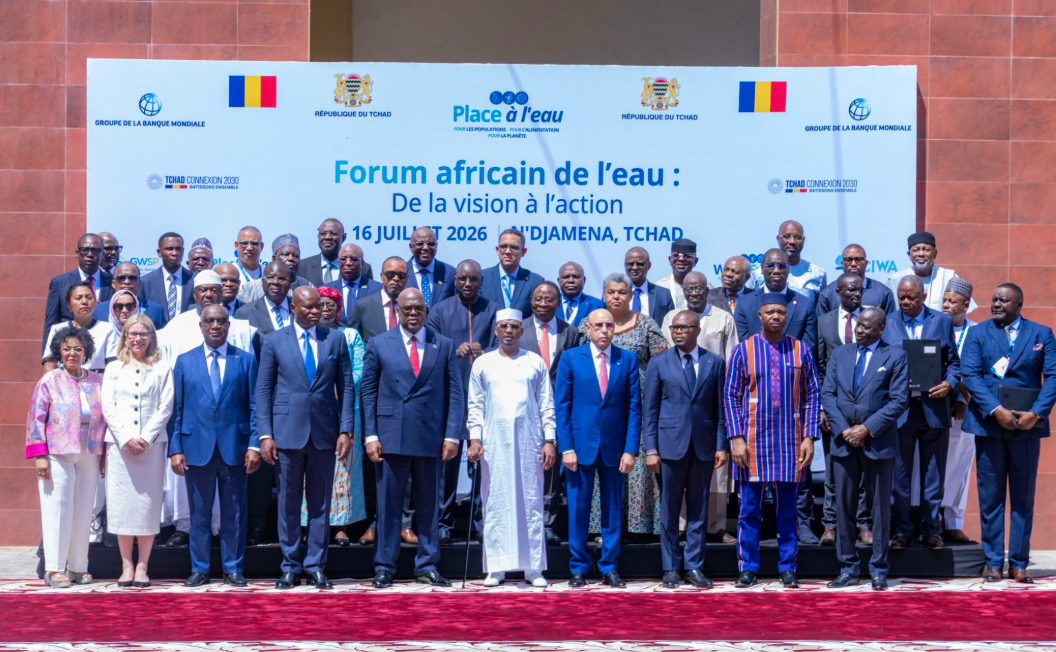
According to the local news website Tchadinfos, the decision was announced by President Mahamat Idriss Deby Itno during the African Water Forum, held in the capital, N'Djamena, on July 15, 2026.
The Chadian president said the measure reflects his country's commitment to advancing African integration, noting that Chad seeks to strengthen its position as a strategic hub linking West, East, North, and Central Africa.
He added that opening the country's borders to African citizens is consistent with Chad's vision of expanding economic and trade cooperation among African states.
With this decision, Chad becomes the eighth African country to adopt a visa-free policy for citizens of other African nations, joining countries such as Rwanda, Benin, The Gambia, Seychelles, Ghana, Kenya, and the Republic of the Congo, as part of ongoing efforts to promote freedom of movement and advance African integration.
The decision is also aligned with the African Union's objectives of facilitating mobility across the continent, particularly under Agenda 2063 and the implementation of the African Continental Free Trade Area (AfCFTA). However, most African countries still require visas for entry, or limit visa exemptions to members of specific regional blocs.

The Turning Point
According to Financial Afrik, in an analysis published on July 16, Chad's decision carries significant diplomatic importance, noting that it places the country within an already established continental trend embraced by a number of African states.
The publication pointed out that Benin was among the first countries to abolish visa requirements for all African citizens. Rwanda, The Gambia, and Seychelles also maintain highly open entry policies, while Ghana recently announced a visa exemption for all African nationals.
It added, "South Africa later announced visa-free entry for citizens of 32 African countries to support tourism, investment, and trade across the continent. Kenya has also undertaken sweeping reforms to its entry requirements to facilitate movement within Africa."
The publication noted that this trend aligns with the ambitions of the African Union and the African Continental Free Trade Area (AfCFTA), both of which regard the free movement of people as a cornerstone of Africa's economic integration.
It also explained that President Mahamat Idriss Deby Itno's decision to announce the reform during the African Water Forum gave the event, originally dedicated to discussing sustainable development challenges, an additional political dimension. During the forum, N'Djamena became a platform for promoting a more open, integrated, and freely connected Africa.
Meanwhile, Le Reveil Africain, in an analysis published on July 16, 2026, said that "this reform announced by Chad marks a genuine turning point."
It continued, "After long being viewed as a landlocked country facing security challenges and lacking economic attractiveness, Chad now intends to capitalize on its strategic geographic location at the crossroads of West, Central, North, and East Africa."
The publication added, "By facilitating the entry of African travelers, N'Djamena hopes to become a regional hub for business, trade, and investment."
The same source noted that the economic impact of Chad's decision could be substantial, as abolishing visa requirements reduces administrative costs and travel barriers for African entrepreneurs, investors, researchers, and tourists.
It continued that the simplified process is also expected to encourage the emergence of new business partnerships, stimulate business-to-business trade, and expand Chad's market to attract capital and skilled professionals from across the continent. Ultimately, the measure could help diversify an economy that still relies heavily on oil.
The publication further stated, "The tourism sector is among the key industries likely to benefit from this move. Although its potential remains largely untapped, Chad possesses remarkable natural and cultural heritage, including the Ennedi Mountains, the Ounianga Lakes, and Zakouma National Park."
It added that the reform is also consistent with the vision of the African Continental Free Trade Area (AfCFTA), which considers the free movement of people a key driver of economic integration. By facilitating mobility, Chad is strengthening the conditions needed to expand intra-African trade, which remains relatively low compared with other regions of the world.
However, the publication cautioned that "opening the borders will only achieve its full impact if it is accompanied by investments in infrastructure, transportation, public services, and security measures. Without efficient roads, improved air connectivity, and a more competitive business environment, the expected benefits may remain limited."
It concluded that if the reform is paired with ambitious economic policies and an improved business climate, it could become a powerful engine of growth, strengthen Chad's regional role, and contribute to the country's sustainable development.

A Renewed African Consciousness
In his assessment of Chad’s move and similar steps taken by some African countries, economic expert Omar Kettani said that the decision to abolish visas reflects the new African consciousness that the continent has begun to embrace in recent years.
Speaking to Al-Estiklal, Kettani said that the people of the continent and its leaders have begun to recognize an established historical reality, reinforced by today’s rapidly accelerating challenges, namely that Africa’s future lies in the hands of Africans themselves, and that this future cannot be built by relying on others.
He warned that Chad’s decision and similar measures reflect this awareness, as well as a sense of belonging to a continent that was fragmented as a result of periods of enslavement and colonialism by Western countries.
He continued that Africans are also becoming aware of a seemingly contradictory reality, namely that they are both rich and poor at the same time: poor because of their current position on the development and progress scale, and rich because of the enormous wealth and resources available to them.
Therefore, the economic expert said, this type of cooperation and the opening of borders between African countries will contribute to mutual benefit, encourage investment, and promote collective use of resources, keeping wealth within the continent rather than transferring it abroad.
Kettani noted that the abolition of visas between several countries helps bring together peoples and ethnic groups within the continent and strengthens efforts to end wars and tribal or regional conflicts, especially in border areas.
He stressed that this rapprochement comes through opening borders, promoting tourism, discovering neighboring countries, building trade, financial, and economic relations, and developing a sense of belonging to a single community, all of which can be advanced through visa abolition and easier movement.
For this reason, Kettani viewed these initiatives as a sign of what can be achieved through African unity and the development of African resilience against foreign influence, which he said continues to control many of the continent’s economic resources.
Overall, he said that this new direction, supported by the governments concerned, reveals a major opportunity for economic engagement and the exchange of ideas and expertise among African countries.
Regarding the security challenges facing these initiatives, Kettani said that one of the fundamental ways to address security issues is to strengthen economic cooperation in order to ease public frustration caused by difficult economic conditions.
He explained that some communities had lived in constant tension, but after funding and solutions were provided to encourage cooperation between groups living along borders, conflicts were reduced and those communities began cooperating instead of fighting and engaging in disputes.
Kettani emphasized that a sense of shared interest is built psychologically, commercially, and economically, and represents a necessary transitional phase to convince populations of the broader importance of opening borders with one another.
He concluded that the poverty affecting many African regions and the continent’s internal conflicts are, at their core, linked to external exploitation of its economic resources and the influence exerted over some of its leaders.
In contrast, greater openness and cooperation among African countries represent a sign of growing awareness of these issues and the beginning of efforts to address them at their roots.
Internal Assessment
Political writer Ahmat Adoum Moussa said that the Chadian president’s decision represents an important turning point in Chad’s migration and diplomatic policy.
As a result, it has sparked wide debate among the public, with reactions on social media platforms and online discussion forums ranging from enthusiasm to concern.
In addition to the previously mentioned benefits, Adoum Moussa wrote in an opinion article published by Toumai Web Medias on July 19, 2026, that some people fear this opening could lead to further destabilization of an already complex security situation.
He continued that Chad still faces multiple threats, most notably terrorism in the Lake Chad Basin, where armed groups, particularly Boko Haram, remain a major challenge.
He added, “Critics believe that opening borders without significantly strengthening monitoring measures could increase the risk of criminal or terrorist networks infiltrating the country.” He noted that these concerns deserve consideration, but should not be exaggerated, as Chad’s decision is not the first of its kind, with other African countries having taken similar steps before it.
Adoum Moussa warned that, regardless of differing opinions, one undeniable reality remains: no African country can confront alone the enormous challenges related to development, security, trade, climate change, and providing employment opportunities for young people.
The political writer stressed that regional and continental integration is no longer merely a political ideal, but has become a strategic necessity to strengthen Africa’s ability to withstand challenges and compete in a world that is increasingly organized around large economic blocs.
He explained that recognizing the importance of this vision does not mean ignoring realities on the ground. The main challenge does not lie in visa abolition itself, but rather in the state’s ability to support and sustain this reform.
Adoum Moussa said that Chad must strengthen smart border controls, modernize security systems at airports and border crossings, improve identification and intelligence systems, and intensify security cooperation with neighboring countries.
He concluded that visa abolition should not be viewed as merely an administrative measure, but rather as a strategic choice requiring careful preparation that balances economic opportunities with security challenges.