Head of the International Committee to Break the Siege on Gaza: We Are Heading Towards a More Impactful Phase (Exclusive)
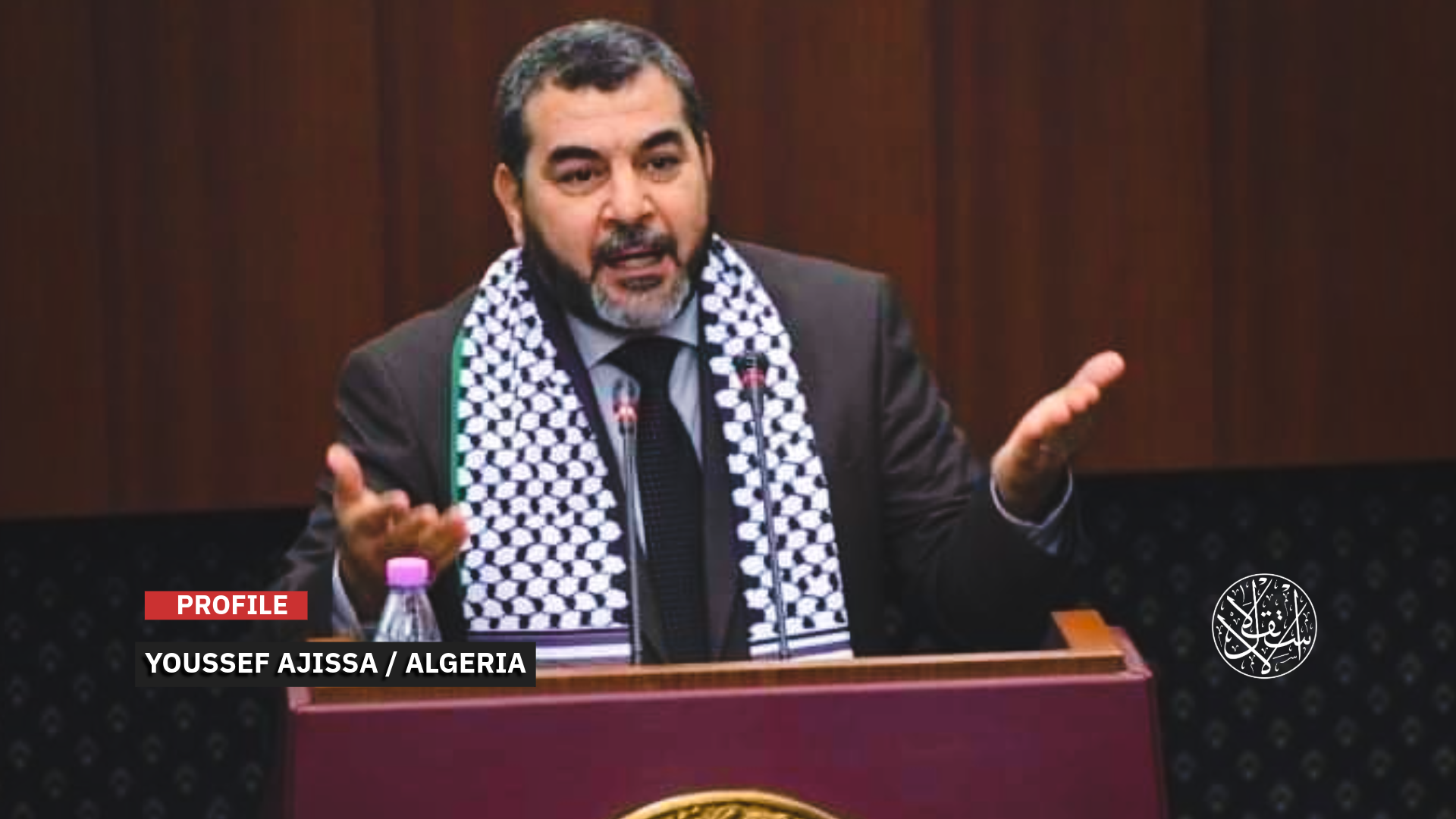
“Our people in the Gaza Strip cannot be left to face their fate alone.”
Amid the ongoing Israeli blockade of the Gaza Strip, international and grassroots efforts are escalating to break it and keep the Palestinian cause at the forefront of the global agenda.
The Freedom Flotilla stands out as one of the most prominent civil initiatives in this context, as it seeks to highlight the suffering of Palestinians and expose the repercussions of the genocide being perpetrated by Israel in Gaza to international public opinion.
In this regard, MP Youssef Ajissa, head of the International Committee to Break the Siege on Gaza, stated in an interview with Al-Estikal: “The Freedom Flotilla has succeeded in bringing the Palestinian cause back to the forefront of international attention.”
He also believes that it has contributed to exposing the practices of the blockade and the violations associated with it, despite the threats, restrictions, and repeated targeting these initiatives face.
He emphasizes the importance of human rights, media, and parliamentary action in support of the Palestinian cause.
He points to the expansion of the international solidarity movement and the increasing number of participants in efforts to break the siege, including parliamentarians, human rights activists, journalists, and supporters from around the world.
He believes this movement strengthens the chances of pressuring governments and international institutions to take more effective stances regarding what is happening in the Gaza Strip.
Steadfastness and Freedom
What is your assessment of the results of the Freedom and Steadfastness flotillas that sailed towards the Gaza Strip in the past period?
The Freedom Flotilla heading to the Gaza Strip is the primary, and perhaps the only, factor that is bringing the Palestinian cause back to the forefront of international attention, especially the unjust, immoral, inhumane, and illegal siege imposed on the Gaza Strip.
Perhaps people, and the international community, do not feel the extent of the suffering endured by our people in Gaza until they see the missiles and shells weighing tons raining down, destroying all aspects of life, and until we see the images of martyrs and the wounded.
But when this barbaric brutality perpetrated by the Israeli occupation ceases, the international community forgets that there is an ongoing and silent genocide, and that there is an unjust siege that has persisted for more than twenty years.
Indeed, the activists have excelled through this great work. It is a monumental effort undertaken by these individuals to break the siege and restore the prominence of the Palestinian cause.
This is precisely what we witnessed after the brutal intervention of this occupation and the interception of these ships and flotillas, along with the subsequent mistreatment and torture of the activists participating in the efforts to break the siege.
The media and diplomatic objective of this flotilla was achieved: exposing the actions of this occupation, revealing the reality of the siege imposed on Gaza, and highlighting its treatment of freedom fighters worldwide and the activists participating in this flotilla.
To what extent did these flotillas succeed in bringing the siege imposed on Gaza to the attention of international public opinion?
The Israeli occupation controls all crossings into Gaza, allowing entry only of what it deems appropriate and what it believes does not affect its security. This deprives the population of even the most basic aid and humanitarian necessities.
These flotillas have shed light on this siege and exposed its true nature to the world, demonstrating that the Palestinian cause remains stagnant and that the negotiations have yielded no tangible results.
The siege remains in place, the brutal killing machine continues its daily operations, and people continue to live in tents.
The reconstruction process has yet to begin, and the effects of the destruction, unemployment, and psychological trauma remain deeply felt in Gaza.
Many residents live in tents that offer no protection from the summer heat or the winter cold, while the occupation continues to target tents and civilians even in their homes.
Assassinations and the siege of the Gaza Strip from all sides, including the sea, also continue.
Therefore, the occupation does not want these flotillas to reach Gaza, knowing that among the participants are journalists and media professionals capable of conveying the truth about the killing, destruction, displacement, and grave violations that have occurred over the past two years.
I believe that the free people of the world, through these flotillas of steadfastness and freedom, have succeeded in demonstrating that the Palestinian cause remains a central and pivotal issue.
Attention must be paid to Gaza until the blockade is lifted, prisoners return to their families, and the implementation of the terms of the concluded agreements—foremost among them reconstruction—begins.
What are the most significant political and diplomatic gains achieved by the campaigns to break the siege so far?
The largest waves of solidarity, marches, and sit-ins occurred during the war of annihilation. This momentum may have waned somewhat when people believed negotiations were underway and a ceasefire had been reached.
However, it later became clear that these negotiations and their terms did not yield tangible results, and that our people in the Gaza Strip continue to suffer. Therefore, we witnessed the popular uprising that followed the attack on the Freedom Flotilla.
These solidarity activists understand that what they experienced is incomparable to what their brothers and sisters in the Gaza Strip are enduring, and to the suffering and harsh conditions faced by prisoners in Israeli occupation prisons, including torture, neglect, and procedures and laws that violate their fundamental rights.
They emphasize that what they personally experienced is nothing compared to what all these people are suffering. This is why the level of solidarity is increasing, and why efforts to monitor and hold accountable those responsible for the killings and violations are expanding.
Today, we see manifestations of this solidarity in many parts of the world, whether in European countries, the United States, or elsewhere, where popular and human rights campaigns demanding accountability and justice continue.
The Freedom Flotilla, along other institutions and organizations, represent an important contribution to the Palestinian cause and help raise international awareness of the reality of this suffering.
I believe that the level of solidarity will increase in the coming period, and that the time has come for politicians, parliamentarians, diplomats, human rights activists, and other influential figures to take a more active role in addressing this issue and defending human rights.
Positions and Challenges
How has the maritime movement affected the positions of governments and international institutions regarding the humanitarian situation in Gaza?
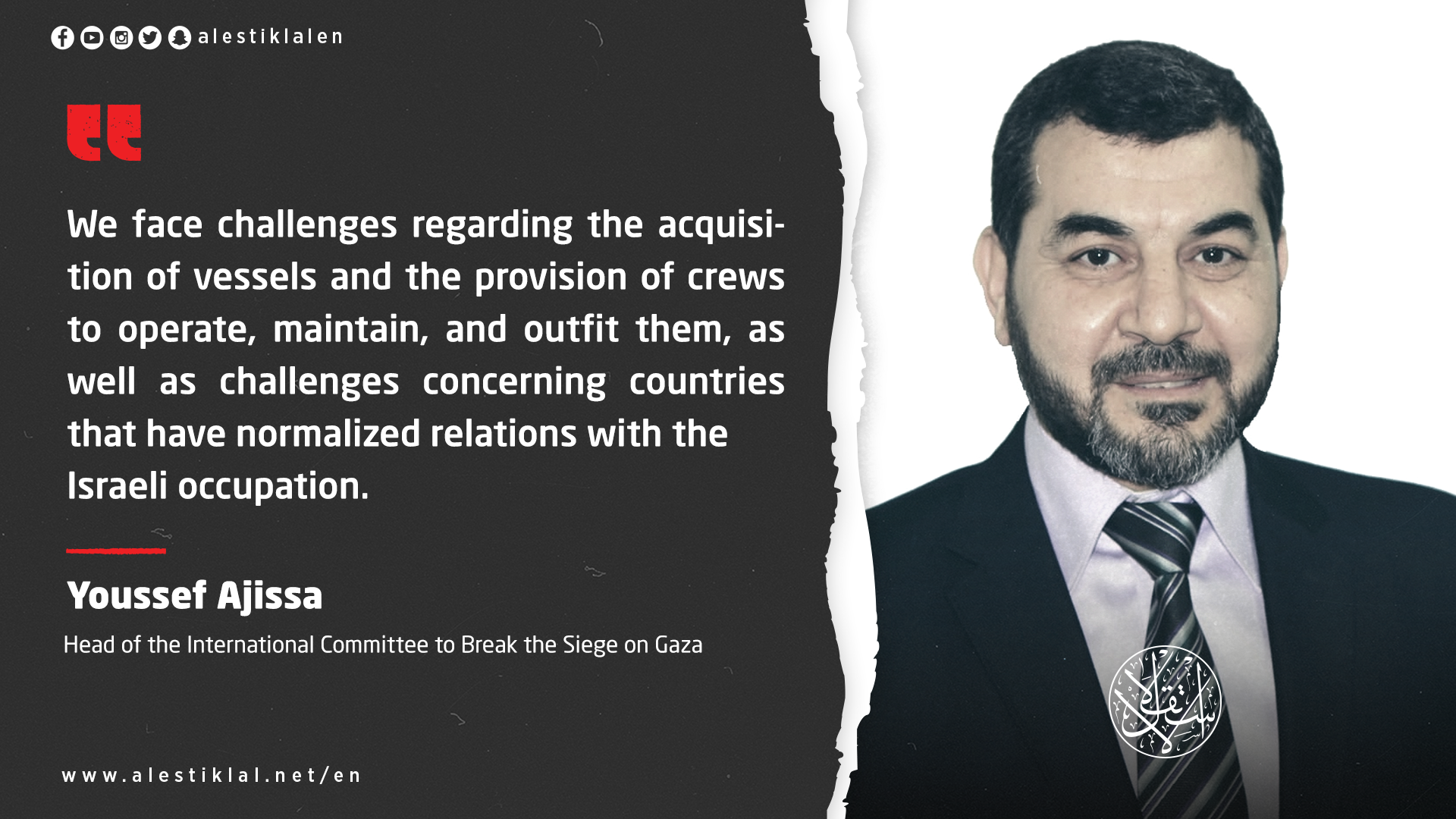
The challenges are numerous. The first of these is the danger of the sea itself. Prior to that, there are challenges related to acquiring ships, providing the crews to operate them, and securing those responsible for their maintenance, repair, and outfitting.
While it is true that thousands of people are eager to participate in these flotillas and experience the journey, regardless of the risks and challenges posed by the sea's waves and conditions, there are other equally important challenges.
These include the positions of some countries that have normalized relations with the occupation, whether European, Arab, or otherwise, which prevent ships from docking in their ports or impose significant restrictions and limitations.
Furthermore, some ships are subjected to deliberate acts of sabotage and destruction, which poses a major challenge to these initiatives.
As I mentioned, people often only see the final scene: the moment the ships set sail, raising flags and banners demanding freedom, an end to the blockade, and solidarity with Palestine.
But behind this scene lie significant and serious challenges facing the entire process, despite the growing international interest in blockade-breaking initiatives and the increasing participation of institutions and organizations in supporting them.
For a long time, the Freedom Flotilla Coalition was the primary entity organizing attempts to break the blockade with one, two, or more ships.
However, the idea of breaking the blockade has, over time, inspired many international organizations, leading to the emergence of numerous initiatives, such as the Freedom Flotilla and others originating from various regions, including Europe and East Asia.
This diversity has contributed to unifying efforts and raising the level of the challenge, despite the existing difficulties. Nevertheless, everyone is working to overcome these obstacles and coordinate their efforts, because the sea is vast enough for everyone.
This unified action among these organizations is what gives these initiatives momentum, strength, and impact, and makes them more difficult to confront.
We have seen this in past experiences, whether in the Freedom Flotilla initiatives or in the joint efforts led by the Freedom Flotilla Coalition. The cooperation and coordination between various parties have proven its ability to enhance the media and humanitarian presence of these initiatives.
What messages do the Freedom Flotillas seek to convey to the international community?
In reality, as soon as a flotilla of resistance and freedom sets sail, the Israeli occupation begins issuing threats.
These threats may occur during the preparation phase, through targeting or attempting to sink the ships, as happened with the Ship of Conscience in Malta, or as happened in Tunisia when it was harassed and targeted in various ways.
This occupation believes that such threats will deter the participants and supporters, but in reality, they only increase their resolve and raise the level of defiance.
We have seen this clearly; even when some participants were arrested, they remained steadfast in their positions, chanting slogans of freedom for Palestine and Gaza.
These are the free people of the world who were raised on the values of freedom and justice, and they understand that injustice cannot last, and that our people in the Gaza Strip cannot be left to face their fate alone.
What we see from these solidarity activists is truly admirable. Although they do not share borders, language, or religion with the people of Gaza in many cases, they share human values and ethical principles. They believe in the human right to life, liberty, and dignity, and they reject injustice and suffering wherever they exist.
These individuals have maintained their consciences and are prepared to bear the personal consequences of their stances, including arrest, harassment, or other hardships.
However, when preparations for a new flotilla were announced, they were among the first to register and participate, reaffirming their continued commitment to this humanitarian cause.
Continuous Pressure
Have you noticed a change in the level of international solidarity with Gaza since the launch of the recent maritime initiatives?
The International Committee to Break the Siege on Gaza, a founding member of the Freedom Flotilla Coalition, frequently speaks on behalf of the coalition, particularly to the Arab and Muslim worlds. Alongside the coalition, it participates in various human rights activities and efforts, and it has representatives and spokespeople who continuously monitor these issues.
Among the leading organizations cooperating in this field is Adalah, based in the occupied Palestinian territories, which monitors the detention, abduction, interrogation, and torture of activists. It also works to document these violations, pursue legal action, and bring them before international courts and human rights organizations worldwide.
The International Committee to Break the Siege also collaborates in this area with numerous other institutions and bodies that have prioritized the human rights aspect within the efforts of the Resilience and Freedom Flotillas.
We recognize that this occupation frequently violates human rights laws and conventions, works to obscure the truth, and exerts pressure on various entities and institutions to distort facts and present conflicting narratives that serve its own objectives and interests.
Therefore, the International Committee to Break the Siege, through its staff and members, actively participates in these human rights efforts, which we consider among the most important avenues that deserve attention and support.
Have you succeeded in building new alliances with parliamentarians or international figures who support the Palestinian cause?
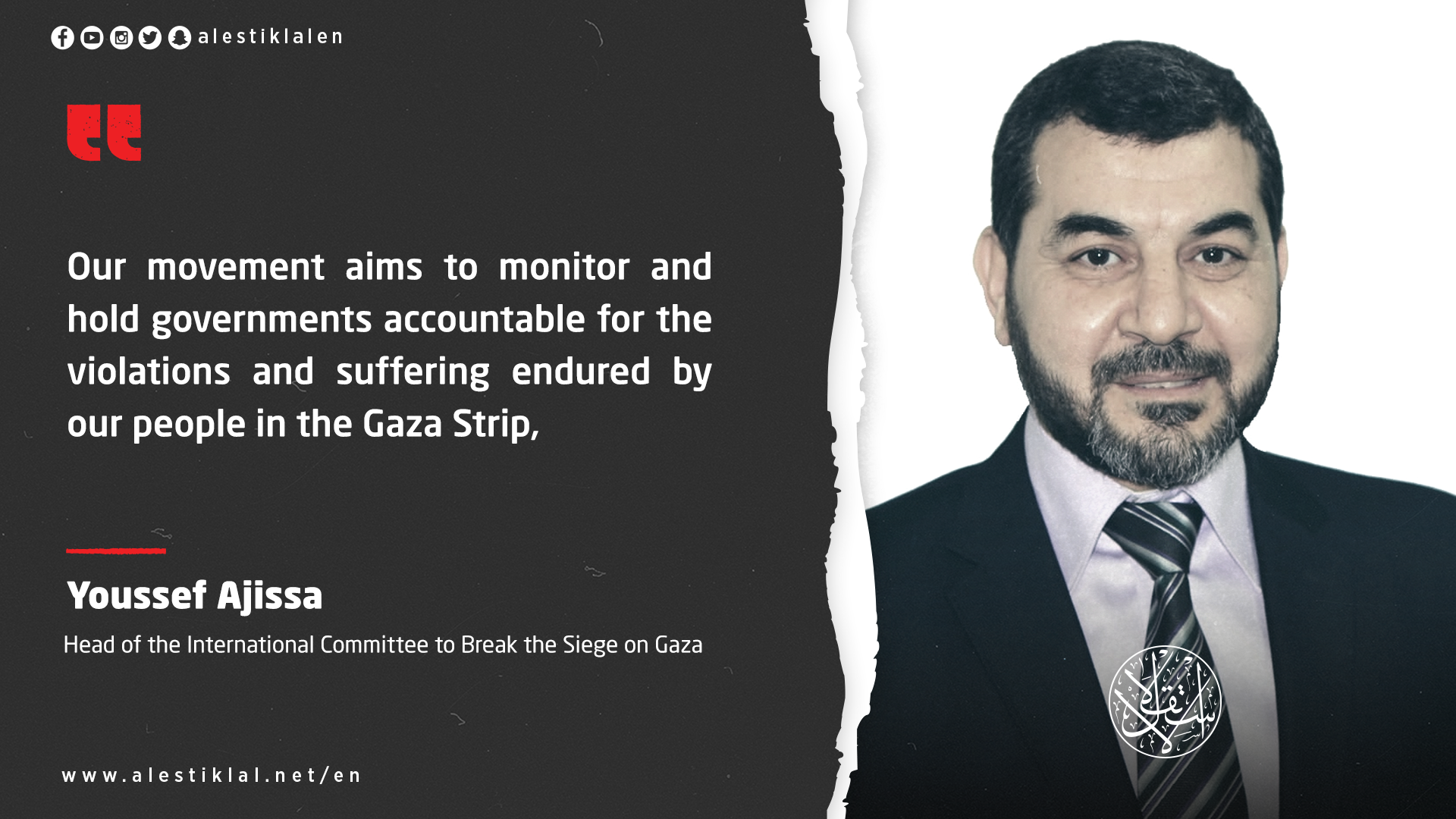
This movement aims to monitor and hold governments accountable for the violations and suffering endured by our people in the Gaza Strip, as well as to pressure them to adopt more effective stances, including imposing sanctions on this occupation and halting all forms of cooperation with it, including supplying it with weapons and other forms of support.
Today, we see loud and influential voices within parliaments around the world, with a growing number of representatives demanding clearer and more decisive positions.
This trend is expected to strengthen over time, potentially prompting many governments to reconsider their policies and positions.
Perhaps one of the reasons that led some governments to recognize the State of Palestine was the pressure exerted by parliaments and elected bodies, which contributed to changing some positions and strengthening support for Palestinian rights.
This occupation has become, according to many, a political and moral burden on a number of Western governments, and even on the US administration, especially given the growing voices of criticism within the US Congress and across American and Western society in general.
This is not limited to politicians and parliamentarians; it also includes journalists, human rights activists, artists, and supporters from around the world, many of whom declare their support for Palestinian rights. Some even participate in initiatives like the Freedom Flotilla, undeterred by the potential repercussions or intimidation they may face later.
Therefore, the role of parliamentarians is extremely important, and the actions of representatives in parliaments worldwide are closely followed and can have a significant impact on the future of the Palestinian cause and its political and legal trajectory.