El-Sisi’s Octagon: Protecting Egypt or Entrenching Military Dictatorship?
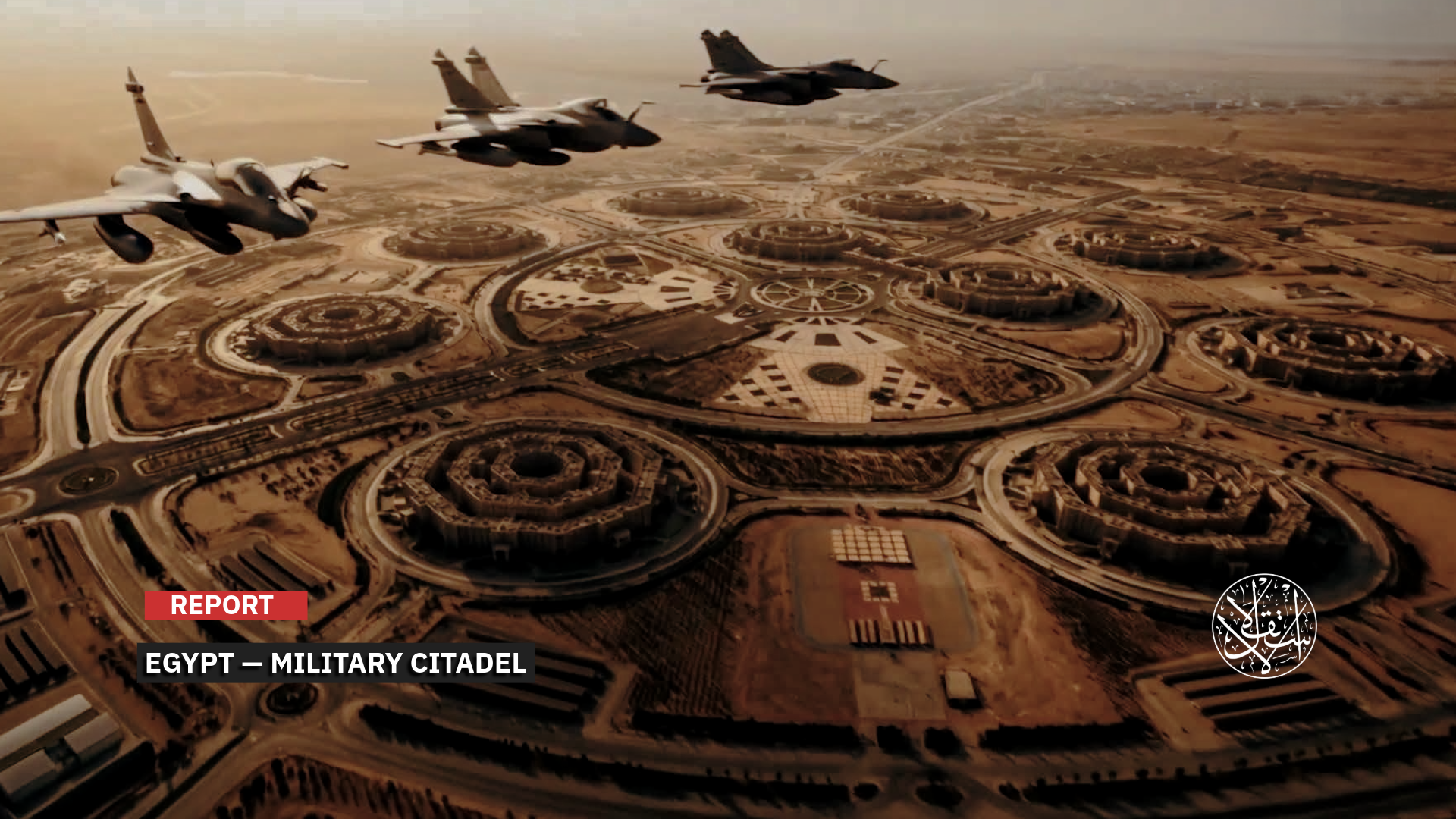
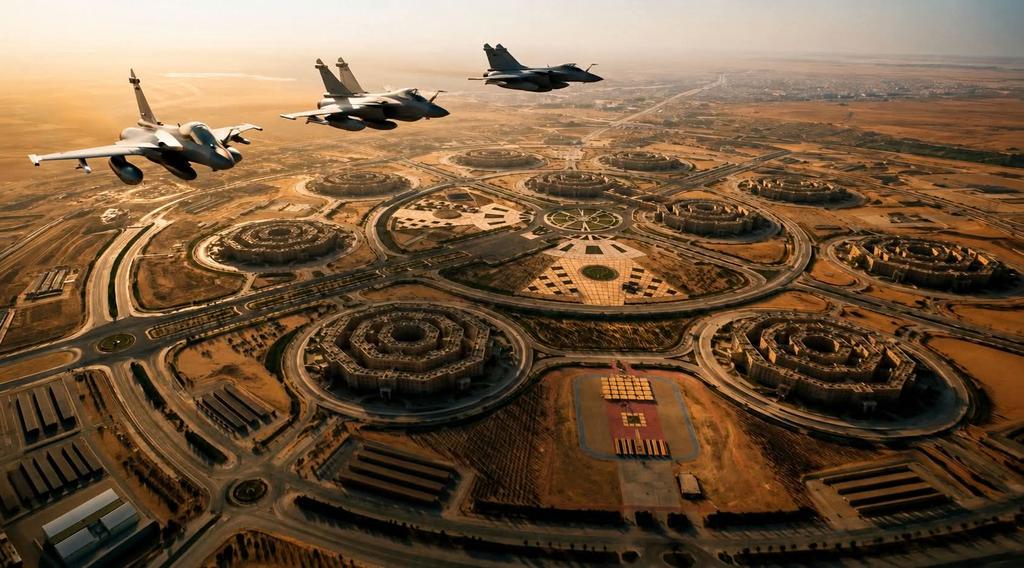
The project consists of eight interconnected main buildings, giving it its name, which is inspired by the geometric shape of an octagon.
When construction began on the “Strategic Command Headquarters,” known as “the Octagon,” in the New Administrative Capital in 2017, statements were issued by Egyptian President Abdel Fattah el-Sisi asserting that its purpose was to confront external threats and unify decision-making centers in one location.
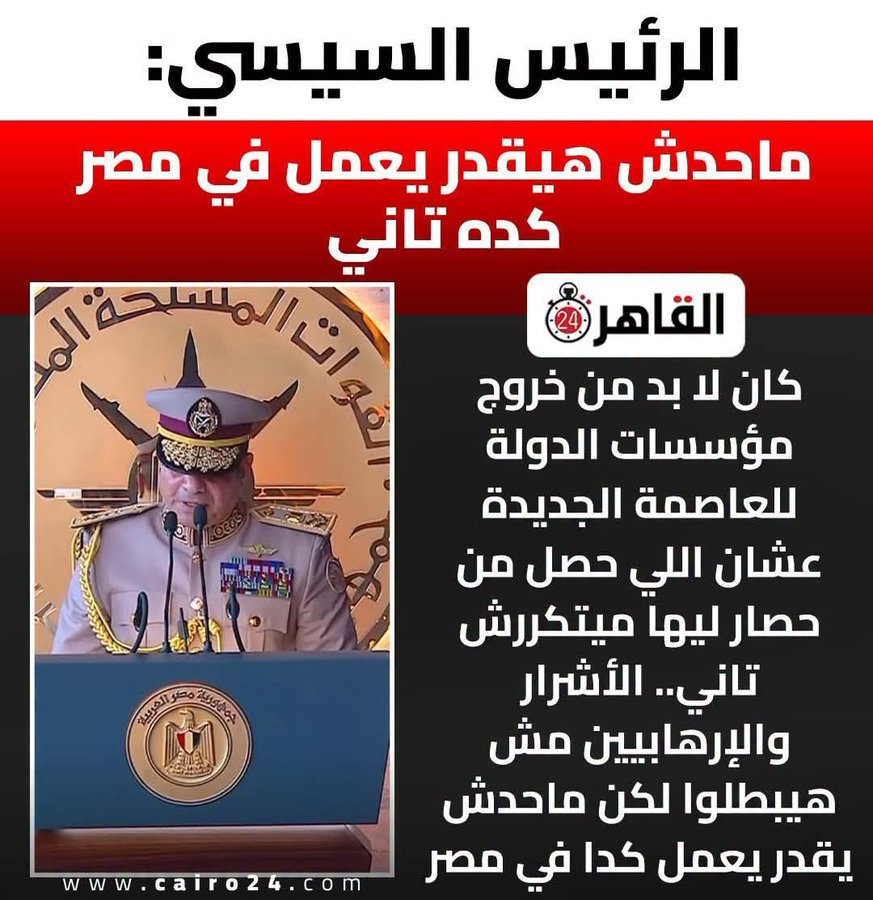
However, during the inauguration ceremony of the headquarters on July 4, 2026, el-Sisi returned to state explicitly that the establishment of the new strategic command was intended to protect the state, or rather the regime, from pressures of “siege” and from waves of domestic popular anger, similar to what occurred during the January 25, 2011 uprising.
In doing so, he openly indicated that the military and security measures incorporated into the Octagon are aimed at safeguarding the regime in the event that public anger intensifies due to political, economic, and social conditions, leading citizens toward protests or revolution. According to this interpretation, the headquarters was built to confront an internal enemy represented by the people, whom el-Sisi referred to as “the evil ones.”
El-Sisi also renewed his criticism of the January 25, 2011 revolution, holding it responsible for the decline of the Egyptian economy and for losses of around $450 billion, as well as for the fall in the value of the Egyptian pound against the dollar from around 6 pounds to nearly 50 pounds, remarks that surprised many Egyptians.
By contrast, Iran announced that after being subjected to 40 days of intense bombardment using some of the most advanced and precise American and Israeli weapons, its losses amounted to $270 billion. Meanwhile, el-Sisi claims that Egyptians peacefully demonstrating in the streets for 18 days caused losses of $450 billion.
Economic experts argue that the real causes behind this deterioration lie in economic decisions made under el-Sisi, including the liberalization of the exchange rate and expanded reliance on borrowing. According to these experts, such policies contributed to the decline in the value of the local currency, and the revolution was not responsible for the subsequent collapse of the pound’s value.
During el-Sisi’s years in power, the Egyptian pound has undergone successive periods of sharp decline as a result of five currency devaluations that began in November 2016.
These policies led to a decline of 85.4% in the value of the pound, with the exchange rate of the US dollar rising from an average of 7.15 pounds to between 49 and 50 pounds in July 2026.
In addition, over the course of el-Sisi’s rule, the government expanded its external borrowing, causing Egypt’s foreign debt balance to rise by 255.5%, from $46.1 billion in June 2014 to $163.9 billion in December 2025, a factor that also contributed to the decline in the value of the Egyptian pound.
The Purpose of the Octagon
Since Egypt inaugurated the new Ministry of Defense headquarters, “the Octagon,” inside the New Administrative Capital, the project has not been viewed merely as the relocation of a government building, but rather as an announcement of a new phase in the structure of the Egyptian military institution and its command doctrine.
The facility, described as one of the largest military complexes in the Middle East and Africa, was built as part of a broader project to relocate state institutions to the New Administrative Capital. According to foreign reports, its construction, together with the first phase of the new capital, cost approximately $57 billion.
This has raised questions among military circles and international research centers about the real motives behind constructing such a massive complex, one that exceeds the size of the US Pentagon or any other military command headquarters in the world.
The official Egyptian narrative has consistently maintained that “the Octagon” represents a qualitative leap in the country’s command-and-control system and provides an advanced environment for managing joint military operations amid growing regional challenges, ranging from terrorism in Sinai, to the crises in Libya and Sudan, and extending to security concerns in the Red Sea and the Eastern Mediterranean.
However, some researchers argue that the choice of the complex’s location inside the New Administrative Capital, and its integration into a broader security network that includes the presidential palace, the government district, and security and intelligence agencies, also reflects an effort to redesign centers of power in a way that ensures the continuity of state institutions during times of crisis and internal unrest.
Between the official narrative and these interpretations, a question emerges: Does “the Octagon” represent a response to the changing nature of external threats, or does it also serve a strategic function in securing the political system? Or was it originally built to protect the regime?
The Egyptian government has presented several justifications for the relocation, foremost among them the modernization of the state’s institutional infrastructure, reducing pressure on Cairo, and creating a smart capital capable of accommodating government institutions for decades to come.
As for the military establishment, official statements emphasize that relocating the Ministry of Defense is intended to provide a more advanced environment for managing operations and to connect military command with the other state institutions located inside the new capital.
The site is located relatively far from the population density of Greater Cairo and is connected to an extensive network of roads, aircraft landing facilities, and restricted military zones, providing a high level of protection in the event of attacks or widespread unrest.
Its presence within the New Administrative Capital, which was designed to include the presidential palace, the cabinet, parliament, ministries, and sovereign state agencies, also reflects an approach aimed at concentrating vital state institutions within a single highly secured area.
Abdel Fattah el-Sisi settled the issue by affirming that the construction of the new Strategic Command Headquarters in the New Administrative Capital was not “a coincidence,” but rather a strategic necessity to protect the country’s decision-making center from the pressures and security threats Egypt experienced following the events of 2011.
In other words, the headquarters was built for internal reasons related to preventing potential uprisings, in addition to serving as the new headquarters for the military and the state’s power institutions.
The Return to the Age of Castles
When the project was launched during its construction years, in 2016, el-Sisi presented it as part of the modernization of the armed forces, strengthening their ability to protect the state from external threats and regional challenges, and relocating and consolidating the military branches in the New Administrative Capital.
However, in his inauguration speech on July 4, 2026, he expanded the political framing of the project, linking strategic command with the state’s, or the regime’s, ability to withstand pressures, siege, and attempts aimed at weakening it.
Analysts argue that this shift in rhetoric reflects a move away from a purely military function focused on protecting the state from external threats, toward highlighting the role of “the Octagon” as a tool for ensuring the continuity of institutions of power during periods of internal crisis, which el-Sisi stated openly and clearly.
He said, “Allow me to tell you why the state’s Strategic Command exists here. Because at one point, the Constitutional Court and the Cabinet were being surrounded, and at another point they were threatening the Ministry of Defense, and at another point they were surrounding Media Production City, so that any crisis, whatever the crisis may be, would be managed under pressure, and perhaps even with fear.”
“It was necessary for the state to move out of the capital, and for this matter, meaning the January Revolution, not to happen again. I am speaking with complete frankness here. The state must move out of the capital so that this does not happen again.”
He continued, “The evil ones and the terrorists will not stop. God helps us, but we must take the necessary measures. That is why the state could not remain there again, with parliament there, the Cabinet there, and the Ministry of Defense there, as it existed before. That is over. No one will be able to do that in Egypt again.”
The irony here, as noted by Egyptian politicians, is that el-Sisi has used the term “the evil ones” since his 2013 takeover to refer to the Muslim Brotherhood and its allies. However, this time he clearly used it to refer to everyone who participated in the January Revolution, which means the term could apply to millions of Egyptians.
He said that he took the step of building the New Administrative Capital away from those “evil ones” and intended it to serve as the authority’s secure green zone. He also established the Strategic Command Headquarters (the Octagon) to bring together all the key centers of power in one place with greater protection and security.
Human rights lawyer Nasser Amin says that this represents a return to the era of sultans, and a relocation of the seat of power once again from the middle of the people to the mountains, similar to what occurred in ancient Egyptian history when rule moved from “Bayn al-Qasrayn” to the Citadel of the Mountain in Mokattam, before later returning to Abdeen Palace, and now moving back to the desert again with the New Administrative Capital and the Octagon headquarters.
In an analysis published on Al-Manassa on July 6, 2026, he described the inauguration of the Strategic Command Headquarters away from the population and urban areas, similar to the historical movement of power in the Middle Ages to fortified castles, as a “return of Egypt’s seat of government 800 years backward, to the Citadel of the Mountain, to the era of the early sultans.”
He explained that the reasons for this relocation, as el-Sisi himself described during the inauguration ceremony, were “the events of 2011 and up to June 30,” referring to the surrounding of the Constitutional Court, the Cabinet, and Media Production City, as well as threats against the Ministry of Defense.
He stated that the danger of this, “is not limited only to its backward-looking nature, and the fact that it resembles colonial ideas that, in the modern era, are practiced only by foreign rulers who fear the peoples they govern through the force of de facto authority, which requires them to maintain a great distance between themselves and the populations they rule.”
Rather, he said, “the real danger lies in the fact that these ideas pave the way for the return of systems of rule based on sultans, kings, or princes, and a regression to the eras before modernity, constitutions, domestic laws, international law, the right of people to determine their own destiny, and the right of societies to participate in managing the affairs of their countries. These are eras in which peoples are reduced to mere subjects and slaves burdened with obligations, without any rights.”
Journalist Abdel Azim Hamad, the former editor-in-chief of Al-Shorouk, described the Octagon as “a new fortress to protect power.”
Political analyst Khaled Mahmoud says that el-Sisi attributed the relocation of the new command headquarters to the New Administrative Capital to preparations for the possibility of events similar to those of January 2011 recurring. However, he argues that, at its core, the move is also intended to address the current state of tension and cooling relations with “Israel” and Ethiopia.
He explained that “the Octagon” was designed with a vision that goes beyond mere internal security, aiming to connect all of the state’s strategic directions simultaneously.
The Royal Presidential Family
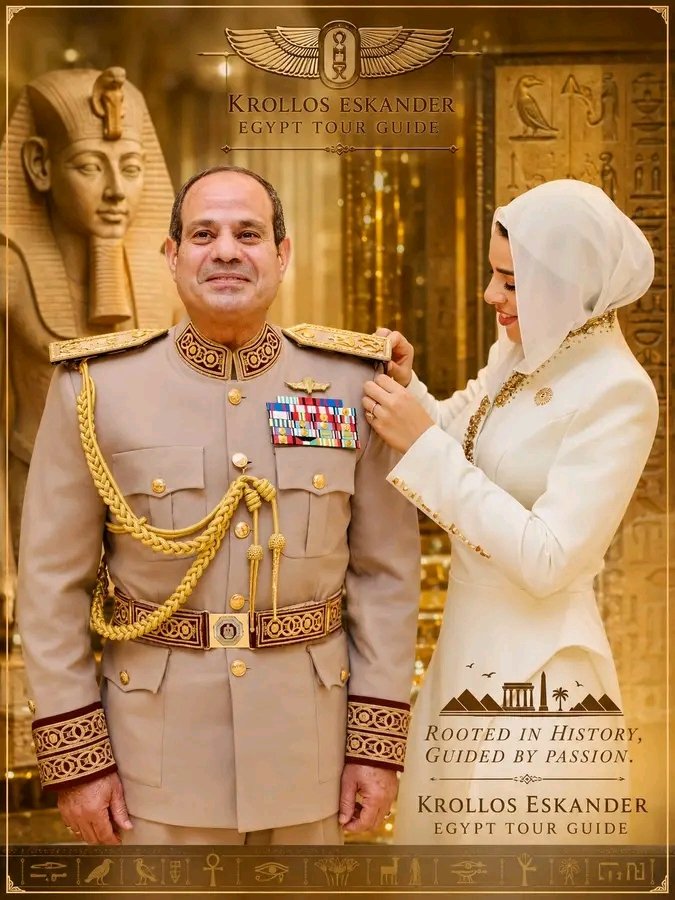
Some Egyptians drew parallels between the return to the imagery of the Citadel of the Mountain and fortified castles, along with their lavish decorations and elaborate facilities, and the authorities’ insistence on presenting el-Sisi as the sole military ruler through his appearance in military attire and decorations, despite currently being a civilian president. They compared him to the late Libyan leader Muammar Gaddafi.
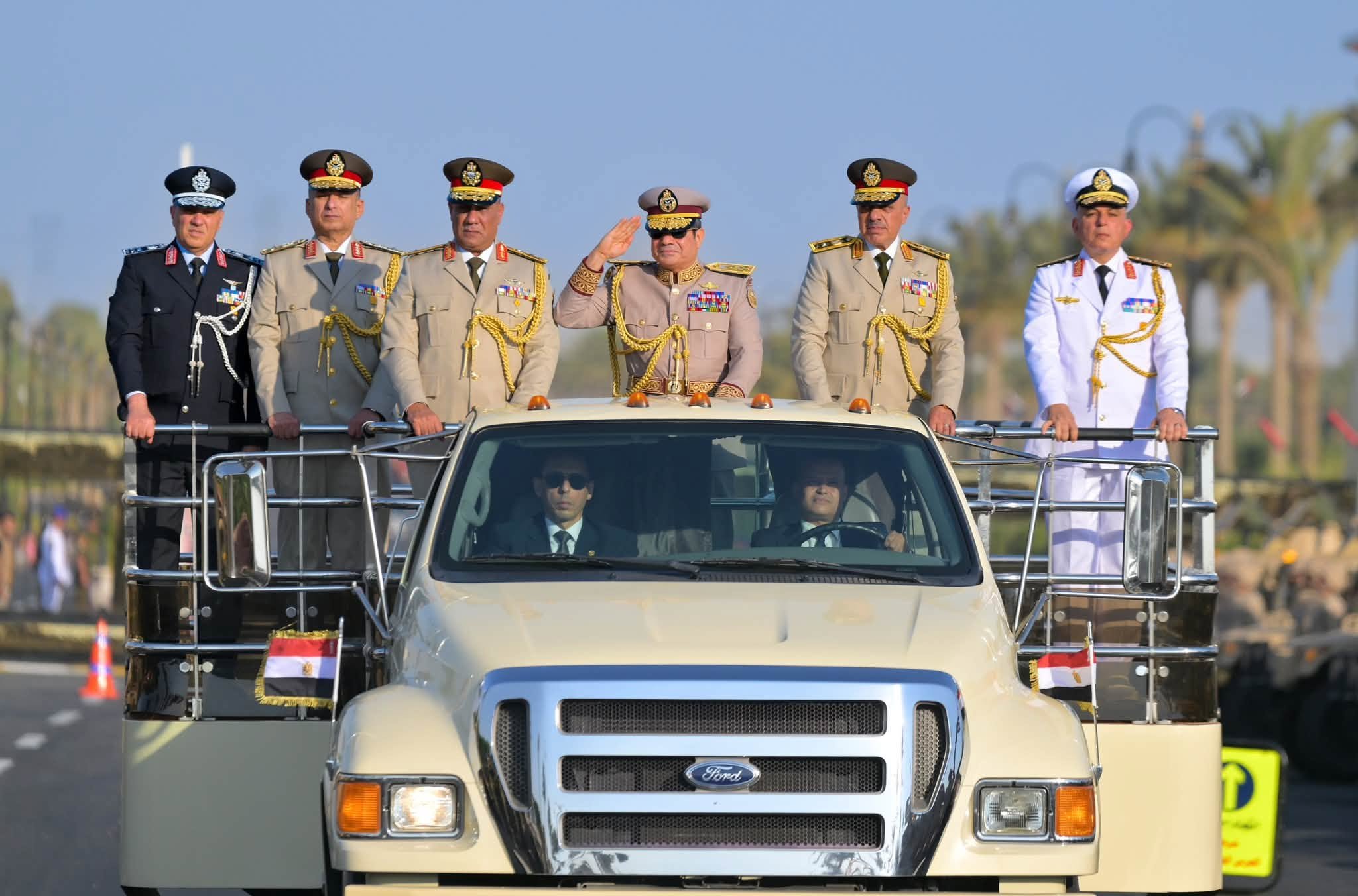
The inauguration ceremony and el-Sisi’s motorcade featured a degree of spectacle involving imperial-style military processions, aircraft, formations of motorcycles, and displays.
However, this had the opposite effect, prompting criticism from Egyptians over such lavish spending at a time when the authorities themselves describe Egypt as “poor.”
They also criticized the appearance of his daughter, Aya el-Sisi, wearing expensive princess-style clothing and accessories at a time when Egypt is experiencing an unprecedented economic and living crisis.
They argued that the presidency’s intended goal of presenting a modern image, projecting confidence and stability, or creating a public presence for the presidential family, has evaporated because citizens facing rising prices, declining purchasing power, and increasing poverty will not view such images as merely protocol moments.
Instead, they will interpret them through the lens of their daily realities, which explains the mockery and anger expressed on social media over this lavish spending.
Images showing some of the interior spaces of the Octagon buildings revealed a high level of luxury, prompting Egyptians to question such extravagance.
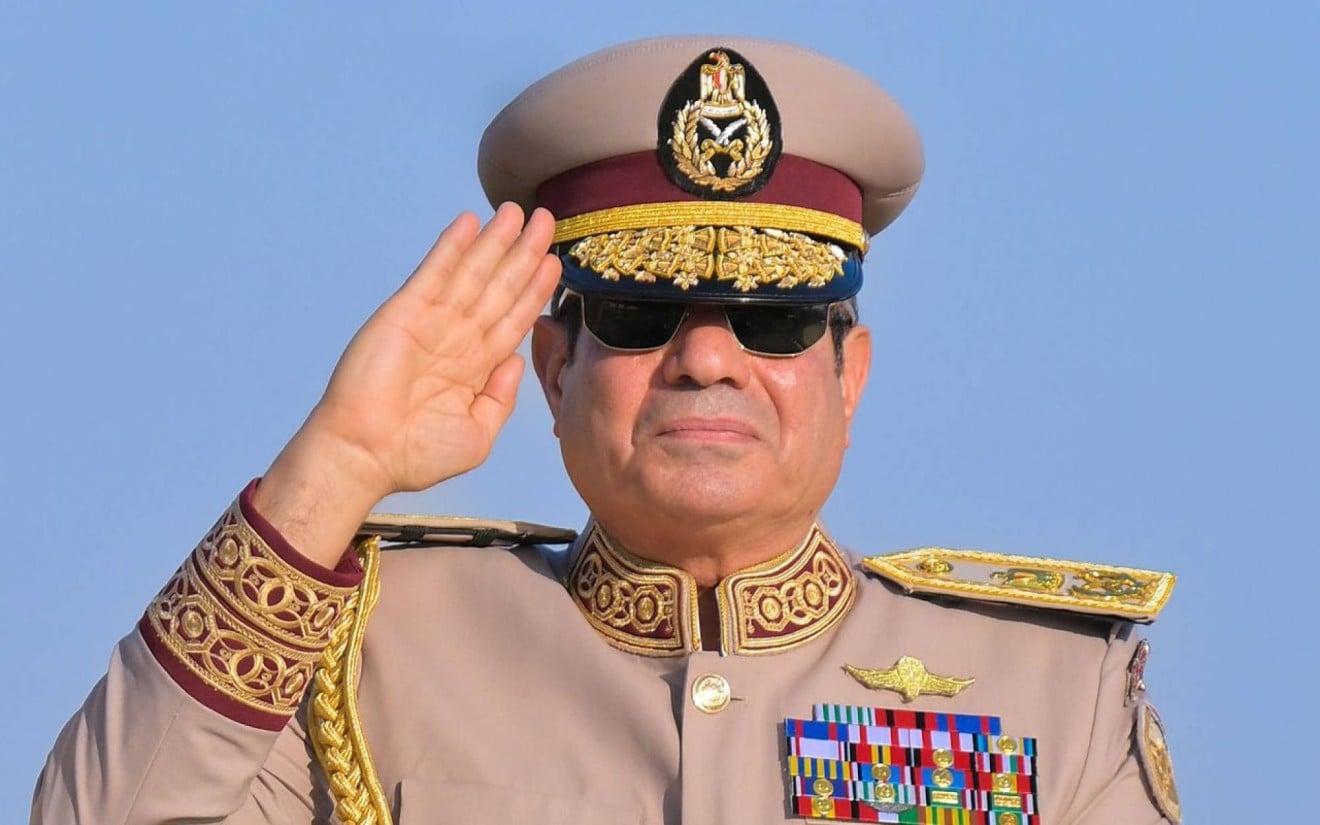
El-Sisi’s removal of his civilian suit and wearing of military attire during the inauguration ceremony of “the Octagon” marked the seventh time since 2014 that he has done so.
He had previously worn military uniform on six occasions at different events since assuming the presidency as a “civilian,” and each time the return to military dress carried a message.
Egyptians have generally linked the wearing of military uniform to the idea that the greater the signs of rising public anger, the more the regime increases the military tone of its rhetoric and emphasizes its military identity.
A political expert told Al-Estiklal that el-Sisi’s use of military attire and military displays reflects a political and security strategy based on highlighting military identity during crises and portraying the army as his source of protection.
The expert explained that this is connected to the mindset of the authorities since the 2013 coup, namely the use of “militarism” to project authority and impose prestige, and the management of the state through purely military perspectives.
Putting All Your Eggs in One Basket
Experts have also come forward to explain the risks of gathering all branches and departments of the military, along with state agencies, in one location, arguing that this would make them easier to target in any future war.
They pointed to the city’s proximity to Suez, which was previously besieged by “Israel” during the Deversoir Gap operation in the 1973 October War, as well as the vulnerability of a single concentrated site to attacks by warplanes and drones.
In the final days of the 1973 October War, “Israel” succeeded in carrying out what became known as the Deversoir Gap, when a force led by Ariel Sharon crossed to the western bank of the Suez Canal, seized the Cairo–Suez road, and came within 100 kilometers of Cairo, though it was unable to advance toward the capital.
Human rights activist Osama Rushdi described the danger, saying that the Octagon is “a monument to a foolish military mindset belonging to the last century,” stressing that such a headquarters does not fundamentally align with modern concepts of warfare.
He explained that the wars in Ukraine, Iran, Lebanon, and Gaza have demonstrated that wars are no longer managed from massive, highly visible command palaces, but rather through geographically dispersed command networks, fortified centers, underground facilities, and alternative communication systems that ensure command continuity even under the most difficult circumstances.
As for creating a monumental complex of this scale, containing most command-and-control capabilities in a single location, he argued that, if war were to break out, it would become an obvious strategic target whose infrastructure could be destroyed or disabled by a concentrated strike.
This is precisely what modern military doctrines seek to avoid through the distribution of command centers and the construction of multiple, resilient alternatives capable of continuing operations.
Some Egyptians compared the Octagon, the Egyptian Ministry of Defense building designed to serve as a fortress resistant to destruction and housing all branches of the military and security apparatus, with what happened in Iran, including the assassinations of senior leadership figures and strikes on government facilities.
They argued that Tehran’s ability to withstand the US-Israeli attacks was due to the dispersal of its command centers and its reliance on a decentralized operating model.
However, military experts pointed to the army’s decision to officially reveal the S-300VM (Antey-2500) air defense system through the official platform of the State Information Service, saying that this carries strategic and military significance.
They described it as an explicit announcement that the self-protection shield for the country’s most important military and intelligence decision-making center, the Octagon, has been completed.
Octagon’s Story
The “Octagon” is the new headquarters of the Egyptian Ministry of Defense and the General Command of the Egyptian Armed Forces. It is located in the western sector of the New Administrative Capital, covering an area estimated at hundreds of acres.
It consists of eight interconnected main buildings, which gave the project its name, inspired by the geometric shape of an octagon.
The complex forms part of the “Strategic Command City,” which includes command-and-control facilities, communications centers, operations management facilities, training and residential facilities, as well as advanced security systems.
According to official statements, the project’s purpose is to provide a unified command center that keeps pace with technological developments in military operations management and enhances the armed forces’ ability to coordinate among their various main branches.
The Armed Forces Engineering Authority states that the complex was designed to be one of the largest defense ministry headquarters in the region, with advanced infrastructure based on secure communication networks and modern operations rooms capable of managing crises and operations simultaneously.
This aligns with the global trend toward establishing unified command centers that rely on digital technology and real-time connectivity between military units.
The Octagon project began as part of the construction of the New Administrative Capital, which was launched in 2016, while construction work on the military complex itself began in 2017.
Parts of it, specifically the Strategic Command, were inaugurated on October 31, 2021, followed by the full inauguration on July 4, 2026. The complex is located within an area of approximately 90 square kilometers, an area comparable to that of the Portuguese capital, Lisbon.
Neither the Egyptian government nor the armed forces have announced the official cost of constructing the Strategic Command “Octagon” complex. Some foreign reports have conflated the cost of the Octagon with the cost of the New Administrative Capital project, which is estimated at around $57–60 billion, according to The South China Morning Post on July 6, 2026.
There are no official figures regarding the amount spent on the new capital itself. Researcher Yezid Sayigh of the Carnegie Middle East Center says that the first phase of the project cost figures such as $48 billion or $58 billion.
Nevertheless, Western academics describe a project of this enormous scale as “excessively costly and representing a serious risk for an already heavily indebted state,” according to a report by The Economist on April 2, 2026.
They said that the US-Israeli war on Iran has increased the level of risks, given that Egypt relies heavily on oil, natural gas, and financial remittances from Gulf countries.
On the other hand, military analysts view “the Octagon” as the command hub within a network of major military bases built by Egypt, such as Mohamed Naguib Military Base on the northwestern coast, Berenice Military Base on the Red Sea, and 3 July Naval Base on the northern coast.
They link these developments to statements by the Egyptian armed forces warning that Egypt now faces several threat zones simultaneously, including the western border with Libya, the southern border with Sudan, the eastern border involving the Gaza Strip and “Israel”, in addition to the Red Sea, the Bab al-Mandab Strait, and the Eastern Mediterranean.
The Israeli newspaper The Jerusalem Post, on July 4, 2026, linked the construction of this massive military complex to “Egypt’s efforts to strengthen its regional influence and the growing influence of Cairo in the region.”
It noted that this large-scale center “was not built merely to serve as an administrative building, but rather to function as an integrated center for managing and controlling state institutions, improving data exchange efficiency, managing crises, and strengthening Egypt’s security and defense capabilities.”