After Decades of French Dominance: How English Became the Leading Language in Algerian Schools
“Language conversion requires thousands of qualified teachers, modern curricula, and societal acceptance.”
The Algerian government announced its intention to prioritize English over French in primary school, a move that has been widely praised within the country but has also raised questions about its motivations and whether it is based on educational principles or reflects the ongoing crisis with Paris.
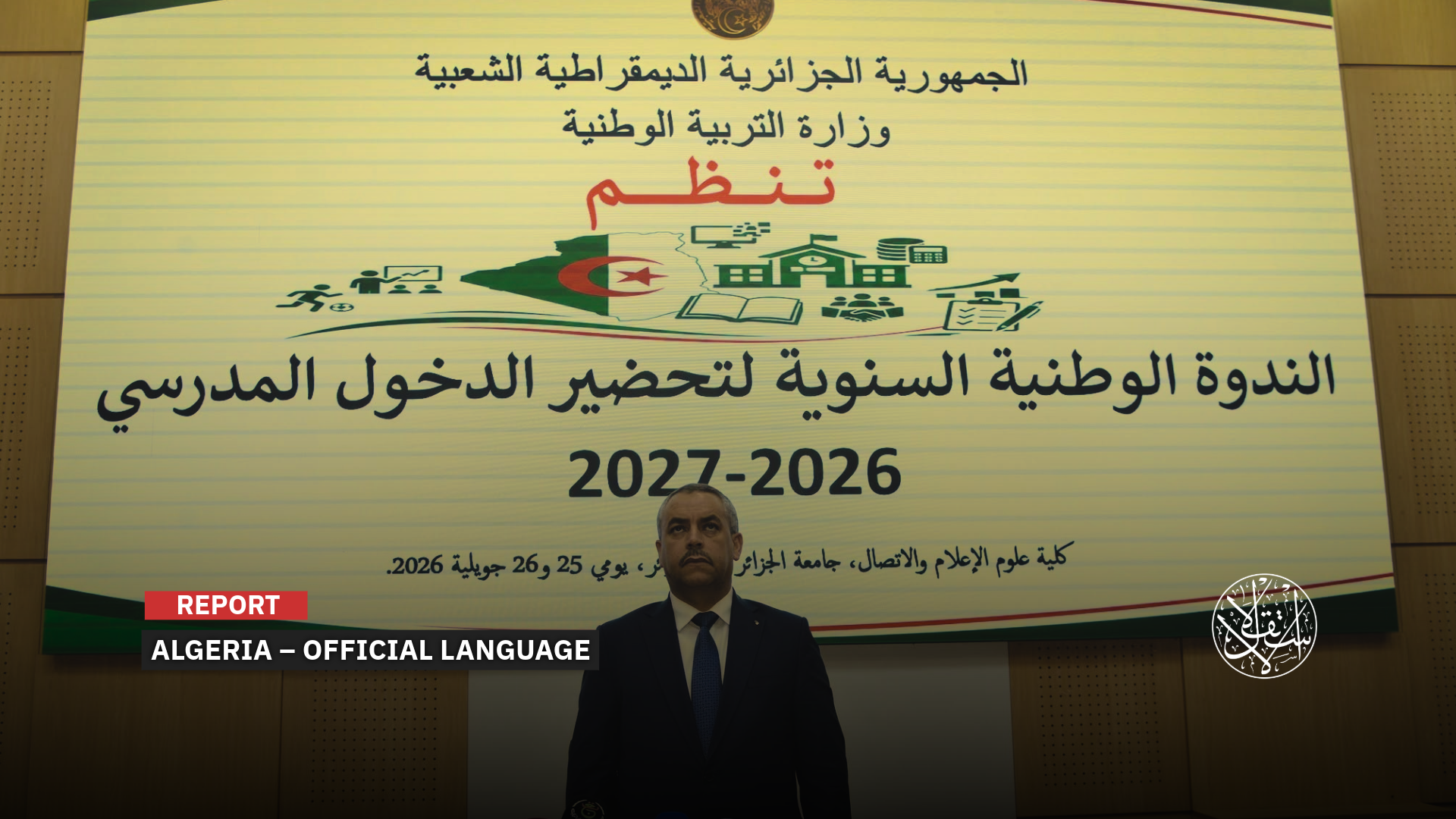
According to the decision announced by the Algerian Ministry of National Education, with the start of the 2026-2027 school year in Algeria, English instruction will begin from the third grade of primary school, while French instruction will be postponed to the fourth grade.
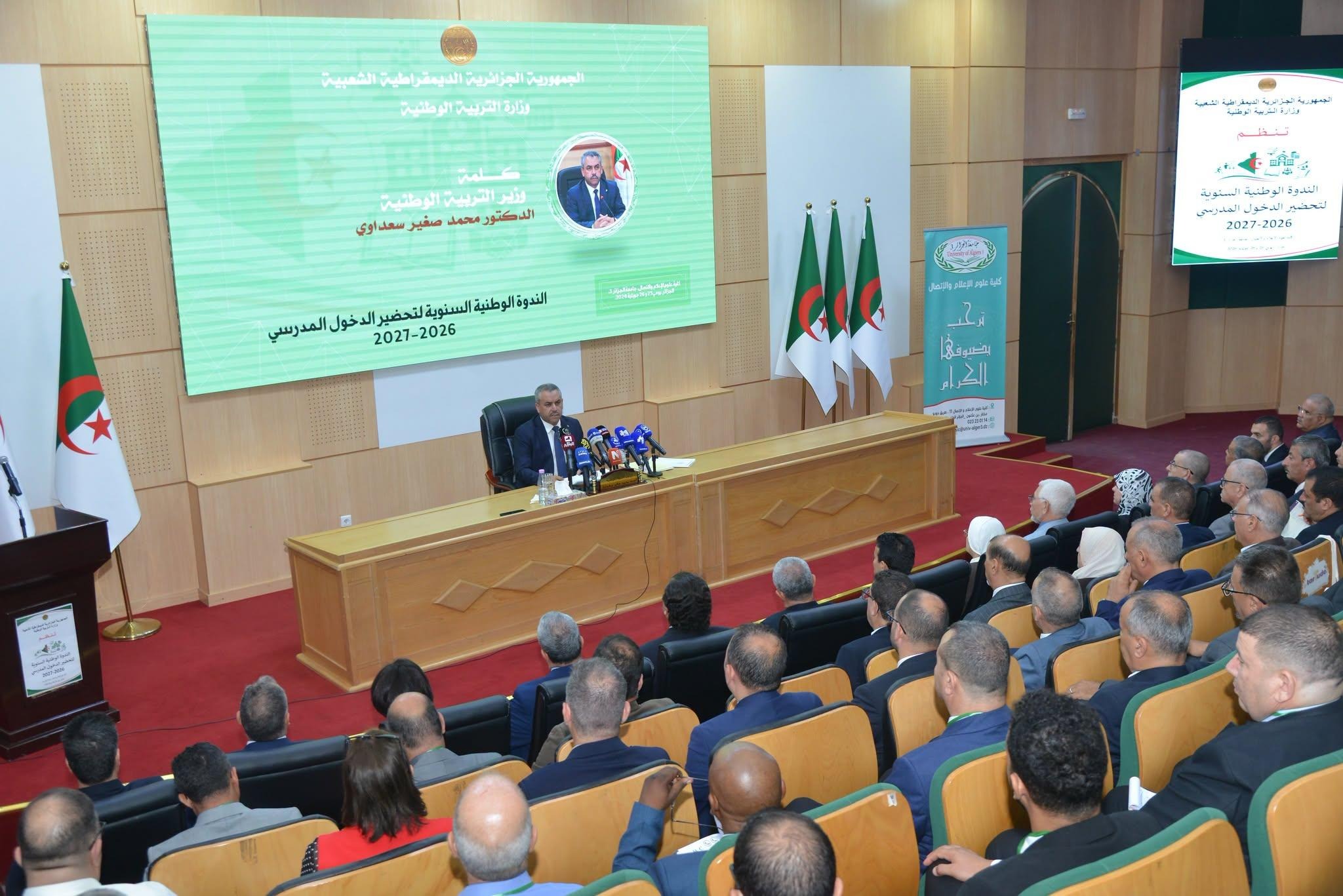
During the national conference dedicated to preparing for the upcoming school year, held on July 25, 2026, the Algerian Minister of National Education, Mohamed Seghir Saadaoui, explained that the decision is part of a new approach aimed at improving foreign language learning.
He indicated that the ministry decided to focus on English in the third grade before introducing French.
The minister added that expanding the presence of English aligns with the ongoing transformations in higher education and scientific research, given its status as the most widely used language globally in scientific research and studies.
This step is part of a series of reforms announced by the Ministry of National Education, aimed at raising the quality of education, improving learning, and developing curricula and pedagogical organization, based on the findings of the first phase of the National Committee for Education Quality's work.
The reforms, scheduled to be implemented starting in the 2026-2027 academic year, include reorganizing the teaching of several subjects, strengthening the presence of English in science and technology tracks at the secondary level, and continuing to update the curriculum and syllabus.
The Language Conflict
This decision marks a new milestone in Algeria's educational journey, which began in the summer of 2022 when President Abdelmadjid Tebboune announced the introduction of English into primary education, after decades in which French was the sole foreign language taught at this level.
This was followed by the Ministry of Education launching a large-scale campaign to recruit approximately 25,000 English language teachers from graduates specializing in English language and translation, to meet the needs created by the introduction of the new subject.
The Ministry also adopted both permanent and contract-based employment models, with the possibility of utilizing retired or previously teaching teachers, in anticipation of filling the required positions in various provinces.
In this regard, the Ministry of Higher Education and Scientific Research began implementing a gradual approach to teaching some medical specialties in English in 2025, a step deemed correct by President Abdelmadjid Tebboune.
Nevertheless, French remains strongly present in administration, the economy, medicine, media, and higher education, and is also mixed with Algerian Arabic and Tamazight in daily communication.
The International Organization of the Francophonie estimates that there are approximately 15 million French speakers in Algeria, making it one of the largest French-speaking communities in the world, even though Algeria is not a member of the organization.
The student movement also reveals the continued influence of French. According to data reported by Le Monde, 68% of Algerian students who chose to study abroad in 2024 went to France, compared to 5% to Canada and 2% to the UK.
More than 8,350 Algerian students received French student visas in 2025, a 16% increase compared to 2024.
Crisis with France
Academic and public policy expert Moulay Hicham Mouatadid emphasized that the Algerian decision cannot be understood in isolation from both the internal and external contexts.
Mouatadid added to Al-Estiklal, "Objectively speaking, the move towards strengthening English language instruction reflects a growing awareness of the transformations occurring in the global economy, where English has become the language of science, technology, the digital economy, and scientific research."
He continued, "From a political standpoint, it is difficult to separate this decision from the recurring tensions that have characterized Algerian-French relations in recent years."
He added, "In Algeria, the French language has never been merely a tool for education; it has always been part of the colonial legacy and the equation of cultural and political influence."
Therefore, Mouatadid says, "The prioritization of English and the postponement of French carries a message that transcends the pedagogical dimension. It falls within the framework of an attempt to restructure the cultural landscape and redistribute spheres of external influence, as Algeria seeks to diversify its international partnerships and reduce its symbolic dependence on the Francophone world."
The same speaker pointed out that in the 21st century, language has become a tool of geopolitical power because it defines the spaces for economic partnerships, sources of technology, scientific research networks, and even the orientations of future elites.
He emphasized that "the success of this positioning will remain contingent on the state's ability to transform the political decision into a long-term institutional project, far removed from circumstantial calculations or messages directed abroad."
Mouatadid emphasized that major shifts in language policies are not measured by their mere announcement, but rather by their ability, after a decade or two, to transform the quality of human capital, the level of innovation, and a country's position within the global economy.
From this perspective, the academic researcher added, "Algeria's success will not be determined by the extent to which French declines, but by its ability to make English a genuine driver of developmental and intellectual reform, not merely a tool for redrawing political balances with Paris."
In this context, North Africa TV, in an analysis of the move published on its Facebook page on July 25, 2026, asserted that the decision has reignited the debate surrounding language policy in Algeria, noting that it cannot be separated from the political shifts that Algerian-French relations have been undergoing for several years.
The channel added that since the introduction of English in primary education in 2022, the authorities have gradually moved to expand its presence in the educational and administrative system, while simultaneously diminishing the traditional status of French.
This occurs within a context that coincides with recurring diplomatic tensions between Algeria and Paris and an official discourse calling for liberation from the language legacy of French colonialism.
The same source stated that language reform has become a matter with more political and symbolic dimensions than a comprehensive educational project, explaining that changing the order of languages does not address the real issues facing Algerian schools.
The channel further stated, "These include the decline in academic achievement, overcrowded classrooms, a lack of supervision and ongoing training for teachers, weak curricula, and a lack of stability in educational policies."
It noted that the education system has witnessed frequent modifications to programs, curricula, and teaching methods over the past two decades.
However, most of these modifications have not been accompanied by independent scientific evaluations measuring their impact on student outcomes or the quality of education. This has led to each new reform sparking the same controversy without addressing the structural problems plaguing the school system.
It emphasized that "strengthening English aligns with its status as a language of science, technology, and the global economy. However, the success of this approach remains contingent upon providing qualified teachers, modern curricula, appropriate teaching resources, and a comprehensive reform of the system; because simply changing the language of instruction is insufficient to improve the quality of education."
The channel concluded by warning against reducing the reform of the Algerian school system to the issue of languages, asserting that the future of education is not determined by the language taught first, but rather by the quality of curricula, teacher competence, the stability of educational policies, and the existence of a long-term vision based on scientific findings, not political or symbolic considerations.
A Step Towards Liberation
The Algerian initiative has sparked widespread reactions from experts and activists. In this regard, Badi Tebani, director of the London Success Academy, affirmed that strengthening the position of the English language in Algerian schools is not merely an educational reform, but a step towards intellectual liberation and the restoration of cultural sovereignty.
In a Facebook post dated July 26, 2026, Tebani added that the French did not enter Algeria as a result of a free scientific or cultural choice, but was imposed during 132 years of French colonialism as part of a policy aimed at erasing national identity and replacing Arabic with French.
He stated that after independence, French linguistic influence remained present in administration, education, and the economy, and various currents associated with the Francophone world sought to maintain French as the dominant language in Algeria.
Tebani emphasized that clinging to French as the primary foreign language no longer serves the interests of new generations; rather, it ties them further to a hateful colonial past, while English opens up horizons for the future and the entire world.
He added, "We are not against learning languages; French, for example, is a language of culture, literature, and civilization. However, we are against it remaining a barrier between Algerian youth and global sources of knowledge. Developing nations do not choose languages out of nostalgia for the past, but rather according to the demands of the future."
For his part, Algerian blogger Kamal Lachi said that lovers of the French language in Algeria must admit that the youngest among them is over fifty.
In a Facebook post dated July 25, Lachi pointed out that today's youth are fast-paced in everything and love speed, sometimes even rushing and falling headlong. The French language no longer appeals to them; they can't express themselves eloquently in it, nor can they bear to write in it.
Lachi concluded that "English is the language of Generation Z and all the generations that follow. French, my dear lovers, has lost its place even in its own country, France."
Political and educational activist Abdelaziz Belaid believes that while the decision to postpone the introduction of French from the third to the fourth grade of primary school is a positive step, it shouldn't obscure the core issue.
In a Facebook post, Belaid added, "The problem in Algeria isn't just the timing of French language instruction, but the status it has been given since independence."
He continued, "Despite not being an official language in the constitution, it is treated in many state institutions as if it were the second official language, and it is granted privileges that no other foreign language enjoys."
Belaid continued: "In fact, their teaching methods often go beyond language instruction to the transmission of French cultural norms, whereas the fundamental purpose of foreign language education should be to acquire a tool for communication and scientific openness, not to perpetuate cultural dependency."
The educational activist called for a clear national language policy that places Arabic and Tamazight at the forefront of the national discourse, and teaches all foreign languages as tools for knowledge and openness, without granting any language exceptional privileges based on historical considerations.
He concluded that "building the new Algeria does not only involve reforming the economy and administration, but also begins with liberating language decision-making, so that it becomes an expression of the nation's choices and future, not an extension of the legacy of the past."
Integrated System
Academic and public policy expert, Moulay Hicham Mouatadid, stated that the move towards English is, in principle, a choice that aligns with modern global trends.
He told Al-Estiklal that all international indicators confirm that the economies most integrated into innovation and technology chains rely on English as the primary language for scientific research and knowledge exchange.
Therefore, Mouatadid adds, "The success of the project will not be measured by the number of hours of English instruction, but rather by its ability to produce a more competitive human capital in the global economy."
In another context, the public policy expert pointed out that international experience confirms that changing the language of instruction does not yield automatic results if it is not preceded by the establishment of a comprehensive educational system.
He explained that the language conversion requires thousands of qualified teachers, modern curricula, digital teaching tools, new assessment mechanisms, and societal acceptance of the philosophy of reform.
He emphasized that the continued widespread use of French within the Algerian administration, universities, and economy could create a state of bilingualism if the transition is not managed gradually and thoughtfully.
Mouatadid stressed that the real challenge is not simply declaring English an early language, but rather ensuring its ability to become a language of knowledge and production, not merely an additional subject within the educational system.
The academic researcher concluded that Algeria's success in redefining its position on the geopolitical map of knowledge will remain contingent on the extent to which it can separate circumstantial political considerations from the requirements of long-term structural reform.
The most prominent criticism of the official move towards English came from the Workers' Party, which, in a previous statement from its political bureau, warned of the consequences of replacing French with English in primary education, describing the decision as arbitrary.
The political bureau of the party, led by Louisa Hanoune, stated that it recalled similar decisions in the past that had serious repercussions for several generations, disrupting their educational paths due to the imposition of impulsive changes dictated by ideological considerations and therefore lacking a scientific basis.
The party emphasized in its statement that adding English as a subject to broaden one's horizons could not justify abandoning a "spoils of war" or destabilizing students and, more generally, the education system.
The term "spoils of war" refers to the French language, a description coined by the writer and novelist Kateb Yacine after Algeria's independence from France.